

Consumer Insights
Uncover trends and behaviors shaping consumer choices today
Procurement Insights
Optimize your sourcing strategy with key market data
Industry Stats
Stay ahead with the latest trends and market analysis.
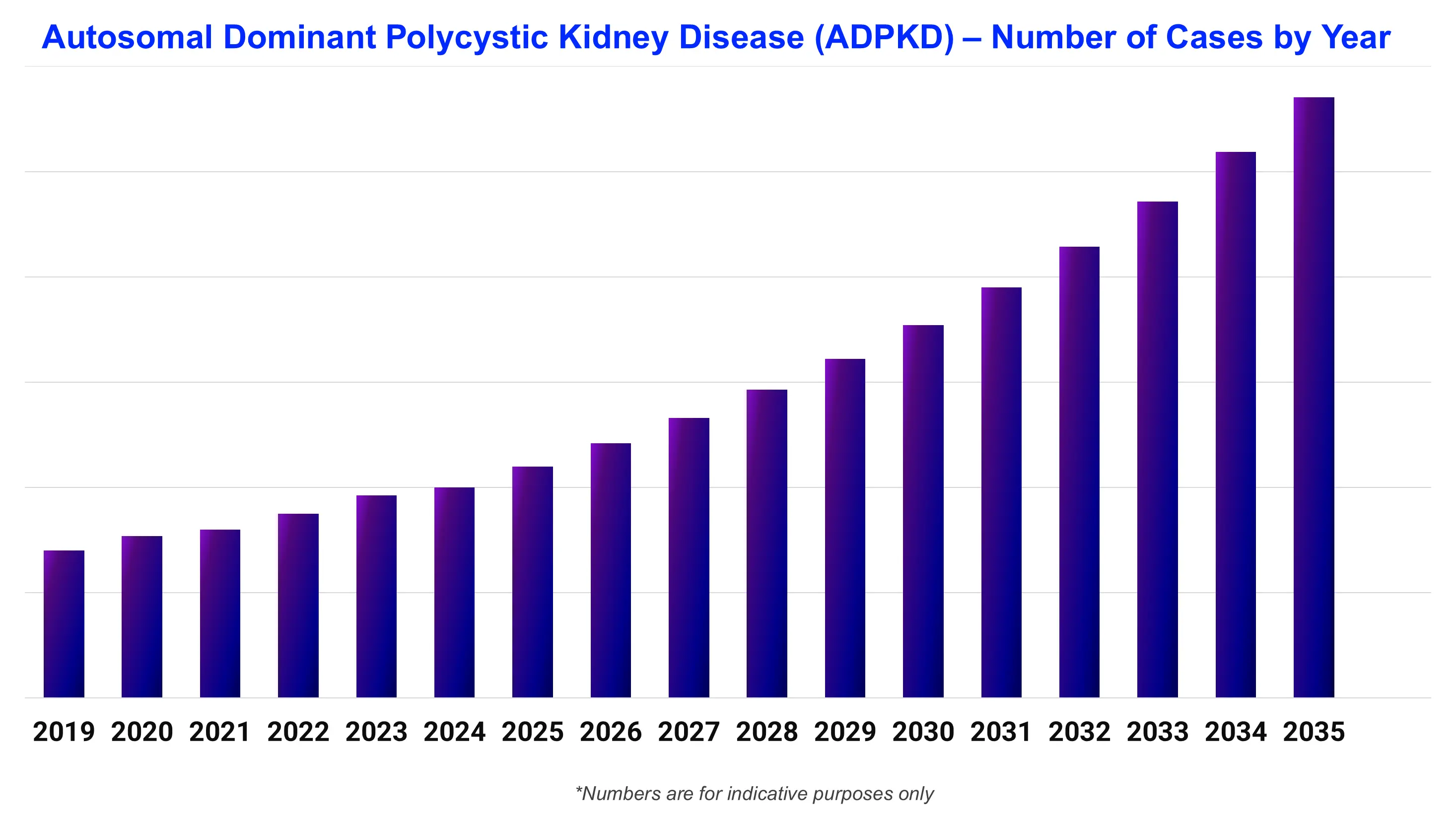
Autosomal dominant polycystic kidney disease (ADPKD) is the most common hereditary kidney disorder, characterized by fluid-filled cysts that progressively impair kidney function. According to Eunji Mun et al. (2026), its estimated global prevalence ranges from 1 in 400 to 1 in 2,500 individuals. According to the autosomal dominant polycystic kidney disease (ADPKD) epidemiology forecast by Expert Market Research, disease prevalence is an important indicator of market demand for renal therapies.
Base Year
Historical Period
Forecast Period
Read more about this report - REQUEST FREE SAMPLE COPY IN PDF
Expert Market Research's “Autosomal Dominant Polycystic Kidney Disease (ADPKD) Epidemiology Forecast Report 2026-2035” offers comprehensive information on the prevalence and demographics of autosomal dominant polycystic kidney disease (ADPKD). It projects the future incidence and prevalence rates of autosomal dominant polycystic kidney disease (ADPKD) cases across various populations. The study covers age, gender, and type as major determinants of the autosomal dominant polycystic kidney disease (ADPKD) population. The report highlights patterns in the prevalence of autosomal dominant polycystic kidney disease (ADPKD) over time and projects future trends based on multiple variables.
The report provides a comprehensive overview of the disease, as well as historical and projected data on the epidemiology of autosomal dominant polycystic kidney disease (ADPKD) in the 8 major markets.
Regions Covered
Autosomal dominant polycystic kidney disease (ADPKD) is an inherited genetic disorder characterized by the progressive development of fluid-filled cysts in the kidneys, causing kidney enlargement and potentially leading to chronic kidney disease and kidney failure. It is primarily associated with pathogenic variants in the PKD1 or PKD2 genes, which affect polycystin proteins and normal kidney cell function. The disease follows an autosomal dominant inheritance pattern, meaning an affected parent has a 50% chance of passing the variant to each child. Its clinical course varies considerably, reflecting differences in genetic variants, age, and disease severity.
|
Parameter |
Insight |
|
Largest Patient Pool |
United States |
|
Fastest Growing Country |
India |
|
High-Risk Population |
Individuals with a family history of ADPKD, particularly those carrying pathogenic variants in the PKD1 or PKD2 genes. Patients with early hypertension or evidence of rapid kidney function decline require appropriate risk assessment. |
|
Key Diagnostic Method |
Renal imaging, particularly ultrasonography; magnetic resonance imaging and computed tomography may support assessment. Genetic testing can help in selected cases where imaging or family history does not establish the diagnosis. |
|
Major Risk Factor |
Inherited pathogenic variants in PKD1 or PKD2. An affected parent has a 50% chance of transmitting the autosomal dominant condition to each child. |
|
Major gap in the market |
Potential gaps include delayed diagnosis, inconsistent access to specialist nephrology care, and barriers to disease-modifying treatment, including eligibility assessment and monitoring requirements for tolvaptan. The magnitude of these gaps varies by country. |
The autosomal dominant polycystic kidney disease (ADPKD) epidemiology division offers information on the patient pool from history to the present as well as the projected trend for each of the 8 major markets. Expert Market Research provides both current and predicted trends for the autosomal dominant polycystic kidney disease (ADPKD) epidemiology scenario by examining a wide range of studies. Additionally, the report covers the diagnosed patient pool for autosomal dominant polycystic kidney disease (ADPKD) and their trends. The data is broken down into specific categories, such as total prevalent cases in males and females, and total diagnosed cases across different age groups and patient pools.
|
Epidemiology Segment |
Key Insights |
|
Diagnosed Prevalent Cases of the Disease |
According to Fouad T. Chebib et al. (2025), ADPKD prevalence in the United States is estimated at 9.3 per 10,000 individuals. Globally, estimates range from 1 in 400 to 1 in 2,500 people, reflecting differences in diagnostic and ascertainment methods. |
|
Gender-Specific Cases of the Disease |
As per Maude Pichette et al. (2026), ADPKD affects males and females equally. In an Indian single-center cohort reported by Shivendra Singh et al. (2023), males accounted for 53.42% of the 73 patients studied, indicating a slight male majority within that specific cohort. |
|
Age-Specific Cases of the Disease |
According to Fouad T. Chebib et al. (2025), ADPKD is typically diagnosed between 27 and 42 years of age. Maude Pichette et al. (2026) reported a median diagnosis age of approximately 35 years, while severe very-early-onset disease accounts for 2%–5% of children with ADPKD-causing mutations. |
|
Ethnicity-Wise Cases of the Disease |
According to Muddassar Mahboob et al. (2024), ADPKD occurs across racial groups worldwide. The supplied epidemiological evidence also indicates variation in reported prevalence across ethnic populations and regions, potentially reflecting differences in screening, diagnostic access, and ascertainment methods. |
|
Mortality and Survival Analysis of the Disease |
According to Eunji Mun et al. (2026), approximately 50% of patients with ADPKD progress to end-stage kidney disease requiring kidney replacement therapy by age 60. Muddassar Mahboob et al. (2024) reported that approximately half, and potentially up to three-quarters, develop end-stage kidney disease by age 70. |
|
Disease Type |
Prevalence |
|
PKD1-associated ADPKD |
According to Fouad T. Chebib et al. (2025), pathogenic variants in PKD1 account for approximately 78% of ADPKD cases and are generally associated with earlier disease progression and greater severity. |
|
PKD2-associated ADPKD |
As reported by Fouad T. Chebib et al. (2025), PKD2 pathogenic variants account for approximately 15% of ADPKD cases and are generally associated with a milder disease course than PKD1-associated disease. |
|
Very-early-onset ADPKD (VEO-ADPKD) |
According to Eunji Mun et al. (2026), very-early-onset ADPKD represents approximately 2%–5% of children carrying ADPKD-causing mutations, with severe manifestations occurring before 18 months of age. |
|
Atypical ADPKD |
As reported by Eunji Mun et al. (2026), atypical ADPKD, classified as Class 2 under the Mayo Imaging Classification, accounts for approximately 5%–10% of cases. |
Read more about this report - REQUEST FREE SAMPLE COPY IN PDF
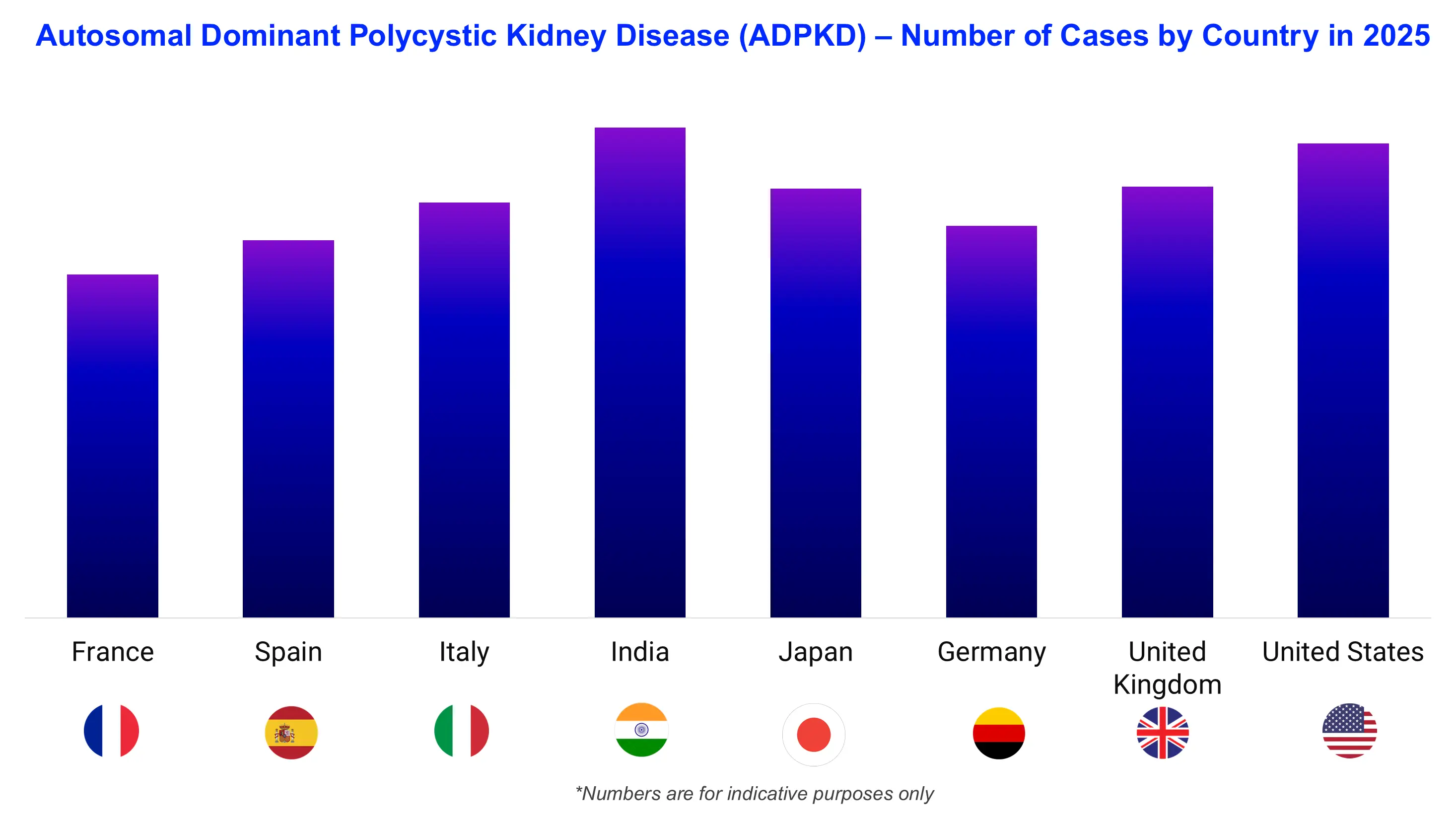
The autosomal dominant polycystic kidney disease (ADPKD) epidemiology data and findings for the United States, Germany, Spain, Italy, France, the United Kingdom, Japan, and India are also provided in the epidemiology section.
|
Country |
Key Insights |
|
United States |
According to Fouad T. Chebib et al. (2025), ADPKD prevalence is approximately 9.3 per 10,000 individuals. Gautam Agrawal et al. (2025) estimated that 140,000–240,000 individuals in the United States have clinically recognized disease. |
|
Germany |
In Germany, ADPKD prevalence is influenced by inherited pathogenic variants, family history, and the identification of affected individuals through routine kidney assessments and family screening. Differences in diagnostic practices and access to genetic testing may also influence the number of recognized cases. |
|
France |
According to the epidemiological evidence provided by Matthew Gittus et al. (2026) and related supplied material, a French study estimated ADPKD prevalence at approximately 1 in 1,111 individuals. The Genkyst cohort reported a median diagnosis age of 35 years, as per Maude Pichette et al. (2026). |
|
Italy |
ADPKD prevalence in Italy is shaped by its autosomal dominant inheritance pattern, which creates a risk of transmission within affected families. Awareness of family history, early identification of kidney abnormalities, and access to diagnostic services influence the recognition of affected individuals. |
|
Spain |
In Spain, ADPKD prevalence is influenced by inherited genetic susceptibility and the identification of affected individuals across generations. Family screening, recognition of kidney abnormalities, and differences in diagnostic access can affect the number of identified cases and the estimated disease burden. |
|
United Kingdom |
According to Matthew Gittus et al. (2026), ADPKD affects an estimated 70,000 people in the United Kingdom. The reported figure indicates a substantial diagnosed and managed population requiring ongoing kidney care. |
|
Japan |
According to Toshio Mochizuki et al. (2025), ADPKD prevalence in Japan is estimated at approximately 1 in 4,000 individuals. |
|
India |
According to Shivendra Singh et al. (2023), a single-center cohort included 73 patients, with a median diagnosis age of 35 years; 53.42% were male, and 69.86% had a family history of ADPKD. |
Across the United States, Germany, France, Italy, Spain, the United Kingdom, Japan, and India, opportunities exist to improve the early identification and management of ADPKD. Diagnosis may be delayed when family history is unrecognized or kidney imaging is not performed before symptoms or complications develop. Greater use of risk-stratification tools, appropriate imaging, and genetic testing in selected patients could support earlier diagnosis and treatment decisions. Additional opportunities include expanding access to tolvaptan for eligible patients, strengthening long-term monitoring, and improving specialist care pathways. Country-specific differences in diagnosis, reimbursement, and treatment access require further evaluation.
Autosomal dominant polycystic kidney disease (ADPKD) treatment aims to slow disease progression, manage symptoms, and reduce complications. Blood pressure control, commonly using angiotensin-converting enzyme inhibitors or angiotensin receptor blockers, is a central component of care. Tolvaptan, a vasopressin V2 receptor antagonist, may be prescribed to eligible adults at risk of rapidly progressing disease, with appropriate liver-function monitoring. Additional management includes pain relief, treatment of urinary tract infections and kidney stones, and lifestyle measures such as sodium restriction and adequate hydration as clinically appropriate. Advanced kidney failure may require dialysis or kidney transplantation.


Upto 15% Off
USD
$2699 $2429
$4299 $3869
$5799 $4949
$6999 $5949


*While we strive to always give you current and accurate information, the numbers depicted on the website are indicative and may differ from the actual numbers in the main report. At Expert Market Research, we aim to bring you the latest insights and trends in the market. Using our analyses and forecasts, stakeholders can understand the market dynamics, navigate challenges, and capitalize on opportunities to make data-driven strategic decisions.*
Explore our key highlights of the report and gain a concise overview of key findings, trends, and actionable insights that will empower your strategic decisions.
|
Report Features |
Details |
|
Base Year |
2025 |
|
Historical Period |
2019-2025 |
|
Forecast Period |
2026-2035 |
|
Epidemiology Statistics Provided |
|
|
Segmentation Provided |
|
|
Geographies Covered |
|
Datasheet
One User
USD 2,699
USD 2,429
tax inclusive*
Single User License
One User
USD 4,299
USD 3,869
tax inclusive*
Five User License
Five User
USD 5,799
USD 4,949
tax inclusive*
Corporate License
Unlimited Users
USD 6,999
USD 5,949
tax inclusive*
*Please note that the prices mentioned below are starting prices for each bundle type. Kindly contact our team for further details.*
Flash Bundle
Small Business Bundle
Growth Bundle
Enterprise Bundle
*Please note that the prices mentioned below are starting prices for each bundle type. Kindly contact our team for further details.*
Flash Bundle
Number of Reports: 3
20%
tax inclusive*
Small Business Bundle
Number of Reports: 5
25%
tax inclusive*
Growth Bundle
Number of Reports: 8
30%
tax inclusive*
Enterprise Bundle
Number of Reports: 10
35%
tax inclusive*
How To Order

Select License Type
Choose the right license for your needs and access rights.

Click on ‘Buy Now’
Add the report to your cart with one click and proceed to register.

Select Mode of Payment
Choose a payment option for a secure checkout. You will be redirected accordingly.
Strategic Solutions for Informed Decision-Making
Gain insights to stay ahead and seize opportunities.

Get insights & trends for a competitive edge.

Track prices with detailed trend reports.

Analyse trade data for supply chain insights.

Leverage cost reports for smart savings

Enhance supply chain with partnerships.

Connect For More Information
Our expert team of analysts will offer full support and resolve any queries regarding the report, before and after the purchase.
Our expert team of analysts will offer full support and resolve any queries regarding the report, before and after the purchase.
We employ meticulous research methods, blending advanced analytics and expert insights to deliver accurate, actionable industry intelligence, staying ahead of competitors.
Our skilled analysts offer unparalleled competitive advantage with detailed insights on current and emerging markets, ensuring your strategic edge.
We offer an in-depth yet simplified presentation of industry insights and analysis to meet your specific requirements effectively.




