

Consumer Insights
Uncover trends and behaviors shaping consumer choices today
Procurement Insights
Optimize your sourcing strategy with key market data
Industry Stats
Stay ahead with the latest trends and market analysis.
Chagas disease is a chronic parasitic infection, and estimates of infected people, diagnosed cases, clinical manifestations, and annual deaths measure different aspects of its burden. The WHO’s 2026 fact sheet estimates approximately 8 million people infected worldwide, but that global estimate cannot be used as a country-specific figure for any of the eight markets. According to Chagas Disease Epidemiology Forecast by Expert Market Research (EMR), the disease burden is substantive while underdiagnosis and inconsistent access to screening remain challenges.
Base Year
Historical Period
Forecast Period
Read more about this report - Request a Free Sample
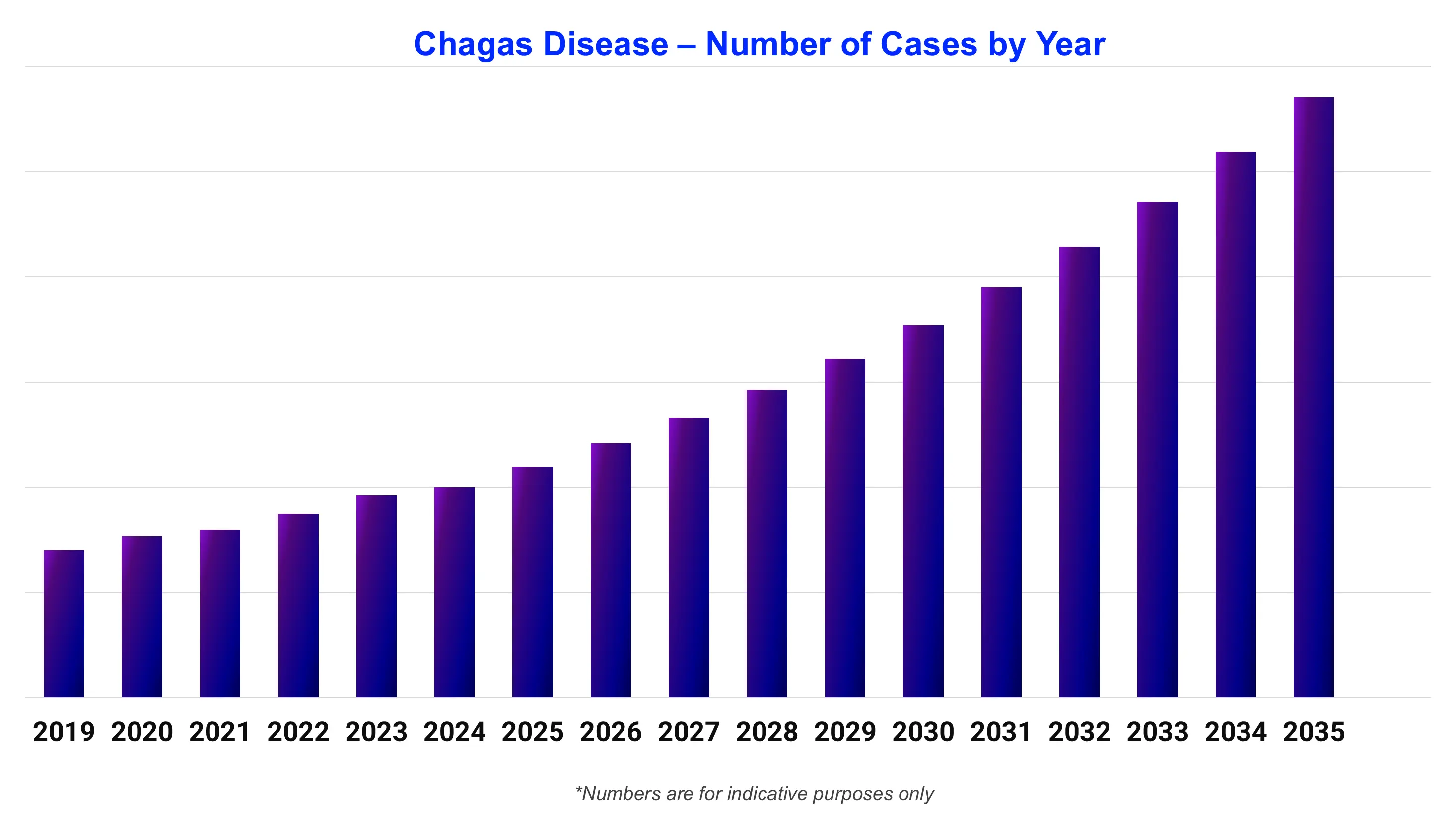
Expert Market Research's “Chagas Disease Epidemiology Forecast Report 2026-2035” offers comprehensive information on the prevalence and demographics of Chagas Disease. It projects the future incidence and prevalence rates of Chagas Disease cases across various populations. The study covers age, gender, and type as major determinants of the Chagas Disease population. The report highlights patterns in the prevalence of Chagas Disease over time and projects future trends based on multiple variables.
The report provides a comprehensive overview of the disease, as well as historical and projected data on the epidemiology of Chagas Disease in the 8 major markets.
Regions Covered
Chagas disease is a potentially life-threatening parasitic infection caused by Trypanosoma cruzi. It progresses from an acute phase, which is frequently asymptomatic or mild, to a chronic phase that may persist for decades. Chronic infection can cause cardiomyopathy, arrhythmias, heart failure, and digestive complications, including megaesophagus and megacolon. Transmission occurs primarily through infected triatomine insects in endemic areas, but congenital transmission, contaminated blood products, organ transplantation, and laboratory exposure are relevant in non-endemic countries. In the United States and Europe, the disease burden is associated largely with migration from endemic regions and underdiagnosis. Recent surveillance and screening studies are more informative than conventional prevalence estimates because many infected individuals remain undiagnosed.
|
Parameter |
Insight |
|
Largest Patient Pool |
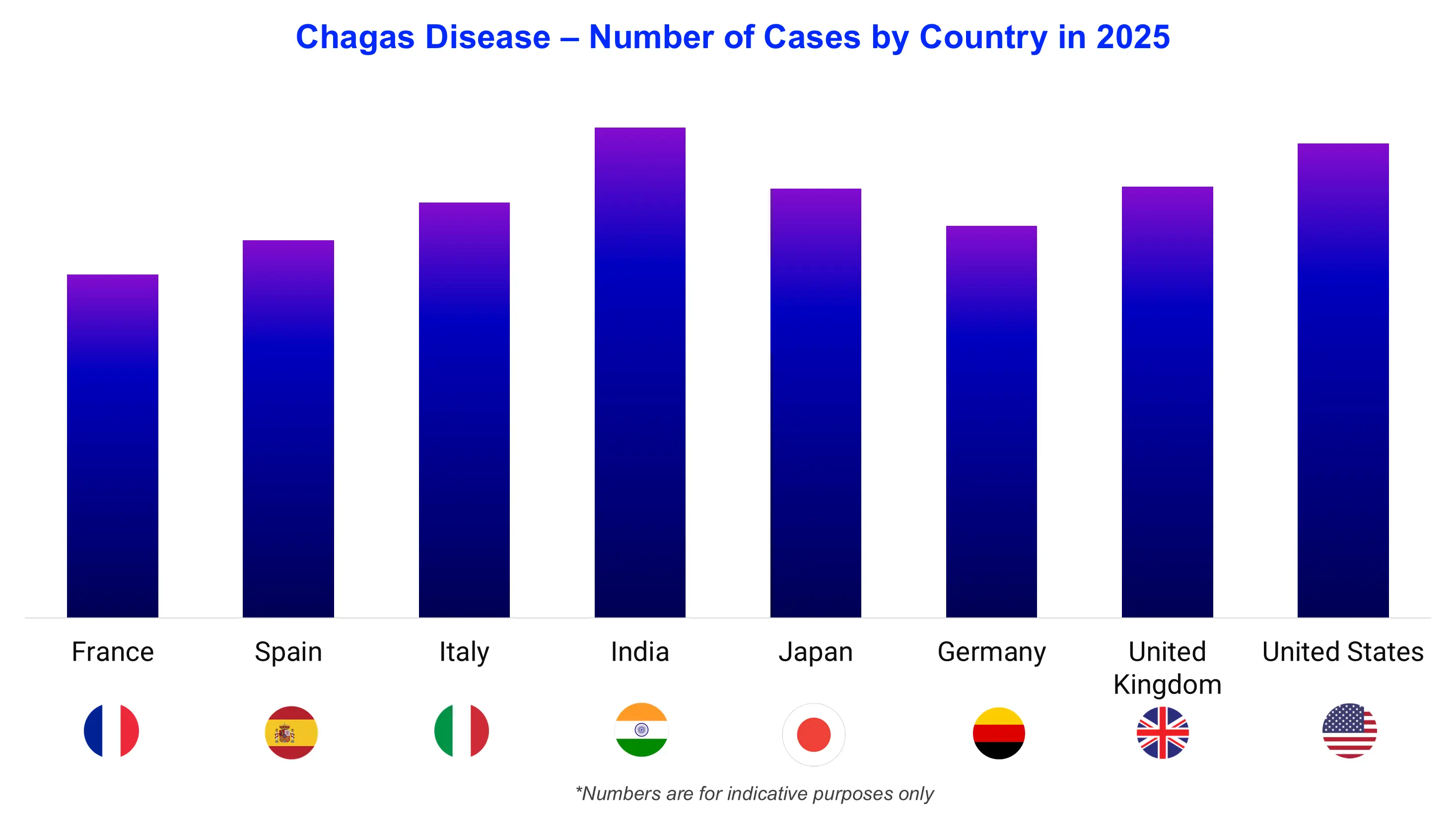
United States |
|
Fastest Growing Country |
Spain |
|
High-Risk Population |
In non-endemic countries, women of reproductive age with epidemiological links to endemic regions and their newborns are particularly important for screening because congenital transmission can occur without obvious maternal symptoms. |
|
Key Diagnostic Method |
Serological testing is the principal diagnostic method for chronic Chagas disease, using antibody assays to detect infection with Trypanosoma cruzi. Confirmation generally requires two serological tests based on different methods or antigen preparations, with additional testing when results are discordant. |
|
Major Risk Factor |
The major epidemiological risk factor is residence in, or maternal and family links to, a region where Trypanosoma cruzi transmission occurs. In endemic settings, exposure to infected triatomine insects is a key route. |
|
Major gap in the market |
The principal gap is the underdiagnosis of chronic infection and inconsistent access to risk-based screening and longitudinal care. |
The Chagas Disease epidemiology division offers information on the patient pool from history to the present as well as the projected trend for each of the 8 major markets. Expert Market Research provides both current and predicted trends for the Chagas Disease epidemiology scenario by examining a wide range of studies. Additionally, the report covers the diagnosed patient pool for Chagas Disease and their trends. The data is broken down into specific categories, such as total prevalent cases in males and females, and total diagnosed cases across different age groups and patient pools.
|
Epidemiology Segment |
Key Insights |
|
Diagnosed Prevalent Cases of the Disease |
A harmonized count of diagnosed prevalent Chagas disease cases across the eight countries was not established from the reviewed 2023–2026 evidence. The United States has an estimated infected population of approximately 300,000, but this should not be interpreted as the number formally diagnosed. In the United Kingdom, a 2026 report of screening conducted in London during 2023–2025 identified 14 confirmed cases among 523 people screened; this is a selected screening cohort, not a national diagnosed-case count. Comparable recent national counts were not verified for Germany, France, Italy, Spain, Japan, and India. |
|
Gender-Specific Cases of the Disease |
Recent evidence does not support a reliable, harmonized male-to-female distribution of diagnosed Chagas disease across the eight countries. Women of reproductive age are a key screening population because identifying infection before pregnancy can help prevent congenital transmission, while testing during pregnancy can support timely assessment of newborns. However, the importance of this screening group should not be interpreted as evidence that women have a higher overall prevalence than men. Country-level sex-specific case counts remain dependent on testing access and the populations targeted by screening programmes. |
|
Age-Specific Cases of the Disease |
Chagas disease affects people of different ages, but its chronic complications often emerge years or decades after the initial infection. Children born to infected mothers are an important group for early testing because congenital infection can be asymptomatic and treatment is most effective when provided promptly. Adults with longstanding infection require assessment for cardiac and digestive involvement, even when symptoms are absent. A comparable 2023–2026 age-stratified distribution of diagnosed cases was not established across all eight countries; age-specific screening cohorts should not be treated as representative of the national infected population. |
|
Ethnicity-Wise Cases of the Disease |
In non-endemic settings, epidemiological risk assessment generally relies on country of birth, residence in endemic areas, maternal origin, and relevant exposure history rather than ethnicity as a proxy for infection. Nationality or ethnic identity alone cannot establish infection. Screening strategies should use clinically relevant exposure criteria and ensure access to testing without stigmatizing migrant communities. |
|
Mortality and Survival Analysis of the Disease |
Chagas-related mortality is principally associated with chronic cardiac complications, including arrhythmias, cardiomyopathy, and heart failure. Digestive complications can also contribute to long-term morbidity. The WHO’s 2026 fact sheet estimates that Chagas disease causes more than 10,000 deaths annually worldwide, but this global figure cannot be assigned to any of the eight countries individually. |
Read more about this report - Request a Free Sample
The Chagas Disease epidemiology data and findings for the United States, Germany, Spain, Italy, France, the United Kingdom, Japan, and India are also provided in the epidemiology section.
|
Country |
Key Insights |
|
United States |
A 2024 FDA fact sheet cites an estimated 300,000 people living with Chagas disease in the United States. This represents an estimate of the infected population rather than a measured national seroprevalence or a count of confirmed diagnoses. A 2025 review in the CDC’s Emerging Infectious Diseases journal noted that locally acquired infections have been identified in several states, but the true prevalence and incidence of locally acquired disease remain unknown because Chagas disease is not nationally notifiable. |
|
Germany |
A reliable nationwide prevalence estimate for Chagas disease in Germany based on 2023–2026 population data was not identified. As a non-endemic setting, the German burden is expected to be associated mainly with people who have lived in endemic regions and with potential congenital transmission. European reviews published in 2023 describe limited and uneven epidemiological data, while the 2024 ECDC review highlights the need for improved identification of at-risk individuals. |
|
France |
The available recent European evidence emphasizes underdiagnosis and inconsistent screening practices across non-endemic countries, limiting comparisons between national populations. French estimates should distinguish confirmed infections among screened individuals from the total number of people living with the disease. In the absence of a recent, representative French estimate with a defined denominator, a national prevalence percentage cannot be responsibly assigned. |
|
Italy |
Recent European literature identifies Italy, alongside Spain, as one of the countries contributing a substantial share of published evidence on Chagas disease outside endemic regions; however, the evidence remains uneven and does not establish a current national prevalence percentage. Screening of people with epidemiological links to endemic areas, particularly women of reproductive age and newborns at risk of congenital infection, remains important for improving case detection. |
|
Spain |
A 2024 multicentre primary-care study from Catalonia reported five Chagas diagnoses among 122 tested migrants, a positivity proportion of 4.1%; however, the data were collected in 2018 and therefore fall outside the requested data window. That figure should not be used as a 2023-2026 prevalence estimate. A recent national figure requires current population-based or surveillance data with a clearly defined denominator. |
|
United Kingdom |
A 2026 study of primary-care and community screening in London identified 14 confirmed Chagas disease cases among 523 people screened during 2023–2025, corresponding to a positivity proportion of 2.7% (95% CI: 1.5-4.5). Positivity was 1.1% among people screened in primary care and 4.5% at community screening events. These findings provide recent evidence of infection among selected people offered testing, but the cohort is not nationally representative and should not be interpreted as UK population prevalence. |
|
Japan |
A reliable nationwide prevalence estimate for Chagas disease in Japan based on population data collected during 2023-2026 was not identified. Japan is a non-endemic setting where infection risk is primarily associated with people who have lived in endemic areas and with possible congenital or transfusion-related transmission. A published Japanese screening study reported results from a selected migrant cohort, but its underlying observations predate the requested data window and are therefore excluded from this assessment. |
|
India |
India is not considered a principal endemic setting for Trypanosoma cruzi, and the reviewed evidence did not establish a representative national burden estimate or a comparable recent series of confirmed cases. Imported or individually diagnosed cases should not be used to infer population prevalence. |
The principal gaps across the eight markets are underdiagnosis, limited comparable prevalence data, and inconsistent screening of people with epidemiological links to endemic regions. In the United States and Europe, opportunities include risk-based screening in primary care, antenatal testing, timely confirmation of positive results, and follow-up of newborns at risk of congenital infection. Japan also requires reliable contemporary estimates to quantify its diagnosed burden, while India lacks a verified national prevalence estimate in the reviewed evidence. Improved access to antiparasitic treatment, cardiac assessment, and long-term follow-up could reduce complications among diagnosed patients. Standardized surveillance would strengthen estimates of disease burden and improve evaluation of screening programmes
Treatment of Chagas disease includes antiparasitic therapy and management of established organ complications. Benznidazole and nifurtimox are the principal antiparasitic medicines; treatment is particularly important in acute and congenital infection and is considered for chronic infection according to age, clinical status, and individual circumstances. Treatment is generally more effective when initiated early, while decisions in longstanding chronic disease require clinical assessment of likely benefit and potential adverse effects. Cardiac or digestive manifestations may require additional specialist management, including treatment for arrhythmias or heart failure. Pregnancy, liver or kidney impairment, and other contraindications must be considered when selecting therapy. Prevention focuses on screening at-risk populations, testing blood and organ donors according to applicable guidance, and identifying infected mothers and newborns early.


Upto 15% Off
USD
$2699 $2429
$4299 $3869
$5799 $4949
$6999 $5949


*While we strive to always give you current and accurate information, the numbers depicted on the website are indicative and may differ from the actual numbers in the main report. At Expert Market Research, we aim to bring you the latest insights and trends in the market. Using our analyses and forecasts, stakeholders can understand the market dynamics, navigate challenges, and capitalize on opportunities to make data-driven strategic decisions.*
Explore our key highlights of the report and gain a concise overview of key findings, trends, and actionable insights that will empower your strategic decisions.
|
Report Features |
Details |
|
Base Year |
2025 |
|
Historical Period |
2019-2025 |
|
Forecast Period |
2026-2035 |
|
Epidemiology Statistics Provided |
|
|
Segmentation Provided |
|
|
Geographies Covered |
|
Datasheet
One User
USD 2,699
USD 2,429
tax inclusive*
Single User License
One User
USD 4,299
USD 3,869
tax inclusive*
Five User License
Five User
USD 5,799
USD 4,949
tax inclusive*
Corporate License
Unlimited Users
USD 6,999
USD 5,949
tax inclusive*
*Please note that the prices mentioned below are starting prices for each bundle type. Kindly contact our team for further details.*
Flash Bundle
Small Business Bundle
Growth Bundle
Enterprise Bundle
*Please note that the prices mentioned below are starting prices for each bundle type. Kindly contact our team for further details.*
Flash Bundle
Number of Reports: 3
20%
tax inclusive*
Small Business Bundle
Number of Reports: 5
25%
tax inclusive*
Growth Bundle
Number of Reports: 8
30%
tax inclusive*
Enterprise Bundle
Number of Reports: 10
35%
tax inclusive*
How To Order

Select License Type
Choose the right license for your needs and access rights.

Click on ‘Buy Now’
Add the report to your cart with one click and proceed to register.

Select Mode of Payment
Choose a payment option for a secure checkout. You will be redirected accordingly.
Strategic Solutions for Informed Decision-Making
Gain insights to stay ahead and seize opportunities.

Get insights & trends for a competitive edge.

Track prices with detailed trend reports.

Analyse trade data for supply chain insights.

Leverage cost reports for smart savings

Enhance supply chain with partnerships.

Connect For More Information
Our expert team of analysts will offer full support and resolve any queries regarding the report, before and after the purchase.
Our expert team of analysts will offer full support and resolve any queries regarding the report, before and after the purchase.
We employ meticulous research methods, blending advanced analytics and expert insights to deliver accurate, actionable industry intelligence, staying ahead of competitors.
Our skilled analysts offer unparalleled competitive advantage with detailed insights on current and emerging markets, ensuring your strategic edge.
We offer an in-depth yet simplified presentation of industry insights and analysis to meet your specific requirements effectively.




