

Consumer Insights
Uncover trends and behaviors shaping consumer choices today
Procurement Insights
Optimize your sourcing strategy with key market data
Industry Stats
Stay ahead with the latest trends and market analysis.
Lassa fever is an acute viral haemorrhagic disease caused by Lassa virus. Infection usually occurs through contact with food or household materials contaminated by infected rodent excreta; transmission between people can also occur through direct contact with infectious bodily fluids. Clinical severity ranges from mild or asymptomatic infection to severe systemic illness. As per the Lassa Fever Epidemiology Forecast by Expert Market Research, in the eight-country scope, the epidemiological concern is principally imported infection, recognition of returning travellers, and prevention of secondary transmission in healthcare settings.
Base Year
Historical Period
Forecast Period
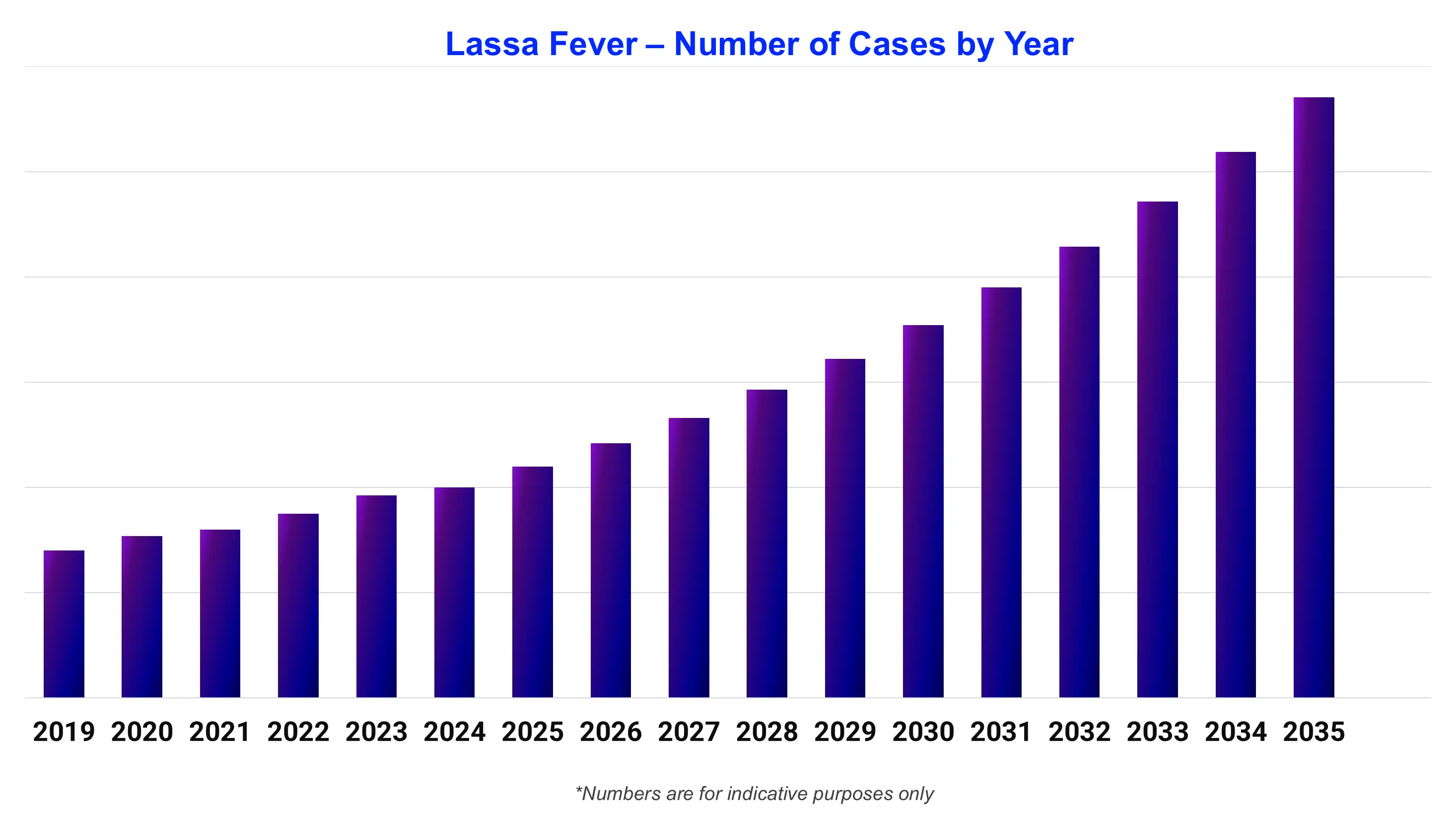
Read more about this report - Request a Free Sample
Expert Market Research's “Lassa Fever Epidemiology Forecast Report 2026-2035” offers comprehensive information on the prevalence and demographics of Lassa Fever. It projects the future incidence and prevalence rates of Lassa Fever cases across various populations. The study covers age, gender, and type as major determinants of the Lassa Fever population. The report highlights patterns in the prevalence of Lassa Fever overtime and projects future trends based on multiple variables.
The report provides a comprehensive overview of the disease, as well as historical and projected data on the epidemiology of Lassa Fever in the 8 major markets.
Regions Covered
Lassa fever is an acute, zoonotic viral hemorrhagic illness caused by the Lassa virus, a member of the Arenaviridae virus family. First identified in 1969 in the town of Lassa, Nigeria, the disease is endemic to several parts of West Africa, including Nigeria, Sierra Leone, Liberia, and Guinea.
The disease represents a significant public health burden, with conservative estimates placing annual infections at up to 500,000 cases resulting in roughly 5,000 deaths. Public health data highlights its ongoing severity; in Nigeria alone, a spike in cases has resulted in 268 deaths and 1,138 confirmed cases.
|
Parameter |
Insight |
|
Largest Patient Pool |
France |
|
Fastest Growing Country |
France |
|
High-Risk Population |
Within the specified countries, higher-risk groups include people returning from areas where Lassa fever circulates, healthcare workers caring for suspected or confirmed cases, laboratory personnel handling potentially infectious specimens, and close contacts exposed to a patient’s blood or other bodily fluids. |
|
Key Diagnostic Method |
Reverse-transcription polymerase chain reaction (RT-PCR) is a key method for detecting Lassa virus in suspected acute infection. Depending on the laboratory and clinical context, diagnostic approaches may also include antigen detection and antibody-based assays. |
|
Major Risk Factor |
The principal risk factor in the eight-country scope is exposure associated with travel to an area where Lassa virus circulates, followed by delayed recognition of illness after return. Secondary risk arises from unprotected contact with infectious bodily fluids during healthcare or caregiving. |
|
Major gap in the market |
A central gap is the lack of comparable, publicly available 2023-2026 country-level data on suspected cases, confirmed infections, diagnostic turnaround times and outcomes across all eight countries. Because infections are rare and surveillance systems may report suspected, confirmed and imported cases differently, national prevalence comparisons are not currently supportable. |
The Lassa Fever epidemiology division offers information on the patient pool from history to the present as well as the projected trend for each of the 8 major markets. Expert Market Research provides both current and predicted trends for the Lassa Fever epidemiology scenario by examining a wide range of studies. Additionally, the report covers the diagnosed patient pool for Lassa Fever and their trends. The data is broken down into specific categories, such as total prevalent cases in males and females, and total diagnosed cases across different age groups and patient pools.
|
Epidemiology Segment |
Key Insights |
|
Diagnosed Prevalent Cases of the Disease |
A reliable diagnosed-prevalence estimate is unavailable for the eight countries. Lassa fever is an acute infection, and isolated imported cases cannot be used to calculate the number of people living with the disease at a given time. In May 2024, France reported one confirmed case in a returning military serviceman. In October 2024, US authorities investigated a suspected case in an Iowa resident who had returned from travel; the initial public report described presumptive rather than final confirmatory testing. These reports should not be treated as equivalent confirmed-case counts. |
|
Gender-Specific Cases of the Disease |
The available reports of individual imported cases do not provide a sufficient basis for estimating the distribution of Lassa fever by sex. Pregnancy is a clinically important risk context because infection can lead to serious maternal and fetal complications, but this does not establish a higher overall prevalence among women in the specified countries. |
|
Age-Specific Cases of the Disease |
Age-related patterns of Lassa fever should be assessed through documented cases and their clinical characteristics across the eight countries. The age distribution of reported infections can help identify affected population groups and inform clinical assessment. However, imported cases alone cannot establish age-specific disease prevalence or indicate that a particular age group faces a higher risk of infection. Country-level comparisons should therefore distinguish individual case reports from representative epidemiological findings. |
|
Ethnicity-Wise Cases of the Disease |
The distribution of Lassa fever across ethnic groups should be interpreted in the context of geographic exposure and documented epidemiological evidence. Ethnicity alone does not determine infection risk, as exposure is more directly associated with contact with infected individuals, contaminated materials, or environments in endemic regions. A meaningful assessment requires reliable population-level data and appropriate consideration of travel, residence, and exposure history. These factors are essential for avoiding misleading comparisons between demographic groups. |
|
Mortality and Survival Analysis of the Disease |
Lassa fever outcomes vary according to disease severity, the timing of diagnosis, access to medical care, and the development of complications. Mortality findings from individual imported cases should be interpreted cautiously and distinguished from country-level case-fatality estimates. Early clinical recognition and supportive management, including fluid and electrolyte correction and treatment of complications, remain important aspects of care. Ribavirin has been used in treatment, although uncertainty remains regarding its efficacy and optimal dosing. The absence of a licensed vaccine and a proven specific antiviral treatment continues to present challenges for disease prevention and management. |
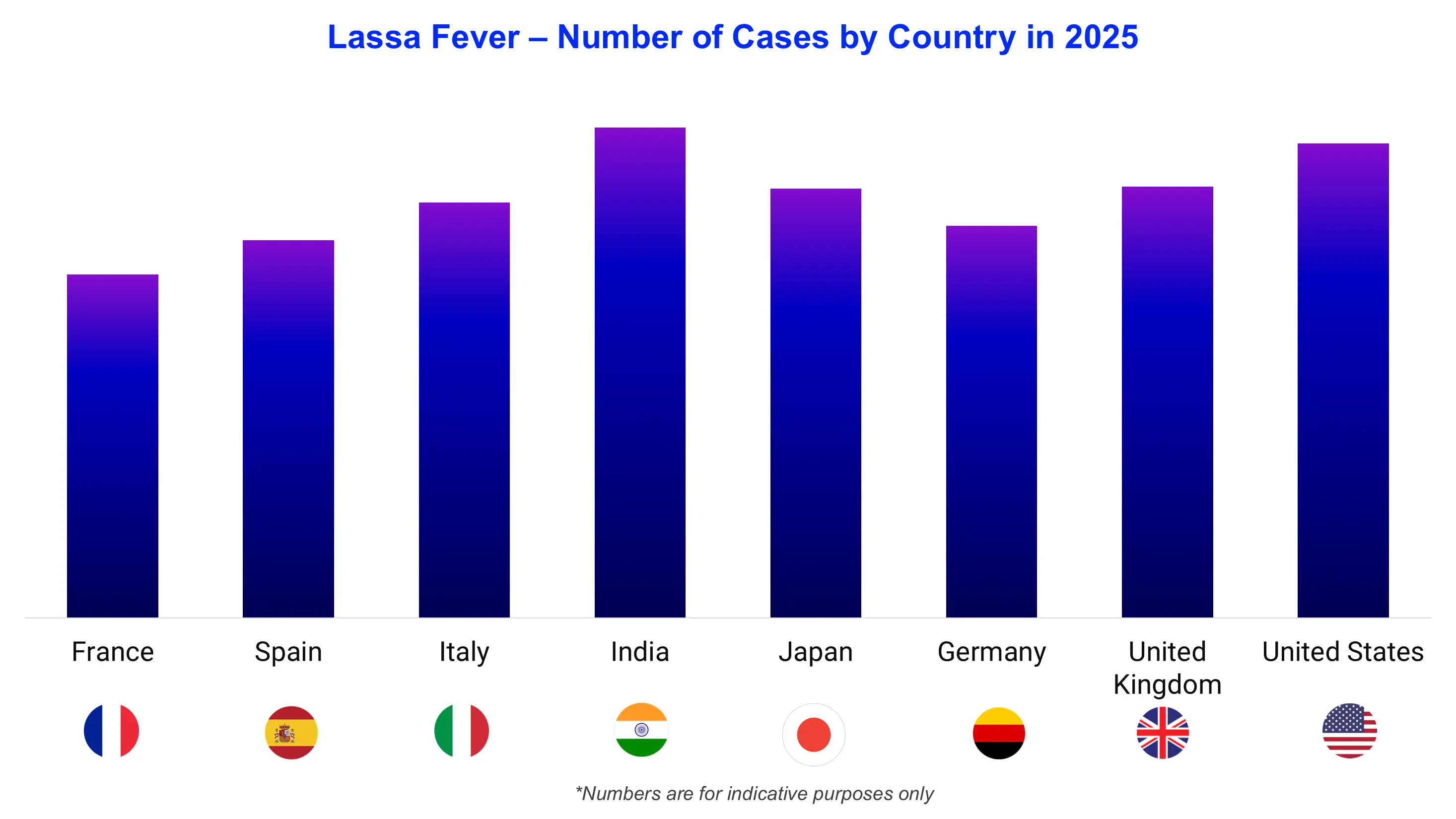
Read more about this report - Request a Free Sample
The Lassa Fever epidemiology data and findings for the United States, Germany, Spain, Italy, France, the United Kingdom, Japan, and India are also provided in the epidemiology section.
|
Country |
Key Insights |
|
United States |
In October 2024, the CDC announced an investigation of a suspected case in an Iowa resident who had recently returned from West Africa; the initial report described presumptive positive testing, with confirmation planned. This event is evidence of travel-associated clinical concern, not a basis for estimating national prevalence. |
|
Germany |
In Germany, effective public health surveillance and timely clinical assessment remain important for identifying and managing potential Lassa fever cases. International travel and exposure to infected individuals are key factors to consider when evaluating suspected infections. Strengthening healthcare professionals’ awareness, maintaining appropriate infection prevention and control measures, and ensuring timely reporting can support early detection and preparedness against potential imported cases. |
|
France |
France reported one confirmed imported case in May 2024 involving a serviceman returning from abroad. Public health authorities initiated epidemiological investigation and contact tracing. A single imported case establishes that travel-associated infection can occur but does not indicate sustained domestic transmission or measurable population prevalence. |
|
Italy |
In Italy, preparedness for Lassa fever relies on the timely recognition of potential cases and effective coordination between healthcare providers and public health authorities. Assessing travel history and possible exposure in individuals presenting with compatible symptoms can help guide diagnostic decisions. Appropriate clinical protocols, infection control practices, and prompt communication with relevant health authorities are important for managing suspected infections and limiting the risk of further transmission. |
|
Spain |
In Spain, maintaining readiness for travel-associated infectious diseases involves effective clinical assessment and public health coordination. Healthcare professionals should consider relevant travel patterns and potential exposure when evaluating individuals with symptoms consistent with Lassa fever. Early identification, appropriate isolation precautions, and adherence to infection prevention protocols can help reduce transmission risks and support an effective public health response to suspected cases. |
|
United Kingdom |
In March 2025, the UK Health Security Agency initiated contact tracing after being notified that a person with Lassa fever had travelled to England while unwell and subsequently returned to Nigeria, where the diagnosis was made. The event prompted a public health response but was not reported as a confirmed diagnosis made in the UK. It should not be counted as a UK laboratory-confirmed case without further evidence. |
|
Japan |
Japan’s geographic separation from Lassa fever-endemic areas makes international travel and imported infections important considerations in disease preparedness. Healthcare facilities should remain equipped to recognize unusual febrile illnesses in individuals returning from affected regions. Clinical awareness, access to confirmatory testing, and coordination with public health authorities can help distinguish Lassa fever from other infectious diseases and ensure appropriate management of suspected cases. |
|
India |
India’s international connectivity and movement of people highlight the importance of considering travel-related infections within its broader infectious disease surveillance framework. For Lassa fever, clinical evaluation should account for travel to affected regions and potential contact with infected individuals. Strengthening diagnostic readiness, improving awareness among healthcare professionals, and establishing clear reporting pathways can support timely investigation and appropriate public health action when suspected cases arise. |
Across the eight countries, the principal opportunities are stronger travel-linked surveillance, clearer reporting of suspected versus laboratory-confirmed infections, rapid access to specialist diagnostics, and improved clinical preparedness for high-consequence imported infections. Better standardization of case definitions and outcome reporting would help distinguish imported cases from secondary transmission and improve cross-country comparisons. There is also an unmet need for treatments with demonstrated efficacy and for a licensed vaccine. Current evidence does not support ranking these countries by prevalence or identifying a fastest-growing national market.
Management primarily involves early supportive care, including fluid and electrolyte management, symptom control, and treatment of complications. Suspected cases require prompt specialist assessment and appropriate isolation and infection-prevention measures. Ribavirin has been used, but the WHO identifies substantial uncertainty about its clinical efficacy and optimal regimen; it should not be described as a proven standard antiviral cure. As of the WHO’s December 2024 fact sheet, no licensed vaccine was available. Investigational therapies and vaccines remain important areas of development.


Upto 15% Off
USD
$2699 $2429
$4299 $3869
$5799 $4949
$6999 $5949


*While we strive to always give you current and accurate information, the numbers depicted on the website are indicative and may differ from the actual numbers in the main report. At Expert Market Research, we aim to bring you the latest insights and trends in the market. Using our analyses and forecasts, stakeholders can understand the market dynamics, navigate challenges, and capitalize on opportunities to make data-driven strategic decisions.*
Explore our key highlights of the report and gain a concise overview of key findings, trends, and actionable insights that will empower your strategic decisions.
|
Report Features |
Details |
|
Base Year |
2025 |
|
Historical Period |
2019-2025 |
|
Forecast Period |
2026-2035 |
|
Epidemiology Statistics Provided |
|
|
Segmentation Provided |
|
|
Geographies Covered |
|
Datasheet
One User
USD 2,699
USD 2,429
tax inclusive*
Single User License
One User
USD 4,299
USD 3,869
tax inclusive*
Five User License
Five User
USD 5,799
USD 4,949
tax inclusive*
Corporate License
Unlimited Users
USD 6,999
USD 5,949
tax inclusive*
*Please note that the prices mentioned below are starting prices for each bundle type. Kindly contact our team for further details.*
Flash Bundle
Small Business Bundle
Growth Bundle
Enterprise Bundle
*Please note that the prices mentioned below are starting prices for each bundle type. Kindly contact our team for further details.*
Flash Bundle
Number of Reports: 3
20%
tax inclusive*
Small Business Bundle
Number of Reports: 5
25%
tax inclusive*
Growth Bundle
Number of Reports: 8
30%
tax inclusive*
Enterprise Bundle
Number of Reports: 10
35%
tax inclusive*
How To Order

Select License Type
Choose the right license for your needs and access rights.

Click on ‘Buy Now’
Add the report to your cart with one click and proceed to register.

Select Mode of Payment
Choose a payment option for a secure checkout. You will be redirected accordingly.
Strategic Solutions for Informed Decision-Making
Gain insights to stay ahead and seize opportunities.

Get insights & trends for a competitive edge.

Track prices with detailed trend reports.

Analyse trade data for supply chain insights.

Leverage cost reports for smart savings

Enhance supply chain with partnerships.

Connect For More Information
Our expert team of analysts will offer full support and resolve any queries regarding the report, before and after the purchase.
Our expert team of analysts will offer full support and resolve any queries regarding the report, before and after the purchase.
We employ meticulous research methods, blending advanced analytics and expert insights to deliver accurate, actionable industry intelligence, staying ahead of competitors.
Our skilled analysts offer unparalleled competitive advantage with detailed insights on current and emerging markets, ensuring your strategic edge.
We offer an in-depth yet simplified presentation of industry insights and analysis to meet your specific requirements effectively.




