

Consumer Insights
Uncover trends and behaviors shaping consumer choices today
Procurement Insights
Optimize your sourcing strategy with key market data
Industry Stats
Stay ahead with the latest trends and market analysis.
Merkel cell carcinoma (MCC) is a rare, aggressive neuroendocrine skin malignancy that originates from, or exhibits differentiation resembling, Merkel cells, specialized mechanosensory cells associated with the epidermis and hair follicles. Approximately 3,000-3,200 new cases of Merkel cell carcinoma are diagnosed annually in the United States. According to Merkel Cell Carcinoma Epidemiology Forecast by Expert Market Research (EMR), the disease remains an uncommon but clinically significant malignancy because of its aggressive behavior, propensity for early metastasis, and concentration among older adults.
Base Year
Historical Period
Forecast Period
Read more about this report - REQUEST FREE SAMPLE COPY IN PDF
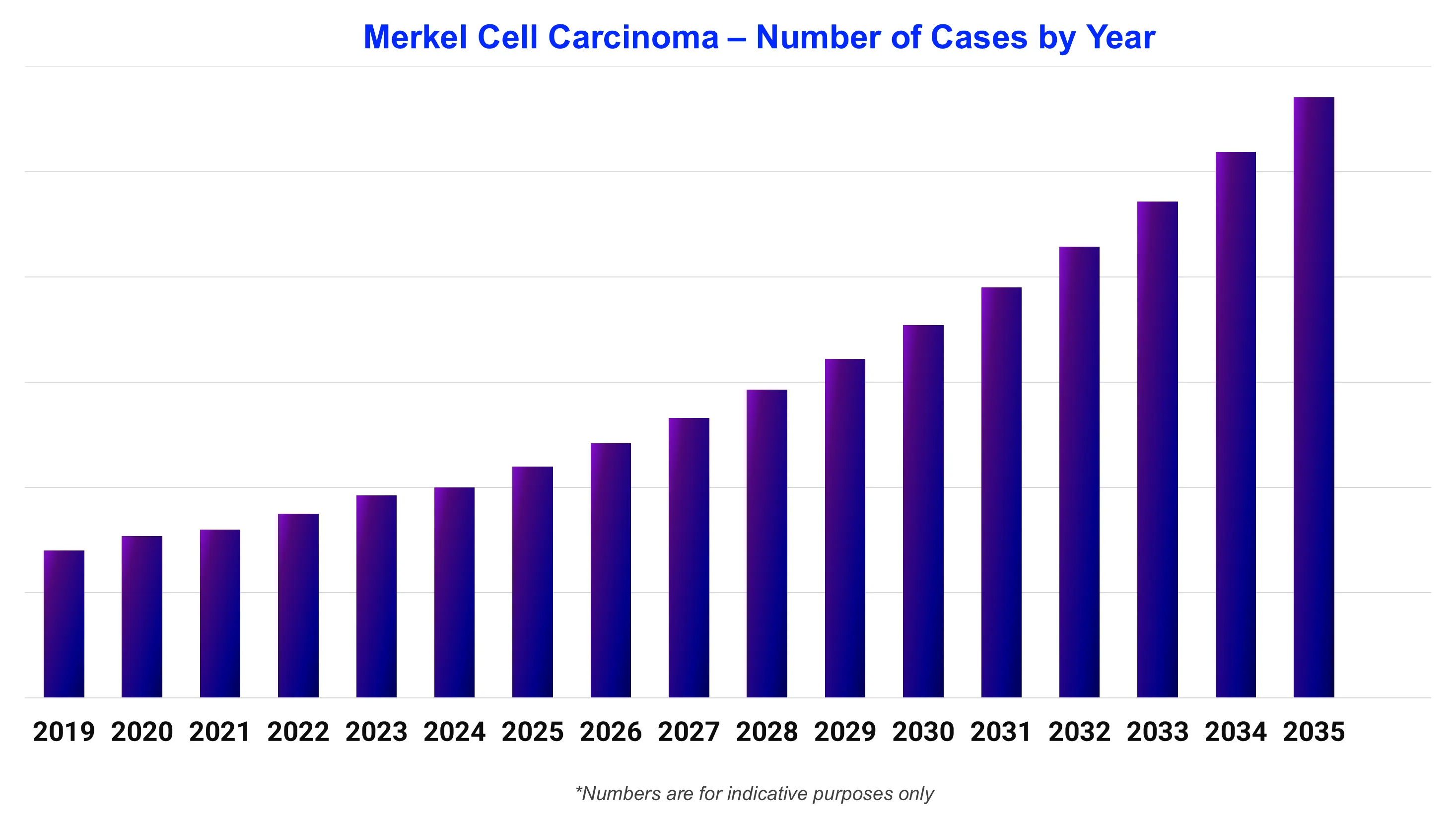
Expert Market Research's “Merkel Cell Carcinoma Epidemiology Forecast Report 2026-2035” offers comprehensive information on the prevalence and demographics of Merkel Cell Carcinoma. It projects the future incidence and prevalence rates of Merkel Cell Carcinoma cases across various populations. The study covers age, gender, and type as major determinants of the Merkel Cell Carcinoma population. The report highlights patterns in the prevalence of Merkel Cell Carcinoma over time and projects future trends based on multiple variables.
The report provides a comprehensive overview of the disease, as well as historical and projected data on the epidemiology of Merkel Cell Carcinoma in the 8 major markets.
Regions Covered
Merkel cell carcinoma (MCC) is a rare, aggressive neuroendocrine skin malignancy that originates from, or exhibits differentiation resembling, Merkel cells, specialized mechanosensory cells associated with the epidermis and hair follicles. It typically presents as a rapidly enlarging, painless, firm, red, pink, violet, or skin-colored nodule on sun-exposed areas, particularly the head, neck, and extremities. MCC is characterized by early lymphatic dissemination, a substantial risk of regional lymph-node involvement, and distant metastasis. Two major biological pathways are recognized: Merkel cell polyomavirus (MCPyV)-associated carcinogenesis, involving viral oncoproteins, and virus-negative disease, which is strongly associated with ultraviolet radiation-induced DNA damage and a high tumor mutational burden.
|
Parameter |
Insight |
|
Largest Patient Pool |
United States |
|
Fastest Growing Country |
Germany |
|
High-Risk Population |
Individuals aged over 70 years, particularly older men with fair skin and substantial cumulative ultraviolet (UV) radiation exposure, constitute the principal high-risk population for Merkel cell carcinoma (MCC). |
|
Key Diagnostic Method |
Histopathological examination of a skin biopsy, supported by immunohistochemistry (IHC), is the primary diagnostic method for Merkel cell carcinoma (MCC). |
|
Major Risk Factor |
Chronic ultraviolet (UV) radiation exposure is a major modifiable risk factor for Merkel cell carcinoma (MCC), contributing to DNA damage and malignant transformation in skin cells. |
|
Major gap in the market |
A major unmet need in the Merkel cell carcinoma (MCC) treatment market is the lack of effective, durable treatment options for patients with advanced disease who develop resistance to immune checkpoint inhibitors or cannot tolerate immunotherapy. |
The Merkel Cell Carcinoma epidemiology division offers information on the patient pool from history to the present as well as the projected trend for each of the 8 major markets. Expert Market Research provides both current and predicted trends for the Merkel Cell Carcinoma epidemiology scenario by examining a wide range of studies. Additionally, the report covers the diagnosed patient pool for Merkel Cell Carcinoma and their trends. The data is broken down into specific categories, such as total prevalent cases in males and females, and total diagnosed cases across different age groups and patient pools.
|
Epidemiology Segment |
Key Insights |
|
Diagnosed Prevalent Cases of the Disease |
MCC is a rare malignancy, and international epidemiological studies predominantly report incidence, mortality, and survival rather than global point prevalence. A systematic review published in the British Journal of Dermatology in 2024 synthesized population-based evidence from 52 studies across 24 countries, confirming substantial geographic variation and an overall increasing incidence trend. For context, the United States diagnoses approximately 3,000 new cases annually, while England reports around 360 new cases per year based on 2019, 2021, and 2022 data. |
|
Gender-Specific Cases of the Disease |
A 2025 population-based study using the U.S. Surveillance, Epidemiology, and End Results (SEER) database identified 11,574 patients diagnosed between 2000 and 2021, of whom 7,368 (63.7%) were male and 4,206 (36.3%) were female. The male predominance is also reflected in incidence rates: a U.S. analysis reported age-adjusted incidence rates of 0.94 per 100,000 person-years in males and 0.46 per 100,000 person-years in females during 2012–2016. |
|
Age-Specific Cases of the Disease |
A 2025 U.S. population-based study using the Surveillance, Epidemiology, and End Results (SEER) database identified 11,574 patients diagnosed between 2000 and 2021, with a median age at diagnosis of 77 years. Approximately 72% of cases occur in individuals aged 70 years and older. The highest incidence is observed among adults aged 85 years and above, with 2012–2016 U.S. age-adjusted incidence rates reaching 14.6 per 100,000 person-years in men and 5.5 per 100,000 person-years in women in this age group. |
|
Ethnicity-Wise Cases of the Disease |
A 2025 U.S. population-based study using the Surveillance, Epidemiology, and End Results (SEER) database identified 11,574 patients diagnosed between 2000 and 2021; approximately 89.8% of patients with known race were White. A separate SEER cohort of 9,557 patients diagnosed between 2000 and 2018 reported 8,590 White patients (89.9%), 541 Hispanic patients (5.7%), 222 Asian American or Pacific Islander patients (2.3%), 146 Black patients (1.5%), and 58 patients (0.6%) classified as other or unknown race. |
|
Mortality and Survival Analysis of the Disease |
A 2025 population-based U.S. study using the Surveillance, Epidemiology, and End Results (SEER) database identified 11,574 patients diagnosed between 2000 and 2021, reporting a median overall survival of 45 months. The age-adjusted mortality rate averaged approximately 0.16 deaths per 100,000 person-years after 2010, with mortality stabilizing and declining slightly. According to the American Cancer Society's 2025 survival estimates, based on patients diagnosed during 2015–2021, the five-year relative survival rate was 79% for localized disease, 66% for regional disease, and 31% for distant metastatic disease, with an overall rate of 69%. |
Read more about this report - REQUEST FREE SAMPLE COPY IN PDF
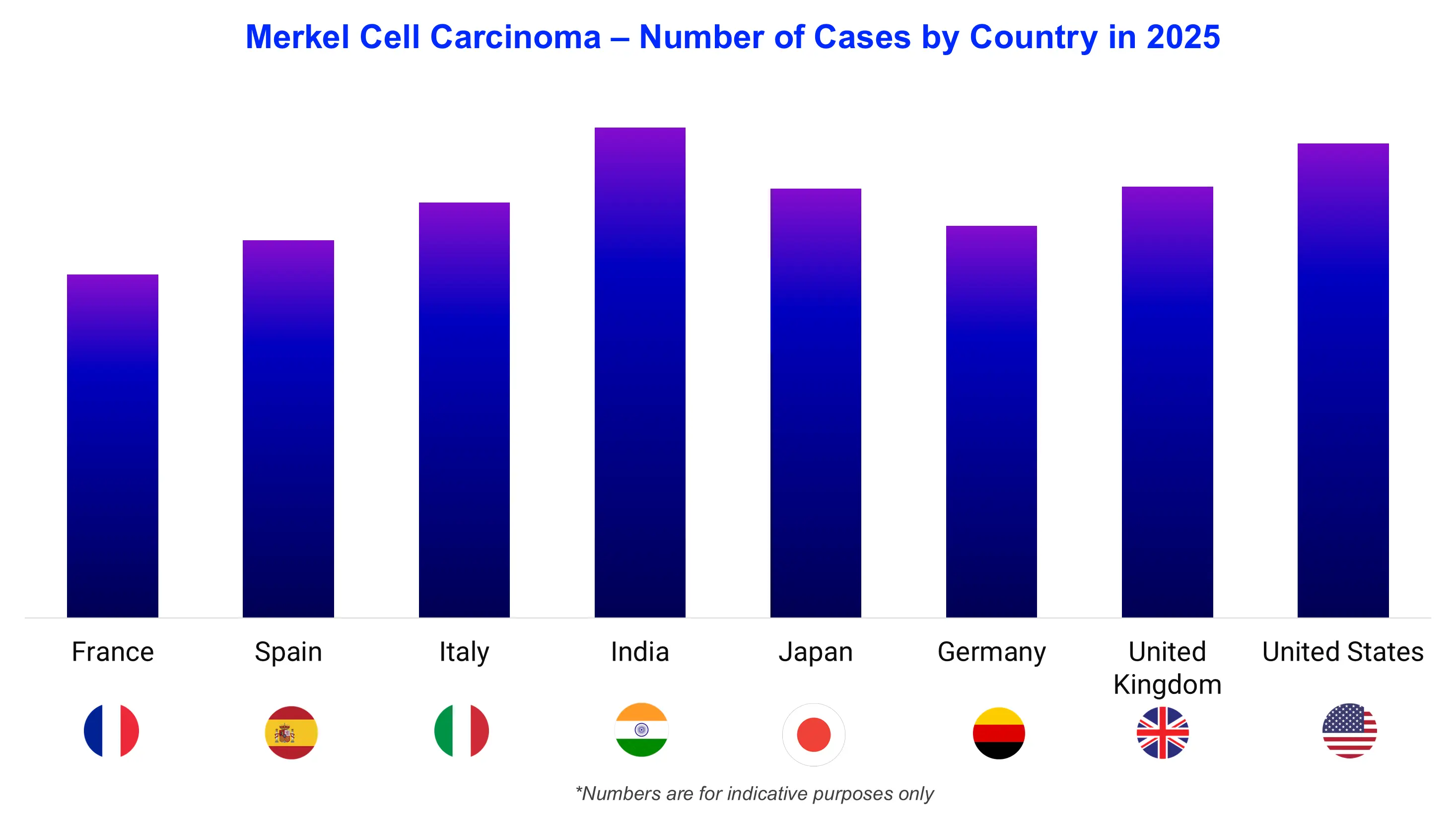
The Merkel cell carcinoma epidemiology data and findings for the United States, Germany, Spain, Italy, France, the United Kingdom, Japan, and India are also provided in the epidemiology section.
|
Country |
Key Insights |
|
United States |
A 2025 population-based study using the Surveillance, Epidemiology, and End Results (SEER) database identified 11,574 patients diagnosed between 2000 and 2021. The age-adjusted incidence rate averaged 0.68 cases per 100,000 person-years during 2013–2021, equivalent to approximately 7 new cases per million people annually. |
|
Germany |
A 2024 study published in Cancers analyzed 2,164 newly diagnosed patients between 2008 and 2021 across a population of approximately 18 million. The age-standardized annual incidence was 5.2 cases per million person-years in men and 3.8 cases per million person-years in women, equivalent to 0.52 and 0.38 cases per 100,000 person-years, respectively. Incidence increased substantially with age, reaching 96.1 cases per million person-years among men and 68.4 among women aged 85 years and older. |
|
France |
Merkel cell carcinoma (MCC) is a rare cutaneous neuroendocrine malignancy, with population-based French cancer-registry data reporting an age-standardized incidence rate of approximately 0.25 cases per 100,000 person-years. A study published in the British Journal of Dermatology in 2024 reviewed population-based evidence and confirmed that MCC incidence has increased across several European countries. French registry data covering 2006–2010 reported standardized incidence rates of 0.26 per 100,000 person-years in men and 0.24 in women using the European standard population. |
|
Italy |
A 2023 study published in the European Journal of Cancer Prevention analysed cases diagnosed in Tuscany between 2006 and 2021 and reported a crude incidence rate of 1.15 cases per 100,000 inhabitants per year during the study period, reflecting a substantial increase in diagnoses in the later years. Separately, a multicentre study of six dermatology clinics in Central Italy identified 94 patients diagnosed between 2015 and 2020 and estimated an incidence rate of 0.93 per 100,000 inhabitants annually. |
|
Spain |
Merkel cell carcinoma (MCC) is a rare, aggressive skin malignancy, with a Spanish multicentre observational study published in Cancer Epidemiology in 2022 estimating an incidence rate of 0.32 cases per 100,000 inhabitants annually during 2012–2016. The study included 192 patients from 25 Spanish hospitals and reported regional variation, with higher incidence in northern Spain (0.46 per 100,000) than in central and southern regions (0.28 per 100,000). The mean age at diagnosis was 78.9 years, and 54.2% of patients were male. |
|
United Kingdom |
Merkel cell carcinoma (MCC) is a rare, aggressive skin malignancy, with approximately 360 new cases diagnosed annually in England, based on the average for 2019, 2021 and 2022. A national population-based study published in the British Journal of Dermatology in 2023 identified 3,775 MCC tumours diagnosed in England between 2004 and 2018. The European age-standardized incidence rate increased from 0.43 to 0.65 cases per 100,000 person-years over this period, representing an annual increase of 3.9%. |
|
Japan |
A nationwide population-based study published in Cancer Science in 2023, using Japan’s National Cancer Registry data for 2016–2017, reported an age-standardized incidence rate of 0.038 cases per 100,000 person-years using the World Health Organization standard population, equivalent to approximately 0.38 new cases per million people annually. Using the Japanese standard population, the age-adjusted incidence rate was 0.17 per 100,000 person-years. A systematic review of 847 Japanese cases diagnosed between 1985 and 2015 reported a mean age at diagnosis of 77.5 years, confirming that MCC predominantly affects older adults. |
|
India |
Merkel cell carcinoma (MCC) is an exceptionally rare skin malignancy in India. The latest comprehensive Indian cancer-registry analysis, published in JAMA Network Open in August 2025, analysed cancer data from 43 population-based registries and provided national estimates for 2024. However, it did not report a separate national prevalence estimate for MCC. A 2026 Indian case report published in the Journal of Medical Sciences and Health further documents the continued occurrence of this malignancy in clinical practice. |
A major market gap is the limited availability of validated predictive biomarkers to identify patients likely to respond to immune checkpoint inhibitors or develop treatment resistance. Untapped opportunities include novel immunotherapies, combination treatment strategies, circulating tumor DNA-based monitoring, and improved recurrence surveillance. In the United States and Europe, established oncology infrastructure supports clinical research and the adoption of advanced therapies, whereas Japan offers opportunities for age-specific screening awareness and specialized treatment pathways. In India, limited disease-specific epidemiological data, low clinical awareness, and potential diagnostic delays underscore the need for stronger cancer-registry reporting, specialist pathology services, and wider access to immunohistochemistry and immunotherapy.
The treatment of Merkel cell carcinoma (MCC) depends on disease stage, tumor size, regional lymph-node involvement, metastatic spread, and the patient's immune status. For localized disease, wide local excision with appropriate surgical margins is generally recommended, often combined with adjuvant radiotherapy because of the tumor’s high risk of local recurrence. Sentinel lymph-node biopsy is used to assess occult regional spread in clinically node-negative patients. Patients with regional lymph-node involvement may require lymph-node dissection or nodal radiotherapy, alongside individualized consideration of systemic treatment. For unresectable locally advanced or metastatic MCC, immune checkpoint inhibitors targeting the programmed cell death protein 1 (PD-1) or programmed death-ligand 1 (PD-L1) pathway are central to treatment. These include avelumab, pembrolizumab, and retifanlimab, depending on regulatory approval and clinical indication.


Upto 15% Off
USD
$2699 $2429
$4299 $3869
$5799 $4949
$6999 $5949


*While we strive to always give you current and accurate information, the numbers depicted on the website are indicative and may differ from the actual numbers in the main report. At Expert Market Research, we aim to bring you the latest insights and trends in the market. Using our analyses and forecasts, stakeholders can understand the market dynamics, navigate challenges, and capitalize on opportunities to make data-driven strategic decisions.*
Explore our key highlights of the report and gain a concise overview of key findings, trends, and actionable insights that will empower your strategic decisions.
|
Report Features |
Details |
|
Base Year |
2025 |
|
Historical Period |
2019-2025 |
|
Forecast Period |
2026-2035 |
|
Epidemiology Statistics Provided |
|
|
Segmentation Provided |
|
|
Geographies Covered |
|
Datasheet
One User
USD 2,699
USD 2,429
tax inclusive*
Single User License
One User
USD 4,299
USD 3,869
tax inclusive*
Five User License
Five User
USD 5,799
USD 4,949
tax inclusive*
Corporate License
Unlimited Users
USD 6,999
USD 5,949
tax inclusive*
*Please note that the prices mentioned below are starting prices for each bundle type. Kindly contact our team for further details.*
Flash Bundle
Small Business Bundle
Growth Bundle
Enterprise Bundle
*Please note that the prices mentioned below are starting prices for each bundle type. Kindly contact our team for further details.*
Flash Bundle
Number of Reports: 3
20%
tax inclusive*
Small Business Bundle
Number of Reports: 5
25%
tax inclusive*
Growth Bundle
Number of Reports: 8
30%
tax inclusive*
Enterprise Bundle
Number of Reports: 10
35%
tax inclusive*
How To Order

Select License Type
Choose the right license for your needs and access rights.

Click on ‘Buy Now’
Add the report to your cart with one click and proceed to register.

Select Mode of Payment
Choose a payment option for a secure checkout. You will be redirected accordingly.
Strategic Solutions for Informed Decision-Making
Gain insights to stay ahead and seize opportunities.

Get insights & trends for a competitive edge.

Track prices with detailed trend reports.

Analyse trade data for supply chain insights.

Leverage cost reports for smart savings

Enhance supply chain with partnerships.

Connect For More Information
Our expert team of analysts will offer full support and resolve any queries regarding the report, before and after the purchase.
Our expert team of analysts will offer full support and resolve any queries regarding the report, before and after the purchase.
We employ meticulous research methods, blending advanced analytics and expert insights to deliver accurate, actionable industry intelligence, staying ahead of competitors.
Our skilled analysts offer unparalleled competitive advantage with detailed insights on current and emerging markets, ensuring your strategic edge.
We offer an in-depth yet simplified presentation of industry insights and analysis to meet your specific requirements effectively.




