

Consumer Insights
Uncover trends and behaviors shaping consumer choices today
Procurement Insights
Optimize your sourcing strategy with key market data
Industry Stats
Stay ahead with the latest trends and market analysis.
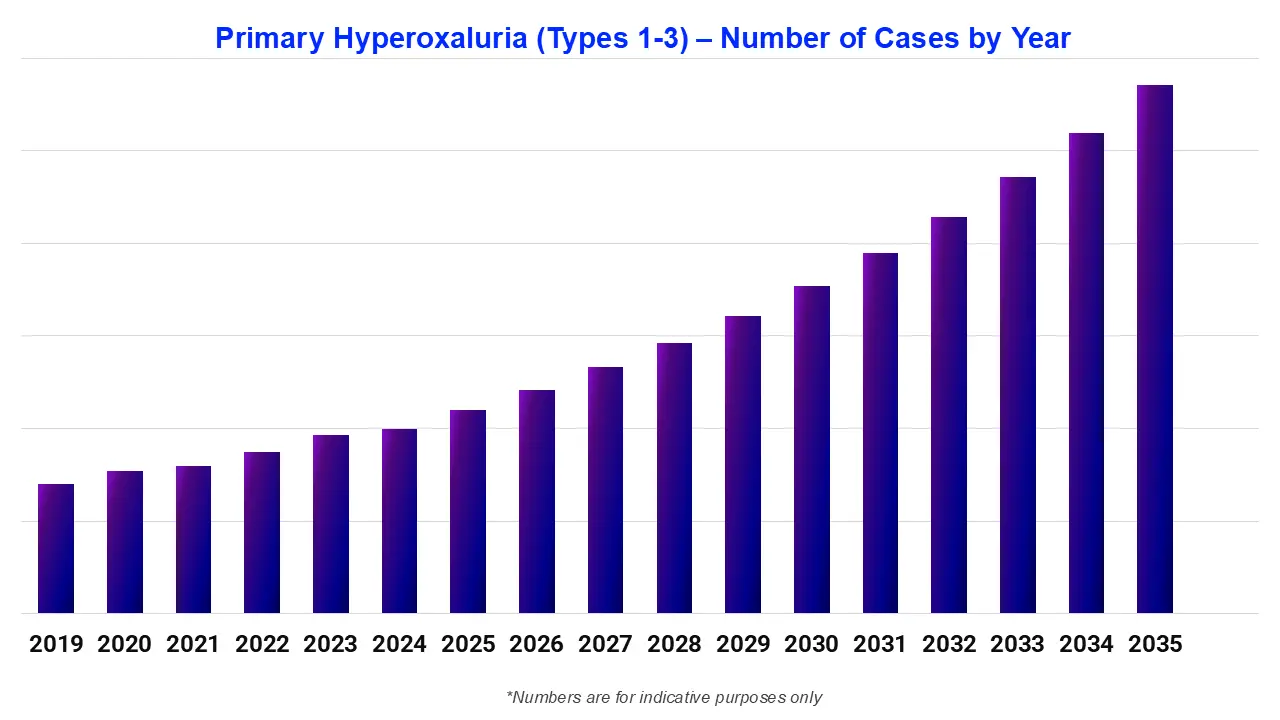
Primary Hyperoxaluria (PH) is a group of rare autosomal-recessive metabolic disorders caused by defects in hepatic glyoxylate metabolism, resulting in excessive endogenous oxalate production. France has particularly strong contemporary epidemiological evidence. A 2024 nationwide cohort included 52 genetically diagnosed patients, comprising 40 PH1, 3 PH2, and 9 PH3. At diagnosis, 23% required dialysis, while 13% underwent double liver-kidney transplantation and 13% isolated kidney transplantation. According to primary hyperoxaluria (types 1-3) epidemiology forecast by Expert Market Research (EMR), considers PH a rare inherited metabolic disease with substantial diagnostic and treatment complexity.
Base Year
Historical Period
Forecast Period
Read more about this report - Request a Free Sample
Expert Market Research's “Primary Hyperoxaluria (Types 1-3) Epidemiology Forecast Report 2026-2035” offers comprehensive information on the prevalence and demographics of Primary Hyperoxaluria (Types 1-3). It projects the future incidence and prevalence rates of Primary Hyperoxaluria (Types 1-3) cases across various populations. The study covers age, gender, and type as major determinants of the Primary Hyperoxaluria (Types 1-3) population. The report highlights patterns in the prevalence of Primary Hyperoxaluria (Types 1-3) over time and projects future trends based on multiple variables.
The report provides a comprehensive overview of the disease, as well as historical and projected data on the epidemiology of Primary Hyperoxaluria (Types 1-3) in the 8 major markets.
Regions Covered
Primary Hyperoxaluria (PH) is a group of rare autosomal-recessive metabolic disorders caused by defects in hepatic glyoxylate metabolism, resulting in excessive endogenous oxalate production. The three established forms are PH1, caused by AGXT variants; PH2, caused by GRHPR variants; and PH3, caused by HOGA1 variants. Excess oxalate combines with calcium to form calcium oxalate crystals, producing recurrent nephrolithiasis, nephrocalcinosis, progressive chronic kidney disease, kidney failure, and systemic oxalosis. PH1 is the most clinically severe and most frequently diagnosed subtype and results from deficient or dysfunctional hepatic alanine aminotransferase. PH2 results from glyoxylate reductase/hydroxypyruvate reductase deficiency, while PH3 results from 4-hydroxy-2-oxoglutarate aldolase deficiency. All three disorders increase endogenous oxalate production, but their natural histories differ.
|
Parameter |
Insight |
|
Largest Patient Pool |
United States |
|
Fastest Growing Country |
Germany |
|
High-Risk Population |
Children and young adults with recurrent calcium oxalate stones, nephrocalcinosis, unexplained chronic kidney disease, or kidney failure are high-risk groups. Individuals from populations with higher frequencies of specific pathogenic variants and families with consanguinity also warrant particular attention. |
|
Key Diagnostic Method |
Diagnosis combines urinary oxalate measurement, plasma oxalate in advanced kidney disease, stone composition, renal imaging, biochemical testing, and molecular analysis of AGXT, GRHPR, and HOGA1. Genetic testing is increasingly central because biochemical phenotypes overlap and early diagnosis can alter management. |
|
Major Risk Factor |
The fundamental risk factor is biallelic pathogenic variation in AGXT, GRHPR, or HOGA1. Consanguinity, family history, recurrent nephrolithiasis, nephrocalcinosis, and unexplained kidney failure increase the clinical suspicion for inherited PH. |
|
Major gap in the market |
Major gaps include prolonged diagnostic delay, under-recognition of PH2 and PH3, limited access to genetic testing, insufficient screening of recurrent stone formers, limited subtype-specific biomarkers, high treatment burden, and restricted availability of disease-modifying therapy outside PH1. |
The Primary Hyperoxaluria (Types 1-3) epidemiology division offers information on the patient pool from history to the present as well as the projected trend for each of the 8 major markets. Expert Market Research provides both current and predicted trends for the Primary Hyperoxaluria (Types 1-3) epidemiology scenario by examining a wide range of studies. Additionally, the report covers the diagnosed patient pool for Primary Hyperoxaluria (Types 1-3) and their trends. The data is broken down into specific categories, such as total prevalent cases in males and females, and total diagnosed cases across different age groups and patient pools.
|
Epidemiology Segment |
Key Insights |
|
Diagnosed Prevalent Cases of the Disease |
Clinically diagnosed PH has traditionally been estimated at approximately 1–3 per million population. A 2025 genetic analysis produced substantially higher estimates based on pathogenic/likely pathogenic variants: approximately 4.8 per million for PH1, 1.2 per million for PH2, and 11.0 per million for PH3. The authors estimated an overall genetic risk of approximately 1 in 59,017. |
|
Gender-Specific Cases of the Disease |
PH is inherited in an autosomal-recessive manner and therefore affects both sexes. Recent Japanese PH1 data identified 12 females and 7 males among 20 patients with known sex, although this small literature-derived cohort cannot establish a population-level sex difference. The 2024 French nationwide cohort also demonstrated disease across both pediatric and adult populations. |
|
Age-Specific Cases of the Disease |
PH can present from infancy to adulthood. In a 2024 French nationwide cohort of 52 genetically diagnosed patients, 34 were children and 18 were adults. Median diagnostic delay was 1.2 years in children versus 30 years in adults. In Japan, the 2026 PH1 review reported median symptom onset at 4.21 years and median diagnosis at 5.5 years. |
|
Ethnicity-Wise Cases of the Disease |
Genetic prevalence varies considerably between populations. The 2025 global analysis estimated the highest AGXT pathogenic-variant carrier frequency in East Asians at approximately 1 in 146 and in European non-Finnish populations at 1 in 187. GRHPR carrier frequency was highest in South Asians at approximately 1 in 313, while HOGA1 carrier frequency was particularly high among Ashkenazi Jewish populations at approximately 1 in 38. |
|
Mortality and Survival Analysis of the Disease |
PH1 carries the greatest risk of progressive kidney failure and systemic oxalosis. In a 2023 Chinese PH1 literature review, 51.1% of patients had reached end-stage renal disease and 38.9% had died. A 2026 Japanese PH1 review reported an overall survival rate of 81% at 5, 10, and 20 years after diagnosis, although the cohort was small and literature-derived. |
|
Disease Type |
Prevalence |
|
Primary Hyperoxaluria Type 1 (PH1) |
PH1 is caused by pathogenic variants in AGXT and is the most clinically severe and frequently diagnosed PH subtype. A 2025 genetic analysis estimated PH1 prevalence at approximately 1 in 209,357 individuals, or nearly 5 per million. Disease commonly presents with recurrent calcium oxalate stones, nephrocalcinosis, progressive kidney impairment, and systemic oxalosis. |
|
Primary Hyperoxaluria Type 2 (PH2) |
PH2 results from biallelic GRHPR variants and generally demonstrates a more heterogeneous and less severe renal course than PH1. The 2025 genetic analysis estimated prevalence at approximately 1 in 863,028, or about 1.2 per million. Its lower clinical recognition relative to genetic estimates suggests substantial underdiagnosis, particularly among patients with recurrent calcium oxalate stones. |
|
Primary Hyperoxaluria Type 3 (PH3) |
PH3 is caused by pathogenic HOGA1 variants and has emerged as the genetically most prevalent PH subtype in contemporary genomic analysis. The 2025 study estimated prevalence at approximately 1 in 90,834, or nearly 11 per million. PH3 frequently presents with childhood nephrolithiasis but generally demonstrates slower renal decline than PH1, contributing to substantial underdiagnosis. |
Read more about this report - Request a Free Sample
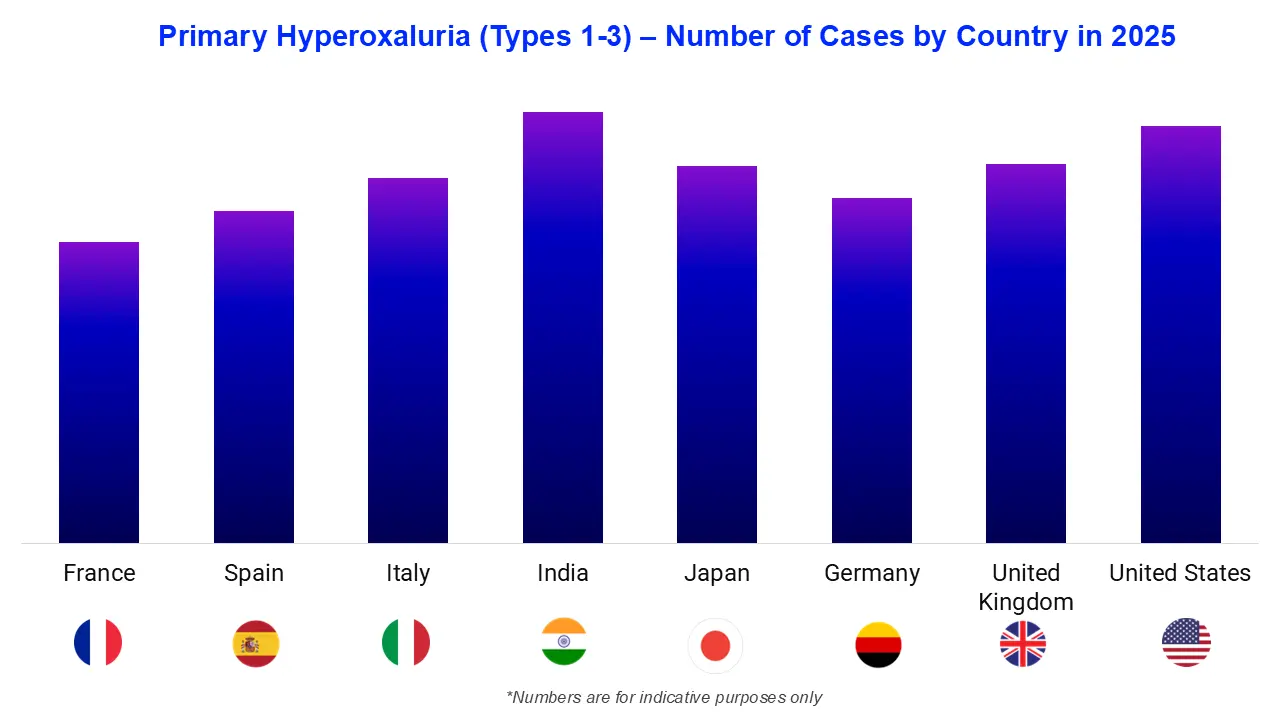
The Primary Hyperoxaluria (Types 1-3) epidemiology data and findings for the United States, Germany, Spain, Italy, France, the United Kingdom, Japan, and India are also provided in the epidemiology section.
|
Country |
Key Insights |
|
United States |
The United States has major PH expertise through inherited kidney-disease and rare-stone networks. Contemporary management increasingly incorporates genetic diagnosis and RNA-interference therapy for PH1. Population-level diagnosed prevalence remains difficult to establish because many patients are identified only after recurrent stones, nephrocalcinosis, or chronic kidney disease. |
|
Germany |
Germany contributes to European PH research and rare metabolic kidney-disease care. Contemporary European practice emphasizes molecular confirmation and early identification of patients with recurrent calcium oxalate stones or unexplained nephrocalcinosis. National population-based prevalence data meeting the 2023–2026 evidence requirement remain limited. |
|
France |
France has particularly strong contemporary epidemiological evidence. A 2024 nationwide cohort included 52 genetically diagnosed patients, comprising 40 PH1, 3 PH2, and 9 PH3. At diagnosis, 23% required dialysis, while 13% underwent double liver-kidney transplantation and 13% isolated kidney transplantation. A 2026 French follow-up cohort of 62 patients reported 42 PH1, 5 PH2, and 11 PH3 cases and found that diagnostic delay had approximately halved compared with the earlier cohort. |
|
Italy |
Italy contributed to the 2025 global genetic-prevalence analysis through investigators from the University of Torino and represents an important European centre for PH genetics. The contemporary analysis estimated global PH1, PH2, and PH3 genetic prevalence at approximately 5, 1, and 11 per million, respectively. Italian population-specific clinical prevalence remains insufficiently established. |
|
Spain |
Spain participates in European rare kidney disease and urolithiasis research, although a contemporary nationwide PH prevalence estimate is not well established. Current European diagnostic approaches emphasize molecular confirmation in patients with recurrent calcium oxalate stones, nephrocalcinosis, early kidney failure, or a family history compatible with inherited hyperoxaluria. |
|
United Kingdom |
The United Kingdom has longstanding expertise in PH genetics and metabolic stone disease. UK researchers contributed to the 2025 global genetic-prevalence analysis, which highlighted substantial underdiagnosis of PH2 and PH3. Current UK clinical practice increasingly incorporates molecular diagnosis and specialist inherited-stone pathways, but national 2023-2026 clinical prevalence remains incompletely quantified. |
|
Japan |
A 2026 review of Japanese PH1 cases reported 20 patients diagnosed between 2003 and 2023, including 7 males and 12 females, with one patient of unspecified sex. Median symptom onset was 4.21 years and median diagnosis was 5.5 years. Half were diagnosed before age 18, while 44% of those pediatric patients had already reached kidney failure. |
|
India |
India has substantial clinical relevance because South Asian populations show a relatively high estimated GRHPR carrier frequency. The 2025 global genetic analysis estimated the GRHPR pathogenic-variant carrier frequency in South Asians at approximately 1 in 313. Contemporary Indian reports also demonstrate that PH2 may present as unexplained advanced kidney disease in adolescents, reinforcing the need for genetic evaluation. |
Epidemiological gaps in PH are driven primarily by underdiagnosis, delayed genetic confirmation, differences in access to metabolic stone testing, and the relatively mild or heterogeneous presentation of PH2 and PH3. The 2025 global genetic analysis identified pathogenic or likely pathogenic variants producing estimated prevalence substantially above clinically diagnosed disease, particularly for PH3. The 2024 French nationwide cohort demonstrated the clinical consequences of this gap: adults had a median diagnostic delay of 30 years compared with 1.2 years in children, and nearly one-quarter of the total cohort required dialysis at genetic diagnosis. A 2026 French cohort suggests that increased awareness and therapeutic developments may already be reducing diagnostic delay.
The management of PH focuses on reducing urinary oxalate supersaturation, preventing calcium oxalate crystallization, preserving kidney function, and preventing systemic oxalosis. Treatment includes high fluid intake, crystallization inhibitors such as potassium citrate, and pyridoxine in appropriate PH1 genotypes. Lumasiran, an RNA-interference therapy targeting hepatic glycolate oxidase, is established for PH1 and produces sustained reductions in urinary and plasma oxalate. Five-year ILLUMINATE-A data published in 2026 reported sustained biochemical reductions together with encouraging renal and stone-related outcomes. Nedosiran, another RNA-interference approach targeting hepatic lactate dehydrogenase, has also expanded the PH1 therapeutic landscape. Advanced PH1 with irreversible hepatic oxalate overproduction and kidney failure may require combined liver-kidney transplantation. PH2 and PH3 remain areas of substantial therapeutic unmet need.


Upto 15% Off
USD
$2699 $2429
$4299 $3869
$5799 $4949
$6999 $5949


*While we strive to always give you current and accurate information, the numbers depicted on the website are indicative and may differ from the actual numbers in the main report. At Expert Market Research, we aim to bring you the latest insights and trends in the market. Using our analyses and forecasts, stakeholders can understand the market dynamics, navigate challenges, and capitalize on opportunities to make data-driven strategic decisions.*
Explore our key highlights of the report and gain a concise overview of key findings, trends, and actionable insights that will empower your strategic decisions.
|
Report Features |
Details |
|
Base Year |
2025 |
|
Historical Period |
2019-2025 |
|
Forecast Period |
2026-2035 |
|
Epidemiology Statistics Provided |
|
|
Segmentation Provided |
|
|
Geographies Covered |
|
Datasheet
One User
USD 2,699
USD 2,429
tax inclusive*
Single User License
One User
USD 4,299
USD 3,869
tax inclusive*
Five User License
Five User
USD 5,799
USD 4,949
tax inclusive*
Corporate License
Unlimited Users
USD 6,999
USD 5,949
tax inclusive*
*Please note that the prices mentioned below are starting prices for each bundle type. Kindly contact our team for further details.*
Flash Bundle
Small Business Bundle
Growth Bundle
Enterprise Bundle
*Please note that the prices mentioned below are starting prices for each bundle type. Kindly contact our team for further details.*
Flash Bundle
Number of Reports: 3
20%
tax inclusive*
Small Business Bundle
Number of Reports: 5
25%
tax inclusive*
Growth Bundle
Number of Reports: 8
30%
tax inclusive*
Enterprise Bundle
Number of Reports: 10
35%
tax inclusive*
How To Order

Select License Type
Choose the right license for your needs and access rights.

Click on ‘Buy Now’
Add the report to your cart with one click and proceed to register.

Select Mode of Payment
Choose a payment option for a secure checkout. You will be redirected accordingly.
Strategic Solutions for Informed Decision-Making
Gain insights to stay ahead and seize opportunities.

Get insights & trends for a competitive edge.

Track prices with detailed trend reports.

Analyse trade data for supply chain insights.

Leverage cost reports for smart savings

Enhance supply chain with partnerships.

Connect For More Information
Our expert team of analysts will offer full support and resolve any queries regarding the report, before and after the purchase.
Our expert team of analysts will offer full support and resolve any queries regarding the report, before and after the purchase.
We employ meticulous research methods, blending advanced analytics and expert insights to deliver accurate, actionable industry intelligence, staying ahead of competitors.
Our skilled analysts offer unparalleled competitive advantage with detailed insights on current and emerging markets, ensuring your strategic edge.
We offer an in-depth yet simplified presentation of industry insights and analysis to meet your specific requirements effectively.




