

Consumer Insights
Uncover trends and behaviors shaping consumer choices today
Procurement Insights
Optimize your sourcing strategy with key market data
Industry Stats
Stay ahead with the latest trends and market analysis.
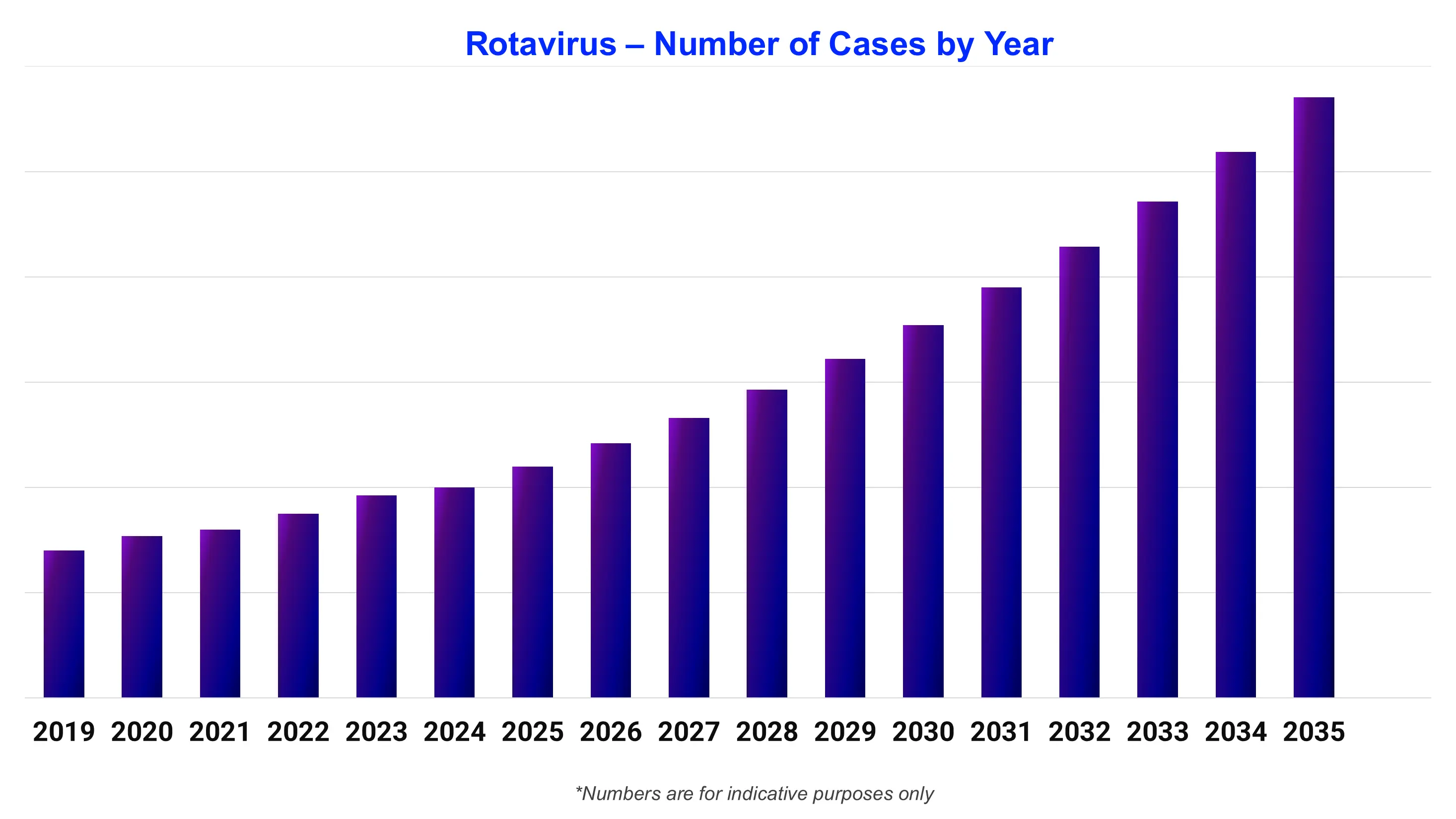
Rotavirus is a highly contagious virus that is most common cause of severe watery diarrhea, or gastroenteritis, in infants and young children worldwide. In India, about 40 percent of moderate to severe diarrhea cases in children under 5 were due to rotavirus. National surveillance data also found rotavirus highly prevalent, about 40 percent, among children hospitalized with diarrhea across the country. According to Rotavirus Epidemiology Forecast by Expert Market Research (EMR), Rotavirus remains the leading cause of severe dehydrating diarrhea in under 5s worldwide, but deaths are falling as vaccine coverage rises.
Base Year
Historical Period
Forecast Period
Read more about this report - Request a Free Sample
Expert Market Research's “Rotavirus Epidemiology Forecast Report 2026-2035” offers comprehensive information on the prevalence and demographics of Rotavirus. It projects the future incidence and prevalence rates of Rotavirus cases across various populations. The study covers age, gender, and type as major determinants of the Rotavirus population. The report highlights patterns in the prevalence of Rotavirus over time and projects future trends based on multiple variables.
The report provides a comprehensive overview of the disease, as well as historical and projected data on the epidemiology of Rotavirus in the 8 major markets.
Regions Covered
Rotavirus is a highly contagious virus that is the most common cause of severe watery diarrhea, or gastroenteritis, in infants and young children worldwide. Rotavirus is a double stranded RNA virus that infects the lining of the small intestine. Almost all children are infected by age 3 to 5, but severe disease clusters in age 3 to 35 months. You can get it more than once, each later infection is usually milder. Large amounts of viruses are shed in stool and spread easily on hands and objects. It spreads by the fecal oral route, by touching contaminated surfaces, food, or caregivers, and less often by respiratory droplets. Children can spread it before and after they have diarrhea. Incubation is usually about 2 days.
|
Parameter |
Insight |
|
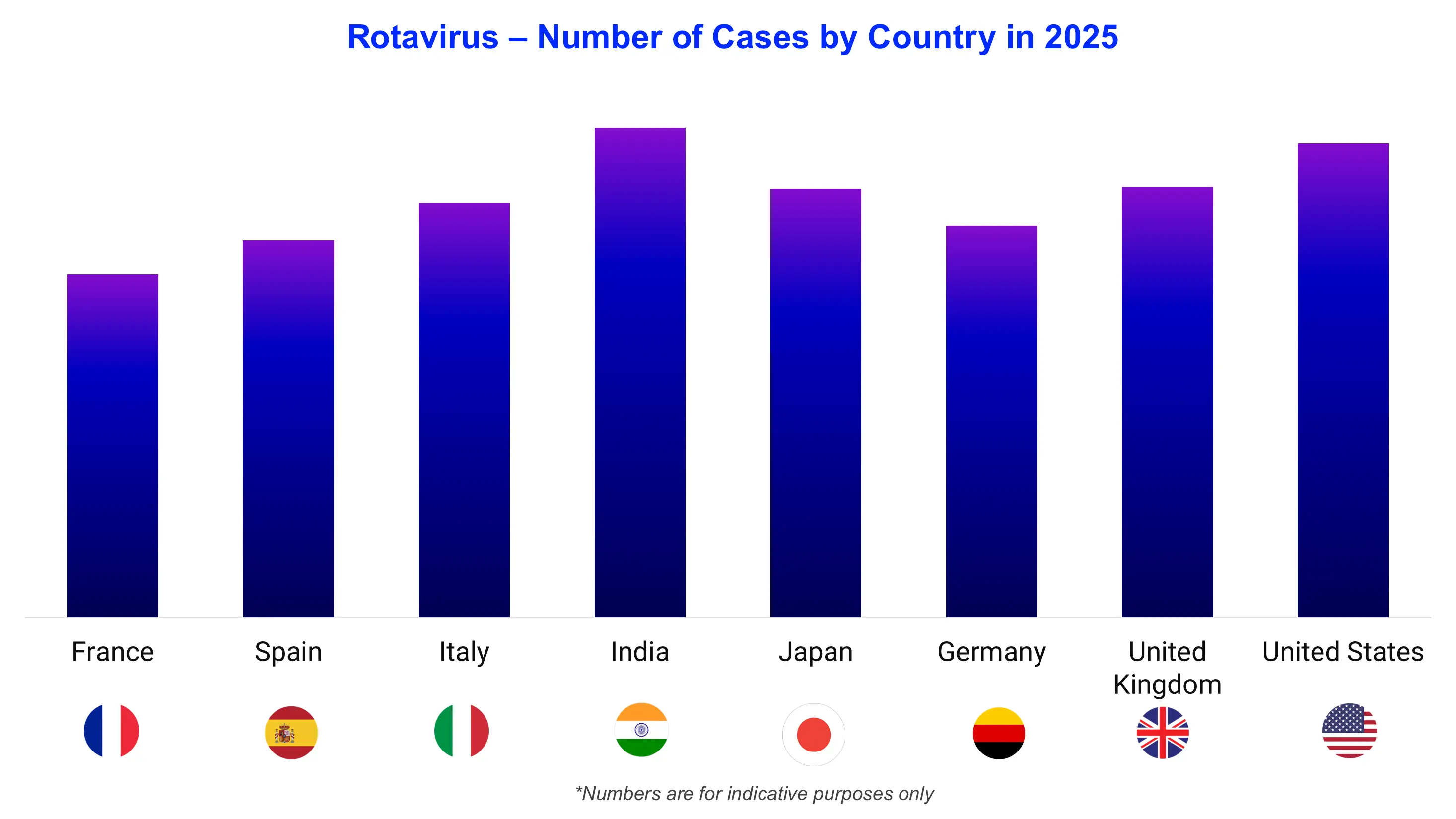
Largest Patient Pool |
India |
|
Fastest Growing Country |
United States |
|
High-Risk Population |
High risk for severe rotavirus disease is infants and young children, plus anyone with weakened immunity. |
|
Key Diagnostic Method |
The most widely used method of diagnosis of rotavirus infection is antigen detection in fecal specimens using one of several commercial enzyme immunoassays (EIA). |
|
Major Risk Factor |
In general, unvaccinated children are at greatest risk of infection. Children who are not vaccinated are more likely to develop rotavirus related symptoms such as diarrhea, vomiting, and dehydration. |
|
Major gap in the market |
There are no specific therapies or therapeutics available to treat rotavirus infection. Current clinical practice is limited to symptomatic management, due to the lack of targeted antiviral therapies. At present, no approved antiviral medications are available, and no specific antiviral drug is available against rotavirus infection. |
The Rotavirus epidemiology division offers information on the patient pool from history to the present as well as the projected trend for each of the 8 major markets. Expert Market Research provides both current and predicted trends for the Rotavirus epidemiology scenario by examining a wide range of studies. Additionally, the report covers the diagnosed patient pool for Rotavirus and their trends. The data is broken down into specific categories, such as total prevalent cases in males and females, and total diagnosed cases across different age groups and patient pools.
|
Epidemiology Segment |
Key Insights |
|
Diagnosed Prevalent Cases of the Disease |
Among lab tested diarrhea, reported prevalence ranges from 6 percent to 56 percent across global surveillance networks. About 40 percent of hospitalizations for acute gastroenteritis in children aged under 5 years old were attributable to rotavirus disease in EU data, and about 40 percent hospitalizations for diarrhea in under 5s globally in sentinel sites. 111 million episodes at home, 25 million outpatient visits, 2 million inpatient visits per year globally, over 600,000 deaths in older estimates. Current WHO estimates are about 128,500 deaths in under 5s. |
|
Gender-Specific Cases of the Disease |
There is a slight male predominance in diagnosed cases, but it is not consistent enough to be a biological rule. Rotavirus was detected in a higher proportion of males than females, relative risk 1.2, with male to female ratio 1.6 to 1. This agrees with finding that boys are twice as susceptible and more likely to be hospitalized. In hospital studies, men accounted for 62.06 percent of prevalence, women 37.93 percent, ratio 1.5 to 1. In a Sudanese cross-sectional study of 755 children of 121 infected with rotavirus, 79, or 65.3 percent, were male and 42, or 34.7 percent, female. |
|
Age-Specific Cases of the Disease |
Age is the strongest predictor of rotavirus disease. Almost every child is infected once before age 5. Virtually all children at least once within the first 5 years of life, with the peak incidence widely quoted as occurring between 6 and 24 months of age. In developing countries, three quarters of children acquire their first episode before 12 months, mean age 6 to 9 months. |
|
Ethnicity-Wise Cases of the Disease |
Rotavirus infects every ethnic group. Differences in diagnosed cases reflect access, crowding, vaccine uptake and blood group genetics, not ethnicity specific immunity. In US surveillance, rotavirus positive cases were more often white, 62.2 percent vs 57.7 percent, compared with rotavirus negative controls. Rates of rotavirus test positive stools were lower in Hispanic ethnicity were significantly less likely to be nonsecretors, potentially indicating enhanced rotavirus gastroenteritis risk among Hispanic children compared with non-Hispanic children. This is substantiated by pre vaccine studies showing a higher burden of rotavirus among Hispanic or Native American populations, particularly among young age groups. |
|
Mortality and Survival Analysis of the Disease |
Annually, 128,500 deaths among children under five are attributed to rotavirus globally. It is estimated that India accounts for one fifth of the global rotavirus attributed deaths. This is about 25,700 deaths per year now. |
Read more about this report - Request a Free Sample
The Rotavirus epidemiology data and findings for the United States, Germany, Spain, Italy, France, the United Kingdom, Japan, and India are also provided in the epidemiology section.
|
Country |
Key Insights |
|
United States |
Rotavirus was the leading cause of acute gastroenteritis in children until the 2006 vaccine introduction. Pre-vaccine it caused about 3 million cases, 55,000-70,000 hospitalizations, and 20-69 deaths annually. Vaccination coverage is high (median 87 percent), and the vaccine remains highly effective, with 78 percent effectiveness against ED visits or hospitalization. Predominant strains include G1P(8), G2P(4), G3P(8), and G12P(8). |
|
Germany |
Rotavirus vaccines have been available since 2006, with STKO recommending infant vaccination since 2013. Since then, case numbers have declined, particularly severe cases. However, outbreaks still occur, with 6,399 cases reported in North Rhine-Westphalia in 2025, up from 4,091 the previous year. Rotavirus remains a leading cause of acute gastroenteritis in infants and young infants. |
|
France |
Rotavirus causes an estimated 60,000 GP consultations and 20,000 hospitalizations annually in children under 3. It accounts for 30-50% of acutes viral gastroenteritis in infants and young children. Vaccination was recommended for all infants in 2022, with a 2- or 3- dose oral schedule starting at 6 weeks. |
|
Italy |
Rotavirus causes approximately 250,000 cases of gastroenteritis annually in children under 5, leading to over 70,000 medical visits and more than 10,000 hospitalizations. Vaccination coverage reached about 70 percent by 2022. Rotavirus remains the most common agent of pediatric viral gastroenteritis, though prevalence has declined post-vaccination (from 32.6 percent to 13.3 percent in one Sicilian study). |
|
Spain |
A nationwide population-prevalence estimate for rotavirus infection in Spain was not established from the reviewed 2023-2026 sources. Rotavirus surveillance results should be expressed as laboratory-confirmed cases, positivity among tested patients, or hospitalizations, with the period and age group specified. These indicators are affected by testing and reporting practices and do not capture all infections. |
|
United Kingdom |
A nationwide population-prevalence estimate for rotavirus infection in the United Kingdom was not established from the reviewed 2023-2026 sources. UK Health Security Agency surveillance provides seasonal laboratory reports and outbreak monitoring; its 2023-2024 reporting series describes rotavirus activity in England using laboratory and outbreak surveillance systems. These data are useful for assessing recent circulation but do not represent the total number of infections in the population. A prevalence percentage should not be inferred from surveillance counts without an appropriate denominator. |
|
Japan |
A reliable nationwide population-prevalence estimate for rotavirus infection in Japan was not established from the reviewed 2023–2026 sources. Japan’s infectious-disease surveillance system publishes rotavirus detections and seasonal trends, including data for the 2023–2024 season. These are surveillance observations rather than population-wide case counts and cannot independently establish national prevalence. A current estimate should specify whether it measures laboratory-confirmed cases, rotavirus positivity among children with gastroenteritis, or hospitalization rates. |
|
India |
A reliable nationwide population-prevalence percentage for rotavirus infection in India was not established from the reviewed 2023–2026 sources. However, a 2026 analysis using Global Burden of Disease 2023 estimates attributed approximately 9,387 deaths (95% uncertainty interval: 6,251-14,190) among Indian children younger than five to rotavirus in 2023, indicating a substantial residual burden. This is a modelled mortality estimate, not a prevalence or diagnosed-case count. India’s epidemiological profile should therefore distinguish rotavirus-attributable mortality and disease burden from laboratory-confirmed cases and population prevalence. |
The regional rotavirus landscape is constrained by gaps in comparable, age-stratified surveillance and by differences in vaccine coverage, laboratory testing, and reporting. India retains a substantial burden of rotavirus-attributable childhood mortality, while countries with established vaccination programmes continue to monitor seasonal circulation and outbreaks. Opportunities include improving vaccine uptake, monitoring vaccine performance and circulating genotypes, strengthening diagnostic surveillance, and expanding timely access to oral rehydration and hospital care. Better harmonization of incidence, hospitalization, and mortality reporting across the eight countries would improve assessment of residual disease burden and help identify populations requiring targeted prevention.
Treatment of rotavirus gastroenteritis is primarily supportive because no specific antiviral therapy is routinely recommended. Oral rehydration solution is the mainstay for preventing and treating dehydration, while severe dehydration may require intravenous fluids and clinical monitoring. Continued feeding and age-appropriate nutrition support recovery. Antibiotics are ineffective against rotavirus and should not be used to treat the viral infection itself. Prevention relies principally on routine infant rotavirus vaccination, supported by hand hygiene, environmental cleaning, and infection-control measures. Vaccination reduces severe disease and hospitalization but does not prevent every infection; prompt recognition and management of dehydration remain essential.
Gastroenteropancreatic Neuroendocrine Tumors (GEP-NET) Pipeline Analysis


Upto 15% Off
USD
$2699 $2429
$4299 $3869
$5799 $4949
$6999 $5949


*While we strive to always give you current and accurate information, the numbers depicted on the website are indicative and may differ from the actual numbers in the main report. At Expert Market Research, we aim to bring you the latest insights and trends in the market. Using our analyses and forecasts, stakeholders can understand the market dynamics, navigate challenges, and capitalize on opportunities to make data-driven strategic decisions.*
Explore our key highlights of the report and gain a concise overview of key findings, trends, and actionable insights that will empower your strategic decisions.
|
Report Features |
Details |
|
Base Year |
2025 |
|
Historical Period |
2019-2025 |
|
Forecast Period |
2026-2035 |
|
Epidemiology Statistics Provided |
|
|
Segmentation Provided |
|
|
Geographies Covered |
|
Datasheet
One User
USD 2,699
USD 2,429
tax inclusive*
Single User License
One User
USD 4,299
USD 3,869
tax inclusive*
Five User License
Five User
USD 5,799
USD 4,949
tax inclusive*
Corporate License
Unlimited Users
USD 6,999
USD 5,949
tax inclusive*
*Please note that the prices mentioned below are starting prices for each bundle type. Kindly contact our team for further details.*
Flash Bundle
Small Business Bundle
Growth Bundle
Enterprise Bundle
*Please note that the prices mentioned below are starting prices for each bundle type. Kindly contact our team for further details.*
Flash Bundle
Number of Reports: 3
20%
tax inclusive*
Small Business Bundle
Number of Reports: 5
25%
tax inclusive*
Growth Bundle
Number of Reports: 8
30%
tax inclusive*
Enterprise Bundle
Number of Reports: 10
35%
tax inclusive*
How To Order

Select License Type
Choose the right license for your needs and access rights.

Click on ‘Buy Now’
Add the report to your cart with one click and proceed to register.

Select Mode of Payment
Choose a payment option for a secure checkout. You will be redirected accordingly.
Strategic Solutions for Informed Decision-Making
Gain insights to stay ahead and seize opportunities.

Get insights & trends for a competitive edge.

Track prices with detailed trend reports.

Analyse trade data for supply chain insights.

Leverage cost reports for smart savings

Enhance supply chain with partnerships.

Connect For More Information
Our expert team of analysts will offer full support and resolve any queries regarding the report, before and after the purchase.
Our expert team of analysts will offer full support and resolve any queries regarding the report, before and after the purchase.
We employ meticulous research methods, blending advanced analytics and expert insights to deliver accurate, actionable industry intelligence, staying ahead of competitors.
Our skilled analysts offer unparalleled competitive advantage with detailed insights on current and emerging markets, ensuring your strategic edge.
We offer an in-depth yet simplified presentation of industry insights and analysis to meet your specific requirements effectively.




