

Consumer Insights
Uncover trends and behaviors shaping consumer choices today
Procurement Insights
Optimize your sourcing strategy with key market data
Industry Stats
Stay ahead with the latest trends and market analysis.
Typhoid fever is a potentially life-threatening bacterial infection caused by Salmonella Typhi, primarily transmitted through contaminated food and water. As per the Centers for Disease Control and Prevention (CDC), an estimated 9.2 million typhoid fever cases and 3.8 million paratyphoid fever cases occur annually. According to typhoid fever epidemiology forecasts by Expert Market Research, waterborne infections remain relevant to disease burden and prevention efforts.
Base Year
Historical Period
Forecast Period
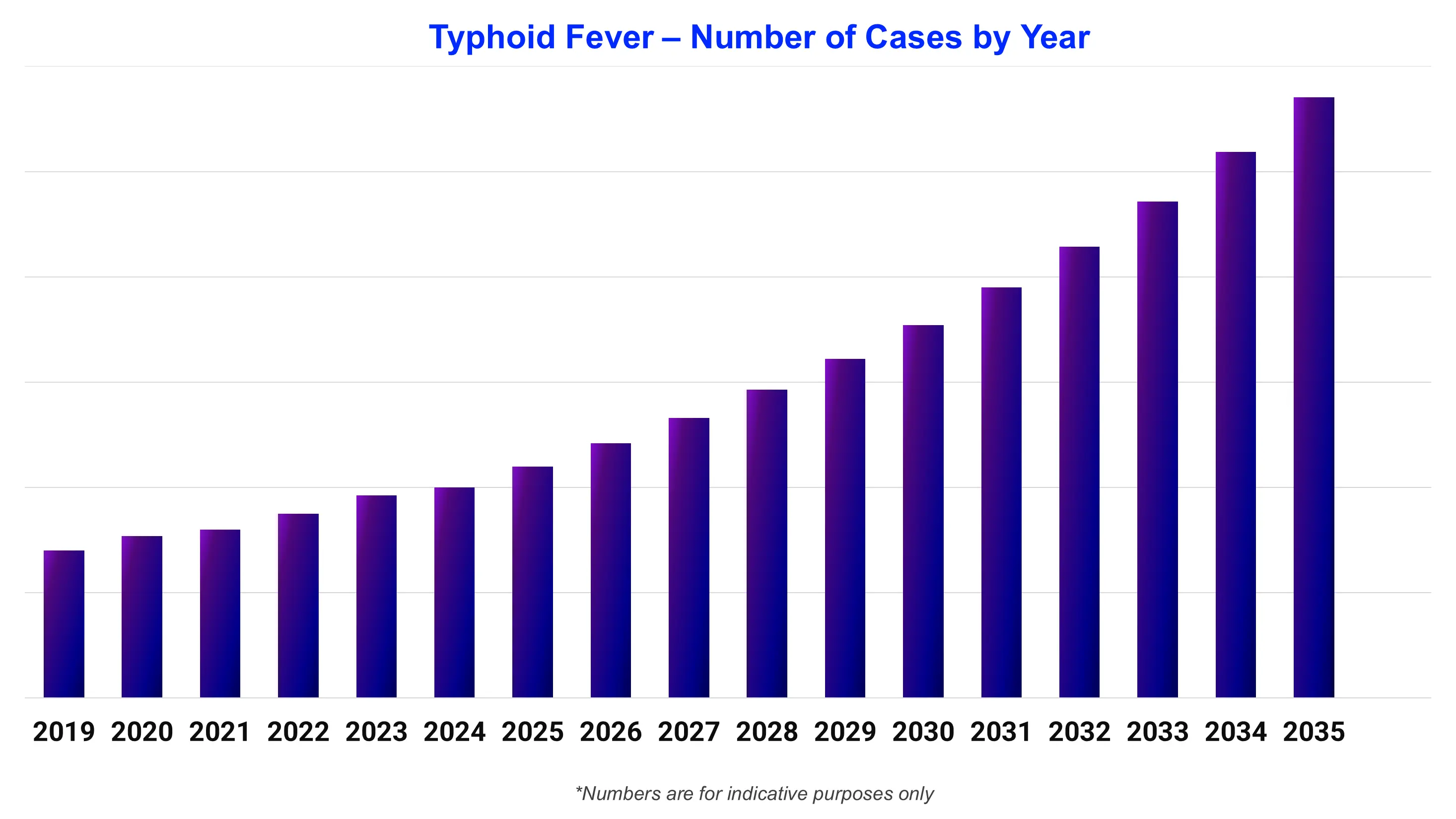
Read more about this report - REQUEST FREE SAMPLE COPY IN PDF
Expert Market Research's “Typhoid Fever Epidemiology Forecast Report 2026-2035” offers comprehensive information on the prevalence and demographics of typhoid fever. It projects the future incidence and prevalence rates of typhoid fever cases across various populations. The study covers age, gender, and type as major determinants of the typhoid fever population. The report highlights patterns in the prevalence of typhoid fever over time and projects future trends based on multiple variables.
The report provides a comprehensive overview of the disease, as well as historical and projected data on the epidemiology of typhoid fever in the 8 major markets.
Regions Covered
Typhoid fever is a systemic bacterial infection caused by Salmonella enterica serovar Typhi, transmitted primarily through food or water contaminated with the feces of infected individuals. The disease is more prevalent in areas with inadequate sanitation, unsafe drinking water, and limited access to hygiene facilities. Common symptoms include prolonged fever, headache, abdominal pain, weakness, and gastrointestinal disturbances. Unlike paratyphoid fever, which is caused by other Salmonella serovars, typhoid fever is specifically associated with S. Typhi. Its transmission is closely linked to fecal-oral transmission, making safe water and sanitation essential for prevention.
|
Parameter |
Insight |
|
Largest Patient Pool |
India |
|
Fastest Growing Country |
India |
|
High-Risk Population |
Children, people living in typhoid-endemic areas, and individuals exposed to unsafe water and contaminated food. |
|
Key Diagnostic Method |
Blood culture, which helps confirm infection and supports antimicrobial susceptibility testing. |
|
Major Risk Factor |
Consumption of contaminated food or water, particularly where sanitation and safe water access are inadequate. |
|
Major gap in the market |
Limited access to timely diagnosis, appropriate antibiotic treatment, and reliable surveillance of antimicrobial resistance in high-burden settings. |
The typhoid fever epidemiology division offers information on the patient pool from history to the present as well as the projected trend for each of the 8 major markets. Expert Market Research provides both current and predicted trends for the typhoid fever epidemiology scenario by examining a wide range of studies. Additionally, the report covers the diagnosed patient pool for typhoid fever and their trends. The data is broken down into specific categories, such as total prevalent cases in males and females, and total diagnosed cases across different age groups and patient pools.
|
Epidemiology Segment |
Key Insights |
|
Diagnosed Prevalent Cases of the Disease |
According to the Centers for Disease Control and Prevention (CDC), approximately 9.2 million cases of typhoid fever occur worldwide annually, highlighting the substantial global disease burden and the continuing need for effective prevention and surveillance. |
|
Gender-Specific Cases of the Disease |
Gender-based epidemiological assessments can examine differences in reported typhoid fever cases between males and females. Exposure to contaminated water and food, sanitation conditions, occupational activities, and differences in healthcare-seeking behavior can influence observed disease patterns across populations. |
|
Age-Specific Cases of the Disease |
According to Jacob John et al. (2023), surveillance in India identified culture-confirmed typhoid fever cases among children aged 6 months to 14 years. Incidence varied considerably between urban and rural sites, highlighting differences in pediatric disease burden across geographic settings. |
|
Ethnicity-Wise Cases of the Disease |
Epidemiological assessments can examine differences in typhoid fever burden across ethnic and population groups by considering geographic residence, socioeconomic conditions, access to safe drinking water, sanitation infrastructure, and healthcare accessibility. These factors help characterize variations in exposure and reported disease burden. |
|
Mortality and Survival Analysis of the Disease |
According to the Centers for Disease Control and Prevention (CDC), typhoid fever and paratyphoid fever collectively account for an estimated 133,000 deaths worldwide annually. The London School of Hygiene & Tropical Medicine estimated nearly 8,000 typhoid fever deaths in India in 2023, highlighting the continuing mortality burden. |
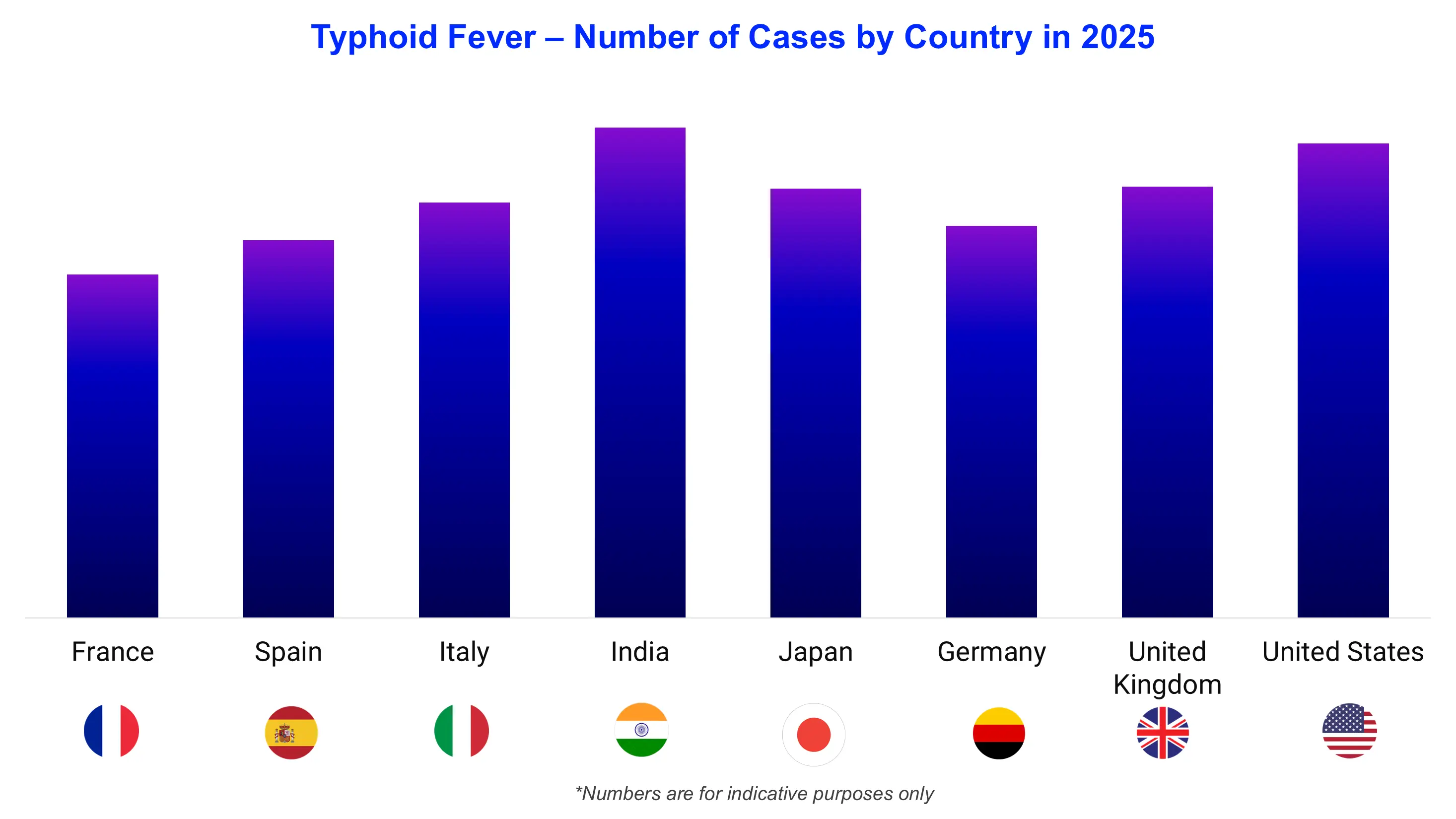
Read more about this report - REQUEST FREE SAMPLE COPY IN PDF
The typhoid fever epidemiology data and findings for the United States, Germany, Spain, Italy, France, the United Kingdom, Japan, and India are also provided in the epidemiology section.
|
Country |
Key Insights |
|
United States |
According to the Centers for Disease Control and Prevention (CDC), approximately 450 culture-confirmed typhoid fever cases were reported in 2019. During 2020-2021, annual cases declined to approximately 150-160. Around 85% of US typhoid fever cases occurred among international travelers, with more than 70% of these travelers returning from South Asia, particularly Bangladesh, India, and Pakistan. These patterns highlight the importance of travel-associated disease surveillance. |
|
Germany |
According to Dr. Frühwein & Partner Brienner, approximately 200 typhoid fever cases are reported annually in Germany. The source highlights potential underreporting and increasing importation of cases from regions with higher infection risks. International travel and exposure to areas with inadequate sanitation are important considerations when assessing the country's reported disease burden. |
|
France |
Epidemiological assessment in France can focus on reported typhoid fever cases and infections associated with international travel. Monitoring travel histories, exposure to contaminated food or water, and the geographic origins of imported infections can help characterize disease patterns and support targeted prevention strategies. |
|
Italy |
In Italy, typhoid fever epidemiology can be assessed through reported cases, travel-associated exposures, and the distribution of infections among different population groups. Surveillance of international travelers and individuals returning from endemic regions can help identify exposure patterns and inform public health interventions. |
|
Spain |
In Spain, the epidemiological profile of typhoid fever can be evaluated by examining imported infections and travel-related exposure patterns. Monitoring the countries visited before illness onset and potential food- and waterborne exposures can help identify infection risks and guide preventive measures for travelers. |
|
United Kingdom |
In the United Kingdom, typhoid fever surveillance can focus on the geographic origins of reported infections and travel-associated cases. Evaluating exposure histories and patterns among international travelers can help identify potential sources of infection and support public health planning and prevention efforts. |
|
Japan |
According to the Japan Registry for Infectious Diseases from Abroad, Japan records approximately 50-60 typhoid fever cases annually. Imported infectious diseases are relatively uncommon in Japan, and international travel is an important consideration in understanding reported infections. Monitoring travel histories and the geographic origins of imported cases can help characterize the country's epidemiological profile. |
|
India |
According to the London School of Hygiene & Tropical Medicine, India experienced an estimated 4.9 million typhoid fever cases and nearly 8,000 deaths in 2023. Approximately 4.7 million people sought treatment, resulting in around 730,000 hospitalizations. Jacob John et al. (2023) reported incidence estimates of 576-1,173 cases per 100,000 child-years at urban sites and 35 cases per 100,000 child-years in rural Pune, highlighting geographic variation in disease burden. |
Typhoid fever management faces important gaps in timely diagnosis, access to effective treatment, and prevention, particularly in endemic settings such as India. Antimicrobial resistance increases the need for reliable diagnostic testing and susceptibility-guided antibiotic selection. Opportunities include expanding access to blood culture facilities, strengthening surveillance of resistant Salmonella Typhi strains, and improving typhoid conjugate vaccine coverage in eligible populations. Investments in safe drinking water, sanitation, food safety, and public health education can further reduce transmission. In the United States, Europe, and Japan, travel-associated cases also support the importance of vaccination awareness and early diagnosis.
Typhoid fever is primarily treated with antibiotics, selected according to local antimicrobial resistance patterns, disease severity, and susceptibility testing results. Common treatment options include azithromycin and ceftriaxone, while other antibiotics may be considered when susceptibility is confirmed. Increasing antimicrobial resistance, particularly extensively drug-resistant S. Typhi, complicates treatment selection in some regions. Supportive care includes adequate fluid intake, electrolyte replacement when necessary, and nutritional support. Severe cases may require hospitalization and monitoring for complications. Antimicrobial susceptibility testing helps guide appropriate antibiotic selection, while vaccination, safe drinking water, sanitation, and food hygiene reduce infection risk.


Upto 15% Off
USD
$2699 $2429
$4299 $3869
$5799 $4949
$6999 $5949


*While we strive to always give you current and accurate information, the numbers depicted on the website are indicative and may differ from the actual numbers in the main report. At Expert Market Research, we aim to bring you the latest insights and trends in the market. Using our analyses and forecasts, stakeholders can understand the market dynamics, navigate challenges, and capitalize on opportunities to make data-driven strategic decisions.*
Explore our key highlights of the report and gain a concise overview of key findings, trends, and actionable insights that will empower your strategic decisions.
|
Report Features |
Details |
|
Base Year |
2025 |
|
Historical Period |
2019-2025 |
|
Forecast Period |
2026-2035 |
|
Epidemiology Statistics Provided |
|
|
Segmentation Provided |
|
|
Geographies Covered |
|
Datasheet
One User
USD 2,699
USD 2,429
tax inclusive*
Single User License
One User
USD 4,299
USD 3,869
tax inclusive*
Five User License
Five User
USD 5,799
USD 4,949
tax inclusive*
Corporate License
Unlimited Users
USD 6,999
USD 5,949
tax inclusive*
*Please note that the prices mentioned below are starting prices for each bundle type. Kindly contact our team for further details.*
Flash Bundle
Small Business Bundle
Growth Bundle
Enterprise Bundle
*Please note that the prices mentioned below are starting prices for each bundle type. Kindly contact our team for further details.*
Flash Bundle
Number of Reports: 3
20%
tax inclusive*
Small Business Bundle
Number of Reports: 5
25%
tax inclusive*
Growth Bundle
Number of Reports: 8
30%
tax inclusive*
Enterprise Bundle
Number of Reports: 10
35%
tax inclusive*
How To Order

Select License Type
Choose the right license for your needs and access rights.

Click on ‘Buy Now’
Add the report to your cart with one click and proceed to register.

Select Mode of Payment
Choose a payment option for a secure checkout. You will be redirected accordingly.
Strategic Solutions for Informed Decision-Making
Gain insights to stay ahead and seize opportunities.

Get insights & trends for a competitive edge.

Track prices with detailed trend reports.

Analyse trade data for supply chain insights.

Leverage cost reports for smart savings

Enhance supply chain with partnerships.

Connect For More Information
Our expert team of analysts will offer full support and resolve any queries regarding the report, before and after the purchase.
Our expert team of analysts will offer full support and resolve any queries regarding the report, before and after the purchase.
We employ meticulous research methods, blending advanced analytics and expert insights to deliver accurate, actionable industry intelligence, staying ahead of competitors.
Our skilled analysts offer unparalleled competitive advantage with detailed insights on current and emerging markets, ensuring your strategic edge.
We offer an in-depth yet simplified presentation of industry insights and analysis to meet your specific requirements effectively.




