

Consumer Insights
Uncover trends and behaviors shaping consumer choices today
Procurement Insights
Optimize your sourcing strategy with key market data
Industry Stats
Stay ahead with the latest trends and market analysis.
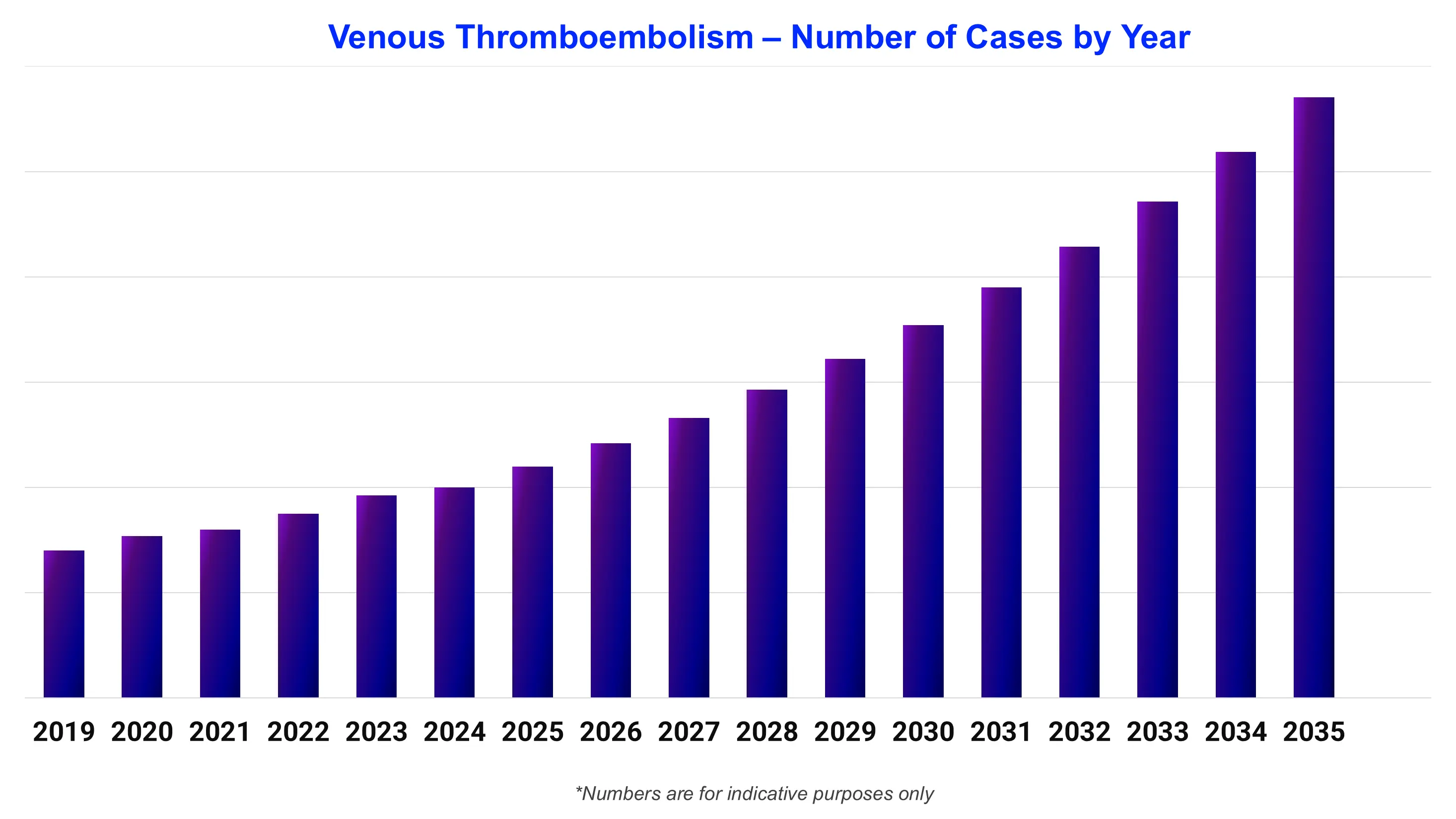
Venous thromboembolism (VTE) is a condition characterized by blood clots in the veins, including deep vein thrombosis and pulmonary embolism. According to Aaron M. Wendelboe et al. (2022), the global annual incidence of VTE is estimated at 0.75-2.69 cases per 1,000 people. As per the venous thromboembolism epidemiology forecast by Expert Market Research, this thrombotic disorder remains an important public health concern.
Base Year
Historical Period
Forecast Period
Read more about this report - REQUEST FREE SAMPLE COPY IN PDF
Expert Market Research's “Venous Thromboembolism Epidemiology Forecast Report 2026-2035” offers comprehensive information on the prevalence and demographics of venous thromboembolism. It projects the future incidence and prevalence rates of Venous Thromboembolism cases across various populations. The study covers age, gender, and type as major determinants of the venous thromboembolism population. The report highlights patterns in the prevalence of venous thromboembolism over time and projects future trends based on multiple variables.
The report provides a comprehensive overview of the disease, as well as historical and projected data on the epidemiology of venous thromboembolism in the 8 major markets.
Regions Covered
Venous thromboembolism (VTE) is a condition in which blood clots form in the venous circulation, potentially obstructing blood flow and causing serious complications. It primarily includes deep vein thrombosis (DVT), in which clots develop in deep veins, usually in the legs, and pulmonary embolism (PE), which occurs when a clot travels to the lungs. VTE develops when blood flow slows, the vessel wall is damaged, or blood becomes more prone to clotting. Major risk factors include surgery, prolonged immobility, cancer, and advanced age.
|
Parameter |
Insight |
|
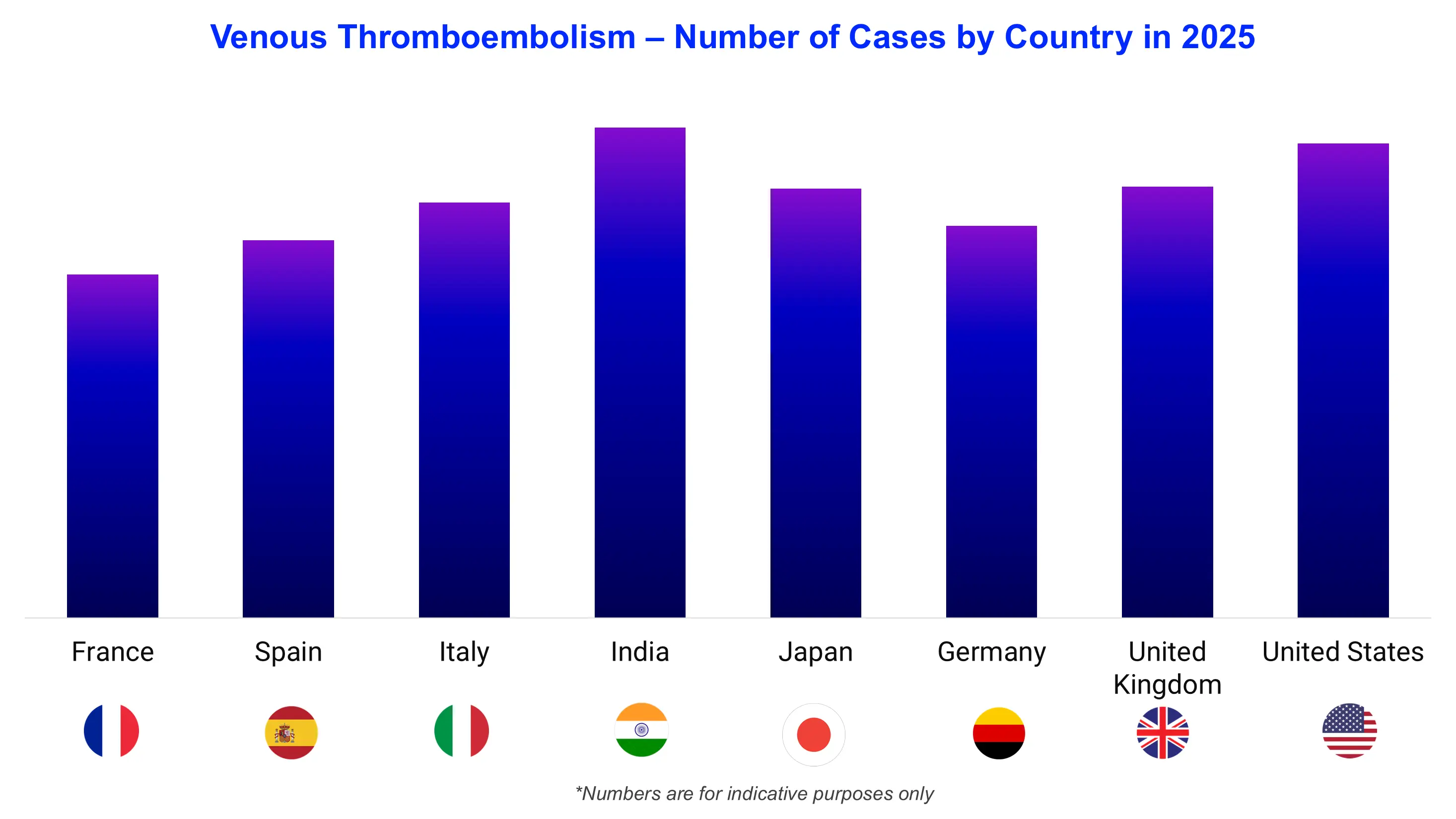
Largest Patient Pool |
United States |
|
Fastest Growing Region |
India |
|
High-Risk Population |
Older adults, hospitalized patients, individuals undergoing surgery, people with cancer, and those experiencing prolonged immobility. |
|
Key Diagnostic Method |
Duplex ultrasonography for deep vein thrombosis and computed tomography pulmonary angiography for pulmonary embolism. |
|
Major Risk Factor |
Prolonged immobility, recent surgery or hospitalization, active cancer, and previous VTE are important risk factors. |
|
Major gap in the market |
Underdiagnosis, nonspecific symptoms, and uneven availability of reliable epidemiological data and timely diagnostic services. |
The venous thromboembolism epidemiology division offers information on the patient pool from history to the present as well as the projected trend for each of the 8 major markets. Expert Market Research provides both current and predicted trends for the venous thromboembolism epidemiology scenario by examining a wide range of studies. Additionally, the report covers the diagnosed patient pool for venous thromboembolism and their trends. The data is broken down into specific categories, such as total prevalent cases in males and females, and total diagnosed cases across different age groups and patient pools.
|
Epidemiology Segment |
Key Insights |
|
Diagnosed Prevalent Cases of the Disease |
According to Aaron M. Wendelboe et al. (2022), the global annual incidence of venous thromboembolism (VTE) is estimated at 0.75-2.69 cases per 1,000 people. Up to 60% of VTE events occur during or within three months after hospital admission, accounting for approximately 10 million cases globally. |
|
Gender-Specific Cases of the Disease |
As per Lucia Cayuela et al. (2025), Spain recorded 59,515 VTE-related deaths between 1999 and 2022, with women accounting for 59.4% and men for 40.6%. The findings also indicate that mortality patterns vary by sex and age, supporting gender-specific epidemiological assessments. |
|
Age-Specific Cases of the Disease |
According to TROMBO.info, age is a major risk factor for thrombosis and pulmonary embolism, with most VTE patients older than 65 years. The increasing number of older adults affected by VTE highlights the importance of monitoring age-related disease burden. |
|
Ethnicity-Wise Cases of the Disease |
Epidemiological patterns may vary across populations because of differences in demographic characteristics, underlying risk factors, and healthcare settings. The supplied evidence also highlights VTE in the North Indian population, particularly among patients undergoing major lower-limb surgery. |
|
Mortality and Survival Analysis of the Disease |
According to the Centers for Disease Control and Prevention (CDC), an estimated 60,000-100,000 Americans die from VTE annually. Approximately 25% of people with pulmonary embolism experience sudden death as their first symptom, while one-third of VTE patients experience recurrence within 10 years. |
|
Disease Type |
Prevalence |
|
Deep vein thrombosis (DVT) |
A major manifestation of venous thromboembolism, representing a substantial proportion of VTE cases. |
|
Pulmonary embolism (PE) |
A serious manifestation of venous thromboembolism that occurs in a smaller subset of cases but contributes significantly to VTE-related mortality. |
Read more about this report - REQUEST FREE SAMPLE COPY IN PDF
The venous thromboembolism epidemiology data and findings for the United States, Germany, Spain, Italy, France, the United Kingdom, Japan, and India are also provided in the epidemiology section.
|
Country |
Key Insights |
|
United States |
According to the Centers for Disease Control and Prevention (CDC), up to 900,000 people in the United States are affected by VTE annually, and approximately 60,000-100,000 Americans die from the condition each year. Safura Khubdast et al. (2024) reported an estimated VTE prevalence of 422 per 100,000, projected to reach 567 per 100,000 by 2050. |
|
Germany |
According to Safura Khubdast et al. (2024), a study in Germany reported a VTE prevalence of 7.8% among patients in nonsurgical intensive care units. This finding highlights the burden observed in critically ill populations rather than the general population. |
|
France |
According to Aram Hovhannisyan et al. (2026), France recorded an overall VTE prevalence of 1.5% in 2022. The age-standardized annual incidence among hospitalized patients was 103.8 cases per 100,000 person-years. |
|
Italy |
In Italy, the prevalence of venous thromboembolism may be influenced by population aging, increasing exposure to chronic diseases, hospitalization, surgical procedures, and prolonged immobility. Improved diagnostic practices and greater recognition of thromboembolic events may also contribute to the identification of cases. |
|
Spain |
According to Lucia Cayuela et al. (2025), Spain recorded 59,515 VTE-related deaths from 1999 to 2022. Women accounted for 59.4% of deaths and men for 40.6%. Age-standardized mortality rates declined nationally for both sexes, although regional and demographic differences persisted. |
|
United Kingdom |
As reported by M. Hey et al. (2025), 13,260 deaths in the United Kingdom had VTE recorded on the death certificate between April 2023 and April 2024. Hospital-acquired VTE represented an important preventable contributor to thromboembolism-related morbidity and mortality. |
|
Japan |
In Japan, the growing proportion of older adults may contribute to the venous thromboembolism burden, alongside age-related comorbidities, hospitalization, cancer, and reduced mobility. Increasing recognition of thromboembolic complications and changes in healthcare utilization may further influence reported disease prevalence. |
|
India |
According to Amrit Goyal et al. (2025), DVT affects approximately one person per 1,000 in the Indian general population. Pulmonary embolism incidence is estimated at 39-115 cases per 100,000 people annually, while major lower-limb surgery is associated with an increased risk of DVT. |
Venous thromboembolism presents opportunities to improve early detection, prevention, and access to evidence-based treatment across the United States, Germany, France, Italy, Spain, the United Kingdom, Japan, and India. A major unmet need is the timely identification of patients whose symptoms are nonspecific or whose risk increases following hospitalization, surgery, cancer treatment, or prolonged immobility. Another gap is the limited availability of comparable country-level epidemiological data, which complicates assessment of disease burden and healthcare needs. Opportunities include standardized risk-assessment protocols, improved diagnostic pathways, appropriate thromboprophylaxis, and follow-up to reduce recurrent events.
Venous thromboembolism treatment primarily aims to prevent clot extension, reduce the risk of pulmonary embolism, and prevent recurrence. Anticoagulants, including direct oral anticoagulants, low-molecular-weight heparin, and vitamin K antagonists, are commonly used to inhibit further clot formation. Thrombolytic therapy may be considered for selected patients with severe pulmonary embolism, while catheter-based interventions or surgical embolectomy may be required in specific high-risk cases. Inferior vena cava filters may be considered when anticoagulation is contraindicated in selected patients. Treatment duration depends on clot location, recurrence risk, underlying causes, and bleeding risk.


Upto 15% Off
USD
$2699 $2429
$4299 $3869
$5799 $4949
$6999 $5949


*While we strive to always give you current and accurate information, the numbers depicted on the website are indicative and may differ from the actual numbers in the main report. At Expert Market Research, we aim to bring you the latest insights and trends in the market. Using our analyses and forecasts, stakeholders can understand the market dynamics, navigate challenges, and capitalize on opportunities to make data-driven strategic decisions.*
Explore our key highlights of the report and gain a concise overview of key findings, trends, and actionable insights that will empower your strategic decisions.
|
Report Features |
Details |
|
Base Year |
2025 |
|
Historical Period |
2019-2025 |
|
Forecast Period |
2026-2035 |
|
Epidemiology Statistics Provided |
|
|
Segmentation Provided |
|
|
Geographies Covered |
|
Datasheet
One User
USD 2,699
USD 2,429
tax inclusive*
Single User License
One User
USD 4,299
USD 3,869
tax inclusive*
Five User License
Five User
USD 5,799
USD 4,949
tax inclusive*
Corporate License
Unlimited Users
USD 6,999
USD 5,949
tax inclusive*
*Please note that the prices mentioned below are starting prices for each bundle type. Kindly contact our team for further details.*
Flash Bundle
Small Business Bundle
Growth Bundle
Enterprise Bundle
*Please note that the prices mentioned below are starting prices for each bundle type. Kindly contact our team for further details.*
Flash Bundle
Number of Reports: 3
20%
tax inclusive*
Small Business Bundle
Number of Reports: 5
25%
tax inclusive*
Growth Bundle
Number of Reports: 8
30%
tax inclusive*
Enterprise Bundle
Number of Reports: 10
35%
tax inclusive*
How To Order

Select License Type
Choose the right license for your needs and access rights.

Click on ‘Buy Now’
Add the report to your cart with one click and proceed to register.

Select Mode of Payment
Choose a payment option for a secure checkout. You will be redirected accordingly.
Strategic Solutions for Informed Decision-Making
Gain insights to stay ahead and seize opportunities.

Get insights & trends for a competitive edge.

Track prices with detailed trend reports.

Analyse trade data for supply chain insights.

Leverage cost reports for smart savings

Enhance supply chain with partnerships.

Connect For More Information
Our expert team of analysts will offer full support and resolve any queries regarding the report, before and after the purchase.
Our expert team of analysts will offer full support and resolve any queries regarding the report, before and after the purchase.
We employ meticulous research methods, blending advanced analytics and expert insights to deliver accurate, actionable industry intelligence, staying ahead of competitors.
Our skilled analysts offer unparalleled competitive advantage with detailed insights on current and emerging markets, ensuring your strategic edge.
We offer an in-depth yet simplified presentation of industry insights and analysis to meet your specific requirements effectively.




