

Consumer Insights
Uncover trends and behaviors shaping consumer choices today
Procurement Insights
Optimize your sourcing strategy with key market data
Industry Stats
Stay ahead with the latest trends and market analysis.
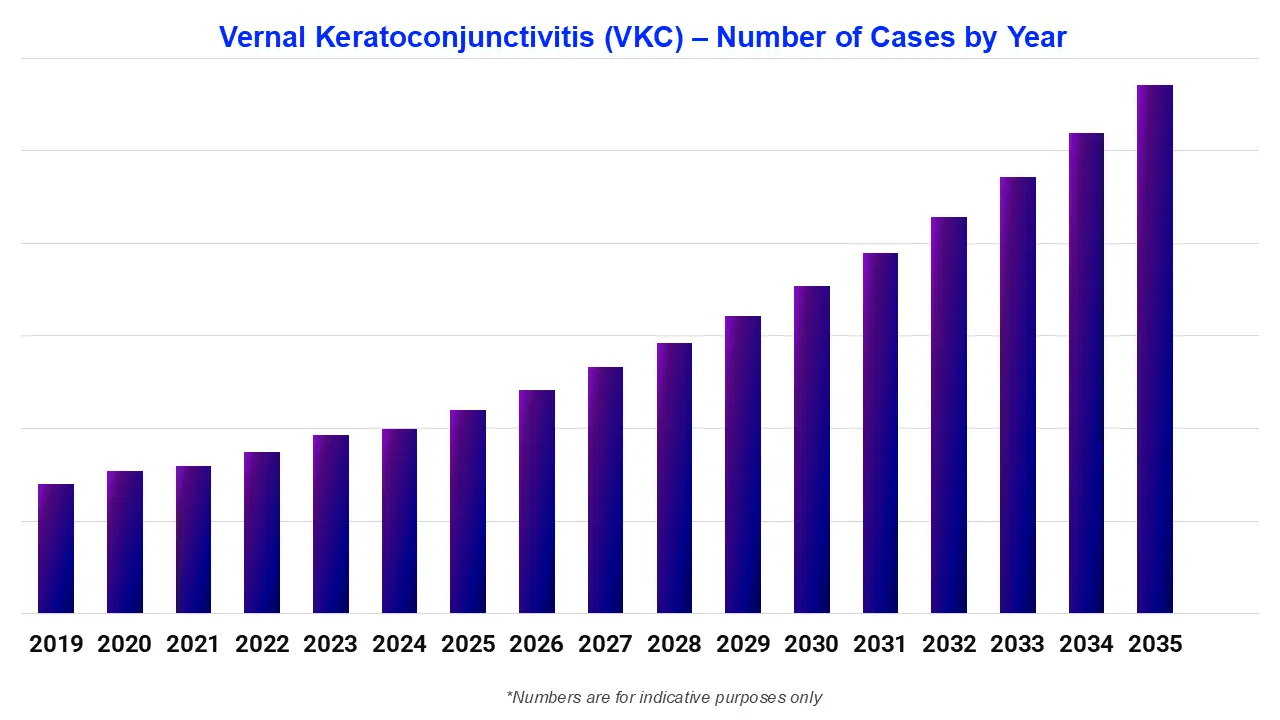
Vernal keratoconjunctivitis continues to represent a clinically significant pediatric ocular allergy burden, particularly across warmer climatic regions. In the United States, VKC prevalence is estimated at approximately 0.29 cases per 10,000 population, reflecting lower occurrence compared to tropical countries. The vernal keratoconjunctivitis (VKC) epidemiology forecast by Expert Market Research highlights increasing clinical focus on early diagnosis, advanced immunomodulatory therapies, and improved long-term management of chronic ocular allergy to minimize corneal complications and preserve visual outcomes in affected patients.
Base Year
Historical Period
Forecast Period
Read more about this report - Request a Free Sample
Expert Market Research's “Vernal Keratoconjunctivitis (VKC) Epidemiology Forecast Report 2026-2035” offers comprehensive information on the prevalence and demographics of vernal keratoconjunctivitis (VKC). It projects the future incidence and prevalence rates of vernal keratoconjunctivitis (VKC) cases across various vernal keratoconjunctivitis (VKC) populations. The study covers age, gender, and type as major determinants of the population. The report highlights patterns in the prevalence of vernal keratoconjunctivitis (VKC) over time and projects future trends based on multiple variables.
The report provides a comprehensive overview of the disease, as well as historical and projected data on epidemiology in the region.
Countries Covered
Vernal keratoconjunctivitis is a chronic, recurrent allergic eye disorder primarily affecting children and young adults, characterized by seasonal exacerbations and severe ocular inflammation. VKC is associated with hypersensitivity reactions leading to bilateral ocular surface inflammation involving the conjunctiva and cornea. It commonly presents in warm climates and regions with high allergen exposure. The disease manifests in palpebral, limbal, or mixed forms, often causing intense itching, photophobia, and visual impairment in severe cases. VKC significantly impacts quality of life and may lead to corneal complications if not effectively managed.
Key Report Insights
|
Parameter |
Insight |
|
Fastest Growing Region |
Tropical and subtropical regions, particularly Africa and South Asia, show increasing VKC burden and diagnosis rates. |
|
High-Risk Population |
Male children aged 5-14 years in warm, dusty climates represent highest-risk VKC populations. |
|
Key Diagnostic Method |
Clinical ocular examination identifying papillae, Horner-Tranta dots, conjunctival hyperemia, and corneal involvement remains primary diagnostic approach. |
|
Major Risk Factor |
Warm climates, allergen exposure, dust, sunlight, male gender, and atopic history significantly increase VKC risk. |
|
Major Gap in the Market |
Lack of standardized diagnostic criteria and universally accepted VKC severity grading systems limits accurate disease management. |
The vernal keratoconjunctivitis (VKC) epidemiology report provides comprehensive insights into the historical, current, and forecasted patient population trends across the regional markets. Expert Market Research provides both current and forecast trends for the vernal keratoconjunctivitis (VKC) epidemiology scenario by examining a wide range of studies. Additionally, the report covers the diagnosed patient pool for vernal keratoconjunctivitis (VKC) and its trends. The vernal keratoconjunctivitis (VKC) detailed epidemiology segmentation is broken down into specific categories, such as total prevalent cases in males and females, and total diagnosed cases across different age groups and patient pools.
|
Epidemiology Segment |
Key Insights |
|
Diagnosed Prevalent Cases of Vernal Keratoconjunctivitis (VKC) |
VKC demonstrates marked geographic variability, with prevalence remaining below 1/10,000 in Europe but reaching 5%-37% in tropical African and Asian populations, indicating strong climatic and environmental influence on disease epidemiology. |
|
Gender-Specific Cases of Vernal Keratoconjunctivitis (VKC) |
Epidemiological studies consistently report male predominance in VKC, with male-to-female ratios ranging between 2:1 and 4:1, particularly during pediatric disease onset and progression stages. |
|
Age-Specific Cases of Vernal Keratoconjunctivitis (VKC) |
VKC predominantly affects individuals aged 5-25 years, with disease onset commonly occurring between 10-12 years, although infant cases have been reported. |
|
Ethnicity-Wise Cases of Vernal Keratoconjunctivitis (VKC) |
Higher epidemiological burden of VKC is reported among African, Mediterranean, Middle Eastern, and South Asian ethnic populations, particularly in regions characterized by warm and dry climatic conditions. |
|
Mortality and Survival Analysis of Vernal Keratoconjunctivitis (VKC) |
VKC is associated with negligible mortality; however, severe untreated disease may contribute to long-term ocular morbidity, including corneal ulceration, keratopathy, and permanent visual impairment. |
|
Disease Type |
Subtype Distribution (%) |
|
Mixed VKC |
57.5% of VKC cases were classified as mixed subtype in a tertiary-care epidemiology study. |
|
Limbal VKC |
22.5% of VKC cases were identified as limbal subtype in reported patient cohorts. |
|
Palpebral VKC |
20.0% of VKC cases were categorized as palpebral subtype in the same epidemiological assessment. |
Read more about this report - Request a Free Sample
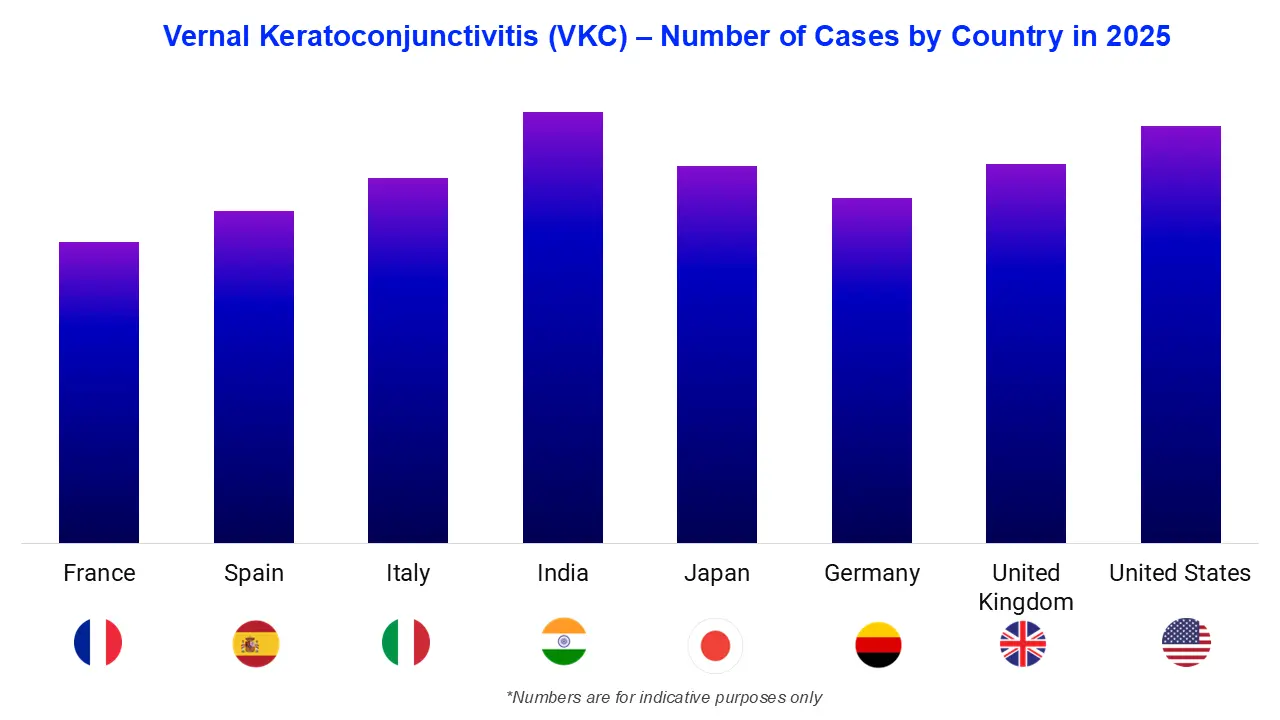
The vernal keratoconjunctivitis (VKC) epidemiology data and findings for the region-specific countries are also provided in the epidemiology section.
|
Country |
Key Insights |
|
United States |
VKC prevalence is reported at approximately 0.29 cases per 10,000 population, reflecting lower disease burden in cooler climates. |
|
Germany |
Germany is considered a low-burden VKC market within Europe, reflecting the rarity of the disease in temperate climatic regions. |
|
France |
France is categorized among European countries reporting VKC prevalence between 1-5 cases per 10,000 population, reflecting the relatively low but clinically significant burden of chronic allergic ocular disease within the region. |
|
Italy |
In Italy, VKC prevalence ranges from 0.4 to 4.8 cases per 10,000 population, indicating variable regional disease burden. |
|
Spain |
A Spain-based VKC study by Gómez-Henao et al. (2018) involving 32 patients reported pruritus in 75% of cases, photophobia in 50%, and red eye in 43.8%, indicating significant ocular symptom burden among pediatric VKC patients. |
|
United Kingdom |
In the United Kingdom, VKC commonly develops before 10 years of age, predominantly affecting boys and typically resolving before puberty. |
|
Japan |
In Japan, VKC accounts for nearly 1.2% of ocular allergic diseases, reflecting a relatively limited yet clinically significant burden. |
|
India |
In India, the EPIC VKC study screened 8,231 children aged 5-15 years of age and reported VKC prevalence at 1.11%, with males accounting for 66.3% of cases. Rural populations represented 69.6% of diagnosed patients, while palpebral VKC remained the predominant subtype (82.6%). |
The vernal keratoconjunctivitis (VKC) epidemiology landscape faces significant diagnostic and disease-standardization gaps, particularly across pediatric populations and emerging markets. European studies report VKC prevalence below 1 case per 10,000 population, while African prevalence reaches up to 37%, highlighting major regional disparities in diagnosis and reporting standards. Additionally, absence of universally accepted grading systems and biomarker-driven diagnostic criteria continues limiting accurate disease stratification and treatment optimization across severe VKC cases globally.
Significant untapped opportunities exist in the Vernal Keratoconjunctivitis (VKC) epidemiology landscape due to limited availability of targeted therapies for severe and recurrent disease cases. Nearly 10% of VKC patients continue experiencing symptoms into adulthood, while long-term corticosteroid use increases risks of glaucoma and cataracts, creating demand for safer steroid-sparing treatments. Additionally, high VKC prevalence across tropical and developing regions remains underdiagnosed and undertreated, highlighting opportunities for pediatric-focused biologics, advanced ocular immunotherapies, and biomarker-driven diagnostic tools supporting early intervention and improved long-term disease management.
Emerging growth areas in the VKC epidemiology landscape include advanced immunomodulatory therapies, pediatric ocular allergy management, and AI-enabled disease severity assessment tools. Epidemiological studies report VKC prevalence ranging from 5.2% to 7.3% in Ethiopia and approximately 3.3% in Egypt, indicating expanding disease burden in tropical regions. Increasing focus on cytokine-targeted therapies, tear biomarker profiling, and personalized ophthalmic treatment approaches is expected to strengthen future clinical research and therapeutic innovation within chronic allergic ocular disease management globally.
Treatment strategies for vernal keratoconjunctivitis focus on controlling chronic ocular inflammation, reducing allergic responses, and preventing corneal complications associated with severe disease progression. Management commonly includes antihistamines, mast cell stabilizers, corticosteroids, and immunomodulatory therapies for patients with seasonal allergic eye disease. A Phase III clinical trial (NCT06903884) is evaluating investigational therapies targeting inflammatory pathways in VKC, with estimated study completion in 2028. The trial aims to improve symptom control and long-term ocular surface protection in affected patients. Advancements in targeted ophthalmic therapies are supporting improved management outcomes and reducing recurrence-related complications in severe VKC cases.
Vernal Keratoconjunctivitis Market


Upto 15% Off
USD
$1999 $1799
$2999 $2699
$4399 $3739
$5799 $4929


*While we strive to always give you current and accurate information, the numbers depicted on the website are indicative and may differ from the actual numbers in the main report. At Expert Market Research, we aim to bring you the latest insights and trends in the market. Using our analyses and forecasts, stakeholders can understand the market dynamics, navigate challenges, and capitalize on opportunities to make data-driven strategic decisions.*
Explore our key highlights of the report and gain a concise overview of key findings, trends, and actionable insights that will empower your strategic decisions.
|
Report Features |
Details |
|
Base Year |
2025 |
|
Historical Period |
2019-2025 |
|
Forecast Period |
2026-2035 |
|
Epidemiology Statistics Provided |
|
|
Segmentation Provided |
|
|
Geographies Covered |
|
Datasheet
One User
USD 1,999
USD 1,799
tax inclusive*
Single User License
One User
USD 2,999
USD 2,699
tax inclusive*
Five User License
Five User
USD 4,399
USD 3,739
tax inclusive*
Corporate License
Unlimited Users
USD 5,799
USD 4,929
tax inclusive*
*Please note that the prices mentioned below are starting prices for each bundle type. Kindly contact our team for further details.*
Flash Bundle
Small Business Bundle
Growth Bundle
Enterprise Bundle
*Please note that the prices mentioned below are starting prices for each bundle type. Kindly contact our team for further details.*
Flash Bundle
Number of Reports: 3
20%
tax inclusive*
Small Business Bundle
Number of Reports: 5
25%
tax inclusive*
Growth Bundle
Number of Reports: 8
30%
tax inclusive*
Enterprise Bundle
Number of Reports: 10
35%
tax inclusive*
How To Order

Select License Type
Choose the right license for your needs and access rights.

Click on ‘Buy Now’
Add the report to your cart with one click and proceed to register.

Select Mode of Payment
Choose a payment option for a secure checkout. You will be redirected accordingly.
Strategic Solutions for Informed Decision-Making
Gain insights to stay ahead and seize opportunities.

Get insights & trends for a competitive edge.

Track prices with detailed trend reports.

Analyse trade data for supply chain insights.

Leverage cost reports for smart savings

Enhance supply chain with partnerships.

Connect For More Information
Our expert team of analysts will offer full support and resolve any queries regarding the report, before and after the purchase.
Our expert team of analysts will offer full support and resolve any queries regarding the report, before and after the purchase.
We employ meticulous research methods, blending advanced analytics and expert insights to deliver accurate, actionable industry intelligence, staying ahead of competitors.
Our skilled analysts offer unparalleled competitive advantage with detailed insights on current and emerging markets, ensuring your strategic edge.
We offer an in-depth yet simplified presentation of industry insights and analysis to meet your specific requirements effectively.




