Digital Transformation in Coal Mining Operations
With a long-standing reputation for being a labor-intensive process involving many operational challenges, the coal mining industry is now experiencing a substantial change through the application of automation and other modern technologies. In this case, mining companies have decided to use more intelligent technology solutions, which will help boost efficiency, ensure greater safety, and save money. This trend does not relate solely to experimenting. The implementation of automated technologies in the coal mining industry is becoming a widespread practice in different parts of the world.
Autonomous Equipment Reshaping Extraction Processes
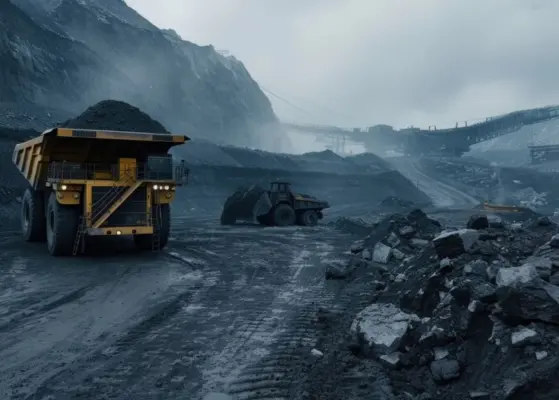
Perhaps one of the most apparent advancements in coal mining is the use of driverless vehicles and other types of autonomous machinery. This refers to the use of automated haul trucks, drilling machines, and loading devices that do not require human drivers to become completely self-driven. This type of machinery is built for sustained operation without manual interference to boost efficiency even further.
Autonomous haulage, for instance, can improve the productivity of mine sites by about 15% to 20%, in addition to lowering the costs of fuel and maintenance expenses. Companies have invested significant capital in developing and adopting such technological solutions as part of their efforts to maximize output.
Another important innovation includes the integration of automation technology into a central monitoring station from which multiple components of the equipment can be controlled at once. In addition to boosting efficiency, it also protects the health of miners by exposing them to less dangerous conditions.
AI and Predictive Analytics Driving Operational Intelligence
AI and predictive analysis have proven to be essential in the modern mining processes. It involves the analysis of data collected from equipment and other sensors to help predict machine performance problems and make the most effective use of resources.
Predictive maintenance is one area that stands out as revolutionary because companies no longer need to wait for machines to break down before repairing or replacing them. Predictive maintenance allows a company to know when a machine will break down and act accordingly. On the other hand, AI-assisted geological modelling helps companies understand the composition of the coal seams, hence allowing them to extract coal more efficiently while minimizing wastage.
IoT Integration and Real-Time Monitoring
The use of IoT technology has further advanced the process of digitalization in coal mining. Sensors installed in machinery and infrastructures supply real-time information related to different factors such as temperature, pressure, vibrations, and machinery efficiency. Real-time analysis can reveal any abnormalities in machinery performance, which can be addressed in advance.
Moreover, IoT technology is also being increasingly employed to assess environmental factors such as gas content and air quality in mines. The latter is especially relevant for underground mines, which pose a greater risk to miners. Continuous assessment of working conditions helps businesses comply with all the safety regulations and ensure the safety of their employees.
Safety Innovations and Workforce Transformation
Safety continues to be an important aspect in coal mining, and technology continues to play an essential part in making the workplace safe. First, autonomous equipment makes it unnecessary to have workers in some dangerous areas. Second, wearable technology and intelligent helmets offer valuable health and safety information regarding the miners. This technology allows monitoring aspects such as fatigue, location, and the level of risk. Furthermore, virtual reality (VR) technology is used to educate and train workers to make them better equipped to deal with mining situations.
Automation is therefore expected to lead to changes in the nature of jobs within the industry. Although some occupations are expected to become obsolete, there will be an increasing need for qualified people who would be able to maintain the new technologies.
Strategic Collaborations and Technology Partnerships
Technology companies are forming partnerships with mining businesses, machinery manufacturers, and software developers to drive rapid digitization of mining activities. It has become easier and cheaper to implement state-of-the-art technologies into mining processes through such collaborations. Such collaborative efforts are facilitating the creation of bespoke systems that help address various problems faced by mining businesses. This is also leading to the emergence of innovative business practices within the industry.
Mining businesses are also engaging in various research and development activities as they are trying to explore next-generation technologies for future use. For instance, they are testing drones for surveying purposes, blockchain systems for transparent supply chain management, and advanced robotic technologies for underground mining.
Cost Optimization and Competitive Advantage
The use of advanced technology is contributing to substantial cuts in costs for mining companies. Through automation, labor costs are lowered. Predictive maintenance ensures that downtimes and repairs do not take place too often. Resource efficiency is another way through which mining firms benefit from digital transformation.
Companies that adopt new technologies get ahead of competitors. Such firms can operate more effectively and produce coal cheaper. This factor matters especially in view of the unstable market situation and growing competition from other types of energy sources. Furthermore, digitalization helps companies perform better environmentally. Advanced extraction techniques can also help reduce the impact on the environment.
Explore how mining innovations shape coal industry trends in the Coal Market Report.
Reimagining the Future of Coal Mining
The digitalization process is changing the nature of coal mining as an industry, transforming it into a more effective, safe, and technology-oriented field of production. Firms that are able to integrate automated systems and data analytics into their work are expected to cope with the challenges associated with energy markets in the present day.
Although the position of coal within the global energy balance is constantly changing, the necessity to improve and develop technologies related to mining operations remains relevant. With time, coal mining is becoming more intelligent and interconnected, guaranteeing its place within the global energy industry scope for many years to come.











Share