Growing Role of Robotics in Emergency Response Operations
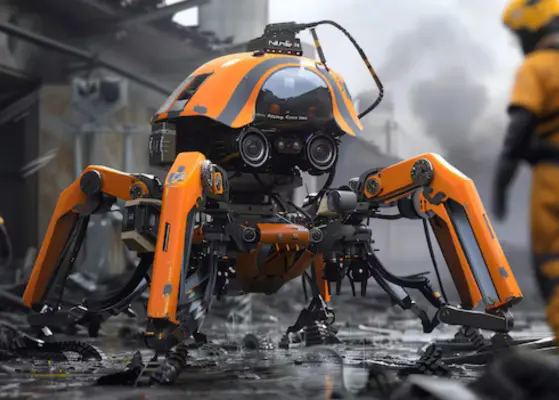
Emergency responses are becoming increasingly investigated because of the growing number and complexity of the emergencies involved. Conventional approaches have become inadequate for dealing with these emergent threats. Robotics, however, is emerging as an increasingly strategic solution. Robots were initially used merely as an auxiliary support mechanism but are now being looked at as primary tools for emergency response and rescue missions.
This trend represents a major shift in expectation. Response agencies are not only looking at humans as tools but are looking for technological approaches that can enter dangerous environments, collect data, and provide assistance for rescue missions. Emergency response robotics has thus moved from an experimental process to a practical one. The uptake may not be universal, but there certainly seems to be a definite trend toward its use.
From Controlled Environments to Real Disaster Zones
Previously, rescue robots were primarily evaluated within limited, controlled facility setups. Companies are now trying to create machines capable of functioning in non-regular and dangerous situations. For example, at Boston Dynamics, the quadruped robot called Spot is continuously being explored for emergency work. Fire department units in New York have deployed Spot to help inspect dangerous areas in buildings in December 2023. The robot sent live video and thermal images to the team, which minimized human re-entry into hazardous zones.
On the other hand, Sarcos Technology and Robotics Corporation have been developing robotic devices that can perform heavy lifting tasks, especially during rescues. Their Guardian XO exoskeleton make it possible for rescue workers to lift large pieces of debris without exerting themselves physically.
Precision and Speed Are Becoming Key Differentiators
Emergency response is highly time-sensitive, where rapid action directly improves the likelihood of saving lives. Robotics plays a critical role in enhancing both the speed and precision of emergency operations. Rescue robots equipped with sensors and cameras can access collapsed structures where human entry is not possible.
Besides that, Teledyne FLIR and similar companies provide thermal imaging systems which are used for detecting human presence. Their technology is being deployed in various disaster zones, like those affected by earthquakes. The most remarkable feature in these robots is how they help to minimize risks. Before them, rescue teams were often sent without knowing what was waiting inside the dangerous areas. But in the present day, powered by real-time data, this technological advancement is changing how extreme situation decisions are made.
AI Integration Is Expanding Capabilities
With AI, robots can assess their surroundings, pinpoint hazards, and make simple decisions. This not only eases the pressure on human supervisors but also leads to greater productivity. The fusion of AI and robotics is one area where businesses are investing their funds.
For instance, Shield AI is working on autonomous systems capable of functioning without GPS signals. Although the primary application of the technology was defense, it is now being applied in the area of disaster relief where communication infrastructures are typically broken. A notable development has also emerged from Hyundai’s robotics division, which is focused on introducing AI-driven mobility solutions for emergency operations. They are mainly concerned with the creation of robots that can operate effortlessly through various types of terrain such as debris in cities or also a forest environment.
Adoption Across Industries Is Expanding the Market Scope
Private companies in the oil and gas industry now use robots to check sites and react to crises. In the event of a fire or leak, machines are deployed first to assess the situation. This approach keeps human personnel out of danger while enabling faster, more informed response actions, ultimately improving safety outcomes, and reducing response time.
To explore how aerial robotics are enhancing firefighting capabilities, refer to the Firefighting Drone Market Report.
Challenges Are Slowing Full-Scale Adoption
Even though there have been advancements, some obstacles that prevent widespread usage continue to exist. One of the obstacles is cost, as modern robots demand significant investment and thus are expensive for most buyers. Another obstacle is related to technical aspects. Modern robots cannot perform properly in unpredictable conditions due to the presence of debris, temperature extremes, and even destruction of the buildings around them. Moreover, training is yet another important aspect that needs attention, as rescue crews need to have the necessary skills to use these tools effectively.











Share