Retail Supply Chain and Inventory Optimization Trends Across Europe
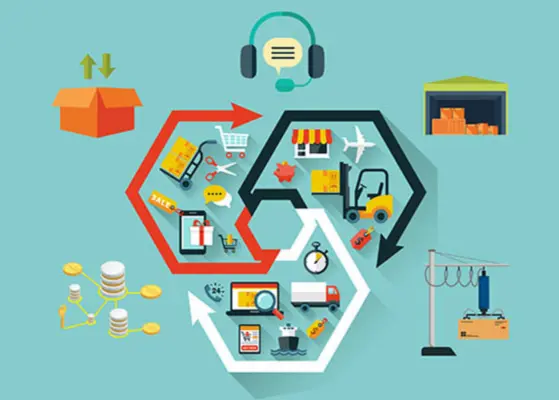
Retail supply chains are going through a period of significant upheaval in the European retail landscape. Increasing costs of operation, a transformed consumer, and an increasingly complex retail channel have led to a re-evaluation of the retail supply chain, from the supplier to the store. Supply chain and inventory optimization have moved to the forefront of retail competitiveness.
Those retail companies that can improve visibility and coordination of the entire supply chain are better positioned to decrease costs, sustain inventories, and respond to changes in the demand pattern. These skills are critical, especially in the area where the markets and behaviors vary in different regions.
Growing Complexity in European Retail Supply Chains
The supply chains of the retail sector in the European continent are increasing in complexity owing to a combination of factors. The retail companies function in more than one country. Every country has a unique set of regulations and taxes. The crossing of borders with the merchandise thereby results in an administrative hurdle.
Assortment of products has also emerged as an important consideration. Retail businesses have been offering more extensive product assortments to meet the varying preferences of their customers. This in turn has caused an increase in the SKU base. Omnichannel retailing has greatly added complexity to the topic of supply chain. Retail stores are now forced to meet both the "in-store sales" and the "online fulfilment of sales" requirements. To address both, inventory and demand management should be precise.
Importance of Inventory Visibility and Control
Inventory visibility is an important factor for optimizing the supply chain. For a retailing business, there is a need for accurate knowledge at all times regarding the existing levels of inventory in the storage and point of sale.
Consolidated inventory systems offer the retailer the chance to manage inventory more efficiently. Items can be re-routed based upon their demand requirements. This increases consumer satisfaction, and there are reduced discounts.
In addition, accurate stock information is the basis for customers' trust. Customers would like to have accurate information regarding the availability of products. Such services improve customers' satisfaction and loyalty.
Role of Technology in Optimization Efforts
Technology plays a significant role in the issue of supply chain management in the 21st century. European retailers are adopting advance planning tools for more accurate forecasting. Such tools enable forecasting based on historical data, seasonality, and promotions.
Automation is also another growing trend. Distribution centers use automated picking and sorting systems for more efficiency and fewer errors. Automation at the store level enables faster restocking and improved shelf inventory. Cloud-based solutions enable more cooperation among those in the supply chain. Data sharing and coordination are done more efficiently by retailers, manufacturers, and logistics companies. They can also react faster because they are connected.
Managing Last Mile and Store Fulfilment
The problem of last-mile delivery persists as a difficult challenge in retail logistics. The operations of last-mile deliveries are further complicated by congestion in urban areas, concerns for sustainable deliveries, and cost constraints. Retailers are seeking new solutions to these challenges. Store-based fulfilment has become popular as such. The concept of using stores as small distribution centers reduces the distances of deliveries. It also improves the times of fulfilling orders. Additionally, it improves inventory turnover.
Nevertheless, fulfilment in the store must be properly planned for. Workloads, capacity, as well as inventory, need to be managed. Retailers who allocate efforts in process improvement experience enhanced performance outcomes.
Cost Control and Resilience Considerations
Supply chain optimization is inextricably linked with cost management. With rising costs of transportation, energy, and labor, companies are facing pressure in terms of margins. Retailers are looking for ways to save by optimizing routes, consolidation, and collaboration with suppliers.
Resilience is, in addition to this, an issue that has recently received attention. The disruptions resulting from geopolitical factors, climate change, and logistics bottlenecks are primarily driving forces accounting for the risks. The retailers are diversifying suppliers and developing buffer stocks for the items that are considered essential.
It is hard to achieve the balance between efficiency and resilience. If there is too much inventory, it results in the tying down of funds, and if the system is lean, then there are risks associated with it as well. It is necessary for the retailers to identify the optimal balance based on the product and demand variability.
Strategic Implications for European Retailers
Long-term competitiveness is maintained with effective supply chain and inventory strategies. More efficient retailers are able to quickly respond to demand changes and reduce waste, therefore enhancing customer experience and increasing profitability. Data-driven decision-making underpins successful optimization.
Retailers invest in analytics as a means to drive forecasting, assortment planning, and replenishment. Integration enhances both accuracy and speed. The more complex supply chains become, the more critical collaboration will be towards making them successful. Accordingly, retailers building strong partnerships right through the value chain benefit from better visibility and control.
Explore how efficiency, supply chain strategies & regional dynamics shape retail performance in the Europe Retail Market report.
Strengthening Retail Operations Through Smarter Supply Chains
Supply chain and inventory optimization are the most important determinants of the future of retail in Europe. Retail companies with visibility, technology, and collaboration are likely not to have challenges in dealing with complexity and uncertainty. With changing expectations of the customer in terms of pressures of efficiency of operations, having an optimal supply chain remains the cause of a competitive advantage. Companies focusing on supply chain optimization as the top priority are likely to survive in the long term in the European market.










Share