The Innovations in Modern Honey Production and Beekeeping
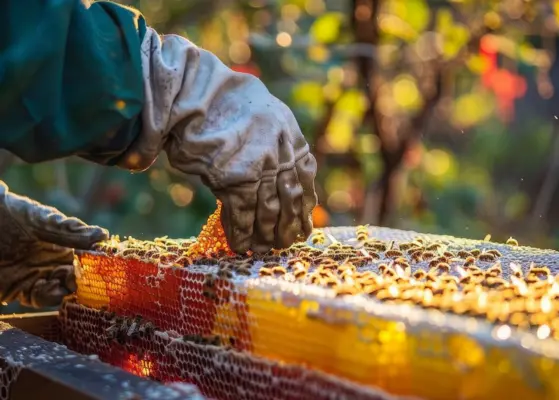
The production of honey has tremendously changed over time as beekeepers embrace modern ways of production to enhance efficiency, quality, and sustainability. Conventionally used honey harvesting techniques were labor-intensive and had crude hives that usually restricted the output and increased the exposure of the honeybees. Currently, new hive designs, monitoring, and management enable beekeepers to maximally produce and safeguard bee health. The Langstroth hives, top-bar hives, and flow hives offer a higher level of control over the growth of colonies and their honey harvesting. These designs also eliminate stress in the bees and allow them to forage and produce honey. With the addition of all these enhanced structures to the typical inspection and data-driven management, honey harvests become more predictable and regular.
Sustainable Practices in Honey Farming
Sustainability is a growing concept in contemporary honey production. To take care of the bee populations, beekeepers are embracing environmental practices that are friendly to help sustain the ecosystems that supply the nectar. The health of bee colonies in the long run is ensured by planting bee-friendly flowers, using no chemical pesticides, and keeping large forage areas. Other operations are aimed at the production of organic honey when no synthetic chemicals are applied. Moreover, the hives are placed in pure areas. Besides enhancing the quality of honey, sustainable practices are also attractive to consumers who are interested in environmentally conscious products. With the application of ecological stewardship in production, beekeepers are helping in food security and maintaining the natural habitat of the bees.
Technology-Driven Honey Production
The use of technology has also become a major issue in the contemporary production of honey. Sensors, cameras, and automated monitoring systems have become tools used by beekeepers to monitor the conditions of the hives, like temperature, humidity, and activity in the colony. This real-time data is used to detect early infections such as disease, pests, or a shortage of food. Hence, interventions are made in time. Automated honey extractors and filtration systems are also used in some of the large-scale operations and streamline the processing without compromising product quality. The accuracy of tracking and mechanized treatment cuts down waste and makes sure that honey does not lose its natural components and taste. Technological inclusion enhances production cycle efficiency and transparency, as well as assists beekeepers in satisfying the increasing consumer demand.
Hive Management and Colony Health
Keeping bee colonies healthy is the key to the successful production of honey. To achieve the regular yield, beekeepers observe the strength of the colony, the well-being of the queen and the progress of the brood. The frequent check-ups make it possible to identify possible issues like Varroa mite invasion, fungus, or malnutrition. The other methods of modern hive management are controlled feeding in times of nectar scarcity, divestiture of colonies at risk of overcrowding, and rotating of hives to retain good genetic diversity. These treatments assist in ensuring that the productivity of colonies remains low with little mortality. Significantly, beekeepers protect their livelihoods and the ecosystem at large by focusing on the well-being of their bees, as they are extremely important pollinators.
Optimizing Honey Yield and Quality
There are a number of methods that lead to honey maximization and quality. High-yielding species of bees, ample foraging, and a good site for a hive are all beneficial in improving honey yield. Another thing that beekeepers are keen on is the timing of harvesting. They extract honey when it has the correct moisture level to avoid fermentation. Handling of honey after harvesting, such as gentle filtration and proper storage, preserves the natural smell, taste, and nutrition of honey. Coupled with proper colony management and current extraction and processing methods, manufacturers can provide quality honey at the local and global satisfaction requirements.
Emerging Innovations in Beekeeping
Honey production will always be influenced in the future by innovation. There are beekeepers who are trying mobile hives and transporting colonies to nectar-rich areas seasonally. The practice will boost yield, and honey will have different sources of flowers. There is also the idea of AI and machine learning to predict colony behavior and optimize feeding schedules as well as prevent disease outbreaks. Flow hives, in which the honey can be easily removed without the hive being opened, are becoming increasingly popular with hobbyists and smaller-scale producers due to their simplicity and less disturbance to the bees. The innovations ensure that honey production has become efficient, sustainable, and available to more producers.
Supporting the Honey Industry Through Innovation
The contemporary honey production is concerned with the productivity, quality, and sustainability balance. Beekeepers who embrace new technological adjustments, new designs of hives, and new environmental sustainability can serve the increasing demand and still have healthy populations of bees. The methods are favorable both to the producers and the consumers, and honey is a high-quality product that is natural. They also help in the resilience of the supply chain of honey by enhancing the consistency of yield and reducing losses because of environmental or operational setbacks. The introduction of modern methods into the traditional practice is a new age in beekeeping, a new era that focuses on efficiency, sustainability, and consumer satisfaction.
Check out the Global Honey Market Report for insights on production trends, emerging technologies & regional growth in honey supply.
Preparing for a Sustainable Future in Beekeeping
The future of honey production depends on constant innovation and proper management. Beekeepers who adopt the new methods, focus on the health of the colonies, and use sustainable practices are in a better position to deal with environmental issues and satisfy the market. Technology used in conjunction with traditional knowledge could help the honey industry to continue expanding and serve the ecosystems, as well as provide high-quality products. Sustainable honey production is not a mere commercial principle but a determination to maintain the importance of bees to agriculture and the global food system.











Share