Fire Safety Regulations Reshaping Building Material Innovation
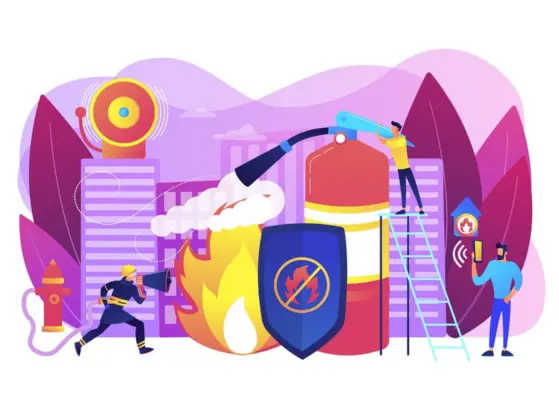
The issue of fire safety regulations is not simply limited to compliance anymore; these regulations have become one of the major driving factors behind innovation within the construction materials industry. Such changes are most apparent in the construction of high-risk buildings like commercial complexes, tall buildings, and other types of public infrastructure where a lack of safety could prove to be detrimental.
Rather than merely following the regulations put forth by the authority, companies are increasingly adopting these guidelines as the basis for their innovation process so that they can produce a product that will make them more competitive than others.
Rising Stringency of Global Fire Safety Standards
Fire safety standards have advanced significantly over the past decade, driven by major fire incidents and growing complexity in modern building designs. International codes like International Building Code (IBC), NFPA codes in the United States of America, and EN code in Europe have been evolving and getting more detailed and rigid. Not only are they laying down minimum benchmark performance criteria, but they also require the use of materials that provide extended fire resistance, low smoke generation, and lesser toxic emissions. Hence, manufacturers must continuously invest in research and development of their products in order to ensure that they meet the required criteria.
Product Development Aligned with Compliance
In the present day, compliance is considered to be an essential part of product design by many manufacturers. Fire-proof boards, coatings, insulations, and glazing systems are created in accordance with several standards for use in different geographic locations without any major adjustments. For instance, the development of products that resist the effects of fire and are able to hold out for long periods of time under heat stress, has become particularly popular. Such products have to undergo extensive tests to prove their high-performance ability.
Moreover, the implementation of digital methods and simulation programs in the process of product creation has proved highly efficient in recent years. Modeling the behavior of a product when exposed to fire helps avoid unnecessary testing.
Strategic Role of Certification and Testing
Certifications are now becoming a distinguishing factor in the construction material industry. Developers and contractors are expected to use products such as those certified by UL, FM Global, or CE marking, as these products guarantee quality and reliability. In order to cater to this demand, many organizations are setting up in-house testing labs or collaborating with reputable testing organizations. This enables them to perform full-scale tests on their products and facilitate the process of certification.
Impact on High-Rise and Infrastructure Projects
Modern builders and developers are obliged to implement the most sophisticated fire protection technologies. This includes installing fire-resistant products, implementing compartmentation, and smoke control strategies. Infrastructure facilities, such as airports, subway stations, and tunnels, should comply with the same rules concerning the fire hazard. In addition to the above-stated technologies, these facilities require materials to be resistant to high temperatures. For example, in March 2026, LONGi launched a fire-resistant solar module for rooftop PV, featuring a multi-layer safety design to reduce fire risks, improve efficiency, and enhance durability.
Sustainability Meets Compliance
There is an ever-growing convergence between fire safety and sustainability within the building materials industry. Authorities are promoting the development of materials that will not only offer fire safety but also reduce the negative impact on the environment.
Companies are designing sustainable materials that resist fires while also minimizing their effect on the environment. This includes the use of recyclable materials and reducing the emission of toxic fumes during production. However, meeting these criteria requires conducting extensive tests to ensure that such materials retain their fire safety properties.
Competitive Strategies and Market Dynamics
Changing dynamics of the regulatory environment have influenced competitive conditions in the construction material market. Various strategies are being implemented by companies to compete, such as innovations, strategic cooperation, and geographical growth.
Multinational corporations use their potential to create complete product lines covering various issues connected with fire safety. In addition, they expand in new markets characterized by urbanization and infrastructure projects that demand compliance with the regulations. At the same time, new entrants target particular segments of the construction materials market, offering special solutions. By doing so, they manage to distinguish their products from those produced by competitors.
Another trend influencing competitiveness is related to the process of digitization. Digital platforms are increasingly used to present products online with all necessary documentation, as well as technical support and information concerning compliance with regulatory requirements.
Explore how fire-rated materials and glazing systems evolve under regulations in the Fire Resistant Glass Market Report.
Compliance as a Catalyst for Innovation
In terms of future developments, stricter laws regarding fire safety measures are expected to emerge as urban structures grow increasingly complex and demand higher levels of protection. This will prompt manufacturers to come up with new solutions which will deliver better results in terms of effectiveness and durability.
Digitalization and other innovations such as new materials and methods for designing buildings might also have an impact on the future of fire safety standards. Companies which manage to synchronize their strategies with laws are projected to have an advantage in the future.









Share