Helicopter Charter Services in Emergency Medical Operations
Emergency medical services require time, accuracy, and easy access to patients. In very critical cases, the fact that each minute matters and that the usual ways of transport are often too slow to arrive at the patients or to take them to the hospital, has caused helicopter charter services to become the key solution in emergency medical operations. They provide rapid response, reach remote locations, and carry patients to hospitals in the shortest time possible. Hospitals, disaster response teams, and government agencies are increasingly turning to air ambulance and medical helicopter services to save lives in time-sensitive scenarios.
Rapid Response for Critical Patients
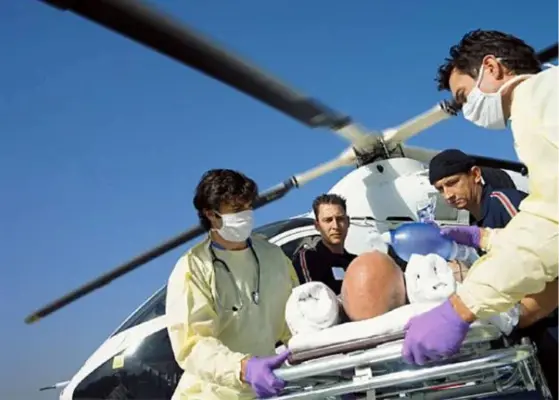
Helicopter medical transport is primarily beneficial in the aspect of reaching the patients in the shortest possible time. Ground ambulances are held up by urban traffic, remote terrain, or natural obstacles. Helicopters are not affected by such barriers thus they can arrive at accident sites or rural areas that are hard to get. Meanwhile, emergency medical personnel on board can start treatment during the flight, thus stabilizing patients before they arrive at the hospital. This speedy access to medical care is what often creates the difference between living and dying in case of traumatic injuries, cardiac arrests, strokes, and other serious wounds.
Specialized Equipment and Trained Medical Teams
The aircrafts destined for medical charters come with the installation of different life-support systems, high-tech monitoring gadgets, and a variety of essential drugs. The onboard medical team is not only familiar with the situation but also very trained to provide that critical care, deal with emergency procedures, and stabilize the patient during the flight. Hence, the combination of high-tech equipment and adept personnel is a guarantee that the patient will have access to quality medical care even before they get to a healthcare facility. Moreover, the transfer of patients between hospitals becomes safe due to the medical specialization provided ensuring that even here, there is continuity of care when the situation is critical.
Operational Advantages and Safety Protocols
Security comes first in emergency medical helicopter operations. The pilots, thus, undergo intensive training which assists them in dealing with difficult weather conditions, managing busy urban areas, and navigating through remote landscapes. Maintenance of helicopters is done in accordance with strict aviation standards, and they are outfitted with navigation, communication, and emergency equipment. There are also operation rules in place to guarantee the safety of both patients and medical personnel throughout the duration of their journey. Through the adoption of these safety measures, helicopter charters are in a position to offer dependable and steady service for emergency medical transport, which is in line with the high demands of healthcare providers and families.
Best Practices in Medical Helicopter Services
In order to best utilize air medical transport, several best practices are put in place by service providers:
- Perform pre-flight medical evaluations to establish patient needs and the necessary equipment
- Keep up regular training for pilots and medical crews on emergency procedures
- Have real-time communication with hospitals to coordinate patient transfer and care
- Make sure helicopters are fitted with life-support systems and monitoring gadgets
- Carry out standard procedures for flight safety, patient handling, and rapid response
These methods not only keep the standards of care at a high level but also improve the times of the response and greatly reduce the risks of a crisis mission.
Expanding Access to Remote and Disaster Areas
Providing services through helicopter charters is instrumental in accessing those places that have no other means of contact. The problem of lack of quick access to hospitals is faced by rural areas, islands, or those places that have been hit by a disaster. Medical helicopters serve as a link between these places and the rest of the world, they are the ones who bring the first aid to the communities which are in dire need of it. The use of air ambulances by the government as well as by private healthcare providers is on the rise and the main idea behind it is to broaden medical coverage and to make the system more capable of responding to disasters. The integration of helicopter services in emergency management plans is beneficial for healthcare systems as they will be able to provide better patient outcomes as well as aid the larger population on time.
Check out the full report to learn more about medical helicopter services and emergency transport solutions.
Flying for Life and Safety
In emergency medical operations, the helicopter charter services prove the point of how the combination of these three elements results in saving the life of the patient, namely speed, technology, and expertise. The patient on board receives regular care as there is a quick response, specialized equipment is used, and trained medical teams are there to assist the patient. The community will soon be benefiting from the adoption of best practices and the integration of air transport in their emergency plans, thus the community will be able to get medical support that is fast, safe, and reliable. The arrival of the helicopter at the scene has revolutionized the fighting against time in emergencies, and it has become possible to give timely medical interventions in cases where every minute is of utmost importance.











Share