The Impact of Contemporary Lighting on Urban Planning
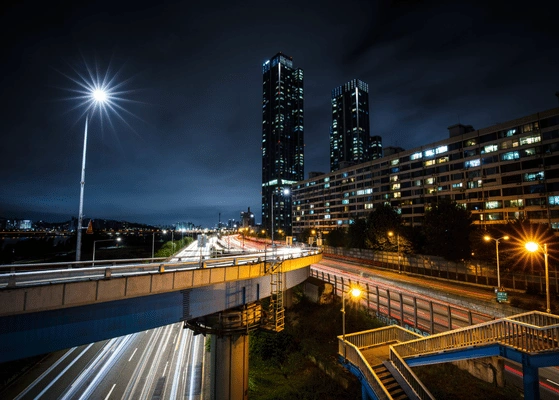
Lighting plays a central role in defining urban environments, business districts, and public spaces globally. Innovation in LED technology, smart control systems, and energy-saving designs is assisting cities, companies, and homeowners in saving energy while enhancing security and aesthetics. From roads and gardens to offices and shopping settings, contemporary lighting solutions are optimized to satisfy functional requirements and sustainability objectives.
Urban environments are increasingly embracing intelligent lighting that adjusts to traffic, weather, and occupancy patterns. Commercial offices and spaces are employing automated systems that enhance employee and visitor productivity, comfort, and safety. Effective lighting not only saves energy and carbon emissions but also serves towards larger environmental sustainability outcomes. Those cities investing in smart lighting are making living and visiting conditions better for citizens and visitors, as well as enhancing the experience and functionality of public spaces.
Smart lighting is utilized to accentuate the buildings' design or public art, enhancing beauty and civic pride. By incorporating technology, city planners are designing areas that are functional yet aesthetically pleasing.
Global Adoption Trends
Major cities are at the forefront of installing smart and efficient lighting. European, North American, and Asian cities are installing new-generation LED streetlights and IoT-based solutions to reduce energy consumption and enhance system performance. Commercial and industrial buildings are also adopting lighting controls, occupancy-based automation, and daylight harvesting to minimize energy usage while maximizing operational efficiency.
Most smaller cities and suburbs still have not implemented cutting-edge lighting solutions. Technical skills, high upfront costs, and outdated infrastructure hamper rollout. To broaden use in these regions will take special investment, education efforts, and public-private partnerships between companies and municipalities. Effective use in smaller cities will enhance security, lower energy use, and make public and commercial areas more visually attractive.
Energy Efficiency and Technological Innovation
Energy-efficient lighting lowers the cost of operations and decreases the environmental footprint. LED lighting uses much less electricity than incandescent or fluorescent lights and has longer lifetimes.
Smart controls, dimming, and motion or occupancy sensors enable systems to adapt the illumination according to time of day, presence, or daylight availability. They save energy while providing sufficient lighting for safety and productivity.
Technological innovation is also enabling lighting infrastructure to be more flexible and scalable. Wireless controls, modular architecture, and cloud-based monitoring enable cities and companies to control multiple locations at once.
Design and User Experience
Lighting is not just about seeing. Design and user experience drive adoption and satisfaction. Good lighting enhances safety, comfort, and beauty in the urban and commercial environments. Contemporary lighting solutions can further impact the mood and behavior of humans in an environment, enabling well-being and productivity.
Advanced design solutions are being adopted by numerous cities and companies:
- Dynamic lighting that responds to traffic, pedestrians, or events
- Color temperature fine-tuning to enhance comfort, concentration, and clarity
- Lighting synthesis with architecture and urban design to facilitate improved aesthetic appeal
Such solutions provide safer, more inviting, and visually stimulating environments while being energy efficient. Properly designed lighting enhances residents' quality of life as well as the experience of visitors, customers, and employees. For example, shopping areas with adaptive lighting draw more evening visitors, whereas office spaces with automated lighting enhance employee comfort and lower fatigue.
Policy Support and Incentives
Government incentives and policies are influencing the use of smart and sustainable lighting globally. Several countries have tax credits, rebates, or grants for installing energy-efficient technologies or retrofitting current lighting facilities. Compliance and adoption of best practices are ensured through international standards and certifications.
Public-private partnerships are also increasing to develop infrastructure and fund research in lighting technology. Municipal, utility, and technology company partnerships form scalable solutions for urban, commercial, and industrial uses. Partnership actions enhance coverage, decrease energy usage, and enable long-term sustainability. Incentive programs that pay for both retrofitting and new installations have been adopted successfully by some cities, enabling wider participation and quicker adoption.
For an exhaustive analysis and future prediction, go through our Global Lighting Market
Future of Smart and Sustainable Lighting
With growing urbanization and technology integration globally, lighting solutions will further transform. Efficiency, flexibility, and user experience are becoming crucial for new-generation lighting systems. Smart, connected, and energy-efficient lighting saves operational expenditure, facilitates sustainability, and uplifts urban and commercial environments.
The future will be more about the integration of predictive analytics and AI in lighting systems. Lights may adjust automatically depending on traffic movement, climatic conditions, and human usage patterns. Streetlights can also integrate with emergency services, enhancing response times and public safety. Lighting indoors will continue to include personalization options, enabling users to manage brightness, color temperature, and automation schemes using smartphones or voice control.











Share