|
170M+
Women affected globally
(1 in 8)
|
~70%
Estimated undiagnosed
globally
|
22,000+
Stakeholder inputs across
3 global surveys
|
56+
International orgs
involved
|
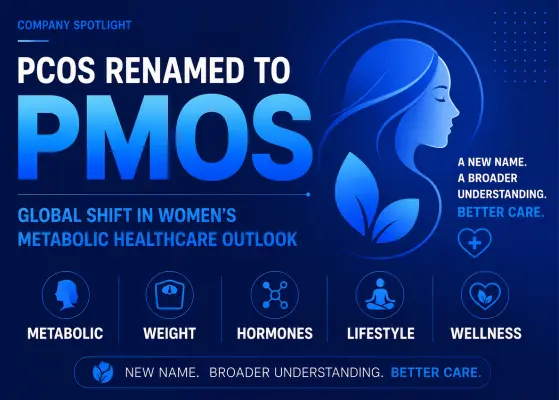
The global healthcare industry is witnessing one of the most significant transformations in women’s metabolic and endocrine care in decades. In May 2026, The Lancet published a global consensus renaming Polycystic Ovary Syndrome (PCOS) to Polyendocrine Metabolic Ovarian Syndrome (PMOS) – the largest medical condition renaming initiative in history. This 14-year effort, led by Prof. Helena Teede (Monash University) and Prof. Terhi Piltonen (Oulu University), formally reclassifies a condition affecting 1 in 8 women worldwide from a gynaecological disorder to a complex, multisystem endocrine–metabolic condition. The reclassification reflects a simple but important scientific reality: the old name did not fully describe the condition. PCOS has long been understood as a disorder with endocrine, metabolic, reproductive, and psychological dimensions, not just an ovarian one.
For healthcare organisations, this is more than a terminology update. PMOS signals a clear direction: women's health is moving toward an integrated model of diagnosis, care delivery, patient education, and long-term risk management. For pharma, providers, payers, and policy stakeholders, that shift has implications for evidence generation, care pathways, market access, and disease awareness.
The renaming initiative followed more than a decade of international collaboration involving healthcare professionals, academics, advocacy groups, and patients worldwide. More than 170 million women globally are estimated to be affected by the condition, making this one of the most consequential reclassifications in women’s healthcare in recent decades. With a structured three-year transition now underway and full international guideline implementation expected in 2028, the window for proactive action is open – but finite.
Why “PCOS” Was No Longer Fit for Purpose
The term Polycystic ovary syndrome (PCOS) has been in clinical use for over four decades, yet contemporary research has firmly established that it is scientifically inaccurate. Ovarian cysts are not actually increased in most women with the condition, and the name's ovarian focus obscured the broader hormonal, metabolic, and systemic dimensions of the syndrome. The US National Institutes of Health raised concerns about this terminology as early as 2012.
The real-world consequences were significant - an estimated 70% of women with the condition remained undiagnosed. By centering the condition primarily within reproductive medicine, the name contributed to fragmented care pathways and delayed recognition of metabolic and endocrine complications. Many patients were diagnosed only after years of symptoms, while others received incomplete care focused solely on fertility or menstrual irregularities. As Prof. Teede put it: "The diverse features of the condition were often unappreciated... It was heartbreaking to see the delayed diagnosis, limited awareness, and inadequate care afforded those affected."
Research over the last two decades has increasingly demonstrated that the condition involves multiple interconnected systems. Insulin resistance, obesity, cardiovascular risk, inflammation, mental health burden, and hormonal dysregulation are now recognised as central components of the disease profile. Yet the older terminology often failed to communicate this broader clinical reality to both patients and healthcare providers.
What followed was one of the most rigorous nomenclature reform processes in modern medicine – 14 years, six continents, 56 organisations including the Endocrine Society, and three rounds of Delphi surveys drawing more than 22,000 responses. The agreed selection criteria were grounded: scientific accuracy, patient benefit, cultural appropriateness, stigma reduction, and clinical utility. In a near-unanimous vote – 87 of 90 Global Name Change Consortium members – PMOS was adopted.
Defining PMOS: A Multisystem Disease Model
The designation Polyendocrine Metabolic Ovarian Syndrome is not cosmetic, it reflects a broader and more clinically accurate disease framework. Each component of the name carries clinical meaning that was previously underweighted in care delivery.
|
Name Component
|
Clinical Meaning
|
Implication for Care
|
|
Polyendocrine
|
Multiple hormone systems disrupted – including impaired insulin signalling, androgen excess, and neuroendocrine imbalance. This is a multi-hormonal, not single-axis, disorder.
|
Endocrinology must lead or co-lead care pathways; multiple hormonal axes require evaluation
|
|
Metabolic
|
Wide-ranging cardiometabolic risk formally included: obesity, insulin resistance, type 2 diabetes, hypertension, dyslipidaemia, fatty liver disease, cardiovascular disease, and sleep apnoea.
|
Metabolic screening – glucose, lipids, BP, BMI – becomes standard, not optional
|
|
Ovarian
|
Reproductive function (irregular ovulation, menstrual irregularity, infertility, pregnancy complications, endometrial cancer risk) is preserved as a core but non-exclusive feature.
|
Gynaecology remains relevant within a broader MDT framework rather than as the primary care lead
|
PMOS is now formally linked to type 2 diabetes, hypertension, cardiovascular disease, gestational diabetes, depression, anxiety, infertility, non-alcoholic fatty liver disease, and dermatological conditions including acne and hirsutism. These were historically treated in isolation from the PCOS diagnosis. Patient advocates put it plainly: "The new name leads with hormones and recognises the metabolic dimension of the condition," reframing PMOS as a serious, lifelong health issue rather than primarily a fertility problem.
Clinical Transformation: From Gynecology-Centric Care to Integrated Multisystem Management
The PMOS reclassification is not just a documentation update – it fundamentally changes how this condition should be staffed, resourced, and structured within health systems. Care pathways built around OB/GYN and fertility services are not sufficient for a condition with formal links to cardiovascular disease, type 2 diabetes, and mental health. Endocrinologists, diabetologists, cardiologists, mental health professionals, and dermatologists are now all formally part of the care model – not optional referrals.
Key clinical changes expected under PMOS include:
- Broader diagnostic scope: Routine metabolic screening (HbA1c, fasting glucose, lipid panel, blood pressure, BMI) as a standard component of the diagnostic workup – not limited to women with visible fertility symptoms
- Insulin resistance as a core feature: Recognition that insulin resistance is present in the majority of PMOS patients, irrespective of body weight, driving earlier testing and referral across phenotypes
- Updated clinical protocols: Primary care and specialist protocols must be updated to reflect the broader symptom complex – irregular periods, androgen excess, cardiometabolic risk, and psychological comorbidities – rather than focusing only on gynaecological signs
- Health informatics alignment: EHR systems, ICD coding (SNOMED), lab order sets, and billing frameworks will all require updating to support PMOS diagnosis codes as the transition progresses through 2028
- Patient communication and stigma reduction: The new terminology reduces the stigma previously associated with "cysts" and "infertility", improving patient understanding, engagement, and long-term adherence to care
"Language matters in medicine" noted Dr. Melanie Cree of the University of Colorado Anschutz. The shift from PCOS to PMOS corrects a long-standing scientific inaccuracy – and creates a genuine opportunity to rebuild care pathways around the patient's full health profile.
Strategic Implications by Stakeholder Group
The PMOS renaming represents a system-wide shift that requires redesigns of care delivery, funding models, and workforce capabilities across women’s health. Under the older PCOS framework, the disease category was often approached primarily through fertility and reproductive health. The PMOS terminology broadens the commercial and therapeutic conversation by explicitly incorporating metabolic and endocrine dimensions. This shift may influence epidemiology studies, disease burden analysis, clinical trial design, patient segmentation, evidence generation, and future therapeutic positioning.
Assets targeting obesity, insulin resistance, cardiometabolic complications, and endocrine dysfunction become increasingly relevant in this landscape. Market access and reimbursement discussions will evolve too – payers are likely to focus more on long-term metabolic risk reduction and integrated disease management rather than isolated symptom treatment. Cross-therapy collaboration between women's health, endocrinology, obesity management, diabetes care, and cardiometabolic teams will become commercially relevant, not just clinically desirable.
1. Pharmaceutical Companies & R&D Teams
The reclassification materially changes the therapeutic framing of PMOS. Drug development strategies, labelling, and indication frameworks built primarily around PCOS's reproductive and hormonal construct need to be reassessed. The more immediate opportunity sits in pipeline repositioning: several compounds already used off-label in PCOS – including metformin, GLP-1 receptor agonists, SGLT2 inhibitors, statins, and anti-androgens – could now be formally studied under the PMOS framework, with metabolic endpoints opening legitimate new development pathways.
- Pipeline repositioning: Compounds targeting metabolic syndrome, insulin resistance, or cardiometabolic conditions may gain relevance for PMOS patient populations not previously captured in PCOS trial design
- Market sizing: With cardiometabolic comorbidities formally included the addressable market for PMOS-related therapeutics expands significantly beyond reproductive health portfolios
- Regulatory and labelling strategy: Label language referencing PCOS will require updating; early engagement with regulators on transition terminology is advisable before 2028 guideline lock-in
- Competitive landscape: New therapeutic areas – cardiology, endocrinology, and metabolic medicine – now become legitimate entry points for PMOS-focused development strategies
- Evidence generation: Clinical trials may need to enroll "PMOS" populations with explicit metabolic endpoints; collaboration between diabetes/endocrine and gynaecology researchers will become more common
Explore our Drug Pipeline Insight Reports
2. Healthcare System Planners & Strategy Teams
Every care pathway, referral model, and clinical protocol built around PCOS as a gynaecological condition is now structurally misaligned with the PMOS framework. That's not a 2027 problem – the 2028 guideline update is approaching, and systems that delay redesigning care models will be catching up under a hard deadline.
- MDT model formalisation: Endocrinology, cardiology, mental health, dermatology, and reproductive medicine must be brought under a coordinated PMOS care pathway, moving beyond gynaecology-led models
- Institutional reclassification: Hospital and clinic classification of PMOS as a reproductive condition must be reviewed to ensure appropriate specialist routing and departmental engagement
- Workforce development: Cross-specialty training programmes for GPs, nurses, allied health, and specialists must be commissioned and delivered within the transition window
- Multidisciplinary clinic models: The creation of integrated PMOS clinics – analogous to diabetes or cardiology multidisciplinary clinics – represents a meaningful system investment with strong long-term value
3. Policy Researchers & Government Health Bodies
This reclassification creates a real policy discontinuity. National programmes that fund PCOS within reproductive or women's health budget lines will find those frameworks too narrow once PMOS's metabolic and cardiometabolic dimensions are formally embedded in 2028 guidelines. The cost burden is not trivial: PCOS alone exceeded $15 billion per year in the US - PMOS reclassification is likely to expand that figure as comorbidities are formally incorporated.
- Reimbursement and coverage review: Insurance frameworks must be updated to cover metabolic workups, cardiometabolic screening, and mental health support as standard PMOS care components
- NCD policy integration: PMOS should be integrated into non-communicable disease policy frameworks alongside diabetes and cardiovascular disease – particularly in LMICs where reproductive health and metabolic health budgets remain siloed
- National guideline updates: Countries that initiate guideline revision ahead of the 2028 international deadline will avoid costly emergency revisions; proactive engagement with the guideline development process is advised
- Value-based care metrics: In settings with value-based care frameworks, PMOS-specific quality metrics around metabolic screening, mental health integration, and multidisciplinary care delivery may emerge
4. Patient Access & Market Access Teams
Patient access strategies built around PCOS – including formulary positioning, patient support programmes, and diagnostic access pathways – need to be rebuilt around a broader disease definition. A condition previously framed as reproductive now carries formal metabolic and cardiometabolic dimensions, opening doors with different payer categories, different prescribing communities, and substantially different patient journeys.
- Formulary repositioning: Inclusion of treatments addressing metabolic dimensions of PMOS (insulin-sensitising agents, cardiometabolic risk reduction therapies) may require new evidence packages aligned with the PMOS framing
- Patient transition management: The transition period will be characterised by confusion among the millions who received PCOS diagnoses; investment in patient awareness, FAQ communications, and transition support is critical
- Equity and LMIC access: Large PMOS populations in South Asia and Sub-Saharan Africa face severely limited access to endocrinology and metabolic care services; access strategy must account for health system capacity gaps
- Segmentation refinement: Patient segments may now be better defined by metabolic phenotype (insulin-resistant vs normoinsulinemic, obese vs lean PMOS) rather than purely reproductive presentation, changing how markets are sized and targeted
PCOS vs PMOS: A Comparative Framework
|
Attribute
|
PCOS (Legacy Term)
|
PMOS (New Term, 2026)
|
|
Name focus
|
Ovarian cysts
|
Multiple endocrine glands + metabolism + ovaries
|
|
Clinical emphasis
|
Gynaecological (menstrual, fertility)
|
Endocrine/metabolic + reproductive (integrated)
|
|
Diagnostic framing
|
Syndrome of ovarian abnormalities
|
Multisystem endocrine–metabolic dysfunction
|
|
Care team
|
Primarily OB/GYN and fertility specialists
|
Endocrinology, cardiology, mental health, dermatology, OB/GYN
|
|
Treatment focus
|
Hormonal contraceptives, ovulation induction
|
Metabolic treatments + hormonal + lifestyle (integrated)
|
|
Comorbidity scope
|
Recognised but secondary to reproductive Dx
|
Core to the diagnosis – formally included
|
|
Stigma
|
Fertility-focused; cysts language causes anxiety
|
Metabolic framing reduces stigma and clarifies complexity
|
|
Implementation
|
Established 4+ decades
|
2026–2028 phased global adoption; full guidelines by 2028
|
Explore our Epidemiology Forecast Reports
The 2026–2028 Window: What's Happening and When
The transition from PCOS to PMOS is being implemented gradually, with full integration expected by 2028. This phased approach is intended to give healthcare systems, clinicians, policymakers, and industry stakeholders time to adapt. A major international education and awareness campaign, multi-language resources, EHR and SNOMED coding updates, and medical education revisions are already underway. The International PCOS Guideline – currently used in 195 countries – will formally adopt PMOS terminology at its 2028 update. That's the hard deadline; what happens before it determines whether organisations lead or scramble.
|
Timeline
|
Phase
|
Key Activities
|
|
May 2026
|
Publication & Launch
|
PMOS published in The Lancet; global consensus established; international education campaign launched across 56 organisations
|
|
2026–2028
|
Transition Period
|
Clinical protocols, EHR coding (ICD/SNOMED), formularies, training programmes, and policy frameworks in active revision globally; provider communications and patient toolkits developed
|
|
2028
|
Full Implementation
|
PMOS fully integrated into International Clinical Guidelines used in 195 countries; all care pathways, policies, and regulatory frameworks expected to reflect the new standard
|
Strategic Implications: Act in the Window, Not at the Deadline
The renaming of PCOS to PMOS is a structural shift in how a condition affecting 170 million women is understood, diagnosed, treated, and funded. The clinical, commercial, and policy implications are real and time-sensitive. For pharma, health strategy, policy, and patient access teams, the 2026–2028 window is not a grace period – it is an intelligence and action imperative.
Organisations that act now should consider the following as immediate priorities:
- Rapid impact assessment: Analyse your portfolio, service offerings, or care models against the PMOS framework. Identify where existing products, protocols, or programmes align with the new endocrine-metabolic focus - and where gaps exist.
- Guideline intelligence mapping: Track timelines for key guideline revisions in women's health and endocrinology across international, US, EU, and Asia-Pacific bodies. Early visibility of draft language shapes strategic positioning.
- Stakeholder awareness research: Gauge awareness and sentiment among clinicians, patients, and payers. Surveys, focus groups, or in-depth interviews can uncover readiness gaps and communication priorities.
- Market segmentation refresh: Develop a revised market model segmenting by metabolic vs reproductive phenotype, age group, and geography to capture the expanded patient population under PMOS.
- Provider and patient communications: Prepare clinician-facing and patient-facing materials explaining the transition – including FAQ documents, side-by-side comparison tools, and updated consent and counselling resources.
- Policy engagement: Engage proactively with payer and policy bodies on coverage expansion for metabolic screening and mental health services under PMOS diagnostic codes before the 2028 deadline enforces change.
At Expert Market Research, we help stakeholders navigate evolving clinical frameworks and market dynamics to stay prepared for structural shifts like the PMOS transition.
Explore our Healthcare And Pharmaceuticals Intelligence Services
Conclusion: System-Level Transformation Ahead
The shift from PCOS to PMOS is more than semantics – it is a fresh lens for innovation in diagnosis, treatment, access, and advocacy in women's health. This condition was never simply a reproductive problem. It's a lifelong endocrine–metabolic syndrome, and the healthcare system now has a formal mandate to treat it that way. The transition window is already open. Organisations that invest in intelligence, alignment, and stakeholder engagement now will be operating from a position of strength when the 2028 mandate arrives. Those that wait will be managing reactive catch-up under deadline pressure.
Is Your Organisation PMOS-Ready?
We help pharma, health strategy, and policy teams navigate clinical reclassifications like this – with evidence-backed assessments, protocol reviews, and actionable market intelligence. Get in touch to explore how we can support your strategy.
→ Contact Us | Visit Our Website









Share