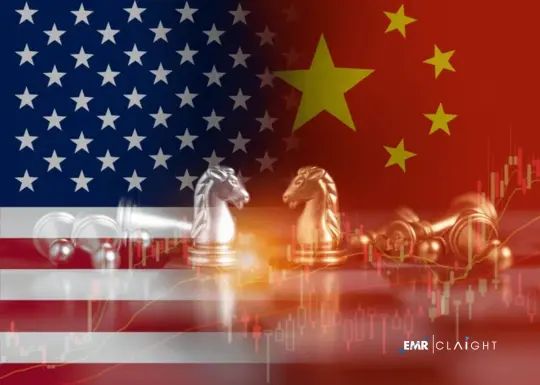
The ongoing trade tensions between the United States and other countries has entered a critical phase, with the pharmaceutical sector emerging as an unexpected battleground. What began as a dispute over steel and electronics has now spilled into an industry vital to global health. Several countries have started imposing retaliatory tariffs, but unlike those on consumer goods, these measures carry consequences that go beyond economics, impacting lives directly. Recent moves include China’s decision to raise tariffs on select U.S.-manufactured drugs, such as cancer therapies and diabetes medications, to 125%, while the U.S. launched a national security review of pharmaceutical imports on April 14th, 2025 , potentially paving the way for new tariffs on Chinese-made medicines. The investigations are being carried out under Section 232 of the Trade Expansion Act of 1962. This section gives the President the authority to impose tariffs or other trade measures if it is found that the import of certain goods threatens national security.
For patients, this escalation raises urgent questions: Will life-saving drugs become harder to access? Will prices rise further? Behind the headlines, pharmaceutical executives, policymakers, and healthcare providers are scrambling to adapt to a new reality where trade policy and public health collide.
Over the last five years, pharmaceutical trade between the U.S. and China has grown substantially. It once made up only 0.6% of the total trade between the two countries, but now it accounts for nearly 3%. Contrary to popular belief, this growth hasn’t been driven by an influx of low-cost Chinese products. Instead, the trade involves high-value goods such as cancer medications and advanced antibiotics. The trade is relatively balanced, with the United States importing USD 10.2 billion worth of pharmaceutical products from China and exporting USD 9.3 billion worth back. However, when looking deeper into the trade structure, a significant asymmetry emerges.
United States Imports vs. Exports – Raw Materials vs. Finished Products
The United States is highly dependent on imports for both finished pharmaceutical products and raw materials used to manufacture drugs. In 2024, the country imported USD 212 billion in finished pharmaceutical products. Most of these imports came from the European Union, which accounted for 60% of the total. Other major contributors included Switzerland (9%), Singapore (7%), India (6%), and China at just 4%. This indicates that while China is not the top supplier of finished drugs, it still plays a key role, especially in supplying critical raw materials.
| Country |
Share (%) |
Amount (USD Billion) |
| European Union |
60% |
127.2 billion |
| Switzerland |
9% |
19.08 billion |
| Singapore |
7% |
14.84 billion |
| India |
6% |
12.72 billion |
| China |
4% |
8.48 billion |
US Finished Pharmaceutical Products Import (2024)
For pharmaceutical raw materials, the United States imported USD 58 billion worth in 2024. Here, the European Union again led the chart with a 57% share. However, China’s role becomes more prominent in this category, supplying 12% of the raw materials, followed by Switzerland (8%), Singapore (7%), and India (5%). This heavy reliance on China for pharmaceutical ingredients places the United States in a vulnerable position, especially amid rising tariffs and political uncertainty.
| Country |
Share (%) |
Amount (USD Billion) |
| European Union |
57% |
33.06 billion |
| China |
12% |
6.96 billion |
| Switzerland |
8% |
4.64 billion |
| Singapore |
7% |
4.06 billion |
| India |
5% |
2.9 billion |
US Pharmaceutical Raw Material Imports (2024)
On the export front, the U.S. remains a significant player in the global pharmaceutical market. In 2024, it exported USD 94 billion worth of finished pharmaceutical products. The European Union again was the biggest customer, receiving 42% of these exports. China followed with a 10% share, with Japan (9%), Canada (7%), and the UK (6%) also being key markets. The United States also exported USD 28 billion in pharmaceutical raw materials, mainly to the EU (50%), Mexico (9%), Japan (8%), Canada (6%), and China (5%). This shows that while the United States depends on China for certain raw materials, it also exports a substantial amount of value-added pharmaceutical products back to China.
| Country/Region |
Share (%) |
Export Value (USD Billion) |
| European Union |
42 |
39.48 billion |
| China |
10% |
9.4 billion |
| Japan |
9% |
8.46 billion |
| Canada |
7% |
6.58 billion |
| UK |
6% |
5.64 billion |
| Others |
26% |
24.44 billion |
US Finished Pharmaceutical Products Export (2024)
| Country/Region |
Share (%) |
Export Value (USD Billion) |
| European Union |
50 |
14 billion |
| Mexico |
9% |
2.52 billion |
| Japan |
8% |
2.24 billion |
| Canada |
6% |
1.68 billion |
| China |
5% |
1.4 billion |
| Others |
22% |
6.16 billion |
US Pharmaceutical Raw Materials Export (2024)
When looking at the trade balance, the biggest deficit for the United States is with the European Union, particularly Ireland, which has become a major pharmaceutical manufacturing hub due to favorable tax policies. Interestingly, with China, the United States enjoys a trade surplus in finished drugs, totaling around USD 1.7 billion. However, this is offset by a USD 5.6 billion trade deficit in raw materials. In contrast, the United States maintains a trade surplus in both raw materials and finished pharmaceutical goods with countries like Canada, Mexico, and Taiwan.
Key Players and Their Strategies
Many global pharmaceutical giants are navigating this challenging trade environment by adapting their supply chains. Companies such as AstraZeneca, Sanofi, GSK, and Eli Lilly have taken strategic steps to mitigate the impact of tariffs. All of these firms have established at least one manufacturing facility in the United States specifically for products sold in China. For instance, AstraZeneca produces its blockbuster cancer drug durvalumab in Indiana. Eli Lilly, another major player, manufactures GLP-1 agonists like tirzepatide, a diabetes and weight-loss medication, at its U.S. facilities. North Carolina has also emerged as a critical hub, with companies like AstraZeneca, Sanofi, and GSK producing respiratory and HIV - related treatments there. These decisions are part of a broader strategy to ensure continued market access in China while reducing tariff-related costs.
Pharmaceutical companies have also actively lobbied the United States government to phase in tariffs gradually. Their aim is to soften the financial blow and gain time to shift manufacturing operations. This phased approach helps avoid disruptions in drug supply, which could have serious consequences for patient care and public health.
Future Outlook: Europe and India to Take the Center Stage
Looking ahead, the future of pharmaceutical trade appears to be shifting. While China remains a vital player, particularly in supplying raw materials, many United States firms are looking to strengthen trade relationships with other regions. The European Union and India are expected to become even more important partners. The EU offers a stable regulatory environment and high-quality manufacturing capabilities, while India provides a competitive edge in producing generic medicines and APIs at lower costs. This diversification strategy is seen as a way to reduce dependency on China, manage geopolitical risks, and build a more resilient supply chain.
In conclusion, the United States-China tariff war has deeply influenced the global pharmaceutical industry. Although the U.S. remains an export powerhouse for finished drugs, it is heavily dependent on foreign imports, especially for raw materials. The ongoing trade tensions with China have prompted pharmaceutical companies to reconsider their manufacturing and sourcing strategies, leading to a gradual pivot toward other regions like the EU and India. As global health challenges grow and supply chain stability becomes more critical than ever, how the United States navigates this new era of trade will have long-term implications for both economic resilience and public health.








Share