

Consumer Insights
Uncover trends and behaviors shaping consumer choices today
Procurement Insights
Optimize your sourcing strategy with key market data
Industry Stats
Stay ahead with the latest trends and market analysis.
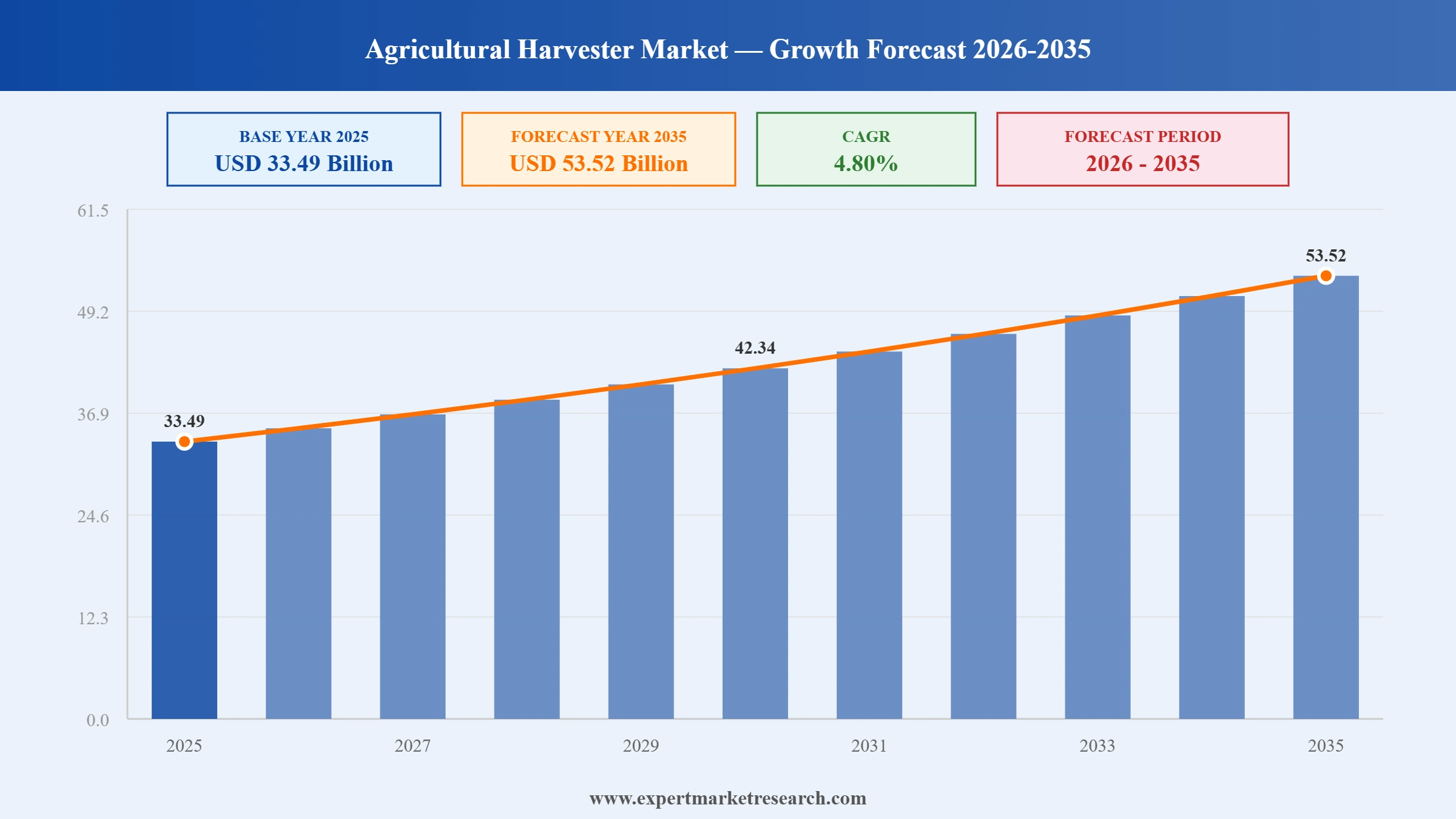
The global agricultural harvester market attained a value of USD 33.49 Billion in 2025 and is projected to expand at a CAGR of 4.80% through 2035. The market is further expected to reach USD 53.52 Billion by 2035. Rising farm labour shortages, growing mechanization across emerging agricultural economies, and continuous investment in high-capacity, fuel-efficient combine and forage harvesting equipment are strengthening demand across wheat, rice, maize, and barley growing regions.
The agricultural harvester market combines, and forage harvesters used to cut, thresh, and collect wheat, rice, maize, and barley across small, medium, and large landholdings. Four-wheel drive harvesters dominate large flat cropping belts across North America and Europe, while two-wheel drive machines remain relevant for smaller or terraced plots across Asia and Africa.
Demand is concentrating around manufacturers pairing higher throughput with lighter, versatile machines suited to diverse field conditions. In September 2025, Escorts Kubota Limited rolled out the Kubota brand PRO588i-G combine harvester in Punjab and Haryana, built with a Japan engineered threshing mechanism reducing grain breakage in long grain basmati rice.
Manufacturers are widening investment toward higher capacity grain tanks, stronger engines, and connected cab technologies improving operator comfort and uptime. Companies are also expanding regional manufacturing and aftersales networks so spare parts and technicians stay available close to peak harvest periods, protecting yield quality and reducing downtime.
Read more about this report - REQUEST FREE SAMPLE COPY IN PDF
Sampo Rosenlew, the Finland-based combine harvester manufacturer, entered the Turkish market in July 2026 through an arrangement backed by Tera Holding. The tie-up gives the manufacturer a foothold in a large grain-growing economy without building a standalone distribution network. Such backed entries help harvester brands reach new wheat and barley regions faster, strengthening competitive position within the agricultural harvester market.
Rostselmash started serial production of its RSM F 2750 forage harvester in June 2026, calling it the most powerful forage harvester of domestic design, rated at 770 horsepower with throughput of up to 280 tonnes of forage mass per hour. The first batch of ten units has already shipped, with the entire planned 2026 production output fully allocated to customers.
CLAAS announced updates to its Lexion high-performance combine harvester range in July 2025, ahead of the 2026 harvest season. Changes included a new entry-level Lexion 8500 model with a 549-horsepower engine, an 18,000-litre grain tank option on the Lexion 8700, and a more powerful 646 horsepower engine for flagship models. Such upgrades help large-acreage growers across the agricultural harvester market shorten harvest windows.
Titan Machinery closed its acquisition of the dealership assets of Farmers Implement and Irrigation in May 2025, adding two South Dakota locations built over 53 years of local operation. The deal expanded the dealer's harvester and tractor sales presence across South Dakota and brought an established service network under its umbrella, supporting faster parts and servicing access for area growers.
Combine harvester manufacturers are continuing to upgrade engines and threshing systems to raise daily output without enlarging machine footprints. This helps operators complete harvesting of large grain volumes within narrow weather windows across high-yield cropping regions. Gomselmash, for instance, is showcasing a modernized GH810 grain harvester fitted with an upgraded engine option, reported in June 2026 at the Belagro exhibition, with stated productivity of 21 to 22 tonnes per hour. Such drivetrain upgrades support faster turnaround during peak harvest periods.
Manufacturers are extending regional manufacturing and after-sales footprints to shorten supply lines for parts and service during harvest season. This approach reduces downtime risk in markets where imported equipment faces long wait times for repairs. Zoomlion, for example, is expanding its Latin American presence, reported in May 2026, through a new manufacturing base in Argentina, an aftersales and spare parts centre in Brazil, and a new service centre in Mexico. Such footprint expansion is improving machine uptime for regional growers.
Smallholder mechanization is accelerating as rental and custom hiring models make combined ownership viable for farmers who previously harvested manually or through contracted labour. This shift widens the addressable base for lighter, lower-cost harvester models suited to fragmented landholdings. Industry data published in September 2025 shows India's retail harvester sales climbing 52.17% year over year to 1,263 units in August 2025 alone, reflecting the pace of this ongoing transition. Such volume growth reinforces manufacturer interest in compact, crop-specific harvester designs.
Rising crop output across parts of Africa is supporting renewed investment in mechanized harvesting as growers seek to protect larger yields from field losses and weather risk. Stronger harvests also improve farmer financing capacity for machinery purchases in subsequent seasons. South Africa's Crop Estimates Committee, in a release dated August 2025, lifted its maize harvest projection to 15.8 million tonnes for the season, a 23% recovery from the prior drought-affected year. Such recovery is expected to lift maize harvester demand.
Government mechanization subsidy programs are increasingly bundling harvester-linked attachments with crop residue management goals, widening access to equipment that reduces post-harvest field burning. Such programs are especially relevant in regions dealing with air quality concerns tied to stubble burning after wheat and rice harvests. Punjab's state government, in an action plan announced in April 2025, committed Rs 500 crore to subsidize crop residue management machinery, including combine-mounted Super Straw Management Systems, at rates of up to 80% for cooperative societies.
The Expert Market Research’s report titled “Global Agricultural Harvester Market Report and Forecast 2026-2035” offers a detailed analysis of the market based on the following segments:
Market Breakup by Product Type
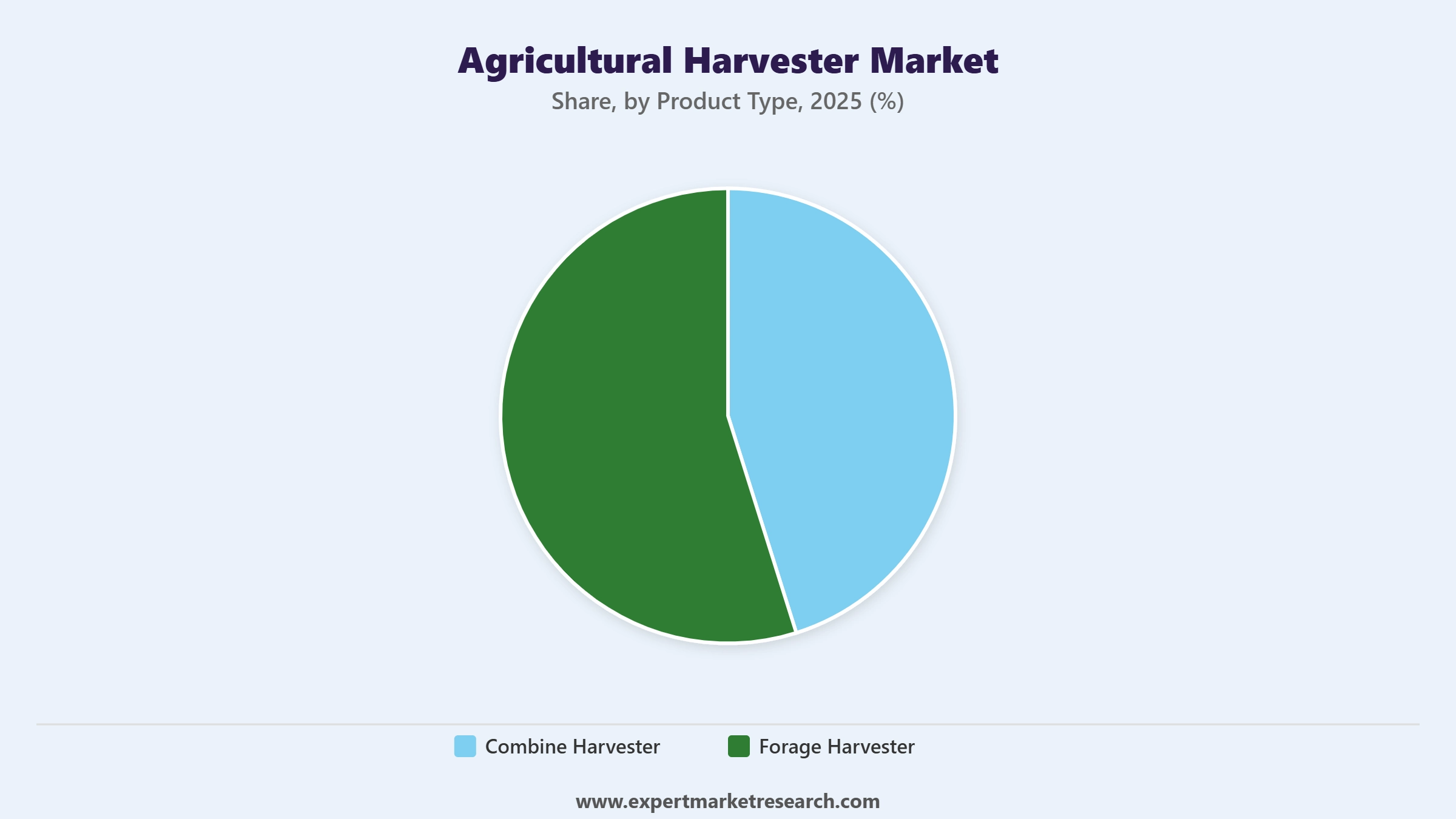
Key Insight: Combine harvester units that dominate the agricultural harvester market, as a single machine can cut, thresh, and clean wheat, rice, maize, and barley in one pass, making it the preferred choice for large commercial farms and custom hiring operators. Forage harvester demand is growing faster, driven by expanding dairy and livestock operations that need silage chopped within short cutting windows. Manufacturers are widening throughput and engine ratings across both machine types, lengthening usable working hours for contractors serving mixed crop and fodder geographies.
Market Breakup by Drive Type
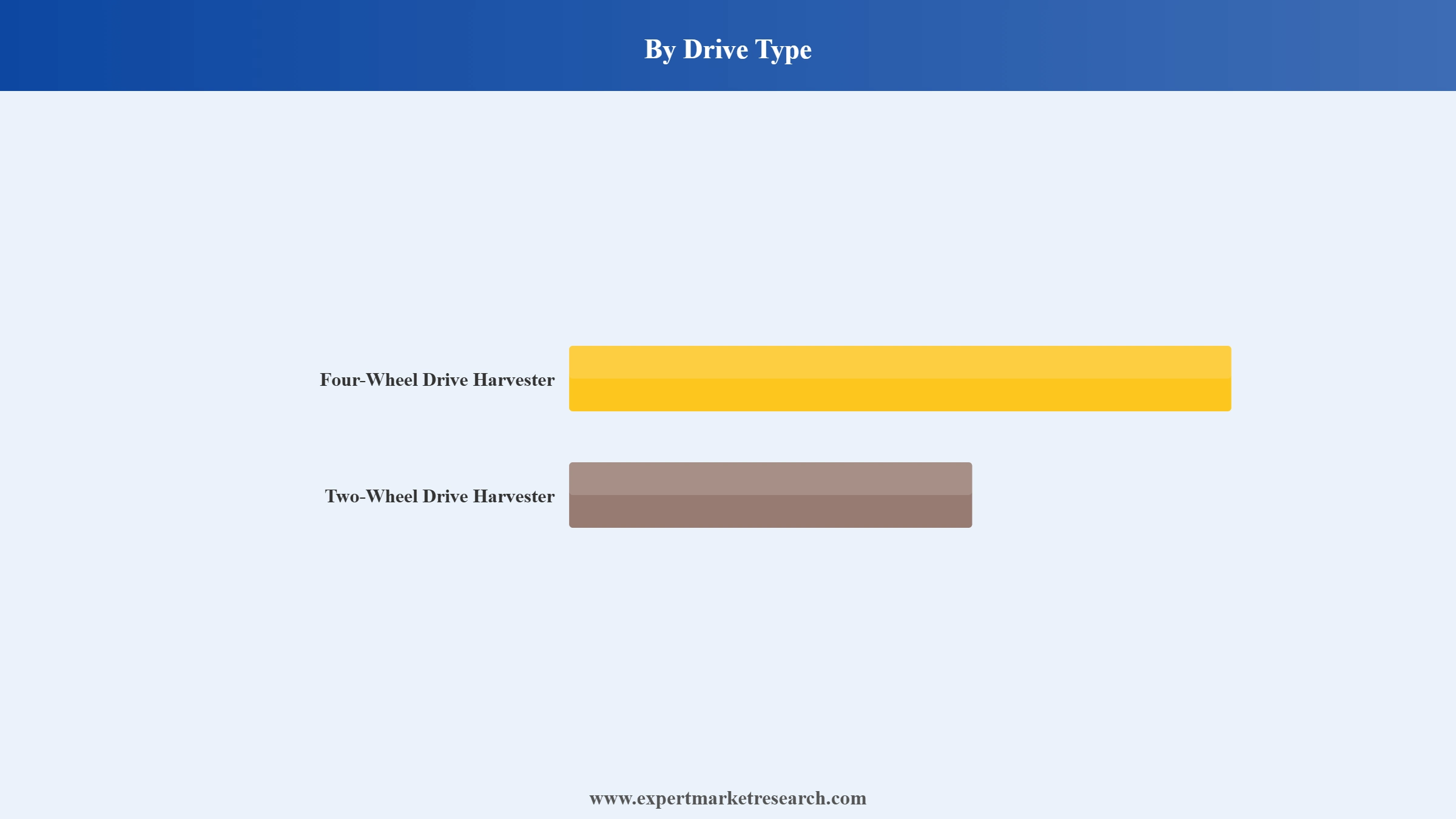
Key Insight: Four-wheel drive harvesters hold the larger share of the agricultural harvester market, favoured on large, flat cropping belts across North America, Europe, and parts of Latin America where traction and higher field speeds matter most during short harvest windows. Two-wheel drive harvesters remain important across smaller, wetter, or terraced holdings in parts of Asia and Africa, where lighter machines reduce soil compaction and manoeuvre more easily between narrow field boundaries. Manufacturers continue tuning both drivetrain formats to local soil and field-size conditions.
Market Breakup by Application
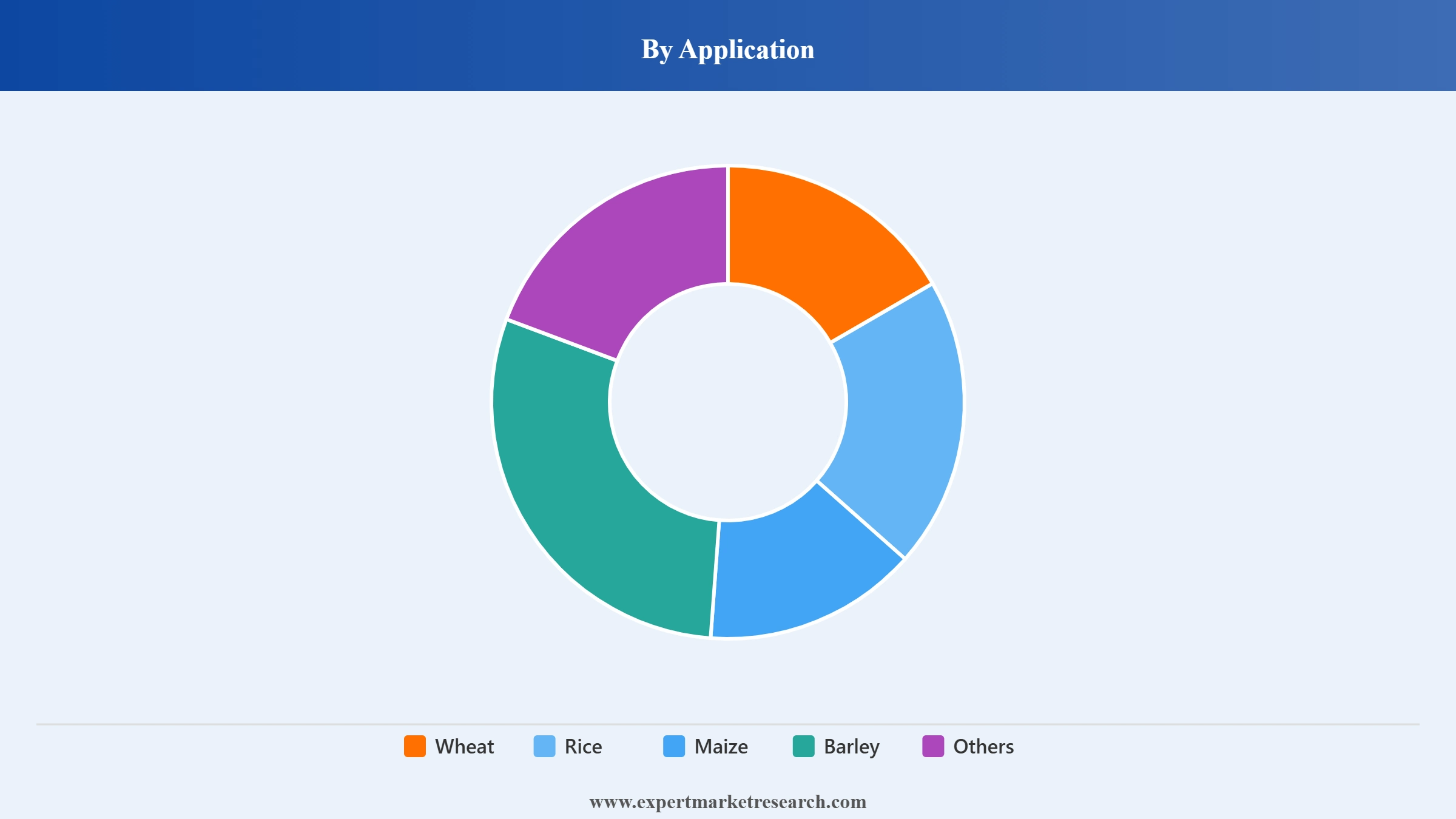
Key Insight: Wheat remains the largest application for the agricultural harvester market given its extensive cultivated area across North America, Europe, and Asia, where large-scale farms rely on high capacity combines during compressed harvest seasons. Rice harvesting is expanding across South and Southeast Asia as crawler-type combines replace manual threshing. Maize harvesting benefits from dedicated header attachments, while barley follows cropping patterns like wheat. The Others category, covering sorghum, oilseeds, and pulses, is gaining relevance as multi-crop headers let a single harvester serve mixed farms.
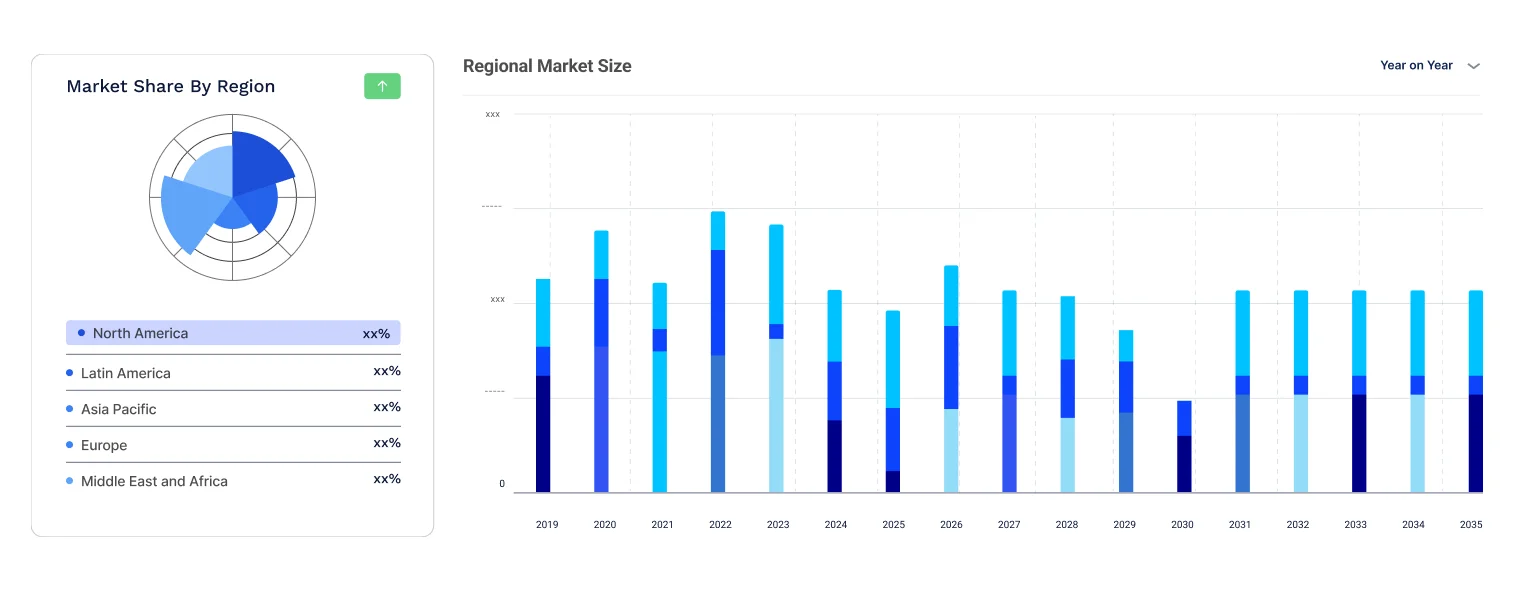
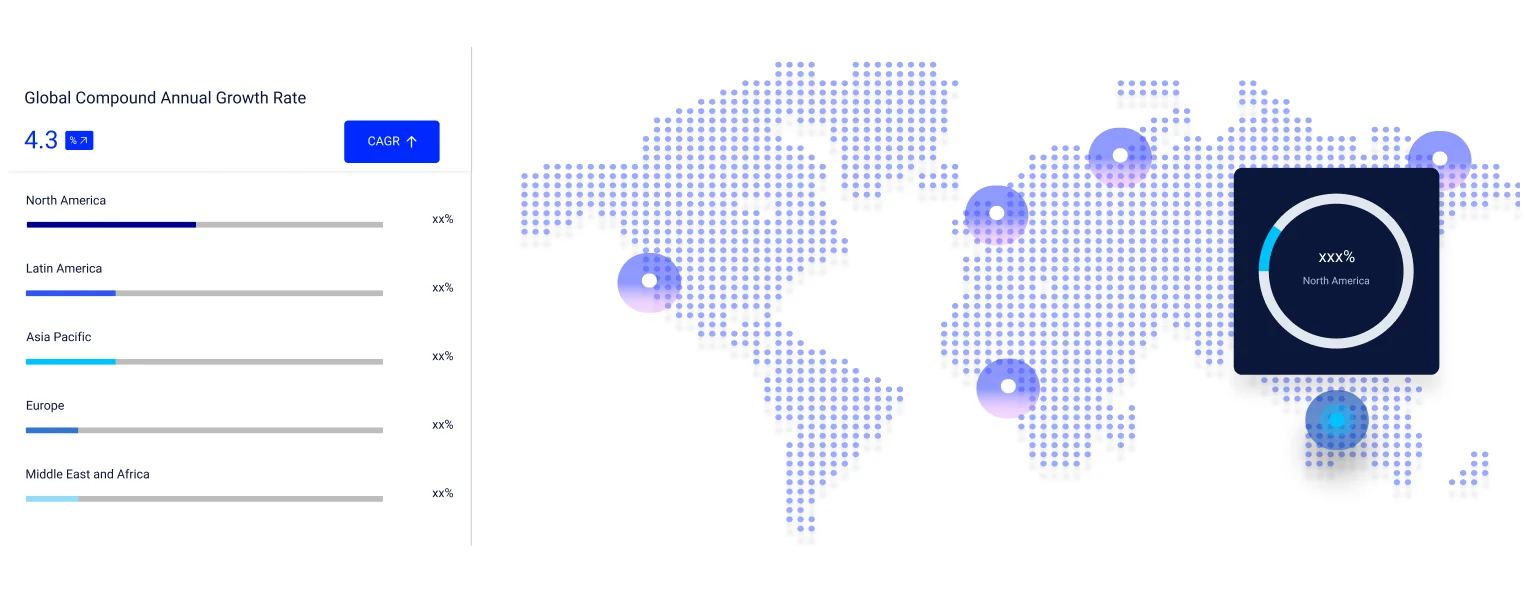
Market Breakup by Region
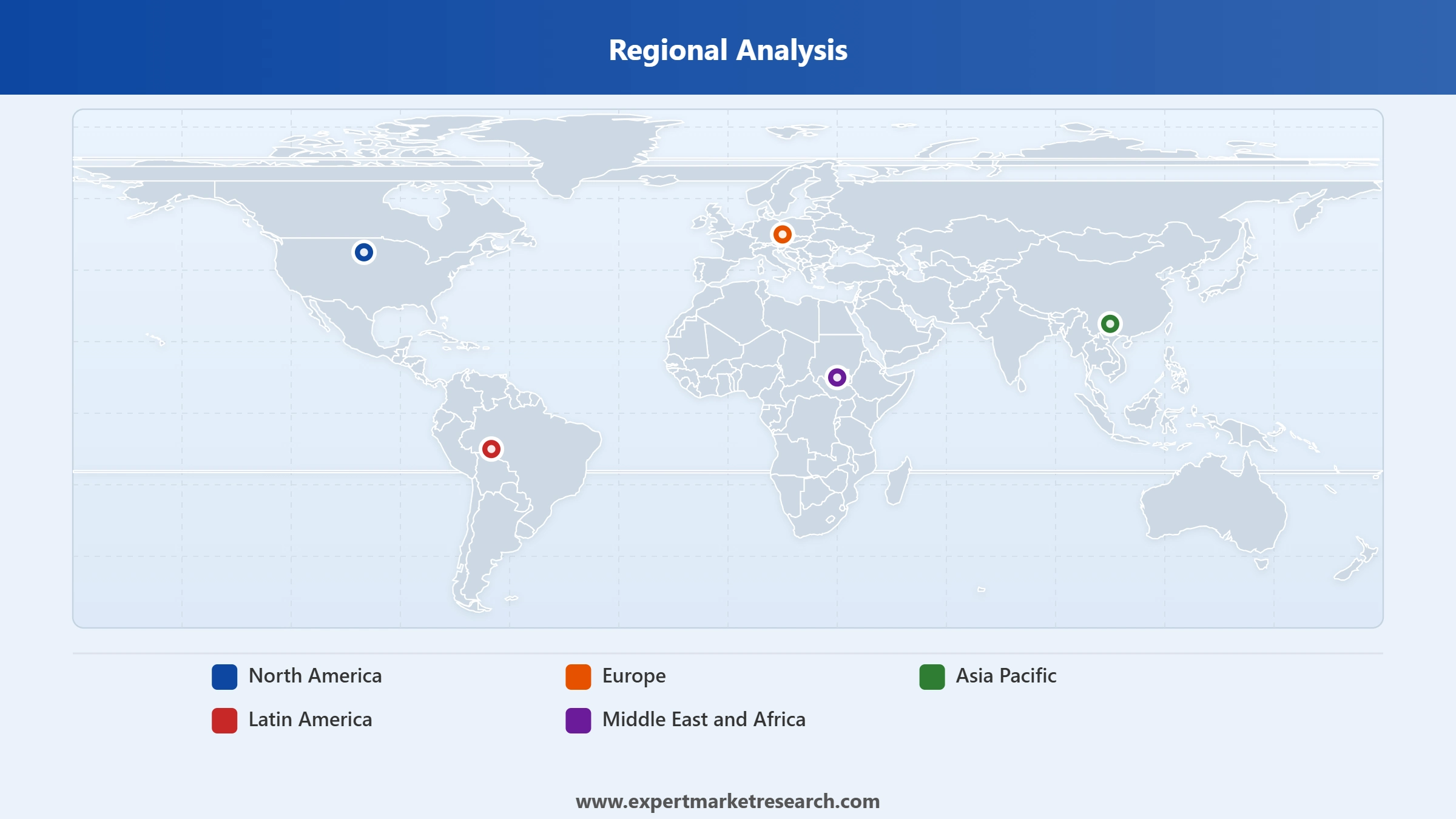
Key Insight: North America leads the agricultural harvester market on the strength of large-scale commercial grain farms and high per-unit machine values, while Europe follows with dense combine fleets across its wheat and barley belts. Asia Pacific is recording the fastest growth as mechanization spreads across smallholder rice and wheat farms in China and India. Latin America is expanding on soybean, maize, and wheat acreage across Brazil and Argentina. The Middle East and Africa are gaining ground as governments and cooperatives invest in mechanized harvesting.
Combine harvester units lead the market while forage harvester demand grows fastest on rising livestock feed needs
Combine harvester units that account for the larger share of the agricultural harvester market, as a single machine can cut, thresh, and clean wheat, rice, maize, and barley in one pass across varied field conditions. Foton Lovol, in June 2026, committed more than USD 200 million toward a new combine harvester manufacturing plant in China, underscoring sustained capacity investment. Grain tank capacity, threshing efficiency, and dealer proximity remain the leading purchase considerations for large-acreage buyers renewing their ageing fleets each season.
Read more about this report - REQUEST FREE SAMPLE COPY IN PDF
Forage harvester demand is rising at the fastest pace in the agricultural harvester market as dairy and livestock operations scale up and need silage cut and chopped within narrow weather windows. Manufacturers are widening chopping throughput, crop-processing rollers, and engine ratings on forage-specific machines to serve expanding feed and silage operations, a pace of capacity addition that is outstripping growth in the combine segment across dairy-intensive growing regions worldwide, as herd sizes and feed demand continue climbing steadily each season.
Four-wheel drive harvesters dominate on large flat farms while two-wheel drive demand grows fastest on smallholder mechanization
Four-wheel drive harvesters hold the larger share of the agricultural harvester market, preferred across the large, flat cropping belts of North America, Europe, and parts of Latin America where higher field speeds and stable traction shorten harvest windows. Buyers in these regions prioritize engine power, grain tank size, and ground clearance when selecting four-wheel drive machines for continuous, high-acreage operation, and financing availability through dealer networks continues to support steady fleet renewal cycles among established commercial grain growers each season.
Read more about this report - REQUEST FREE SAMPLE COPY IN PDF
Two-wheel drive harvester demand is growing fastest in the agricultural harvester market as smallholder mechanization spreads across smaller, wetter, and terraced landholdings in parts of Asia and Africa. Lighter two-wheel drive machines reduce soil compaction and manoeuvre more easily between narrow field boundaries, making them well suited to fragmented farm sizes where custom hiring and rental models are expanding machine access for first-time mechanized growers, lifting unit volumes even as average machine values stay comparatively modest across most markets served.
Wheat harvesting leads on cultivated area while rice harvesting demand grows fastest on Asian mechanization
Wheat harvesting accounts for the largest application share of the agricultural harvester market given its extensive cultivated area across North America, Europe, and large parts of Asia, where high-capacity combines remain essential to complete harvest within compressed windows. U.S. combine sales climbed 68% year over year in January 2026, the Association of Equipment Manufacturers reported, pointing to renewed wheat-belt fleet replacement. Dealer financing and servicing infrastructure continue supporting fleet renewal across large grain operations and smaller family-run wheat farms nationwide.
Read more about this report - REQUEST FREE SAMPLE COPY IN PDF
Rice harvesting demand is growing fastest in the agricultural harvester market as crawler-type and lightweight combines replace manual cutting and threshing across South and Southeast Asian paddy farms. Government-backed mechanization subsidy schemes and expanding custom hiring networks are widening access to rice-specific harvesting equipment among smallholders who previously depended on contracted manual labour, a shift that is lifting unit volumes even where average machine prices stay comparatively modest across these fragmented paddy-growing landholdings served by expanding dealer and rental networks.
North America leads the market on large-scale commercial grain farming
North America holds the largest share of the agricultural harvester market, supported by extensive commercial grain farms, high per-unit machine values, and well-established dealer and financing networks across the United States and Canada. Large-acreage wheat and maize growers in the region continue to renew ageing fleets with higher-horsepower, higher-capacity combines to shorten harvest windows and manage rising labour costs, sustaining steady replacement demand even as new unit growth moderates across mature cropping belts each successive harvest season nationwide and regionally.
Read more about this report - REQUEST FREE SAMPLE COPY IN PDF
Asia Pacific is the fastest-growing region in the agricultural harvester market as mechanization spreads across smallholder wheat and rice farms in China and India, supported by government-backed custom hiring schemes and expanding domestic manufacturing capacity. Chinese agricultural machinery exports, spanning combine and forage equipment, grew in shipment value by 28.9% year over year, reported in June 2026, underscoring the pace of capacity expansion feeding regional and export demand across several neighbouring mechanizing economies within the broader surrounding farm equipment region.
The competitive landscape among agricultural harvester companies is concentrated around a small group of global manufacturers combining deep dealer networks with wide product ranges from entry level to flagship machines. Regional manufacturers in Asia, Eastern Europe, and Latin America carve out share with lighter, lower cost machines suited to local conditions.
Agricultural harvester market players are investing in regional assembly, service, and parts infrastructure so machines stay serviceable close to peak harvest periods. Players are also widening multi crop header compatibility and connected cab technologies to differentiate otherwise similar grain handling architectures.
Founded in 1837 and headquartered in Moline, Illinois, United States, Deere and Co. supplies a broad range of combine and forage harvesting equipment alongside its wider construction and turf equipment businesses. It maintains one of the industry's largest dealer and parts networks.
Founded in 1990 and headquartered in Duluth, Georgia, United States, AGCO Corporation markets combine and forage harvesters under multiple regional brands, serving commercial and mid-sized farms across more than 140 countries with a manufacturing footprint spanning three continents.
Founded in 1945 and headquartered in Mumbai, India, Mahindra and Mahindra Ltd. is among the world's largest tractor manufacturers by volume and produces harvesting equipment suited to Indian and South Asian farm conditions. Its rural dealer network supports smallholder adoption.
Founded in 1912 and headquartered in Osaka, Japan, Yanmar Co., Ltd. produces combine harvesters alongside engines and compact agricultural machinery suited to smaller, terraced, and wetland field conditions common across Japan and other parts of Asia.
Other key players in the market include CNH Industrial N.V., Krone North America Inc., and Bernard Krone Holding SE and Co. KG, among others.
*Please note that this is only a partial list; the complete list of key players is available in the full report. Additionally, the list of key players can be customized to better suit your needs.*
Unlock the latest insights with our global agricultural harvester market trends 2026 report. Discover regional growth patterns, mechanization trends, and key industry players. Stay ahead of competition with trusted data and expert analysis. Download your free sample report today and drive informed decisions in the global market.


Upto 15% Off
USD
$2499 $2249
$3999 $3599
$4999 $4249
$5999 $5099


*While we strive to always give you current and accurate information, the numbers depicted on the website are indicative and may differ from the actual numbers in the main report. At Expert Market Research, we aim to bring you the latest insights and trends in the market. Using our analyses and forecasts, stakeholders can understand the market dynamics, navigate challenges, and capitalize on opportunities to make data-driven strategic decisions.*
In 2025, the market reached an approximate value of USD 33.49 Billion.
The market is projected to grow at a CAGR of 4.80% between 2026 and 2035.
The market is estimated to witness a healthy growth in the forecast period of 2026-2035 to reach USD 53.52 Billion by 2035.
Expanding multi-crop header compatibility, investing in regional manufacturing and aftersales networks, widening custom hiring and rental access, adopting precision guidance and yield monitoring, and broadening entry-level machine ranges to serve the market's smallholder mechanization segment.
The key trends guiding the growth of the market include the favourable government initiatives and the technological advancements in the agricultural industry.
The major regions in the industry are North America, Latin America, the Middle East and Africa, Europe, and the Asia Pacific.
Combine harvester and forage harvester are the major agricultural harvester product types in the market.
Four-wheel drive harvester and two-wheel drive harvester are the different drive types of the product in the market.
Wheat, rice, maize, and barley, among others are the significant applications of the product.
The key players in the market include a mix of global and regional manufacturers, such as Deere and Co., AGCO Corporation, Mahindra and Mahindra Ltd., Yanmar Co., Ltd., CNH Industrial N.V., Krone North America Inc., and Bernard Krone Holding SE and Co. KG, among other leading agricultural harvester brands profiled in the report.
Companies across the market face rising input and steel costs, uneven farm credit access across smallholder markets, limited-service infrastructure in remote growing regions, short seasonal harvest windows, and the need to balance machine affordability against rising feature and emissions compliance costs.
Explore our key highlights of the report and gain a concise overview of key findings, trends, and actionable insights that will empower your strategic decisions.
| REPORT FEATURES | DETAILS |
| Base Year | 2025 |
| Historical Period | 2019-2025 |
| Forecast Period | 2026-2035 |
| Scope of the Report |
Historical and Forecast Trends, Industry Drivers and Constraints, Historical and Forecast Market Analysis by Segment:
|
| Breakup by Product Type |
|
| Breakup by Drive Type |
|
| Breakup by Application |
|
| Breakup by Region |
|
| Market Dynamics |
|
| Competitive Landscape |
|
| Companies Covered |
|
| Report Price and Purchase Option | Explore our purchase options that are best suited to your resources and industry needs. |
| Delivery Format | Delivered as an attached PDF and Excel through email, with an option of receiving an editable PPT, according to the purchase option. |
Datasheet
One User
USD 2,499
USD 2,249
tax inclusive*
Single User License
One User
USD 3,999
USD 3,599
tax inclusive*
Five User License
Five User
USD 4,999
USD 4,249
tax inclusive*
Corporate License
Unlimited Users
USD 5,999
USD 5,099
tax inclusive*
*Please note that the prices mentioned below are starting prices for each bundle type. Kindly contact our team for further details.*
Flash Bundle
Small Business Bundle
Growth Bundle
Enterprise Bundle
*Please note that the prices mentioned below are starting prices for each bundle type. Kindly contact our team for further details.*
Flash Bundle
Number of Reports: 3
20%
tax inclusive*
Small Business Bundle
Number of Reports: 5
25%
tax inclusive*
Growth Bundle
Number of Reports: 8
30%
tax inclusive*
Enterprise Bundle
Number of Reports: 10
35%
tax inclusive*
How To Order

Select License Type
Choose the right license for your needs and access rights.

Click on ‘Buy Now’
Add the report to your cart with one click and proceed to register.

Select Mode of Payment
Choose a payment option for a secure checkout. You will be redirected accordingly.
Strategic Solutions for Informed Decision-Making
Gain insights to stay ahead and seize opportunities.

Get insights & trends for a competitive edge.

Track prices with detailed trend reports.

Analyse trade data for supply chain insights.

Leverage cost reports for smart savings

Enhance supply chain with partnerships.

Connect For More Information
Our expert team of analysts will offer full support and resolve any queries regarding the report, before and after the purchase.
Our expert team of analysts will offer full support and resolve any queries regarding the report, before and after the purchase.
We employ meticulous research methods, blending advanced analytics and expert insights to deliver accurate, actionable industry intelligence, staying ahead of competitors.
Our skilled analysts offer unparalleled competitive advantage with detailed insights on current and emerging markets, ensuring your strategic edge.
We offer an in-depth yet simplified presentation of industry insights and analysis to meet your specific requirements effectively.




