Consumer Insights
Uncover trends and behaviors shaping consumer choices today
Procurement Insights
Optimize your sourcing strategy with key market data
Industry Stats
Stay ahead with the latest trends and market analysis.
The aircraft antenna market was valued at USD 4.20 Billion in 2025. The market is expected to grow at a CAGR of 7.60% during the forecast period of 2026-2035 to reach a value of USD 8.74 Billion by 2035. Rising airline fleets, growth in onboard connectivity, and the need for resilient navigation and surveillance equipment are collectively driving the market growth.
The current aircraft antenna market dynamics reflect fleet growth, connectivity upgrades, and rising interference with satellite navigation signals. Guidance is central to this shift: on 12 March 2026, the US Federal Aviation Administration issued version 1.1 of its GNSS Interference Resource Guide, which cites an IATA estimate that the rate of GNSS loss per 1,000 flights rose 65% in the first half of 2024 compared with 2023, although the guide is not formal policy. Such events keep operators focused on resilient navigation equipment. Airlines, air forces, and business jet owners are also upgrading antennas to keep navigation, surveillance, and communication links reliable, which supports demand for anti jam, multi band, and certified replacement units on new and existing aircraft.
The overall aircraft antenna market value is also shaped by fleet growth. In its Commercial Market Outlook released in July 2026, Boeing forecast 43,625 new airplane deliveries from 2026 to 2045, with the global fleet growing nearly 80% to more than 50,000 airplanes and passenger traffic rising 4% a year. Every delivery carries communication, navigation, surveillance, and weather radar antennas, while buyers weigh weight, power, and certification cost. Suppliers with approved, multi band products are better placed. Growing fleets also add replacement and upgrade work, because antennas are changed during heavy maintenance and as airlines move to faster satellite networks.
Compound Annual Growth Rate
7.6%
Value in USD Billion
2026-2035
Read more about this report - REQUEST FREE SAMPLE COPY IN PDF
|
Aircraft Antenna Market Report Summary |
Description |
Value |
|
Base Year |
USD Billion |
2025 |
|
Historical Period |
USD Billion |
2019-2025 |
|
Forecast Period |
USD Billion |
2026-2035 |
|
Market Size 2025 |
USD Billion |
4.20 |
|
Market Size 2035 |
USD Billion |
8.74 |
|
CAGR 2019-2025 |
Percentage |
XX% |
|
CAGR 2026-2035 |
Percentage |
7.60% |
|
CAGR 2026-2035 - Market by Region |
Asia Pacific |
9.2% |
|
CAGR 2026-2035 - Market by Type |
Surveillance Antennas |
9.0% |
|
CAGR 2026-2035 - Market by Frequency Band |
Ka Band |
11.0% |
|
2025 Market Share by Region |
Europe |
24.0% |
The aircraft antenna market is being shaped by Gogo's Galileo HDX certification in Brazil, Intellian's first aviation terminal, Hughes antenna production, and Honeywell's weather radar expansion. Product launches, certifications, and airframer partnerships are further reshaping the competitive landscape for antenna makers and airlines.
TAM Executive Aviation became the first company in Brazil to install the Galileo HDX connectivity system from Gogo Business Aviation on an Embraer Phenom 300, under a Brazilian supplemental type certificate in June 2026. The company developed the certificate itself and offered it to other operators. Retrofit providers can leverage this by developing local certifications that open new regional fleets.
Intellian detailed its first aviation terminal, the OW11FA, developed with Panasonic Avionics for the Eutelsat OneWeb Ku band network, in April 2026. The sealed, self contained unit delivered speeds up to 195 Mbps, latency under 100 ms, and an embedded modem. Antenna makers can leverage this by taking maritime and land designs into aviation through partnerships with airline connectivity integrators.
Hughes expanded production of its HDX and FDX electronically steerable antennas for the Galileo platform, shipping over 600 antennas by March 2026, with more than 120 aircraft flying with the system. The antennas were built with no moving parts and optimized for size, weight, and power. Antenna makers can leverage this by scaling production lines and certifying more aircraft types.
Honeywell expanded its IntuVue RDR-7000 three dimensional weather radar technology into a ground based weather detection application for general aviation airports in February 2026. The system scanned volumes along intended flight paths to detect wind shear and thunderstorms at low altitude. Weather radar makers can leverage this by extending airborne sensing know how into airport and low altitude safety markets.
Airlines are moving from partial trials to fleet wide low earth orbit connectivity, which multiplies antenna orders. For example, in October 2026, American Airlines expanded its Starlink agreement to cover its mainline fleet of more than 1,000 Airbus and Boeing aircraft, building on an earlier plan for more than 500 Airbus aircraft, with installations starting in early 2027 using terminals designed for up to 1 Gbps. Fleet scale like this gives antenna makers large, steady retrofit and line fit volumes.
Satellite based safety services are creating new certified antenna demand beyond passenger Wi-Fi. For instance, in April 2026, Iridium prepared its Certus 100 safety services for civil aviation, with Certus 100 offering up to 88 Kbps and Certus 200 up to 176 Kbps, and the FAA finding one low gain antenna compliant with the DO-262 standard, while the first Certus 100 safety solution was expected by the end of 2026. Operators can add certified safety links alongside cabin connectivity services.
Airframers are creating standard antenna mounting provisions, so antenna makers can qualify once and sell to several airlines. Following such trends, in May 2026, Boeing's Aerodynamic Shroud fairing, which holds up to two electronically steered antennas per aircraft and supports several antenna types, appeared on Qatar Airways 787s, followed by ZIPAIR and British Airways 787s. This reduces integration work for airlines and gives suppliers a clearer path from certification to installation. Standard mounting points cut installation time and repeat engineering.
Strong production and a large order backlog keep new aircraft deliveries, and the antenna sets fitted in factories, on a steady path. Demonstrating this stability, in October 2026, Airbus delivered 72 aircraft in September 2026 and 547 year to date, up 8%, while its backlog stood at 9,310 aircraft after net orders of 1,105 for January to September 2026, according to industry data. Steady deliveries keep factory antenna orders flowing to suppliers through the forecast period and cushion retrofit delays.
New aircraft categories are adding broadband and navigation antennas from the design stage. For example, in February 2026, Archer Aviation announced plans to add satellite connectivity to its Midnight electric air taxi using a flat electronically steered antenna, with each airframe needing a supplemental type certificate, showing how advanced air mobility developers are widening the market beyond conventional aircraft. Suppliers that certify lightweight, low power antennas early can supply these platforms in the coming years as these fleets scale up.
The Expert Market Research's report titled "Aircraft Antenna Market Report and Forecast 2026-2035" offers a detailed analysis of the market based on the following segments:
Market Breakup by Type
Key Insight: Communication antennas dominate the aircraft antenna market by type, as every aircraft needs voice, data, and satellite links, while surveillance antennas are the fastest growing on wider traffic awareness rules. Navigation antennas support GNSS and landing guidance, weather radar antennas support route safety, and others cover specialist sensors. Showing communication demand, in February 2026, Lufthansa Group announced Starlink high speed internet for around 850 aircraft, with first flights in the second half of 2026 and the full fleet fitted by 2029.
Market Breakup by Frequency Band
Key Insight: Ku band dominates the aircraft antenna market by frequency band, as airlines and business jets have a large installed base, while Ka band is the fastest growing on high throughput capacity. VHF/UHF band serves voice and military links, L band serves safety and tracking, and others cover niche uses. Showing Ku band demand, in April 2026, Airbus and Hughes worked on connectivity for the 20 A350-1000 aircraft ordered by Delta Air Lines, with a Hughes made electronically steered Ku band antenna linking to Eutelsat OneWeb.
Market Breakup by Aircraft Type
Key Insight: Commercial aircraft dominate the aircraft antenna market by aircraft type, as airline fleets are the largest, while business jets are the fastest growing on cabin upgrades. Military aircraft add radar and secure communication demand, helicopters need compact antennas for navigation and communication, and others include drones and air taxis. Showing military demand, in October 2026, Northrop Grumman selected ThinKom to supply ThinAir satcom antennas for the US Navy E-130J TACAMO aircraft, offering multi orbit, anti jam links across geostationary and non geostationary constellations.
Market Breakup by Fit Type
Key Insight: Line fit dominates the aircraft antenna market by fit type, as factory installed antenna sets ship with every new aircraft, while retrofit is the fastest growing on connectivity upgrades to older fleets. Showing both routes, in April 2026, Japan Airlines selected SES multi orbit connectivity for 41 aircraft, with line fit on 20 A350-900 and 10 787-9 aircraft and retrofit on 11 787-9 aircraft, and line fit deliveries beginning in 2028.
Market Breakup by Region
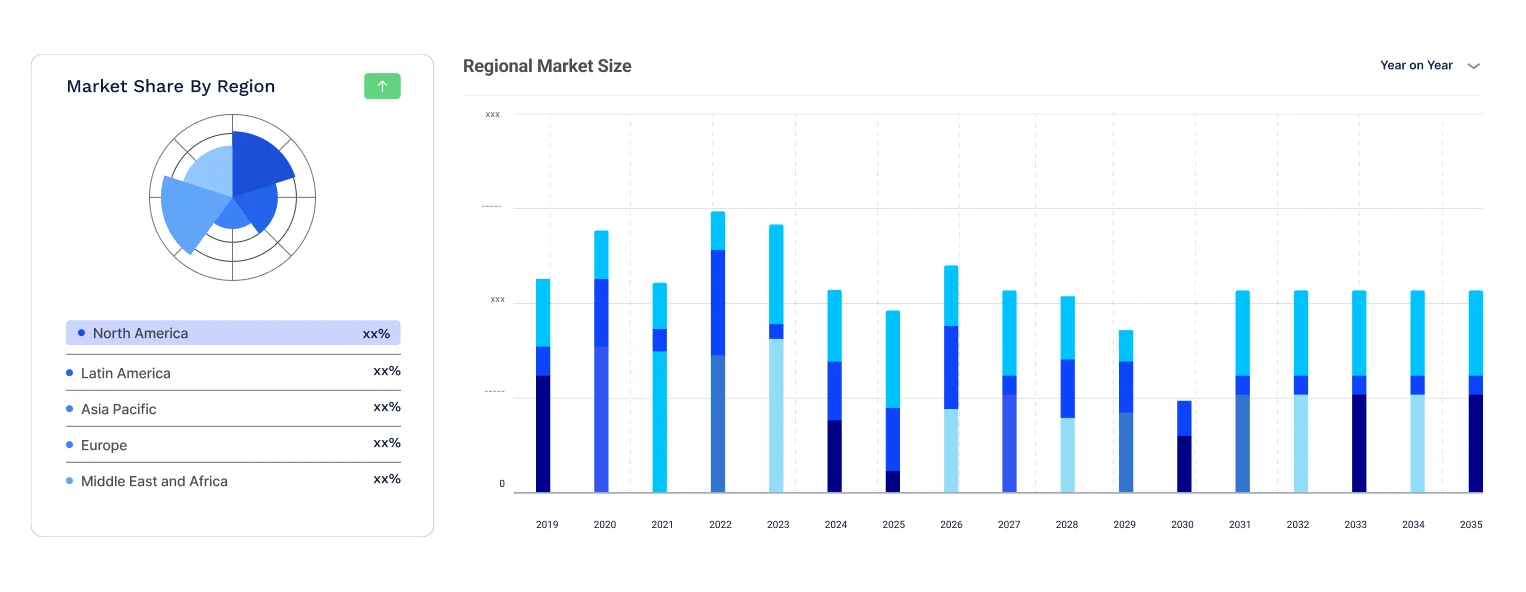
Key Insight: North America dominates the aircraft antenna market on its large airline, business jet, and defense fleets, while Asia Pacific is the fastest growing on fleet expansion. Europe grows on fleet upgrades and new aircraft, Latin America on airline connectivity programs, and the Middle East and Africa on new aircraft orders. Showing Middle East demand, in January 2026, Riyadh Air chose a Ka2517 antenna and Airbus HBCplus hardware for its A321 fleet, with speeds up to 300 Mbps and the first aircraft in service in the fourth quarter of 2026.

Read more about this report - REQUEST FREE SAMPLE COPY IN PDF
By type, communication antennas dominate on voice, data, and satellite link needs across every aircraft
Communication antennas account for the largest share of the aircraft antenna market by type, because every aircraft carries VHF, UHF, HF, and satellite antennas for voice, data, and cabin links, and airlines keep adding connectivity. Airframers and avionics suppliers specify them early, and operators replace them on fixed maintenance cycles. Satellite connectivity upgrades raise the value of each installation, while certification rules keep qualified suppliers in a strong position over long programs. Suppliers compete on weight, power, and certification speed.
Surveillance antennas are the fastest growing type as regulators push wider use of electronic conspicuity and traffic awareness equipment. In March 2026, the UK Civil Aviation Authority published CAP 3217, which strongly suggested that ADS-B Out electronic conspicuity would become mandatory in lower airspace, with an updated concept of operations expected in late 2026 or early 2027. Navigation and weather radar antennas follow steady fleet upgrades and replacements. This keeps demand for suppliers that hold approvals across several aircraft models.
By frequency band, Ku band dominates on wide airline use and a large installed base
Ku band accounts for the largest share of the aircraft antenna market by frequency band, because airlines and business jet operators have used it for years and a large installed base still needs service, upgrades, and replacements. Many satellite networks and aircraft already support Ku capacity, so operators can add new antennas without redesigning systems. VHF, UHF, and L band antennas stay important for voice, safety, and navigation links on every flight, and others serve niche military and mission uses.
Ka band is the fastest growing frequency band as high throughput satellites deliver more capacity at lower cost per bit. In March 2026, Gilat Wavestream received an order for its AeroStream 60W Ka band block upconverter for in-flight connectivity, with deliveries over 24 months and more than 5,000 aircraft already using Wavestream products, showing how suppliers are building out Ka band equipment to meet airline demand for faster service. More Ka band satellites should keep demand for antennas rising steadily.
By aircraft type, commercial aircraft dominate on large fleets and frequent equipment cycles
Commercial aircraft account for the largest share of the aircraft antenna market by aircraft type, because airline fleets are the largest and every new delivery carries communication, navigation, surveillance, and weather radar antennas. Airlines also add connectivity antennas to existing aircraft to attract passengers and improve operations, and maintenance cycles replace older units regularly. Large narrowbody orders keep factory fit volumes high, while widebody programs carry more antennas and higher value per aircraft. Regional jets add smaller but steady volumes.
Business jets are the fastest growing aircraft type as owners upgrade older cabins with low earth orbit connectivity. In June 2026, Dassault received a supplemental type certificate for a low earth orbit antenna on its Falcon 7X and 8X, with download speeds up to 60 Mbps, showing how certification across business jet models is opening the aftermarket. Military aircraft, helicopters, and others add demand through defense programs and new platforms. These platforms favor lightweight, low power antennas with simple installation.
By fit type, line fit dominates on new aircraft deliveries and factory installed antenna sets
Line fit accounts for the largest share of the aircraft antenna market by fit type, because every new aircraft leaves the factory with a full set of communication, navigation, surveillance, and weather radar antennas, and deliveries run at high rates. Airframers also certify connectivity antennas during production, which lowers installation cost and time for airlines. Large order backlogs support this demand for years, even as retrofit programs add more aftermarket volume across existing fleets. Airlines value this predictable installation cost.
Retrofit is the fastest growing fit type as airlines and business jet owners add connectivity to aircraft already in service. In July 2026, Copa Airlines became the first airline in Latin America to offer Starlink inflight connectivity, with the first aircraft already flying on routes and the full rollout planned for completion in 2027, showing how operators are upgrading existing fleets without waiting for new aircraft deliveries. Retrofit programs let airlines add antenna technology to aircraft with years of service.
North America dominates the market due to its large airline, business jet, and defense fleets
North America dominates the aircraft antenna market, as it has the largest airline, business jet, and military fleets and the earliest connectivity upgrades. Defense and business aviation fleets add further antenna demand there. Large carriers also lead the shift to low earth orbit connectivity, which raises the number of antennas fitted per aircraft, while defense budgets support radar, navigation, and secure communication upgrades on military fleets. Regional jets and turboprops add steady demand for compact, certified antennas across several programs.
Asia Pacific is the fastest growing region in the aircraft antenna market, as airlines expand fleets and add onboard connectivity. In July 2026, Qantas said more than 125 aircraft already offered Wi-Fi, 11 Dreamliners had hardware fitted, and its 10 remaining A380s would be fitted, with the retrofit due to finish in April 2027. Europe, Latin America, and the Middle East and Africa grow on fleet upgrades, new orders, and airline connectivity programs across several regional and long haul routes.
|
CAGR 2026-2035 - Market by |
Region |
|
North America |
7.0% |
|
Europe |
6.8% |
|
Asia Pacific |
9.2% |
|
Latin America |
8.0% |
|
Middle East and Africa |
8.4% |
The global aircraft antenna market is competitive, as aircraft antenna market players include avionics majors, satellite connectivity providers, and specialist antenna makers from North America, Europe, and Asia, each competing on weight, reliability, certification, and speed. Companies like RTX Corporation, Honeywell Aerospace Inc., Thales Group, and Gogo Inc. lead through scale and approvals, while Viasat Inc., Intellian Technologies Inc., Hughes Network Systems, LLC, Gilat Satellite Networks Ltd., and ThinKom Solutions, Inc. add depth in specific segments.
Leading aircraft antenna market companies are differentiating through electronically steered antennas, multi orbit designs, anti jam navigation, and factory installed options. Several are also securing airframer approvals, certifying new antennas on more aircraft models, and forming partnerships to widen demand. Growing focus on low weight, power efficiency, and faster connectivity is helping companies broaden portfolios, reach new customers, and support sustained long term growth across several regions.
RTX Corporation, headquartered in Arlington, Virginia, was founded in 2020 through the merger of United Technologies and Raytheon. Its Collins Aerospace business offers the HGA-2100B SATCOM high gain antenna with electronic steering and phased array design. RTX reported 2025 sales of USD 88,603 million, including USD 30,196 million at Collins Aerospace.
Honeywell Aerospace Inc., headquartered in Phoenix, Arizona, was founded in 2026 when it separated from Honeywell on 29 June 2026 and began trading on Nasdaq as HONA. Its portfolio includes avionics, navigation, and satellite communication systems such as JetWave X. It reported sales of USD 4,644 million for the third quarter of 2026.
Thales Group, headquartered in Meudon, France, was founded in 1918 and took the Thales name in 2000. Its range includes L band satellite communication systems with antennas and transceivers, plus passive antennas for connectivity, communication, and navigation. The group reported 2025 sales of 22,136 million euros, including 5,910 million euros in aerospace.
Gogo Inc., headquartered in Broomfield, Colorado, was founded in 1991 as Aircell. The company sells Galileo HDX and FDX low earth orbit antenna systems for business aviation and shipped 318 Galileo antennas in 2025. It reported 2025 revenue of USD 910.5 million.
Other key players in the market report include Viasat Inc, Intellian Technologies Inc, Hughes Network Systems, LLC, Gilat Satellite Networks Ltd, and ThinKom Solutions, Inc, among others.
*Please note that this is only a partial list; the complete list of key players is available in the full report. Additionally, the list of key players can be customized to better suit your needs.*
Discover the key trends shaping the aircraft antenna market 2026-2035 through our in-depth report. Access strategic insights, forward looking forecasts, and major market developments that help you stay ahead of competitors. Request a free sample report or speak with our team for tailored guidance on the aircraft antenna market trends 2026.


Upto 15% Off
USD
$2499 $2249
$3999 $3599
$4999 $4249
$5999 $5099


*While we strive to always give you current and accurate information, the numbers depicted on the website are indicative and may differ from the actual numbers in the main report. At Expert Market Research, we aim to bring you the latest insights and trends in the market. Using our analyses and forecasts, stakeholders can understand the market dynamics, navigate challenges, and capitalize on opportunities to make data-driven strategic decisions.*
In 2025, the aircraft antenna market reached an approximate value of USD 4.20 Billion.
The market is projected to grow at a CAGR of 7.60% between 2026 and 2035.
The key players in the market include RTX Corporation, Honeywell Aerospace Inc., Thales Group, Gogo Inc., Viasat Inc., Intellian Technologies Inc., Hughes Network Systems, LLC, Gilat Satellite Networks Ltd., and ThinKom Solutions, Inc., among others.
Leading companies are developing electronically steered and multi orbit antennas, securing airframer approvals, certifying products on more aircraft models, and partnering with airlines and satellite operators.
Key challenges include long certification timelines, weight and drag limits, supply chain constraints, price pressure from airlines, and the fast pace of change in satellite networks.
Explore our key highlights of the report and gain a concise overview of key findings, trends, and actionable insights that will empower your strategic decisions.
|
Report Features |
Details |
|
Base Year |
2025 |
|
Historical Period |
2019-2025 |
|
Forecast Period |
2026-2035 |
|
Scope of the Report |
Historical and Forecast Trends, Industry Drivers and Constraints, Historical and Forecast Market Analysis by Segment: Type Frequency Band Aircraft Type Fit Type Region |
|
Breakup by Type |
|
|
Breakup by Frequency Band |
|
|
Breakup by Aircraft Type |
|
|
Breakup by Fit Type |
|
|
Breakup by Region |
|
|
Market Dynamics |
|
|
Competitive Landscape |
|
|
Companies Covered |
|
Datasheet
One User
USD 2,499
USD 2,249
tax inclusive*
Single User License
One User
USD 3,999
USD 3,599
tax inclusive*
Five User License
Five User
USD 4,999
USD 4,249
tax inclusive*
Corporate License
Unlimited Users
USD 5,999
USD 5,099
tax inclusive*
*Please note that the prices mentioned below are starting prices for each bundle type. Kindly contact our team for further details.*
Flash Bundle
Small Business Bundle
Growth Bundle
Enterprise Bundle
*Please note that the prices mentioned below are starting prices for each bundle type. Kindly contact our team for further details.*
Flash Bundle
Number of Reports: 3
20%
tax inclusive*
Small Business Bundle
Number of Reports: 5
25%
tax inclusive*
Growth Bundle
Number of Reports: 8
30%
tax inclusive*
Enterprise Bundle
Number of Reports: 10
35%
tax inclusive*
How To Order

Select License Type
Choose the right license for your needs and access rights.

Click on ‘Buy Now’
Add the report to your cart with one click and proceed to register.

Select Mode of Payment
Choose a payment option for a secure checkout. You will be redirected accordingly.
Strategic Solutions for Informed Decision-Making
Gain insights to stay ahead and seize opportunities.
Get insights & trends for a competitive edge.

Track prices with detailed trend reports.

Analyse trade data for supply chain insights.

Leverage cost reports for smart savings

Enhance supply chain with partnerships.

Connect For More Information
Our expert team of analysts will offer full support and resolve any queries regarding the report, before and after the purchase.
Our expert team of analysts will offer full support and resolve any queries regarding the report, before and after the purchase.
We employ meticulous research methods, blending advanced analytics and expert insights to deliver accurate, actionable industry intelligence, staying ahead of competitors.
Our skilled analysts offer unparalleled competitive advantage with detailed insights on current and emerging markets, ensuring your strategic edge.
We offer an in-depth yet simplified presentation of industry insights and analysis to meet your specific requirements effectively.