

Consumer Insights
Uncover trends and behaviors shaping consumer choices today
Procurement Insights
Optimize your sourcing strategy with key market data
Industry Stats
Stay ahead with the latest trends and market analysis.
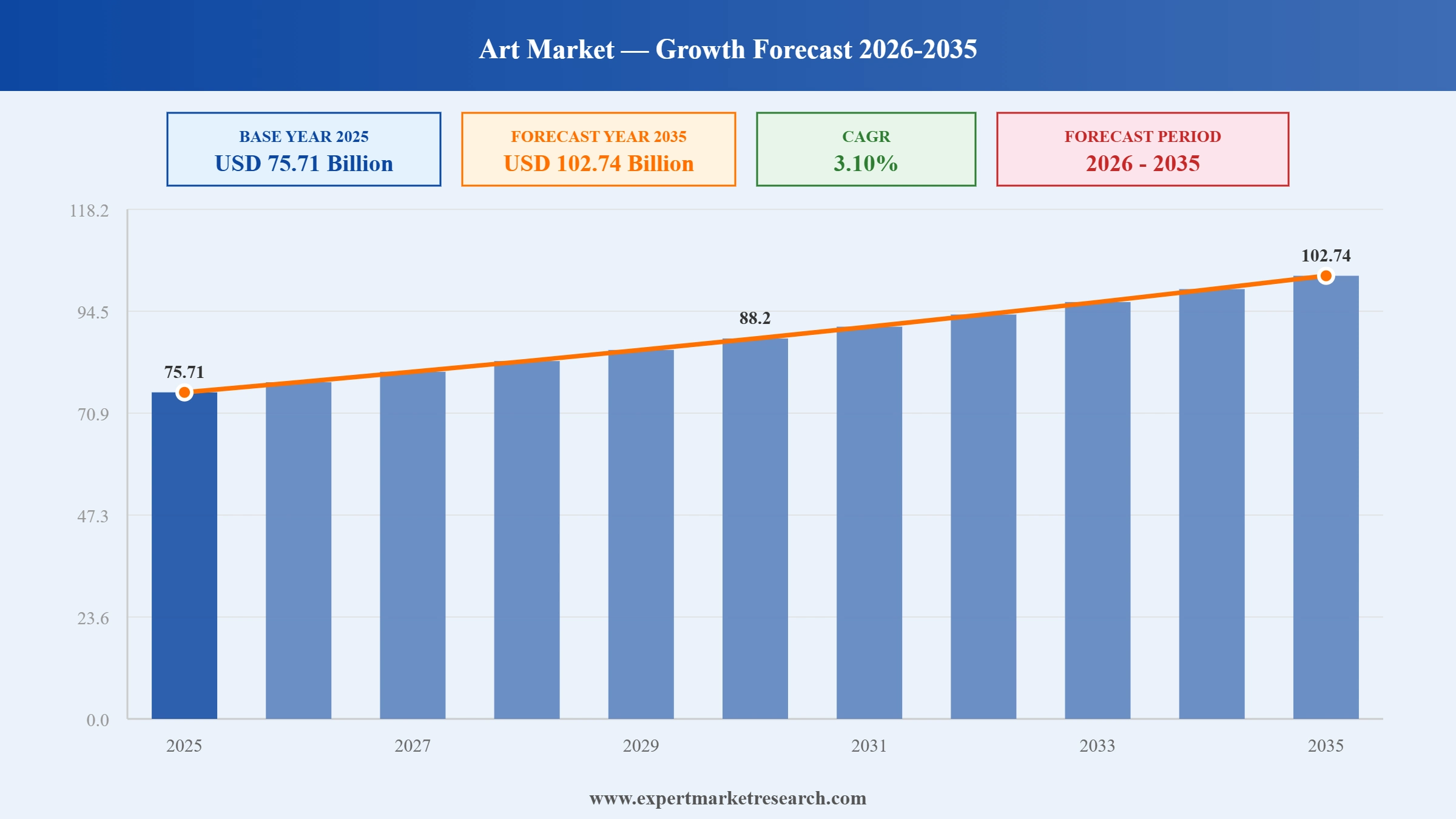
The global art market attained a value of USD 75.71 Billion in 2025 and is projected to expand at a CAGR of 3.10% through 2035. The market is further expected to achieve USD 102.74 Billion by 2035. As companies make greater investments in workplace art and hospitality, there is an increasing need for curations of art installations which provide long term benefits to galleries, consultants, artists working on commissions, and platforms of digital marketplaces.
The influence of institutional investments and technological progress is continuously transforming the art market through means that go beyond collecting needs. The use of innovative collection management software as well as the digitalization of archives by museums and private foundations ensures the preservation of assets and their increased accessibility. Simultaneously, blockchain technology helps reduce the risks of authentication associated with cross border transactions. Moreover, luxury hospitality and real estate development companies are starting to produce exclusive art pieces to enhance their unique offerings.
There is an evident transition in the art market dynamics as major auction houses, galleries, and online platforms integrate physical shows with modernized digital business models. One such example was the improvement in the AI-enabled recommendation capabilities and development of the digital marketplace at Sotheby's, which enhanced the process of discovering art through its global auctions. On the other hand, in July 2026, TOPPAN partnered with the National Museum of Asian Art, launching immersive VR experiences and expanding global digital cultural access.
In addition to the digital transition, the art market notices considerable developments in terms of changing sourcing policies, representation of artists, and diversified portfolios. For example, in July 2026, BE OPEN's Art Limitless program promoted sustainable art aligned with SDG 12, encouraging responsible creativity and inclusive artistic innovation. Major blue-chip galleries are moving into new geographic territories and representing young contemporary artists to increase the number of clients and institutions that would become their patrons. Moreover, there is a noticeable adoption of technological tools in art fairs to ensure visitors' experience and increase the efficiency of operations.
Read more about this report - REQUEST FREE SAMPLE COPY IN PDF
| Global Art Market Report Summary | Description | Value |
| Base Year | USD Billion | 2025 |
| Historical Period | USD Billion | 2019-2025 |
| Forecast Period | USD Billion | 2026-2035 |
| Market Size 2025 | USD Billion | 75.71 |
| Market Size 2035 | USD Billion | 102.74 |
| CAGR 2019-2025 | Percentage | XX% |
| CAGR 2026-2035 | Percentage | 3.10% |
| CAGR 2026-2035 - Market by Region | Asia Pacific | 3.6% |
| CAGR 2026-2035 - Market by Country | India | 4.1% |
| CAGR 2026-2035 - Market by Country | China | 3.4% |
| CAGR 2026-2035 - Market by Type | Independent Artists and Performing Art Companies | 3.5% |
| CAGR 2026-2035 - Market by Revenue Source | Media Rights | 4.3% |
| Market Share by Country 2025 | India | 3.8% |
Maxima Gallery opened up an art gallery in Mumbai, India, for contemporary arts by exhibiting both emerging and known artists in curated shows and cultural events. Companies can therefore open up destination galleries with works of regional artists to attract collectors and high-end art buyers.
Romero Britto collaborated with Hasbro to launch a Monopoly Fine Art Collection by merging the intellectual property of a game with a collectible fine art. Brands in the art market can partner with entertainment brands to produce licensed collectibles.
Samsung Art Store launched the Art Basel Hong Kong 2026 collection, increasing access to premium digital art using connected TV technology. Companies can invest in digital art subscription programs as well as smart displays to monetize their collections.
BMW Group India collaborated with India Art Fair 2026, strengthening their commitment to contemporary artists by creating deeper connections with cultures through luxury brands. Companies can become patrons of art fairs and cultural events to increase their brand visibility and contribute to the art market value.
The art market is embracing artificial intelligence and online business to enhance artwork discoverability, pricing techniques, and buyer engagement. Auction companies and art galleries are using AI-powered recommendation engines, predictive pricing models, and virtual viewing rooms to attract international customers. The government is also involved in digital transformation of culture. The Digital Europe program from the European Commission supports digital technologies in cultural institutions to encourage digitization of their collections. This trend might facilitate participation of more players in the market while generating revenues for galleries, dealers, and technological firms. For example, in June 2026, Los Angeles opened DATALAND, the first AI art museum, featuring immersive environmental exhibitions combining AI, sound, scent, and interactive experiences.
Provenance and authentication are becoming key investments as artworks' worth increases internationally. Blockchain technology is helping galleries, auction companies, and art collectors maintain inventory history and ensure security of ownership without any risk of fraud. Christie's and its technology partners are offering blockchain-based provenance solutions for certain art transactions to assure buyers, redefining the art market dynamics and trends. Government-sponsored digital heritage initiatives are accelerating the use of blockchain technology. The government of the United Kingdom is promoting digital technologies through Innovate UK schemes for creative industries. Demonstrating this shift, in November 2025, ArtDiscovery launched the world's first insured artwork authenticity guarantee, combining AI, scientific analysis, provenance research, and insurance protection.
Curated art is being increasingly sought after by businesses to boost brand identities, employee engagement, and customer experience. Commissioned works of art are being seen in luxury hotels, multinational office buildings, hospitals, and mixed-use developments. In April 2026, BIC launched a virtual museum showcasing contemporary artworks inspired by iconic products, expanding global digital access to creative collections. Public art projects are being promoted by governments as part of urban regeneration strategies, accelerating the art market revenue. For example, Singapore's National Arts Council is supportive of public art through commissions that boost commercial districts.
Museums and cultural institutions are making significant investment in technologies related to digital preservation, exhibitions, and collection management. High-definition digitization and augmented reality experiences allow institutions to reach wider audiences and ensure preservation of their collections. For example, in May 2026, Dubai announced the Museum of Digital Art, showcasing immersive technologies, AI-driven exhibitions, and interactive contemporary digital art experiences. Such trends in the art market are being supported by government agencies around the world. The United States Institute of Museum and Library Services is offering grants for digital projects aimed at improving collection preservation, institution efficiency, and education outreach while providing development opportunities for software developers, imaging specialists, and exhibition technologies providers.
There is a shift towards alternative investment methods that are revolutionizing the art market dynamics as institutional investors and high-net-worth individuals are diversifying their portfolio investments by using fine arts as their assets. The emergence of the fractional ownership platform and professionally managed art investment fund is making top-notch artworks affordable to more investors while at the same time providing improved market liquidity. For instance, companies like Masterworks are offering fractional investments in high-end artworks to retail and accredited investors. Regulations in various financial markets that facilitate alternative investment vehicles are gaining the trust of many investors. In January 2026, Anchorage Group launched a regulated Art Investment Fund, enabling secure, transparent artwork investments and unlocking liquidity for global collectors.
The EMR’s report titled “Global Art Market Report and Forecast 2026-2035” offers a detailed analysis of the market based on the following segments:
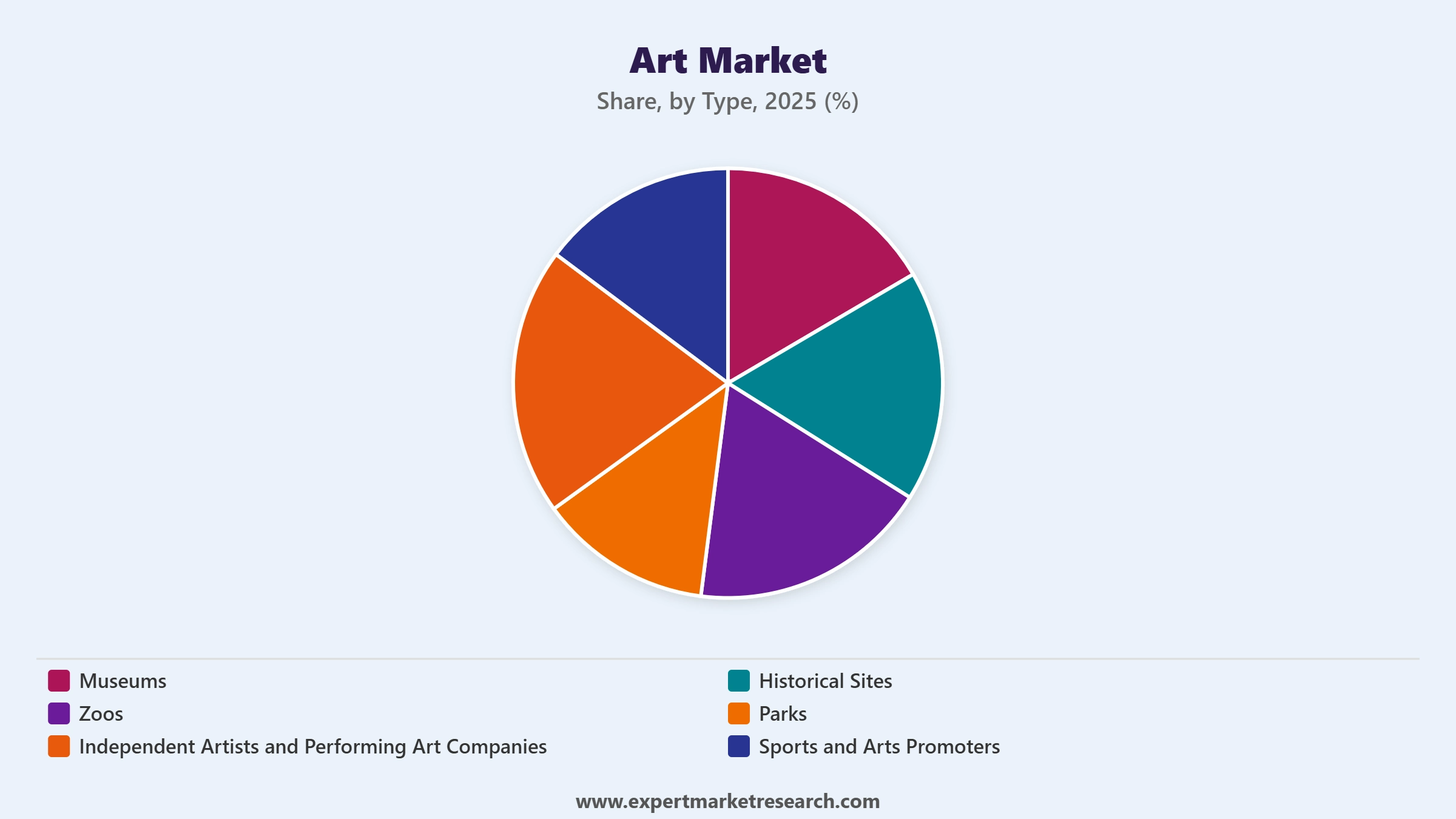
Market Breakup by Type
Key Insight: Across the art market scope, diversity is provided by institutions and business participation in all sectors. Leading in this sector are museums, historic sites, zoos, and parks owing to their efforts in cultural preservation, tourism, and education. Independent artists and performing arts firms continue to grow with the use of technology and direct consumer interaction. Sports and arts marketers play an important role in arranging exhibitions, festivals, and other major cultural events that not only increase artist exposure but also attract sponsors and other business players. All these sectors form a balanced environment in which institutions, individuality, and audience involvement through events promote artwork commercialization, market reach, and constant collaboration. In April 2026, Minted celebrated its fifth Independent Artist Day, championing human creativity and supporting over 20,000 independent artists.
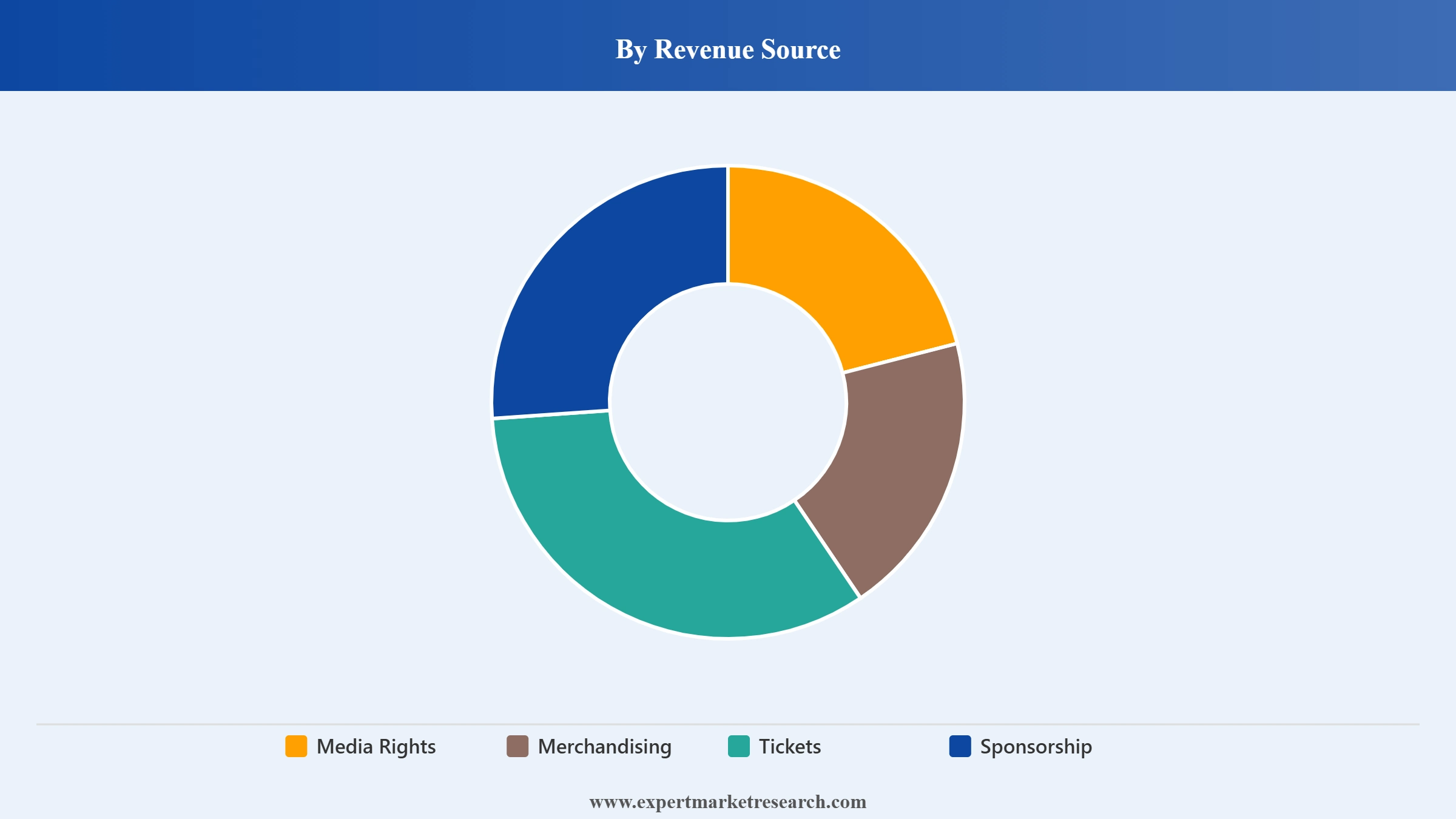
Market Breakup by Revenue Source
Key Insight: Revenue generation in the art market is diversifying significantly. Tickets remain the main source of revenue since they generate reliable money from museums, events, and cultural attractions. Media rights ensure greater audience reach through digital broadcasts, licensing, and virtual exhibitions. Merchandizing boosts revenue through the development of artworks into collectables, publications, and merchandise. Sponsorship is growing at an accelerated pace as companies realize that cultural investments make excellent marketing tools. In May 2026, Louis Vuitton partnered with The Frick Collection, supporting exhibitions, public art programs, research, and expanded museum accessibility through sponsorship. The combined effect of the revenue channels ensures a lack of reliance on any particular source of revenue generation.
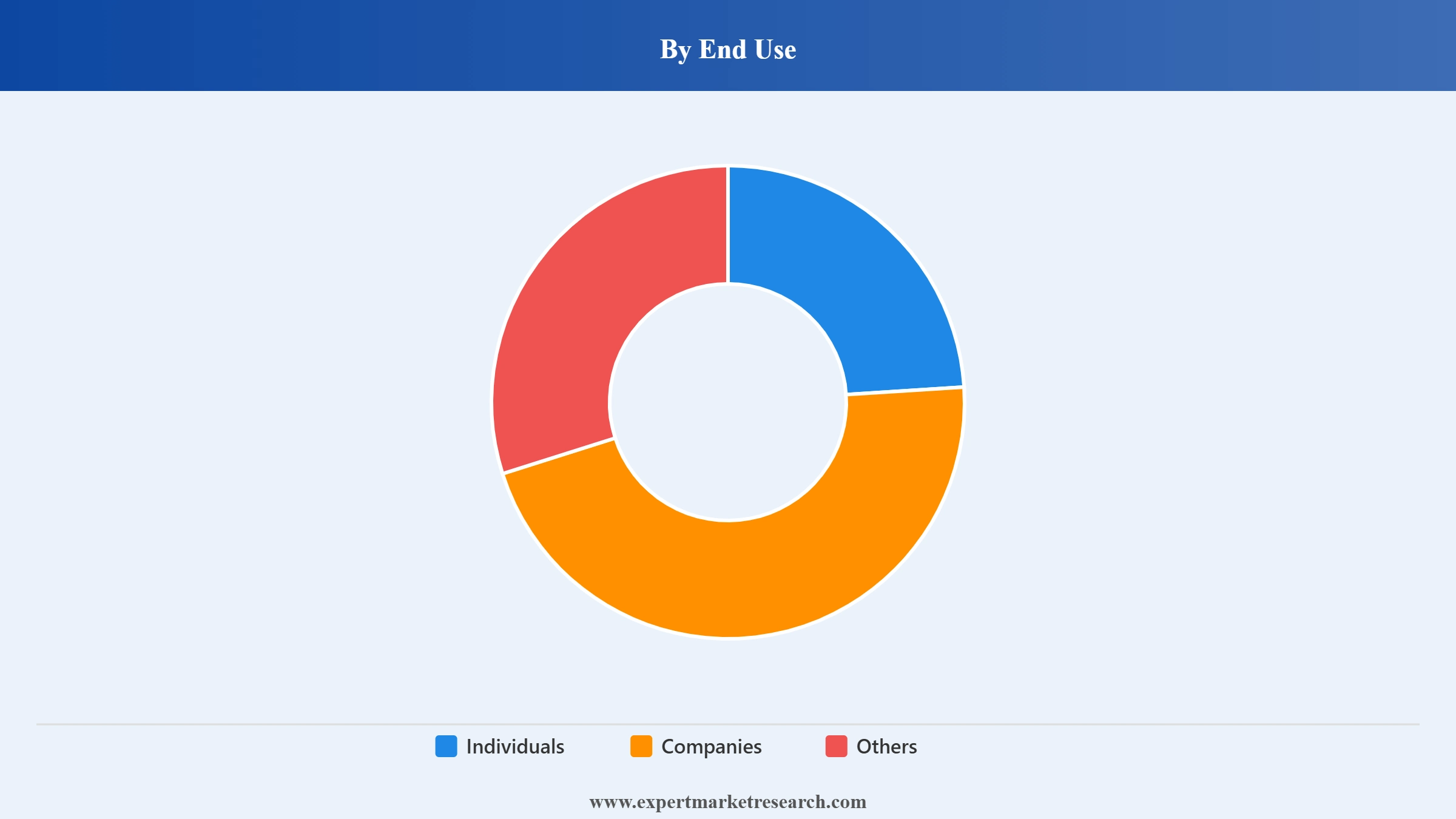
Market Breakup by End Use
Key Insight: End-users demand is an indication of the increasing diversity of the art market from a business perspective. It involves people buying art based on the appreciation and investment of art. Businesses buy art in order to enhance their branding and aesthetics in their workspaces. The others category comprises schools, governments, hospitality firms, and non-profit foundations and they contribute through cultural exhibitions. Together, they create demand for artists, galleries, consultants, logistics companies, and artwork authenticators.
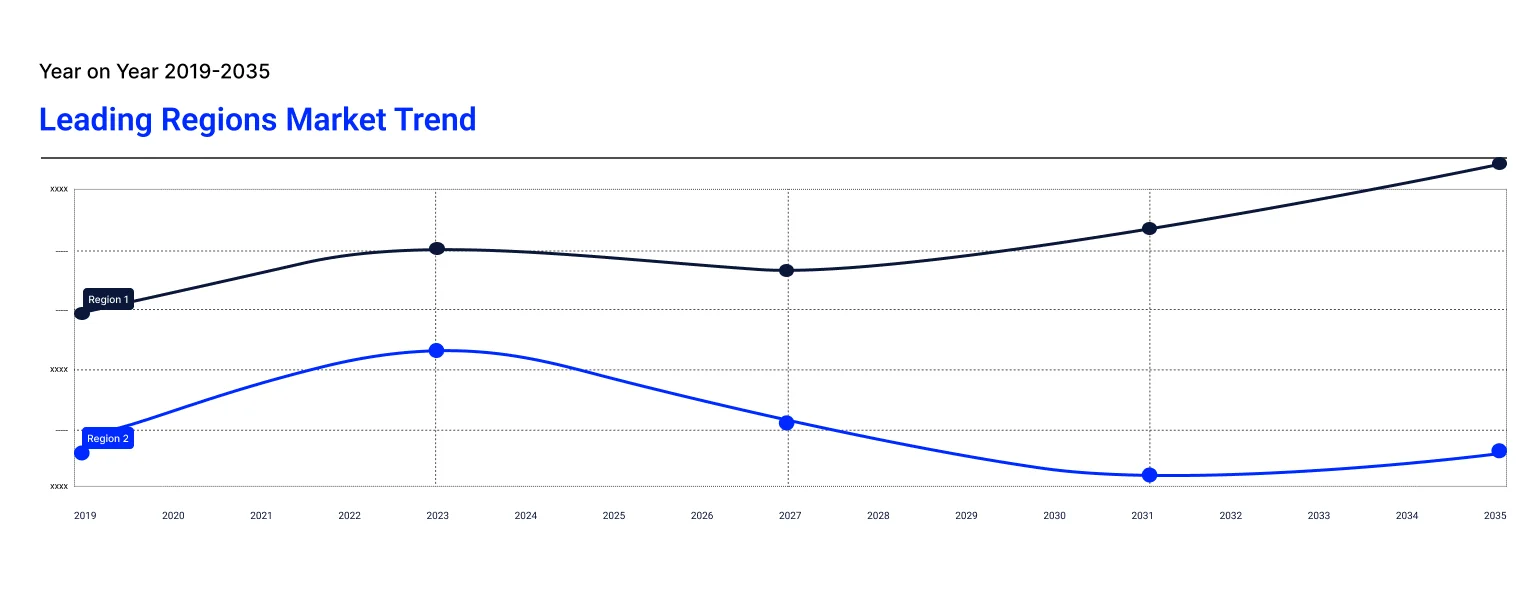
Market Breakup by Region
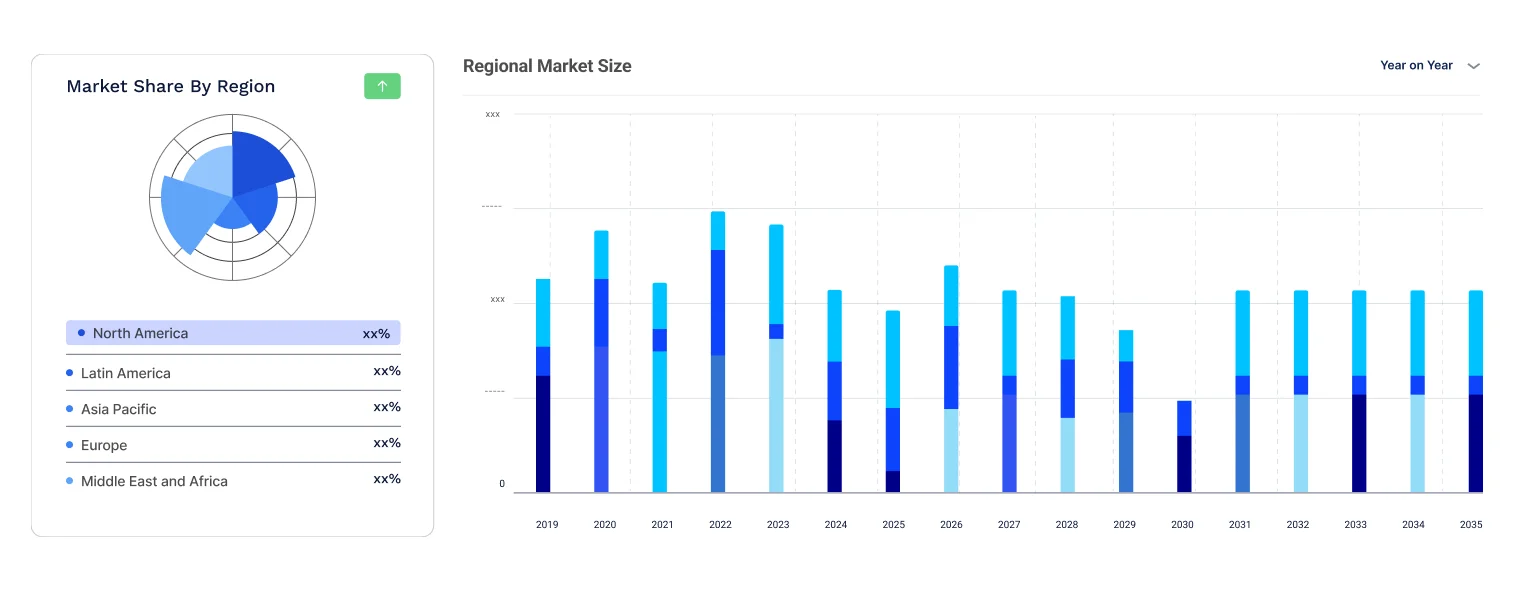
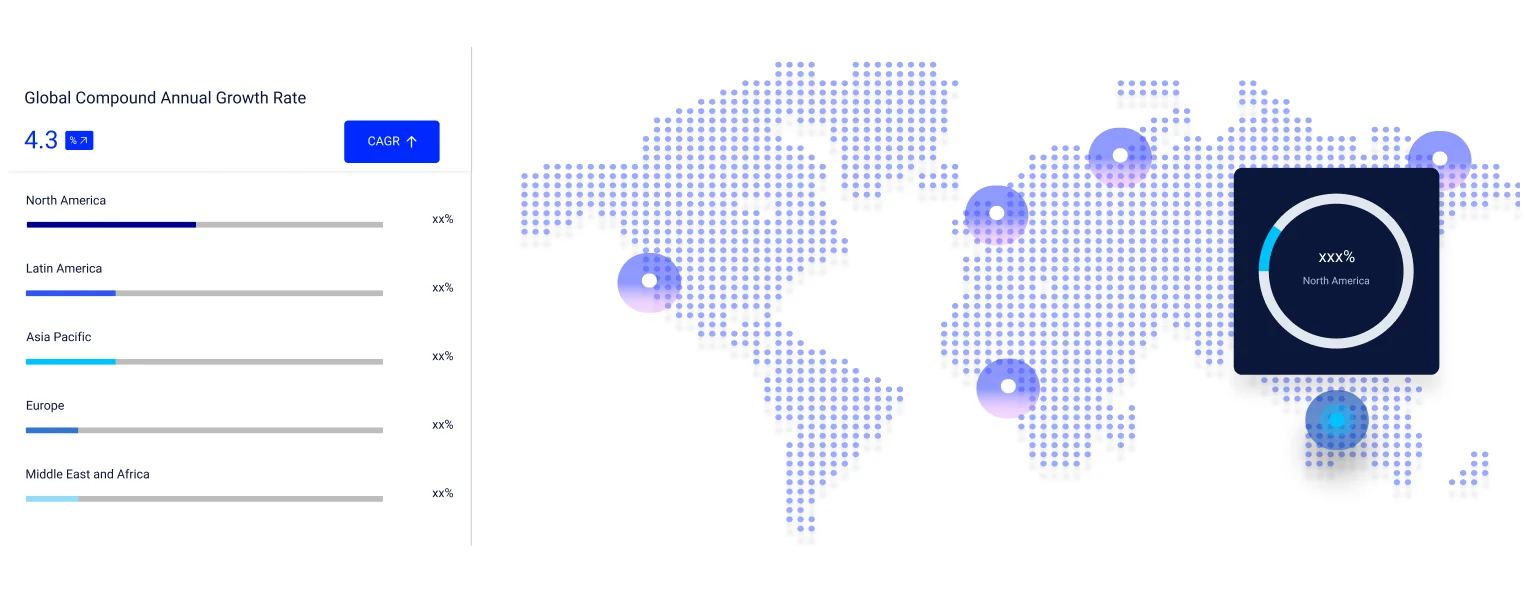
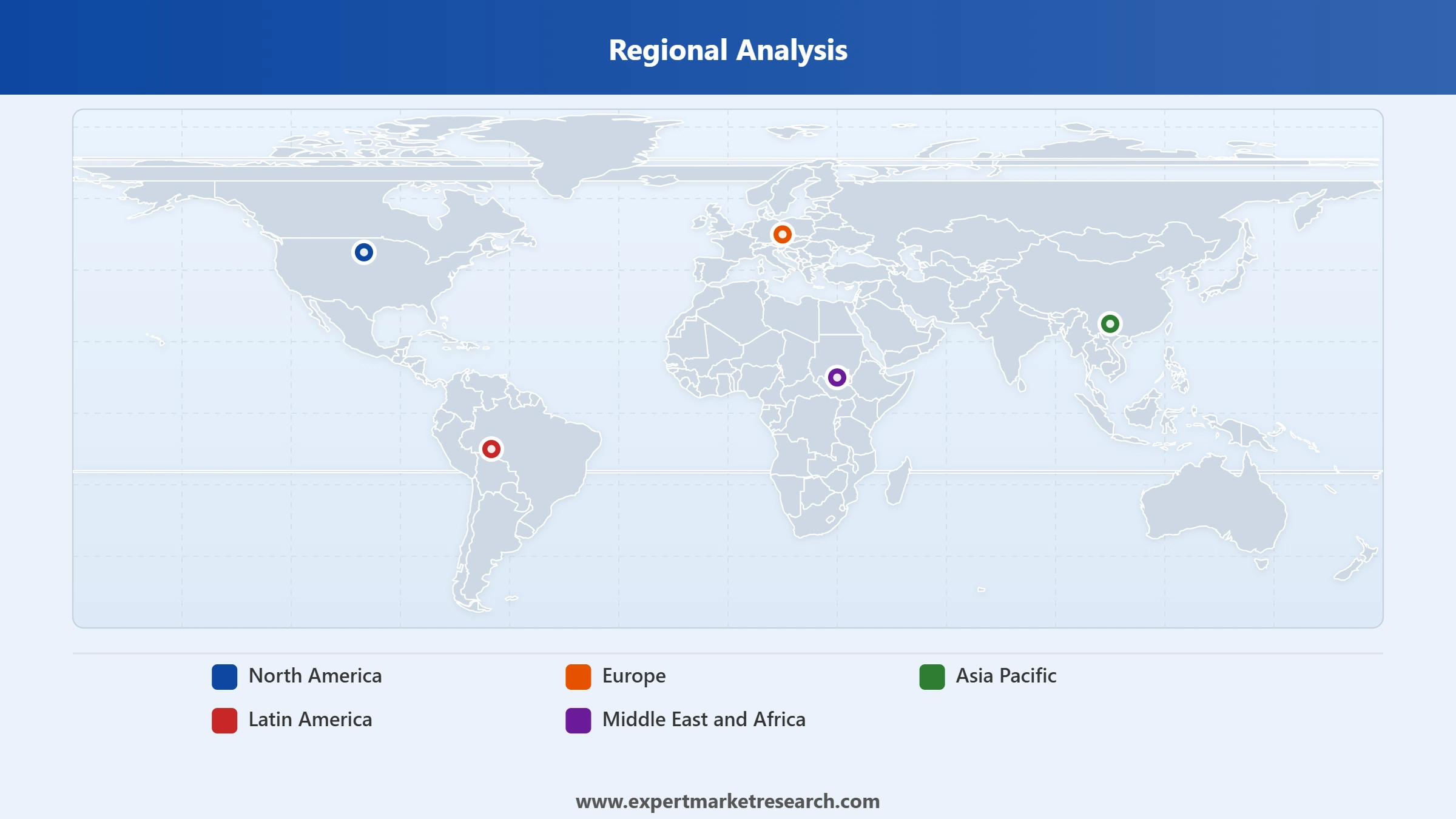
Key Insight: Regional performance of the art market depends on the degree of maturity of the market and the investment strategies pursued. North America is at the forefront in terms of having well-established auction galleries, institutional collections, and sophisticated digital markets. Europe sustains its leading place owing to rich cultural legacy, museums, and world-known galleries. Asia Pacific records the highest rates of development due to increasing prosperity, growing number of collectors, and investments in contemporary art. Latin America profits from the increasing awareness of local artists and tourism. The Middle East and Africa gain momentum through museum projects, cultural zones, government support of creativity, and increasing participation of international collectors and galleries. In April 2026, Art Basel restricted pre-fair sales, promoting equitable gallery participation, transparent transactions, and stronger collector engagement during exhibitions.
Read more about this report - REQUEST FREE SAMPLE COPY IN PDF
By type, museums, historical sites, zoos, and parks dominate the market due to cultural tourism and institutional preservation investments
As museums, historical sites, zoos, and parks play the most prominent role in the art market because they keep attracting domestic and foreign guests and maintaining cultural heritage, their public partners now cooperate with private galleries, artists, and technologists to create immersive exhibitions and digital galleries. Moreover, membership, education, licensing, and special exhibitions are regular sources of income for these organizations with well-established facilities and cultural assets maintained by governmental programs. For example, in June 2026, Crystal Bridges Museum unveiled a 114,000-square-foot expansion, adding galleries, and immersive visitor experiences for broader cultural engagement in the United States.
The number of independent artists and performing art companies is growing due to the emergence of digital marketplaces, social networks, and online exhibitions that allow artists to make money independently from galleries. Artists can sell their products directly, participate in commissions, have subscription plans, and even create limited collections of their products, accelerating growth in the art market revenue. Cooperation with brands, hospitality industry, and corporate offices gives additional business opportunities to these artists who use digital marketing and virtual exhibitions to secure international customers.
Read more about this report - REQUEST FREE SAMPLE COPY IN PDF
By revenue source, tickets generate the largest share through exhibitions, museums, fairs, and premium visitor experiences
Admission sales continue to be the primary source of the art market revenue generation since museums, galleries, cultural venues, and art shows depend significantly on admission sales in order to function. Premium exhibitions, guided tours, special previews, and installation experiences help to boost the sales levels as well as enhance engagement among visitors. Dynamic pricing, membership packages, and VIP programs are being increasingly used in order to increase revenue. Recovered levels of tourism and repeat exhibitions also help to maintain high levels of demand for tickets and thus make this type of income a basic one for cultural organizations and private show organizers. In July 2026, Wayfarers Arcade launched the inaugural Contemporary Art Fair, showcasing over 100 artists while supporting Bebe's Hive through charity art sales.
The trend of sponsorship continues to expand rapidly as an increasing number of companies are willing to associate themselves with cultural events, exhibitions, and top art shows. Businesses fund exhibitions, artist commissions, restoration works, and educational programs as a means of building credibility as well as reaching out to valuable audiences. Luxury goods companies, financial institutions, IT businesses, and real estate companies work together with galleries and museums in order to organize special events.
Read more about this report - REQUEST FREE SAMPLE COPY IN PDF
By end use, individuals secure the leading market position through artwork collecting, home décor investments, and personal portfolio diversification
The largest end-use segment comprises individuals including collectors, enthusiasts, and rich people who keep on spending money on paintings, sculptures, digital artwork, and collectibles. The driving factors behind the demand in the art market include aesthetics, wealth preservation, and the growing interest in alternative investments. Owing to digital platforms and online auctions, the global purchase of artwork is becoming easier for collectors to discover new artists. In June 2026, UNESCO launched the Beautiful China through Children's Eyes art initiative, promoting youth creativity, cultural education, and environmental awareness nationwide.
The demand from corporates is rising at an accelerated pace since corporates use the artwork to decorate their office spaces, hotels, retail outlets, hospitals, and mixed-use developments. Corporates are commissioning the original artworks to promote their brand image, enhance the workplace environment, and provide unique customer experience, boosting growth in the art market. Artworks also help in creating an environmental brand and promoting wellness programs within the organizations. Collaborations between corporations, galleries, and artists provide ongoing business and investment opportunities for customized collections and public art installations within commercial real estate.
Read more about this report - REQUEST FREE SAMPLE COPY IN PDF
North America accounts for the dominant share of the market due to mature auction networks, institutional collectors, and digital art commerce
Dominance of the North America art market is bolstered by world-famous auction houses, prominent museums, rich collectors, and an advanced gallery network. High involvement from institutional investors, corporate buyers of art, and charitable foundations of buying artworks adds to the strength of the market. Advanced technologies for online auctions, art financing, and authentication provide additional support. Collaboration between artists, galleries, collectors, and art institutions further solidifies the position of North America as the leader in the global market. In July 2026, PMI U.S. launched the ZYN America250 Art Series, showcasing limited-edition artist-designed collectible cases celebrating contemporary American creativity and cultural heritage.
Asia Pacific is viewed as one of the most rapidly growing art market due to the growth of the number of wealthy individuals along with rising interest in modern art. Countries such as China, Japan, South Korea, Singapore, and India see increasing investments in galleries, museums, and international art fairs. The growing accessibility of the digital marketplace along with cross-border art exhibitions increases the ability to attract foreign buyers, which additionally helps regional artists.
Read more about this report - REQUEST FREE SAMPLE COPY IN PDF
The market is now getting more competitive with art companies investing in digital interaction, AI-driven artwork curation, immersion in exhibitions, and secure digital transactions. Top auctioneers, museums, entertainment groups, and cultural institutions are developing hybrid exhibition models which integrate physical and digital interaction. The companies are also emphasizing blockchain-enabled authentication, corporate art partnerships, and experiential events in order to boost collector confidence and increase revenue streams.
Leading art market players are increasingly finding opportunities in fractional art ownership, digital management of collections, museum technology, art logistics, and cross-border digital sales. The collaboration of technology firms, artists, galleries, hospitality firms, and banks is assisting companies in attracting younger collectors and broadening their international reach.
CJ Corporation was established in 1953 in Seoul, South Korea, and has been supporting the art market through entertainment, exhibitions, cultural activities, and investment in creative content. The combination of media and performing arts in digital technologies has enabled CJ Corporation to reach more audiences and promote artists by using entertaining platforms, collaboration with other nations, and cultural activities.
Founded in 2010 and based in Beverly Hills, California, United States, Live Nation Entertainment conducts karge-scale live performances, festivals, and cultural activities which help artists and creative industries. Through the digitalization of tickets, audience analysis, and sponsoring, Live Nation Entertainment has been enhancing the experience of events and offering new commercial possibilities to the performers and brands.
AMC Entertainment, which was established in 1920 and is based in Kansas, United States, makes contributions to the art market value by developing alternatives in content programming, which consists of exhibition films, performing arts shows, and cultural events. With its premium cinemas, museums, artists, and event managers can present their works to more people through audiovisual technology.
Established in 1846 and based in Washington, D.C., United States, the Smithsonian Institution ensures the preservation and promotion of art through world-famous museums, research activities, and online collections. It consistently allocates funds for digitizing collections and educational activities and thus making the artwork available to researchers.
Other key players in the market include Cinemark Holdings, Inc., Park West Galleries, Inc., The State Hermitage Museum, Christie’s International Plc, The Metropolitan Opera Association, Inc., Artsy, Inc., artnet AG, and The Walt Disney Company, among others.
*Please note that this is only a partial list; the complete list of key players is available in the full report. Additionally, the list of key players can be customized to better suit your needs.*
Unlock the latest insights with our art market trends 2026 report. Discover regional growth patterns, consumer preferences, and key industry players. Stay ahead of competition with trusted data and expert analysis. Download your free sample report today and drive informed decisions in the market.


Upto 15% Off
USD
$3999 $3599
$2499 $2249
$4999 $4249
$5999 $5099


*While we strive to always give you current and accurate information, the numbers depicted on the website are indicative and may differ from the actual numbers in the main report. At Expert Market Research, we aim to bring you the latest insights and trends in the market. Using our analyses and forecasts, stakeholders can understand the market dynamics, navigate challenges, and capitalize on opportunities to make data-driven strategic decisions.*
In 2025, the market reached an approximate value of USD 75.71 Billion.
The market is projected to grow at a CAGR of 3.10% between 2026 and 2035.
The market is estimated to witness a healthy growth in the forecast period of 2026-2035 to reach a value of around USD 102.74 Billion by 2035.
The market is driven by the growing emphasis on diversity, inclusivity, and sustainability, and the rising popularity of digital medium of arts.
The growth of e-commerce and social media platforms and the improving economic conditions around the world are expected to positively influence the market.
The major regional markets are North America, Europe, the Asia Pacific, Latin America, and the Middle East and Africa.
The different revenue sources include media rights, merchandising, tickets, and sponsorship.
The key players in the market include CJ Corporation, Live Nation Entertainment Inc., AMC Entertainment Holdings, Inc., Smithsonian Institution, Cinemark Holdings, Inc., Park West Galleries, Inc., The State Hermitage Museum, Christie’s International Plc, The Metropolitan Opera Association, Inc., Art.sy, Inc., artnet AG, and The Walt Disney Company, among others.
Explore our key highlights of the report and gain a concise overview of key findings, trends, and actionable insights that will empower your strategic decisions.
| REPORT FEATURES | DETAILS |
| Base Year | 2025 |
| Historical Period | 2019-2025 |
| Forecast Period | 2026-2035 |
| Scope of the Report |
Historical and Forecast Trends, Industry Drivers and Constraints, Historical and Forecast Market Analysis by Segment:
|
| Breakup by Type |
|
| Breakup by Revenue Source |
|
| Breakup by End Use |
|
| Breakup by Region |
|
| Market Dynamics |
|
| Competitive Landscape |
|
| Companies Covered |
|
Single User License
One User
USD 3,999
USD 3,599
tax inclusive*
Datasheet
One User
USD 2,499
USD 2,249
tax inclusive*
Five User License
Five User
USD 4,999
USD 4,249
tax inclusive*
Corporate License
Unlimited Users
USD 5,999
USD 5,099
tax inclusive*
*Please note that the prices mentioned below are starting prices for each bundle type. Kindly contact our team for further details.*
Flash Bundle
Small Business Bundle
Growth Bundle
Enterprise Bundle
*Please note that the prices mentioned below are starting prices for each bundle type. Kindly contact our team for further details.*
Flash Bundle
Number of Reports: 3
20%
tax inclusive*
Small Business Bundle
Number of Reports: 5
25%
tax inclusive*
Growth Bundle
Number of Reports: 8
30%
tax inclusive*
Enterprise Bundle
Number of Reports: 10
35%
tax inclusive*
How To Order

Select License Type
Choose the right license for your needs and access rights.

Click on ‘Buy Now’
Add the report to your cart with one click and proceed to register.

Select Mode of Payment
Choose a payment option for a secure checkout. You will be redirected accordingly.
Strategic Solutions for Informed Decision-Making
Gain insights to stay ahead and seize opportunities.

Get insights & trends for a competitive edge.

Track prices with detailed trend reports.

Analyse trade data for supply chain insights.

Leverage cost reports for smart savings

Enhance supply chain with partnerships.

Connect For More Information
Our expert team of analysts will offer full support and resolve any queries regarding the report, before and after the purchase.
Our expert team of analysts will offer full support and resolve any queries regarding the report, before and after the purchase.
We employ meticulous research methods, blending advanced analytics and expert insights to deliver accurate, actionable industry intelligence, staying ahead of competitors.
Our skilled analysts offer unparalleled competitive advantage with detailed insights on current and emerging markets, ensuring your strategic edge.
We offer an in-depth yet simplified presentation of industry insights and analysis to meet your specific requirements effectively.




