

Consumer Insights
Uncover trends and behaviors shaping consumer choices today
Procurement Insights
Optimize your sourcing strategy with key market data
Industry Stats
Stay ahead with the latest trends and market analysis.
The Australia pallets market attained a volume of 21.92 Million Units in 2025 and is projected to expand at a CAGR of 2.73% through 2035. The market is further expected to achieve 28.70 Million Units by 2035. Digital pallet visibility is becoming a practical supply-chain tool as connected assets can provide location, condition, and handling information. Brambles reports approximately 352 million pallets, crates, and containers globally, creating a large installed base for digitally enabled logistics services.
The growing number of building projects in Australia will lead to the consistent demand for support transport platforms. Residential building construction rose 9.1% on a year-over-year basis in the June quarter of 2026, while non-residential construction projects saw an increase of 11.5%, expanding the movement of construction products through manufacturers, wholesalers, distributors, and project sites. The second major factor is the growing freight challenge in Australia. The updated National Freight and Supply Chain Strategy outlines productivity, resilience, decarbonization, and data as the strategic challenges, and government forecasts point out a 26% increase in domestic freight challenge by 2050. This environment will push for standardization of pallet sizes and cycles of repairs, as well as the use of reusable platforms and pallet integration into automated warehouse operations.
Australia’s Atlas TEC Pallet project is developing a 100% recycled-polymer pallet designed with a specific focus on circular logistics. The key aspects of this project include the use of recycled polymers alongside integrated pallet tracking which enables tracking of each pallet during its lifecycle. Automated repair and remanufacturing features are also incorporated in the design of this pallet. Its design also incorporates automated repair and remanufacturing concepts, enabling damaged units to be returned into productive circulation instead of being discarded. This approach addresses several limitations associated with conventional pallet recovery, particularly where businesses need visibility over pallet movements and condition. The project is being developed with the objective of creating a scalable, market-ready pallet solution for Australian supply chains. Its combination of recycled material, digital traceability, repairability, and remanufacturing provides a distinct model for extending pallet lifecycles while retaining material value within logistics networks, thereby boosting the Australia pallets market value.
Australia-based pallet manufacturers continue to be subject to changes in the supply of sawn wood and regionally available fiber due to the need for consistent sources of quality raw materials needed for the production of timber pallets. The problem is exacerbated by the expansion of manufacturing or sudden orders of pallets from logistics, agricultural, food, and other industries. Changes in the supply of timber may also occur between regions due to the dependence of manufacturers of pallets on regional sawmills, infrastructure, and appropriate timber grades of recovered or newly processed timber. Recent investment in facilities such as the Neville Smith Forestry Products sawmill in Tasmania demonstrates the importance of strengthening domestic processing capacity. However, expanding pallet output still requires dependable access to appropriate timber sizes and grades, meaning supply conditions can influence production planning, procurement costs, and manufacturers’ ability to respond quickly to large-volume requirements, thereby boosting the Australia pallets market developments.
Compound Annual Growth Rate
2.73%
Value in Million Units
2026-2035
Read more about this report - REQUEST FREE SAMPLE COPY IN PDF
Hyne Group expanded its national Hyne Pallets network through the acquisition of Seapal Pallets & Crates in Kilcoy, Queensland, completed in October 2025. The transaction represented the group's sixth pallet-manufacturing acquisition in less than two years and its second in Queensland. Seapal supplies standard and customised pallets and crates to mining, agriculture, logistics, and food customers. Hyne identified opportunities to integrate Seapal with its nearby Express Pallets & Crates operation through shared freight, staffing, fibre supply, production planning, and raw-material procurement.
Hyne Group expanded its Hyne Pallets division through the acquisition of Newcastle Pallets, with completion scheduled for September 2025. The acquisition marked the group's fifth pallet-manufacturing acquisition in less than two years and strengthened its presence in the Hunter Valley and greater Newcastle region. Newcastle Pallets serves manufacturing, mining, industrial, and agricultural customers, while the transaction increased integration with Hyne's existing timber distribution operations. The expansion supports greater regional manufacturing capacity and supply-chain efficiency for pallet customers across New South Wales.
CHEP Australia expanded its local pallet-production capacity in July 2025 through its partnership with Neville Smith Forestry Products. The development followed a $14 million upgrade to NSFP’s Southwood sawmill in Tasmania, adding advanced equipment for processing plantation hardwood into pallets. The upgraded facility can process up to 100,000 GMT of plantation hardwood logs annually and produces hundreds of thousands of pallets for Australian supply chains. The expansion strengthens domestic pallet manufacturing and supports greater use of locally sourced timber.
NewCold announced a major Australian expansion in June 2025, including a new Sydney facility planned with 100,000 frozen pallet positions and an additional 80,000 positions at its Melbourne I facility. The Melbourne expansion is designed to increase total frozen capacity to 265,000 pallets and overall site capacity to 405,000 pallet positions. The Sydney development is targeted for operation in October 2026, while Melbourne expansion was planned for July 2026, strengthening automated palletised cold-chain infrastructure.
Reusable pallet systems are gaining importance across Australia's grocery, food, beverage, and consumer-goods supply chains as companies seek to reduce packaging waste and improve asset utilisation. Retail distribution requires pallets to withstand repeated loading, unloading, storage, and transport cycles, making repairability increasingly important. Australian pallet suppliers are therefore expanding inspection, repair, collection, and refurbishment capabilities alongside new-pallet production. Reconditioned pallets can serve domestic distribution requirements where export certification is unnecessary, extending useful pallet life and reducing demand for replacement units. This creates opportunities for suppliers offering integrated recovery services rather than relying solely on one-time pallet sales.
Australia's strict biosecurity requirements continue to shape pallet specifications for exporters shipping goods internationally. Solid-wood packaging used in international trade generally needs treatment and marking under ISPM 15 requirements to manage timber-pest risks. This is increasing demand for suppliers capable of providing compliant heat-treated pallets alongside appropriate documentation and traceability. Manufacturers serving agricultural, food, machinery, mining-equipment, and industrial exporters can differentiate by integrating treatment into pallet production rather than outsourcing the requirement after manufacturing. Reusable export pallets also need careful inspection because repairs or alterations can affect their compliance status. Consequently, certification capability is becoming an important part of export-pallet procurement.
Plastic pallets are gaining applications where resistance to moisture, contamination, chemicals, and repeated washing is important. Food processing, pharmaceutical manufacturing, cold-chain distribution, and other hygiene-sensitive operations can favour plastic platforms because their non-porous construction simplifies cleaning compared with untreated timber. Plastic designs also provide consistent dimensions for warehouse handling and can support repeated circulation. Australian suppliers are consequently positioning recycled and reusable plastic pallets as alternatives for closed-loop logistics where pallet recovery is practical. Demand is particularly relevant for operations exposed to wet processing environments or stringent hygiene procedures. Product durability and recyclability are becoming important differentiators alongside conventional considerations such as load capacity and dimensions, thus shaping the trends of the Australia pallets market.
Australia's expanding focus on resource recovery is encouraging pallet businesses to place greater emphasis on repair, refurbishment, and recycling. Timber pallets with damaged boards or components can often be repaired and returned to service instead of being immediately discarded. Suppliers are also recovering usable timber from unrepairable pallets for recycling or alternative applications. This supports a circular model in which pallet companies generate revenue through collection, sorting, repair, resale, and recycling in addition to manufacturing. For customers, these services can reduce disposal requirements and provide lower-cost alternatives to purchasing entirely new pallets. The approach is particularly relevant for businesses generating substantial pallet volumes across warehouses and distribution operations.
Pallet manufacturers are increasingly developing lightweight designs where reducing packaging weight can improve handling and transport economics without compromising required load performance. This is particularly relevant to air freight, export shipments, consumer products, and logistics operations where pallet tare weight contributes to total shipment weight. Paper and engineered-material pallets can address selected lightweight applications, while timber manufacturers can optimise board dimensions and construction to reduce unnecessary material. Lightweight designs also support manual handling by reducing the empty pallet weight that warehouse personnel must move. Consequently, Australian suppliers are increasingly balancing structural strength, pallet weight, durability, and application-specific load requirements when developing products for logistics customers.
The Expert Market Research’s report titled "Australia Pallets Market Report and Forecast 2026-2035” offers a detailed analysis of the market based on the following segments:
Market Breakup by Type
Key Insight: Collapsible, stackable, display, and nestable pallets address different points within the storage and distribution cycle. Collapsible pallets are appropriate for facilities that need to store or return empty equipment, while stackable pallets help in improving vertical storage in warehouses. Display pallets combine the transportation function with retail display and minimize the number of transfers from distribution centers to retailers. The design of nestable pallets is especially useful for situations in which empty pallets occupy a large amount of space. Australia’s government freight strategy places productivity and resilience at the center of national supply-chain planning, increasing the commercial relevance of space-efficient pallet formats. Together, these designs allow procurement teams to select pallet geometry according to transport density, warehouse configuration, merchandising requirements, and reverse-logistics costs.
Market Breakup by Material
Key Insight: Wood, plastic, metal, and paper pallets serve distinct industrial requirements based on load capacity, hygiene, moisture resistance, export regulations, and lifecycle costs. Wood remains widely used, supported by Australia’s established forestry and wood-products sector, while plastic pallets are increasingly relevant for food, pharmaceutical, and automated logistics applications requiring durability and easy sanitation. Metal pallets serve heavy-duty industrial and manufacturing operations, whereas paper pallets support lightweight and specialised shipments. Sustainability is also shaping procurement decisions. Australia generated 75.6 million tonnes of headline waste in 2022-23, with 47.6 million tonnes recycled or reused, reinforcing demand for reusable, recyclable, repairable, and resource-efficient pallet solutions, thus driving the demand in the Australia pallets market.
Market Breakup by Structural Design
Key Insight: Stringer, block, and other structural configurations provide different combinations of load distribution, forklift accessibility, rack compatibility, and manufacturing economics. Stringer designs remain closely associated with conventional timber handling systems, while block structures can provide four-way entry and improved flexibility across handling equipment. Specialized designs are increasingly important where customers use automated storage, narrow handling lanes, export packaging, or unusual load geometries. CHEP's Australian wooden platform, for example, uses a three-bearer hardwood construction and supports a 2,000 kg maximum payload in drive-in racking and a 10,000 kg static load. These requirements encourage suppliers to engineer structural formats around actual warehouse and freight conditions.
Market Breakup by Application
Key Insight: Building and construction, chemicals and pharmaceuticals, food and beverages, machinery and metal, pharmaceuticals, consumer electronics, textile and handcraft, automotive, agriculture, and cosmetics and personal care collectively create a diversified demand base. Construction benefits from expanding building activity, while agriculture generates export-oriented palletized freight. Food and beverage applications place greater emphasis on hygiene and moisture resistance, whereas chemicals require containment and durable industrial handling. ABS recorded AUD 23.66 billion in manufacturing labor income in the June quarter of 2026 and AUD 18.51 billion in transport, postal and warehousing labor income, highlighting the scale of industries that interact with palletized supply chains.
Market Breakup by Region
Key Insight: New South Wales, Victoria, Queensland, the Australian Capital Territory, Western Australia, and other territories exhibit different pallet requirements based on population, construction, manufacturing, mining, agriculture, ports, and distribution infrastructure. New South Wales and Victoria provide large addressable customer bases, while Queensland combines population growth with agricultural, industrial, and logistics activity. Western Australia has particular relevance for mining, export logistics, and industrial freight. As of December 2025, Australia had 27.8 million residents, with New South Wales at 8.64 million, Victoria at 7.12 million, Queensland at 5.71 million, and Western Australia at 3.08 million.
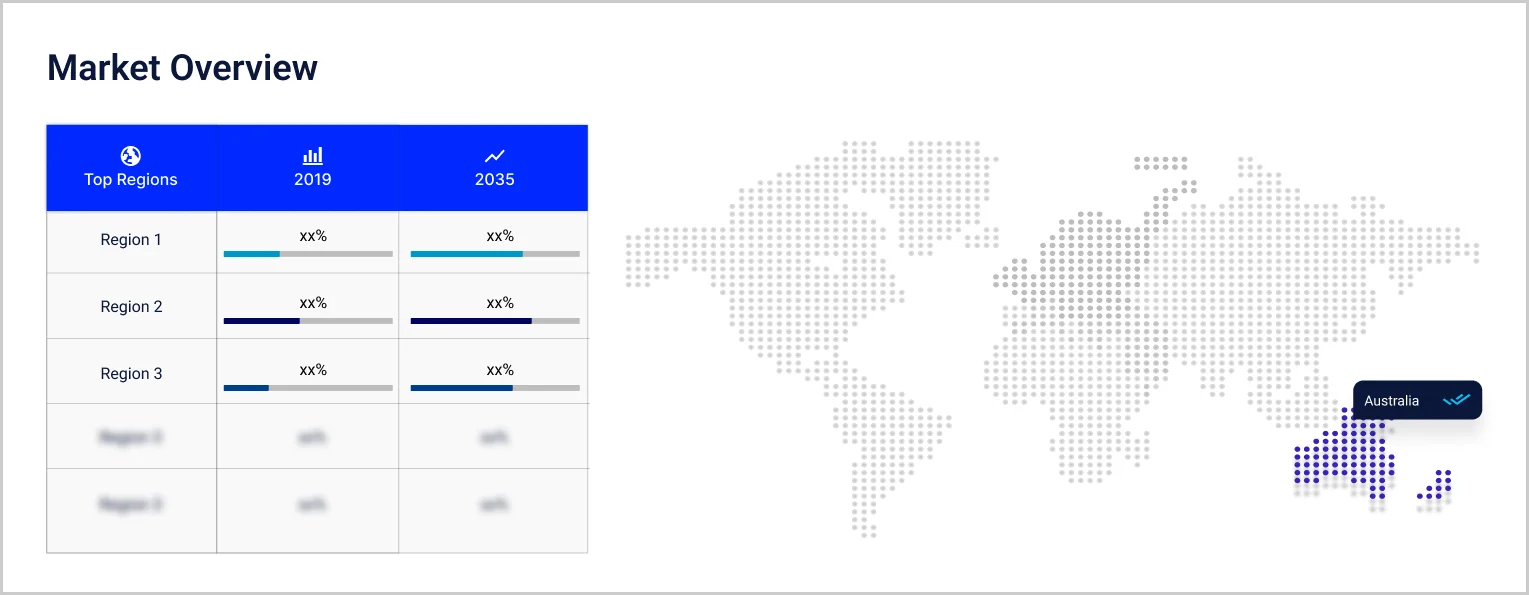
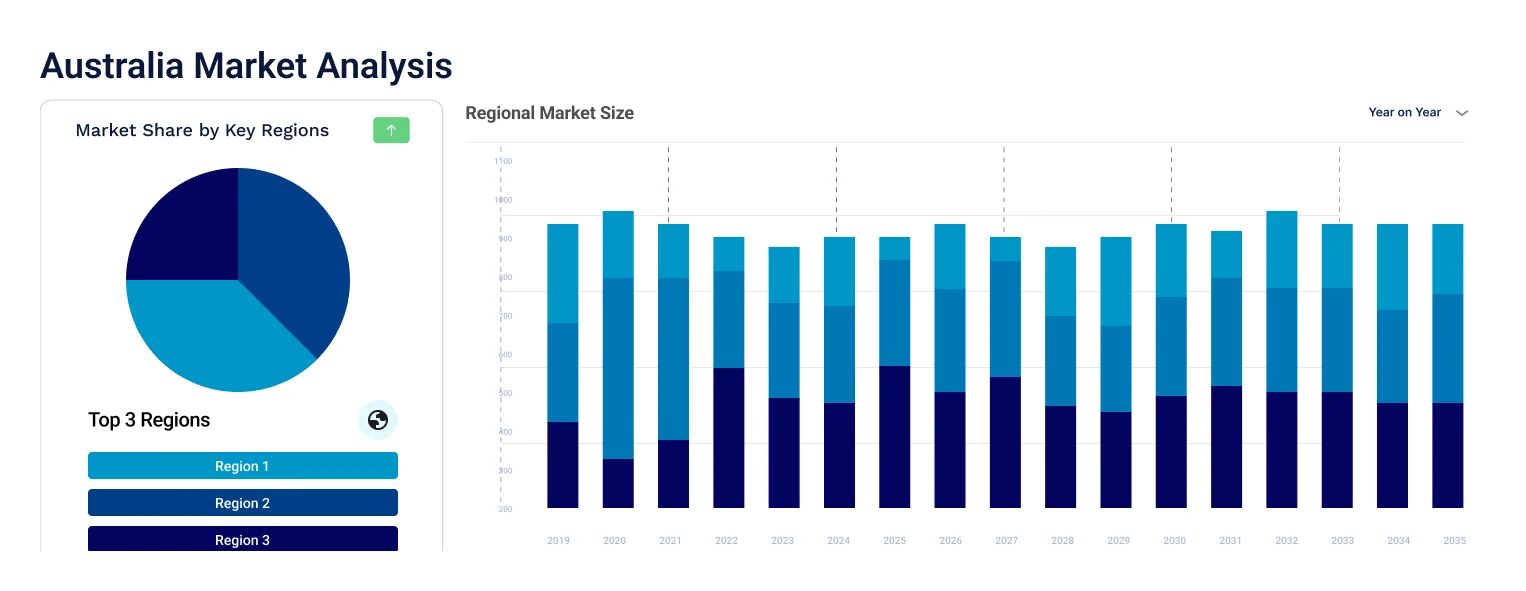
Read more about this report - REQUEST FREE SAMPLE COPY IN PDF
By type, collapsible pallets are anticipated to dominate due to their space-saving operational advantages
Collapsible pallets are positioned as the dominant type because their ability to reduce empty-pallet volume addresses a major logistics cost associated with storage and reverse transportation. Their relevance is reinforced by Australia's national freight agenda, which emphasizes productivity and resilience across supply chains. The format is particularly suitable for manufacturers and distribution centers managing substantial return flows, seasonal inventory, or constrained warehouse footprints. Demand is likely to remain concentrated where procurement teams evaluate pallet ownership together with transport, storage, and return-handling costs.
Nestable pallets are positioned for strong growth where businesses need to reduce the space occupied by empty platforms. Lightweight export designs demonstrate the commercial value of minimizing pallet tare weight and empty freight volume. Veeco Pallets, for example, offers lightweight export pallets weighing 6.9 kg and lists nestable designs among its solutions. Such configurations are relevant to exporters, third-party logistics providers, and businesses managing frequent international or inter-site pallet movements.
By material, wood pallets are anticipated to dominate due to established domestic supply and infrastructure compatibility
Wood pallets remain the dominant material because they are deeply embedded in Australia's industrial handling infrastructure and benefit from domestic timber availability. Australia produced 4.3 million cubic meters of sawnwood in 2022-23, with 95% consumed domestically. Established pallet pools, repair networks, forklift compatibility, and widespread warehouse acceptance further reinforce timber's position. Wooden platforms also support export applications when appropriately treated and certified. These characteristics make wood particularly suitable for high-volume industrial, construction, agricultural, and general warehousing operations. Such developments will thus boost Australia pallets market trends in the long run.
Plastic pallets are poised to see accelerated growth in those sectors where hygiene, moisture protection, reusability, and automation play critical roles. Veeco Pallets claims that it has manufactured more than one million plastic pallets made from recycled materials, and converted in excess of 37 million kg of waste into plastic material. The relevance of plastic forms is particularly notable in food, beverages, pharmaceuticals, exports, and clean manufacturing where the material does not absorb any liquid and can be reused again and again after cleaning. Growing emphasis on resource recovery can further support recycled-material pallet solutions.
By structural design, stringer pallets are anticipated to dominate due to established handling-system compatibility
Stringer pallets are positioned as the leading structural design because conventional warehouse and transport operations continue to rely heavily on familiar timber configurations compatible with forklifts, pallet jacks, trucks, and racking systems. CHEP's Australian wooden pallet illustrates the importance of standardized dimensions, with a 1,165 mm × 1,165 mm footprint and broad compatibility with existing supply-chain infrastructure. Their straightforward manufacturing and repair characteristics also support widespread industrial use.
Block pallets are poised to grow due to the need for four-way access and automation compatibility. Four-way access will make it easier to position products in warehouses and distribution centers where the load is accessed by forklift trucks from all four directions. It will become increasingly important as supply chains adopt automation for storing materials. Australia's freight strategy specifically identifies productivity and data as national priorities, encouraging logistics operators to improve equipment utilization and operational visibility. Suppliers capable of combining block construction with precise dimensions can target automated and high-throughput facilities.
By application, food and beverages are anticipated to dominate due to extensive palletized supply chains
Food and beverages represent a major pallet application because Australia maintains a large agricultural and food-export base requiring repeated movement through processing plants, cold stores, distribution centers, and ports. ABARES forecast agricultural export value at AUD 80.5 billion for 2025-26, following a record agricultural production year. Pallet requirements extend beyond load carrying to hygiene, moisture resistance, traceability, and compatibility with refrigerated operations. Suppliers serving food processors and distributors can therefore gain value through dedicated hygienic designs and consistent dimensional performance.
Building and construction has high growth potential due to increasing palletized movement of building materials. According to ABS, AUD 45.8 billion worth of building work was carried out in the June quarter of 2026, representing an increase of 10.0% compared to the same quarter of the previous year. Building non-residential buildings went up by 11.5%. Pallet manufacturers can capitalize on this opportunity by supplying durable pallets that cater to various building material needs.
By region, New South Wales is anticipated to dominate due to its population and construction base
New South Wales remains the largest addressable regional market because of its population scale, construction pipeline, manufacturing base, logistics infrastructure, and concentration of commercial distribution. ABS recorded AUD 24.1 billion in construction work in New South Wales during the June quarter of 2026, compared with AUD 19.7 billion in Victoria and AUD 17.0 billion in Queensland. Victoria also represents a substantial pallet-consuming market, supported by population growth of 1.7% in the year to December 2025 and strong construction activity. Queensland combines population growth with agricultural and logistics demand, while the Australian Capital Territory remains smaller because of its more limited industrial base, thereby directly boosting the Australia pallets market regional growth.
Western Australia provides a distinct growth opportunity linked to mining, export activity, industrial freight, and rapid population expansion. Its population increased 2.2% in the year to December 2025, while the state's construction activity remained AUD 13.3 billion in the June quarter of 2026 despite a substantial quarterly correction. Western Australian suppliers are also developing certified timber-pallet capabilities; West Coast Pallets holds PEFC chain-of-custody certification covering certified timber pallets, crates, and related products. Across regions, suppliers with localized repair, treatment, inventory, and delivery capabilities can reduce lead times and improve resilience for geographically dispersed customers.
Leading Australia pallets market players can differentiate by developing solutions around durability, load performance, customisation, and sustainability rather than competing only on pallet prices. Manufacturers can expand portfolios across standard, heavy-duty, export-grade, lightweight, reusable, and customised pallets to address requirements across food processing, agriculture, retail, manufacturing, mining, and logistics. Investment in heat treatment, automated manufacturing, quality inspection, and digital pallet tracking can further improve consistency and traceability. Companies can also strengthen repair, collection, refurbishment, and recycling services to provide customers with complete pallet lifecycle management.
Australia pallets companies' differentiation can also come from service reliability and supply-chain integration. Maintaining strategically located production and inventory facilities can help suppliers respond quickly to large-volume and urgent orders. Pallet pooling, rental, scheduled collection, and repair programmes can create recurring customer relationships while reducing customers’ handling responsibilities. Using responsibly sourced timber, recycled plastics, and designs that extend pallet life can support sustainability objectives. Players can further differentiate through engineering support, customised dimensions, export-compliance services, and digital ordering platforms that make pallet procurement faster and more transparent.
Established in 1979, Fisher’s (Latrobe Valley) Pty Ltd. is headquartered in Morwell, Victoria, Australia. The company manufactures wooden pallets and crates for domestic and export applications, supported by more than six decades of timber-industry experience. Its offerings include standard and export-grade pallets, customised pallet solutions, and crates. Fisher’s also provides kiln-drying and H2 and H3 timber-treatment services through its sister company, Fisher’s Timber Treatment. Its export-oriented products can be manufactured and treated to meet applicable international shipping requirements.
Established in 2000, Audanus Pty Ltd. is headquartered in Clontarf, Queensland, Australia, and operates as Palletmasters. The company manufactures and supplies wooden pallets, skids, crates, and timber dunnage for domestic and export applications. Its portfolio includes pine and hardwood pallets, standard Australian pallets, shipping pallets, quarter and half pallets, and multiple export pallet configurations. Palletmasters also provides customised designs, heat treatment for export compliance, stencilling, and delivery services, supporting applications across manufacturing, agriculture, warehousing, logistics, construction, mining, metals, and food and beverage industries.
Established in 2007, Pinewood Products Pty Ltd. is headquartered in Queensland, Australia, with pallet production operations in Brisbane and Kurri Kurri, New South Wales. The company manufactures standard Australian pallets from pine, alongside heavy-duty export pallets and customised timber pallets. Its solutions can be configured according to board arrangement, timber grade, dimensions, load capacity, and specialised handling requirements. Pinewood also supplies ISPM 15-compliant pallets for international shipments and offers pallet designs incorporating scalloped bearers and other features for specialised freight, storage, and packaging applications.
Established in 1974, Plain Pallets is headquartered in Braeside, Victoria, Australia. The company supplies new and used wooden pallets, export pallets, custom-built pallets, plastic pallets, and recycled pallet solutions. Its portfolio includes Australian standard pallets, Euro pallets, US export pallets, Australian export pallets, nestable plastic pallets, heavy-duty plastic pallets, composite pallets, reclaimed pallets, and ex-rental pallets. Plain Pallets also provides pallet recycling and collection services, with products manufactured to Australian standards and international export requirements for transport, storage, warehousing, and shipping applications.
Other key players in the Australia pallets market include West Coast Pallets Pty Ltd., Palletize Australia, Westend Pallets, Pallet Recyclers Pty Ltd., Seapal Pallets & Crates Pty Ltd, and Pinetec among others.
*Please note that this is only a partial list; the complete list of key players is available in the full report. Additionally, the list of key players can be customized to better suit your needs.*
Access the detailed report to evaluate Australia Pallets Market trends 2026, competitive dynamics, regional opportunities, material preferences, and application-specific demand. The study provides structured insights for businesses assessing the Australia pallets Market Size, supply-chain developments, product opportunities, and long-term investment priorities. Download the sample to explore the Australia pallets Market forecast 2026-2035 and evaluate opportunities across Australia's evolving logistics ecosystem.
United States Plastic Pallets Market


Upto 15% Off
USD
$2499 $2249
$3999 $3599
$4999 $4249
$5999 $5099


*While we strive to always give you current and accurate information, the numbers depicted on the website are indicative and may differ from the actual numbers in the main report. At Expert Market Research, we aim to bring you the latest insights and trends in the market. Using our analyses and forecasts, stakeholders can understand the market dynamics, navigate challenges, and capitalize on opportunities to make data-driven strategic decisions.*
In 2025, the market reached an approximate value of 21.92 Million Units.
The market is projected to grow at a CAGR of 2.73% between 2026 and 2035.
The revenue generated from the Australia pallets market is expected to reach 28.70 Million Units in 2035.
The market is categorised according to the type, which includes collapsible pallets, stackable pallets, display and nestable pallets.
Key players in the market are Fisher’s (Latrobe Valley) Pty Ltd., Audanus Pty Ltd., Pinewood Products Pty Ltd., Plain Pallets, West Coast Pallets Pty Ltd., Palletize Australia, Westend Pallets, Pallet Recyclers Pty Ltd., Seapal Pallets & Crates Pty Ltd, and Pinetec among others.
Based on the material, the pallets market is divided into metal pallets, paper pallets, plastic pallets and wood pallets.
The market is broken down into New South Wales, Victoria, Queensland, Australian Capital Territory, Western Australia, and others.
The Australia pallets market faces challenges including rising timber and plastic costs, supply chain disruptions, stringent quality and safety requirements, pallet pooling complexities, recycling limitations, and the need to manage damaged pallets while meeting sustainability and circular-economy expectations.
Key strategies driving the Australia pallets market include expanding pallet pooling and rental services, adopting durable and lightweight designs, increasing recycled plastic and sustainably sourced timber use, improving pallet tracking through RFID and IoT technologies, strengthening repair and reuse networks, and enhancing supply-chain efficiency.
Explore our key highlights of the report and gain a concise overview of key findings, trends, and actionable insights that will empower your strategic decisions.
| REPORT FEATURES | DETAILS |
| Base Year | 2025 |
| Historical Period | 2019-2025 |
| Forecast Period | 2026-2035 |
| Scope of the Report |
Historical and Forecast Trends, Industry Drivers and Constraints, Historical and Forecast Market Analysis by Segment:
|
| Breakup by Type |
|
| Breakup by Material |
|
| Breakup by Structural Design |
|
| Breakup by Application |
|
| Breakup by Region |
|
| Market Dynamics |
|
| Competitive Landscape |
|
| Companies Covered |
|
Datasheet
One User
USD 2,499
USD 2,249
tax inclusive*
Single User License
One User
USD 3,999
USD 3,599
tax inclusive*
Five User License
Five User
USD 4,999
USD 4,249
tax inclusive*
Corporate License
Unlimited Users
USD 5,999
USD 5,099
tax inclusive*
*Please note that the prices mentioned below are starting prices for each bundle type. Kindly contact our team for further details.*
Flash Bundle
Small Business Bundle
Growth Bundle
Enterprise Bundle
*Please note that the prices mentioned below are starting prices for each bundle type. Kindly contact our team for further details.*
Flash Bundle
Number of Reports: 3
20%
tax inclusive*
Small Business Bundle
Number of Reports: 5
25%
tax inclusive*
Growth Bundle
Number of Reports: 8
30%
tax inclusive*
Enterprise Bundle
Number of Reports: 10
35%
tax inclusive*
How To Order

Select License Type
Choose the right license for your needs and access rights.

Click on ‘Buy Now’
Add the report to your cart with one click and proceed to register.

Select Mode of Payment
Choose a payment option for a secure checkout. You will be redirected accordingly.
Strategic Solutions for Informed Decision-Making
Gain insights to stay ahead and seize opportunities.

Get insights & trends for a competitive edge.

Track prices with detailed trend reports.

Analyse trade data for supply chain insights.

Leverage cost reports for smart savings

Enhance supply chain with partnerships.

Connect For More Information
Our expert team of analysts will offer full support and resolve any queries regarding the report, before and after the purchase.
Our expert team of analysts will offer full support and resolve any queries regarding the report, before and after the purchase.
We employ meticulous research methods, blending advanced analytics and expert insights to deliver accurate, actionable industry intelligence, staying ahead of competitors.
Our skilled analysts offer unparalleled competitive advantage with detailed insights on current and emerging markets, ensuring your strategic edge.
We offer an in-depth yet simplified presentation of industry insights and analysis to meet your specific requirements effectively.




