

Consumer Insights
Uncover trends and behaviors shaping consumer choices today
Procurement Insights
Optimize your sourcing strategy with key market data
Industry Stats
Stay ahead with the latest trends and market analysis.
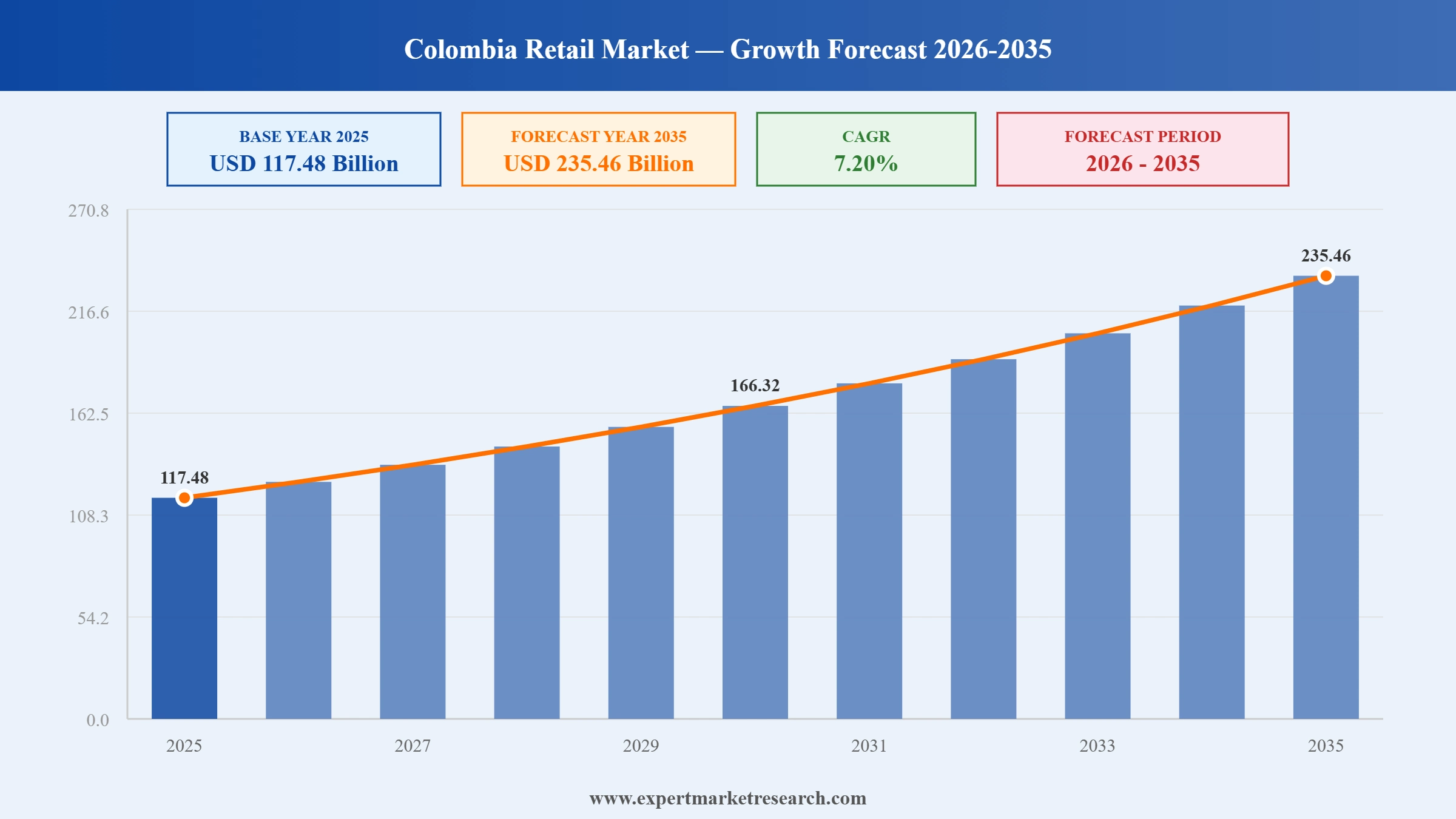
The Colombia retail market was valued at USD 117.48 Billion in 2025 and is projected to grow at a CAGR of 7.20% during the forecast period of 2026-2035. Expansion of Colombia’s fintech ecosystem is enabling greater formalisation of retail, particularly among SMEs, as digital wallets, BNPL schemes, and QR-based POS systems replace legacy cash dependency. Thereby aiding the market to attain a value of USD 235.46 Billion by 2035.
Both digital transformation and infrastructure expansion are key motivators for the market growth, largely fuelled by private consumption and digital commerce penetration. The government’s recent "Compromiso por Colombia" initiative is also channelling investments into commercial hubs to support regional retail growth, boosting logistics and supply chain efficiencies.
Digital integration is reshaping consumer accessibility, boosting further demand in the Colombia retail market. Globally, over 110% of urban consumers now engage in online retail. Government-backed programmes like “MiPyme Vive Digital” enhance technology accessibility for small and mid-sized retailers, making omnichannel retail more inclusive and competitive. The retail landscape has become a blend of traditional sales channels and agile e-commerce, offering unique growth opportunities for B2B stakeholders ready to leverage both physical and digital infrastructures.
Furthermore, the market is benefitting from the integration of cutting-edge technologies like virtual reality, artificial intelligence, machine learning, and augmented reality. By utilising machine learning algorithms, customers are provided with personalised product recommendations based on their previous purchases. Additionally, AI machines analyse real-time market data and customer demand to assist retailers in optimising pricing strategies, ultimately maximising revenue and profit margins.
Within Colombia’s food retail sector, traditional retail outlets remain the most common shopping format, however, the market is witnessing a growing penetration of e-commerce with the rapid digital adoption by consumers.
The retail sector is embracing advanced technologies such as artificial intelligence, to personalise shopping experiences, improve inventory management, and elevate customer services.
Retailers are also aligning their product offerings with consumer preferences for sustainable and ethically sourced products. This involves sourcing materials responsibly, reducing waste in the supply chain, and offering eco-friendly alternatives to traditional products.
Read more about this report - REQUEST FREE SAMPLE COPY IN PDF
Columbia Sportswear announced plans to open new locations around India as it quickly grows its market share in that nation. The company is using both company-owned company operated (COCO) and franchise-owned franchisee operated (FOFO) strategies to expand throughout India. This expansion model provides a strategic blueprint for global brands aiming for scalable entry routes into Colombia’s evolving franchise and premium apparel categories.
Alsea announced plans to invest USD 12 million to open 30 additional Starbucks locations in Colombia. The investment, which was announced to commemorate the United States-based coffee chain's tenth anniversary in Colombia, will allow Alsea to expand on Starbucks' 71 locations there, which rank as the company's fourth-largest market in Latin America after Mexico, Chile, and Argentina. This commitment to open 30 new Starbucks outlets reinforces investor confidence in Colombia’s urban retail landscape and coffee culture, while signalling rising footfall-driven demand in premium café chains.
Esteban Cortázar, a Colombian designer, announced the debut of a new line of resortwear that draws inspiration from an original concept. The brand, "Donde Esteban," which can be found on the website dondeesteban.co, offers a blend of Caribbean and Mediterranean style and is based on Cortázar's varied experience in Cartagena, Miami, Ibiza, and Paris. The launch of Esteban Cortázar’s “Donde Esteban” resortwear label highlights Colombia’s growing fashion retail potential, with digital-native platforms enabling local designers to tap into global and domestic niche markets.
The Canadian fintech company Nuvei Corporation announced the launch of direct local acquisition capabilities in Colombia, enhancing its entire footprint in Colombia and increasing its position in Latin America. Nuvei Corporation’s local acquisition capabilities boost digital payments in Colombia, catalysing formal retail growth and improving checkout conversion rates for omnichannel merchants and international retailers.
The Colombia retail industry is quickly adopting the digital-first approach. With mobile phone penetration at 145.7% as of 2024, the shift to app-based purchases and mobile wallets has become massive. Innovations like Éxito’s "Scan & Go" technology in flagship stores are revolutionising in-store experiences. This is further supported by government policies like the Digital Economy Law, promoting fintech integration, and e-commerce security. Retailers combining digital payment solutions with smart analytics are now leading in the market, providing B2B suppliers a huge opportunity in logistics technology and cloud-based retail services.
Bogotá, Medellín, and Cali are witnessing construction expansion in retail complexes. Projects like Mallplaza’s 2024 expansion and Falabella’s multi-brand hubs showcase the demand for integrated retail spaces, boosting the overall Colombia retail market development. Further, Colombia's National Infrastructure Agency is prioritising urban retail connectivity under its Transport Master Plan 2022–2035, enhancing physical access to retail outlets. B2B vendors in construction, interior design, and logistics technology are capitalising on this trend by offering tailored solutions for fast-scaling retail ventures.
The "Fábricas de Productividad" program has supported a vast number of small retailers with operational and marketing support, strengthening local supply chains, boosting the Colombia retail market value. By 2025, the Ministry of Commerce reported a 12.5% YoY growth in MSME-driven retail sales. This democratisation of retail space enables niche product makers to enter hyperlocal markets. B2B partners providing POS (point-of-sale) technology, inventory solutions, or delivery platforms can tap into this high-growth, low-entry-barrier category.
Eco-conscious consumers are reshaping product sourcing and packaging, redefining the Colombia retail market dynamics. Supermercados Olímpica and Grupo Éxito have both introduced refill stations and plastic-free aisles in Bogotá outlets. Colombia’s Extended Producer Responsibility (EPR) laws, revised in 2023, incentivise sustainable retail practices. Green packaging suppliers and logistics firms offering carbon-neutral solutions are witnessing rising demand in B2B procurement lists.
Retailers in Colombia are investing in immersive shopping formats. For example, Cencosud offers smart mirrors and AR try-ons in its flagship Medellín store, aiming to replicate digital engagement offline. This trend reflects growing demand from young consumer bases seeking integrated experiences. B2B partners in retail technology, digital signage, and sensory marketing are expected to benefit from this emerging trend as more players aim to turn shopping into a hybrid of service and spectacle.
The EMR’s report titled “Colombia Retail Market Report and Forecast 2026-2035” offers a detailed analysis of the market based on the following segments:
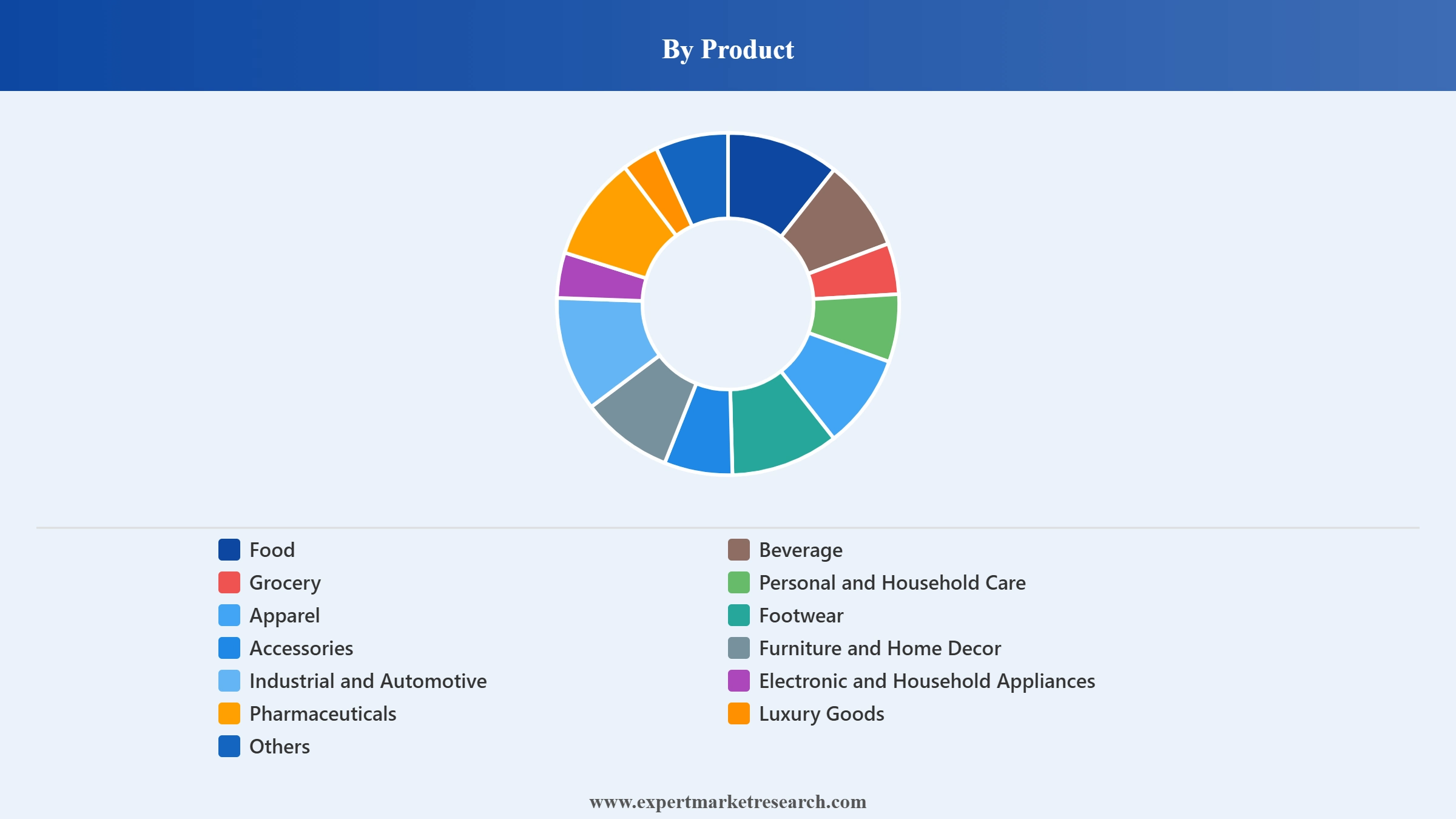
Market Breakup by Product
Key Insight: The retail market in Colombia reflects a fast-changing consumer pattern influenced by urbanisation, technology accessibility, and lifestyle shifts. Food, beverage, and grocery remain the key contributors, especially with rising demand for organic, locally sourced produce. Personal and household care products witness a surge as hygiene consciousness grows post-pandemic. The apparel, footwear, and accessories category is evolving with younger consumers opting for fast fashion and sustainable labels. Electronics and household appliances are gaining traction with increasing digital inclusion and government-led rural electrification. Meanwhile, pharmaceuticals continue to be a key pillar, bolstered by rising health awareness and insurance coverage. Furniture and home decor sales benefit from expanding real estate and remote work culture. Luxury goods, once niche, are now emerging due to aspirational middle-class buyers. Industrial and automotive products are growing, owing to Colombia’s expanding logistics and construction sectors, creating demand for retail-linked B2B sales.
Market Breakup by Sector
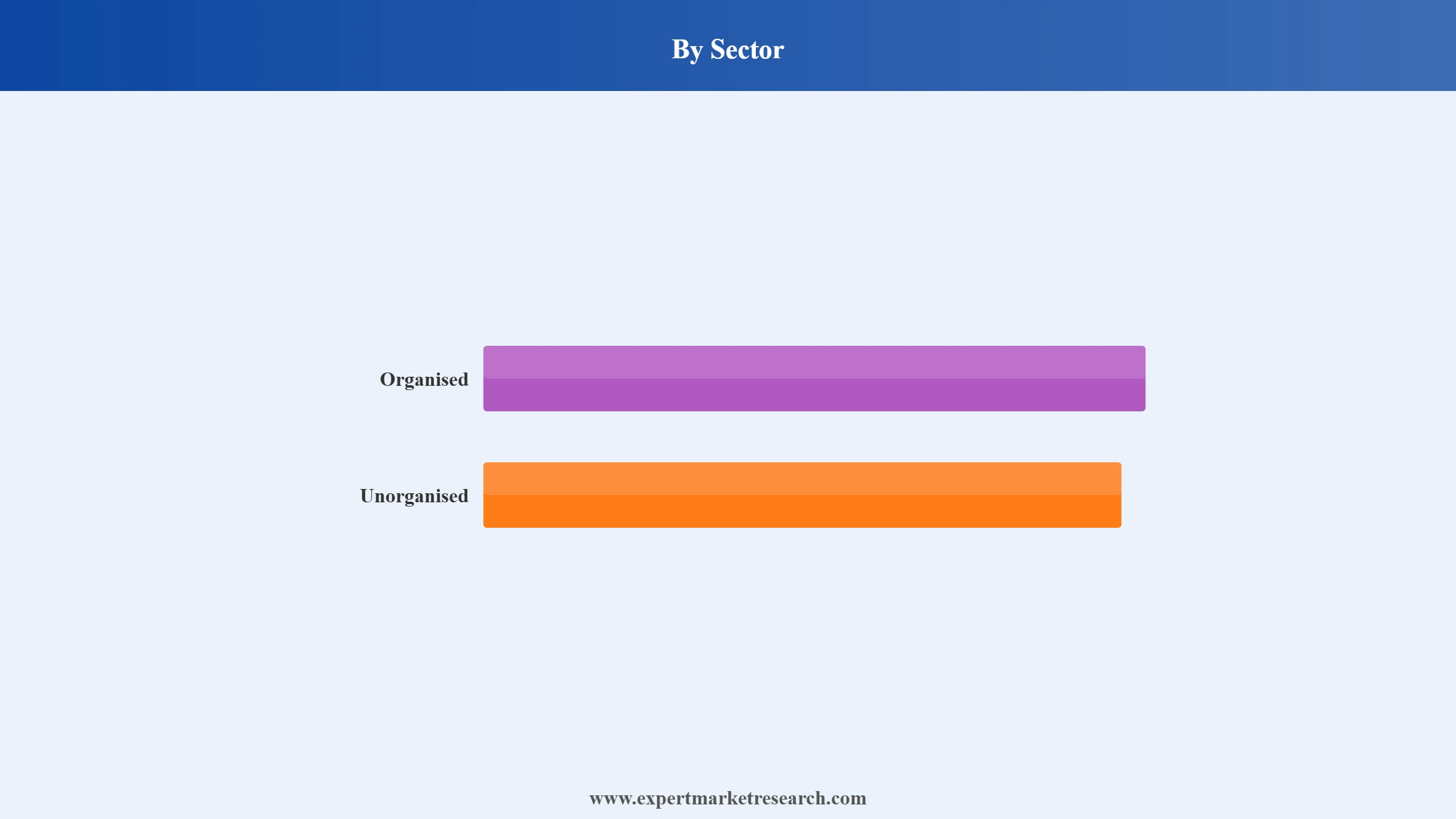
Key Insight: The organised retail category is moving beyond malls into omnichannel ecosystems, driven by better supply chains, digital loyalty programmes, and foreign investments. Brands are collaborating with tech startups to track inventory and customer data in real time. However, the unorganised sector is gaining ground in rural areas and small towns, often due to personalised services and credit-based transactions. Informal vendors also adapt through WhatsApp-based ordering and cashless payments, thereby propelling the Colombia retail market value.
Market Breakup by Distribution Channel
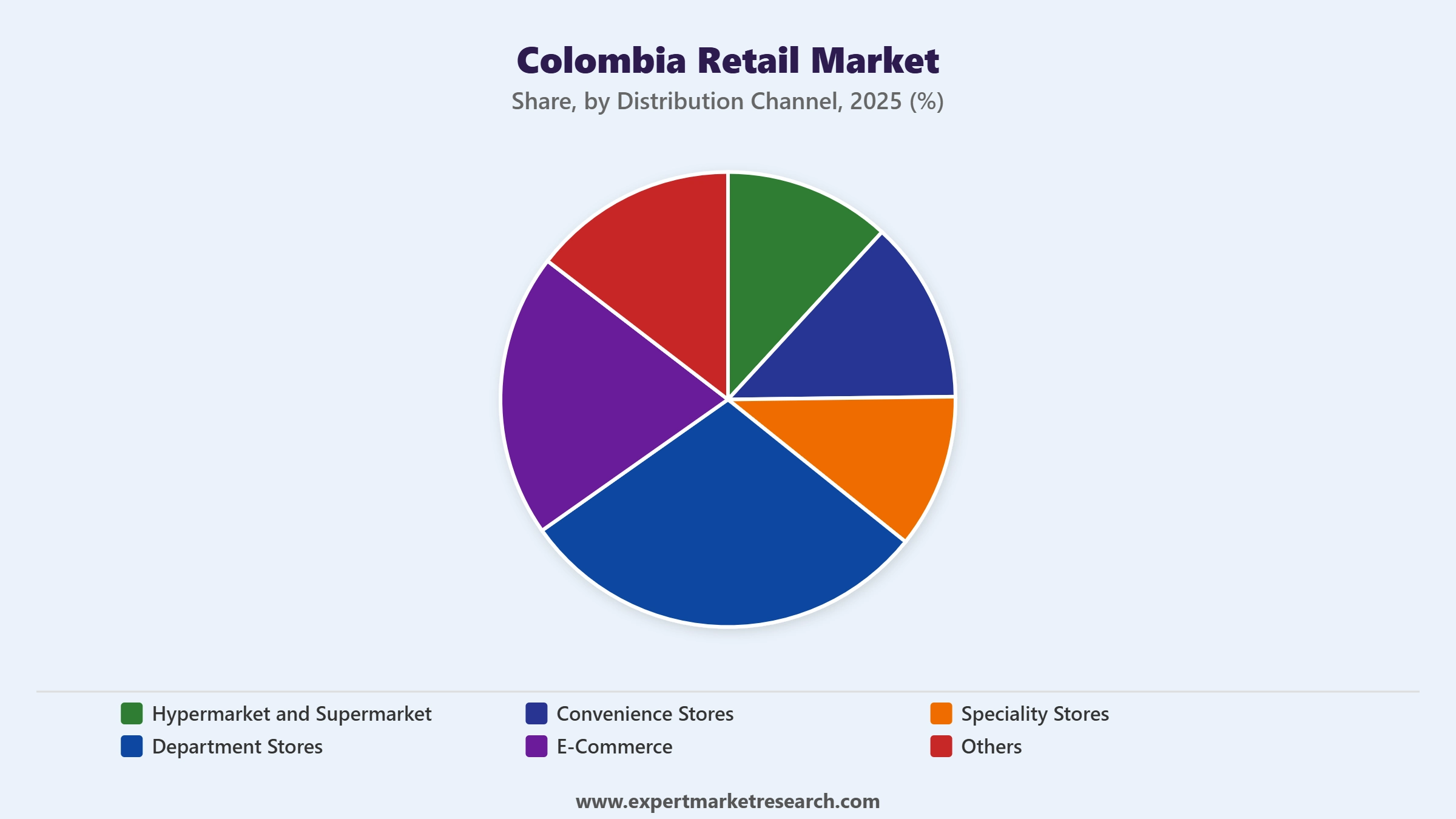
Key Insight: Hypermarkets and supermarkets largely contribute to strengthen the Colombia retail demand forecast due to their wide assortments, pricing efficiency, and brand trust. E-commerce, the fastest-growing channel, is fuelled by mobile penetration, fintech support, and same-day delivery networks. Specialty stores serve premium buyers with curated inventories, while department stores maintain relevance through experiential retail. Convenience stores gain favour in urban zones for quick, grab-and-go needs. Other channels, like pop-up shops, vending machines, and retail kiosks, add agility to Colombia’s increasingly diverse and digitised retail landscape.
Read more about this report - REQUEST FREE SAMPLE COPY IN PDF
By Product, Food, Beverage, and Grocery Account for the Dominant Share of the Market
Food and grocery remain the dominant product category with chains like Éxito and Jumbo optimising their supply chains with AI-based demand planning and smart refrigeration to reduce perishables loss. Regional producers are also getting direct shelf space through alliances with grocery platforms. The category benefits from government food subsidy programmes such as “Ingreso Solidario,” which increased footfall in food retail points during economic downturns, sustaining its dominance in the Colombia retail market revenue share.
Read more about this report - REQUEST FREE SAMPLE COPY IN PDF
Appliances represented the fastest-growing product category in the market. With the country’s middle-class population expanding and homeownership rising, demand for energy-efficient and smart devices is growing rapidly. Online-exclusive retailers like Alkosto are driving growth with embedded financing options. The Ministry of Mines and Energy is pushing energy-efficient product adoption through subsidies, prompting households to incline toward appliance upgrades.
Organised Retail Sector Secures the Bigger Share of the Market in Colombia
Organised retail, particularly big-box and hybrid-format chains, dominates the retail market through Colombia’s urban zones. With retail parks expanding in cities like Cali and Cartagena, chains like Falabella and Olímpica are expanding their footprint using franchise models. These players are leveraging big data to localise inventory and offer real-time promotions. They also benefit from streamlined tax regimes and land leasing support from local governments. Innovations like automated checkouts, loyalty-based pricing, and real-time stock tracking have positioned organised retail as a cost-efficient and scalable distribution platform for B2B product suppliers.
Read more about this report - REQUEST FREE SAMPLE COPY IN PDF
The unorganised sector observes considerable growth in the Colombia retail market through digital onboarding. Apps like Tpaga and Laika are enabling small stores to accept digital payments and access micro-inventory financing. The National Development Plan 2022–2026 includes support to formalise street vendors and small-scale retailers. B2B logistics startups are supplying them with last-mile deliveries, while FMCG companies are pushing direct-to-retail distribution to this revitalised sector.
By Distribution Channel, Hypermarkets and Supermarkets Register a Significant Market Share
Retail chains like Jumbo and Éxito dominate the Colombian industry with national-scale supply chains, modular store formats, and technology-enhanced consumer data models. Retailers have adopted predictive restocking, biometric payment systems, and AI-based shelf management to streamline operations. Supermarkets benefit from their ability to cater to both mass-market consumers and premium shoppers in one place. B2B vendors in retail technology and supply logistics boost consistent demand in the Colombia retail market as these outlets modernise their backend systems and merchandising strategies.
Read more about this report - REQUEST FREE SAMPLE COPY IN PDF
Colombia’s e-commerce retail reached USD 52 billion, supported by better mobile infrastructure and last-mile delivery capabilities. Retailers like Falabella and Mercado Libre are integrating AI-based personalisation, live shopping, and virtual storefronts. The government’s “Vende Digital” program is also providing SMEs with grants to establish e-commerce channels, making it a lucrative space for B2B services like warehousing technology, API-driven fulfilment, and customer analytics platforms.
The Colombia retail players are focusing on omnichannel strategy, supply chain automation, and hyperlocal customisation. Retailers are investing in loyalty programmes backed by data analytics and are adopting AI-led pricing models. Green retailing and sustainable sourcing are opening new opportunities for B2B service providers offering ESG-compliant tools and supply solutions.
Urban expansion and middle-class population growth offer further opportunities to the Colombia retail companies in product personalisation and in-store technology. Expansion into smaller cities and digital marketplaces has become more feasible due to nationwide logistics upgrades. Retailers are increasingly seeking B2B partners who can offer fast adaptability, data-driven operations, and cost-efficient digital solutions. Additionally, innovations in last-mile delivery, real-time inventory tracking, and customer experience platforms are becoming key differentiators, giving tech-enabled B2B firms a competitive edge in this evolving landscape.
Established in 1949 and headquartered in Envigado, Éxito dominates the Colombian market with over 700 stores. The firm blends online and offline with services like Click & Collect, and has piloted AI-driven inventory systems in key outlets.
Based in Bogotá, Colombiana de Comercio SA, operates the market through Alkosto and Ktronix brands. The firm stands out for affordable electronics bundled with financing options and a fast-expanding e-commerce backend.
With operations launched in Colombia in 2006 and headquarters in Chile, Cencosud offers multi-format outlets. It invests heavily in logistics technology and has recently expanded into premium grocery verticals.
Headquartered in Santiago and active in Colombia since 1889, Falabella.com fuses department stores with digital platforms. The firm uses AI to personalize shopping and expand reach via third-party seller integration.
*Please note that this is only a partial list; the complete list of key players is available in the full report. Additionally, the list of key players can be customized to better suit your needs.*
Other key players in the market are Supertiendas y Drogería Olímpica SA, and D1 S.A.S., among others.
Explore the latest trends shaping the Colombia retail market 2026-2035 with our in-depth report. Gain strategic insights, future forecasts, and key market developments that can help you stay competitive. Download a free sample report or contact our team for customised consultation on Colombia retail market trends 2026.
Australia Pharmacy Retail Market
United Kingdom Retail Banking Market
Saudi Arabia Retail Banking Market
Thailand Pharmacy Retail Market
Australia Retail Bags Market
South Korea Retail Market
Singapore Retail Market
Canada Retail Market
Retail Clinics Market
France Retail Market
Brazil Retail Market


Upto 15% Off
USD
$2499 $2249
$3999 $3599
$4999 $4249
$5999 $5099


*While we strive to always give you current and accurate information, the numbers depicted on the website are indicative and may differ from the actual numbers in the main report. At Expert Market Research, we aim to bring you the latest insights and trends in the market. Using our analyses and forecasts, stakeholders can understand the market dynamics, navigate challenges, and capitalize on opportunities to make data-driven strategic decisions.*
The market is projected to grow at a CAGR of 7.20% between 2026 and 2035.
Key strategies driving the market include investing in retail-tech partnerships, streamlining logistics, enhancing hyperlocal presence, embracing circular economy models, and empowering MSMEs with scalable digital tools.
The key trends aiding the market expansion include the rise in online sales and the increasing adoption of advanced technologies by retailers to enhance in-store experience of customers.
The major sectors, according to the market report are organised and unorganised.
The major distribution channels in the market are hypermarket and supermarket, convenience stores, speciality stores, department stores, and e-commerce, among others.
The major players in the market are Almacenes Éxito S.A., Colombiana de Comercio SA, Cencosud S.A., Falabella.com SpA, Supertiendas y Drogería Olímpica SA, and D1 S.A.S., among others.
In 2025, the Colombia retail market reached an approximate value of USD 117.48 Billion.
The key challenges are last-mile logistics, data integration across channels, rising inflation affecting discretionary spending, and regulatory ambiguity in digital taxation laws.
Explore our key highlights of the report and gain a concise overview of key findings, trends, and actionable insights that will empower your strategic decisions.
|
REPORT FEATURES |
DETAILS |
| Base Year | 2025 |
| Historical Period | 2019-2025 |
| Forecast Period | 2026-2035 |
| Scope of the Report |
Historical and Forecast Trends, Industry Drivers and Constraints, Historical and Forecast Market Analysis by Segment:
|
| Breakup by Product |
|
| Breakup by Sector |
|
| Breakup by Distribution Channel |
|
| Market Dynamics |
|
| Competitive Landscape |
|
| Companies Covered |
|
Datasheet
One User
USD 2,499
USD 2,249
tax inclusive*
Single User License
One User
USD 3,999
USD 3,599
tax inclusive*
Five User License
Five User
USD 4,999
USD 4,249
tax inclusive*
Corporate License
Unlimited Users
USD 5,999
USD 5,099
tax inclusive*
*Please note that the prices mentioned below are starting prices for each bundle type. Kindly contact our team for further details.*
Flash Bundle
Small Business Bundle
Growth Bundle
Enterprise Bundle
*Please note that the prices mentioned below are starting prices for each bundle type. Kindly contact our team for further details.*
Flash Bundle
Number of Reports: 3
20%
tax inclusive*
Small Business Bundle
Number of Reports: 5
25%
tax inclusive*
Growth Bundle
Number of Reports: 8
30%
tax inclusive*
Enterprise Bundle
Number of Reports: 10
35%
tax inclusive*
How To Order

Select License Type
Choose the right license for your needs and access rights.

Click on ‘Buy Now’
Add the report to your cart with one click and proceed to register.

Select Mode of Payment
Choose a payment option for a secure checkout. You will be redirected accordingly.
Strategic Solutions for Informed Decision-Making
Gain insights to stay ahead and seize opportunities.

Get insights & trends for a competitive edge.

Track prices with detailed trend reports.

Analyse trade data for supply chain insights.

Leverage cost reports for smart savings

Enhance supply chain with partnerships.

Connect For More Information
Our expert team of analysts will offer full support and resolve any queries regarding the report, before and after the purchase.
Our expert team of analysts will offer full support and resolve any queries regarding the report, before and after the purchase.
We employ meticulous research methods, blending advanced analytics and expert insights to deliver accurate, actionable industry intelligence, staying ahead of competitors.
Our skilled analysts offer unparalleled competitive advantage with detailed insights on current and emerging markets, ensuring your strategic edge.
We offer an in-depth yet simplified presentation of industry insights and analysis to meet your specific requirements effectively.




