

Consumer Insights
Uncover trends and behaviors shaping consumer choices today
Procurement Insights
Optimize your sourcing strategy with key market data
Industry Stats
Stay ahead with the latest trends and market analysis.
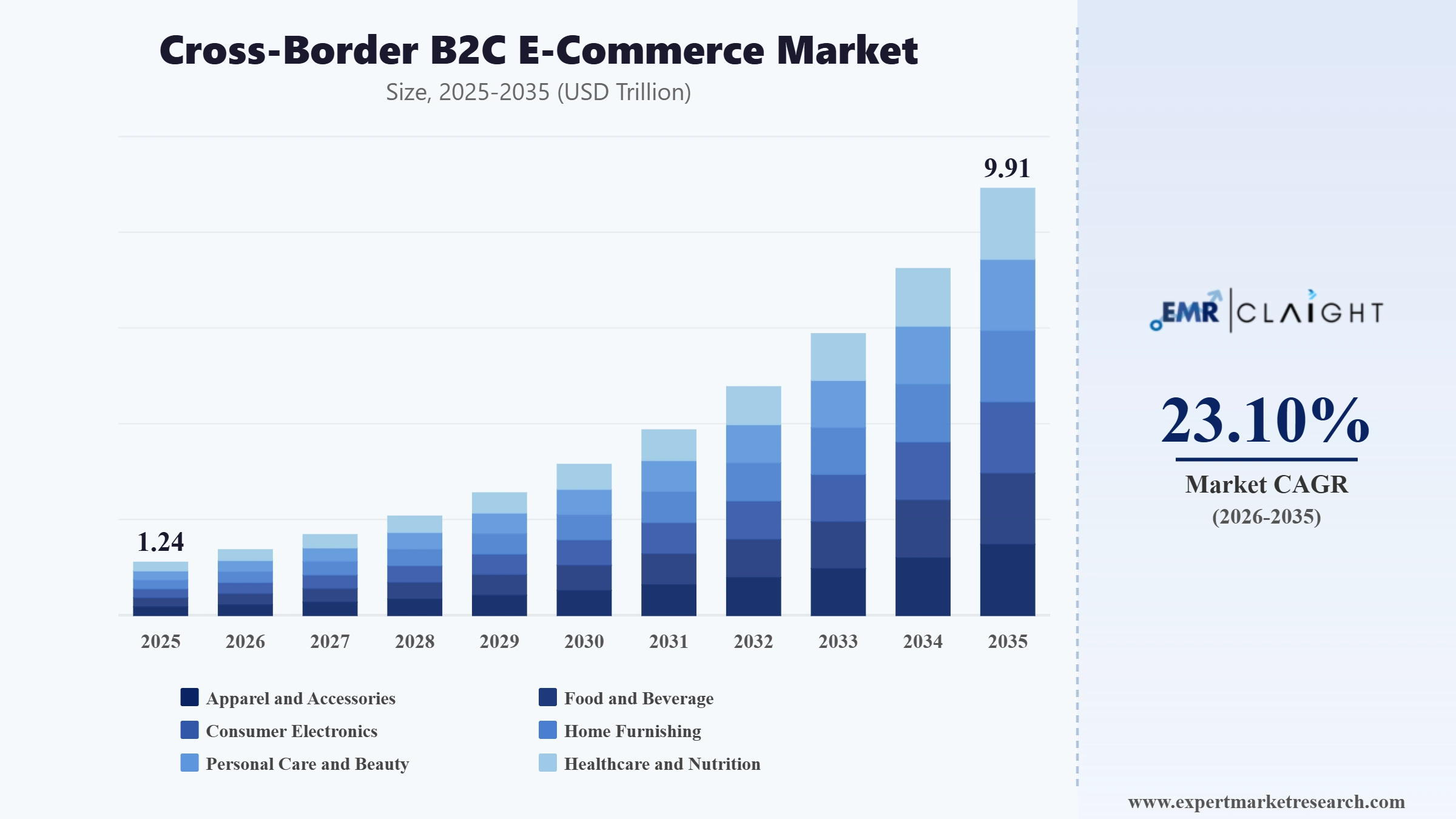
The global cross-border B2C e-commerce market attained a value of USD 1.24 Trillion in 2025 and is projected to expand at a CAGR of 23.10% through 2035. The market is further expected to achieve USD 9.91 Trillion by 2035. Rising smartphone penetration, growing popularity of social commerce, and increasing availability of localised payment solutions continue to support cross-border purchases of apparel, electronics, and beauty products across major global marketplaces.
Rising smartphone penetration continues to anchor steady demand across the cross-border B2C e-commerce market, as mobile commerce increasingly accounts for the majority of international transactions. Platforms are also investing in AI-driven personalisation and localised logistics networks, reflecting the industry's ongoing pursuit of frictionless, trustworthy international shopping experiences that reduce cart abandonment and returns.
The cross-border B2C e-commerce market is witnessing further developments as established platforms scale infrastructure to simplify international selling for smaller merchants. At its Global Selling Summit, Amazon unveiled its Next-Generation Cross-Border Chain initiative, built around AI-driven product innovation, market expansion, intelligent global logistics, and localised support to help sellers succeed internationally. This shift toward infrastructure-as-a-service for cross-border logistics is concentrated among platforms with sufficient global warehousing scale, while smaller specialists continue to compete on niche category curation.
In addition, established platforms are increasingly extending merchant-of-record and duty-calculation infrastructure into new geographic markets, reflecting the industry's recognition that automated compliance and local currency pricing increasingly determine whether smaller merchants can credibly sell internationally at all. Such infrastructure expansion is reshaping competitive positioning across the wider cross-border B2C e-commerce market as platforms with proven cross-border compliance infrastructure increasingly differentiate themselves from competitors requiring merchants to manage international complexity independently.
Read more about this report - REQUEST FREE SAMPLE COPY IN PDF
| Global Cross-Border B2C E-Commerce Market Report Summary | Description | Value |
| Base Year | USD Trillion | 2025 |
| Historical Period | USD Trillion | 2019-2025 |
| Forecast Period | USD Trillion | 2026-2035 |
| Market Size 2025 | USD Trillion | 1.24 |
| Market Size 2035 | USD Trillion | 9.91 |
| CAGR 2019-2025 | Percentage | XX% |
| CAGR 2026-2035 | Percentage | 23.10% |
| CAGR 2026-2035 - Market by Region | Latin America | 24.8% |
| CAGR 2026-2035 - Market by Country | India | 26.1% |
| CAGR 2026-2035 - Market by Country | Mexico | 24.2% |
| CAGR 2026-2035 - Market by Offering | In-house Brands | 25.7% |
| CAGR 2026-2035 - Market by Payment Method | Digital Wallets | 26.4% |
| Market Share by Country 2025 | Australia | 2.6% |
Shopify expanded its Managed Markets cross-border commerce tool to eligible Canadian merchants, supported by Global-e's merchant-of-record infrastructure, as the underlying technology partner reported second-quarter gross merchandise value surpassing 2 billion dollars outside the peak holiday period. Companies can extend proven cross-border infrastructure from an initial home market into adjacent countries to capture merchant demand without rebuilding compliance systems from scratch.
Shopify's first-quarter 2026 earnings report revealed a 26.7 percent year-over-year increase in international merchant revenue, with cross-border sales representing 54 percent of total gross merchandise value on the platform. Companies can track the share of cross-border volume within total platform activity as a leading indicator of successful international infrastructure investment.
Amazon unveiled its Next-Generation Cross-Border Chain initiative at its Global Selling Summit, built around AI-driven product innovation, market expansion, intelligent global logistics, and localised seller support. Companies can open proprietary global warehousing and fulfilment infrastructure to third-party sellers to address the greatest barrier smaller merchants face when expanding internationally.
Shopify expanded its Markets Pro product to 150 countries, enabling automated duty calculation, local currency pricing, and express international fulfilment for more than 875,000 merchant storefronts. Companies can bundle automated compliance features into a single product expansion to unlock cross-border selling capability for hundreds of thousands of merchants simultaneously.
Established platforms continue to extend cross-border commerce infrastructure into new geographic markets. In August 2026, Shopify expanded its merchant-of-record and duty-calculation tool to Canadian merchants, supported by strong underlying technology partner growth in gross merchandise value across the cross-border B2C e-commerce market. Such infrastructure expansion reflects platforms' recognition that proven compliance systems built for one market increasingly transfer efficiently to adjacent countries with similar regulatory frameworks.
Major marketplaces continue opening proprietary global logistics infrastructure to third-party sellers. In November 2025, Amazon unveiled a comprehensive initiative combining AI-driven product innovation, logistics, and localised support to help international sellers succeed. Such infrastructure sharing reflects marketplaces' recognition that global warehousing and fulfilment complexity represents the single greatest barrier preventing smaller merchants from expanding into cross-border sales.
Platforms continue bundling automated compliance features into unified product expansions covering large numbers of countries simultaneously. In late December, Shopify expanded a duty-calculation and currency-pricing product to 150 countries, enabling hundreds of thousands of merchant storefronts to sell internationally without building compliance systems independently. Such bundled compliance expansion reflects platforms' recognition that automated, pre-built infrastructure increasingly determines whether smaller merchants can credibly access cross-border demand at all.
Platform cross-border sales continue representing a growing majority of total transaction volume as international infrastructure investment matures. Earnings reporting in early 2026 revealed cross-border sales reaching the majority share of total gross merchandise value on Shopify, alongside strong year-over-year international revenue growth. Such volume concentration reflects the sector's recognition that cross-border capability has shifted from a supplementary feature to a core determinant of overall platform transaction growth.
Diversified technology groups continue to apply e-commerce and logistics research developed across their broader retail platforms to increasingly sophisticated cross-border commerce development. Established multi-category commerce providers continue to develop cross-border capabilities drawing on broader domestic marketplace, payments, and fulfilment research spanning multiple business categories beyond cross-border trade alone. Such cross-portfolio research investment gives diversified technology groups a technical foundation that narrower cross-border-only specialists must build through more limited, trade-specific development.
This Expert Market Research Report titled "Cross-Border B2C E-Commerce Market Report and Forecast 2026-2035" offers a detailed analysis of the market based on the following segments:
Market Breakup by Category
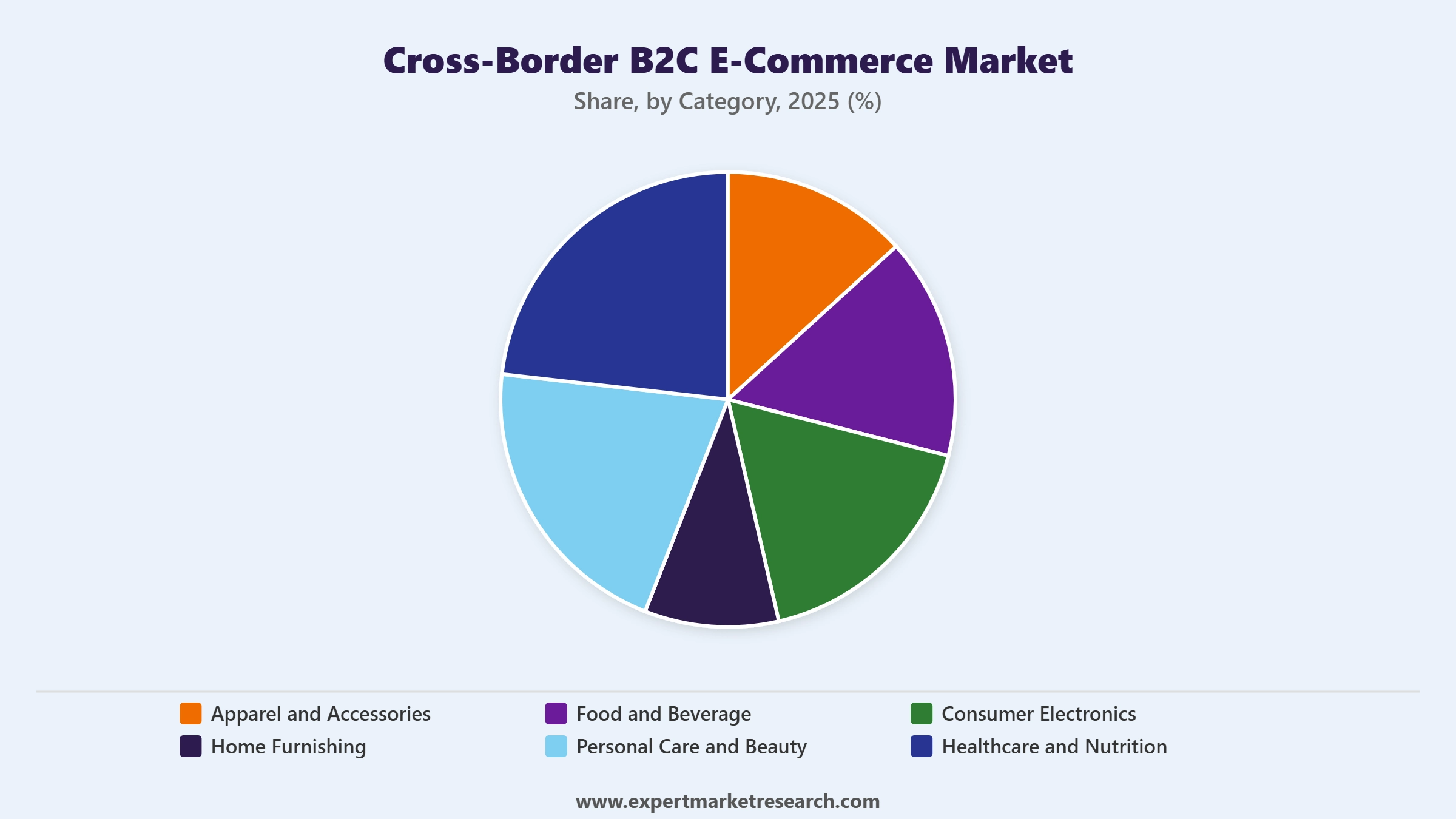
Key Insight: Apparel and Accessories accounts for the largest share of the cross-border B2C e-commerce market, reflecting its broad international appeal and established cross-border shipping and returns infrastructure. Consumer Electronics is growing at the fastest pace as international buyers increasingly seek cost-competitive devices unavailable domestically, illustrated by Amazon's Next-Generation Cross-Border Chain initiative expanding global logistics access for electronics sellers. Personal Care and Beauty and Home Furnishing continue to represent substantial demand, though beauty sellers face a new compliance hurdle from July 2026, when the EU abolishes its €150 duty-free import threshold and introduces a flat customs fee per product line on small cross-border shipments. Food and Beverage and Healthcare and Nutrition each serve distinct regulatory categories, with other categories rounding out the remaining share.
Market Breakup by Offering
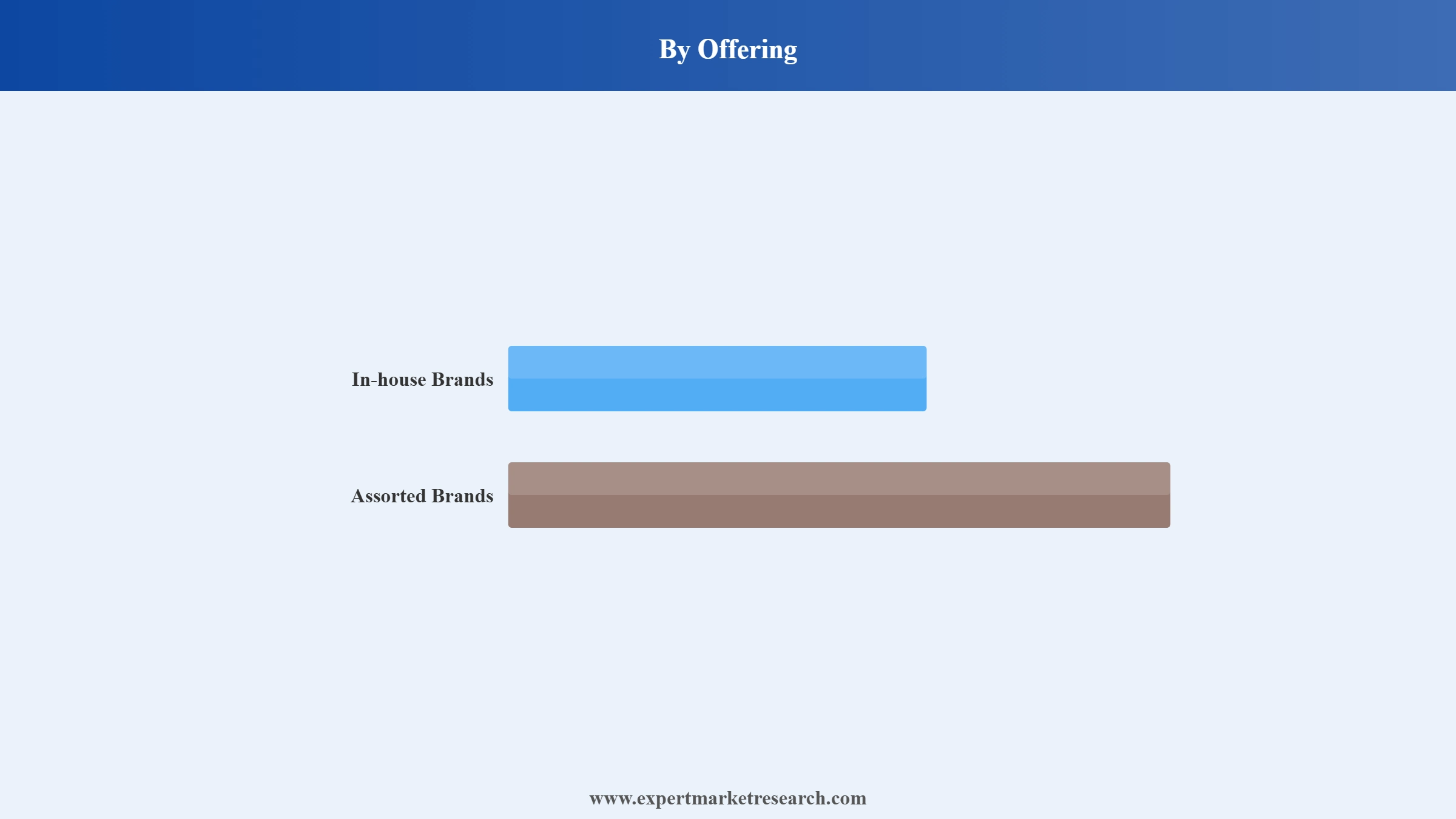
Key Insight: Assorted Brands accounts for the largest share of the cross-border B2C e-commerce market, reflecting marketplace platforms' ability to aggregate diverse third-party sellers and product ranges under a single storefront. Marketplaces are projected to generate approximately 87 percent of global e-commerce revenue in 2026, reflecting continued consolidation around large platform ecosystems that favour the assorted-brand model. In-house Brands continue to serve platforms and retailers seeking direct control over product quality, pricing, and customer relationships without third-party seller intermediation.
Market Breakup by Payment Method
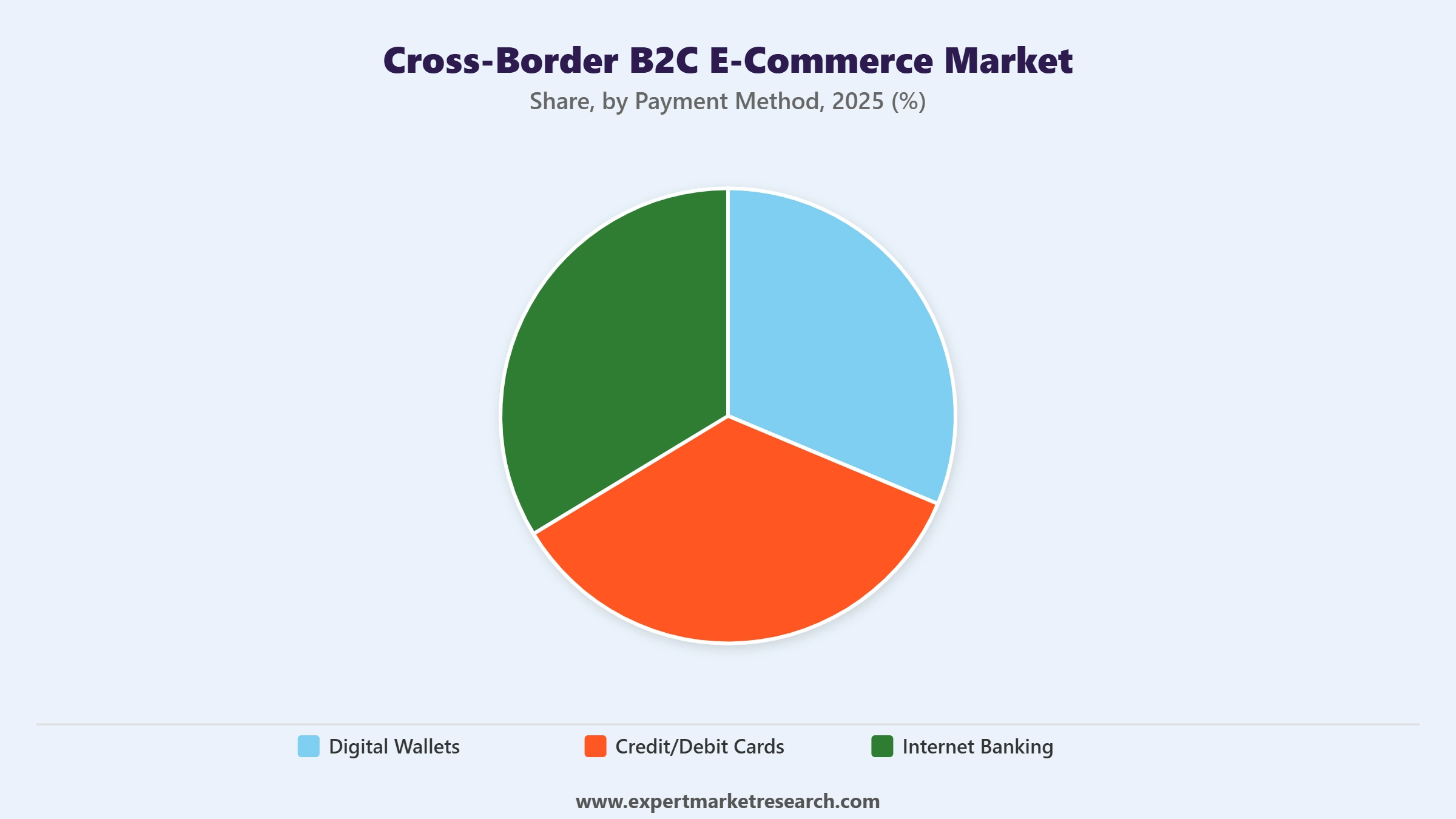
Key Insight: Credit/Debit Cards account for the largest share of the cross-border B2C e-commerce market, reflecting their widespread international acceptance and established fraud protection infrastructure across major markets. In January 2026, Visa outlined plans to expand real-time fraud-intelligence sharing and strengthen cross-border identity-risk collaboration with banks, telecom providers, and global law enforcement to counter increasingly coordinated card fraud. Digital Wallets are growing at a fast pace as mobile-first consumers increasingly prefer app-integrated payment methods over manually entering card details, while Internet Banking continues to serve markets with strong direct-transfer banking cultures, with other payment methods rounding out the remaining category.
Market Breakup by Region
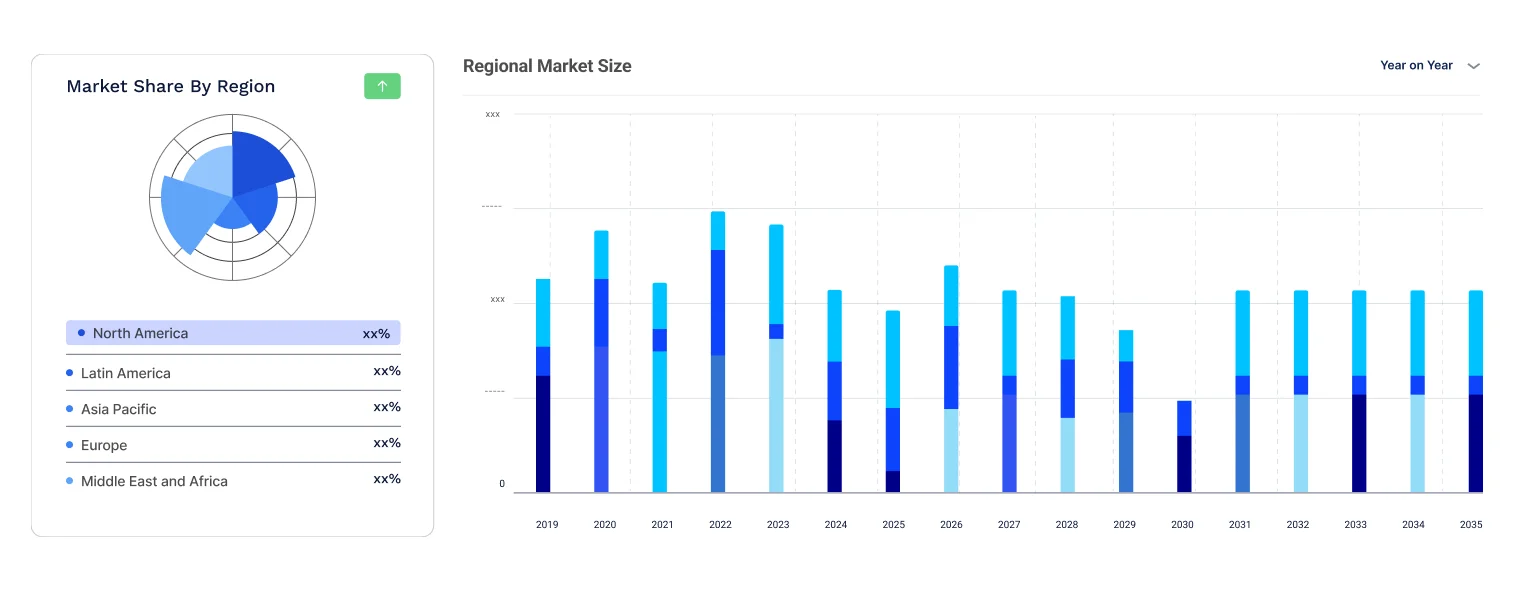
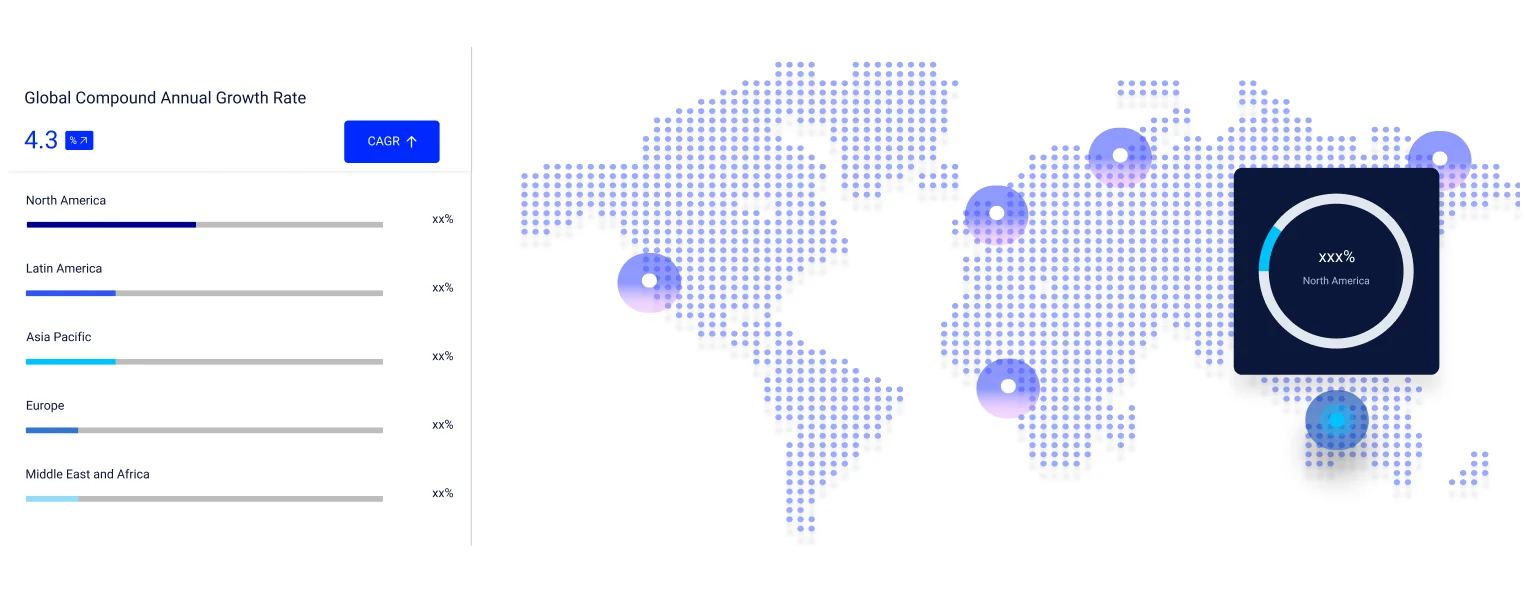
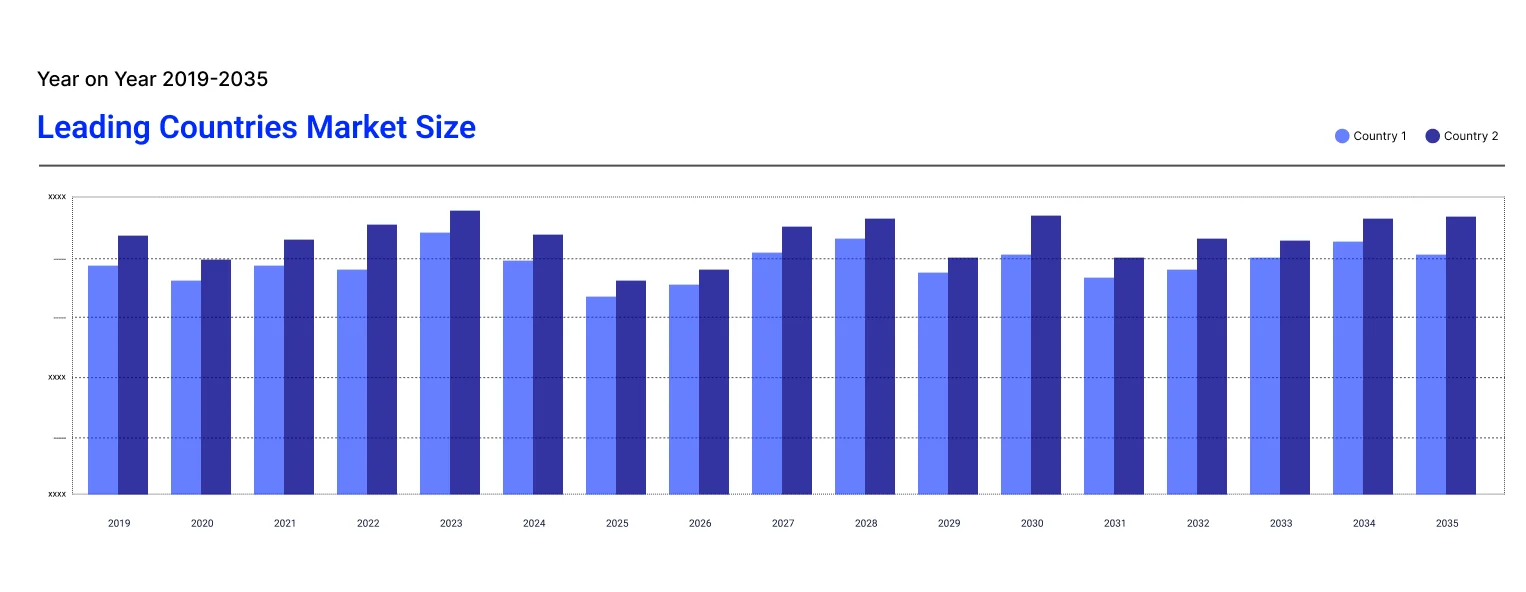
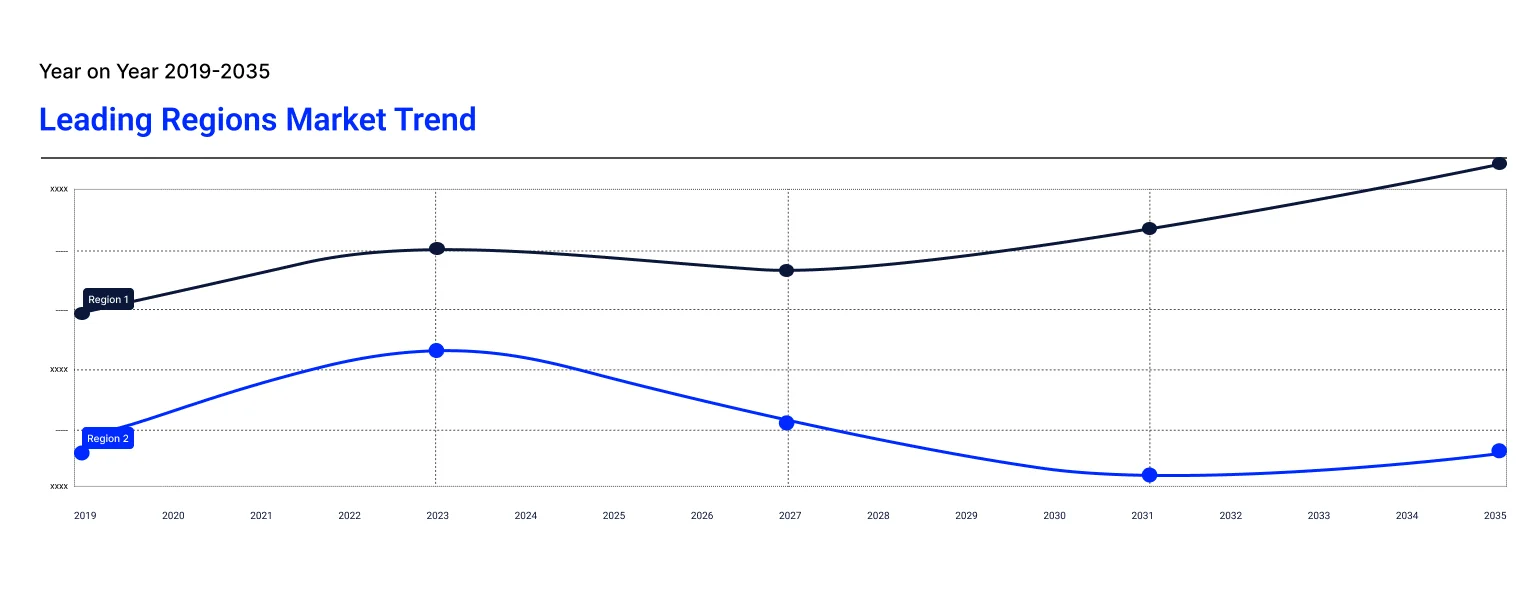
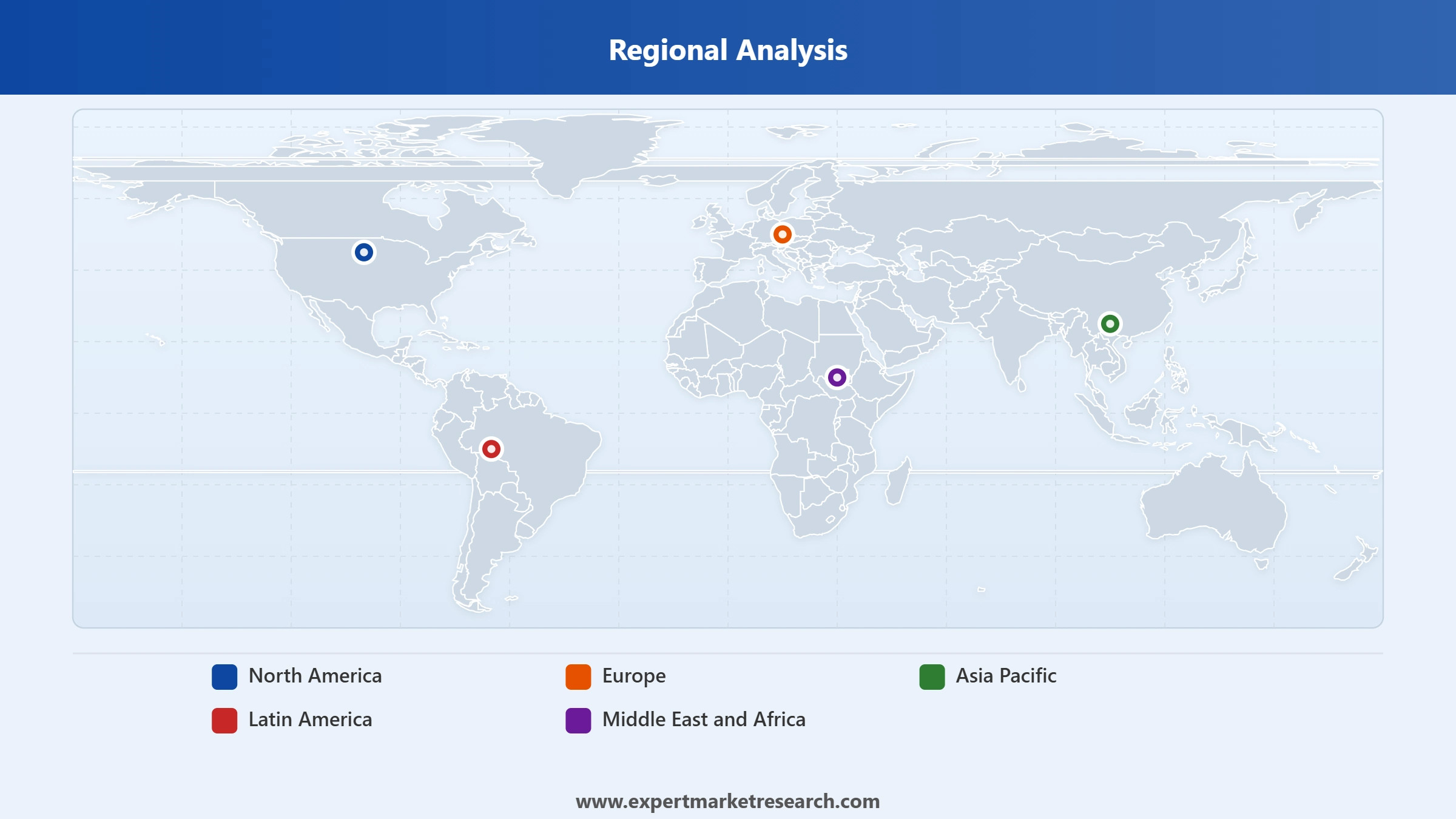
Key Insight: Asia Pacific accounts for the largest share of the cross-border B2C e-commerce market, supported by the region's concentration of major marketplace platforms and manufacturing-linked export infrastructure. North America is emerging as a key growth market as consumers increasingly seek internationally sourced apparel and electronics at competitive prices. Europe, Latin America, and the Middle East and Africa each continue to serve distinct regional trade and regulatory patterns.
By category, apparel and accessories leads the market while consumer electronics grows fastest given rising cost-competitive device demand
Apparel and Accessories continues to account for the largest share of the market, reflecting its broad international appeal and established cross-border shipping and returns infrastructure. Established apparel supply chains continue to anchor steady demand as platforms maintain proven international logistics partnerships across successive shopping seasons, illustrated by SHEIN's new automated fulfilment hub in Lebanon, Indiana, set to begin operations in September 2026.
Read more about this report - REQUEST FREE SAMPLE COPY IN PDF
Consumer Electronics is growing at the fastest pace across the cross-border B2C e-commerce market as international buyers increasingly seek cost-competitive devices unavailable domestically, supported by expanding proprietary logistics infrastructure opened to third-party electronics sellers. A Pitney Bowes Global E-Commerce Study updated in February 2026 found cross-border transactions now account for 33 percent of total sales for international sellers, up from 28 percent in the prior period.
By payment method, credit/debit cards lead the market while digital wallets grow fastest given mobile-first consumer preferences
Credit/Debit Cards continue to account for the largest share of the market, reflecting their widespread international acceptance and established fraud protection infrastructure across major markets. Established card payment relationships continue to anchor steady demand, illustrated by Visa's August 2026 earnings report showing 12 percent cross-border volume growth excluding intra-Europe, with cross-border e-commerce volume up 16 percent. Digital Wallets are growing at the fastest pace across the cross-border B2C e-commerce market as mobile-first consumers increasingly prefer app-integrated payment methods, with Google Pay adoption surging 46 percent in Southeast Asia and 39 percent in Latin America as of late 2025.
Read more about this report - REQUEST FREE SAMPLE COPY IN PDF
By offering, assorted brands lead the market while in-house brands grow fastest given tightening marketplace brand controls
Assorted Brands continue to account for the largest share of the market, reflecting marketplace platforms' ability to aggregate diverse third-party sellers and product ranges under a single storefront. Established assorted-brand marketplace relationships continue to anchor steady demand as platforms maintain proven multi-seller aggregation models across successive shopping cycles.
Read more about this report - REQUEST FREE SAMPLE COPY IN PDF
In-house Brands is growing at the fastest pace across the cross-border B2C e-commerce market as sellers increasingly pursue direct brand ownership over reselling. In spring 2026, Amazon introduced a new Brand Registry requirement mandating permanent, non-removable brand marks on products, tightening authenticity standards for in-house and private label sellers.
Read more about this report - REQUEST FREE SAMPLE COPY IN PDF
Asia Pacific commands the largest share of the market through its concentrated marketplace infrastructure
Asia Pacific holds the largest share of the cross-border B2C e-commerce market, supported by the region's concentration of major marketplace platforms and manufacturing-linked export infrastructure. Regional platforms continue to expand logistics and payment infrastructure to meet both domestic consumption and rising cross-border export demand.
North America is emerging as a key growth market as consumers increasingly seek internationally sourced apparel and electronics at competitive prices. In August 2026, continued platform infrastructure expansion into North American merchant bases reinforced the region's growing importance for cross-border commerce investment across the wider cross-border B2C e-commerce market.
Read more about this report - REQUEST FREE SAMPLE COPY IN PDF
The global industry is moderately consolidated, with cross-border B2C e-commerce market companies ranging from diversified global marketplace platforms spanning multiple commerce categories to specialist cross-border logistics and payment providers competing across category, offering, and payment method segments. Established players operate across the full cross-border commerce value chain, from marketplace listing and merchant-of-record compliance through complete international logistics and localised payment processing for global consumers.
Competitive dynamics among cross-border B2C e-commerce players are increasingly shaped by the pace of proprietary logistics infrastructure sharing, the scale of automated compliance product expansion, and the race to capture a growing majority share of total transaction volume through cross-border sales. Platforms are investing in AI-driven personalisation, localised payment wallets, and merchant-of-record infrastructure to differentiate their offering and secure long-term merchant and consumer loyalty.
Founded in 1994 and headquartered in Seattle, Washington, United States, Amazon operates a global online marketplace connecting third-party sellers with international consumers, supported by its extensive fulfilment and logistics network. At its Global Selling Summit, the company unveiled its Next-Generation Cross-Border Chain initiative combining AI-driven product innovation with global logistics access. Amazon's proprietary warehousing and fulfilment infrastructure differentiates its offering from competitors reliant on third-party logistics partners.
Founded in 1995 and headquartered in San Jose, California, United States, eBay operates a global online marketplace connecting individual and business sellers with international buyers across auction and fixed-price formats. The company serves consumers seeking both new and unique secondhand cross-border products. eBay's auction-based marketplace heritage differentiates its offering from competitors focused solely on fixed-price retail models.
Founded in 1999 and headquartered in Hangzhou, China, Alibaba Group operates multiple cross-border e-commerce platforms including AliExpress, connecting Chinese and international manufacturers with global consumers. The company serves both individual consumers and business buyers seeking direct manufacturer access. Alibaba's integrated manufacturing and logistics ecosystem differentiates its offering from competitors operating purely as intermediary marketplaces.
Founded in 2006 and headquartered in Ottawa, Canada, Shopify provides e-commerce infrastructure enabling independent merchants to build and operate cross-border online stores. In August 2026, the company expanded its Managed Markets cross-border commerce tool to Canadian merchants, building on its Markets Pro expansion to 150 countries. Shopify's merchant-focused infrastructure model differentiates its offering from competitors operating as direct-to-consumer marketplaces.
Other key players in the cross-border B2C e-commerce market include JD.com Inc., SIA Joom, BoxMe Global, Fruugo.com Ltd., Lazada Group, and Shopee Singapore Private Limited, among others.
*Please note that this is only a partial list; the complete list of key players is available in the full report. Additionally, the list of key players can be customized to better suit your needs.*
Unlock the latest insights with our cross-border B2C e-commerce market trends 2026 report. Discover regional growth patterns, category and payment method trends, and key industry players. Stay ahead of competition with trusted data and expert analysis. Download your free sample report today and drive informed decisions in the market.


Upto 15% Off
USD
$2499 $2249
$3999 $3599
$4999 $4249
$5999 $5099


*While we strive to always give you current and accurate information, the numbers depicted on the website are indicative and may differ from the actual numbers in the main report. At Expert Market Research, we aim to bring you the latest insights and trends in the market. Using our analyses and forecasts, stakeholders can understand the market dynamics, navigate challenges, and capitalize on opportunities to make data-driven strategic decisions.*
In 2025, the market reached an approximate value of USD 1.24 Trillion.
The market is projected to grow at a CAGR of 23.10% between 2026 and 2035.
The market is estimated to witness a healthy growth in the forecast period of 2026-2035, reaching a value of around USD 9.91 Trillion by 2035.
Opening proprietary logistics infrastructure to third-party sellers, bundling automated duty and currency compliance into unified product expansions covering many countries, and extending merchant-of-record infrastructure into new geographic markets.
The key trends of the market include the burgeoning popularity of social commerce, the emergence of new payment methods such as mobile and cryptocurrency wallets into cross-border e-commerce, and the advent of advanced technologies such as AI, augmented reality (AR), and virtual reality (VR) in cross-border e-commerce platforms.
The major regions in the market are North America, Europe, the Asia Pacific, Latin America, and the Middle East and Africa.
Different offerings are in-house brands and assorted brands.
The key players in the market include Amazon.com, Inc., eBay Inc., Alibaba Group Holding Limited, JD.com Inc., SIA Joom, BoxMe Global, Shopify Inc., Fruugo.com Ltd., Lazada Group, and Shopee Singapore Private Limited, among others.
Platforms face complex international duty and tax compliance requirements varying by jurisdiction, elevated logistics and returns costs for cross-border shipments, and intensifying competition to build merchant trust around delivery reliability and product authenticity.
Explore our key highlights of the report and gain a concise overview of key findings, trends, and actionable insights that will empower your strategic decisions.
| REPORT FEATURES | DETAILS |
| Base Year | 2025 |
| Historical Period | 2019-2025 |
| Forecast Period | 2026-2035 |
| Scope of the Report |
Historical and Forecast Trends, Industry Drivers and Constraints, Historical and Forecast Market Analysis by Segment:
|
| Breakup by Category |
|
| Breakup by Offering |
|
| Breakup by Payment Method |
|
| Breakup by Region |
|
| Market Dynamics |
|
| Competitive Landscape |
|
| Companies Covered |
|
Datasheet
One User
USD 2,499
USD 2,249
tax inclusive*
Single User License
One User
USD 3,999
USD 3,599
tax inclusive*
Five User License
Five User
USD 4,999
USD 4,249
tax inclusive*
Corporate License
Unlimited Users
USD 5,999
USD 5,099
tax inclusive*
*Please note that the prices mentioned below are starting prices for each bundle type. Kindly contact our team for further details.*
Flash Bundle
Small Business Bundle
Growth Bundle
Enterprise Bundle
*Please note that the prices mentioned below are starting prices for each bundle type. Kindly contact our team for further details.*
Flash Bundle
Number of Reports: 3
20%
tax inclusive*
Small Business Bundle
Number of Reports: 5
25%
tax inclusive*
Growth Bundle
Number of Reports: 8
30%
tax inclusive*
Enterprise Bundle
Number of Reports: 10
35%
tax inclusive*
How To Order

Select License Type
Choose the right license for your needs and access rights.

Click on ‘Buy Now’
Add the report to your cart with one click and proceed to register.

Select Mode of Payment
Choose a payment option for a secure checkout. You will be redirected accordingly.
Strategic Solutions for Informed Decision-Making
Gain insights to stay ahead and seize opportunities.

Get insights & trends for a competitive edge.

Track prices with detailed trend reports.

Analyse trade data for supply chain insights.

Leverage cost reports for smart savings

Enhance supply chain with partnerships.

Connect For More Information
Our expert team of analysts will offer full support and resolve any queries regarding the report, before and after the purchase.
Our expert team of analysts will offer full support and resolve any queries regarding the report, before and after the purchase.
We employ meticulous research methods, blending advanced analytics and expert insights to deliver accurate, actionable industry intelligence, staying ahead of competitors.
Our skilled analysts offer unparalleled competitive advantage with detailed insights on current and emerging markets, ensuring your strategic edge.
We offer an in-depth yet simplified presentation of industry insights and analysis to meet your specific requirements effectively.




