Consumer Insights
Uncover trends and behaviors shaping consumer choices today
Procurement Insights
Optimize your sourcing strategy with key market data
Industry Stats
Stay ahead with the latest trends and market analysis.
The global digital map market attained a value of USD 11.71 Billion in 2025 and is projected to grow at a CAGR of 13.90% through 2035. The market is further expected to reach USD 43.03 Billion by 2035. Rising use of satellite positioning, geographic information systems, and real time navigation across automotive, government, and logistics operations is encouraging providers to widen coverage, improve location accuracy, and build artificial intelligence into mapping platforms worldwide.
The digital map market covers software solutions, map data, geographic information system platforms, LiDAR surveys, satellite and aerial imagery, and positioning services used across automotive, government, logistics, and consumer navigation applications. Adoption is broadening as smartphones, connected vehicles, delivery fleets, and public infrastructure projects depend on continuous location data, turn by turn routing, and high-resolution base maps. Providers are extending coverage into indoor venues, underground utilities, and three-dimensional city models to support cases that plain road maps cannot address on their own. Rising expectations for centimeter level accuracy are pushing providers to refresh base map data far more frequently than earlier survey cycles.
Demand is concentrating around providers that combine artificial intelligence, visual positioning, and large-scale geospatial data to serve robotics, defense, and utility customers alongside traditional navigation users. In May 2025, Niantic Spatial launched as an independent company with USD 250 million in funding, built around artificial intelligence world models, visual positioning technology, and semantic scene understanding for machines operating in GPS environments denied. Such investment is widening the base of specialized digital map providers beyond conventional consumer navigation apps, extending coverage toward warehouse robots, inspection drones, and autonomous equipment that need precise spatial awareness without relying on satellite signals alone.
The digital map market is also directing investment toward satellite constellations, airborne LiDAR, and open data standards to keep base maps current and interoperable across industries. Providers are pairing proprietary datasets with community contributed layers and government survey records to fill coverage gaps no single data source can close alone, particularly across rural roads and new urban districts. In July 2026, Amazon Location Service added Search Nearby support built on GrabMaps data across Singapore and Malaysia, letting developers filter nearby places such as fuel stations and hospitals by category. Such cloud platform integrations are widening crowd sourced map data beyond the ride hailing platforms that built it.
Compound Annual Growth Rate
13.9%
Value in USD Billion
2026-2035
Read more about this report - REQUEST FREE SAMPLE COPY IN PDF
u-blox newly expanded its automotive positioning portfolio with the ZED-X20K and ZED-A20K chips, enabling driver assistance and safety critical deployment at global scale across passenger vehicles. The chips combine satellite positioning with sensor fusion to support lane level accuracy for modern driver assistance systems. Automakers across the digital map market can use this certified positioning hardware to speed up digital map integration into assistance programs.
Mappedin secured USD 24.5 million in growth funding led by Edison Partners to expand its indoor mapping platform, helping venues such as airports and hospitals build digital floor plans with wayfinding and asset location tools. The round supports city wide indoor coverage beyond buildings. Venue operators across the digital map market can use such indoor mapping platforms to improve wayfinding inside large, multi-level facilities.
Woolpert secured a two-year, USD 49.9 million contract to continue operating the Interagency Airborne Technologies for LiDAR program, supplying airborne LiDAR bathymetry data for coastal mapping and nautical charting for federal agencies. The agreement runs through March 2028, continuing work carried out since 2010. Agencies across the digital map market can use LiDAR programs to keep shoreline and navigation charts current amid changing coastlines.
Planet Labs launched its Pelican-5 and Pelican-6 high resolution satellites with 36 additional SuperDove satellites, expanding its orbital fleet for faster earth observation imagery. The new spacecraft adds tasking capacity for agriculture and infrastructure customers needing refreshed base imagery. Digital map providers can use such expanding satellite fleets to shorten refreshing cycles and sharpen photography layers that feed mapping products.
Satellite positioning is becoming embedded in consumer electronics as chipset makers across the digital map market widening compatibility across smartphones and vehicles, deepening the installed base for digital map applications. This reduces dependence on any single constellation and improves reliability in dense settings. In May 2026, a white paper from the Global Navigation Satellite System and Location Based Services Association of China reported the satellite sector reached a total output value of USD 91.9 billion in 2025, with positioning built into nearly 1.4 billion phones.
Public works agencies across the digital map market are turning to artificial intelligence enabled survey platforms to keep pace with aging infrastructure and flood risk monitoring needs that ground crews alone cannot cover fast enough. Cloud based automation cuts the time between data capture and finished mapping products while reviewers handle quality control throughout the process. In May 2026, Fugro was awarded a five-year contract by the United States Army Corps of Engineers for surveying and mapping services covering civil works and military infrastructure.
Ride hailing and delivery platforms across the digital map market are deepening reliance on real time routing partnerships to keep pickup times, fare estimates, and navigation accurate across changing traffic conditions. These partnerships increasingly bundle live traffic and location accuracy improvements with turn-by-turn directions. In January 2026, Uber renewed a long-standing agreement covering routing accuracy and live location services across its ride hailing and delivery operations, showing how mobility platforms favor deep mapping partnerships instead of building base map data in house.
Defense and intelligence agencies across the digital map market continue awarding large multi-year contracts to sustain the imagery analysis workflows that underpin military mapping, targeting, and situational awareness programs, reflecting steady government demand for geospatial intelligence capacity. These programs typically bundle software development with sustainment support. In August 2025, the National Geospatial-Intelligence Agency awarded Lockheed Martin the Erebus indefinite delivery, indefinite quantity contract worth up to USD 652 million to develop and sustain the geospatial intelligence workflow used for imagery analysis across defense operations.
Commercial fleet operators are pushing telematics and mapping hardware earlier into the vehicle supply chain, so trucks arrive ready for dispatch, avoiding delays from aftermarket installation and shortening the gap between delivery and route tracking. Manufacturers and upfitters are responding by building positioning hardware into assembly lines. In August 2025, Samsara launched a pre delivery installation program under which Daimler Truck North America and the upfitter Fontaine Modification install its telematics and camera hardware before trucks ship to fleet customers.
The Expert Market Research's report titled “Global Digital Map Market Report and Forecast 2026-2035” offers a detailed analysis of the market based on the following segments:
Market Breakup by Type
Key Insight: Software solutions account for the largest share of the digital map market by type, covering web based, desktop, and mobile applications used for everyday navigation and business location services. Standalone map data continues to support developers and device makers that license base layers for use inside their own applications. Services, spanning consulting, systems integration, and support engagements, help enterprises and public agencies deploy and maintain mapping systems over time. Geographic information system platforms are seeing fast adoption as governments and utilities digitize infrastructure records and spatial analysis workflows. LiDAR survey equipment supports elevation modeling and autonomous vehicle development, while digital orthophotography and aerial photography feed base imagery into planning and agriculture use cases. Global positioning system components remain fundamental to nearly every outdoor mapping and navigation application in use today.
Market Breakup by Functionality
Key Insight: Computerised digital map tools, built around desktop and server based geographic information system software, dominates functionality-based demand among government agencies, utilities, and large enterprises that manage extensive spatial datasets in the digital map market. Scientific functionality, used for environmental monitoring, geological surveys, and climate research, supports research institutions and agencies that rely on precise elevation and terrain data. GPS navigation functionality is expanding quickest as satellite positioning becomes standard in vehicles, wearables, and mobile devices, letting consumers and fleet operators access turn by turn routing and location sharing without specialized hardware.
Market Breakup by Service
Key Insight: Consulting services across the digital map market help organizations plan data architecture, select platforms, and define spatial workflows before deployment, forming an important entry point for new mapping system buyers. Development and integration services, which connect mapping platforms with existing enterprise software, asset management systems, and mobile applications, represent the largest service segment given the technical complexity of combining geospatial data with business systems. Support and maintenance services keep mapping platforms current with fresh imagery, software patches, and evolving data standards, and are growing steadily as more organizations treat digital maps as a continuously updated system needing ongoing attention.
Market Breakup by Mapping Type
Key Insight: Outdoor mapping remains the largest mapping type segment in the digital map market, underpinning road navigation, aerial surveying, and location-based services that consumers and businesses use every day. Indoor mapping is growing quickly as airports, malls, hospitals, and office campuses adopt digital floor plans with wayfinding and asset location features for visitors and staff who cannot rely on satellite signals inside large buildings. Metaverse mapping, which builds three-dimensional digital replicas of real and virtual spaces for immersive applications, remains a smaller but expanding segment as gaming, training, and virtual collaboration platforms seek spatially accurate digital environments.
Market Breakup by Application
Key Insight: Routing and navigation applications hold the largest application share in the digital map market, powering turn by turn directions, delivery dispatch, and riding hailing platforms that depend on continuously updated road networks. Geo-positioning and geocoding applications, which convert addresses into precise coordinates for billing, service dispatch, and advertising targeting, are among the fastest growing uses as businesses seek more accurate location matching. Asset tracking applications support fleet management, supply chain visibility, and equipment monitoring across logistics and construction operations. Other applications, including urban planning, environmental modeling, and emergency response coordination, continue to draw steady demand from public agencies and research organizations.
Market Breakup by End Use
Key Insight: Automotive end use accounts for a leading share in the digital map market as connected vehicles and driver assistance systems increasingly depend on embedded navigation and positioning hardware. Government and utilities applications cover infrastructure records, land administration, and public safety mapping, representing some of the most consistent long-term spending in the market. E-commerce and retail businesses use digital maps for store locators, delivery address verification, and location-based marketing. Military and defense users rely on geospatial intelligence for mission planning and situational awareness, while mobile devices and enterprise solutions integrate mapping features into everyday consumer and workplace software. Logistics, travel, and transportation operators depend on these tools for route planning and fleet visibility, and infrastructure development and construction firms use mapping and surveying tools for site planning. Other end uses, including education and agriculture, continue to adopt mapping tools for specialized spatial analysis needs.
Market Breakup by Region
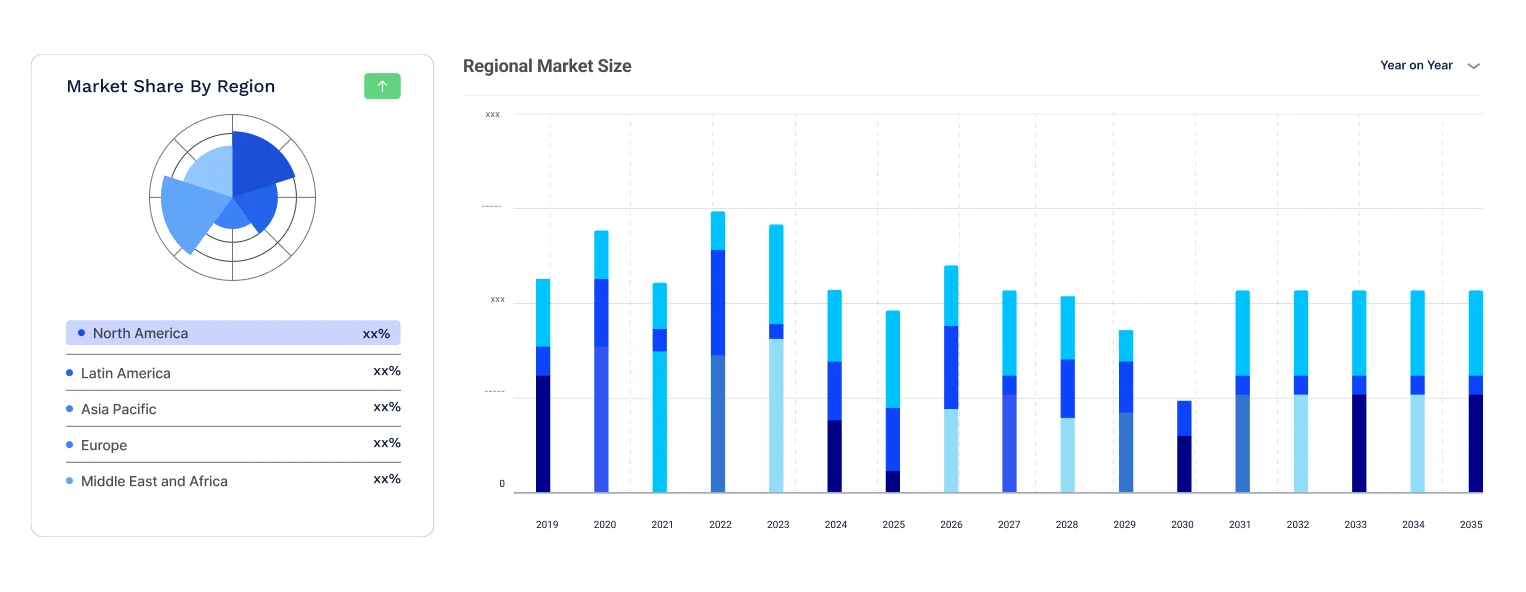
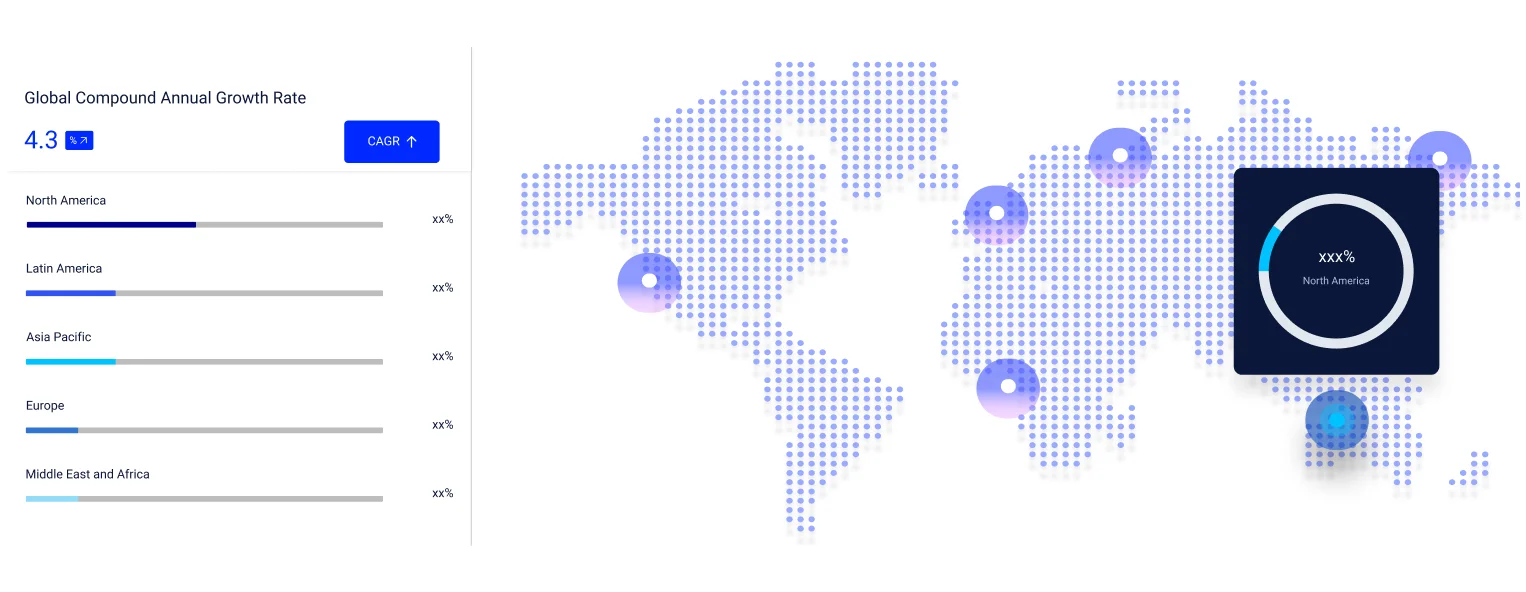
Key Insight: North America accounts for the largest share of the global digital map market, supported by strong enterprise demand for cloud-based mapping infrastructure and advanced location services. In January 2025, HERE Technologies and Amazon Web Services announced a USD 1 billion, ten-year cloud infrastructure partnership at CES in Las Vegas, giving HERE exclusive access to AWS's AI tools to support live-streaming map and location services across multiple markets. Asia Pacific is recording the fastest growth, driven by expanding consumer and enterprise use of AI-powered navigation platforms in China and other regional markets. In September 2026, Alibaba's Amap launched its upgraded Amap 2026 platform, introducing a real-time Navigation Live feature, AI-assisted trip planning, and global map coverage spanning more than 200 countries, reflecting the region's rapid shift toward intelligent, AI-native mapping services.
Read more about this report - REQUEST FREE SAMPLE COPY IN PDF
By type, software solutions account for the largest share of the market owing to widespread use in consumer navigation and enterprise location applications
Software solutions, including web based, desktop, and mobile mapping applications, hold the largest share of the digital map market by type because nearly every consumer navigation app, delivery platform, and enterprise location tool is built on licensed or proprietary mapping software layered on top of raw map data. Providers continue adding artificial intelligence features and voice guided directions to widen their lead over standalone data and hardware categories, giving providers in this category the closest, most direct relationship with end users across consumer and enterprise markets.

Read more about this report - REQUEST FREE SAMPLE COPY IN PDF
The geographic information system segment is registering the fastest growth in the digital map market as governments, utilities, and large enterprises digitize infrastructure records and adopt spatial analysis tools for planning and asset management. In January 2026, Volkswagen Group confirmed that its CARIAD software unit would adopt automated, lane level road mapping data across its vehicle brands to support advanced driving systems, reflecting rising reliance on detailed geospatial data layers beyond conventional turn by turn navigation.
By functionality, computerised mapping tools lead the market owing to widespread use of desktop and server based geographic information system software among government agencies and utilities
Computerised digital map tools, including desktop and server based geographic information system software, account for the largest functionality share across the digital map market because government agencies, utilities, and large enterprises depend on these platforms to manage spatial datasets and infrastructure records. In August 2026, Vorarlberg Netz, an Austrian utility, began moving to a third-generation geographic information system built on ArcGIS Enterprise and VertiGIS Studio, adding a standardized data model and offline tools for field crews. Such upgrades keep utility mapping systems aligned with growing infrastructure data volumes.

Read more about this report - REQUEST FREE SAMPLE COPY IN PDF
GPS navigation functionality is expanding fastest in the digital map market as satellite positioning becomes standard inside wearables, vehicles, and mobile devices beyond dedicated hardware. Consumers increasingly expect turn by turn routing and location sharing built into everyday products rather than separate navigation units. In January 2026, Garmin introduced the quatix 8 Pro nautical smartwatch with inReach satellite connectivity, extending GPS based routing and messaging to boaters who relied on handheld units before. Such embedded navigation features are widening GPS functionality demand across consumer electronics categories.
By service, development and integration leads the market owing to the technical complexity of connecting mapping platforms with enterprise systems
Development and integration services account for the largest service share of the digital map market because connecting mapping platforms with enterprise software, asset management systems, and mobile applications requires specialized technical work beyond simple licensing. Organizations increasingly need pipelines linking analysis tools with mapping interfaces. In February 2026, Wherobots and Felt announced a partnership combining Wherobots' spatial data processing engine with Felt's mapping platform, letting organizations analyze large geospatial datasets without moving them between separate systems. Such integrations reduce overhead when combining mapping data with business systems.

Read more about this report - REQUEST FREE SAMPLE COPY IN PDF
Support and maintenance services across the digital map market are growing fast as organizations treat digital map platforms as continuously updated systems rather than one-time purchases, needing ongoing patches, fresh imagery, and responsive technical help. Vendors are extending support hours to match rising customer expectations. In September 2025, Safe Software expanded its Premium Extended Support program to around the clock coverage for FME users worldwide, giving organizations faster issue escalation and continuous access to senior specialists. Such commitments help vendors retain customers over multi-year subscription terms.
By mapping type, outdoor mapping leads the market owing to its central role in road navigation and location-based services used daily by consumers and businesses
Outdoor mapping remains the largest mapping type segment of the digital map market because road navigation, aerial surveying, and location-based services depend on continuously updated outdoor spatial data covering highways, utilities, and terrain. Agencies are expanding survey programs to keep outdoor base maps current. In August 2026, Matrix Geo Solutions completed a 314-kilometer highway survey across five sections in Haryana for the National Highways Authority of India, using aerial and mobile LiDAR with drone-based surveys. Such programs keep feeding fresh road data into mapping platforms.

Read more about this report - REQUEST FREE SAMPLE COPY IN PDF
Indoor mapping is growing fastest in the digital map market as airports, malls, hospitals, and office campuses adopt digital floor plans with wayfinding and asset location features for visitors who cannot rely on satellite signals inside large buildings. Venue operators increasingly expect indoor coverage to match outdoor map detail. In March 2026, GoodMaps launched an indoor wayfinding solution at Memphis International Airport, extending camera-based positioning and navigation support to travelers moving through the terminal. Such deployments push indoor mapping adoption beyond their earlier niche in retail venues.
By application, routing and navigation leads the market owing to continuous consumer and commercial demand for turn-by-turn directions
Routing and navigation applications account for the largest application share of the digital map market because nearly every driver, rider, and delivery courier relies on turn-by-turn directions generated from continuously updated road network data. Ride hailing, food delivery, and personal navigation apps all depend on this core application, keeping demand broad based. Providers continue refining route calculation speed and traffic prediction to stay competitive in this heavily used application category that anchors most navigation business models.

Read more about this report - REQUEST FREE SAMPLE COPY IN PDF
Geo-positioning and geocoding applications are growing fast in the digital map market as advertisers, delivery platforms, and service businesses seek more precise location matching for targeting and dispatch decisions. In August 2025, GroundTruth, a location-based advertising platform, was recognized in the MarTech Breakthrough Awards program for technology that maps more than 4.8 million locations to help advertisers target specific areas and measure real world store visits.
By end use, automotive leads the market owing to rising integration of navigation and positioning hardware into connected vehicles
Automotive end use accounts for the largest share of the digital map market as automakers continue embedding navigation, positioning, and driver assistance features directly into new vehicles, reducing drivers' need to bring separate devices. In January 2026, Toyota equipped its 2026 RAV4 with a new onboard navigation system, the first vehicle in a planned multi model rollout across the automaker's lineup. Rising adoption of driver assistance systems and connected vehicles continues widening automotive demand for embedded digital map data.

Read more about this report - REQUEST FREE SAMPLE COPY IN PDF
Government and utilities end use is registering strong growth in the digital map market as public agencies digitize infrastructure records, flood risk maps, and land administration systems that were previously maintained on paper or in disconnected databases. Utilities are mapping underground and overhead networks in greater detail to plan maintenance and respond faster to outages, increasingly combining artificial intelligence enabled survey automation with cloud hosted geographic information system platforms to shorten mapping turnaround times.
North America Leads the Global Digital Map Market, Supported by Strong Government and Defense GIS Investment
North America holds the leading share of the global digital map market, supported by the strong presence of major geospatial technology providers and sustained government investment in mapping infrastructure. In July 2026, the National Geospatial-Intelligence Agency awarded Esri a USD 37.1 million sole-source task order to build a unified enterprise GIS platform-as-a-service, consolidating previously separate mapping tools under its ArcGIS suite to support mission-critical cartographic production, reinforcing the region's reliance on advanced geospatial infrastructure.

Read more about this report - REQUEST FREE SAMPLE COPY IN PDF
Asia Pacific is the fastest-growing region in the global digital map market, driven by rising adoption of digital mapping and location-based technologies across the automotive and smart mobility sectors in China and other regional markets. In June 2025, Chinese digital mapping provider NavInfo partnered with Alibaba Cloud to co-develop intelligent transportation solutions, combining NavInfo's smart cockpit technology with Alibaba's large language models to strengthen telematics and navigation offerings for automakers expanding into overseas markets.
The global industry is becoming increasingly competitive as major digital map companies invest in artificial intelligence, satellite imagery, and real time data processing to widen coverage and improve location accuracy. Providers are expanding partnerships with automakers, logistics firms, and public agencies while broadening indoor, outdoor, and specialized mapping capabilities. Continuous investment in data refresh cycles, visual positioning, and cloud-based delivery is helping established providers defend their position against newer, more specialized entrants.
Major digital map market players are also focusing on expanding into underserved use cases such as indoor navigation, defense grade geospatial intelligence, and infrastructure survey automation. Opportunities are growing in areas such as autonomous vehicle mapping, satellite constellation expansion, and open data standards that let providers combine proprietary and community sourced datasets. Companies that successfully combine broad coverage with frequent data updates and strong developer tools are expected to strengthen their competitive position over the coming years.
Founded in 1969 and headquartered in Redlands, California, United States, Esri develops the ArcGIS family of geographic information system software used by governments, utilities, and enterprises worldwide for spatial analysis and infrastructure mapping. The company supports a broad partner network of developers building specialized applications on top of its platform across industries ranging from urban planning to natural resource management.
Founded in 1998 and headquartered in Mountain View, California, United States, Google operates Google Maps, one of the most widely used digital map and navigation platforms globally, alongside Google Earth and a broad geospatial developer platform. The company draws on extensive satellite imagery, street level photography, and crowd sourced place data to keep its mapping products current across consumer and enterprise use cases.
Founded in 1991 and headquartered in Amsterdam, Netherlands, TomTom supplies map data, navigation software, and traffic information to automakers, fleet operators, and consumer device makers worldwide. The company maintains an extensive road network database and licenses its mapping platform to vehicle manufacturers seeking embedded navigation and driver assistance features across passenger and commercial vehicle lineups.
Founded in 2010 and headquartered in San Francisco, California, United States, Mapbox provides customizable mapping and location software development kits used by automakers, delivery platforms, and application developers to build branded navigation experiences. The company focuses on flexible, developer-oriented tools that let customers tailor map styling and routing behavior to their own products.
Other key players in the market include Maxar Technologies Inc., Apple, Inc., HERE Global B.V., AutoNavi Holdings Ltd., Getmapping PLC., Intermap Technologies Corporation, NavInfo Co., Ltd., and Zenrin Co., Ltd., among others.
*Please note that this is only a partial list; the complete list of key players is available in the full report. Additionally, the list of key players can be customized to better suit your needs.*
Unlock the latest insights with our global digital map market trends 2026 report. Discover regional growth patterns, AI powered mapping innovation, and key industry players. Stay ahead of competition with trusted data and expert analysis. Download your free sample report today and drive informed decisions in the market.


Upto 15% Off
USD
$2499 $2249
$3999 $3599
$4999 $4249
$5999 $5099


*While we strive to always give you current and accurate information, the numbers depicted on the website are indicative and may differ from the actual numbers in the main report. At Expert Market Research, we aim to bring you the latest insights and trends in the market. Using our analyses and forecasts, stakeholders can understand the market dynamics, navigate challenges, and capitalize on opportunities to make data-driven strategic decisions.*
The market is projected to grow at a CAGR of 13.90% between 2026 and 2035.
The digital map market size is estimated to reach USD 43.03 Billion by 2035.
The market is projected to grow at a CAGR of 13.90% between 2026 and 2035.
The key trends of the market include the development of enhanced sensor technology, increasing use of consumer-centred applications, growth in the number of software providers, and rapid technological advancements.
The major regions in the market are North America, Europe, the Asia Pacific, Latin America, and the Middle East and Africa.
The significant applications of digital maps in the market are asset tracking, geo-positioning and geocoding, and routing and navigation.
The key players in the market include Environmental Systems Research Institute (ESRI), Inc., Google LLC (Alphabet Inc.), TomTom NV, Mapbox, Inc., Maxar Technologies Inc., Apple, Inc., HERE Global B.V., AutoNavi Holdings Ltd., Getmapping PLC., Intermap Technologies Corporation, NavInfo Co., Ltd., and Zenrin Co., Ltd., among others.
The leading segment considered in the market report is type.
In 2025, the market reached an approximate value of USD 11.71 Billion.
Companies face rising data privacy regulation, high costs of maintaining current satellite and LiDAR imagery, competition from open-source mapping data, integration complexity across devices, and growing pressure to deliver accuracy at scale.
Investing in artificial intelligence and visual positioning technology, expanding indoor and specialized mapping coverage, broadening satellite and LiDAR data collection, strengthening automaker and logistics partnerships, and widening developer platform tools.
Explore our key highlights of the report and gain a concise overview of key findings, trends, and actionable insights that will empower your strategic decisions.
| REPORT FEATURES | DETAILS |
| Base Year | 2025 |
| Historical Period | 2019-2025 |
| Forecast Period | 2026-2035 |
| Scope of the Report |
Historical and Forecast Trends, Industry Drivers and Constraints, Historical and Forecast Market Analysis by Segment:
|
| Breakup by Type |
|
| Breakup by Functionality |
|
| Breakup by Service |
|
| Breakup by Mapping Type |
|
| Breakup by Application |
|
| Breakup by End Use |
|
| Breakup by Region |
|
| Market Dynamics |
|
| Competitive Landscape |
|
| Companies Covered |
|
Datasheet
One User
USD 2,499
USD 2,249
tax inclusive*
Single User License
One User
USD 3,999
USD 3,599
tax inclusive*
Five User License
Five User
USD 4,999
USD 4,249
tax inclusive*
Corporate License
Unlimited Users
USD 5,999
USD 5,099
tax inclusive*
*Please note that the prices mentioned below are starting prices for each bundle type. Kindly contact our team for further details.*
Flash Bundle
Small Business Bundle
Growth Bundle
Enterprise Bundle
*Please note that the prices mentioned below are starting prices for each bundle type. Kindly contact our team for further details.*
Flash Bundle
Number of Reports: 3
20%
tax inclusive*
Small Business Bundle
Number of Reports: 5
25%
tax inclusive*
Growth Bundle
Number of Reports: 8
30%
tax inclusive*
Enterprise Bundle
Number of Reports: 10
35%
tax inclusive*
How To Order

Select License Type
Choose the right license for your needs and access rights.

Click on ‘Buy Now’
Add the report to your cart with one click and proceed to register.

Select Mode of Payment
Choose a payment option for a secure checkout. You will be redirected accordingly.
Strategic Solutions for Informed Decision-Making
Gain insights to stay ahead and seize opportunities.

Get insights & trends for a competitive edge.

Track prices with detailed trend reports.

Analyse trade data for supply chain insights.

Leverage cost reports for smart savings

Enhance supply chain with partnerships.

Connect For More Information
Our expert team of analysts will offer full support and resolve any queries regarding the report, before and after the purchase.
Our expert team of analysts will offer full support and resolve any queries regarding the report, before and after the purchase.
We employ meticulous research methods, blending advanced analytics and expert insights to deliver accurate, actionable industry intelligence, staying ahead of competitors.
Our skilled analysts offer unparalleled competitive advantage with detailed insights on current and emerging markets, ensuring your strategic edge.
We offer an in-depth yet simplified presentation of industry insights and analysis to meet your specific requirements effectively.