

Consumer Insights
Uncover trends and behaviors shaping consumer choices today
Procurement Insights
Optimize your sourcing strategy with key market data
Industry Stats
Stay ahead with the latest trends and market analysis.
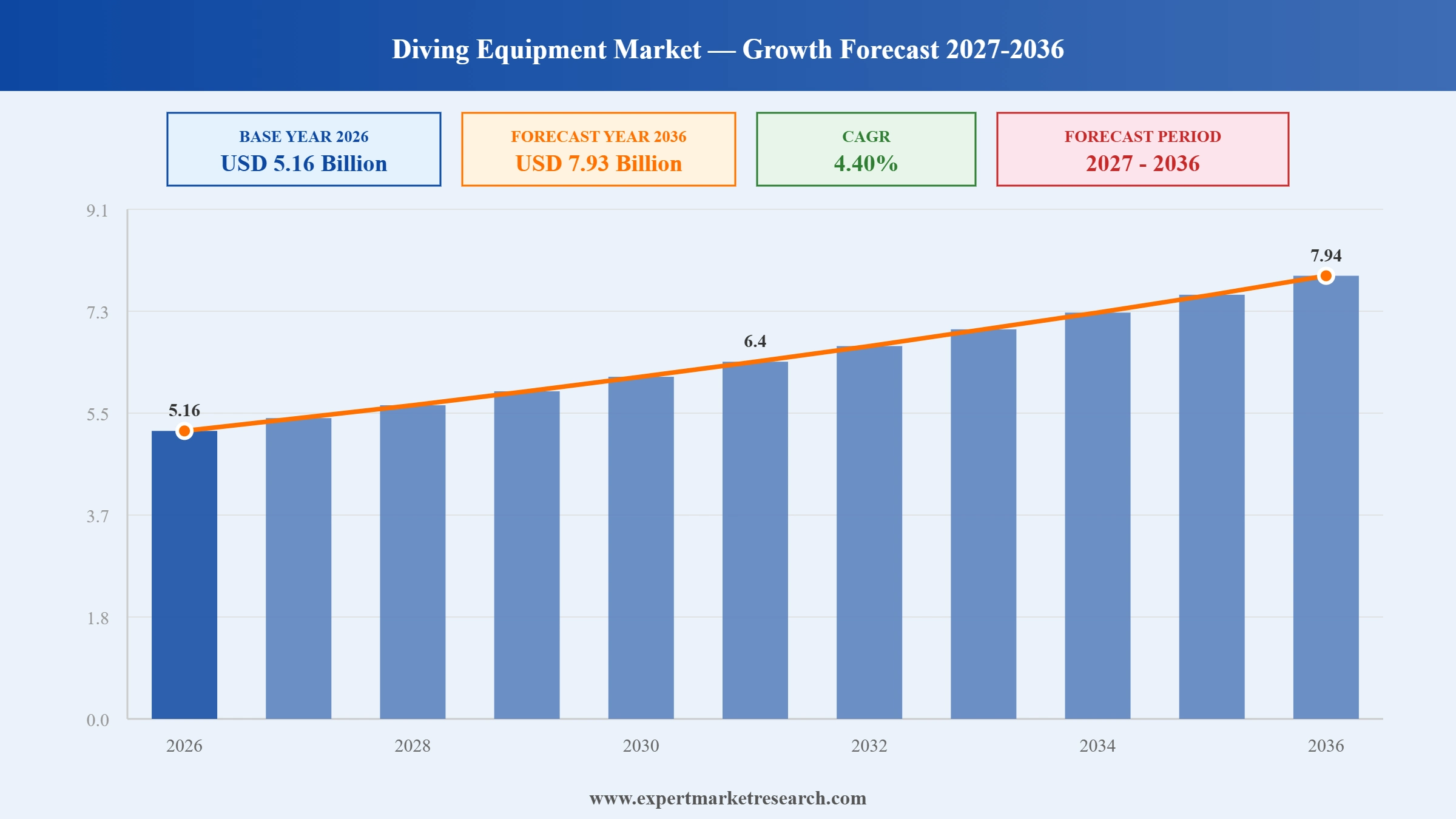
The diving equipment market attained a value of USD 4.94 Billion in 2025 and is projected to expand at a CAGR of 4.40% through 2035. The market is further expected to achieve USD 7.60 Billion by 2035. Connected diving ecosystems are turning standalone equipment into integrated safety platforms. Garmin's Descent S1 buoy can monitor up to eight connected divers, while compatible systems support underwater messaging and surface coordination, demonstrating how communications, navigation, and dive-data technologies are expanding equipment value beyond conventional breathing and buoyancy functions.
A major source of demand is the expanding global base of trained divers and dive-service infrastructure. PADI currently issues more than 1 million certifications annually, giving equipment manufacturers a recurring pool of newly certified customers and replacement demand from established operators. A second source is the increasing commercial value attached to underwater environments. NOAA reports that coral reefs attract 55 million visitors annually across U.S. states, territories, and marine sanctuaries, while reef-linked activities support substantial tourism and recreation expenditure. Together, certification pipelines and marine-tourism ecosystems stimulate procurement of BCDs, regulators, exposure suits, computers, cylinders, masks, fins, communications equipment, and accessories. For manufacturers, this creates opportunities to develop equipment packages for dive centers, resorts, training organizations, rental fleets, and professional operators rather than relying solely on individual replacement purchases, thereby boosting the diving equipment market value.
Innovation in the diving equipment market is increasingly centred on connected safety systems, intelligent dive computers, and integrated emergency-response capabilities. Manufacturers are combining real-time dive monitoring, GPS-enabled communication, satellite connectivity, and diver-specific data to improve underwater safety and situational awareness. Collaborations between equipment providers and diving safety organisations also extend emergency assistance beyond conventional equipment functions. Advanced dive computers, such as Garmin’s Descent series, demonstrate how digital interfaces, health-related metrics, and dive tracking can enhance the user experience. These innovations enable manufacturers to differentiate products, strengthen premium positioning, and serve recreational and technical divers seeking greater safety, convenience, and data-driven diving experiences.
High acquisition and maintenance costs remain a key restraint in the diving equipment market, particularly for beginners, occasional recreational divers, and price-sensitive customers. Advanced regulators, dive computers, buoyancy control devices (BCDs), and drysuits require specialised materials, precision engineering, and rigorous safety testing, increasing retail prices. Equipment ownership also involves recurring expenses, including servicing, replacement parts, inspection, and maintenance to ensure operational reliability. These costs can discourage individual purchases and encourage customers to rent equipment through diving schools, resorts, and tour operators. Furthermore, premium technological features may have limited appeal among casual divers who undertake only occasional dives. Consequently, affordability constraints can slow equipment upgrades, restrict penetration in emerging recreational diving markets, and limit sales growth across entry-level and mid-range product categories, thereby restricting the diving equipment market developments.
Read more about this report - REQUEST FREE SAMPLE COPY IN PDF
Garmin announced a collaboration with Divers Alert Network (DAN) on September 9, 2026, to provide Garmin users who are active DAN members with more direct support during dive-related emergencies. Compatible inReach users can add their DAN member ID to their account, enabling Garmin Response to share relevant emergency information with DAN after an SOS activation. The collaboration connects satellite-based emergency coordination with specialised dive-medicine support, strengthening the integration of communication, rescue, and medical assistance within connected diving equipment ecosystems.
Garmin launched the limited-edition Descent G2 BARREL Deep Blue Edition through a collaboration with Korean watersports brand BARREL. The dive computer features an exclusive wave-themed watch face and Azure-coloured band, while the package includes a collaborative swim cap and a 40% discount coupon for BARREL neoprene products. The 1.2-inch AMOLED device also incorporates a sapphire lens, 10 ATM-rated case, and recycled marine-plastic housing components, combining diving functionality with broader watersports and lifestyle positioning.
Cressi celebrates its 80th anniversary with the limited-edition Dive Yellow collection, comprising eleven products across key diving categories. The collection includes masks, fins, a regulator, dive computers, wetsuits, and the Aquawing Plus BCD, with products such as the Quantum Mask, Thor EBS Fins, Nepto Computer Watch, and T10 SC PVD regulator. The initiative combines Cressi’s established product categories with anniversary-focused design, providing opportunities for coordinated equipment purchases while reinforcing brand identity across recreational diving and related watersports segments.
SCUBAPRO expanded its travel-focused equipment portfolio with the Navigator Lite, a lightweight back-inflation BCD designed for recreational travel divers. The model uses a foldable soft backpack, Quick Cinch tank system, detachable pockets, and replaceable air-cell covers available in multiple colours. Its modular construction allows several components to be replaced when worn or damaged, while its compact design supports easier packing for dive travel. The product reflects continued emphasis on portability, customization, durability, and adaptable equipment configurations.
Diving equipment manufacturers are increasingly integrating communication, tracking, and emergency-response functionality into equipment ecosystems. Garmin's Descent S1 buoy allows surface teams to monitor up to eight divers and exchange preset messages with compatible divers through its SubWave network. This creates a higher-value equipment proposition for charter operators, instructors, technical-diving teams, and professional users. Equipment suppliers can capitalize by developing interoperable computers, transmitters, surface buoys, mobile applications, and emergency systems rather than selling isolated hardware. The trend also creates opportunities for recurring software and service revenues alongside conventional equipment sales.
Manufacturers are using recycled or alternative materials for equipment but still retaining the durability standards. The new model by Garmin, Descent G2 that will be launched in 2025, will feature components that are recycled ocean-bound plastics and will thus relate sustainability with superior connected dive technology. This aspect has great significance in the context of dive resorts, training facilities, and dive equipment rental companies, who require equipment that can be repeatedly used and meet environmental positioning standards. Suppliers can differentiate through traceable materials, repairable components, replaceable modules, longer service intervals, and product take-back programs, creating procurement advantages without sacrificing performance or safety.
Global aquaculture reached a major operational milestone as aquatic-animal production exceeded 100 million tonnes in 2024, reaching 103 million tonnes, according to FAO. Commercial aquaculture operations require underwater inspection, net cleaning, stock monitoring, infrastructure maintenance, and farm servicing, generating demand for professional diving systems and associated protective equipment. Asia is especially significant because it accounted for 76% of global aquatic-animal and algae production in 2024, according to FAO. Equipment suppliers can therefore target aquaculture operators with durable exposure suits, communication systems, compact propulsion equipment, underwater tools, and inspection-oriented packages, thus boosting the diving equipment market dynamics and trends.
The government purchasing process continues to be an important part of the B2B marketplace for diving and salvage systems. There are numerous procurement notices contained in the U.S. Navy's FY2026 procurement process, including portable recompression chamber upgrade kits, diver augmented visual display sonar systems, diver life support charging devices, recompression chamber vans, and many scuba diving systems. Manufacturers targeting naval customers can strengthen their position through ruggedized equipment, modular architectures, service contracts, training support, and rapid deployment configurations.
Reef restoration and monitoring are increasingly connected with tourism protection and local economic activity. NOAA reported in July 2025 that Florida Keys reef restoration supports an economy generating more than USD 2 billion annually and almost 20,000 local jobs tied to tourism, fishing, and ocean recreation. Conservation programs require divers, dive operators, underwater tools, exposure protection, cameras, buoyancy equipment, and monitoring technologies. This creates a specialized procurement opportunity for equipment designed around repeated field deployment, environmentally sensitive operations, data collection, and easy maintenance rather than purely recreational use.
The Expert Market Research’s report titled "Diving Equipment Market Report and Forecast 2026-2035” offers a detailed analysis of the market based on the following segments:
Market Breakup by Product Type
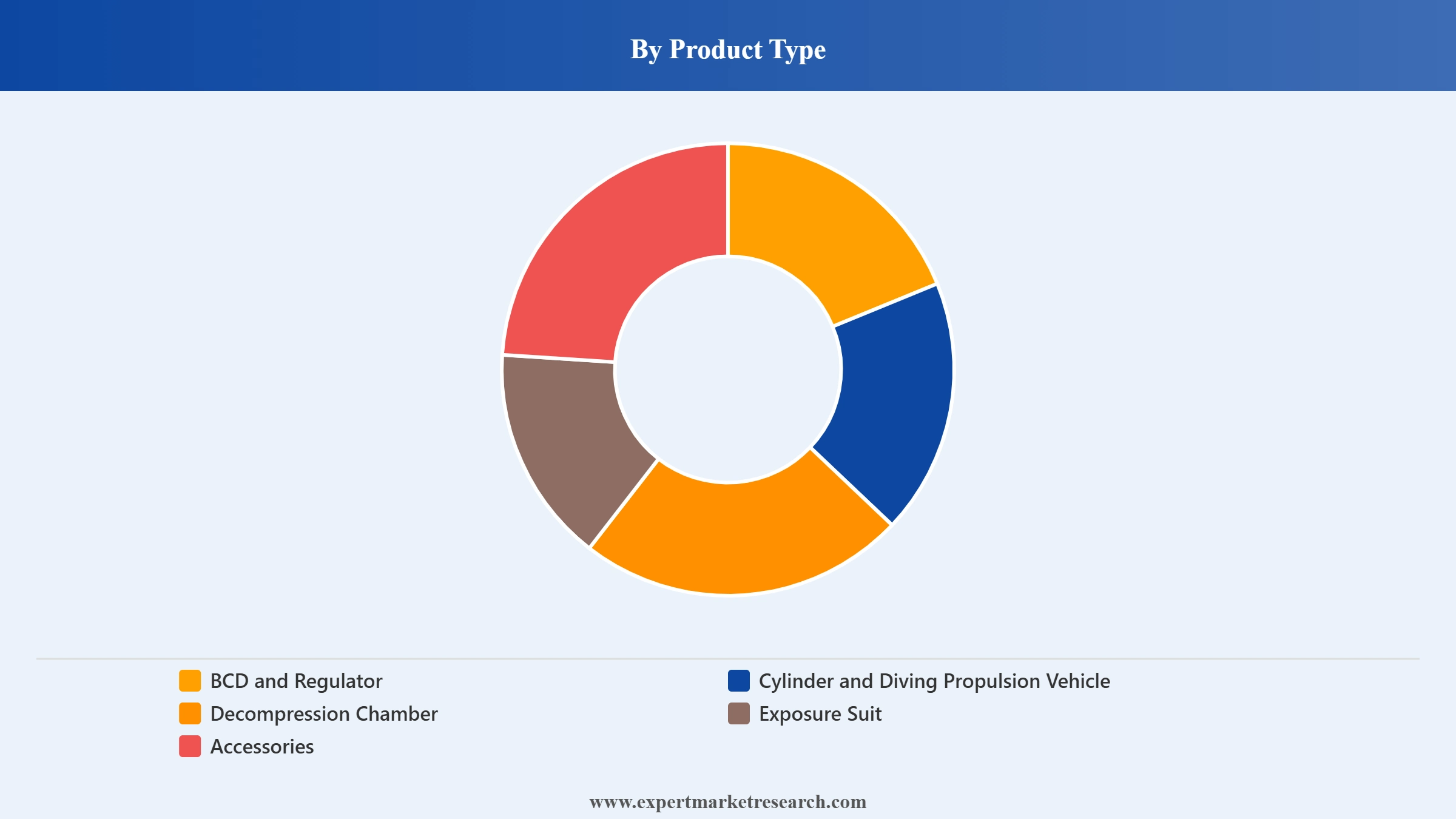
Key Insight: The product landscape combines essential life-support systems with specialized equipment and replacement-driven accessories. BCD and regulator systems remain central because buoyancy control and breathing performance are required across recreational and professional diving configurations. Cylinders and diving propulsion vehicles address higher-equipment-intensity applications, while decompression chambers serve technical, commercial, and military requirements. Exposure suits remain essential across different water temperatures and operating environments. Accessories create an extensive aftermarket spanning lighting, bags, communication components, mounting systems, masks, fins, and maintenance products. SCUBAPRO's portfolio, for example, includes regulators, BCDs, dive computers, exposure protection, masks, fins, bags, and accessories.
Market Breakup by Depth
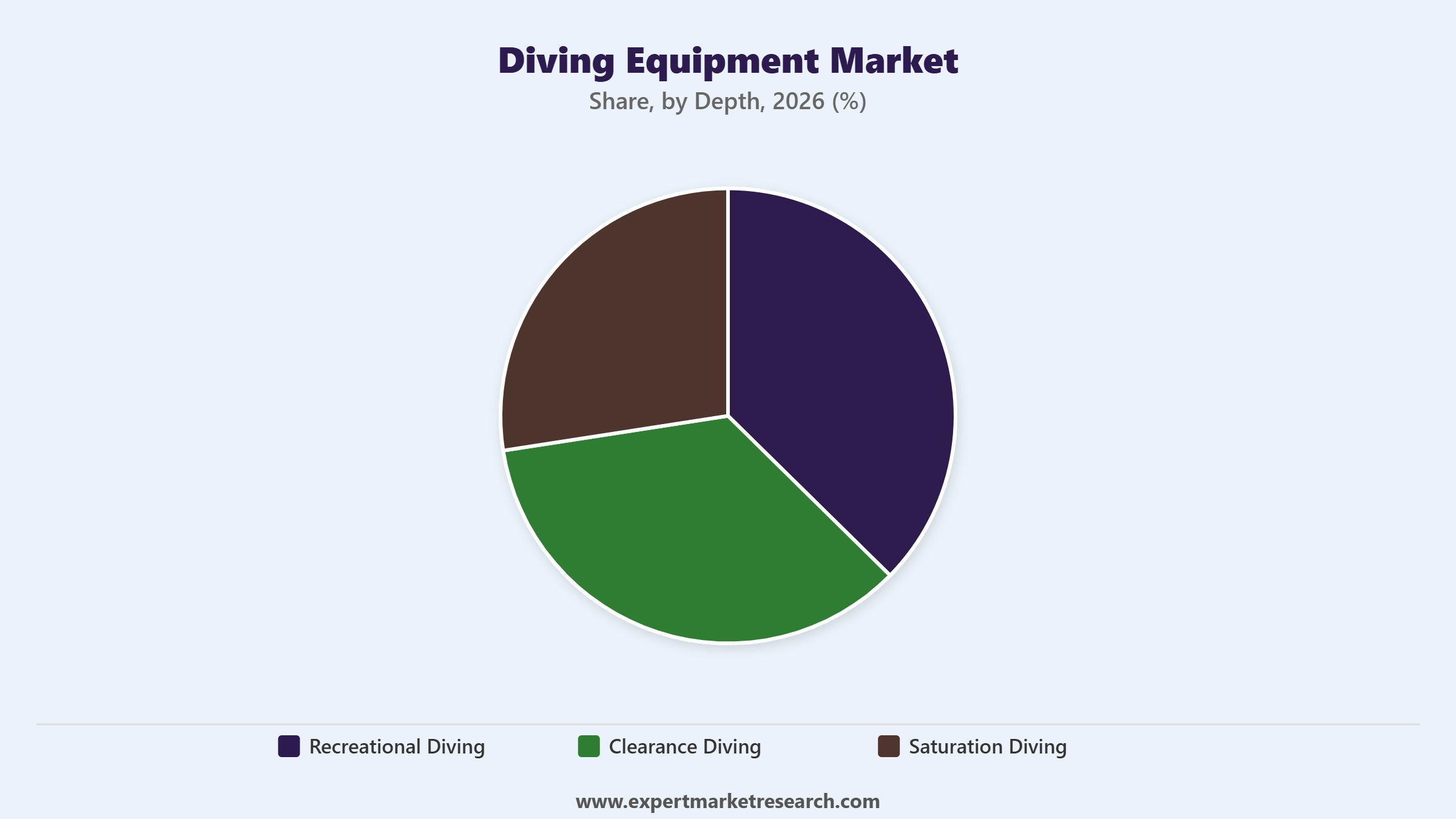
Key Insight: Demand varies significantly by operational depth. Recreational diving represents the broadest equipment ecosystem because it encompasses entry-level certification, holiday diving, club activities, liveaboards, and repeat leisure diving. Clearance diving requires more specialized equipment for naval, security, salvage, and infrastructure-related applications. Saturation diving represents a technically intensive niche where equipment must support prolonged deep-water operations, decompression management, gas management, and specialized life-support requirements. The U.S. Navy's procurement of recompression systems and diver life-support infrastructure demonstrates the high equipment intensity associated with advanced diving operations. Manufacturers therefore increasingly develop products around specific operating profiles rather than treating diving as a single equipment category.
Market Breakup by End-User
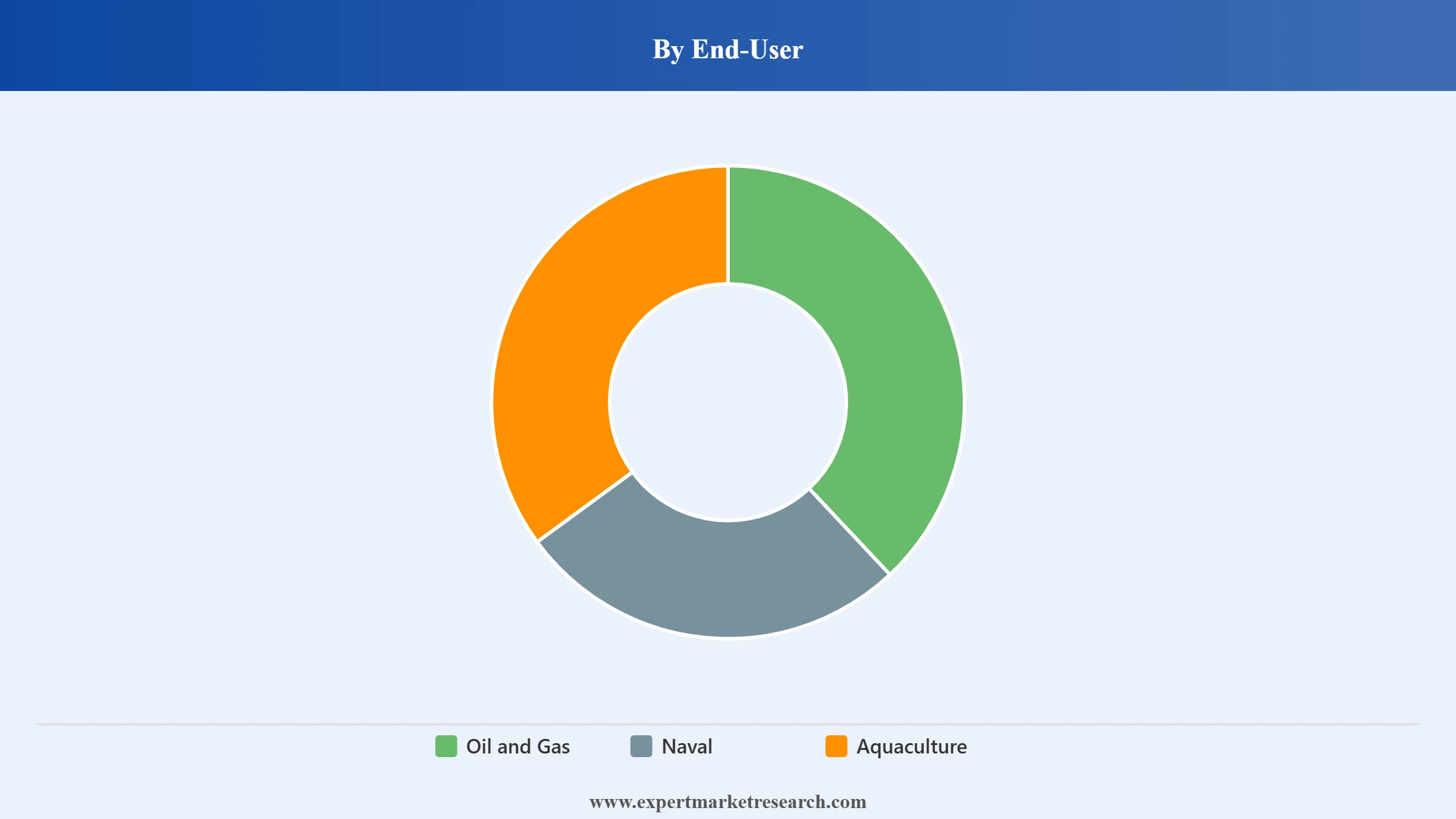
Key Insight: Oil and gas remains an important professional customer base because subsea inspection, maintenance, repair, construction, and offshore infrastructure require trained underwater personnel and specialized equipment. Naval organizations generate demand for ruggedized diving, salvage, surveillance, and life-support systems. Aquaculture represents an expanding application because underwater farms require routine inspection, net maintenance, biological monitoring, and infrastructure servicing. FAO reported that aquaculture aquatic-animal production reached 103 million tonnes in 2024, reinforcing the scale of the underlying underwater operating environment. Other users include research institutions, conservation organizations, commercial diving contractors, underwater photography teams, rescue services, and marine tourism operators.
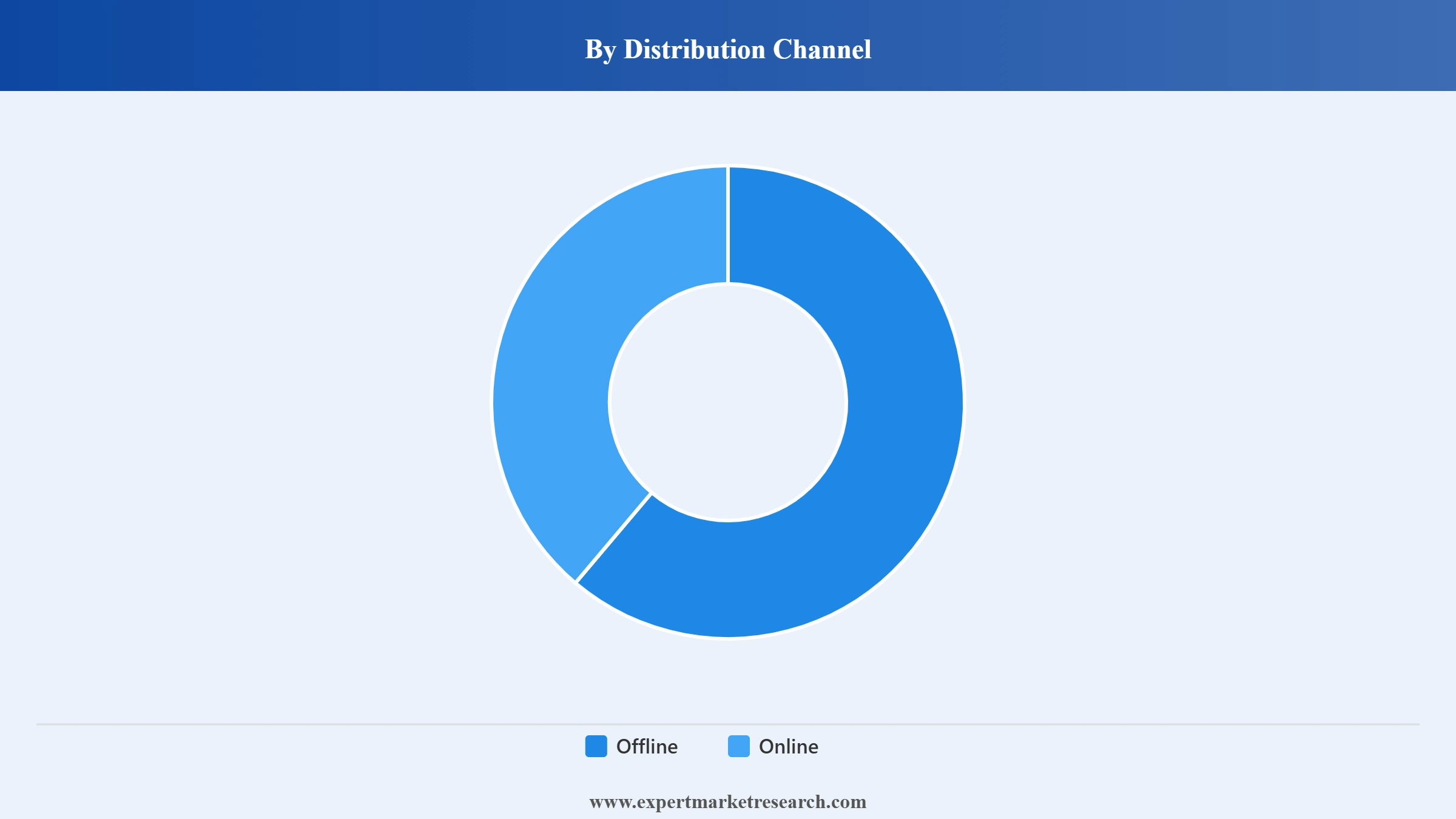
Market Breakup by Distribution Channel
Key Insight: Offline distribution remains strategically important because diving equipment requires fitting, configuration, demonstrations, technical advice, certification compatibility, servicing, and post-sale support. Specialized dealers also function as service points for regulators, BCDs, computers, and other safety-critical equipment. SCUBAPRO directs customers toward authorized dealers and service facilities for regulator servicing and warranty support, demonstrating the continuing role of specialist distribution infrastructure. Online channels are nevertheless expanding the addressable customer base by enabling direct comparison of specifications, accessories, replacement components, and travel-oriented products. A hybrid model is increasingly relevant: online discovery and purchase can be combined with dealer-based fitting, servicing, training, and equipment commissioning.
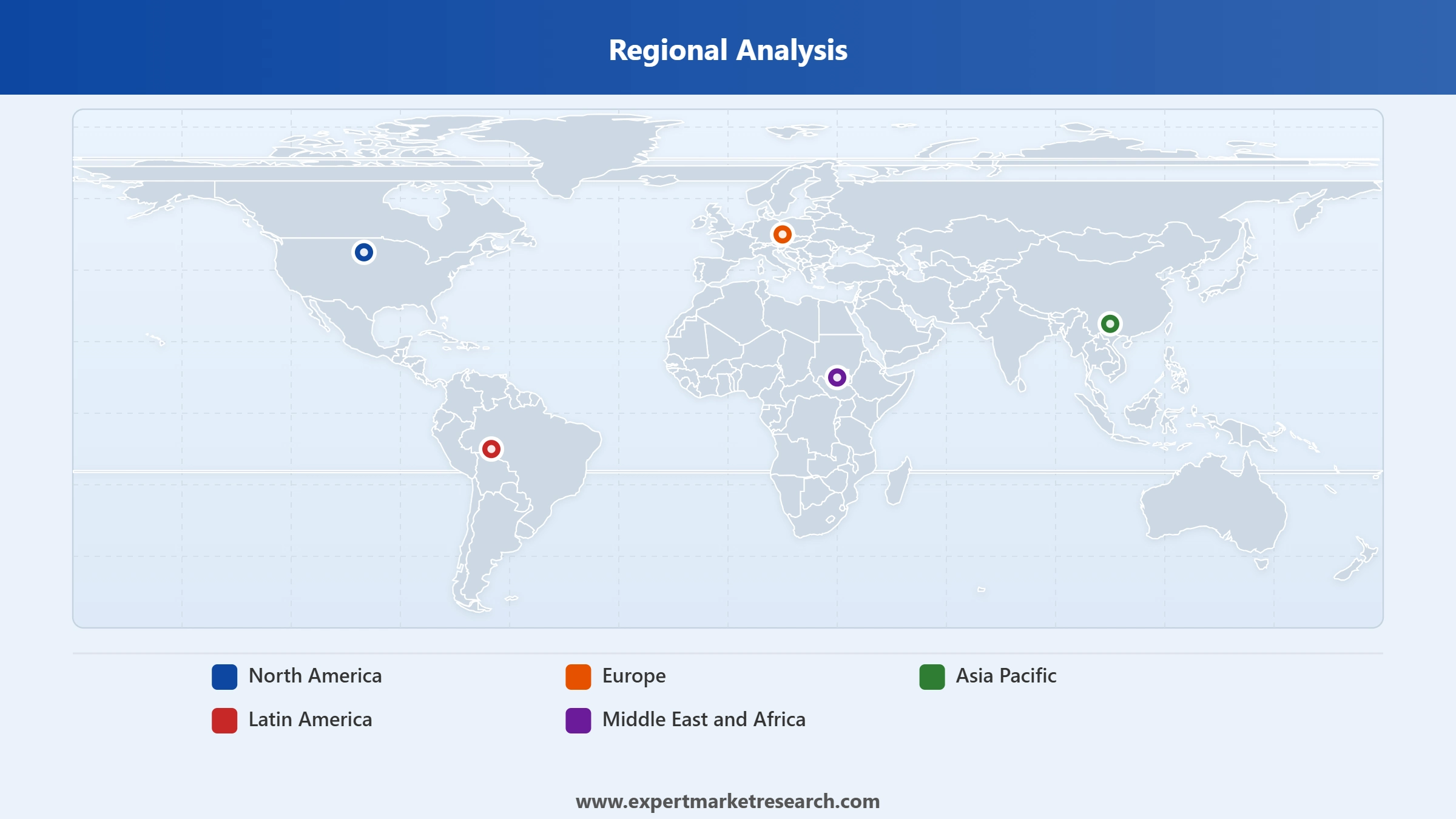
Market Breakup by Region
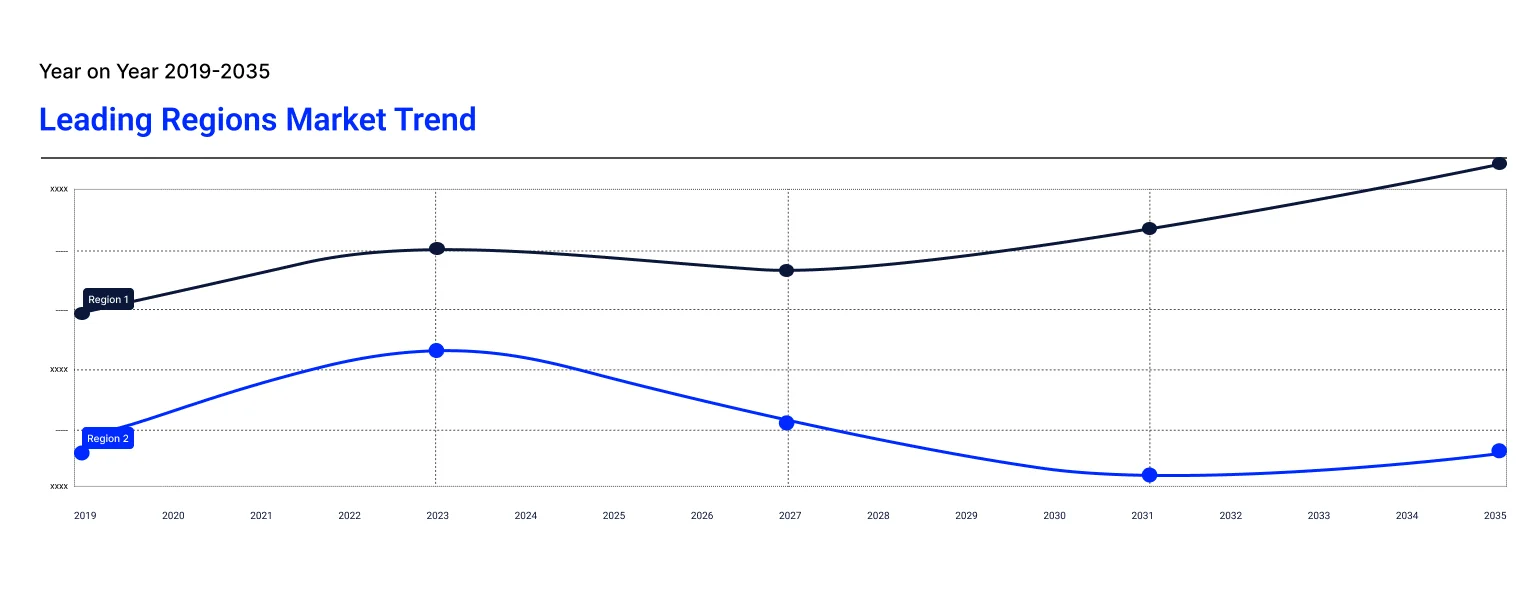
Key Insight: Asia Pacific combines major recreational-diving destinations with extensive aquaculture, coastal tourism, maritime infrastructure, and naval activity. FAO reported that Asia generated 179 million tonnes of aquatic animals and algae in 2024, including approximately 130 million tonnes from aquaculture, strengthening the region's broader underwater commercial ecosystem. North America benefits from established diving infrastructure and sophisticated equipment demand, while Europe has a strong technical-diving, cold-water, professional, and watersports base. Latin America benefits from reef tourism and marine resources, while the Middle East and Africa offer opportunities associated with coastal tourism, offshore energy, and maritime infrastructure. Regional suppliers can therefore tailor portfolios according to operating environment rather than applying one global product mix, thus driving the demand in the diving equipment market.
Read more about this report - REQUEST FREE SAMPLE COPY IN PDF
BCD and regulator systems constitute the core equipment category because they directly address two fundamental diving requirements: breathing gas delivery and buoyancy control. Their relevance extends from entry-level recreational diving to professional, technical, and military operations. PADI's annual certification volume of more than 1 million certifications creates a continuing pipeline of users entering the equipment ecosystem. Manufacturers are therefore focusing on lightweight configurations, improved breathing performance, modularity, travel compatibility, and integrated accessories to capture both first-time purchases and replacement cycles. Such developments will thus boost diving equipment market trends in the long run.
Read more about this report - REQUEST FREE SAMPLE COPY IN PDF
Accessories are gaining ground among divers who are customizing their equipment based on specific environments and uses. Accessories include BCD parts, regulator accessories, dive lights, marker buoys, masks, fin straps, computer accessories, and others. The market segment has a shorter replacement cycle and reduced barriers to entry compared to a diving system as a whole. For B2B suppliers, accessories can also improve customer retention by creating recurring aftermarket sales through dive centers, rental fleets, training facilities, and specialist retailers.
Recreational diving has the broadest customer base because certification programs, dive resorts, liveaboards, clubs, and travel operators continuously introduce consumers to underwater activities. PADI's global network includes more than 6,600 dive centers and resorts, providing a large commercial infrastructure for equipment sales, rentals, servicing, and training. Recreational users also generate demand across virtually every product category, from masks and fins to regulators, BCDs, exposure suits, and computers. This breadth makes recreational diving particularly important for manufacturers seeking high-volume equipment platforms and scalable dealer networks.
Read more about this report - REQUEST FREE SAMPLE COPY IN PDF
Saturation diving is increasing the applicability of their equipment due to increased specialization in the inspections, construction, maintenance, and repair activities necessary on offshore structures. Saturation diving involves advanced systems for respiration, decompression, communication, temperature control, monitoring, and equipment. This can be seen in governmental acquisition decisions in which the U.S. Navy planned for FY2026 transportable and standard recompression chamber van enhancements. Suppliers serving this segment can pursue higher-value contracts through integrated systems, maintenance agreements, operator training, and lifecycle support.
Oil and gas operators remain significant buyers because underwater production infrastructure requires inspection, intervention, repair, maintenance, and construction support. Diving contractors serving offshore installations require equipment that can perform reliably under demanding conditions, often combining exposure protection, communications, breathing systems, monitoring, and specialized tools. The broader offshore energy ecosystem also creates recurring replacement and servicing requirements. For manufacturers, the opportunity lies less in standalone consumer products and more in complete professional configurations that can be standardized across offshore projects, supported through certified maintenance programs and replacement-part availability, thus bolstering the diving equipment market growth.
Read more about this report - REQUEST FREE SAMPLE COPY IN PDF
Aquaculture is increasingly becoming a more relevant professional application as the farms grow in size and infrastructure. The FAO noted that aquaculture aquatic animal production grew to 103 million tonnes in 2024, surpassing 100 million tonnes for the first time ever. The underwater tasks include inspections, cleaning, observation of fish health, checking anchoring systems, and maintenance. This market potential could be capitalized on by equipment manufacturers through small propulsion systems, tough exposure protection, communication equipment, and light inspection equipment. Growth in Asia is particularly relevant because the region accounted for 130 million tonnes of aquaculture aquatic-animal output in 2024.
Offline channels remain critical because diving equipment differs from ordinary sporting goods in its safety requirements, fitting needs, technical configuration, and servicing. Specialist dealers provide equipment demonstrations, regulator servicing, BCD fitting, cylinder-related support, and certification-linked advice. SCUBAPRO requires regulator servicing through authorized dealers or service facilities, with its published service cycle based on 24 months or 100 dives, whichever comes first. This creates a durable role for specialist distribution even as manufacturers strengthen direct-to-consumer websites. Dealer relationships also provide manufacturers with local technical support and customer-retention infrastructure.
Read more about this report - REQUEST FREE SAMPLE COPY IN PDF
Online distribution is gaining importance because buyers increasingly research specifications, compare equipment configurations, purchase replacement components, and prepare for diving trips digitally. Garmin's extensive online product ecosystem, including dive computers, accessories, and supporting applications, illustrates how equipment manufacturers can connect digital discovery with physical hardware. Online sales are particularly suited to repeat purchases such as accessories, straps, bags, replacement components, and apparel. The strongest commercial model is therefore likely to combine online product discovery and transaction capabilities with specialist dealer networks for fitting, commissioning, servicing, and training.
Asia Pacific represents a significant diving-equipment market because of its concentration of tropical dive destinations, marine biodiversity, coastal tourism, and developing equipment ecosystems. The region includes established diving destinations such as the Philippines, Indonesia, Thailand, and Malaysia, alongside expanding domestic markets. The commercial opportunity extends beyond leisure diving into aquaculture, maritime activity, defense, and subsea services. The Philippines is specifically identified by Expert Market Research as a leading Asian dive destination, while the broader region contains globally recognized sites such as Sipadan and the Similan Islands. For manufacturers, Asia Pacific therefore combines consumer equipment demand with resort-rental fleets and institutional applications. Product durability, corrosion resistance, lightweight construction, and service availability are especially important where equipment is deployed intensively in tropical marine environments, thereby directly boosting the diving equipment market regional growth.
Read more about this report - REQUEST FREE SAMPLE COPY IN PDF
North America maintains substantial demand through recreational diving, specialist training, marine recreation, defense, and commercial underwater operations. The United States also has a large snorkeling and diving participant base, while connected-equipment adoption is being accelerated by technology companies developing integrated dive computers and communication systems. Europe remains important because of established diving communities, cold-water requirements, professional subsea activity, and sophisticated regulatory frameworks. Within the UK, the offshore wind pipeline adds an industrial layer to demand: government planning targets 43-50 GW of offshore wind by 2030, with substantial additional subsea infrastructure required. Latin America and the Middle East and Africa offer opportunities linked to marine tourism, coastal ecosystems, offshore energy, and emerging diving infrastructure. Suppliers targeting these regions can improve penetration through regional service partners and equipment configurations adapted to local water temperatures and operating conditions.
Competition in the diving equipment market is increasingly centered on product reliability, equipment integration, safety, environmental materials, and lifecycle support. Established manufacturers are broadening portfolios across regulators, BCDs, exposure suits, masks, fins, instruments, and accessories to increase cross-selling opportunities. Aqualung's current portfolio, for example, spans regulators, BCDs, instruments, masks, and fins, while its 2026 partner-center range is designed specifically around commercial rental requirements.
Technology-led differentiation is becoming more important among the diving equipment companies as digital computers, communication systems, and underwater networking enter mainstream equipment portfolios. Garmin's connected dive ecosystem demonstrates how equipment companies can move beyond standalone hardware into integrated safety and communications solutions. Meanwhile, specialist professional suppliers are pursuing defense and subsea contracts that generate recurring service and maintenance revenues. This creates a competitive structure combining consumer-scale equipment brands with highly specialized engineering companies.
Established in 1970, Johnson Outdoors Inc. is headquartered in Racine, Wisconsin, United States. Through SCUBAPRO, the company serves recreational and professional divers with a comprehensive range of diving equipment. Its portfolio includes regulators, BCDs, wetsuits, masks, fins, dive computers, bags, and accessories. SCUBAPRO emphasises engineering, durability, diver comfort, and equipment performance. Products such as the Hydros Pro 2 BCD and its range of regulator systems support the brand’s position across recreational, technical, and professional diving applications.
Founded in 1950, HEAD Sport GmbH is headquartered in Kennelbach, Austria, and operates Mares as a prominent diving and watersports brand. Mares provides equipment across regulators, BCDs, dive computers, masks, fins, wetsuits, snorkeling gear, and accessories. Its product development addresses recreational, technical, and freediving requirements, while its extensive international distribution network supports market reach. Integration with HEAD’s broader sporting-goods operations provides access to established retail, distribution, and marketing infrastructure across multiple geographic markets and watersports categories.
Founded in 1946, Cressi Sub S.p.A. is headquartered in Genoa, Italy, and specialises in diving, snorkeling, freediving, and watersports equipment. The company offers masks, fins, wetsuits, regulators, BCDs, dive computers, consoles, and related accessories. Its portfolio includes products such as the Quantum mask, Thor EBS fins, Glacier drysuit, Goa and Raffaello dive computers, and Aquawing Plus BCD. Cressi combines product development with a broad international distribution network, serving recreational divers, professionals, freedivers, snorkelers, and watersports enthusiasts.
Established in 1847, James Fisher and Sons plc is headquartered in Barrow-in-Furness, United Kingdom. Unlike consumer-oriented diving equipment brands, the company focuses heavily on specialist marine and subsea applications. Its diving activities encompass submarine rescue, military diving, saturation diving, tactical diving, and subsea services. The company also provides specialised diving systems and equipment for demanding operational environments. Its professional capabilities and relationships with defence and maritime organisations support applications where reliability, specialised technology, and operational performance are critical.
Other key players in the diving equipment market include Poseidon Diving Systems AB, Aquatec-Duton Industry Co., Ltd., Dive Rite, Tabata Co., Ltd., Beauchat International S.A.S., Aqualung Trading, and Sherwood Scuba, among others.
*Please note that this is only a partial list; the complete list of key players is available in the full report. Additionally, the list of key players can be customized to better suit your needs.*
Explore the latest Diving Equipment Market trends 2026 and understand the factors shaping equipment demand across recreational, commercial, naval, and marine applications. The Diving Equipment Market forecast 2026-2035 provides strategic insights into product categories, end-user opportunities, distribution channels, regional performance, and competitive developments. Download the sample report to assess market size, emerging opportunities, competitive positioning, and the strategic outlook for the global Diving Equipment Market.


Upto 15% Off
USD
$2499 $2249
$3999 $3599
$4999 $4249
$5999 $5099


*While we strive to always give you current and accurate information, the numbers depicted on the website are indicative and may differ from the actual numbers in the main report. At Expert Market Research, we aim to bring you the latest insights and trends in the market. Using our analyses and forecasts, stakeholders can understand the market dynamics, navigate challenges, and capitalize on opportunities to make data-driven strategic decisions.*
In 2025, the market reached an approximate value of USD 4.94 Billion.
The market is projected to grow at a CAGR of 4.40% between 2026 and 2035.
The market is estimated to witness a healthy growth in the forecast period of 2026-2035 to reach a value of around USD 7.60 Billion by 2035.
The major product types are BCD and regulator, cylinder and diving propulsion vehicle, decompression chamber, exposure suit, and accessories.
The different channels of diving equipment are online and offline.
Key players in the market are Johnson Outdoors Inc., Poseidon Diving Systems AB, HEAD Sport GmbH (Mares), Cressi Sub S.p.A., Aquatec-Duton Industry Co., Ltd., Dive Rite, James Fisher and Sons plc, Tabata Co., Ltd., Beauchat International S.A.S., Aqualung Trading, and Sherwood Scuba, among others.
Key challenges in the diving equipment market include high equipment costs, stringent safety standards, equipment maintenance requirements, limited access to professional training, technological complexity, supply chain disruptions, environmental regulations, and risks associated with counterfeit or low-quality products.
Key strategies include developing lightweight and durable equipment, integrating smart technologies, expanding online distribution, strengthening partnerships with diving schools and resorts, improving after-sales services, introducing environmentally sustainable materials, broadening product portfolios, and targeting emerging recreational diving destinations through localized marketing and distribution networks.
Explore our key highlights of the report and gain a concise overview of key findings, trends, and actionable insights that will empower your strategic decisions.
| REPORT FEATURES | DETAILS |
| Base Year | 2025 |
| Historical Period | 2019-2025 |
| Forecast Period | 2026-2035 |
| Scope of the Report |
Historical and Forecast Trends, Industry Drivers and Constraints, Historical and Forecast Market Analysis by Segment:
|
| Breakup by Product Type |
|
| Breakup by Depth |
|
| Breakup by End-User |
|
| Breakup by Distribution Channel |
|
| Breakup by Region |
|
| Market Dynamics |
|
| Competitive Landscape |
|
| Companies Covered |
|
Datasheet
One User
USD 2,499
USD 2,249
tax inclusive*
Single User License
One User
USD 3,999
USD 3,599
tax inclusive*
Five User License
Five User
USD 4,999
USD 4,249
tax inclusive*
Corporate License
Unlimited Users
USD 5,999
USD 5,099
tax inclusive*
*Please note that the prices mentioned below are starting prices for each bundle type. Kindly contact our team for further details.*
Flash Bundle
Small Business Bundle
Growth Bundle
Enterprise Bundle
*Please note that the prices mentioned below are starting prices for each bundle type. Kindly contact our team for further details.*
Flash Bundle
Number of Reports: 3
20%
tax inclusive*
Small Business Bundle
Number of Reports: 5
25%
tax inclusive*
Growth Bundle
Number of Reports: 8
30%
tax inclusive*
Enterprise Bundle
Number of Reports: 10
35%
tax inclusive*
How To Order

Select License Type
Choose the right license for your needs and access rights.

Click on ‘Buy Now’
Add the report to your cart with one click and proceed to register.

Select Mode of Payment
Choose a payment option for a secure checkout. You will be redirected accordingly.
Strategic Solutions for Informed Decision-Making
Gain insights to stay ahead and seize opportunities.

Get insights & trends for a competitive edge.

Track prices with detailed trend reports.

Analyse trade data for supply chain insights.

Leverage cost reports for smart savings

Enhance supply chain with partnerships.

Connect For More Information
Our expert team of analysts will offer full support and resolve any queries regarding the report, before and after the purchase.
Our expert team of analysts will offer full support and resolve any queries regarding the report, before and after the purchase.
We employ meticulous research methods, blending advanced analytics and expert insights to deliver accurate, actionable industry intelligence, staying ahead of competitors.
Our skilled analysts offer unparalleled competitive advantage with detailed insights on current and emerging markets, ensuring your strategic edge.
We offer an in-depth yet simplified presentation of industry insights and analysis to meet your specific requirements effectively.




