

Consumer Insights
Uncover trends and behaviors shaping consumer choices today
Procurement Insights
Optimize your sourcing strategy with key market data
Industry Stats
Stay ahead with the latest trends and market analysis.


The GCC bottled water market was valued at USD 11476.85 Million in 2025. The industry is expected to grow at a CAGR of 7.20% during the forecast period of 2026-2035 to reach a value of USD 23002.26 Million by 2035.
The GCC bottled water market growth is driven by rising health-consciousness, desalination innovation, and government stewardship. With the Gulf’s arid climate and limited freshwater reserves, bottled water consumption has become indispensable. Saudi Arabia remains the largest market among the GCC countries. Meanwhile, UAE’s focus on zero single-use plastic has fuelled a dual trend of sustainable bottling and premiumisation.
Government mandates are redefining quality benchmarks, boosting the GCC bottled water market dynamics. For instance, the Saudi Food and Drug Authority has tightened mineral content regulations, prompting providers to invest in lab-grade purification and blockchain-enabled sourcing. On the other hand, the UAE’s Ministry of Climate Change and Environment is incentivising local sourcing and biodegradable packaging, encouraging players like Masafi to shift towards plant-based bottles made out of polylactic acid (PLA).
Desalination is being interwoven with smart sensors, AI-controlled mineral infusion, and TDS (Total Dissolved Solids) technology. Major players in the GCC bottled water market are partnering with AI startups to monitor supply-chain quality in real-time. The market is evolving with traceability, purity profiles, and environmental accountability. The convergence of high-tech bottling systems, D2C digital platforms, and government-backed ESG compliance is transforming this market into a lucrative ground for B2B companies.
Compound Annual Growth Rate
7.2%
Value in USD Million
2026-2035
A significant advancement in sustainable hospitality for the United Arab Emirates was made with the introduction of Abu Dhabi's first entirely circular water bottling facility by BE WTR, a Swiss sustainable water brand, in collaboration with Rosewood Abu Dhabi.
Baynunah Watergeneration Technologies SP, the owner of the Emirati brand Ma Hawa, announced the arrival of its eco-friendly drinking water bottles in the United Arab Emirates (UAE). These environmentally beneficial water-from-air hydration options are offered by Union Coop and the Abu Dhabi National Oil Company. Customers can take advantage of free product samples and discounts in celebration of the launch.
During the International Water Summit held as part of the Abu Dhabi Sustainability Week, a new bottled water enriched with Vitamin D, named 'Al Ain Vitamin D' bottle was launched, catering to the individuals battling the vitamin deficiency.
Al Ain Water, the UAE’s leading water brand, launched its new water bottle made of recycled polyethylene terephthalate (rPET). The new water bottle, with 100% rPET is the first to be locally produced by a UAE brand.
With over 40% of the global desalinated water produced in the region, companies in the GCC bottled water market are adopting next-gen technologies like solar desalination and membrane distillation. UAE-based solar-powered desalination plants are now integrating directly with bottling units, enabling low-carbon operations. For example, Abu Dhabi’s EWEC invited developers and developer consortiums to submit an Expression of Interest (EOI) for the development of Abu Dhabi Islands Reverse Osmosis (RO) Independent Water Project (IWP). Such a co-development initiative reduces logistics costs and carbon emissions, creating a green, scalable water infrastructure.
The concept of customised hydration is gaining ground in the GCC bottled water market, especially in high-income urban centres like Dubai and Doha. Brands are using smart bottling that allows QR code scanning to reveal mineral breakdown, sourcing details, and shelf-life tracking. Companies such as Agthia are testing smart caps that monitor consumption via apps, targeting health-focused millennials. The increasing adoption of fitness wearables in the GCC is synchronising well with this trend, encouraging players to offer vitamin-infused or functional water variants.
With the UAE targeting a ban on single-use plastics by 2026, bottled water companies in the GCC are fast pivoting to biodegradable and reusable materials. In 2022, Emirates has recycled more than 500,000 kilograms of plastic and glass, by collecting discarded bottles onboard for repurposing, aligning with Dubai’s Zero Waste Strategy 2030. Qatar’s Green Building Council has also started rating retail chains on packaging sustainability. These measures are shaping buyer preferences and shelf-space decisions in major retail chains.
E-commerce and AI-powered distribution are further revolutionising the GCC bottled water market trends and dynamics. Health Water Bottling Co. Ltd has expanded its smart vending machine network across Riyadh and Jeddah, using AI to forecast demand and automate replenishment. Subscription-based D2C models with tailored hydration packages are also emerging, supported by GCC’s high internet penetration and mobile payment adoption. Kuwait’s National Development Plan includes digital supply chain innovations, making last-mile water delivery faster and traceable. These channels are not only reducing OPEX for suppliers but are also providing data-rich insights into consumption behaviour, helping brands personalise offers and optimise production cycles.
Mineral-rich, imported-style branding is gaining traction in the GCC bottled water market. Agthia’s Al Ain Water now offers pH-balanced “Zero Sodium” options, while Frio Sparkling based in Dubai offers pure carbonated bottled water. The consumer shift from hydration to wellness is especially noticeable post-pandemic. The GCC’s affluent population has become increasingly willing to pay a premium for clarity in mineral content, alkaline balance, and source purity. Luxury hotels and airline caterers are now sourcing boutique-labelled water, including gold-flaked or collagen-infused variants.
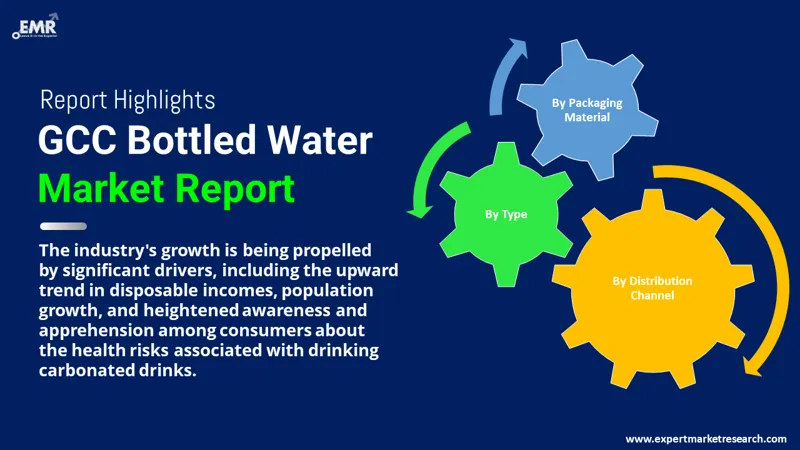
Read more about this report - REQUEST FREE SAMPLE COPY IN PDF
The EMR’s report titled “GCC Bottled Water Market Report and Forecast 2026-2035” offers a detailed analysis of the market based on the following segments:
Market Breakup by Type
Key Insight: The bottled water market in the GCC is fragmented into still, carbonated, mineral, and flavoured waters, each carving a distinct niche. Still water remains foundational, fulfilling institutional and everyday demand. Carbonated water is growing popular among social drinkers and hence, finding shelf space in wellness bars. Flavoured water has gained traction among the health-savvy population seeking sugar-free alternatives, while mineral water appeals to those prioritising source integrity. Each type’s trajectory is shaped by regional health campaigns, urban consumption trends, and evolving taste profiles.
Market Breakup by Packaging Material
Key Insight: Plastic continues to lead the GCC bottled water market, especially for its cost-effectiveness and adaptability to mass distribution systems. However, regulatory shifts are boosting the appeal of eco-compliant alternatives. The glass segment is scaling rapidly in sectors where brand prestige and environmental concerns matter, like in airlines, luxury hotels, and spas. Manufacturers that can balance both, via hybrid packaging portfolios and circular supply chain integrations, are better poised for long-term growth in this regulation-sensitive market.
Market Breakup by Distribution Channel
Key Insight: The GCC bottled water market's distribution is stratified across home and office delivery, supermarkets, convenience stores, and on-trade channels. Home and office delivery dominates the market due to infrastructural fit and tech-led logistics. Supermarkets offer volume but face high competition, while on-trade is rising fast owing to hospitality and tourism growth. Each channel demands specific SKU sizes, branding, and service levels. Successful players are building omni-channel strategies.
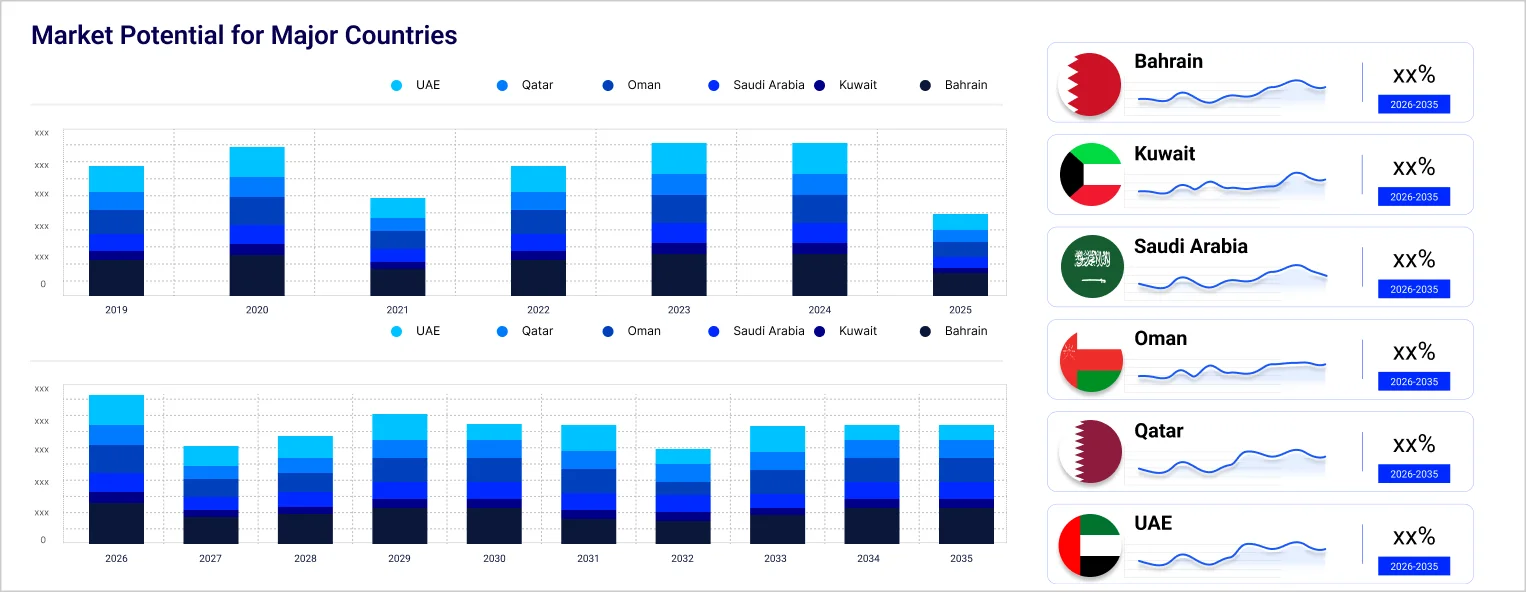
Market Breakup by Country
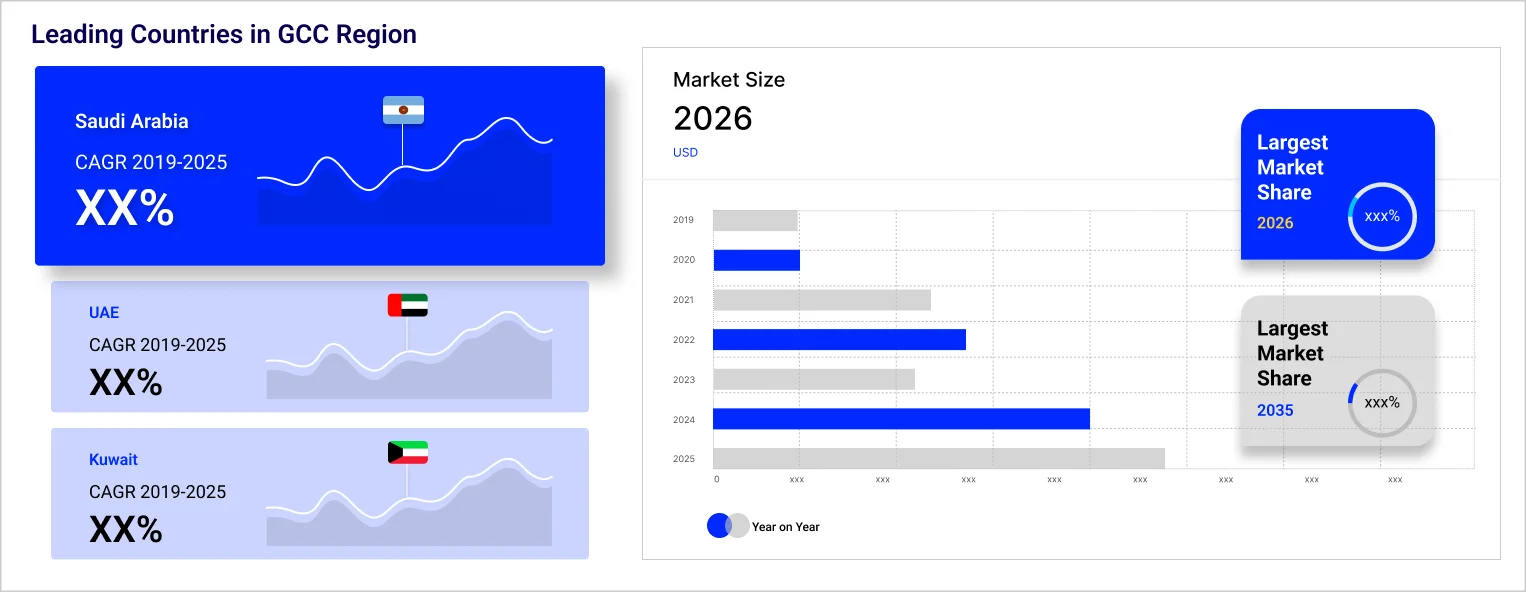
Key Insight: Saudi Arabia dominates the GCC bottled water market revenue share, supported by massive population demand and stringent health norms. UAE, however, is evolving faster, driven by luxury branding, sustainability goals, and government-sponsored innovation platforms. Kuwait and Oman are also emerging with distinct regulatory frameworks and startup ecosystems supporting flavoured and tech-enabled bottled water. Each market has unique levers, such as tourism in the UAE and hygiene mandates in Saudi, which further necessitates hyper-local strategies. Regional players expanding across borders must navigate differing compliance, logistics, and consumer expectations, tailoring both product and packaging innovation for sustained presence.
By Type, Still Water Registers the Largest Share of the Market
Still water dominates the GCC bottled water market due to daily hydration requirements in an arid climate. It caters to hospitals, schools, offices, and large-scale industrial labour camps where basic hydration is critical. In Saudi Arabia and UAE, regulatory standards for still water purity have intensified, prompting suppliers to adopt multi-stage filtration and UV sterilisation. Masafi and Nova Water are using mineral balancing techniques to ensure palatability while preserving local taste preferences. Furthermore, still water fits seamlessly into government-led health awareness programmes.
Flavoured water is emerging as the fastest-growing subsegment in the GCC bottled water industry, boosted by wellness trends and sugar-tax regulations. GCC consumers are increasingly rejecting sugary sodas while preferring flavoured water that offers a functional, zero-calorie alternative. For example, in 2023, The Aqua Water Bar by Luqel, based in Dubai, introduced ‘gourmet water’, appealing to urban health-conscious consumers. Kuwait and UAE’s fitness-centric Gen Z population is actively purchasing berry and citrus-based variants, especially through online platforms. Local startups are also launching halal-certified flavoured waters with added electrolytes.
By Packaging Material, Plastic Registers the Bigger Share of the Market
As per the GCC bottled water market report, plastic packaging remains dominant due to its affordability, lightweight profile, and mass production scalability. It supports extensive distribution, from large retail shelves to remote work sites. Most GCC governments still allow PET plastic under specific recyclability conditions. Companies like Agthia are using recycled PET in compliance with UAE’s circular economy roadmap. Saudi Arabia’s government has introduced Extended Producer Responsibility (EPR) policies, making it mandatory for manufacturers to recover used plastics. Players are investing in reverse vending and smart tracking systems to reclaim used bottles. Despite environmental concerns, plastic’s logistical efficiency and compatibility with smart labelling and tracking technology keep it at the core of mass-market bottled water operations.
Glass packaging is rapidly gaining traction in premium and hospitality segments due to its inert nature and premium appeal, boosting the GCC bottled water market revenue. It aligns with sustainability goals and avoids chemical leaching, especially relevant for mineral-rich or flavoured waters. Emirates Refreshments and several boutique brands have switched to returnable glass bottles in hotels and airlines. The UAE and Qatar governments are promoting glass use via hotel procurement regulations and single-use plastic curbs.
By Distribution Channel, Home and Office Delivery Secures the Majority of the Market Share
The home and office delivery segment dominates the GCC bottled water market revenue share due to extreme climate, growing urbanisation, and work-from-home culture. With the growing number of high-rise living and corporate clusters in the region, bulk bottled water delivery services have been in constant demand. Masafi and Nova Water operate advanced logistics using RFID and route optimisation. Government initiatives like Saudi Arabia’s Vision 2030 are digitising utility services, indirectly supporting tech-integrated water delivery. Demand spikes in summer months have also prompted subscription-based models with auto-replenishment features.
The on-trade distribution channel is seeing a sharp rise in the GCC bottled water market as tourism and hospitality sectors rebound after the pandemic. Brands are launching exclusive lines for on-trade use with higher margins and custom branding. The rise of mocktail bars and wellness cafes in urban Dubai and Riyadh further contributes to this growth. Governments are also encouraging culinary tourism, adding to the growing demand.
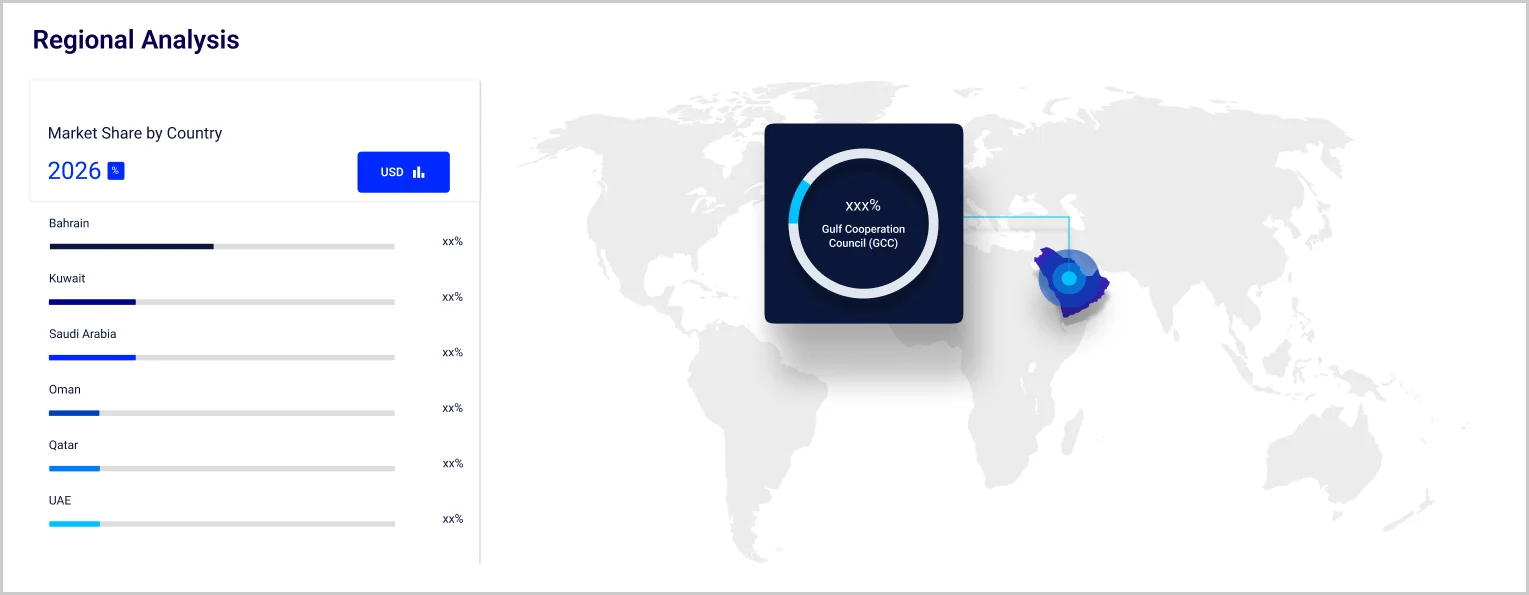
By Country, Saudi Arabia Occupies the Leading Position in the Market
The Saudi Arabia bottled water market has accounted for the largest revenue share due to the country’s population size and regulatory structuring. Health Water Bottling Co. and Nova Water dominate this region, supported by government hygiene campaigns like “Healthy Cities Programme.” The SFDA has introduced strict guidelines on TDS, fluoride, and microbial content, compelling brands to improve their purification systems. Saudi’s growing HoReCa (Hotel, Restaurant, Catering) sector has also resulted in bulk demand. Vision 2030 prioritises water sustainability, with initiatives around recycling and desalination-based bottling. As demand extends from urban hubs to semi-urban cities, localised production and smart logistics remain key focus areas for bottled water brands in the Kingdom.
UAE is witnessing the fastest growth in terms of bottled water consumption, driven by tourism, health consciousness, and regulatory stringency. Government initiatives including sustainability campaigns are changing consumer perceptions and retail dynamics. Agthia’s Al Ain plant recently integrated AI for real-time water composition analytics. With Expo City and hospitality-driven infrastructure expansion, demand for premium, branded water has surged. The rise of clean-label products and functional beverages is further fuelling niche bottled water categories. UAE’s import-export policies also support entry of global wellness water brands, amplifying market competitiveness.
The GCC bottled water market players are increasingly scaling operations and reengineering processes, right from source authentication to end-user experience. Smart packaging, AI-based inventory systems, and ESG-focused material sourcing are gaining traction. There is rising interest in co-packing ventures and public-private partnerships, especially in Saudi Arabia and the UAE, to expand desalination-integrated bottling.
Hotels and airlines demand custom-labelled offerings, compelling GCC bottled water companies to rethink branding. Opportunities also lie in expanding digital storefronts and integrating IoT for home-delivery tracking. Smart packaging, personalised hydration, eco-compliance, AI-driven logistics, and premium wellness branding are defining this marketspace, creating new opportunities for niche targeting and long-term institutional contracts. Businesses focusing on green packaging, consumer education, and wellness-centric variants are most likely to attract institutional buyers and long-term contracts.
Founded in 1977 and headquartered in Saudi Arabia, Masafi is a legacy brand blending tradition with innovation. Masafi’s integration of AI in quality monitoring and its strong logistics for home and office deliveries position it as a top contender. The company also explores wellness extensions, offering flavoured and functional water to cater to health-savvy consumers across retail, HORECA, and e-commerce channels.
Established in 1980 and headquartered in Dubai, Emirates Refreshments focuses on carbonated and flavoured water offerings. It has embraced sustainable operations, including a major glass bottle return scheme for institutional clients. Their flavoured variants are aligned with UAE’s sugar-tax norms. Emirates Refreshments supplies to luxury hotels, duty-free shops, and wellness resorts, positioning itself as a premium brand in a competitive landscape.
Health Water Bottling Co., founded in 1973 and based in Riyadh, is known for its flagship Nova Water brand. The company dominates bulk delivery across KSA and uses smart routing for efficient replenishment. It invests heavily in compliance and purification upgrades in line with SFDA standards.
Headquartered in Abu Dhabi and founded in 2004, Agthia owns Al Ain Water, one of the most advanced bottling operations in the GCC. The company is heavily invested in R&D, launching Zero Sodium and vitamin-enhanced variants. Agthia uses smart caps and AI-enabled water composition analytics, targeting both hospitals and upscale retail. It aligns closely with UAE’s sustainability goals and supports D2C and vending distribution with digitally integrated platforms.
*Please note that this is only a partial list; the complete list of key players is available in the full report. Additionally, the list of key players can be customized to better suit your needs.*
Other key players in the market are Dubai Crystal Mineral Water & Refreshments L.L.C, and Hana Food Industries Company, among others.
Explore the latest trends shaping the GCC Bottled Water Market 2026-2035 with our in-depth report. Gain strategic insights, future forecasts, and key market developments that can help you stay competitive. Download a free sample report or contact our team for customized consultation on GCC Bottled Water Market trends 2026.
North America Bottled Water Market
Saudi Arabia Bottled Water Market
Argentina Bottled Water Market
Colombia Bottled Water Market
Ecuador Bottled Water Market
Australia Bottled Water Market
Europe Bottled Water Market
Bolivia Bottled Water Market
Chile Bottled Water Market
Bottled Water Market


Upto 15% Off
USD
$2499 $2249
$3999 $3599
$4999 $4249
$5999 $5099


*While we strive to always give you current and accurate information, the numbers depicted on the website are indicative and may differ from the actual numbers in the main report. At Expert Market Research, we aim to bring you the latest insights and trends in the market. Using our analyses and forecasts, stakeholders can understand the market dynamics, navigate challenges, and capitalize on opportunities to make data-driven strategic decisions.*
In 2025, the GCC bottled water market reached an approximate value of USD 11476.85 Million.
The market is projected to grow at a CAGR of 7.20% between 2026 and 2035.
The market is estimated to witness a healthy growth in the forecast period of 2026-2035 to reach a value of USD 23002.26 Million by 2035.
The key types are still water, carbonated water, flavoured water, and mineral water.
The key countries are Saudi Arabia, the United Arab Emirates, Kuwait, and others.
The distribution channels include supermarkets and hypermarkets, convenience stores, home and office delivery, on-trade, and others.
Plastic and glass are the two major packaging materials used.
The key players in the market include Masafi Co. LLC, Emirates Refreshments PJSC, Health Water Bottling Co. Ltd, Agthia Group PJSC, Dubai Crystal Mineral Water & Refreshments L.L.C, and Hana Food Industries Company, among others.
Key strategies driving the market include embedding smart technology into packaging, aligning with ESG goals, launching clean-label variants, partnering with desalination plants, and digitising HOD logistics to drive scale while personalising end-user hydration experiences.
The key challenges are high logistics costs, regulatory fragmentation across GCC nations, and rising consumer demand for both low environmental impact and premium quality.
Explore our key highlights of the report and gain a concise overview of key findings, trends, and actionable insights that will empower your strategic decisions.
| REPORT FEATURES | DETAILS |
| Base Year | 2025 |
| Historical Period | 2019-2025 |
| Forecast Period | 2026-2035 |
| Scope of the Report |
Historical and Forecast Trends, Industry Drivers and Constraints, Historical and Forecast Market Analysis by Segment:
|
| Breakup by Type |
|
| Breakup by Packaging Material |
|
| Breakup by Distribution Channel |
|
| Breakup by Region |
|
| Market Dynamics |
|
| Competitive Landscape |
|
| Companies Covered |
|
| Report Price and Purchase Option | Explore our purchase options that are best suited to your resources and industry needs. |
| Delivery Format | Delivered as an attached PDF and Excel through email, with an option of receiving an editable PPT, according to the purchase option. |
Datasheet
One User
USD 2,499
USD 2,249
tax inclusive*
Single User License
One User
USD 3,999
USD 3,599
tax inclusive*
Five User License
Five User
USD 4,999
USD 4,249
tax inclusive*
Corporate License
Unlimited Users
USD 5,999
USD 5,099
tax inclusive*
*Please note that the prices mentioned below are starting prices for each bundle type. Kindly contact our team for further details.*
Flash Bundle
Small Business Bundle
Growth Bundle
Enterprise Bundle
*Please note that the prices mentioned below are starting prices for each bundle type. Kindly contact our team for further details.*
Flash Bundle
Number of Reports: 3
20%
tax inclusive*
Small Business Bundle
Number of Reports: 5
25%
tax inclusive*
Growth Bundle
Number of Reports: 8
30%
tax inclusive*
Enterprise Bundle
Number of Reports: 10
35%
tax inclusive*
How To Order

Select License Type
Choose the right license for your needs and access rights.

Click on ‘Buy Now’
Add the report to your cart with one click and proceed to register.

Select Mode of Payment
Choose a payment option for a secure checkout. You will be redirected accordingly.
Strategic Solutions for Informed Decision-Making
Gain insights to stay ahead and seize opportunities.

Get insights & trends for a competitive edge.

Track prices with detailed trend reports.

Analyse trade data for supply chain insights.

Leverage cost reports for smart savings

Enhance supply chain with partnerships.

Connect For More Information
Our expert team of analysts will offer full support and resolve any queries regarding the report, before and after the purchase.
Our expert team of analysts will offer full support and resolve any queries regarding the report, before and after the purchase.
We employ meticulous research methods, blending advanced analytics and expert insights to deliver accurate, actionable industry intelligence, staying ahead of competitors.
Our skilled analysts offer unparalleled competitive advantage with detailed insights on current and emerging markets, ensuring your strategic edge.
We offer an in-depth yet simplified presentation of industry insights and analysis to meet your specific requirements effectively.




