

Consumer Insights
Uncover trends and behaviors shaping consumer choices today
Procurement Insights
Optimize your sourcing strategy with key market data
Industry Stats
Stay ahead with the latest trends and market analysis.
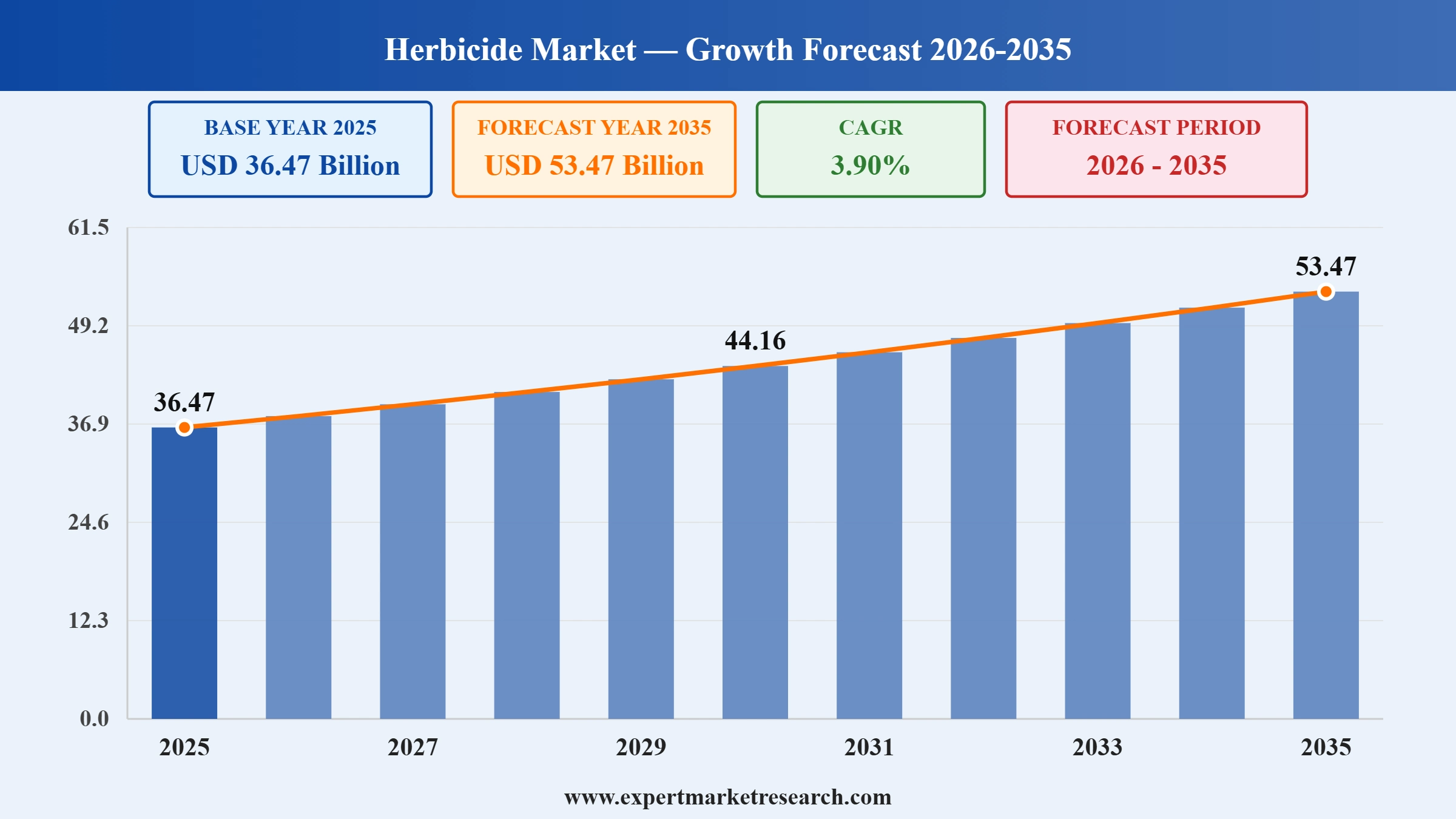
The global herbicide market attained a value of USD 36.47 Billion in 2025 and is projected to expand at a CAGR of 3.90% through 2035. The market is further expected to reach USD 53.47 Billion by 2035. Rising pressure to protect yields of rice, wheat, corn, and soybean, together with the spread of herbicide-resistant weeds, is encouraging manufacturers to launch new active ingredients, premixes, and residual formulations. Growing use of precision spraying, bioherbicides, and localized production is further reshaping how growers across Asia Pacific, the Americas, and Europe manage weeds.
Herbicides control weeds that compete with crops for light, water, and nutrients, and they account for the largest share of crop protection spending in many row-crop regions. The herbicide market covers selective products that remove specific weeds inside a standing crop and non-selective products used for burndown, fallow, and non-crop vegetation management. Cereals, grains, oilseeds, and pulses absorb most of the volume, while fruits, vegetables, turf, and ornamentals add higher-value demand. Rising food demand, farm labor shortages, and the move toward no-till and direct-seeded systems continue to support herbicide use across large commercial farms and smallholder agriculture alike.
Demand in the herbicide market is concentrating around residual pre-emergence products, rice and wheat weed control, and combinations that manage resistant grasses and broadleaf weeds. Generic and specialty formulators are growing volumes by adding dedicated herbicide plants close to key farming regions. In May 2026, Dharmaj Crop Guard reported FY26 revenue of INR 11,380 million, up 20 percent, and confirmed a dedicated herbicides formulation facility under construction at its Kerala GIDC site in Ahmedabad, India. Investments of this kind are expanding supply ahead of seasonal peaks in rice, cotton, and soybean spraying. Price competition from Chinese technical suppliers also keeps formulation margins under steady pressure.
Major herbicide market players are directing growth toward novel modes of action, high-load and low-dose formulations, and partnerships with equipment makers for targeted application. Companies are licensing actives from Japanese and Chinese discovery firms, building registration portfolios crop by crop, and pairing chemistry with digital agronomy tools that guide timing and rates. Many are also adding biological options for turf, home gardens, and organic farming, widening portfolios beyond conventional synthetic chemistry and preparing for stricter residue and environmental rules across Europe, North America, and Latin America. Stewardship programs and grower training are becoming part of nearly every major launch.
Read more about this report - REQUEST FREE SAMPLE COPY IN PDF
| Global Herbicide Market Report Summary | Description | Value |
| Base Year | USD Billion | 2025 |
| Historical Period | USD Billion | 2019-2025 |
| Forecast Period | USD Billion | 2026-2035 |
| Market Size 2025 | USD Billion | 36.47 |
| Market Size 2035 | USD Billion | 53.47 |
| CAGR 2019-2025 | Percentage | XX% |
| CAGR 2026-2035 | Percentage | 3.90% |
| CAGR 2026-2035 - Market by Region | Asia Pacific | 5.1% |
| CAGR 2026-2035 - Market by Country | India | 5.8% |
| CAGR 2026-2035 - Market by Country | China | 4.8% |
| CAGR 2026-2035 - Market by Mode of Action | Selective Herbicides | 4.3% |
| CAGR 2026-2035 - Market by Crop Type | Grains and Cereals | 4.4% |
| Market Share by Country 2025 | USA | XX% |
The Environmental Protection Agency registered Rapidicil, a PPO inhibitor herbicide based on epyrifenacil, to be sold as Empera and Empera Viragess. The products offer foliar preplant control of broadleaf weeds and grasses, cover crop termination, and use in no-till systems, with launch planned before the end of 2026. Suppliers across the herbicide market can widen burndown portfolios with new actives that ease resistance pressure.
The company began US commercial sales of Novali, a high-load liquid pyroxasulfone herbicide for residual weed control in corn and soybean. Built on its Sesgama formulation technology, the product carries 40 percent more active ingredient per gallon than standard liquid pyroxasulfone, reducing handling, storage, and refills. Formulators in the herbicide market can differentiate off-patent actives through concentration and convenience gains.
The company launched Testament, a corn and soybean herbicide combining saflufenacil, pyroxasulfone, and dimethenamid-P for preplant, pre-emergence, and fall burndown use. The product targets Palmer amaranth, waterhemp, and marestail, three of the most troublesome resistant weeds in US row crops. Distributors can build lasting grower loyalty by bundling three-way premixes with agronomic advice on resistance management, application timing, and rates.
Canada's Pest Management Regulatory Agency registered Garrison Liquid EC, a preplant soil-incorporated herbicide combining triallate and trifluralin, for the 2026 spring season. The product controls hard-to-manage herbicide-resistant wild oats and Persian darnel in canola, mustard, dry peas, flax, and lentils. Crop protection firms in the herbicide market can capture Canadian Prairie demand by pairing Group 15 and Group 3 chemistries.
Spot spraying systems across the herbicide market are moving from large broadacre machines to smaller implements that suit vegetable, specialty, and mid-sized arable farms. Cameras and nozzle-level control allow growers to treat only visible weeds, cut herbicide volumes sharply, and lower input costs per hectare. Farm-ING is adding two smaller SpotSprayING models in September 2026, measuring 2.5 to 3 meters and 4.5 meters wide, with a camera every 75 cm, nozzles every 5 cm, and prices starting from EUR 80,000 for the 3-meter unit.
Weed resistance has outpaced the arrival of new herbicide chemistry for decades, creating room for new discovery start-ups in the herbicide market. Venture investors and agricultural funds are backing platforms that screen large compound libraries against novel plant targets to find fresh chemistry. Moa Technology, an Oxford spinout, is advancing three lead herbicide candidates after raising GBP 22.2 million in a July 2026 Series C round, having screened over 900,000 compounds and identified more than 80 new modes of action.
Growers and turf managers across the herbicide market are adopting contact bioherbicides based on natural fatty acids for burndown in sensitive settings such as vineyards, orchards, greenhouses, and landscaped public areas. These products suit certified organic programs and public sites where residue limits and application rules are strict, opening profitable new niches for specialty suppliers. Contact BioSolutions is promoting its EPA-registered FireHawk nonanoic acid bioherbicide and a newly approved ready-to-use version, announced in November 2025 for vineyards, orchards, turf, greenhouses, and non-crop areas.
Spray drones are spreading across Southeast Asia and Latin America, where small plots, wet soils, and labor shortages limit ground rigs. Growers and service providers are using drones for targeted herbicide passes in rice, maize, sugarcane, and plantation crops, lowering labor needs per hectare. DJI Agriculture is rolling out the Agras T100, T70P, and T25P drones launched in July 2025, with the T100 carrying a 100-liter spray payload and the T25P offering adjustable droplet size from 50 to 500 microns.
Indian crop protection firms across the herbicide market are consolidating to gain technical manufacturing depth and broader herbicide and pesticide registrations at home and abroad. Scale is helping acquirers secure molecules, share distribution networks, and compete more strongly in export markets and domestic tenders. Coromandel International is integrating NACL Industries after agreeing in March 2025 to buy a 53 percent controlling stake for INR 820 crore, adding established technical and formulation plants in Andhra Pradesh and an active ingredient unit at Dahej in Gujarat.
The Expert Market Research's report titled "Global Herbicide Market Report and Forecast 2026-2035" offers a detailed analysis of the market based on the following segments:
Market Breakup by Mode of Action
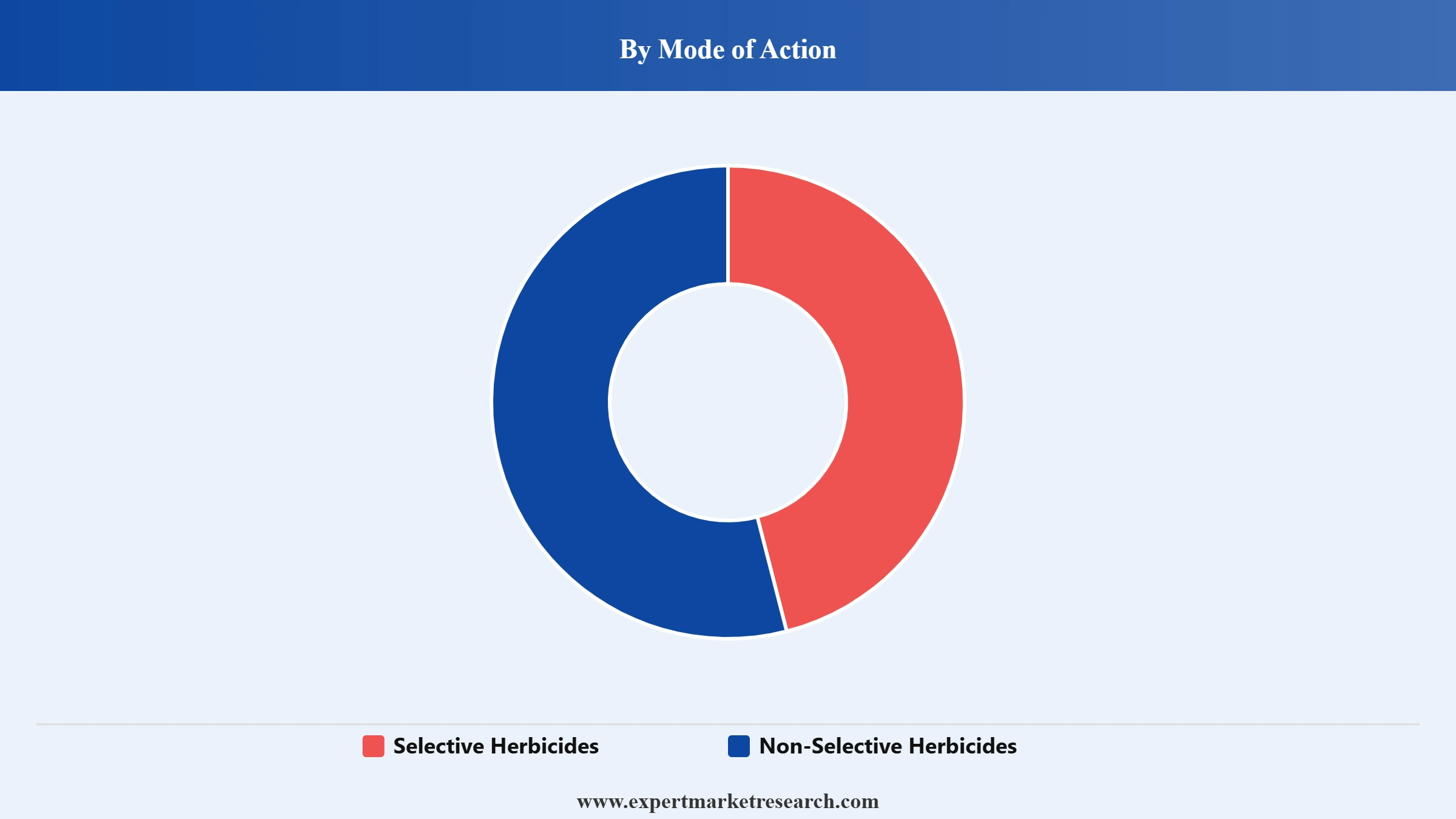
Key Insight: Selective herbicides dominate the market as growers rely on them to remove grass and broadleaf weeds inside standing crops of rice, wheat, corn, soybean, and pulses while keeping the crop safe. Non-selective herbicides such as glyphosate, glufosinate, paraquat, and diquat remain essential for burndown before planting, fallow management, and non-crop vegetation control. In March 2026, Brazil's ANVISA approved the toxicological evaluation of Rainbow Agro's glufosinate-ammonium herbicide, moving the product forward in the country's registration pipeline. Growers increasingly rotate both types within one season to slow resistance.
Market Breakup by Crop Type
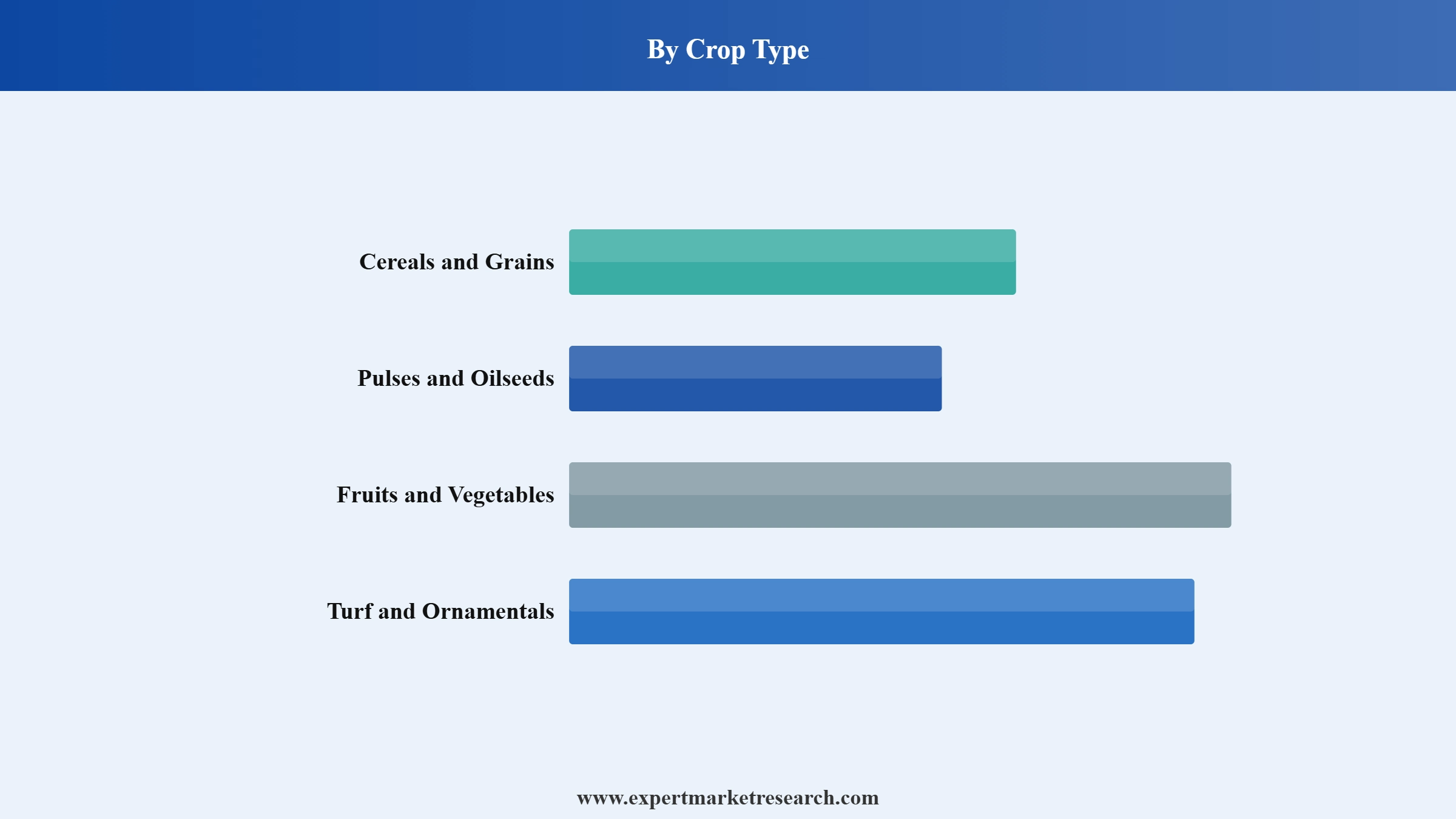
Key Insight: Cereals and grains lead the market owing to vast acreage of wheat, rice, corn, and barley and intense grass weed pressure. Pulses and oilseeds, including soybean, canola, lentils, and chickpeas, rely on pre-emergence and post-emergence programs to protect early crop growth. Fruits and vegetables need precise, low-residue options for orchards, vineyards, and row vegetables, while turf and ornamentals serve golf courses, lawns, and nurseries. In February 2025, Carbon Robotics launched its LaserWeeder G2 line in sizes from 6.6 to 60 feet for vegetable and specialty growers.
Market Breakup by Region
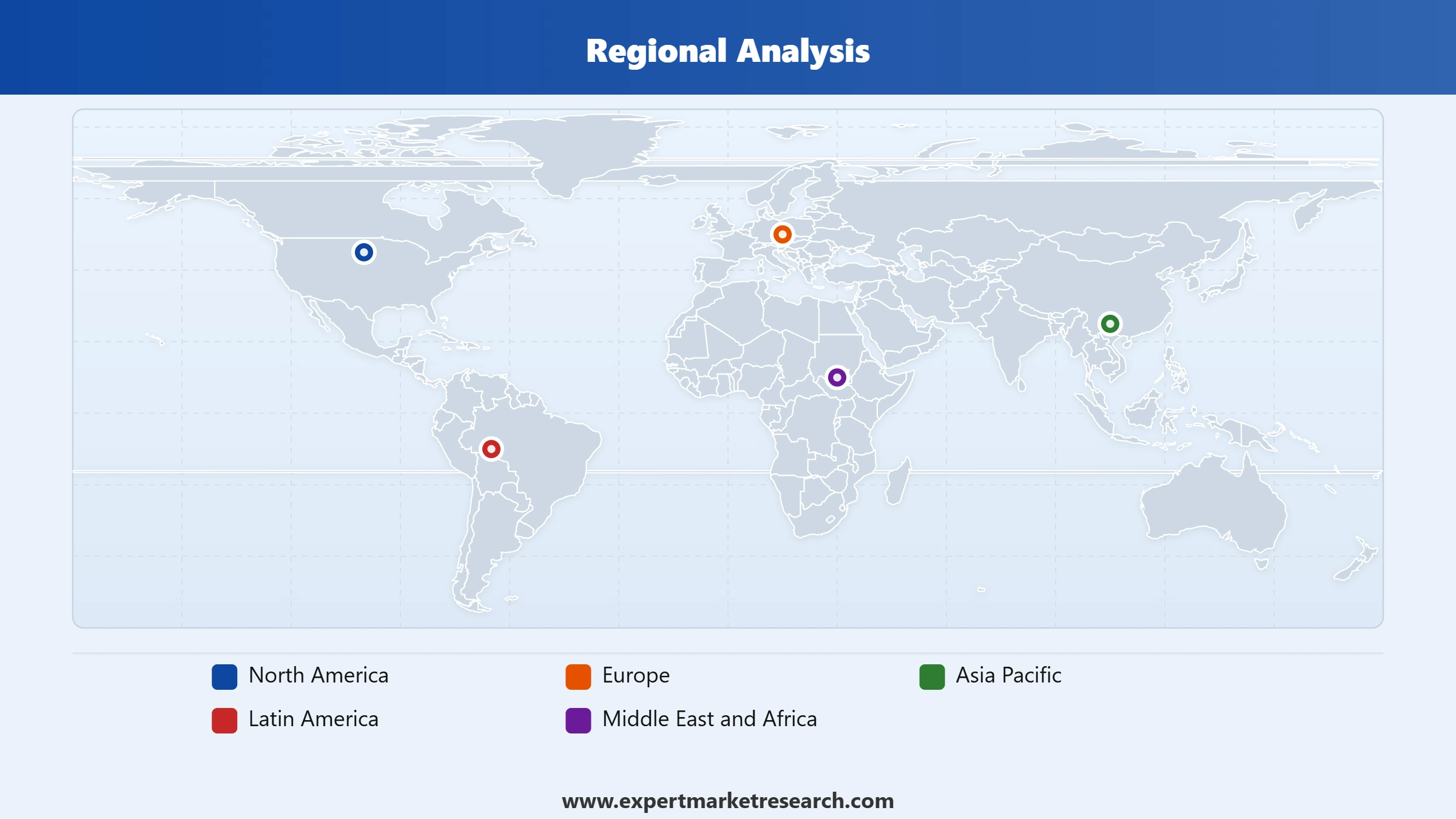
Key Insight: Regional dynamics in the herbicide market continue to shape supply strategies. Asia Pacific leads on the back of large rice, wheat, and maize acreage, expanding technical manufacturing in China and India, and rising labor costs that favor chemical weeding. North America remains a major market driven by resistant weeds in corn and soybean, while Europe focuses on stricter approvals and integrated weed management. Latin America draws strong demand from Brazilian and Argentine soybean systems, and the Middle East and Africa is growing as farm mechanization spreads.
Read more about this report - REQUEST FREE SAMPLE COPY IN PDF
By mode of action, selective herbicides dominate the market owing to their ability to control weeds inside standing crops
Selective herbicides account for the largest share of the herbicide market because they remove competing weeds while leaving the crop unharmed, allowing post-emergence treatment across cereals, oilseeds, pulses, and vegetables. Suppliers keep adding crop-specific chemistries and ready premixes that manage resistant grasses and broadleaf weeds in a single pass. In August 2025, Godrej Agrovet launched Ashitaka, a tolpyralate herbicide developed with ISK Japan, for post-emergence control of grass and broadleaf weeds in maize, starting with Telangana, Karnataka, and Tamil Nadu.
Read more about this report - REQUEST FREE SAMPLE COPY IN PDF
Non-selective herbicides hold a significant, long-standing position in the market, supported by burndown before planting, no-till systems, and vegetation control on plantations, roadsides, railways, and industrial sites. Growing weed resistance to glyphosate is lifting demand for glufosinate, diquat, and newer burndown actives across major row-crop regions. In September 2025, the Shandong unit of Zhejiang NHU received environmental approval for a 60,000-tonne-per-year glufosinate-P project using biocatalytic synthesis, with a first phase of 25,000 tonnes due for completion by December 2027.
By crop type, cereals and grains lead the market owing to vast planted acreage and heavy grass weed pressure
Cereals and grains hold the dominant share of the herbicide market, as wheat, rice, corn, and barley cover the largest planted area worldwide and face constant, heavy competition from grasses, sedges, and broadleaf weeds. The shift to direct-seeded and transplanted rice with fewer hand weedings is lifting herbicide use widely across India, China, and Southeast Asia. In May 2025, Dhanuka Agritech launched DINKAR, an ipfencarbazone herbicide developed with Hokko Chemical Industry, controlling barnyard grass, Ludwigia, and sedges in transplanted paddy.
Read more about this report - REQUEST FREE SAMPLE COPY IN PDF
Pulses and oilseeds are expanding steadily in the market as soybean, canola, lentil, chickpea, and field pea growers adopt layered residual programs to manage resistant weeds. Narrow crop registrations make new label approvals a key driver of supplier growth, especially in Canada, the United States, Australia, and Brazil. In January 2026, Albaugh secured Canadian registrations for four herbicides, including Activus 500SC, a sulfentrazone product for chickpeas, field peas, flax, soybeans, and sunflowers, broadening residual options for Canadian pulse growers.
Asia Pacific leads the market through large cereal acreage and expanding herbicide manufacturing
Asia Pacific holds the largest share of the herbicide market, supported by extensive rice, wheat, and maize cultivation in China, India, and Southeast Asia and strong technical manufacturing capacity. Rising farm wages and the rapid spread of direct-seeded rice are encouraging growers to replace hand weeding with chemical control. In June 2026, Nissan Chemical announced a manufacturing facility in Saykha, Gujarat, for its Ryzonic paddy rice herbicide, with product launch planned in Japan and India, followed by wider global supply.
Read more about this report - REQUEST FREE SAMPLE COPY IN PDF
The Middle East and Africa is registering strong growth in the market as governments promote mechanized farming, irrigation, and higher cereal output to reduce food import bills. Smallholder demand for affordable weed control is rising across Nigeria, Kenya, Ethiopia, and South Africa, and regulators are tightening oversight of product quality. In July 2026, a Paraquat Watch Nigeria survey found 20 paraquat-based products still on sale across 19 retail outlets, after a national ban on the herbicide, highlighting enforcement gaps.
The global industry is becoming more innovation-driven as major herbicide companies invest in new active ingredients, resistance-focused premixes, and advanced formulations to protect margins amid generic competition. Suppliers are prioritizing registration pipelines, regional manufacturing, and partnerships with start-ups and university research groups to secure access to novel chemistry. A strategic emphasis on localized production in India, Brazil, and North America is helping firms shorten supply chains and respond faster to seasonal demand, while tighter stewardship programs are helping protect the value of newer actives.
Leading herbicide market players are also pairing chemistry with precision application, digital agronomy, and biological weed control to meet tightening environmental rules. Opportunities are emerging in rice herbicides for direct-seeded systems, residual products for resistant weeds, bioherbicides for turf and gardens, and spot-spray-compatible formulations. Firms that combine novel modes of action, cost-competitive manufacturing, and strong distributor networks are expected to strengthen their competitive position over the coming years, especially as resistance pressure pushes growers toward premium, multi-mode solutions.
Founded in 1865 and headquartered in Ludwigshafen, Germany, the company serves the market through its Agricultural Solutions division, which offers crop protection, seeds, and digital farming products. Its herbicide portfolio covers cereals, corn, soybean, specialty crops, and non-crop uses, backed by research centers and production sites across Europe, the Americas, and Asia.
Founded in 1863 and headquartered in Leverkusen, Germany, the company operates its Crop Science division, one of the largest suppliers of seeds, traits, and crop protection products worldwide. Its herbicide range spans selective and non-selective chemistries for cereals, corn, soybean, cotton, and specialty crops, supported by a global research, production, and distribution network.
Founded in 2019 and headquartered in Indianapolis, Indiana, United States, the company was formed from the agriculture division of DowDuPont and combines seed and crop protection businesses. Its herbicide portfolio targets corn, soybean, cereals, rice, pasture, and rangeland, and it reaches growers through an extensive global network of dealers and distributors.
Founded in 2000 and headquartered in Basel, Switzerland, the company was created through the merger of the agribusinesses of Novartis and AstraZeneca and now forms part of Syngenta Group. It supplies selective and non-selective herbicides alongside seeds, fungicides, and insecticides, with research and manufacturing facilities spread across Europe, the Americas, and Asia.
Other key players in the market include FMC Corporation, among others.
*Please note that this is only a partial list; the complete list of key players is available in the full report. Additionally, the list of key players can be customized to better suit your needs.*
Unlock the latest insights with our herbicide market trends 2026 report. Discover regional growth patterns, crop type preferences, and key industry players. Stay ahead of competition with trusted data and expert analysis. Download your free sample report today and drive informed decisions in the market.


Upto 15% Off
USD
$2999 $2699
$4399 $3959
$5599 $4759
$6659 $5660


*While we strive to always give you current and accurate information, the numbers depicted on the website are indicative and may differ from the actual numbers in the main report. At Expert Market Research, we aim to bring you the latest insights and trends in the market. Using our analyses and forecasts, stakeholders can understand the market dynamics, navigate challenges, and capitalize on opportunities to make data-driven strategic decisions.*
In 2025, the market reached an approximate value of USD 36.47 Billion.
The market is projected to grow at a CAGR of 3.90% between 2026 and 2035.
The key players in the market include BASF SE, Bayer AG, Corteva Agriscience, Syngenta AG, and FMC Corporation, among others.
Companies face spreading weed resistance, long and costly registration timelines, tighter restrictions on older actives, price pressure from generic producers, and supply volatility for key intermediates while maintaining product performance and grower trust.
Launching new modes of action and multi-mode premixes, expanding local manufacturing in Asia Pacific and Latin America, pairing products with precision spraying, building bioherbicide portfolios, and securing crop-specific registrations for rice, wheat, soybean, and pulses.
Explore our key highlights of the report and gain a concise overview of key findings, trends, and actionable insights that will empower your strategic decisions.
| REPORT FEATURES | DETAILS |
| Base Year | 2025 |
| Historical Period | 2019-2025 |
| Forecast Period | 2026-2035 |
| Scope of the Report |
Historical and Forecast Trends, Industry Drivers and Constraints, Historical and Forecast Market Analysis by Segment:
|
| Breakup by Mode of Action |
|
| Breakup by Crop Type |
|
| Breakup by Region |
|
| Market Dynamics |
|
| Competitive Landscape |
|
| Companies Covered |
|
Datasheet
One User
USD 2,999
USD 2,699
tax inclusive*
Single User License
One User
USD 4,399
USD 3,959
tax inclusive*
Five User License
Five User
USD 5,599
USD 4,759
tax inclusive*
Corporate License
Unlimited Users
USD 6,659
USD 5,660
tax inclusive*
*Please note that the prices mentioned below are starting prices for each bundle type. Kindly contact our team for further details.*
Flash Bundle
Small Business Bundle
Growth Bundle
Enterprise Bundle
*Please note that the prices mentioned below are starting prices for each bundle type. Kindly contact our team for further details.*
Flash Bundle
Number of Reports: 3
20%
tax inclusive*
Small Business Bundle
Number of Reports: 5
25%
tax inclusive*
Growth Bundle
Number of Reports: 8
30%
tax inclusive*
Enterprise Bundle
Number of Reports: 10
35%
tax inclusive*
How To Order

Select License Type
Choose the right license for your needs and access rights.

Click on ‘Buy Now’
Add the report to your cart with one click and proceed to register.

Select Mode of Payment
Choose a payment option for a secure checkout. You will be redirected accordingly.
Strategic Solutions for Informed Decision-Making
Gain insights to stay ahead and seize opportunities.

Get insights & trends for a competitive edge.

Track prices with detailed trend reports.

Analyse trade data for supply chain insights.

Leverage cost reports for smart savings

Enhance supply chain with partnerships.

Connect For More Information
Our expert team of analysts will offer full support and resolve any queries regarding the report, before and after the purchase.
Our expert team of analysts will offer full support and resolve any queries regarding the report, before and after the purchase.
We employ meticulous research methods, blending advanced analytics and expert insights to deliver accurate, actionable industry intelligence, staying ahead of competitors.
Our skilled analysts offer unparalleled competitive advantage with detailed insights on current and emerging markets, ensuring your strategic edge.
We offer an in-depth yet simplified presentation of industry insights and analysis to meet your specific requirements effectively.




