

Consumer Insights
Uncover trends and behaviors shaping consumer choices today
Procurement Insights
Optimize your sourcing strategy with key market data
Industry Stats
Stay ahead with the latest trends and market analysis.
The global hoist market attained a value of USD 3.00 Billion in 2025 and is projected to grow at a CAGR of 5.50% through 2035. The market is further expected to reach USD 5.12 Billion by 2035, driven by rising automation, heavy-lift infrastructure investment, and continued consolidation among established lifting-equipment manufacturers. Growth spans planetary gear, worm gear, electric, hydraulic, chain, and wire rope hoist types across construction, transportation and logistics, aerospace and defence, and oil and gas end uses, with manufacturers across North America, Europe, and Asia Pacific competing on capacity range, product portfolio depth, and channel reach.
Large-scale industry consolidation continues to reshape the global hoist market, as leading manufacturers combine complementary product portfolios. Columbus McKinnon Corp. completed its acquisition of Kito Crosby Limited from KKR-managed funds in February 2026, financed in part through a USD 800 million preferred share investment, projecting USD 70 million in expected net annual run-rate cost synergies while simultaneously divesting its U.S. power chain hoist operations for USD 210 million plus a potential USD 25 million earn-out. This dual acquisition-and-divestiture approach illustrates how diversified industrial manufacturers are recalibrating lifting-equipment portfolios to concentrate capital on higher-margin product lines while shedding operations that no longer fit long-term strategy.
The market is witnessing continued momentum in heavy-lift defence procurement. Konecranes Abp disclosed in May 2026 that it had received a USD 51.2 million order from the U.S. Navy for a 175-ton heavy-lift portal jib crane to be installed at Portsmouth Naval Shipyard in Maine, marking the company's seventh portal jib order under an agreement with the Navy. This defence-linked order activity underscores the strategic importance of heavy-lift capability. Sustained government shipbuilding and naval modernization budgets continue to support multi-year procurement pipelines for heavy-lift crane manufacturers, encouraging suppliers to prioritize reconfigurable, mission-specific designs adaptable across future contract awards.
In addition, manufacturers are expanding planetary winch and hoist product lines to address mid-range capacity demand. Dover Corp.'s TWG Inc. launched the new Pullmaster 40 M/H planetary winch in January 2026, rated for 40,000 pounds of line-pull capacity, filling a capacity gap between its existing 25,000-pound and 50,000-pound offerings for marine, industrial, and energy applications. This incremental approach allows the company to serve a broader range of load requirements without duplicating engineering effort. Rather than redesigning entire product families, manufacturers increasingly favor targeted capacity-tier additions that let existing platforms adapt quickly, reducing time-to-market while preserving the reliability record customers associate with established product lines.
Compound Annual Growth Rate
5.5%
Value in USD Billion
2026-2035
Read more about this report - REQUEST FREE SAMPLE COPY IN PDF
| Global Hoist Market Report Summary | Description | Value |
| Base Year | USD Billion | 2025 |
| Historical Period | USD Billion | 2019-2025 |
| Forecast Period | USD Billion | 2026-2035 |
| Market Size 2025 | USD Billion | 3.00 |
| Market Size 2035 | USD Billion | 5.12 |
| CAGR 2019-2025 | Percentage | XX% |
| CAGR 2026-2035 | Percentage | 5.50% |
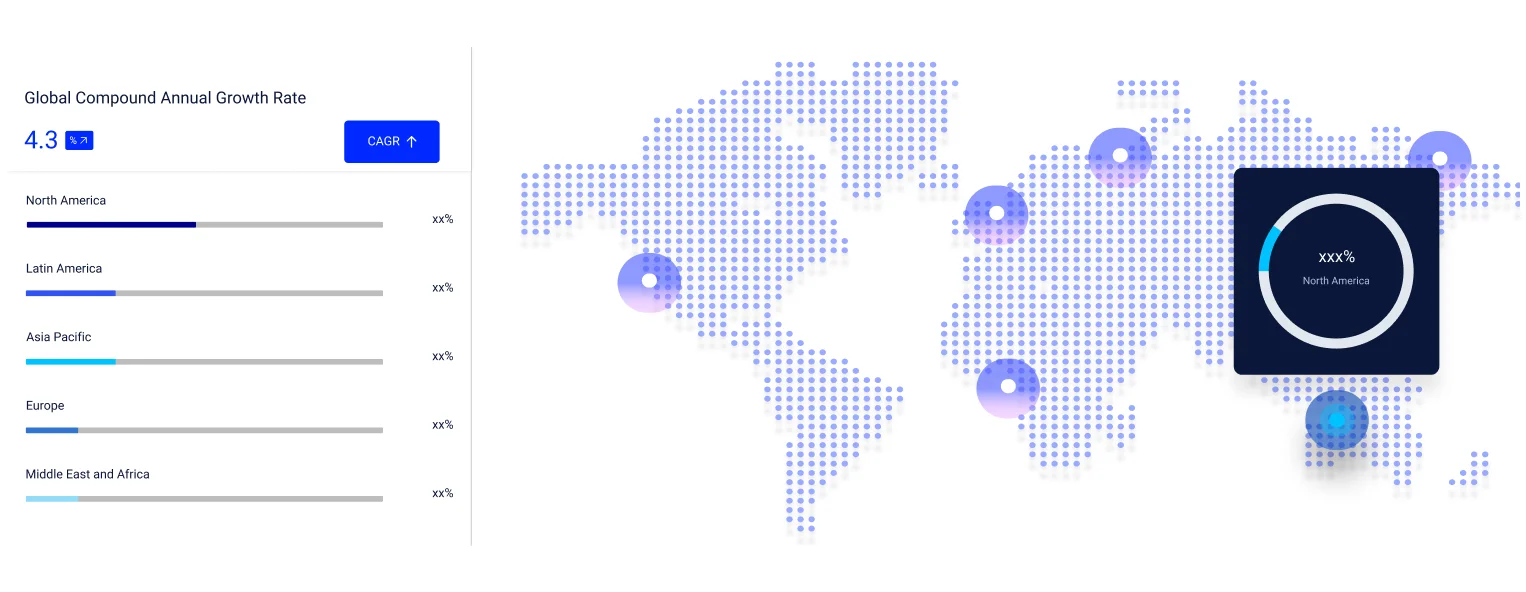
| CAGR 2026-2035 - Market by Region | Asia Pacific | 7.1% |
| CAGR 2026-2035 - Market by Country | India | 8.1% |
| CAGR 2026-2035 - Market by Country | China | 6.8% |
| CAGR 2026-2035 - Market by Product Type | Planetary Gear | 6.1% |
| CAGR 2026-2035 - Market by Distribution Channel | Direct | 6.0% |
| Market Share by Country 2025 | USA | XX% |
Konecranes received a USD 51.2 million order from the U.S. Navy for a 175-ton heavy-lift portal jib crane to be built in Wisconsin and installed at Portsmouth Naval Shipyard, featuring a customized design enabling operation on both straight and curved tracks with a modular jib configuration for future reconfiguration. This represented the company's seventh portal jib order under a Navy agreement first established in December 2019. Companies can leverage modular, reconfigurable heavy-lift crane designs to secure repeat long-term defence procurement contracts. Repeat awards of this kind reduce customer qualification cycles for future orders, since a shipyard already familiar with a supplier's engineering and safety documentation can move more quickly toward subsequent contract awards.
Columbus McKinnon completed its acquisition of Kito Crosby Limited from KKR-managed funds, financed in part through CD&R's USD 800 million Series A cumulative convertible preferred share investment, after clearing U.S. Department of Justice antitrust review in January 2026. The combined entity retains the Kito, Crosby, Harrington, Gunnebo Industries, Peerless, and eepos brands, with a newly formed leadership team including Yoshio Kito as Asia Pacific President. Companies can leverage brand-preserving post-merger integration to retain customer loyalty built around legacy product names during large-scale consolidation. This strategy contrasts with rebranding-heavy integrations elsewhere in the industrial sector, reflecting a bet that preserving brand equity reduces channel disruption for distributors and original equipment manufacturer partners accustomed to established product naming.
Alongside its Kito Crosby acquisition, Columbus McKinnon announced the sale of its U.S. power chain hoist manufacturing operations in Damascus, Virginia, and Lexington, Tennessee, to an affiliate of Pacific Avenue Capital Partners for USD 210 million plus a potential USD 25 million earn-out, with net cash proceeds of approximately USD 160 million expected to support debt reduction. Companies can leverage simultaneous acquisition-and-divestiture strategies to reduce product-line redundancy while funding larger-scale portfolio expansion. Directing divestiture proceeds toward debt reduction rather than discretionary spending signals a disciplined capital-allocation approach that can reassure credit rating agencies and lenders during periods of elevated leverage following major acquisitions.
TWG introduced the Pullmaster 40 M/H planetary winch, rated for 40,000 pounds of line-pull capacity, as the newest addition to its M & H product line targeting marine, industrial, recovery, energy, and natural resources applications, filling a capacity gap between its existing 25,000-pound and 50,000-pound models. TWG maintains more than one million units in operation globally under Dover Corporation, which reports approximately USD 7 billion in annual revenue. Companies can leverage targeted capacity-gap product launches to capture demand from customers underserved by existing lineup increments. This approach mirrors the incremental expansion strategy Columbus McKinnon and Konecranes have each pursued, suggesting that closing narrow capacity or portfolio gaps has become a common competitive lever across the lifting-equipment industry.
Following its Kito Crosby acquisition, completed in February 2026, and U.S. hoist divestiture, Columbus McKinnon projected pro forma combined net sales of USD 2.00 billion to USD 2.05 billion and adjusted EBITDA of USD 440 million to USD 460 million for fiscal 2026, with a target net leverage ratio below 4.0x by the end of fiscal 2028. Companies can leverage pro forma financial guidance following large transactions to give investors clear visibility into post-merger deleveraging timelines. Setting an explicit leverage target two fiscal years out gives analysts a concrete benchmark against which to measure integration progress, reducing the uncertainty that often accompanies large debt-financed acquisitions in capital-intensive industrial sectors.
Following the February 2026 acquisition close, Kito Crosby confirmed it would continue operating as the global leader of the lifting and securement industry, retaining its Kito, Crosby, Harrington, Gunnebo Industries, Peerless, and eepos brand identities while pursuing a stated vision of becoming a global leader in intelligent motion solutions. Companies can leverage multi-brand portfolio strategies to serve distinct regional and application-specific customer segments without diluting individual brand equity. Maintaining separate brand identities under one ownership structure also allows the combined entity to preserve existing distributor agreements and long-standing customer relationships built independently around each legacy brand.
Konecranes reported order intake up 13.4% in its April 2026 second-quarter results, with the company reaffirming its full-year 2026 guidance amid robust order activity across all business areas, building on momentum from its May 2026 U.S. Navy portal jib crane order. Companies can leverage diversified order books spanning defence, industrial, and commercial customers to sustain growth even amid sector-specific demand fluctuations. This diversified performance reinforces the company's resilience across cyclical industrial demand shifts. Reaffirming full-year guidance shortly after reporting double-digit order growth also signals management confidence that current momentum reflects durable demand rather than a temporary spike tied to a single large contract.
Following the Pullmaster 40 M/H winch's January 2026 launch, TWG General Manager Jason VanderMeer confirmed it was developed specifically to address customer demand for a mid-range capacity option, reinforcing the company's strategy of incrementally expanding its M & H Series to serve marine, industrial, and natural resources customers without requiring them to over-specify capacity. Companies can leverage direct customer feedback on capacity gaps to prioritize incremental product-line extensions over full lineup redesigns. Engineering teams that work closely with field sales and end customers can identify these narrow capacity gaps faster than broader market surveys would reveal, shortening development cycles for targeted product launches.
This Expert Market Research's Report titled "Hoist Market Report and Forecast 2026-2035" offers a detailed analysis of the market based on the following segments:
Market Breakup by Product Type
Key Insight: Worm Gear accounts for a substantial share of the hoist market, reflecting its established use across general-purpose industrial and commercial lifting applications. Planetary Gear is the fastest-growing product type segment at an estimated CAGR of 6.40%, reinforced by Dover Corp.'s TWG Inc. launching its Pullmaster 40 M/H planetary winch in January 2026 to fill mid-range capacity demand. Others captures specialty gear configurations serving niche lifting applications. As mid-range demand continues to expand, some manufacturers may increasingly favor planetary configurations even in capacity brackets traditionally served by worm gear designs, gradually narrowing the share gap between the two segments.
Market Breakup by Capacity
Key Insight: Up To 5000 lbs accounts for a substantial share of the market, reflecting widespread use across general industrial, warehousing, and light manufacturing applications. Above 15000 lbs is the fastest-growing capacity segment at an estimated CAGR of 6.70%, reinforced by Konecranes Abp's May 2026 delivery of a 175-ton heavy-lift portal jib crane to the U.S. Navy. 5000 to 10000 lbs and 10000 to 15000 lbs continue to see incremental product expansion targeting mid-range capacity demand, illustrated by TWG Inc.'s January 2026 Pullmaster 40 M/H winch launch. This mid-range bracket sits at the intersection of standard industrial lifting and emerging heavy-capacity needs, giving manufacturers an incentive to keep introducing incremental capacity options rather than large capability jumps between established product tiers.
Market Breakup by Operation
Key Insight: Electric accounts for a substantial share of the market, reflecting its widespread adoption across modern industrial and commercial lifting applications. Hydraulic is growing at a fast pace, supported by continued demand for heavy-lift capability in defence and industrial applications, illustrated by Konecranes Abp's May 2026 U.S. Navy portal jib crane order. Pneumatic and Manual continue to serve specialized applications requiring explosion-proof or power-independent operation. As facilities increasingly digitize lifting operations, demand for electric hoists compatible with remote monitoring and automated load-control systems is expected to reinforce electric's existing share advantage over other operation types.
Market Breakup by Hoist Rope
Key Insight: Chain Hoist accounts for a substantial share of the market, reinforced by the scale of Columbus McKinnon Corp.'s U.S. power chain hoist operations, divested in January 2026 for USD 210 million as part of its broader portfolio consolidation strategy. Wire or Rope Hoist is growing at a fast pace, supported by rising demand for heavy-capacity lifting equipment such as Konecranes Abp's 175-ton portal jib crane delivered to the U.S. Navy in May 2026. Chain hoists remain the preferred choice for continuous-duty, lower-headroom industrial settings, while wire or rope systems are increasingly specified where longer lift heights and higher-capacity spooling are operationally necessary.
Market Breakup by End Use
Key Insight: Construction accounts for a substantial share of the market, reflecting sustained infrastructure development and building activity worldwide. Aerospace and Defence is the fastest-growing end use segment at an estimated CAGR of 6.90%, reinforced by Konecranes Abp's USD 51.2 million U.S. Navy portal jib crane order disclosed in May 2026. Shipping and Marine and Oil and Gas continue to represent substantial demand tied to heavy-lift equipment applications, illustrated by TWG Inc.'s January 2026 Pullmaster winch launch targeting marine and energy customers. Automotive and Railway, Transportation and Logistics, Mining, Agriculture and Forestry, and Others collectively continue to represent steady, application-specific demand across diverse heavy-lifting use cases. This breadth of end-use exposure gives hoist manufacturers a natural hedge against a downturn in any single vertical, since softness in one application area is often offset by resilience in another.
Market Breakup by Distribution Channel
Key Insight: Indirect accounts for a substantial share of the market, reflecting manufacturers' reliance on established distributor and dealer networks to reach original equipment manufacturers, industrial distributors, and end users across diverse regions. Direct is growing at a comparatively faster pace as manufacturers increasingly pursue direct sales relationships for large-scale defence and heavy-industrial procurement contracts, such as Konecranes Abp's direct U.S. Navy crane orders secured in May 2026. Indirect networks remain especially valuable for reaching smaller regional buyers who require local stocking and after-sales support that individual manufacturers cannot economically provide on their own, particularly across geographically dispersed end markets.
Market Breakup by Region
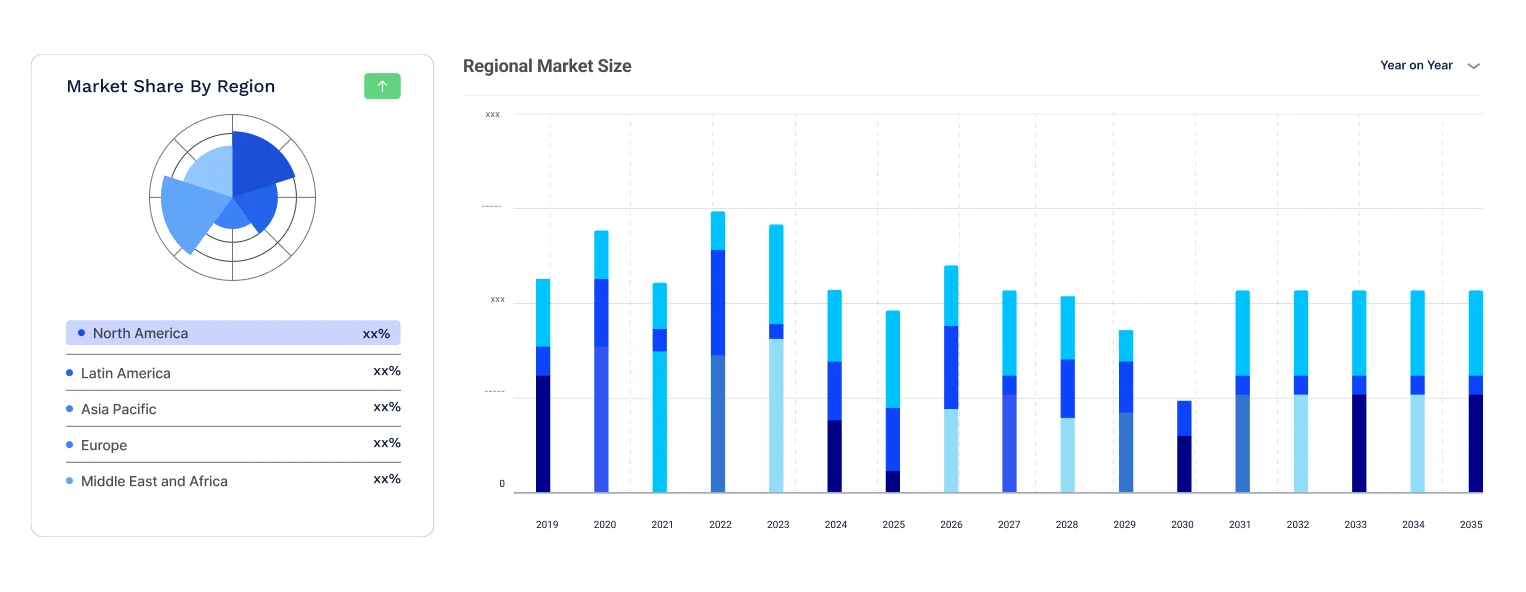
Key Insight: North America accounts for a substantial share of the hoist market, reinforced by Columbus McKinnon Corp.'s U.S.-based power chain hoist operations and Konecranes Abp's ongoing U.S. Navy crane procurement program. Asia Pacific is the fastest-growing regional market, supported by expanding manufacturing and infrastructure investment, with Kito Crosby's combined entity naming Yoshio Kito as Asia Pacific President following the February 2026 acquisition close. Europe continues to represent substantial demand tied to established industrial and marine lifting equipment manufacturing. Latin America and the Middle East and Africa continue to represent smaller, steadily growing demand pockets tied to expanding industrial and infrastructure investment. Together, these regions illustrate a market where mature demand in North America and Europe coexists with faster industrial buildout in Asia Pacific and early-stage investment across Latin America and the Middle East and Africa.
Read more about this report - REQUEST FREE SAMPLE COPY IN PDF
Worm Gear continues to account for a substantial share of the market, reflecting its established use across general-purpose industrial lifting applications. Worm gear systems remain the default choice for general-purpose applications where operators prioritize mechanical simplicity and lower maintenance requirements over the faster line speeds that planetary gear configurations typically offer. This reliability and ease of servicing continue to make worm gear the preferred specification for standard industrial and warehousing hoist installations across cost-conscious end users.
Planetary Gear is growing at a fast pace at a projected CAGR of 6.40%, reinforced by Dover Corp.'s TWG Inc. launching its Pullmaster 40 M/H planetary winch in January 2026 to fill mid-range capacity demand between existing 25,000-pound and 50,000-pound models. Manufacturers continue to expand planetary gear lineups to serve marine, industrial, and natural resources customers seeking higher line-pull capacity and faster operating speeds without over-specifying equipment, positioning planetary gear as the segment best placed to capture incremental heavy-duty demand.
Up To 5000 lbs continues to account for a substantial share of the market, reflecting widespread general industrial and warehousing use. This capacity bracket serves the broadest base of manufacturing, logistics, and light-industrial end users, whose lifting requirements rarely exceed standard operational thresholds. Equipment manufacturers continue to prioritise this bracket for volume production, standardised configurations, and competitive pricing, sustaining its position as the market's foundational capacity segment even as demand for higher-capacity equipment accelerates elsewhere in the market.
Above 15000 lbs is growing at a fast pace at a projected CAGR of 6.70%, illustrated by Konecranes Abp's May 2026 delivery of a 175-ton heavy-lift portal jib crane for U.S. Navy shipyard operations. Growth in this bracket is closely tied to expanding warehousing, logistics, and light manufacturing capacity across established industrial hubs, alongside demand disproportionately shaped by defence and heavy-industrial procurement cycles rather than the broader industrial base driving volume in lower capacity brackets.
Chain Hoist continues to account for a substantial share of the market, reinforced by the scale of Columbus McKinnon Corp.'s U.S. power chain hoist operations divested for USD 210 million in January 2026. Manufacturers continue to prioritise chain-hoist reliability for continuous-duty industrial applications where wire-rope alternatives see comparatively less specification. This established manufacturing base and installed equipment footprint continue to support chain hoist's leading position across general industrial lifting applications, even as heavier-capacity use cases increasingly favour wire-rope alternatives.
Wire or Rope Hoist is growing at a fast pace, supported by heavy-capacity crane demand such as Konecranes Abp's 175-ton U.S. Navy portal jib crane order. Wire or rope hoist systems are typically specified where longer lifting heights or higher line speeds are required, making the two rope types complementary rather than directly substitutable across most industrial use cases. Continued growth in defence and heavy-industrial procurement is expected to keep wire-rope systems as the preferred choice for the market's highest-capacity lifting applications.
Construction continues to account for a substantial share of the market, reflecting sustained global infrastructure development. Governments across multiple regions continue to expand transport and utility infrastructure budgets, sustaining steady construction-linked hoist demand across residential, commercial, and public infrastructure projects. This established, broad-based demand base continues to provide hoist manufacturers with a stable revenue foundation, supporting continued investment in general-purpose product lines even as defence-linked orders increasingly capture a disproportionate share of near-term growth.
Aerospace and Defence is growing at a fast pace at a projected CAGR of 6.90%, reinforced by Konecranes Abp's USD 51.2 million U.S. Navy portal jib crane order secured in May 2026, its seventh under a defence procurement agreement dating to December 2019. This dynamic creates a two-speed market structure, where defence-linked orders deliver outsized growth despite representing a smaller absolute base than construction, reflecting sustained government investment in shipyard modernisation and heavy-lift naval infrastructure across allied nations.
Electric continues to account for a substantial share of the market, reflecting its widespread adoption across modern industrial and commercial lifting applications. Facility operators continue to favour electric hoists for their lower operating costs, precise load control, and ease of integration with automated material-handling systems. This combination of efficiency and controllability continues to make electric the default specification across warehousing, manufacturing, and general commercial lifting applications where consistent indoor power access is available.
Hydraulic is growing at a fast pace, supported by continued demand for heavy-lift capability, illustrated by Konecranes Abp's May 2026 U.S. Navy portal jib crane order. Hydraulic systems remain preferred for outdoor and heavy-duty applications requiring high force density, particularly where reliable electric power is unavailable. Pneumatic and manual variants, though smaller in overall share, remain indispensable in explosion-prone environments and remote sites lacking reliable power access, underscoring that operation-type selection is driven by site constraints as much as cost.
Indirect continues to account for a substantial share of the market, as manufacturers rely on distributor and dealer networks spanning original equipment manufacturers, industrial resellers, and end users. Indirect channels remain the more cost-efficient route for reaching the broad base of smaller industrial and commercial buyers, whose purchasing volumes rarely justify dedicated direct sales coverage. Manufacturers continue to invest in distributor training and inventory support programs to maintain consistent product availability and service quality across these indirect relationships.
Direct is growing at a comparatively faster pace as manufacturers pursue direct sales relationships for large-scale defence and heavy-industrial procurement, exemplified by Konecranes Abp securing its U.S. Navy crane orders directly in May 2026. This shift toward direct engagement reflects the growing complexity of large-scale procurement contracts requiring close manufacturer involvement throughout design, delivery, and installation. Most manufacturers are likely to maintain a hybrid distribution model, reserving direct engagement for their largest and most technically demanding accounts.
North America commands a substantial share of the market. This is reinforced by Columbus McKinnon Corp.'s U.S.-based lifting equipment operations and Konecranes Abp's continued U.S. Navy crane procurement program, including its USD 51.2 million order disclosed in May 2026 for installation at Portsmouth Naval Shipyard in Maine.
Asia Pacific is emerging as the fastest-growing region, supported by expanding manufacturing and infrastructure investment, with the combined Kito Crosby entity naming Yoshio Kito as Asia Pacific President following the February 2026 completion of Columbus McKinnon Corp.'s acquisition. Europe continues to represent substantial demand tied to its established industrial and marine lifting equipment manufacturing base.
The industry is consolidated, with hoist market companies ranging from large diversified industrial conglomerates to specialized lifting-equipment manufacturers competing across product type, capacity, operation, and end use segments. Established players operate across the full hoist value chain, from gear and winch mechanism design through chain and wire rope hoist manufacturing for construction, defence, marine, and industrial customers.
Competitive dynamics among hoist market players are increasingly shaped by the scale of merger-driven portfolio consolidation, the depth of heavy-capacity crane and winch offerings, and the strength of long-term defence and industrial procurement relationships. Manufacturers are investing in capacity-gap product launches, brand-preserving acquisitions, and reconfigurable heavy-lift designs to secure long-term customer relationships.
Founded in 1875 and headquartered in Charlotte, North Carolina, United States, Columbus McKinnon manufactures hoists, cranes, and lifting equipment worldwide. The company completed its acquisition of Kito Crosby Limited in February 2026, financed in part through a USD 800 million preferred share investment, while also selling its Damascus, Virginia and Lexington, Tennessee power chain hoist manufacturing facilities to Pacific Avenue Capital Partners.
Founded in 1994 and headquartered in Hyvinkaa, Finland, Konecranes manufactures cranes, hoists, and lifting equipment for industrial and marine applications worldwide. The company disclosed in May 2026 that it had received a USD 51.2 million order from the U.S. Navy for a 175-ton heavy-lift portal jib crane, its seventh such order under an agreement dating to December 2019.
Founded in 1932 and headquartered in Yokohama, Japan, KITO manufactures chain hoists and lifting equipment distributed globally. Following Columbus McKinnon Corp.'s February 2026 acquisition of Kito Crosby Limited, the KITO brand continues operating within the combined entity's multi-brand lifting portfolio, with Yoshio Kito named Asia Pacific President of the newly formed leadership team.
Founded in 1955 and headquartered in Downers Grove, Illinois, United States, Dover Corporation manufactures winches, hoists, and hydraulic lifting systems through its TWG Inc. subsidiary, which maintains more than one million units in operation globally. TWG launched its Pullmaster 40 M/H planetary winch in January 2026, rated for 40,000 pounds of line-pull capacity, to fill a mid-range gap in its M & H product line.
Other key players in the hoist market include Hitachi Ltd. (Hitachi Industrial Equipment Systems Co., Ltd.), Ingersoll Rand Inc., Demag Cranes & Components GmbH, Donati Sollevamenti S.r.l., LIFTKET Hoffmann GmbH, and Electrolift, Inc., among others.
*Please note that this is only a partial list; the complete list of key players is available in the full report. Additionally, the list of key players can be customized to better suit your needs.*
Unlock the latest insights with our hoist market trends 2026 report. Discover regional growth patterns, product type and end use trends, and key industry players. Stay ahead of competition with trusted data and expert analysis. Download your free sample report today and drive informed decisions in the market.


Upto 15% Off
USD
$2499 $2249
$3999 $3599
$4999 $4249
$5999 $5099


*While we strive to always give you current and accurate information, the numbers depicted on the website are indicative and may differ from the actual numbers in the main report. At Expert Market Research, we aim to bring you the latest insights and trends in the market. Using our analyses and forecasts, stakeholders can understand the market dynamics, navigate challenges, and capitalize on opportunities to make data-driven strategic decisions.*
In 2025, the market reached an approximate value of USD 3.00 Billion.
The market is projected to grow at a CAGR of 5.50% between 2026 and 2035.
The market is assessed to witness healthy growth in the forecast period to reach around USD 5.12 Billion in 2035.
The different types of products in the market are planetary gear, and worm gear, among others.
The different segments based on the operation of hoist considered in the market are hydraulic, electric, pneumatic, and manual.
The different distribution channels in the market are direct and indirect.
The different regions covered in the market report are North America, Europe, Asia Pacific, Latin America, Middle East and Africa.
The key players in the market include Columbus McKinnon Corp., Konecranes Abp, KITO Corp., Dover Corp. (TWG Inc.), Hitachi Ltd. (Hitachi Industrial Equipment Systems Co., Ltd.), Ingersoll Rand Inc., Demag Cranes & Components GmbH, Donati Sollevamenti S.r.l., LIFTKET Hoffmann GmbH, and Electrolift, Inc., among others.
Manufacturers face integration complexity from large-scale mergers and acquisitions, cyclical defence and industrial procurement demand, and the capital-intensive challenge of maintaining broad capacity-range product portfolios.
Pursuing brand-preserving mergers and acquisitions to consolidate lifting-equipment portfolios, expanding capacity-gap product lines, and securing long-term defence and heavy-industrial procurement relationships.
Explore our key highlights of the report and gain a concise overview of key findings, trends, and actionable insights that will empower your strategic decisions.
| REPORT FEATURES | DETAILS |
| Base Year | 2025 |
| Historical Period | 2019-2025 |
| Forecast Period | 2026-2035 |
| Scope of the Report |
Historical and Forecast Trends, Industry Drivers and Constraints, Historical and Forecast Market Analysis by Segment:
|
| Breakup by Product Type |
|
| Breakup by Capacity |
|
| Breakup by Operation |
|
| Breakup by Hoist Rope |
|
| Breakup by End Use |
|
| Breakup by Distribution Channel |
|
| Breakup by Region |
|
| Market Dynamics |
|
| Competitive Landscape |
|
| Companies Covered |
|
Datasheet
One User
USD 2,499
USD 2,249
tax inclusive*
Single User License
One User
USD 3,999
USD 3,599
tax inclusive*
Five User License
Five User
USD 4,999
USD 4,249
tax inclusive*
Corporate License
Unlimited Users
USD 5,999
USD 5,099
tax inclusive*
*Please note that the prices mentioned below are starting prices for each bundle type. Kindly contact our team for further details.*
Flash Bundle
Small Business Bundle
Growth Bundle
Enterprise Bundle
*Please note that the prices mentioned below are starting prices for each bundle type. Kindly contact our team for further details.*
Flash Bundle
Number of Reports: 3
20%
tax inclusive*
Small Business Bundle
Number of Reports: 5
25%
tax inclusive*
Growth Bundle
Number of Reports: 8
30%
tax inclusive*
Enterprise Bundle
Number of Reports: 10
35%
tax inclusive*
How To Order

Select License Type
Choose the right license for your needs and access rights.

Click on ‘Buy Now’
Add the report to your cart with one click and proceed to register.

Select Mode of Payment
Choose a payment option for a secure checkout. You will be redirected accordingly.
Strategic Solutions for Informed Decision-Making
Gain insights to stay ahead and seize opportunities.

Get insights & trends for a competitive edge.

Track prices with detailed trend reports.

Analyse trade data for supply chain insights.

Leverage cost reports for smart savings

Enhance supply chain with partnerships.

Connect For More Information
Our expert team of analysts will offer full support and resolve any queries regarding the report, before and after the purchase.
Our expert team of analysts will offer full support and resolve any queries regarding the report, before and after the purchase.
We employ meticulous research methods, blending advanced analytics and expert insights to deliver accurate, actionable industry intelligence, staying ahead of competitors.
Our skilled analysts offer unparalleled competitive advantage with detailed insights on current and emerging markets, ensuring your strategic edge.
We offer an in-depth yet simplified presentation of industry insights and analysis to meet your specific requirements effectively.




