

Consumer Insights
Uncover trends and behaviors shaping consumer choices today
Procurement Insights
Optimize your sourcing strategy with key market data
Industry Stats
Stay ahead with the latest trends and market analysis.
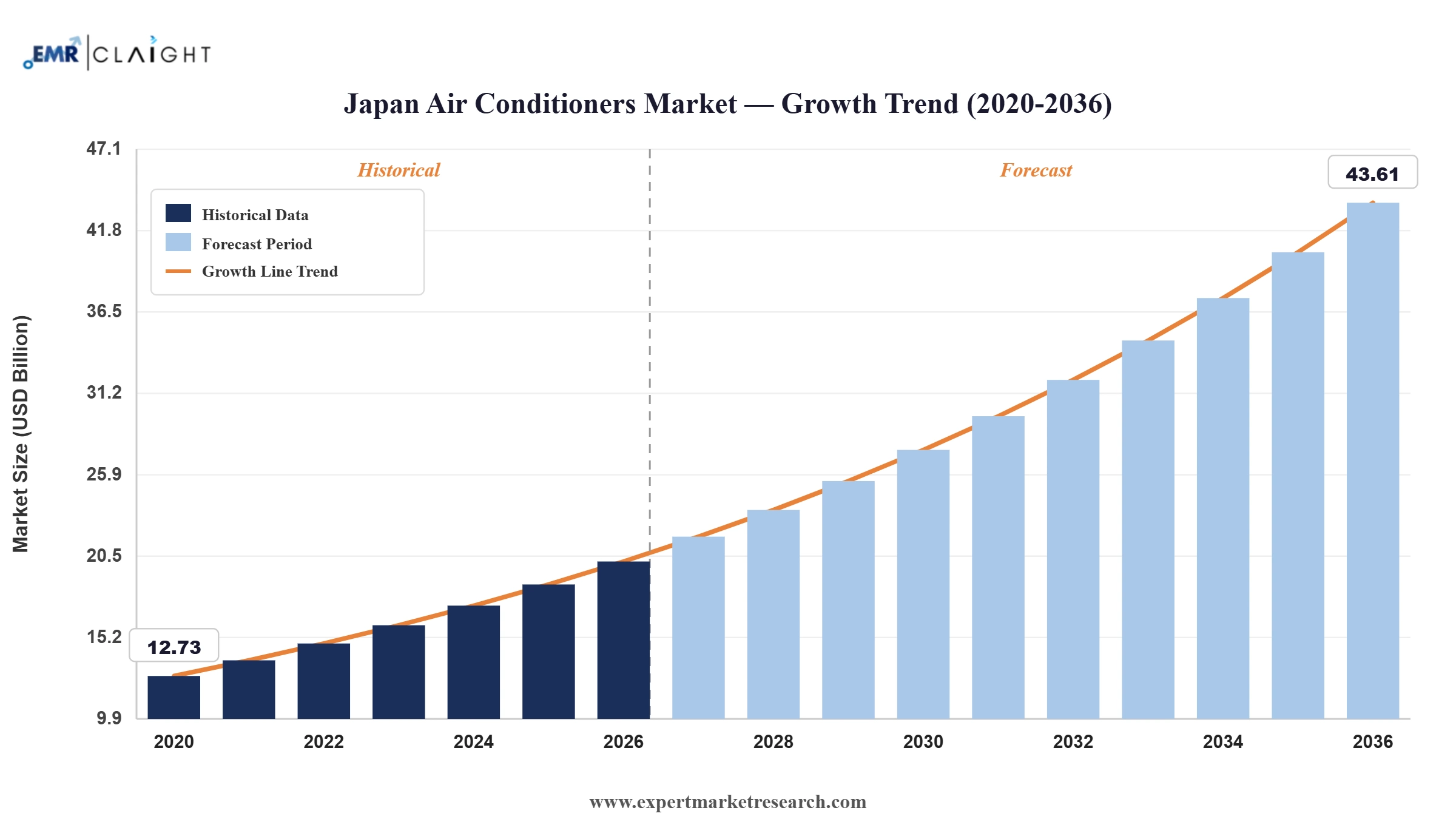
The Japan air conditioners market attained a value of USD 18.70 Billion in 2025 and is projected to expand at a CAGR of 8.00% through 2035. The market is further expected to achieve USD 40.37 Billion by 2035. The increased electricity consumption during the summer season is prompting consumers to buy energy-efficient inverters, thus providing an opportunity for differentiation in terms of controls, low load performance and outdoor unit construction that can withstand harsh Japanese climates.
Top Runner standards in Japan that will be effective in 2027 are encouraging manufacturers to invest in more efficient compressors, heat exchangers and controls. Cooling in data centers is yet another opportunity for suppliers, as companies like Mitsubishi Electric view IT cooling as one of its pillars of future growth along with direct expansion system and building management integration.
The Japan air conditioners market is at the early stage of product upgrade cycle as the companies will have to meet more stringent standards on energy efficiency starting fiscal 2027. Daikin’s September 2025 Urusara X R series offer 4.0 kW product features APF of 7.3, while upgrades in its controls reduce electricity consumption at the start of cooling by 5% and heating by 8%. Additionally, manufacturers are reducing minimum cooling capacity to about 40%, aiming to enable low-power operation in highly insulated buildings and during nighttime.
At the same time, competitive advantage across the Japan air conditioners market scope is shifting towards systems capable of meeting the compliance requirements and delivering value at building level. Daikin VRV 7 is changing Japanese commercial multi-split systems industry by switching from R410A refrigerant to R32, which has only one-third GWP compared to R410A, while improving energy efficiency, ease of installation, coordination of the equipment and indoor-air quality monitoring. Following this trend, in October 2025, MHI Thermal Systems won a 2025 GOOD DESIGN AWARD for its energy-efficient Hyper Multi LXZ air-conditioning series.
Read more about this report - REQUEST FREE SAMPLE COPY IN PDF
A new model of SL5 controller was launched by MHI Thermal Systems capable of monitoring up to 256 devices. HVAC companies can therefore design scalable smart-control systems, combining many AC units, heat pumps, and facility management.
Daikin launched its new line of Ururu Sarara X heat pumps for well-insulated houses with increased efficiency of compressors at low loads. Companies could design low-load heat pumps for energy-efficient residential houses, boosting demand in the Japan air conditioners market.
Mitsubishi Electric bought out APAC and COMPAC, improving HVAC installation and maintenance services for data center operations in Europe. HVAC manufacturers can move ahead with their products by installing and maintaining them, widening the Japan air conditioners market scope.
Daikin introduced Multi Jet and FIVE STAR ZEAS products, solving the issues related to large space, humidity, energy consumption, and reliability in Japan. Manufacturers can cater to factories, office buildings, stores, and sports places with products that solve the problem of heat, humidity, energy, and maintenance.
The Japan 2027 Top Runner program requirements are compelling manufacturers to make changes in design of compressors, heat exchangers, and inverter controllers instead of making small specification improvements. According to the Japan air conditioners market analysis, manufacturers are required to improve the unit's efficiency by 13.8% to 34.7% depending on the model, compared to the current standards. Mitsubishi Electric is working on creating intelligent power module using SiC semiconductor technology. Similarly, in August 2023, Johnson Controls-Hitachi launched air365 Max, an energy-efficient VRF system designed to reduce operating costs and refrigerant use.
Manufacturers are increasingly integrating AI, human presence sensing, and environmental learning technologies into the design to increase energy performance, strengthening demand in the Japan air conditioners market. In January 2026, Asahi Kasei developed a compact CO₂ sensor enabling demand-controlled HVAC systems and supporting energy-efficient building operations. Similarly, the Panasonic Eolia X model incorporates sensors and AI technology to learn occupancy status, activity levels, room environment, and preferred thermal setting.
Development of power semiconductors is becoming an increasingly vital aspect across product development trends in the Japan air conditioners market, especially in regard to the efficiency of the inverter and hence power consumed by the compressor. In April 2025, NEDO revealed the development of the first intelligent power module featuring silicon-carbide SiC chip in addition to standard silicon used in the inverter circuits of the compressor in air conditioners by Mitsubishi Electric. Further, in June 2026, Mitsubishi Electric announced plans to ship fifth-generation SiC-MOSFET samples, reducing on-resistance by approximately 25% for improved xEV efficiency.
As temperatures become harsher, manufacturers in the Japan air conditioners market are improving their outdoor unit, compressor control, and heat exchange system designs, rather than designing outdoor units in accordance with average temperatures. For instance, in February 2026, JEXSYS launched a CO₂ heat pump producing 130°C hot water, targeting industrial processing applications requiring high-temperature heat. Such products can operate at the temperatures of up to 46°C in summer and -25°C in winter for the outdoor unit, depending on the product specification.
Manufacturers are no longer limited to simple air conditioning and are turning to energy recovery, humidification management, and the optimization of heating and cooling processes under varying conditions. The Panasonic Eolia X series, for instance, makes use of the company's Ene-Charge technology that captures compressor waste heat to use it for heating and cooling, along with its Eco-Inverter controls that help to cut electricity consumption when there is low output. Daikin also uses the same approach through humidity-based cooling and energy-saving operations. Following such trends in the Japan air conditioners market, in March 2024, MHI Thermal Systems launched 31 residential air-conditioner models featuring AI controls, sensors, smartphone connectivity, and energy-efficient operation.
The Expert Market Research's report titled “Japan Air Conditioners Market Report and Forecast 2026-2035” offers a detailed analysis of the market based on the following segments:
Market Breakup by Type
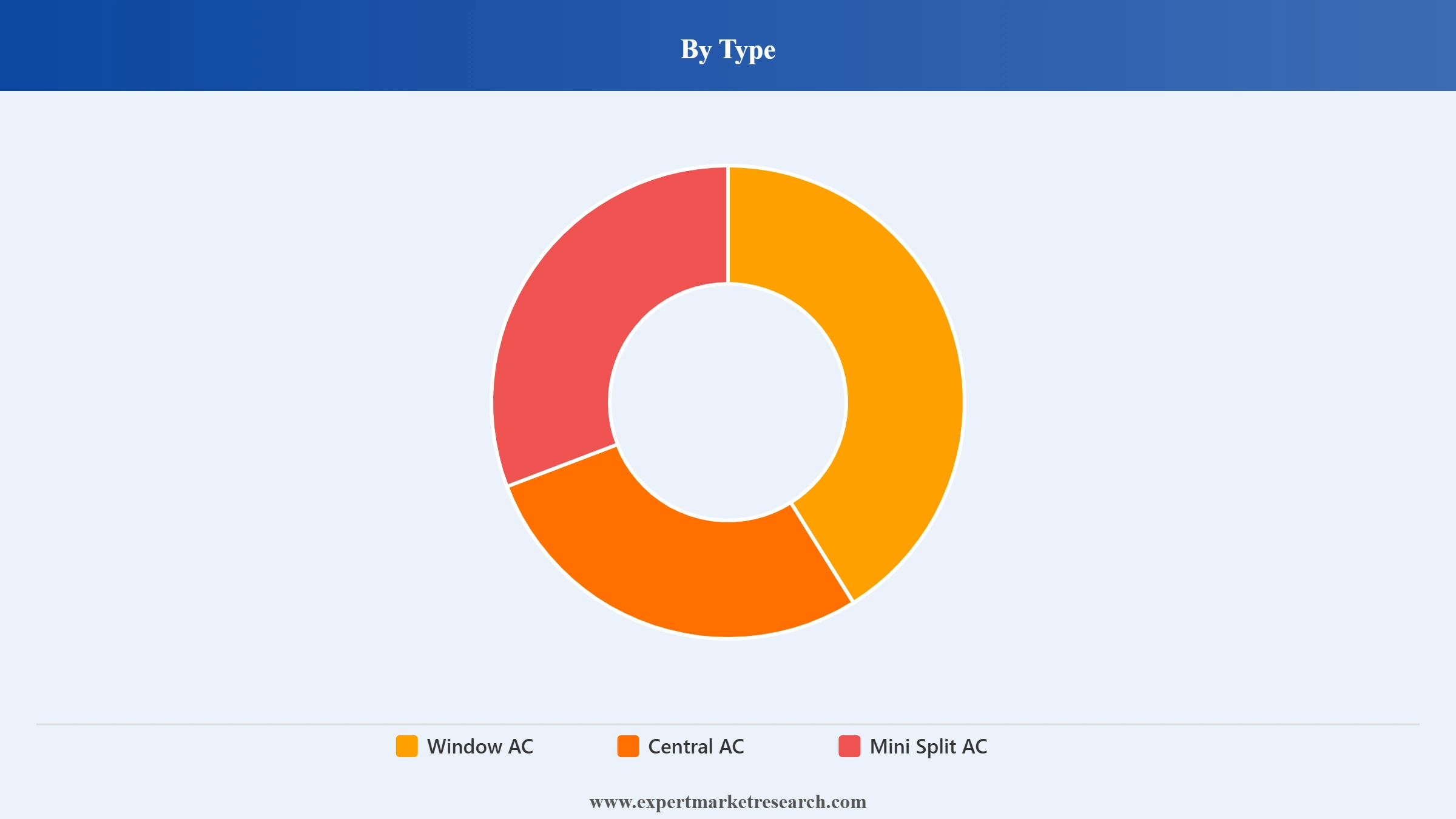
Key Insight: Window air conditioning is significant in situations where consumers emphasize installation simplicity and do not require any major building modifications for cooling their space, accelerating the overall Japan air conditioners market expansion. The mini-split air conditioning system has an advantage of room zonation, inverter efficiency, small space requirement, and replaceability, and therefore, it is the leading type in the residential sector. The central air conditioning system finds its use in offices, hotels, hospitals, and larger construction sites that need coordinated ventilation. There are other types of air conditioning systems that provide cooling for different situations.
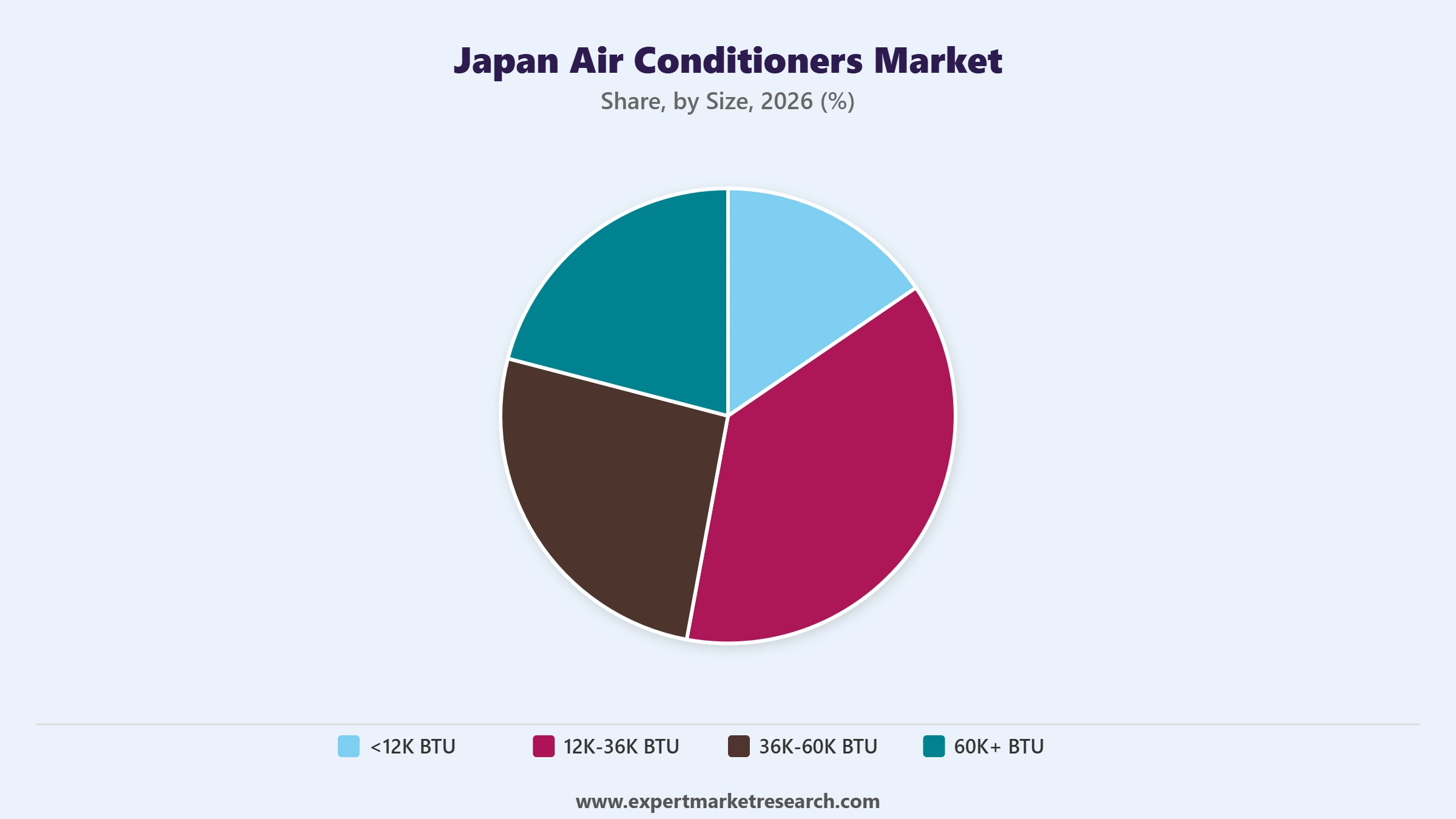
Market Breakup by Size
Key Insight: As per the Japan air conditioners market report, the <12K BTU segment is advantaged by the Japanese style of having small-sized rooms and apartments with the need for precise capacity matching in residential settings. The 12K-36K BTU units benefit from large sized homes, open floor plans, restaurants, and small commercial establishments that need powerful cooling. The 36K-60K BTU unit is designed for larger retail, hospitality, office, and institutional establishments where the higher cooling load justifies centralization or multizone designs. The 60K + BTU unit targets large-scale establishments, industrial buildings, data centers, and large-scale commercial cooling projects.
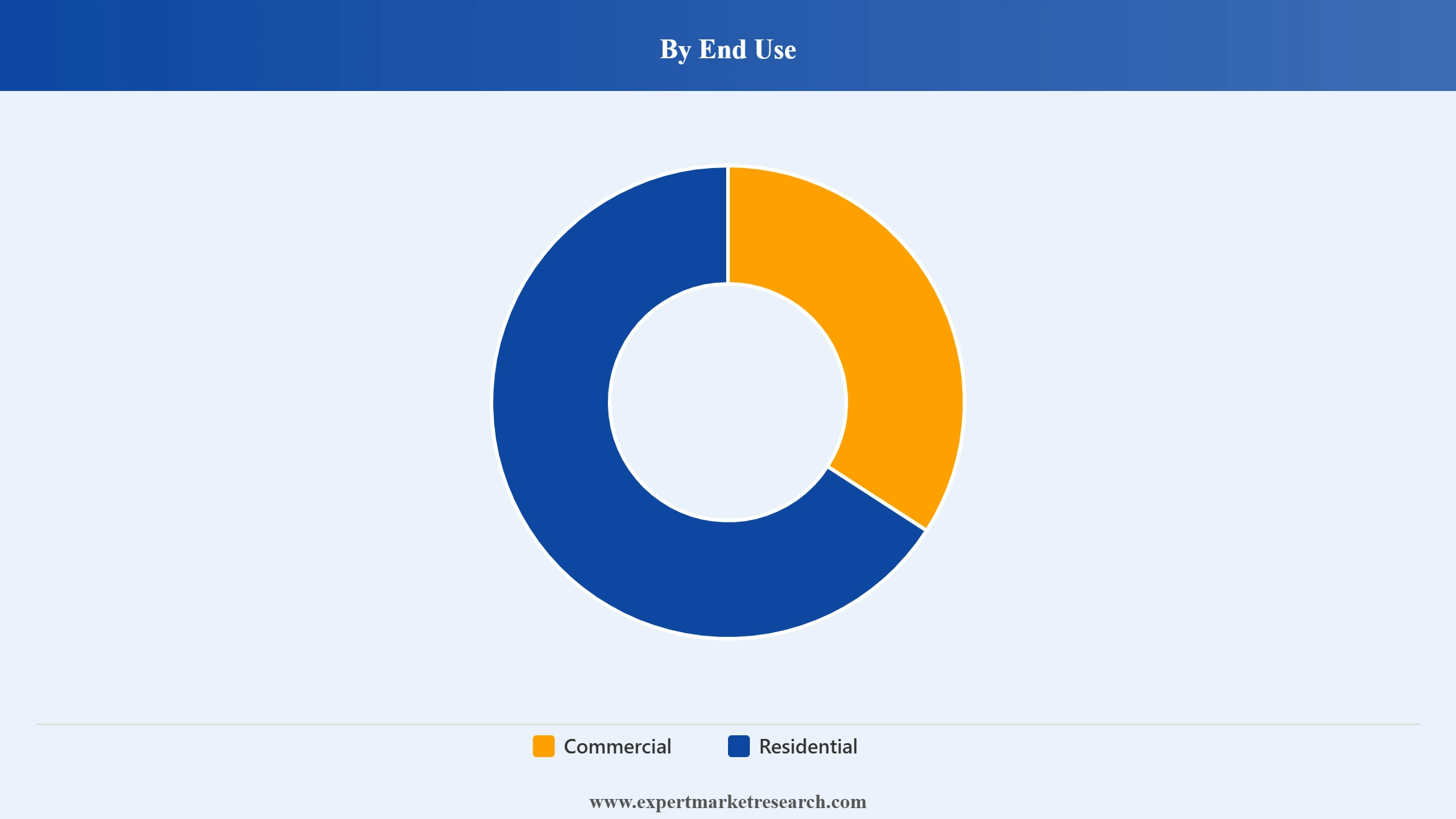
Market Breakup by End Use
Key Insight: The residential end use category dominates the Japan air conditioners market through repeat purchase demand, small room needs, zoning independence, and customer desire for more efficient heating and cooling. The commercial market is developing through office remodeling, hotel developments, healthcare facilities, retail upgrades, and special cooling needs. Customers in the residential market tend to be concerned with low noise levels, efficiency of space usage, control, and installation, whereas commercial customers are generally more concerned about reliability, monitoring, service, and longevity of equipment.
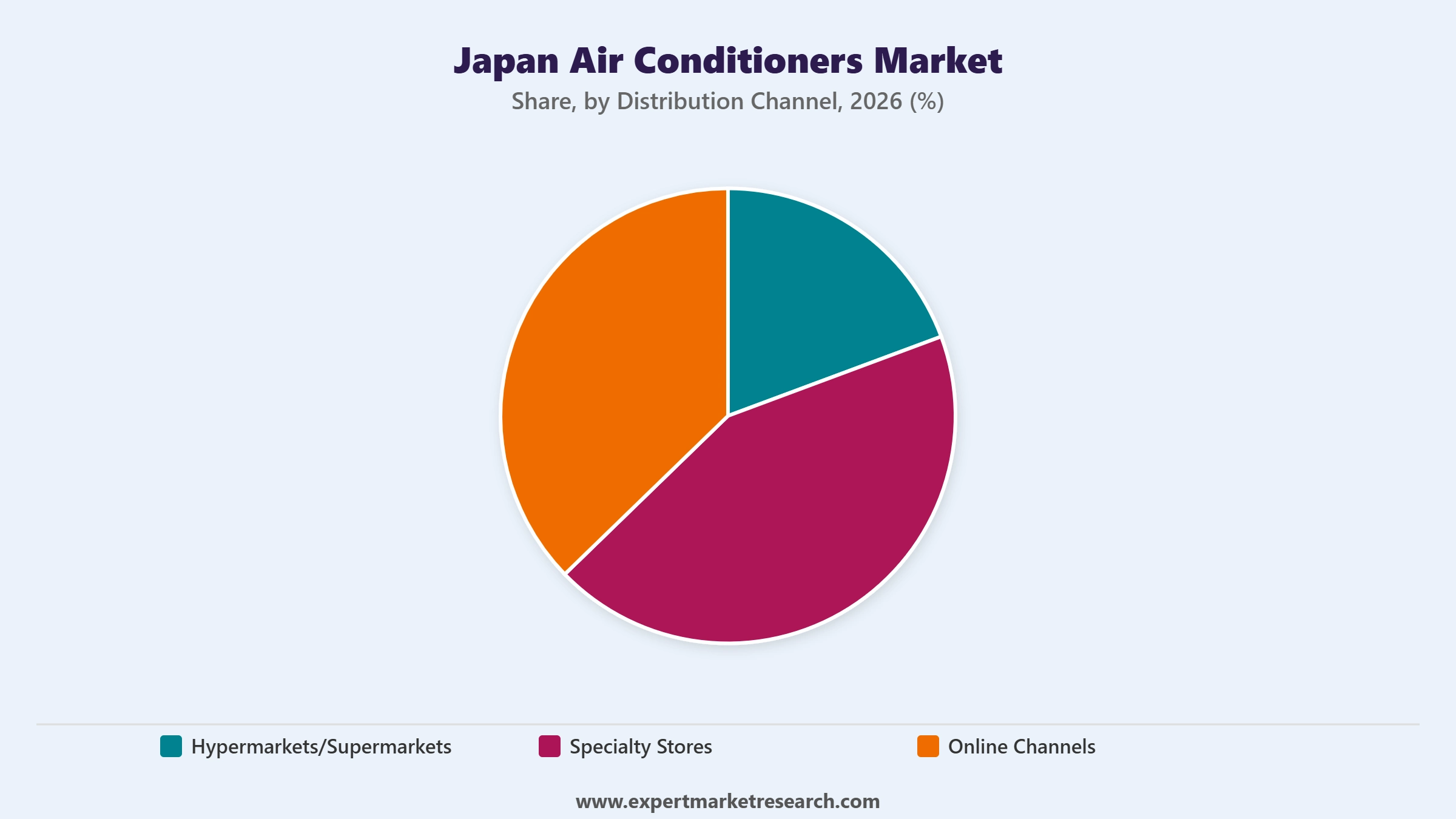
Market Breakup by Distribution Channel
Key Insight: Hypermarkets and supermarkets continue attracting customers who are interested in getting good prices, recognized brands and comparisons among typical residential models. Specialty stores continue to be valuable since technical advice, installation coordination and after-sales services matter in making the decision to buy an air conditioning system. Online marketing channels are increasingly playing a crucial role due to greater specification knowledge, price comparison and replacement convenience, stimulating Japan air conditioners market opportunities. Other marketing channels include manufacturers, contractors, and project distributors.
Read more about this report - REQUEST FREE SAMPLE COPY IN PDF
By type, mini split AC dominates the market due to compact housing and zoning flexibility
The prevalence of mini split AC is due to the fact that Japanese houses prioritize room-level temperature control, small size of the outdoor unit and ease of installation. This type of system is suitable for standalone buildings and apartments that cannot use duct work effectively. Moreover, manufacturers in the Japan air conditioners market enjoy high level of replacement needs since inverter mini split is capable of regulating temperature of the occupied room independently and thus reduce electricity consumption. In January 2025, Panasonic launched OASYS, a residential central air-conditioning system designed to reduce heating and cooling energy consumption by over 50%.
Read more about this report - REQUEST FREE SAMPLE COPY IN PDF
The most rapidly growing AC type is central AC as office, hotel, hospital, retail buildings and large-scale residential complexes need temperature coordination, boosting growth in the Japan air conditioners market. In case of a centralized system, facility owners can coordinate cooling with ventilation and other building systems. The demand for central systems is driven by facilities which have several zones which need equal indoor conditions and equipment room for larger equipment. Thus, manufacturers focus on developing variable speed technology and modularity.
By size, the <12K BTU segment accounts for the dominant share in the market due to compact residential room requirements
Systems below 12K BTU are prevalent since Japanese rooms tend to be small and require precise cooling without large-scale systems designed for buildings. It includes various bedroom systems, living space systems, apartments, and single offices, boosting the Japan air conditioners market growth. Systems of such sizes enable an exact matching of capacities to the load in a room. In addition, low-capacity inverter systems enable efficient operation under partial loads which is especially relevant when the cooling needs fluctuate during the day. Manufacturers are capable of providing a wide range of models in this segment, while retailers enjoy the advantage of high replacement demand. In March 2026, SHARP launched India’s first window AC with active air purification, combining Plasmacluster technology with high-temperature cooling performance.
Read more about this report - REQUEST FREE SAMPLE COPY IN PDF
12K-36K BTU is the fastest growing capacity segment in the Japan air conditioners market due to rising demand for larger living spaces, open interiors, small offices, restaurants, and multifunctional rooms. Consumers require greater cooling capacity while preserving zoning capabilities and inverter energy efficiency features which make middle capacity systems attractive for replacement and installation. Manufacturers continue developing compressors, heat exchangers, and control systems in order to ensure performance under variable loadings as well as increasing capacity.
Residential end use continues to dominate the market due to recurring replacement and room-level cooling demand
The residential end-use segment prevails since air conditioning systems are highly widespread in Japanese dwellings. Consumers change room units in favor of more effective seasonally. Room units are preferred in detached houses and apartments as their occupancy and heating needs vary between households. Companies in the Japan air conditioners market can cater to this demand with the help of small-sized indoor units, inverter compressors, humidity regulation systems and interconnected appliances. In March 2023, MHI Thermal Systems announced 22 residential air-conditioner models featuring AI sensors, smart controls, energy efficiency, and enhanced low-temperature heating.
Read more about this report - REQUEST FREE SAMPLE COPY IN PDF
The commercial end-use segment experiences fast growth in the Japan air conditioners industry due to need in more coordinated functioning of HVAC in offices, hotels, healthcare facilities, shopping centers and mixed buildings. Owners of the facilities are looking for air conditioning systems providing possibilities for zoning, centralization, demand management, and reliable functioning under different occupancy rates. Commercial consumers pay close attention to maintainability, redundancies, and system capability to integrate with building management systems. In April 2026, AKAI launched NXT inverter ACs with BEE 2026 ratings, offering 55°C cooling, multiple capacities, and enhanced energy efficiency.
By distribution channel, specialty stores dominate the market due to technical consultation and installation services
The specialty store remains the most significant distribution channel as most Japanese air conditioners require proper selection of products, installation services, and customer care services. The specialty retailers are able to provide the right match between the equipment and room size, electrical supply requirements, physical limitations, and the customer's preference, boosting the Japan air conditioners market revenue. In addition, these retailers can provide installation services, maintenance services, warranty claims, and replacements for higher spec products. In May 2025, Daikin expanded its residential air-conditioning lineup, strengthening energy efficiency and advanced comfort features for Japanese households.
Read more about this report - REQUEST FREE SAMPLE COPY IN PDF
Online channels are also expanding their share in the Japan air conditioners market value since an increasing number of people conduct searches for specifications, model comparisons, and energy-efficient features prior to purchasing. Internet channels enable manufacturers and retailers to showcase their products' configuration, compatibility, reviews, and installation choices hence decreasing product discovery process. Internet sales are applicable to replacement buyers who understand their capacity and equipment requirements.
The market is rapidly transforming into a technology-driven one, where competition among Japan air conditioner companies is mainly based on energy efficiency, artificial intelligence-based comfort controls, refrigerant switching, maintainability and commercial HVAC systems integration. The commercial presence of Carrier Japan in the country is being increased through the introduction of their R32 Super Multi-u VRF and Abound HVAC Performance lifecycle platform, which targets low GWP refrigerants and equipment health and service-driven value.
Opportunities abound for those Japan air conditioners market players who are developing equipment, which is connected and has a small size as well as high efficiency. LG is making strides with its development of AI enabled air conditioners that have human detection sensors and usage patterns to improve airflow, whereas Sharp has an advantage because of its air-conditioner and air quality technology portfolio to enhance its differentiated indoor environment solutions.
Carrier Global Corporation was founded in 1915 and is based in Palm Beach Gardens, Florida, United States. In Japan, Carrier prioritizes commercial HVAC with VRF systems, low-GWP R32 refrigerant technology, and lifecycle services. With its introduction of the Super Multi-u VRF system, it solidifies its focus on sustainability, safety, comfort, and commercial buildings.
Fujitsu General Ltd. was established in 1936 and is based in Kanagawa, Japan. The firm places much importance on the manufacturing of residential air conditioners while focusing on energy efficiency, air cleaning, humidity management, IoT connectivity, and maintenance simplicity. The 2025 W and L series of Fujitsu featured detachable airflow passages.
LG Corporation was started in 1947 and is based in Seoul, South Korea. LG provides services to Japan by way of residential and commercial air solutions, with an emphasis on AI-enabled optimization of comfort, inverter technology, human-sensing, and control systems.
Sharp Corporation was created in 1912 and is based in Osaka, Japan. Sharp offers air-conditioning services in the Japanese market, along with its other health and environment-related equipment. The Sharp brand is differentiated by way of air quality technology such as Plasmacluster, along with cooling, heating, dehumidifying, and connected home features.
Other key players in the market include Daikin Industries, Ltd., Haier Group Corp., Samsung Electronics Co. Ltd., Panasonic Holdings Corporation, Johnson Controls International Plc, and Mitsubishi Electric Corp., among others.
*Please note that this is only a partial list; the complete list of key players is available in the full report. Additionally, the list of key players can be customized to better suit your needs.*
Unlock the latest insights with our Japan air conditioners market trends 2026 report. Discover regional growth patterns, consumer preferences, and key industry players. Stay ahead of competition with trusted data and expert analysis. Download your free sample report today and drive informed decisions in the market.


Upto 15% Off
USD
$2499 $2249
$3999 $3599
$4999 $4249
$5999 $5099


*While we strive to always give you current and accurate information, the numbers depicted on the website are indicative and may differ from the actual numbers in the main report. At Expert Market Research, we aim to bring you the latest insights and trends in the market. Using our analyses and forecasts, stakeholders can understand the market dynamics, navigate challenges, and capitalize on opportunities to make data-driven strategic decisions.*
The market is projected to grow at a CAGR of 8.00% between 2026 and 2035.
The air conditioner market is categorised according to the type, which includes window AC, central AC, mini–split AC and others.
The key players in the market include Carrier Global Corporation, Fujitsu General Ltd., LG Corporation, Sharp Corporation, Daikin Industries, Ltd., Haier Group Corp., Samsung Electronics Co. Ltd., Panasonic Holdings Corporation, Johnson Controls International Plc, and Mitsubishi Electric Corp., among others.
Based on the end use, the market is divided into commercial and residential.
In 2025, the market reached an approximate value of USD 18.70 Billion.
Companies face tighter efficiency requirements, costly technology upgrades, refrigerant transition pressures, skilled-installer shortages, intense replacement competition, and difficulties balancing premium features with affordability for consumers.
Stakeholders are developing higher-efficiency compressors, expanding R32 systems, integrating AI controls, strengthening predictive servicing, simplifying installation, and targeting commercial retrofits with scalable HVAC platforms.
Explore our key highlights of the report and gain a concise overview of key findings, trends, and actionable insights that will empower your strategic decisions.
| REPORT FEATURES | DETAILS |
| Base Year | 2025 |
| Historical Period | 2019-2025 |
| Forecast Period | 2026-2035 |
| Scope of the Report |
Historical and Forecast Trends, Industry Drivers and Constraints, Historical and Forecast Market Analysis by Segment:
|
| Breakup by Type |
|
| Breakup by Size |
|
| Breakup by End Use |
|
| Breakup by Distribution Channel |
|
| Market Dynamics |
|
| Competitive Landscape |
|
| Companies Covered |
|
Datasheet
One User
USD 2,499
USD 2,249
tax inclusive*
Single User License
One User
USD 3,999
USD 3,599
tax inclusive*
Five User License
Five User
USD 4,999
USD 4,249
tax inclusive*
Corporate License
Unlimited Users
USD 5,999
USD 5,099
tax inclusive*
*Please note that the prices mentioned below are starting prices for each bundle type. Kindly contact our team for further details.*
Flash Bundle
Small Business Bundle
Growth Bundle
Enterprise Bundle
*Please note that the prices mentioned below are starting prices for each bundle type. Kindly contact our team for further details.*
Flash Bundle
Number of Reports: 3
20%
tax inclusive*
Small Business Bundle
Number of Reports: 5
25%
tax inclusive*
Growth Bundle
Number of Reports: 8
30%
tax inclusive*
Enterprise Bundle
Number of Reports: 10
35%
tax inclusive*
How To Order

Select License Type
Choose the right license for your needs and access rights.

Click on ‘Buy Now’
Add the report to your cart with one click and proceed to register.

Select Mode of Payment
Choose a payment option for a secure checkout. You will be redirected accordingly.
Strategic Solutions for Informed Decision-Making
Gain insights to stay ahead and seize opportunities.

Get insights & trends for a competitive edge.

Track prices with detailed trend reports.

Analyse trade data for supply chain insights.

Leverage cost reports for smart savings

Enhance supply chain with partnerships.

Connect For More Information
Our expert team of analysts will offer full support and resolve any queries regarding the report, before and after the purchase.
Our expert team of analysts will offer full support and resolve any queries regarding the report, before and after the purchase.
We employ meticulous research methods, blending advanced analytics and expert insights to deliver accurate, actionable industry intelligence, staying ahead of competitors.
Our skilled analysts offer unparalleled competitive advantage with detailed insights on current and emerging markets, ensuring your strategic edge.
We offer an in-depth yet simplified presentation of industry insights and analysis to meet your specific requirements effectively.




