

Consumer Insights
Uncover trends and behaviors shaping consumer choices today
Procurement Insights
Optimize your sourcing strategy with key market data
Industry Stats
Stay ahead with the latest trends and market analysis.
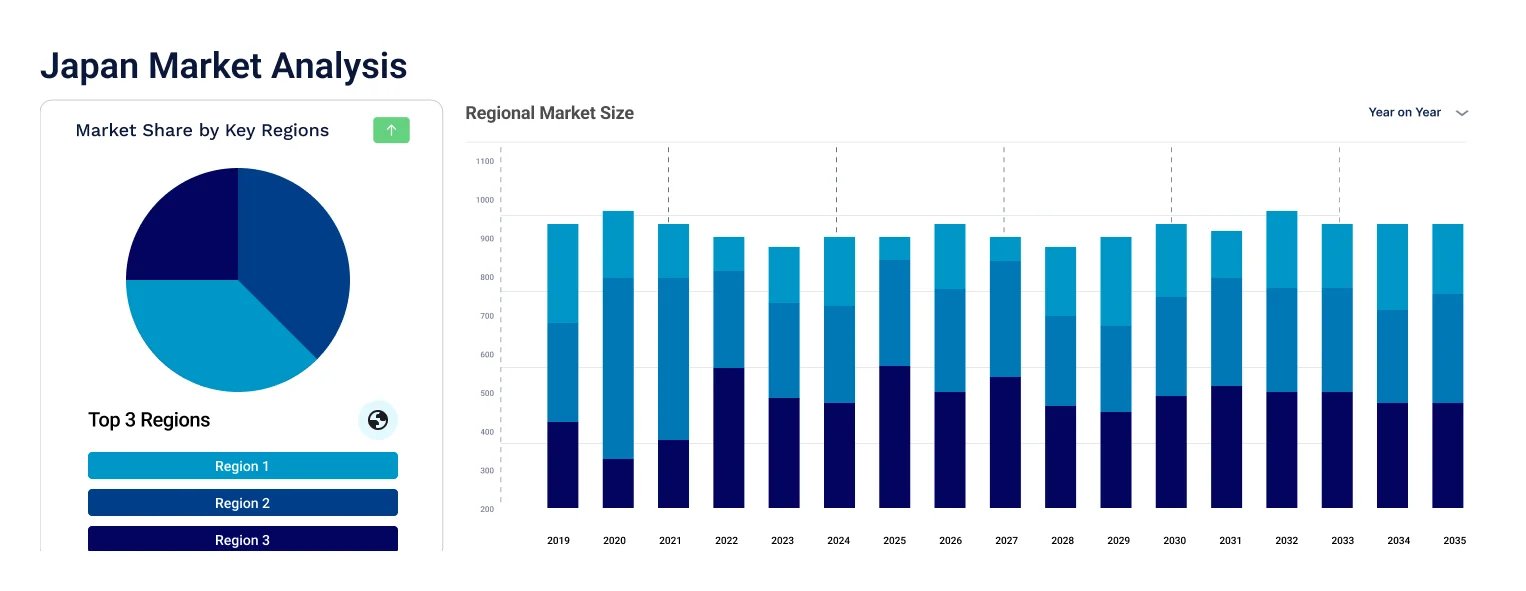
The Japan diagnostic imaging equipment market was valued at USD 2.04 Billion in 2025 and is expected to grow at a CAGR of 3.90%, reaching USD 2.99 Billion by 2035. The market growth is driven by the aging population, rising prevalence of chronic diseases, increasing demand for early and accurate diagnosis, technological advancements in AI-integrated imaging systems, expansion of preventive screening programmes and continued modernization of healthcare infrastructure.
Compound Annual Growth Rate
3.9%
Value in USD Billion
2026-2035
Read more about this report - REQUEST FREE SAMPLE COPY IN PDF
Diagnostic imaging equipment refers to medical devices and systems used to produce images of internal body structures, organs, tissues and physiological processes. These images help healthcare professionals detect diseases, establish diagnoses, assess disease severity, guide clinical procedures and monitor treatment responses. The equipment uses different principles, including X-rays, magnetic fields, sound waves and radioactive tracers, to generate anatomical or functional images. The market was poised to reach USD 2.04 Billion in 2025 and driven by the aging population, rising burden of chronic diseases, increasing demand for early and accurate diagnosis, technological advancements in AI-integrated imaging systems, modernization of hospital infrastructure, and growing adoption of advanced CT, MRI and ultrasound technologies.
|
Analysis Type |
Factors |
Example |
|
Market Drivers |
Ageing population and growing burden of chronic diseases are sustaining demand for advanced diagnostic imaging. |
In April 2026, Canon Medical announced the launch of Ultimion, Japan's first domestically produced photon-counting CT system. |
|
Market Restraints |
Deteriorating hospital finances represent a major restraint on diagnostic imaging equipment procurement, particularly for smaller healthcare providers. |
In May 2026, The Japan Times, citing Tokyo Shoko Research, reported a record 478 bankruptcies among medical and nursing-care providers in fiscal 2025, reflecting rising operating costs and staffing shortages. |
|
Market Opportunities |
Japan's healthcare digitalization agenda creates an opportunity for cloud-connected imaging systems, PACS and interoperable diagnostic platforms. |
In October 2026, pafin launched its Sumazou service, that enables hospitals and health facilities to transfer CT and MRI examination images directly to patients' smartphones . |
The following section outlines the key factors influencing the growth of the market, including major drivers, restraints, and emerging opportunities.
Ageing Population and Technological Modernization to Elevate the Market Value
The aging population and growing burden of chronic diseases are sustaining demand for advanced diagnostic imaging, while hospitals increasingly prioritize equipment modernization, diagnostic accuracy and operational efficiency. In April 2026, Canon Medical announced the launch of Ultimion, Japan's first domestically produced photon-counting CT system. Its high-resolution spectral imaging, radiation-dose reduction capabilities and AI-enabled workflow support strengthen the case for upgrading conventional CT infrastructure. Such investments also reflect the financial imperative to improve equipment utilization, examination throughput and long-term returns on hospital capital expenditure.
Hospital Financial Constraints and High Capital Costs of Imaging Infrastructure can Limit the Market Expansion
Financial constraints across Japan's healthcare providers can limit investment in diagnostic imaging equipment, particularly where hospitals face rising operating costs and expensive scanner infrastructure. In May 2026, The Japan Times, citing Tokyo Shoko Research, reported a record 478 bankruptcies among medical and nursing-care providers in fiscal 2025, reflecting rising operating costs and staffing shortages. According to Daigo Ushijima et al. (2025), inefficient utilization of expensive CT and MRI infrastructure also creates avoidable capital and energy expenditure. This financial and operational pressure may constrain equipment procurement and replacement.
Expansion of Digital Imaging and Patient-Centric Image-Sharing Solutions to improve the Market Demand
The growing adoption of digital imaging solutions and patient-centric image-sharing services in Japan creates opportunities for advanced diagnostic imaging infrastructure and integrated healthcare technologies. In October 2026, pafin launched its Sumazou service, enabling hospitals and health-screening facilities to transfer CT and MRI examination images directly to patients' smartphones through a dedicated kiosk and application, without requiring connections to hospital LAN or PACS. This development creates opportunities for digital imaging service providers and connected diagnostic solutions in Japan.
The market includes several key trends, including incorporating AI-assisted image analysis to support lesion detection and improve diagnostic workflows across hospitals.
Increasing Integration of AI-Assisted Imaging to Enhance the Market Landscape
The market is increasingly shifting towards AI-assisted image interpretation, automated lesion detection, and workflow optimization. For instance, according to Utsuno et al., 2025, St. Luke's International Hospital has implemented AI applications across chest radiography and CT, supporting lesion detection and diagnostic efficiency. Integration of AI into imaging workflows can improve equipment productivity and strengthen the economic case for technology upgrades amid radiologist shortages.
Read more about this report - REQUEST FREE SAMPLE COPY IN PDF
Fixed Systems are Anticipated to Lead the Market by Portability
Fixed diagnostic imaging systems are expected to account for a significant share of Japan's diagnostic imaging equipment market, supported by their established use across hospitals and diagnostic centers. These systems provide dedicated imaging infrastructure for routine examinations and complex diagnostic procedures, including MRI, CT, X-ray, and nuclear imaging. Their integration into hospital radiology departments supports consistent imaging capacity, access to advanced diagnostic capabilities, and the management of high patient volumes.
The key features of the market report include patent analysis, funding and investment analysis, and strategic initiatives by leading players. The major companies in the market are as follows:
GE HealthCare is a US-based medical technology company specializing in diagnostic imaging, ultrasound, patient monitoring and pharmaceutical diagnostics. Its imaging portfolio includes MRI, CT, X-ray, mammography and molecular imaging systems. The company focuses on AI-enabled imaging, precision diagnostics and workflow optimization, supplying hospitals and diagnostic centres across international healthcare markets.
Philips is a Netherlands-based health technology company offering diagnostic imaging, image-guided therapy, ultrasound and enterprise imaging solutions. Its portfolio includes MRI, CT, X-ray and ultrasound systems. The company emphasizes AI-assisted imaging, connected healthcare infrastructure and clinical workflow integration, supporting diagnostic efficiency and advanced medical imaging across hospitals and specialized healthcare facilities.
Shimadzu is a Japanese manufacturer of analytical instruments, industrial equipment and medical imaging systems. Its healthcare portfolio includes digital radiography, fluoroscopy, angiography and mobile X-ray equipment. The company focuses on advanced X-ray technologies, image processing and diagnostic workflow improvements, serving hospitals, clinics and healthcare institutions in Japan and international markets.
Esaote is an Italian medical technology company specializing in diagnostic imaging, particularly MRI and ultrasound systems. Its portfolio includes dedicated musculoskeletal MRI, extremity MRI and advanced ultrasound equipment. The company focuses on compact imaging platforms, image quality and clinical usability, serving hospitals, diagnostic centres and specialized medical facilities across international markets.
Other key players include Siemens Healthineers AG, Fujifilm Holdings Corporation, Samsung Medison Co., Ltd., Hologic, Inc., Konica Minolta, Inc., Carestream Health, Inc., and Canon Medical Systems Corporation.
*Please note that this is only a partial list; the complete list of key players is available in the full report. Additionally, the list of key players can be customized to better suit your needs.*
The market report offers a detailed analysis of the market based on the following segments:
Market Breakup by Product Type
The segment comprises a range of imaging modalities used for disease detection, clinical assessment and patient monitoring. X-ray and ultrasound systems address routine diagnostic requirements, while CT, MRI and nuclear imaging enable advanced examinations, detailed anatomical visualization and functional assessment of complex medical conditions across healthcare settings.
Market Breakup by Portability
The portability segment comprises fixed, mobile and handheld imaging systems. Fixed installations remain essential to hospitals and diagnostic centres, supporting routine examinations and high-volume imaging requirements. Mobile and handheld systems are gaining adoption across emergency departments, intensive care units and point-of-care settings, offering greater operational flexibility and enabling bedside examinations and diagnostic services in remote or underserved healthcare facilities.
Market Breakup by Application
The application segment covers diagnostic imaging across diverse medical specialities and clinical indications. Demand is driven by the growing use of imaging for early disease detection, preventive screening and chronic disease management. Key applications include oncology, cardiology, neurology, orthopedics, gastroenterology and women's healthcare, where imaging supports diagnosis, clinical assessment, treatment planning and ongoing disease monitoring.
Market Breakup by End User
The segment comprises hospitals, diagnostic imaging centres, specialty clinics and other healthcare facilities. Hospitals represent the primary demand base, driven by high patient volumes and the need for comprehensive imaging capabilities across multiple clinical specialities. Meanwhile, diagnostic centres and specialty clinics are expanding dedicated imaging infrastructure to strengthen outpatient diagnostic services and improve access to advanced imaging procedures.
This report is developed through a structured research approach combining secondary research, market analysis, and data validation to assess the market:


Upto 15% Off
USD
$1999 $1799
$3099 $2789
$4599 $3909
$5999 $5099


*While we strive to always give you current and accurate information, the numbers depicted on the website are indicative and may differ from the actual numbers in the main report. At Expert Market Research, we aim to bring you the latest insights and trends in the market. Using our analyses and forecasts, stakeholders can understand the market dynamics, navigate challenges, and capitalize on opportunities to make data-driven strategic decisions.*
Explore our key highlights of the report and gain a concise overview of key findings, trends, and actionable insights that will empower your strategic decisions.
| REPORT FEATURES | DETAILS |
| Base Year | 2025 |
| Historical Period | 2019-2025 |
| Forecast Period | 2026-2035 |
| Scope of the Report |
Historical and Forecast Trends, Industry Drivers and Constraints, Historical and Forecast Market Analysis by Segment:
|
| Breakup by Product Type |
|
| Breakup by Portability |
|
| Breakup by Application |
|
| Breakup by End User |
|
| Market Dynamics |
|
| Supplier Landscape |
|
| Companies Covered |
|
Datasheet
One User
USD 1,999
USD 1,799
tax inclusive*
Single User License
One User
USD 3,099
USD 2,789
tax inclusive*
Five User License
Five User
USD 4,599
USD 3,909
tax inclusive*
Corporate License
Unlimited Users
USD 5,999
USD 5,099
tax inclusive*
*Please note that the prices mentioned below are starting prices for each bundle type. Kindly contact our team for further details.*
Flash Bundle
Small Business Bundle
Growth Bundle
Enterprise Bundle
*Please note that the prices mentioned below are starting prices for each bundle type. Kindly contact our team for further details.*
Flash Bundle
Number of Reports: 3
20%
tax inclusive*
Small Business Bundle
Number of Reports: 5
25%
tax inclusive*
Growth Bundle
Number of Reports: 8
30%
tax inclusive*
Enterprise Bundle
Number of Reports: 10
35%
tax inclusive*
How To Order

Select License Type
Choose the right license for your needs and access rights.

Click on ‘Buy Now’
Add the report to your cart with one click and proceed to register.

Select Mode of Payment
Choose a payment option for a secure checkout. You will be redirected accordingly.
Strategic Solutions for Informed Decision-Making
Gain insights to stay ahead and seize opportunities.

Get insights & trends for a competitive edge.

Track prices with detailed trend reports.

Analyse trade data for supply chain insights.

Leverage cost reports for smart savings

Enhance supply chain with partnerships.

Connect For More Information
Our expert team of analysts will offer full support and resolve any queries regarding the report, before and after the purchase.
Our expert team of analysts will offer full support and resolve any queries regarding the report, before and after the purchase.
We employ meticulous research methods, blending advanced analytics and expert insights to deliver accurate, actionable industry intelligence, staying ahead of competitors.
Our skilled analysts offer unparalleled competitive advantage with detailed insights on current and emerging markets, ensuring your strategic edge.
We offer an in-depth yet simplified presentation of industry insights and analysis to meet your specific requirements effectively.




