

Consumer Insights
Uncover trends and behaviors shaping consumer choices today
Procurement Insights
Optimize your sourcing strategy with key market data
Industry Stats
Stay ahead with the latest trends and market analysis.
The Latin America home healthcare market was valued at USD 46.49 Billion in 2025 and is expected to grow at a CAGR of 8.10%, reaching USD 101.30 Billion by 2035. The market growth is driven by an increasing burden of chronic diseases and an aging population compounded by rising healthcare costs.
Compound Annual Growth Rate
8.1%
Value in USD Billion
2026-2035
Read more about this report - Request a Free Sample
The Latin America home healthcare market encompasses a wide range of medical equipment, diagnostic and patient-monitoring systems, mobility aids, skilled nursing, rehabilitation, hospice and palliative care, respiratory and infusion therapy, maternity care, and other specialized medical services delivered in residential settings. These services facilitate chronic disease management, recovery following hospitalization, rehabilitation, remote patient monitoring, and individualized care for older adults and patients with varying healthcare requirements. The market was valued at USD 46.49 Billion in 2025, supported by increasing demand for home-based healthcare, the growing burden of chronic diseases, wider implementation of hospital-at-home programmes, government initiatives encouraging community-based care, rising adoption of remote monitoring technologies and connected medical devices, and technological advancements in home diagnostics, respiratory care, mobility assistance, and digitally integrated healthcare services.
|
Analysis Type |
Factors |
Example |
|
Market Drivers |
Escalating burden of chronic diseases compounded by rapid population aging and rising healthcare costs. |
Noncommunicable diseases account for more than seventy percent of deaths, with diabetes, cardiovascular disease, cancer and arthritis driving demand for continuous monitoring, long term and post-acute at home. |
|
Market Restraints |
Inconsistent regulatory frameworks and limited reimbursement hamper integration into national health systems. |
In Brazil, despite the Unified Health System, coverage remains fragmented and largely restricted to pilot programs in urban centers, leaving rural populations underserved. |
|
Market Opportunities |
Rising prevalence of chronic diseases, an aging population requiring long term care, and increasing government initiatives supporting decentralized models alongside expansion of digital health technologies and telehealth services. |
Home based care clinically viable and economically scalable through remote monitoring devices such as wearable ECG trackers, glucose monitors, and pulse oximeters that are becoming more accessible and affordable, integrated with AI driven diagnostics and mobile health application. |
The following section outlines the key factors influencing the growth of the market, including major drivers, restraints, and emerging opportunities.
Rising Chronic Disease Burden, Population Aging, and Healthcare Costs Propelling the Market Demand
Noncommunicable diseases account for more than seventy percent of deaths, with diabetes, cardiovascular disease, cancer and arthritis driving demand for continuous monitoring, long term and post-acute at home. Brazil and Mexico anchor regional growth through larger elderly cohorts, higher healthcare expenditure and expanding public home care programs, supported by increasing medical tourism and access to technologies. Growing preference for aging in place, rapid adoption of telemedicine, digital health platforms and remote patient monitoring, and the need for affordable solutions in rural areas where hospital access is limited further accelerate the shift from inpatient to home based management, despite shortages of skilled professionals, a dynamic that intensifies pressure on health systems, pushing families, payers and providers toward cost effective, technology enabled, patient centered continuity outside hospitals across diverse urban and peri urban settings today.
Inconsistent Regulatory Frameworks and Limited Reimbursements Preventing Integration into National Health Systems
Unlike North America and Europe where insurance and public programs extensively support home based care, Latin American countries face structural barriers to inclusion. In Brazil, despite the Unified Health System, coverage remains fragmented and largely restricted to pilot programs in urban centers, leaving rural populations underserved. In Argentina, fewer than thirty percent of private plans cover comprehensive home services according to the National Superintendence of Health Services, sharply limited affordability for most families. This reimbursement gap discourages provider investment, restricts scalability of agencies, creates uncertainty for technology adoption, and forces high out of pocket spending. Consequently, adoption slows even as chronic disease prevalence, elderly population growth, and hospital overcrowding increase demand for cost effective personalized care at home. Without coherent policy harmonization and expanding insurance mandates, equitable access will remain constrained across diverse regional economies and demographics.
The Expansion of Digital Health and Remote Patient Monitoring Technologies Driving Market Landscape
This is a force that is fundamentally reshaping a market driven by rising prevalence of chronic diseases, an aging population requiring long term care, and increasing government initiatives supporting decentralized models alongside expansion of digital health technologies and telehealth services. The core of the opportunity lies in making home based care clinically viable and economically scalable through remote monitoring devices such as wearable ECG trackers, glucose monitors, and pulse oximeters that are becoming more accessible and affordable, integrated with AI driven diagnostics and mobile health application that enhance patient engagement and streamline caregiver coordination as demonstrated by private players like Brazil based Doctor Clin and Mexico’s Salud Domiciliara leveraging AI driven diagnostics.
Rapid, Technology Enabled Shift from Episodic Institutional Care to Continuous Telehealth Integrated Home Care
This is anchored by remote patient monitoring or RPM, and it is now the defining growth engine rather than just an auxiliary channel. This transformation is driven by a convergence of structural pressures and enabling infrastructure, on the demand side a surging geriatric population, escalating burden of chronic and lifestyle disease such as cardiovascular disease, diabetes, cancer and arthritis, rising healthcare costs and capacity constraints in hospitals, and a clear cultural and economic preference for aging in place, on the supply side a robust digital foundation where internet access reached nearly 70 percent of the population in 2024 according to the International Telecommunication Union, plus expanding broadband, mobile penetration and supportive.
Diabetes Expected to Lead the Market Share by Indication
The reason diabetes leads in Latin America while the picture looks different globally is epidemiological and structural. Diabetes overtakes both cardiovascular and respiratory for good reason. It is a major health crisis in Latin American countries and one of the leading causes of mortality. As per the Internation Diabetes Federation Diabetes Atlas 2021, the prevalence was highest in the youth population of Brazil and Mexico, with 15.7 million people aged 20 to 79 years living with diabetes in Brazil in 2021 and that number expected to reach 23.2 million by 23.2 million by 2045.
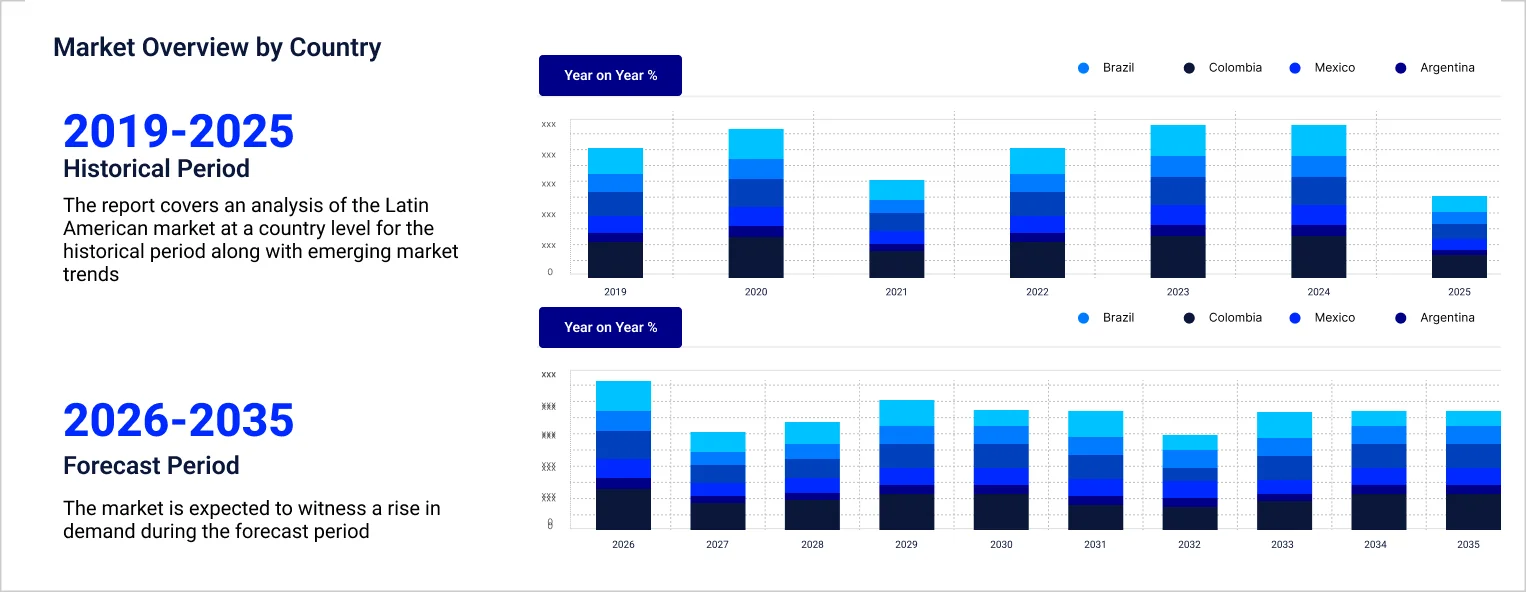
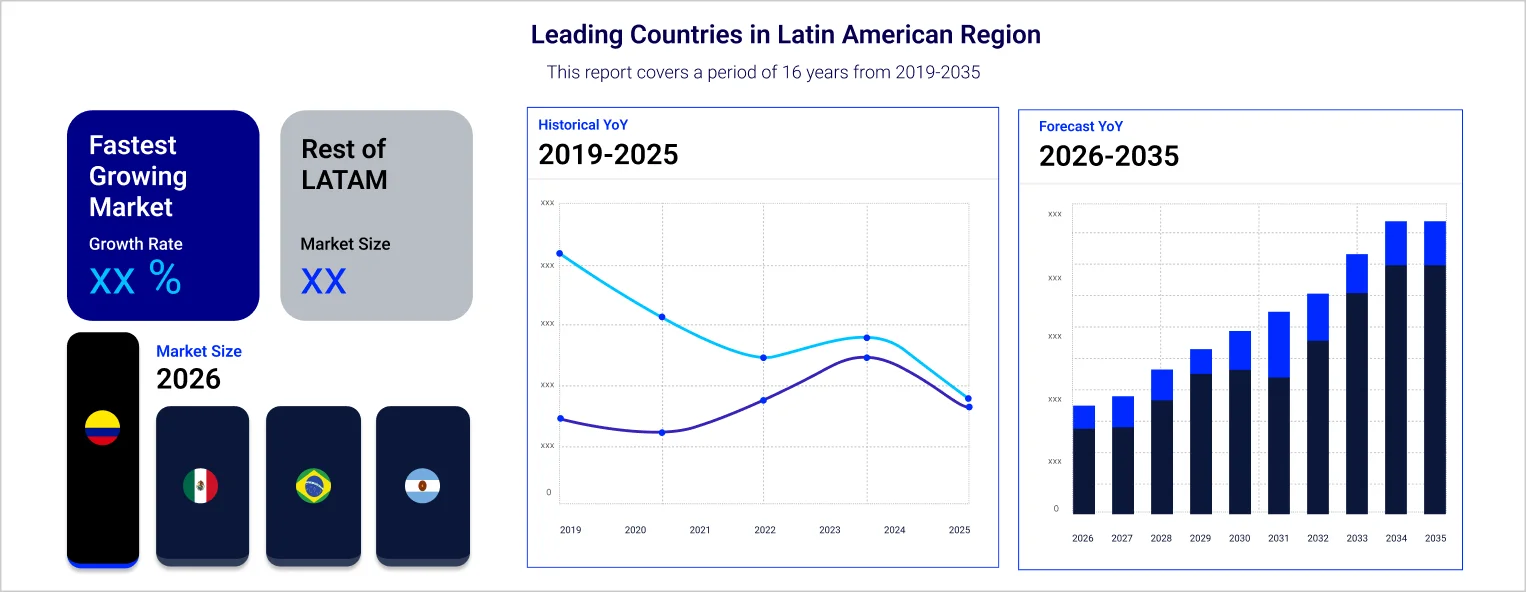
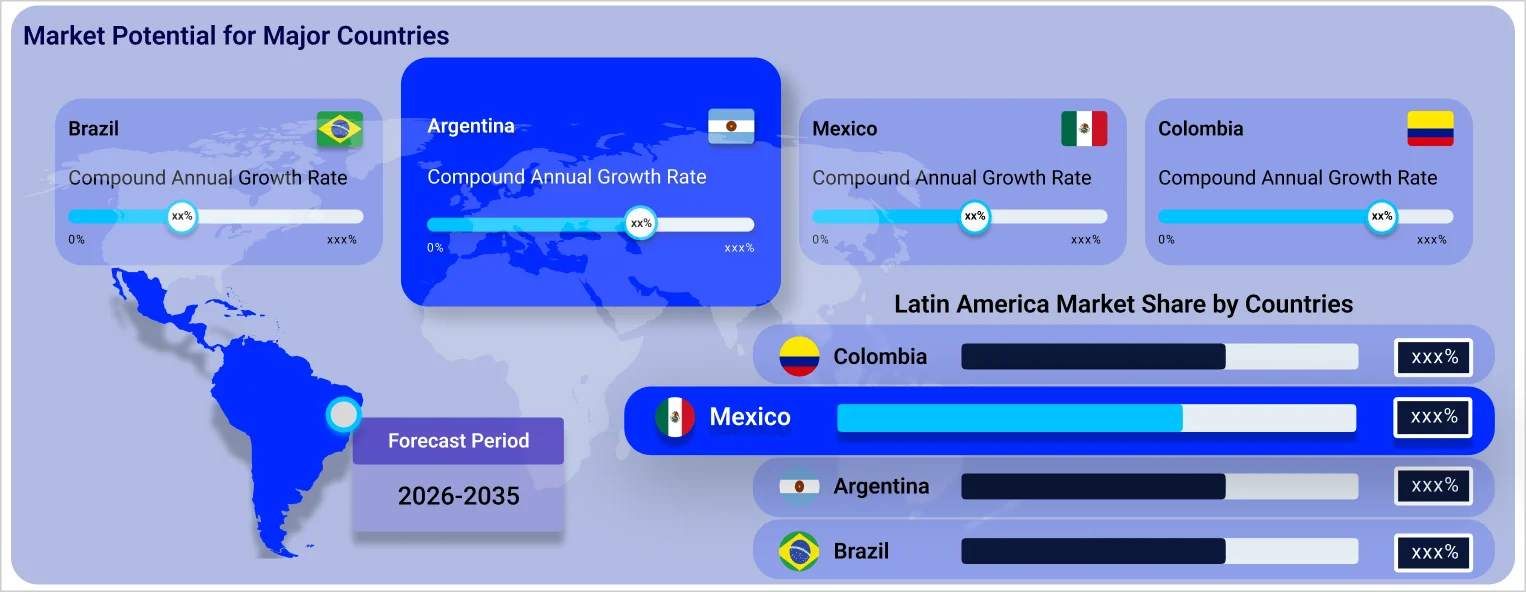
Read more about this report - Request a Free Sample
Brazil is the undisputed leader of the market, a position it has held for more than a decade and continues to consolidate, with the most recent assessment putting its regional share at 31.3% in 2024 due to its large aging population, robust healthcare infrastructure and proactive government initiatives aimed at decentralized medical care, while other estimates that break down share within Latin America alone place Brazil at around 35% in 2013, well ahead of Mexico which is the second largest market at 23.2%. The leadership is structural not cyclical. Brazil captures the largest portion of this growth because it combines scale, demographics, and policy support.
The key features of the market report include patent analysis, funding and investment analysis, and strategic initiatives by leading players. The major companies in the market are as follows:
ResMed provides connected medical devices, software and digital health solutions for managing sleep apnea, respiratory conditions and home healthcare. Its product portfolio comprises CPAP and bilevel devices, masks, ventilators and remote patient-monitoring platforms. With an extensive global presence, the company enables patients and healthcare professionals to deliver and manage treatment beyond conventional clinical environments through integrated connected-care technologies.
Philips is an international health-technology company offering connected patient monitoring, diagnostic imaging, respiratory care and patient-management solutions. Its home healthcare portfolio encompasses sleep and respiratory devices, remote monitoring systems and integrated connected-care platforms. Operating across global markets, the company serves healthcare providers and patients with technologies that support decentralized treatment, chronic disease management and hospital-at-home services.
Medtronic develops medical devices and therapeutic technologies across cardiovascular care, diabetes management, neuroscience and surgical specialties. Its home healthcare offerings include connected monitoring solutions, diabetes-management systems and devices designed to support long-term chronic disease management. With a global operational presence, the company increasingly integrates digital connectivity and remote-care capabilities to facilitate ongoing clinical supervision beyond hospitals and specialized healthcare facilities.
Abbott is a diversified healthcare company with operations spanning medical devices, diagnostics, nutrition and pharmaceuticals. Its product portfolio includes continuous glucose monitoring systems, cardiovascular devices, diagnostic solutions and technologies for managing chronic conditions. Through connected monitoring platforms, Abbott supports ongoing patient care beyond conventional healthcare settings, while its extensive global distribution network enables the use of its technologies across clinical and home healthcare environments.
Other key players in the market include OMRON Healthcare Co., Ltd., Fresenius Medical Care AG, NEB S.A de C.V, LEISTUNG, Biomedica Mexicana S.A de C.V.
*Please note that this is only a partial list; the complete list of key players is available in the full report. Additionally, the list of key players can be customized to better suit your needs.*
The market report offers a detailed analysis of the market based on the following segments:
Market Breakup by Offerings
The market encompasses a diverse range of medical equipment and professional services supporting diagnosis, treatment, rehabilitation, patient monitoring, and routine healthcare delivery. Equipment offerings include therapeutic systems, diagnostic instruments, patient-monitoring devices, and mobility aids, whereas services comprise skilled nursing, clinical assistance, and other essential care solutions. Together, these offerings expand the range of healthcare interventions that can be delivered in residential and community-based settings.
Market Breakup by Indication
The market caters to diverse medical conditions that require continuous monitoring, therapeutic intervention, rehabilitation, or supportive care within residential settings. Major indications include chronic illnesses such as diabetes, cardiovascular diseases, and respiratory disorders, alongside cancer, mobility limitations, wound care, maternity-related needs, and hearing disorders. Population ageing and the increasing focus on delivering healthcare through community-based and home-based settings are further broadening the range of conditions addressed by home healthcare services.
Market Breakup by Country
The market is segmented by country into Brazil, Argentina, Mexico, and others. Brazil benefits from its large population and growing demand for chronic disease management and post-hospitalization care. Argentina's market is supported by population ageing and demand for rehabilitation and skilled nursing. Mexico presents opportunities through rising chronic disease prevalence and demand for cost-effective home-based services, while other regional markets are shaped by healthcare infrastructure development, expanding community-based care, and improving access to home healthcare solutions.


Upto 15% Off
USD
$2699 $2429
$4299 $3869
$5799 $4949
$6999 $5949


*While we strive to always give you current and accurate information, the numbers depicted on the website are indicative and may differ from the actual numbers in the main report. At Expert Market Research, we aim to bring you the latest insights and trends in the market. Using our analyses and forecasts, stakeholders can understand the market dynamics, navigate challenges, and capitalize on opportunities to make data-driven strategic decisions.*
Explore our key highlights of the report and gain a concise overview of key findings, trends, and actionable insights that will empower your strategic decisions.
| REPORT FEATURES | DETAILS |
| Base Year | 2025 |
| Historical Period | 2019-2025 |
| Forecast Period | 2026-2035 |
| Scope of the Report |
Historical and Forecast Trends, Industry Drivers and Constraints, Historical and Forecast Market Analysis by Segment:
|
| Breakup by Offerings |
|
| Breakup by Indication |
|
| Breakup by Region |
|
| Market Dynamics |
|
| Supplier Landscape |
|
| Companies Covered |
|
Datasheet
One User
USD 2,699
USD 2,429
tax inclusive*
Single User License
One User
USD 4,299
USD 3,869
tax inclusive*
Five User License
Five User
USD 5,799
USD 4,949
tax inclusive*
Corporate License
Unlimited Users
USD 6,999
USD 5,949
tax inclusive*
*Please note that the prices mentioned below are starting prices for each bundle type. Kindly contact our team for further details.*
Flash Bundle
Small Business Bundle
Growth Bundle
Enterprise Bundle
*Please note that the prices mentioned below are starting prices for each bundle type. Kindly contact our team for further details.*
Flash Bundle
Number of Reports: 3
20%
tax inclusive*
Small Business Bundle
Number of Reports: 5
25%
tax inclusive*
Growth Bundle
Number of Reports: 8
30%
tax inclusive*
Enterprise Bundle
Number of Reports: 10
35%
tax inclusive*
How To Order

Select License Type
Choose the right license for your needs and access rights.

Click on ‘Buy Now’
Add the report to your cart with one click and proceed to register.

Select Mode of Payment
Choose a payment option for a secure checkout. You will be redirected accordingly.
Strategic Solutions for Informed Decision-Making
Gain insights to stay ahead and seize opportunities.

Get insights & trends for a competitive edge.

Track prices with detailed trend reports.

Analyse trade data for supply chain insights.

Leverage cost reports for smart savings

Enhance supply chain with partnerships.

Connect For More Information
Our expert team of analysts will offer full support and resolve any queries regarding the report, before and after the purchase.
Our expert team of analysts will offer full support and resolve any queries regarding the report, before and after the purchase.
We employ meticulous research methods, blending advanced analytics and expert insights to deliver accurate, actionable industry intelligence, staying ahead of competitors.
Our skilled analysts offer unparalleled competitive advantage with detailed insights on current and emerging markets, ensuring your strategic edge.
We offer an in-depth yet simplified presentation of industry insights and analysis to meet your specific requirements effectively.




