

Consumer Insights
Uncover trends and behaviors shaping consumer choices today
Procurement Insights
Optimize your sourcing strategy with key market data
Industry Stats
Stay ahead with the latest trends and market analysis.
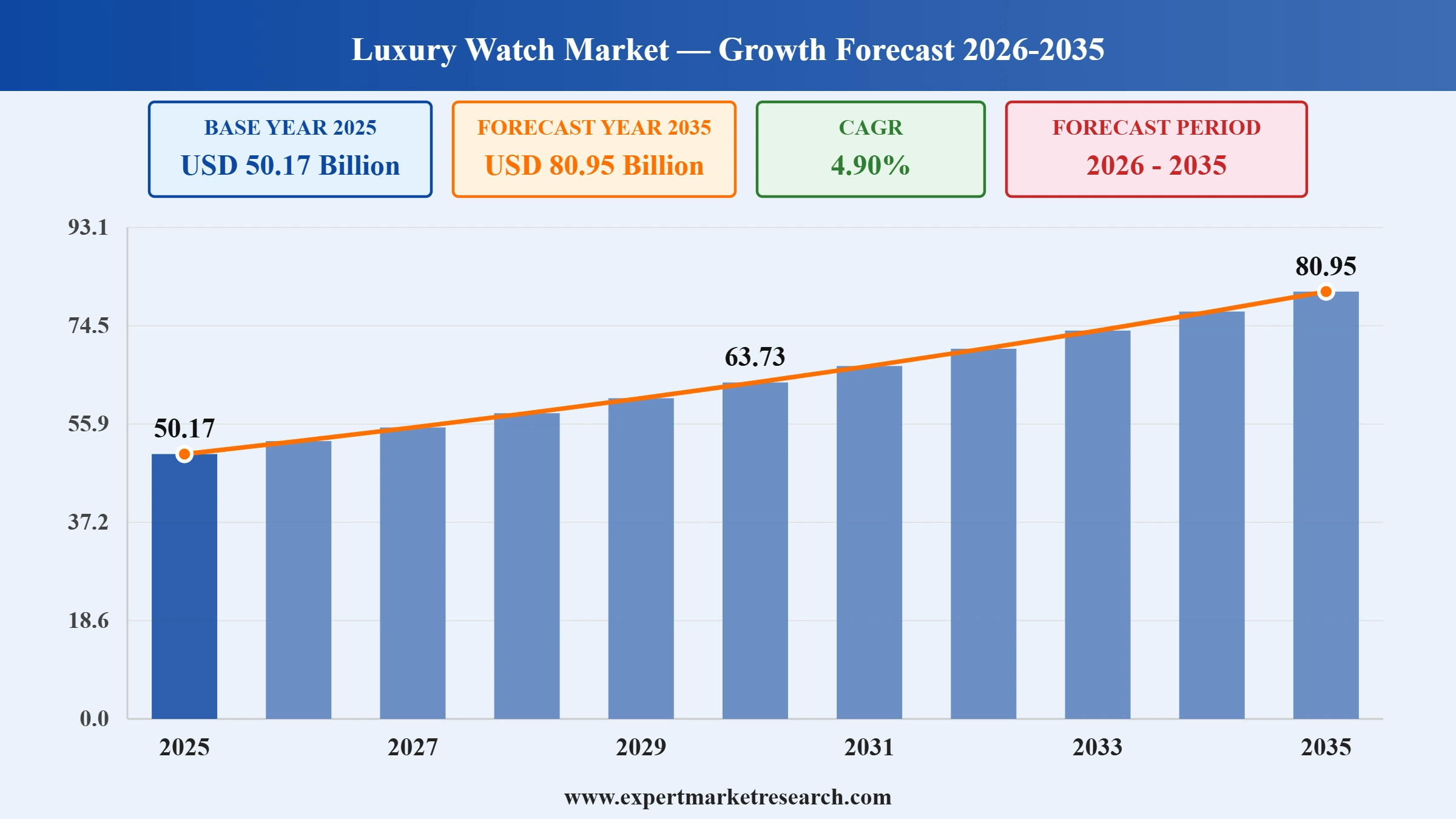
The global luxury watch market size reached approximately USD 50.17 Billion in 2025 and is projected to grow at a CAGR of 4.90% between 2026 and 2035 to reach USD 80.95 Billion by 2035, according to Expert Market Research. Demand is supported by brand prestige, fine craftsmanship, the potential for watches to hold or gain value, and rising affluence, particularly in China and India, while online sales and limited-edition releases are changing how buyers discover and purchase timepieces.
The market covers mechanical and electronic luxury watches sold through offline and online channels across North America, Europe, Asia Pacific, Latin America, and the Middle East and Africa. This Expert Market Research report assesses the market by product type, distribution channel and region, and profiles the leading watchmakers.
These developments highlight the changing dynamics of the luxury watch industry, including regional differences in demand, currency movements, trade policies and portfolio realignment among leading watch groups. While certain markets recorded export declines in 2025, growth in selected regions during the first half of 2026 indicates that demand conditions vary across brands and geographies.
Access the Full Market Insights REQUEST FREE SAMPLE COPY IN PDF
| Luxury Watch Market Report Summary | Description | Value |
| Base Year | USD Billion | 2025 |
| Historical Period | USD Billion | 2019-2025 |
| Forecast Period | USD Billion | 2026-2035 |
| Market Size 2025 | USD Billion | 50.17 |
| Market Size 2035 | USD Billion | 80.95 |
| CAGR 2019-2025 | Percentage | XX% |
| CAGR 2026-2035 | Percentage | 4.90% |
| CAGR 2026-2035 - Market by Region | Asia Pacific | 6.3% |
| CAGR 2026-2035 - Market by Country | India | 7.3% |
| CAGR 2026-2035 - Market by Country | Canada | 6.1% |
| CAGR 2026-2035 - Market by Product | Electronic | 5.5% |
| CAGR 2026-2035 - Market by Distribution Channel | Online | 6.4% |
| Market Share by Country 2025 | China | 16.9% |
A luxury watch is a premium timepiece distinguished by its craftsmanship, brand heritage, precision engineering, material quality and exclusivity. These watches are manufactured using high-quality materials such as stainless steel, gold, platinum, titanium and sapphire crystal, with many models featuring intricate mechanical movements and advanced quartz technology. Beyond their primary function of timekeeping, luxury watches are associated with prestige, personal expression, collectability and, in certain cases, investment value.
The luxury watch market encompasses various product categories, including mechanical, automatic, quartz and smart luxury watches. These products are distributed through brand-owned boutiques, authorised retailers, multi-brand luxury stores and e-commerce platforms. Consumer purchasing decisions are influenced by brand reputation, design, craftsmanship, technological innovation, exclusivity and changing preferences for premium accessories.
Luxury watches carry strong symbolic value, and established houses such as Rolex, founded in 1905, and The Swatch Group, founded in 1983, trade on that reputation. As consumers seek products that signal achievement and taste, brand prestige remains the most visible driver of demand, and it supports pricing power across the market.
Rising incomes expand the group of buyers who can afford premium products. Expanding affluence in China and India is a key support for the market, and Asia Pacific is expected to grow faster than the global average through 2035.
Craftsmanship and brand heritage are central to how luxury watches are valued. Many buyers also view limited-stock models as potential investments, because controlled production helps sustain exclusivity and can help a watch hold or gain value.
Brands release limited-edition models and collaborations that create urgency and collector interest, and personalisation options such as engraved cases, custom dials and bespoke straps deepen the bond between buyer and brand. These strategies sustain exclusivity and keep brands in the conversation between major launches.
Online channels give buyers access to a wider range of models, price comparison and convenience, and luxury brands are investing in e-commerce and digital marketing to reach younger customers. Expert Market Research projects the online segment to outgrow the overall market over 2026-2035.
Personalisation is a growing part of the offer. Customers can choose dials, engravings and straps, and many brands market couples' watches, often at a lower combined price than buying two separate pieces. Such offers broaden the audience for luxury timepieces.
Limited runs and collaborations with artists and other brands generate publicity and collector demand. A recent example cited by Expert Market Research is Grand Seiko's SBGE305, a GMT watch with a red dial and black ceramic bezel launched in 2024.
Expert Market Research points to hybrid models that combine traditional craftsmanship with smart features. They arrive alongside smartwatches and wearables, which compete for the same wrist and which the report identifies as a threat to traditional watches.
Luxury brands are investing in e-commerce and digital marketing to reach younger buyers, and the report names this as a leading opportunity. Online channels also let a brand explain its craftsmanship and heritage to customers who research a watch before they ever visit a boutique.
Counterfeiting threatens brand trust, and buyers of high-value watches want assurance that a piece is genuine. This puts a premium on authorised retail and verified sales channels, and the issue grows in importance as more of the market moves online.
The main challenge facing the luxury watch market is operating a complex supply chain while trade conditions shift. Producers depend on specialist materials and skilled labour that are hard to scale, and tariff changes can alter costs and distribution quickly. Smartwatches and wearables compete for consumer attention, and counterfeiting continues to threaten the trust on which the category depends. The full report quantifies how these pressures differ by product, channel and region.
The principal restraints are price and the cyclical nature of demand. High prices confine the customer base to affluent buyers, and because a luxury watch is a discretionary purchase, demand is sensitive to economic downturns, currency swings and changes in consumer confidence. Softer shipments to large Asian markets in recent periods show how quickly a major market can cool. Readers can find how these restraints affect each segment and region in the report.
Opportunities lie in emerging markets across Asia and the Middle East, where rising affluence widens the base of first-time luxury buyers, and in online sales, where authenticated listings and digital showrooms extend reach. Limited editions, artist and brand collaborations, and sustainable manufacturing can help brands win environmentally conscious and younger consumers. Request a free sample of the report to see segment-level forecasts, regional opportunities and the company strategies behind this growth.
The Expert Market Research report titled “Luxury Watch Market Report and Forecast 2026-2035 offers a detailed analysis of the market based on the following segments:
Market Breakup by Product Type
Key Insights: The electronic segment is gaining traction due to its precision, ease of use and integration of advanced functions. Expert Market Research projects this segment to grow at a CAGR of 5.5% during 2026-2035, ahead of the overall market.
The mechanical segment remains an important part of the luxury watch market, supported by traditional watchmaking techniques, intricate movements and established brand heritage. Automatic and manually wound timepieces appeal particularly to collectors and consumers who value engineering, craftsmanship and exclusivity. Demand is also influenced by limited-edition releases and the reputation of established luxury watchmakers.
Market Breakup by Distribution Channel
Key Insights: Offline distribution covers brand boutiques, authorised dealers and multi-brand luxury stores. Buyers of high-value watches often want to see, try and verify a piece, so boutiques remain central to the sale and to after-sales service. Physical retail also allows brands to deliver personalised services, product demonstrations, warranty assistance and after-sales support. These factors remain particularly relevant for high-value purchases, where buyers often prefer direct interaction with authorised retailers before making a purchase decision.
Online distribution covers brand e-commerce sites and authorised online retailers. Expert Market Research projects online sales to grow at 6.4% a year over 2026-2035, ahead of the overall market. Wider choice, price comparison and verified authenticity programmes support this growth.
Market Breakup by Region
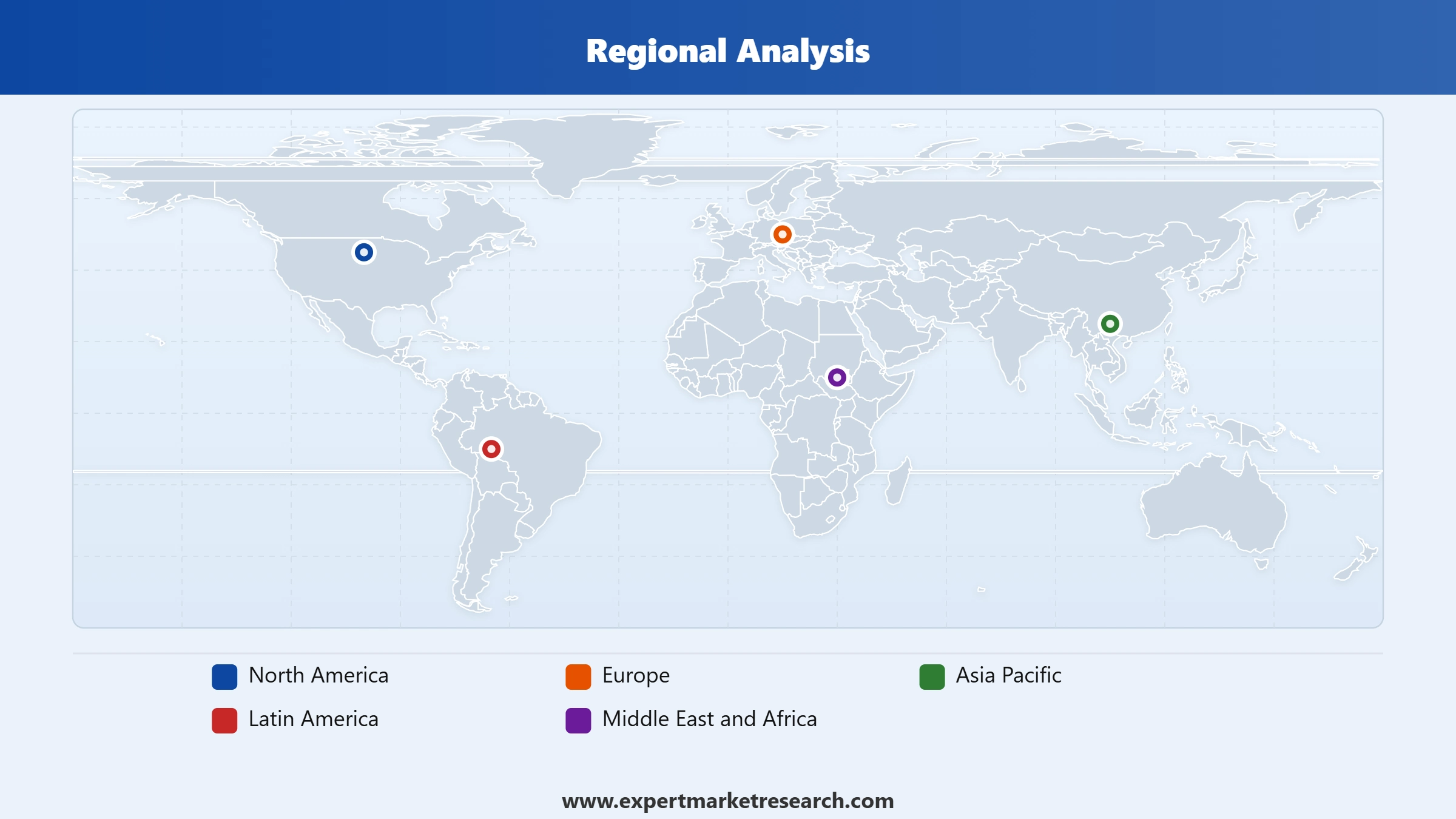
Key Insights: North America holds a major share through high purchasing power and a strong boutique and e-commerce presence. Europe is the home of Swiss watchmaking and a mature market for collectors. Asia Pacific is the fastest-growing region, supported by rising affluence in China and India. Latin America draws affluent consumers in Brazil, Mexico and Argentina through premium retail networks. The Middle East and Africa benefit from tourism and luxury shopping destinations in Saudi Arabia, the United Arab Emirates and South Africa.
View the Complete Market Analysis REQUEST FREE SAMPLE COPY IN PDF
North America is a major share holder, supported by high purchasing power and a strong retail and e-commerce presence.
United States: The United States is the largest single destination for Swiss watches. Tariff revisions during the past year shaped shipment timing, and recent brand results point to a recovery in US demand. For deeper coverage, see the United States luxury watch market report.
Canada: Canada is projected to grow at 6.1% over 2026-2035, one of the faster-growing national markets in the report.
Read more about this report REQUEST FREE SAMPLE COPY IN PDF
Europe is the home of Swiss watchmaking and covers the United Kingdom, Germany, France and Italy. Swiss watch exports to Europe fell 0.3% in 2025.
United Kingdom: Exports rose 0.1% in 2025, which points to stable demand in a mature market. See the United Kingdom luxury watch market report for more detail.
Germany: Exports fell 6.8% in 2025, the steepest decline among the large European markets.
France: France is assessed by product type and distribution channel in the full report.
Italy: Italian demand has improved in recent brand results. Richemont’s agreement to sell Baume & Mercier to Italy’s Damiani Group adds a distribution angle to the market.
Asia Pacific is the fastest-growing region, with Expert Market Research projecting a 6.3% CAGR through 2035. China held a 16.9% share of the market in 2025, and the region also includes Japan, India, ASEAN and Australia. Swiss exports to Asia fell 3.8% in 2025.
China: Swiss watch exports to China and Hong Kong have been sensitive to consumer confidence, while recent brand results show renewed growth in Greater China.
Japan: Demand in Japan has strengthened in recent brand results. Japan is also the home of Seiko and Citizen.
India: India is projected to grow at 7.3% over 2026-2035, the fastest national growth rate Expert Market Research cites.
South Korea and Singapore: Swiss exports to South Korea rose 2.4% and to Singapore 0.7% in 2025.
Australia: The Swatch Group reported 5% sales growth in Australia in the first half of 2026.
Latin America is an emerging market for luxury watches, with demand supported by affluent consumer groups, premium retail development and growing interest in internationally recognised brands. Brazil and Mexico represent important markets due to their larger consumer bases and established luxury retail networks, while Argentina offers opportunities among high-income consumers.
Brazil: Demand is influenced by affluent consumers, international luxury brands and the presence of authorised retail outlets. Import costs, taxation and currency fluctuations can affect the affordability of imported luxury timepieces.
Mexico: The market benefits from premium shopping destinations, international tourism and demand for established luxury brands. Authorised retailers and multi-brand luxury stores play an important role in product availability and consumer confidence.
Argentina: Demand is concentrated among affluent consumers, with purchasing activity influenced by currency conditions, import costs and access to international luxury brands.
The expansion of authorised retail networks and digital channels can improve product accessibility across the region.
The Middle East luxury watch market benefits from affluent consumers, international tourism and the presence of premium shopping destinations. Saudi Arabia and the United Arab Emirates are important markets, supported by luxury retail infrastructure and demand for internationally recognised watch brands. In Africa, South Africa represents a relevant luxury retail market, with demand concentrated among higher-income consumers and premium shopping destinations.
Saudi Arabia: Rising interest in luxury goods, premium retail development and the expansion of high-end shopping destinations support market opportunities.
United Arab Emirates: Dubai and Abu Dhabi attract affluent residents and international visitors, supporting demand for luxury watches through specialised boutiques and authorised retailers.
South Africa: Demand is concentrated in major urban centres, where established luxury retailers serve consumers seeking premium international watch brands.
The competitive landscape combines Swiss heritage houses, luxury groups and international brands. Competition centres on brand prestige, craftsmanship, limited editions, distribution reach and digital presence. The report profiles Rolex SA, The Swatch Group Ltd and Fossil Group, Inc. in depth, and also covers Audemars Piguet Holding SA, Citizen Watch Company of America, Inc., Seiko Watch Corporation, Compagnie Financière Richemont SA, LVMH Group, Movado Group Inc. and Ralph Lauren Corporation.
Rolex is a Swiss watch designer and manufacturer headquartered in Geneva, founded in 1905. It is one of the most prominent players in the luxury watch market.
The Swatch Group designs and sells finished watches, jewellery, watch movements and other components, and electronic systems for watchmaking. It was founded in 1983 and is headquartered in Biel/Bienne, Switzerland. In the first half of 2026 it reported net sales of CHF 3,121 million.
Fossil Group designs, distributes and markets fashion accessories, including traditional and smart watches, handbags, jewellery and leather goods. It was founded in 1984 and is based in Texas, United States.
Richemont is a Swiss luxury group with interests in watches and jewellery. In January 2026 it agreed to sell Baume & Mercier to Italy's Damiani Group, a portfolio change that shows how large groups reshape their watch brands.
The above list is partial, and the report covers more players with their product portfolios, reach and strategies. The competitive landscape is assessed using Porter's Five Forces and a SWOT analysis.
*Please note that this is only a partial list; the complete list of key players is available in the full report. Additionally, the list of key players can be customized to better suit your needs.*


Upto 15% Off
USD
$2499 $2249
$3999 $3599
$4999 $4249
$5999 $5099


*While we strive to always give you current and accurate information, the numbers depicted on the website are indicative and may differ from the actual numbers in the main report. At Expert Market Research, we aim to bring you the latest insights and trends in the market. Using our analyses and forecasts, stakeholders can understand the market dynamics, navigate challenges, and capitalize on opportunities to make data-driven strategic decisions.*
In 2025, the market reached an approximate value of USD 50.17 Billion.
The market is expected to grow at a CAGR of 4.90% between 2026 and 2035.
The market is estimated to witness a healthy growth in the forecast period of 2026-2035 to reach USD 80.95 Billion by 2035.
Rising demand for luxury products, increasing disposable income, and surge in the online sales of luxury watches are major market drivers.
The key trends of the market include increasing attention to limited edition watches, growing inclination towards customised watches, increasing reach of luxury brands, and rising popularity of couples watches.
The different products of luxury watches in the market are electronic and mechanical.
The primary distribution channels of luxury watches are offline and online.
The key players in luxury watches market are ROLEX SA., The Swatch Group Ltd, Audemars Piguet Holding SA, Fossil Group, Inc., Citizen Watch Company Of America, Inc., Seiko Watch Corporation, Compagnie Financiere Richemont SA, LVMH Group, Movado Group Inc., and Ralph Lauren Corporation, among others.
Explore our key highlights of the report and gain a concise overview of key findings, trends, and actionable insights that will empower your strategic decisions.
| REPORT FEATURES | DETAILS |
| Base Year | 2025 |
| Historical Period | 2019-2025 |
| Forecast Period | 2026-2035 |
| Scope of the Report |
Historical and Forecast Trends, Industry Drivers and Constraints, Historical and Forecast Market Analysis by Segment:
|
| Breakup by Product |
|
| Breakup by Distribution Channel |
|
| Breakup by Region |
|
| Market Dynamics |
|
| Competitive Landscape |
|
| Companies Covered |
|
Datasheet
One User
USD 2,499
USD 2,249
tax inclusive*
Single User License
One User
USD 3,999
USD 3,599
tax inclusive*
Five User License
Five User
USD 4,999
USD 4,249
tax inclusive*
Corporate License
Unlimited Users
USD 5,999
USD 5,099
tax inclusive*
*Please note that the prices mentioned below are starting prices for each bundle type. Kindly contact our team for further details.*
Flash Bundle
Small Business Bundle
Growth Bundle
Enterprise Bundle
*Please note that the prices mentioned below are starting prices for each bundle type. Kindly contact our team for further details.*
Flash Bundle
Number of Reports: 3
20%
tax inclusive*
Small Business Bundle
Number of Reports: 5
25%
tax inclusive*
Growth Bundle
Number of Reports: 8
30%
tax inclusive*
Enterprise Bundle
Number of Reports: 10
35%
tax inclusive*
How To Order

Select License Type
Choose the right license for your needs and access rights.

Click on ‘Buy Now’
Add the report to your cart with one click and proceed to register.

Select Mode of Payment
Choose a payment option for a secure checkout. You will be redirected accordingly.
Strategic Solutions for Informed Decision-Making
Gain insights to stay ahead and seize opportunities.

Get insights & trends for a competitive edge.

Track prices with detailed trend reports.

Analyse trade data for supply chain insights.

Leverage cost reports for smart savings

Enhance supply chain with partnerships.

Connect For More Information
Our expert team of analysts will offer full support and resolve any queries regarding the report, before and after the purchase.
Our expert team of analysts will offer full support and resolve any queries regarding the report, before and after the purchase.
We employ meticulous research methods, blending advanced analytics and expert insights to deliver accurate, actionable industry intelligence, staying ahead of competitors.
Our skilled analysts offer unparalleled competitive advantage with detailed insights on current and emerging markets, ensuring your strategic edge.
We offer an in-depth yet simplified presentation of industry insights and analysis to meet your specific requirements effectively.




