

Consumer Insights
Uncover trends and behaviors shaping consumer choices today
Procurement Insights
Optimize your sourcing strategy with key market data
Industry Stats
Stay ahead with the latest trends and market analysis.
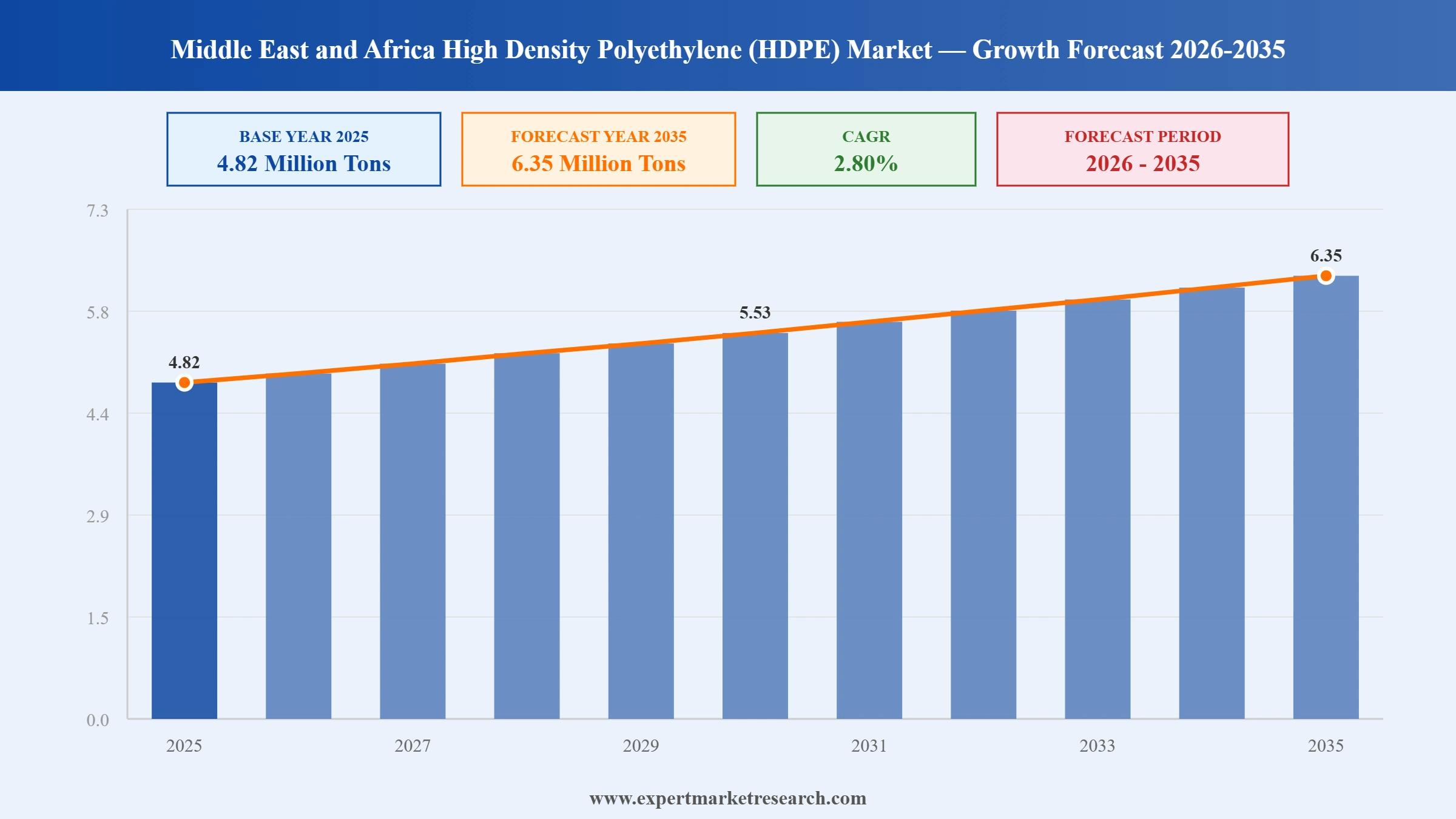
The Middle East and Africa High Density Polyethylene (HDPE) Market reached a volume of 4.82 Million Tons at 2025 and is projected to expand at a CAGR of around 2.80% during the forecast period of 2026-2035. With rapid growth in e-commerce driving HDPE packaging demand, large-scale infrastructure and construction programmes across the region requiring HDPE pipes, growing adoption of HDPE in 5G telecom and electrical infrastructure, and rising investments in HDPE recycling to meet environmental targets, the market is expected to reach 6.35 Million Tons by 2035.
Read more about this report - REQUEST FREE SAMPLE COPY IN PDF
The MEA HDPE market is being shaped by the convergence of rapid e-commerce growth, large-scale infrastructure investment, and a growing regional emphasis on sustainability and recycling. HDPE's versatility across packaging, pipes, and electrical applications makes it a critical industrial material for the region's diversification ambitions, while stricter environmental policies are accelerating the shift toward recycled grades. Geopolitical investments in petrochemical capacity, particularly in Saudi Arabia and the UAE, are further strengthening the region's role as a global HDPE production hub.
By 2025, Borouge, a joint venture between Abu Dhabi National Oil Company (ADNOC) and Borealis AG, raised its nameplate polyethylene production capacity at the Ruwais complex in the United Arab Emirates to 6.4 million tonnes per year. This capacity expansion cements the UAE's position as a leading polyethylene exporter in the Middle East and beyond. Complementing this, the Ta'ziz industrial ecosystem in Abu Dhabi received infrastructure investments totalling AED 7.34 billion, including a chemicals port and dedicated storage facilities, streamlining HDPE export flows toward Africa and South Asia and reinforcing the UAE's role as a global HDPE supply hub.
In the second quarter of 2025, Saudi Basic Industries Corporation (SABIC) received final regulatory approval to construct a new high-density polyethylene production plant in Jubail, Saudi Arabia. Operations at the new facility are expected to commence in 2027. The plant will add significant HDPE output to SABIC's already substantial portfolio of petrochemical production in the Kingdom, serving domestic and export markets across Asia, Europe, and Africa. The approval reflects Saudi Arabia's continued commitment to expanding downstream petrochemical capacity as part of its Vision 2030 industrialisation and economic diversification agenda.
In 2024, the Southern African Plastic Pipe Manufacturers Association (SAPPMA) announced the launch of Project 'Superior Quality 2024' (SQ24), a comprehensive quality enforcement initiative targeting HDPE plastic pipe manufacturers across South Africa. The project mandates the exclusion of third-party recycled material from production processes, prohibits price-cutting practices that compromise quality, and requires adequate official certification for all manufactured HDPE pipes. The initiative aims to standardise quality benchmarks and raise confidence in HDPE piping products across water supply, irrigation, and infrastructure applications throughout the Southern Africa sub-region.
Maire Technimont S.p.A., through its subsidiaries Technimont and Technimont Arabia Limited, was awarded two EPC contracts for a major petrochemical expansion at the SATORP Refinery in Jubail, Kingdom of Saudi Arabia. The overall contract value reached approximately USD 2 billion. One of the contracts specifically covered the execution of the HDPE and Logistic Area package, requiring the construction of two polyethylene production units and associated product logistics facilities. This project represents one of the most significant HDPE capacity expansion investments in Saudi Arabia, reinforcing the Kingdom's position as a leading HDPE producer and exporter in the Middle East region.
In 2023, Perma-Pipe International Holdings, Inc. established a new manufacturing facility in the United Arab Emirates, spanning six hectares, dedicated to the production of HDPE pipes for oil and gas transportation networks. The factory is strategically positioned to serve the expanding regional demand for high-performance HDPE piping in the Gulf's oil, gas, and water infrastructure sectors. The investment underscores the UAE's attractiveness as a manufacturing and logistics hub for specialised HDPE applications and signals growing confidence among international suppliers in the long-term demand trajectory of the MEA HDPE pipe market.
The rapid expansion of e-commerce across the MEA region is emerging as one of the most consistent drivers of HDPE packaging demand. According to the Dubai Chamber of Commerce and Industry, the UAE's e-commerce sector is projected to generate approximately USD 8 billion in sales by 2025, supported by near-universal mobile and internet coverage. This growth is directly translating into elevated consumption of HDPE films and sheets, which are the material of choice for flexible packaging, protective wrapping, and last-mile delivery fulfilment across the region's logistics corridors, which now serve both domestic and cross-border markets at scale.
Saudi Arabia's construction market, valued at USD 70.33 billion in 2024 and projected to reach USD 91.36 billion by 2029, is generating sustained and significant demand for HDPE in building applications. HDPE is used extensively in piping systems for water and gas distribution, geocells, and plastic lumber, owing to its corrosion resistance and long service life. The Kingdom's Vision 2030 programme, which includes mega-projects such as NEOM, Qiddiya, and the Red Sea Project, has created a multi-year pipeline of construction activity that is expected to maintain high regional HDPE consumption throughout the forecast period.
The accelerating rollout of 5G telecommunications infrastructure across major MEA markets, including Saudi Arabia, the UAE, South Africa, and Nigeria, is generating incremental demand for HDPE-jacketed cables and conduit systems. HDPE is the preferred material for protective sheathing in buried and overhead cable installations due to its flexibility, UV resistance, chemical inertness, and long service life. The electrical and electronics end-use segment is emerging as one of the fastest-growing application categories in the MEA HDPE market, as national 5G coverage targets and smart city programmes accelerate both government and private-sector investment in fibre and cable networks across urban and peri-urban areas.
Growing regulatory pressure and consumer awareness are driving significant investments in HDPE recycling infrastructure across the MEA region. South Africa, through SAPPMA's Project SQ24 launched in 2024, is imposing stricter quality and certification standards on HDPE pipe producers, effectively discouraging the use of substandard recycled content while encouraging controlled, certified-grade recycled HDPE. In the Gulf region, producers such as SABIC are expanding their recycled polymer portfolios under sustainability frameworks aligned with national circular economy targets. Recycled HDPE is increasingly integrated into packaging, drainage pipes, and agricultural applications, reflecting a meaningful policy-driven shift in the region's plastics consumption ecosystem.
The Expert Market Research's report titled “Middle East and Africa High Density Polyethylene (HDPE) Market Report and Forecast 2026-2035” offers a detailed analysis of the market based on the following segments:
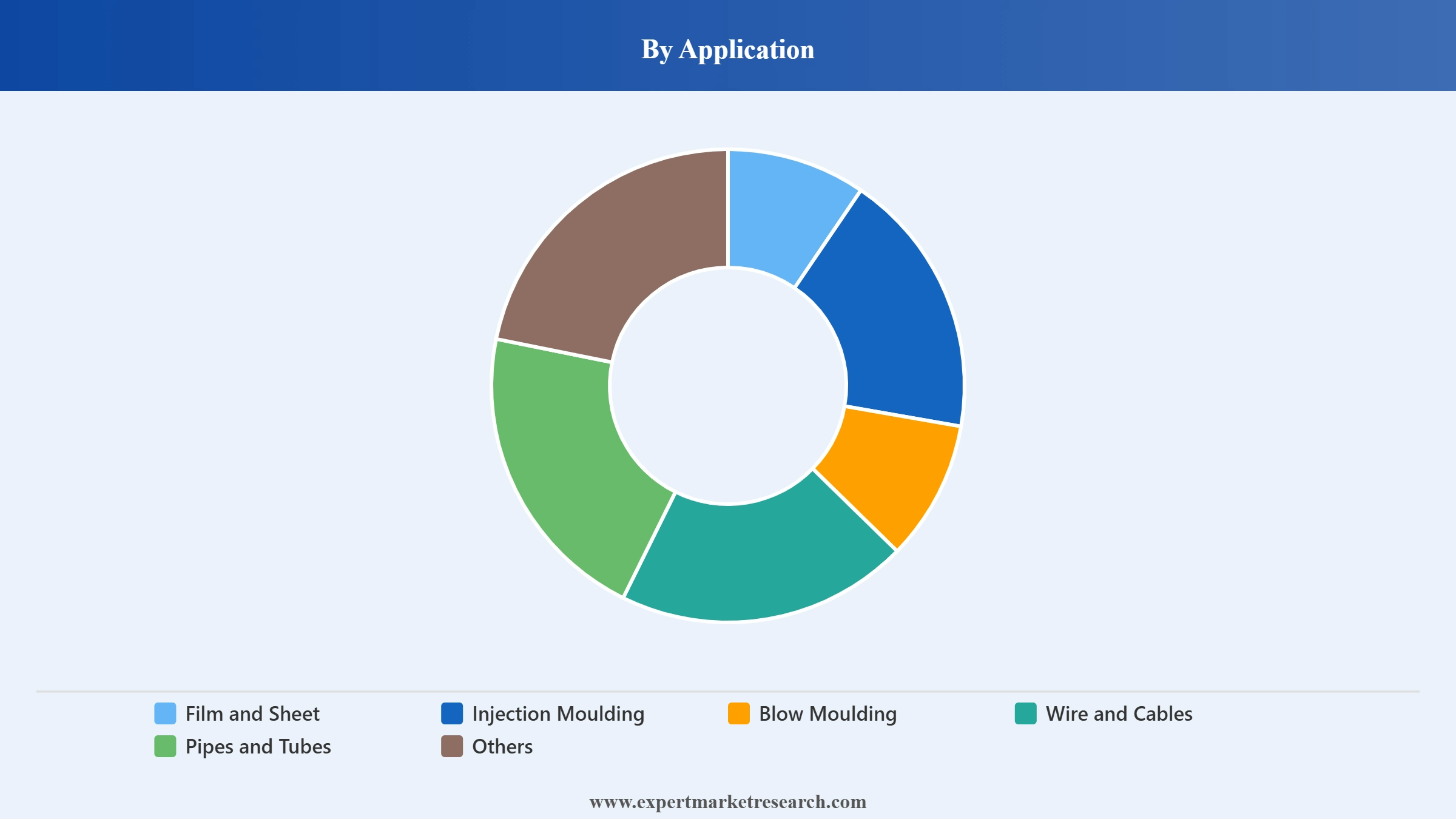
Market Breakup by Application
Key Insight: Film and Sheet is the dominant application segment in the MEA HDPE market, accounting for approximately 46% of total regional market volume in 2025. HDPE films and sheets are the primary material in flexible packaging for food and beverages, personal care products, and fast-moving consumer goods, where their moisture barrier properties, chemical resistance, and cost-effectiveness are critical. Pipes and Tubes represent the second-most-significant application, playing a central role in water supply, irrigation, oil and gas transportation, and sewage networks across the region.
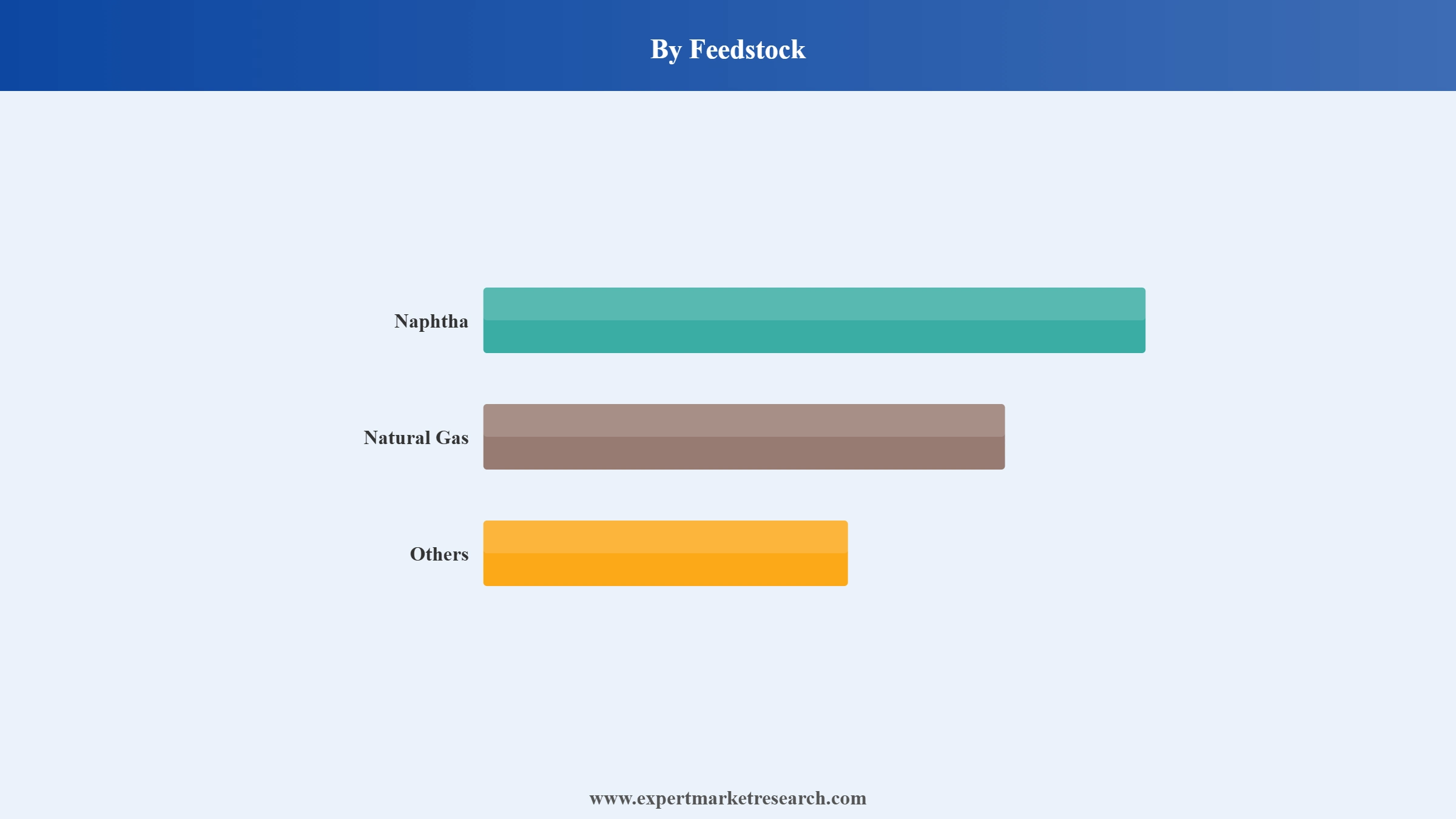
Market Breakup by Feedstock
Key Insight: Natural Gas is the dominant feedstock for HDPE production across the Middle East, where abundant reserves in Saudi Arabia, Qatar, and the UAE have historically given Gulf producers a significant cost advantage over naphtha-based competitors in Europe and Asia. Natural gas cracking produces ethylene at lower cost and with fewer by-products than naphtha cracking, enabling Gulf HDPE producers to maintain globally competitive pricing. Naphtha serves as the primary feedstock for HDPE production in Africa and some parts of the broader MEA region where natural gas infrastructure is less developed.
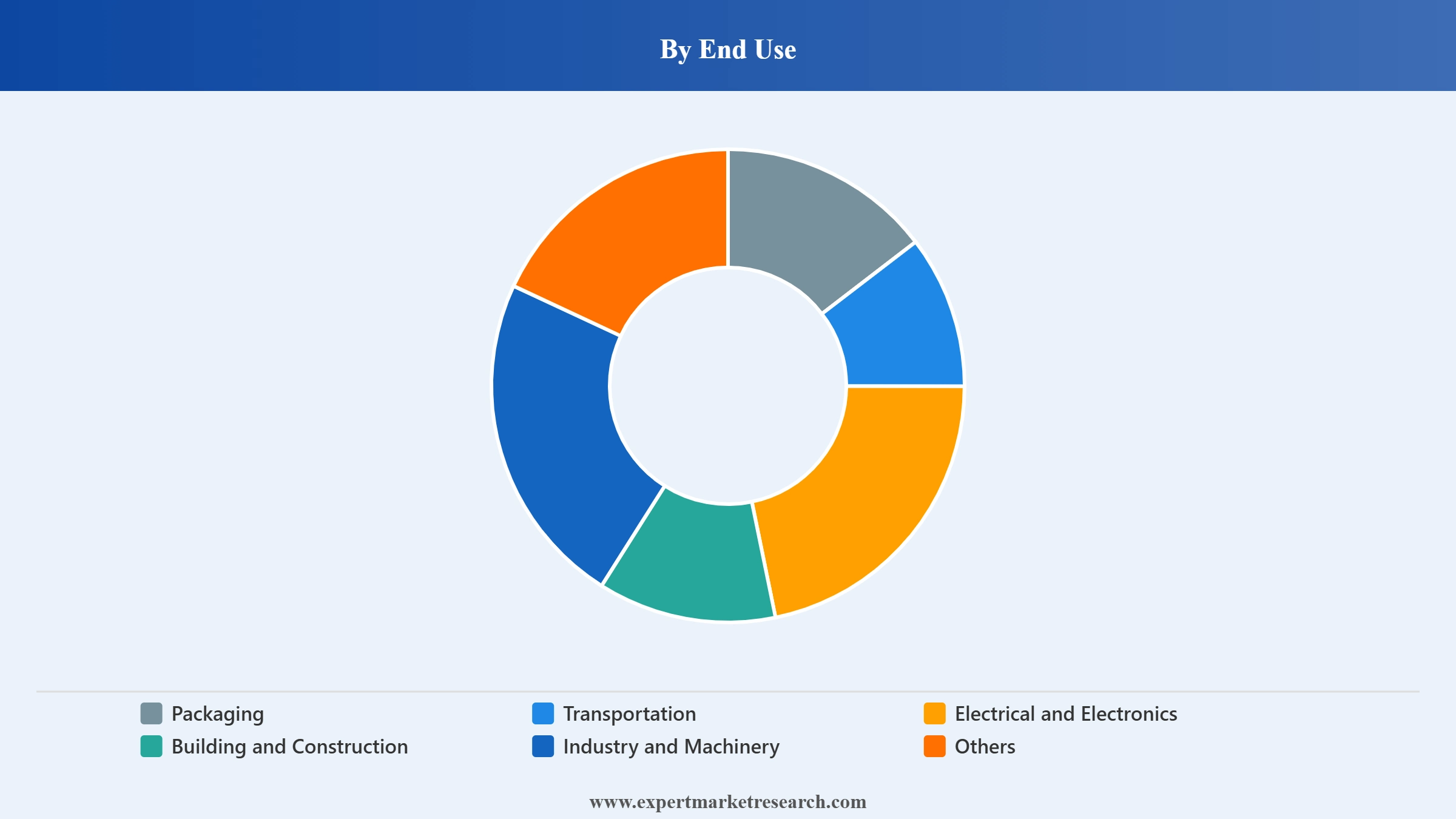
Market Breakup by End Use
Key Insight: Packaging is the dominant end-use segment in the MEA HDPE market, representing approximately 58% of total market volume in 2025. HDPE is the material of choice for a wide range of packaging formats including bottles, containers, crates, drums, and flexible films across food, beverage, chemical, and personal care categories. The rapid growth of e-commerce, food exports, and modern retail formats across Saudi Arabia, the UAE, and South Africa continues to generate sustained packaging demand. Building and Construction is the second most significant end-use category, with HDPE pipes serving as the backbone of new water management, drainage, and utility networks.
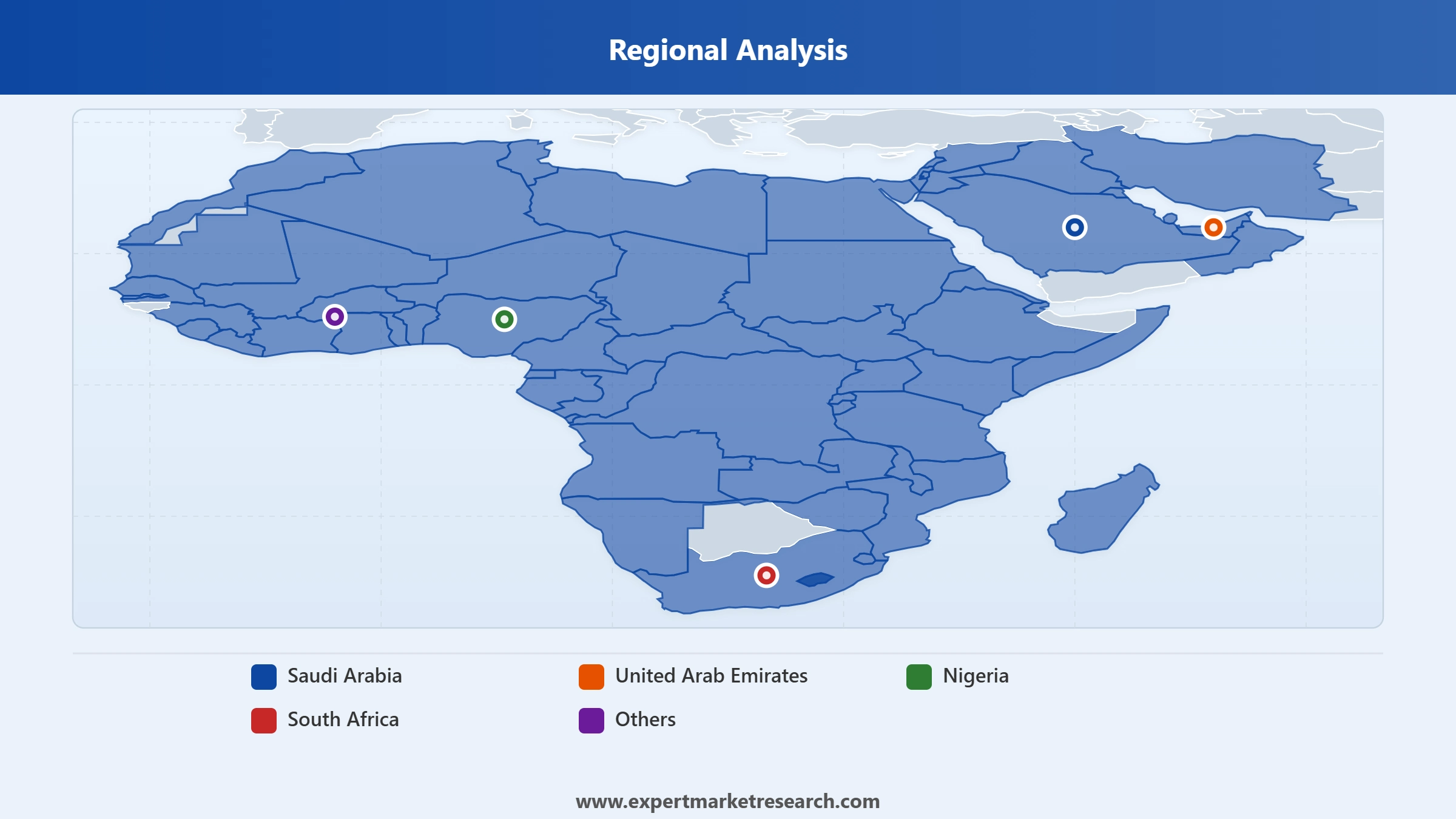
Market Breakup by Country
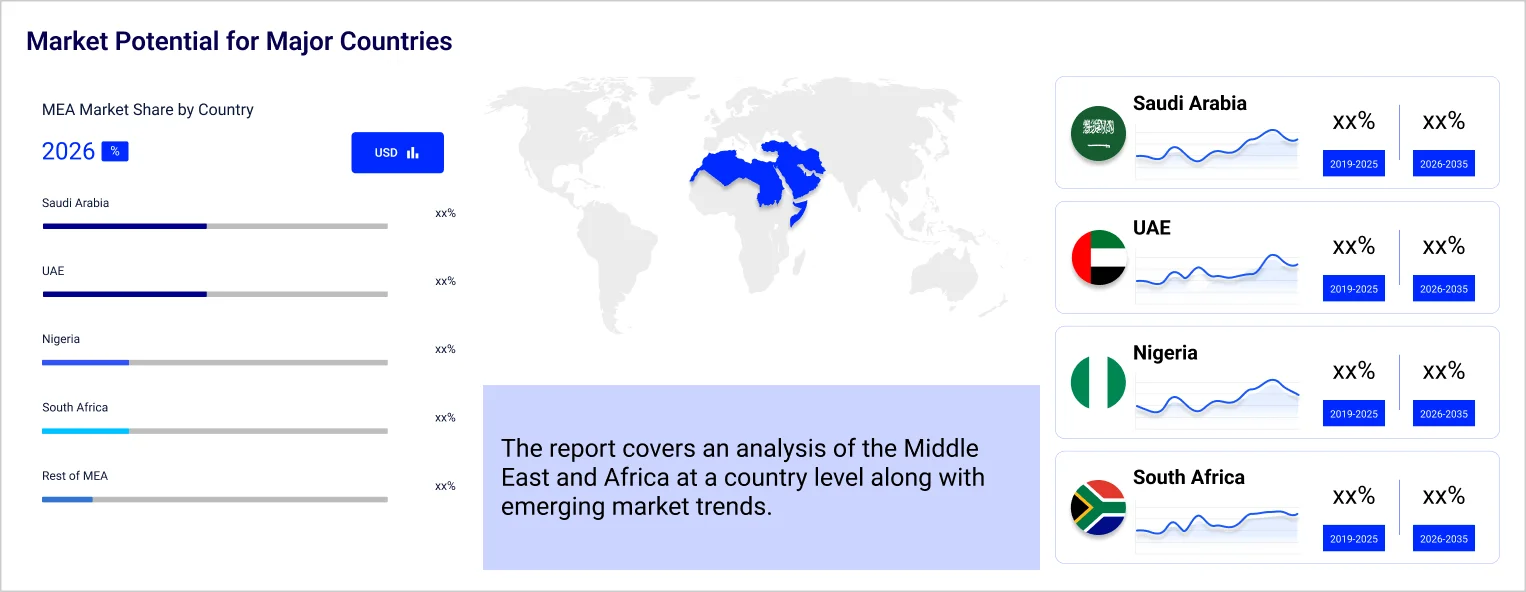
Key Insight: Saudi Arabia leads the MEA HDPE market with approximately 39% of total regional market share in 2025, underpinned by SABIC's 4-million-tonne HDPE production capacity and the country's massive construction, petrochemical, and packaging sectors. The UAE ranks second, achieving the fastest national growth rate within the region, driven by Borouge's expanded Ruwais capacity, Ta'ziz infrastructure investments, and booming e-commerce packaging demand. South Africa is the leading HDPE consumer in sub-Saharan Africa, with demand driven by agricultural irrigation, construction, and packaging.
Read more about this report - REQUEST FREE SAMPLE COPY IN PDF
By Application
Film and Sheet and Pipes and Tubes are the two most commercially significant application segments in the MEA HDPE market. Film and Sheet dominates, accounting for approximately 46% of regional market volume in 2025, driven by the region's expanding food packaging, FMCG distribution, and e-commerce fulfilment sectors. Pipes and Tubes are the second-largest application, essential for water supply, irrigation, gas distribution, and oil pipeline infrastructure across Saudi Arabia, South Africa, and sub-Saharan Africa. The SATORP HDPE expansion project in Jubail, valued at approximately USD 2 billion, reflects the scale of investment being directed toward strengthening Pipes and Tubes production capacity.
Read more about this report - REQUEST FREE SAMPLE COPY IN PDF
By End Use
Within the end-use segmentation, Packaging and Building and Construction are the two dominant categories. Packaging accounts for approximately 58% of total MEA HDPE volume in 2025, a dominance explained by the region's growing food export sector, rapid e-commerce adoption, and the widespread use of HDPE containers, drums, and films across industrial, chemical, and consumer goods logistics networks. Saudi Arabia and the UAE together account for approximately 5% and 3% respectively of global food export market value, sustaining consistent demand for HDPE export packaging.
Read more about this report - REQUEST FREE SAMPLE COPY IN PDF
By Feedstock
Within the feedstock segmentation, Natural Gas and Naphtha are the two primary categories. Natural Gas holds the dominant position among MEA HDPE producers, particularly in the Gulf states, where Qatar, Saudi Arabia, and the UAE benefit from low-cost, abundant natural gas reserves that underpin globally competitive HDPE production costs. This natural advantage has made the Gulf a major HDPE exporting hub. Naphtha is predominantly used by producers in parts of Africa and non-GCC Middle Eastern countries with less developed gas infrastructure.
Read more about this report - REQUEST FREE SAMPLE COPY IN PDF
Saudi Arabia is the anchor of the MEA HDPE market, holding approximately 39% of total regional volume in 2025. The Kingdom is home to world-scale petrochemical production complexes in Jubail and Yanbu, anchored by SABIC's integrated HDPE operations and supported by SATORP's expanding downstream capacity. Vision 2030's mega-projects, which span construction, tourism, and industrial diversification, are generating multi-year demand for HDPE pipes, films, and building materials. Saudi Arabia's agricultural sector relies heavily on HDPE pipes and drip irrigation systems to manage water resources efficiently across food production facilities.
Read more about this report - REQUEST FREE SAMPLE COPY IN PDF
The United Arab Emirates is the fastest-growing national HDPE market within the MEA region, driven by a unique combination of large-scale petrochemical production expansion and surging domestic consumption. Borouge's Ruwais complex achieved a nameplate polyethylene capacity of 6.4 million tonnes per year by 2025, positioning the UAE as the region's leading polyethylene exporter. The Ta'ziz industrial zone has attracted AED 7.34 billion in infrastructure investments, including a dedicated chemicals port that streamlines HDPE export volumes toward Africa and South Asia. Domestically, the UAE's e-commerce sector is projected to generate approximately USD 8 billion in annual sales by 2025, making HDPE flexible packaging a key growth category.
The MEA HDPE market is moderately concentrated, with a handful of large Gulf petrochemical producers, most notably SABIC and Tasnee in Saudi Arabia and Borouge in the UAE, commanding significant market share on the production side. On the supply side, global majors including Dow, Exxon Mobil, and LyondellBasell participate through technology licensing, grade supply, and direct distribution partnerships.
The competitive landscape is shaped by natural gas feedstock cost advantages among Gulf producers, ongoing capacity expansion investments, and a growing emphasis on recycled and sustainable HDPE grades to meet tightening regional regulations. International players differentiate through technology innovation, advanced HDPE grades for specialised applications, and long-term supply partnerships with end-use customers in packaging, construction, and electrical sectors across the region.
Founded in 1897 and headquartered in Midland, Michigan, United States, Dow Inc. is one of the world's leading materials science companies with a diversified portfolio spanning plastics, chemicals, and agricultural products. In HDPE, Dow is a major technology licensor and direct producer, supplying speciality and commodity grades for packaging, pipes, and wire-and-cable applications globally. In June 2025, Dow commenced operations at a new production unit in Freeport, Texas, adding 600,000 metric tonnes per year of polyethylene capacity, with significant volumes directed toward export markets including MEA.
Ilam Petrochemical Co. is an Iranian petrochemical producer headquartered in Bushehr Province, Iran, and is a subsidiary within Iran's National Petrochemical Company ecosystem. The company produces HDPE alongside olefins and other polymers using advanced polymerisation technologies, serving domestic and regional markets. Ilam Petrochemical's HDPE output targets packaging, pipe, and injection-moulding applications, with ethylene and propylene also produced as key feedstocks. Despite operating within geopolitical constraints, the company remains a notable MEA HDPE supplier particularly for markets in Africa and Central Asia.
Founded in 1870 and headquartered in Spring, Texas, United States, Exxon Mobil Corporation is one of the world's largest publicly traded energy and chemical companies. ExxonMobil is a major HDPE producer and technology licensor, supplying high-performance grades across packaging, pipes, and consumer goods applications globally. The company's HDPE solutions are marketed under its Paxon and Enable brand families, with speciality grades targeting demanding applications such as large-diameter pressure pipes and blow-moulded industrial containers. ExxonMobil's integrated upstream and downstream operations give it significant cost efficiency advantages.
Founded in 2007 and headquartered in Rotterdam, Netherlands, LyondellBasell is one of the world's largest plastics, chemicals, and refining companies, and a leading HDPE producer and technology licensor globally. The company's Hostalen and Lupotech technologies are among the most widely licensed HDPE process platforms worldwide, and its HDPE grades serve packaging, pipe, film, and blow-moulding markets. In January 2025, LyondellBasell's Hostalen ACP technology was selected by Indian Oil Corporation for a 500,000-tonne HDPE plant in Paradip, India, reflecting the continued global demand for its process technologies.
Other key players in the market are Amir Kabir Petrochemical Company, Marun Petro Chemical Group, Saudi Basic Industries Corporation (SABIC), National Industrialization Company SJSC (Tasnee), Jam Petrochemical Company, and Others.
*Please note that this is only a partial list; the complete list of key players is available in the full report. Additionally, the list of key players can be customized to better suit your needs.*
Gain a comprehensive understanding of the Middle East and Africa High Density Polyethylene (HDPE) Market 2026 through our detailed industry report. Covering volume trends, end-use dynamics, competitive strategies, and country-level analysis from 2026 to 2035, this report equips you with the intelligence to identify growth opportunities and manage risks in one of the region's most critical industrial polymer markets. Whether you are a producer, processor, investor, or policymaker, the insights in this report will help you make decisions with greater clarity and confidence. Download your free sample report today.


Upto 15% Off
USD
$2499 $2249
$3999 $3599
$4999 $4249
$5999 $5099


*While we strive to always give you current and accurate information, the numbers depicted on the website are indicative and may differ from the actual numbers in the main report. At Expert Market Research, we aim to bring you the latest insights and trends in the market. Using our analyses and forecasts, stakeholders can understand the market dynamics, navigate challenges, and capitalize on opportunities to make data-driven strategic decisions.*
In 2025, the Middle East and Africa high density polyethylene (HDPE) market attained a volume of nearly 4.82 Million Tons.
The market is projected to grow at a CAGR of 2.80% between 2026 and 2035.
The Middle East and Africa high density polyethylene (HDPE) market is expected to attain a volume of 6.35 Million Tons by 2035.
The major drivers of the market are the increasing construction activities, rapid industrialisation, and the demand for sustainable packaging materials in the region.
The key trends of the market include technological advancements in HDPE production processes, the use of HDPE conduits and cables in 5G telecom infrastructure expansion, and the increasing adoption of recycled HDPE in the region.
The major countries in the market are Saudi Arabia, UAE, South Africa, and Nigeria, among others.
The major feedstocks for HDPE production are natural gas and naphtha, among others.
The significant segments based on end-use are packaging, transportation, electrical and electronics, building and construction, industry and machinery, among others.
The several applications of HDPE are films and sheets, injection moulding, blow moulding, wire and cables, and pipes and tubes, among others.
The major players in the market are Dow Inc., Ilam Petrochemical Co., Exxon Mobil Corporation, LyondellBasell Industries N.V., Amir Kabir Petrochemical Company, Marun Petro Chemical Group, Saudi Basic Industries Corporation (SABIC), National Industrialization Company SJSC (Tasnee), and Jam Petrochemical Company, among others.
Explore our key highlights of the report and gain a concise overview of key findings, trends, and actionable insights that will empower your strategic decisions.
| REPORT FEATURES | DETAILS |
| Base Year | 2025 |
| Historical Period | 2019-2025 |
| Forecast Period | 2026-2035 |
| Scope of the Report |
Historical and Forecast Trends, Industry Drivers and Constraints, Historical and Forecast Market Analysis by Segment:
|
| Breakup by Application |
|
| Breakup by Feedstock |
|
| Breakup by End Use |
|
| Breakup by Region |
|
| Market Dynamics |
|
| Competitive Landscape |
|
| Companies Covered |
|
Datasheet
One User
USD 2,499
USD 2,249
tax inclusive*
Single User License
One User
USD 3,999
USD 3,599
tax inclusive*
Five User License
Five User
USD 4,999
USD 4,249
tax inclusive*
Corporate License
Unlimited Users
USD 5,999
USD 5,099
tax inclusive*
*Please note that the prices mentioned below are starting prices for each bundle type. Kindly contact our team for further details.*
Flash Bundle
Small Business Bundle
Growth Bundle
Enterprise Bundle
*Please note that the prices mentioned below are starting prices for each bundle type. Kindly contact our team for further details.*
Flash Bundle
Number of Reports: 3
20%
tax inclusive*
Small Business Bundle
Number of Reports: 5
25%
tax inclusive*
Growth Bundle
Number of Reports: 8
30%
tax inclusive*
Enterprise Bundle
Number of Reports: 10
35%
tax inclusive*
How To Order

Select License Type
Choose the right license for your needs and access rights.

Click on ‘Buy Now’
Add the report to your cart with one click and proceed to register.

Select Mode of Payment
Choose a payment option for a secure checkout. You will be redirected accordingly.
Strategic Solutions for Informed Decision-Making
Gain insights to stay ahead and seize opportunities.

Get insights & trends for a competitive edge.

Track prices with detailed trend reports.

Analyse trade data for supply chain insights.

Leverage cost reports for smart savings

Enhance supply chain with partnerships.

Connect For More Information
Our expert team of analysts will offer full support and resolve any queries regarding the report, before and after the purchase.
Our expert team of analysts will offer full support and resolve any queries regarding the report, before and after the purchase.
We employ meticulous research methods, blending advanced analytics and expert insights to deliver accurate, actionable industry intelligence, staying ahead of competitors.
Our skilled analysts offer unparalleled competitive advantage with detailed insights on current and emerging markets, ensuring your strategic edge.
We offer an in-depth yet simplified presentation of industry insights and analysis to meet your specific requirements effectively.




