

Consumer Insights
Uncover trends and behaviors shaping consumer choices today
Procurement Insights
Optimize your sourcing strategy with key market data
Industry Stats
Stay ahead with the latest trends and market analysis.
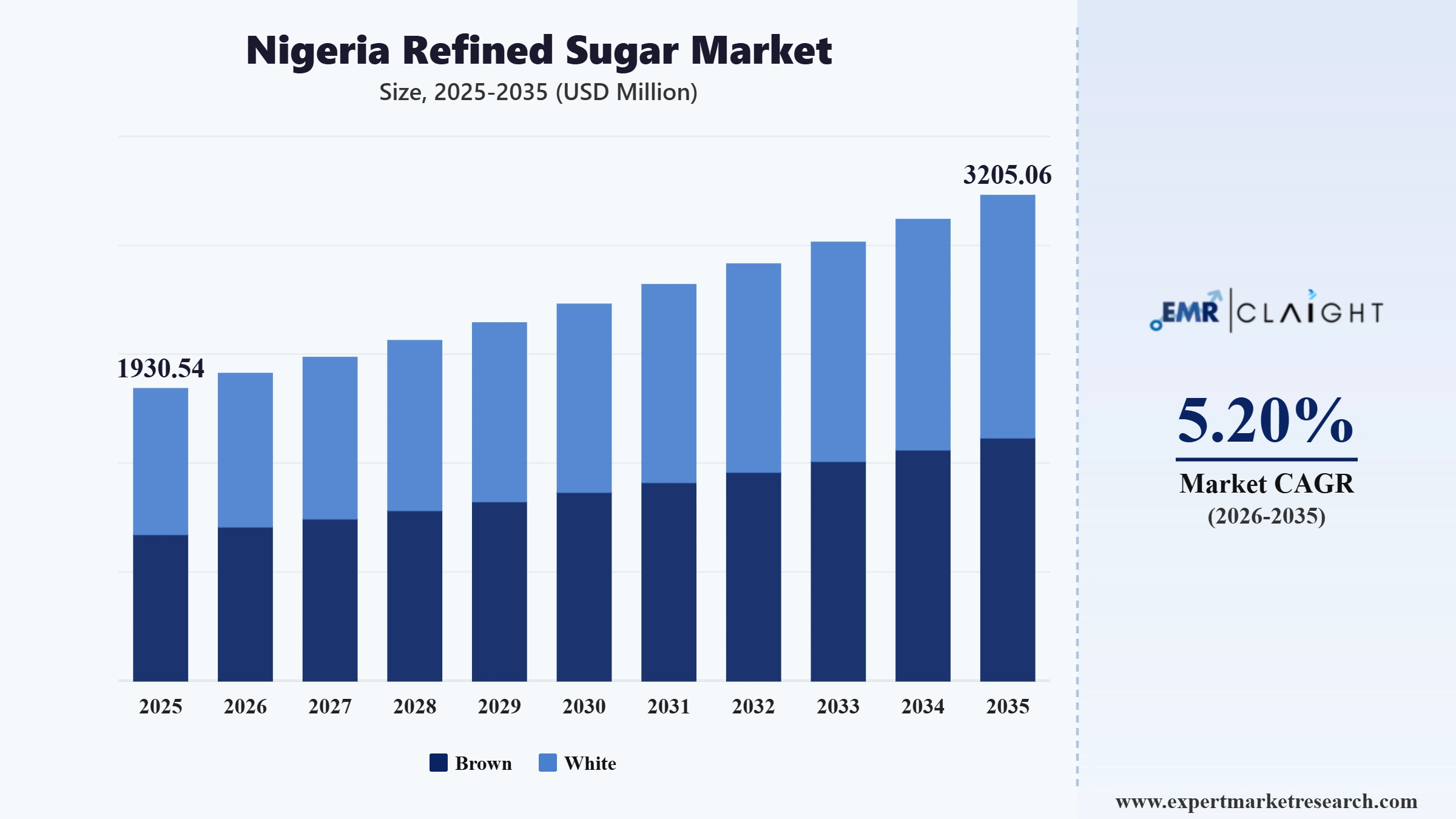
The Nigeria refined sugar market was valued at USD 1930.54 Million in 2025. The market is expected to grow at a CAGR of 5.20% during the forecast period of 2026-2035 to reach a value of USD 3205.06 Million by 2035. Rising investments in ethanol co-production from sugarcane, aimed at diversifying revenue streams and strengthening energy security, are driving new opportunities in the market.
The market is advancing forward with state-backed policies and private investments, with the Nigeria Sugar Master Plan (NSMP) at the core of this transformation. The extension of the NSMP into its second phase, running till 2033, sets a bold target of producing 2 million metric tons of sugar locally by 2032. Moreover, according to the Nigeria refined sugar market analysis, the country’s sugarcane output is forecast to increase by 8% in the 2023/24 cycle, as investments in cane-crushing facilities expand. This push aligns with the government’s Backward Integration Plan (BIP), which incentivizes companies to develop domestic cultivation and refining estates, reducing reliance on imported sugar.
Another strong driving factor is the expanding food and beverage sector, which continues to absorb a significant share of refined sugar demand. Reports suggest that Nigeria became Sub-Saharan Africa’s largest soft drink consumer in 2024, crossing 53 billion liters annually, while bakeries and confectioners are also scaling up production to meet urban consumption needs. Companies such as Dangote Sugar, BUA Foods, and Golden Sugar have responded by upgrading refinery capacity and securing land for sugar estates, propelling growth in the Nigeria refined sugar market.
Read more about this report - REQUEST FREE SAMPLE COPY IN PDF
| Nigeria Refined Sugar Market Report Summary | Description | Value |
| Base Year | USD Million | 2025 |
| Historical Period | USD Million | 2019-2025 |
| Forecast Period | USD Million | 2026-2035 |
| Market Size 2025 | USD Million | 1930.54 |
| Market Size 2035 | USD Million | 3205.06 |
| CAGR 2019-2025 | Percentage | XX% |
| CAGR 2026-2035 | Percentage | 5.20% |
| CAGR 2026-2035 - Market by End Use | Food and Beverage | 5.5% |
| CAGR 2026-2035 - Market by End Use | Bakery and Confectionery | 5.0% |
| CAGR 2026-2035 - Market by Source | Sugar Cane | 5.2% |
| CAGR 2026-2035 - Market by End Use | Brown | 6.2% |
Nigeria’s National Sugar Development Council partnered with China to boost local sugar production, technology transfer, and training, aiming to enhance domestic output and position Nigeria for exports to China’s lucrative billion sugar market. This development is boosting local sugar production, introducing advanced technology, and enhancing Nigeria’s export potential.
Dangote Group announced plans to launch a major sugar refinery in Kwame-Danso, Ghana, under the country’s One District, One Factory initiative. The facility is expected to feature a daily sugarcane crushing capacity of 12,000 tons and aims to significantly reduce Ghana annual sugar import bill while boosting local agro-industrial capacity. This Nigeria refined sugar market development strengthen local sugar production, reducing import dependency, and expanding agro-industrial capacity.
Dangote Sugar Refinery Plc (DSR) announced its plans to produce 700,000 metric tons of refined sugar from locally cultivated sugarcane in the next four years. The company also revealed its ten-year plan to use local sugarcane to manufacture 1.5 million MT of sugar annually. The company also plans to expand its DS Numan factory and grow more sugarcane. It aims to have 24,200 hectares of land by 2029 for sugarcane production. These plans are increasing local sugar output, promoting self-sufficiency, and supporting large-scale sugarcane cultivation for sustainable supply.
The Federal Government embarked on its efforts to launch Phase II of the Nigeria Sugar Master Plan (NSMP) to achieve a minimum production capacity of 2 million metric tons of sugar, generate 400 MW of electricity, and create 110,000 jobs throughout the entire value chain across the nation. This Nigeria refined sugar market development is driving national production capacity, renewable energy generation, and significant job creation across the sugar value chain.
Nigeria’s sugar sector is increasingly becoming attractive to private and international investors, backed by the National Sugar Development Council (NSDC). In April 2025, the council signed a USD 1 billion MoU with Chinese firm SINOMACH to develop sugarcane cultivation and processing hubs targeting one million metric tons of sugar annually. Such large-scale commitments are boosting rural infrastructure, creating jobs, and expanding processing capacity, driving the Nigeria refined sugar market opportunities. By coupling government incentives with private capital, Nigeria is establishing itself as a destination for sugar industry growth across West Africa.
The food and beverage sector remains a key consumer of refined sugar in Nigeria, fueled by changing urban lifestyles and rising incomes. The bakery and confectionery industry is also scaling production to meet consumer demand for convenience foods, cakes, and biscuits. Companies like BUA Foods and Flour Mills of Nigeria are integrating sugar refining with food production to meet these requirements efficiently, fueling demand in the Nigeria refined sugar market. As urbanization accelerates, sugar demand from beverage and bakery chains is set to remain one of the market’s strongest long-term growth catalysts.
Nigeria’s dependence on imported refined sugar continues to pressure domestic supply chains. USDA projects that imports could rise by 12% to 1.9 million metric tons during 2025/26, as consumption outpaces production. State-level programs, such as Niger State’s initiative to boost sugar output alongside ethanol production, reflect growing momentum in the Nigeria refined sugar market dynamics. The widening supply-demand gap has effectively triggered fresh investments in refineries, cane crushing operations, and out-grower schemes designed to strengthen domestic self-sufficiency.
The Nigerian market is experiencing a gradual shift in consumer preferences, with fortified brown sugar gaining traction alongside traditional white sugar. For example, Flour Mills of Nigeria launched Sunti Brown Sugar, a vitamin A-enriched variant, in April 2022 to align with consumer health consciousness, boosting further refined sugar consumption in Nigeria. Brown sugar’s appeal stems from its mineral content and natural flavor profile, making it attractive to bakeries and health-aware households.
A growing trend is the integration of sugarcane estates with ethanol and bioenergy production, offering diversified revenue streams and reduced energy dependency. Niger State’s initiative to generate 250 million liters of ethanol from cane illustrates this Nigeria refined sugar market trend. Companies are exploring cogeneration from bagasse to power refineries and nearby communities, supporting the country’s renewable energy goals. This integration not only enhances profitability for sugar producers but also aligns with national energy security and sustainability targets.
The EMR’s report titled “Nigeria Refined Sugar Market Report and Forecast 2026-2035” offers a detailed analysis of the market based on the following segments:
Market Breakup by Product Type
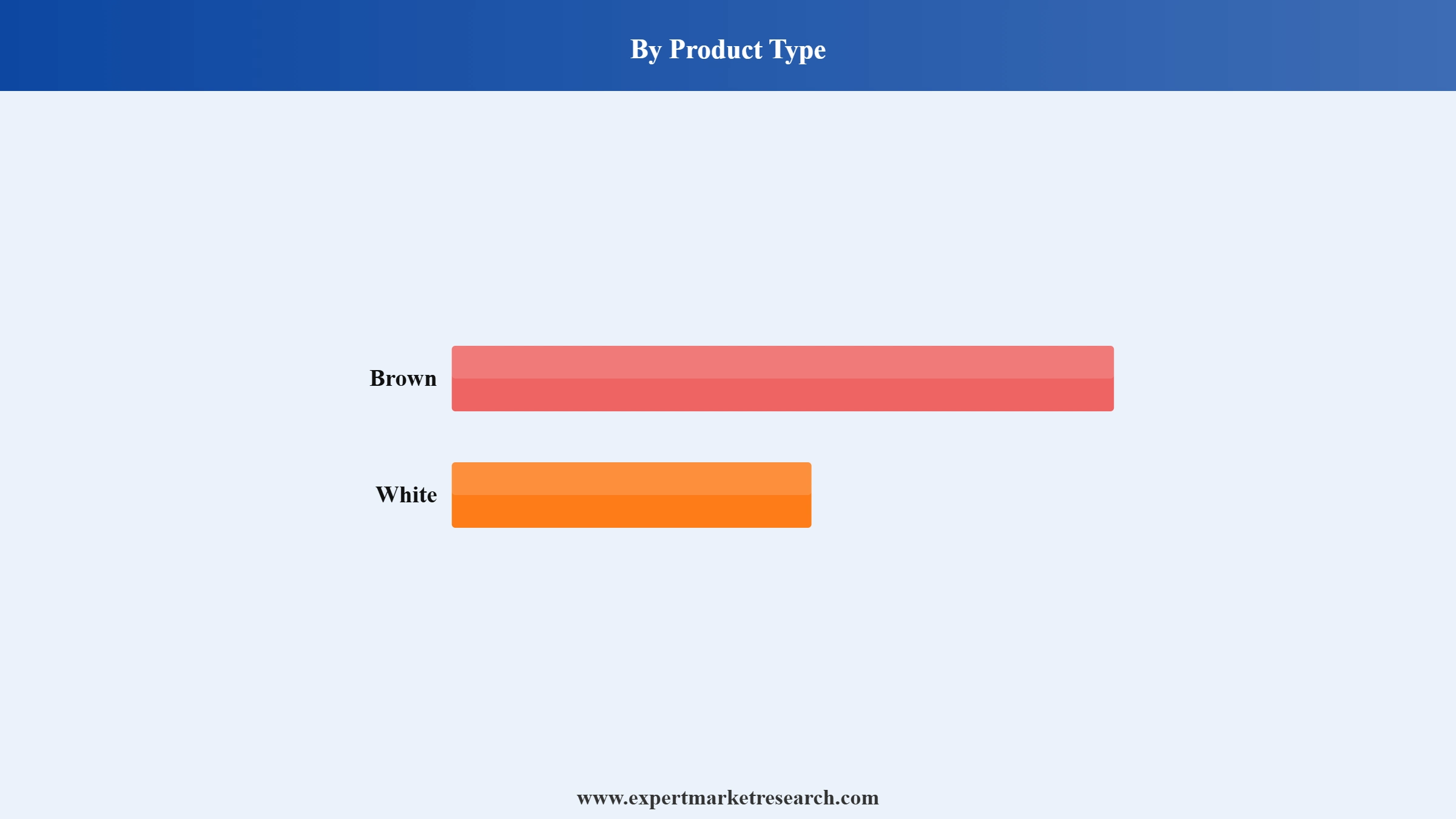
Key Insight: According to the Nigeria refined sugar market report, white sugar maintains dominance due to its established role in food, beverages, and household consumption, while brown sugar emerges as the fastest-growing category, shaped by innovation and consumer health awareness. The diversification of offerings reflects industry resilience, as producers introduce fortified and value-added sugars to capture changing preferences.
Market Breakup by Form
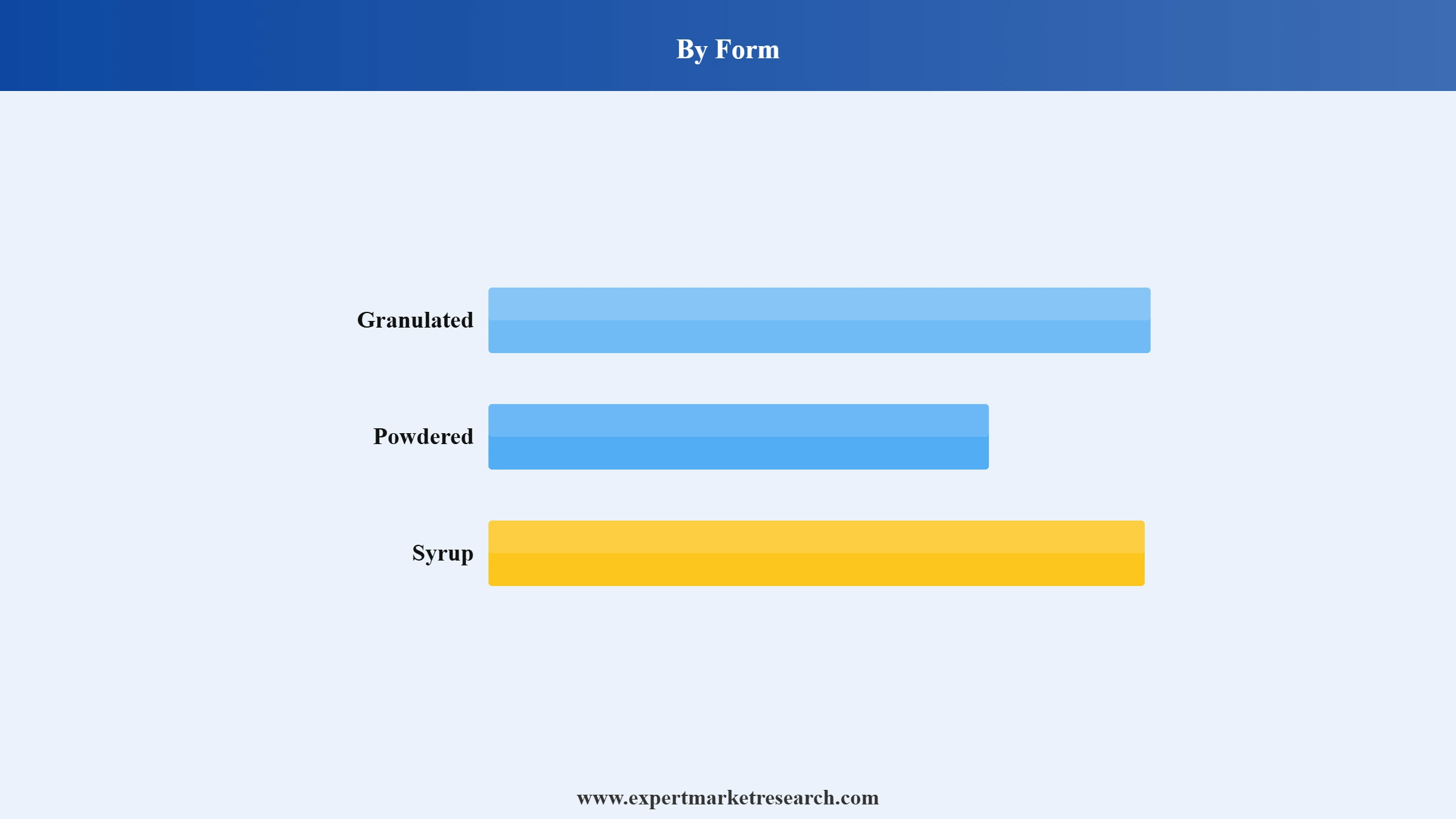
Key Insight: The market is shaped by the dominance of granulated sugar, the most versatile and widely used form across household and industrial settings. Powdered sugar plays a niche role in bakery and confectionery, while syrup is emerging as the fastest-growing form, driven by its integration in beverage manufacturing and ready-to-eat products. Each form addresses specific industry needs. Granulated sugar provides stability, powdered sugar offers functionality in specialty desserts, and syrup delivers scalability in high-volume food and beverage operations, accelerating demand in the Nigeria refined sugar market.
Market Breakup by Source
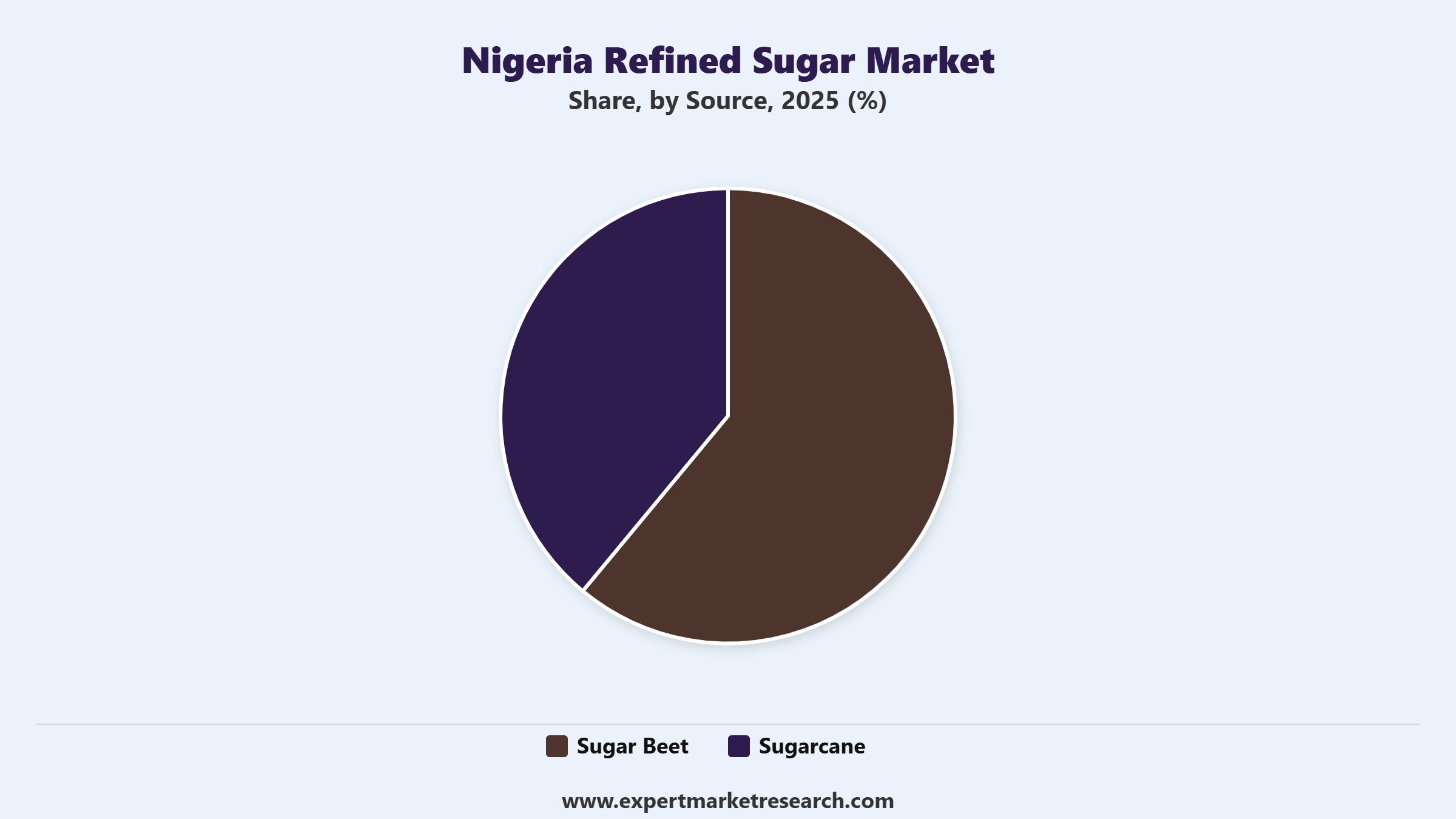
Key Insight: The market is almost entirely dependent on sugarcane, which remains the largest and fastest-growing source due to government-backed expansion and heavy private investment. Sugar beet, while not commercially significant, represents an experimental avenue for diversification, supported by pilot projects in specific regions. Cane’s dominance in the Nigeria refined sugar market lies in its scalability and multi-industry applications, while beet could act as a complementary source in the long term if agronomic challenges are addressed.
Market Breakup by End Use
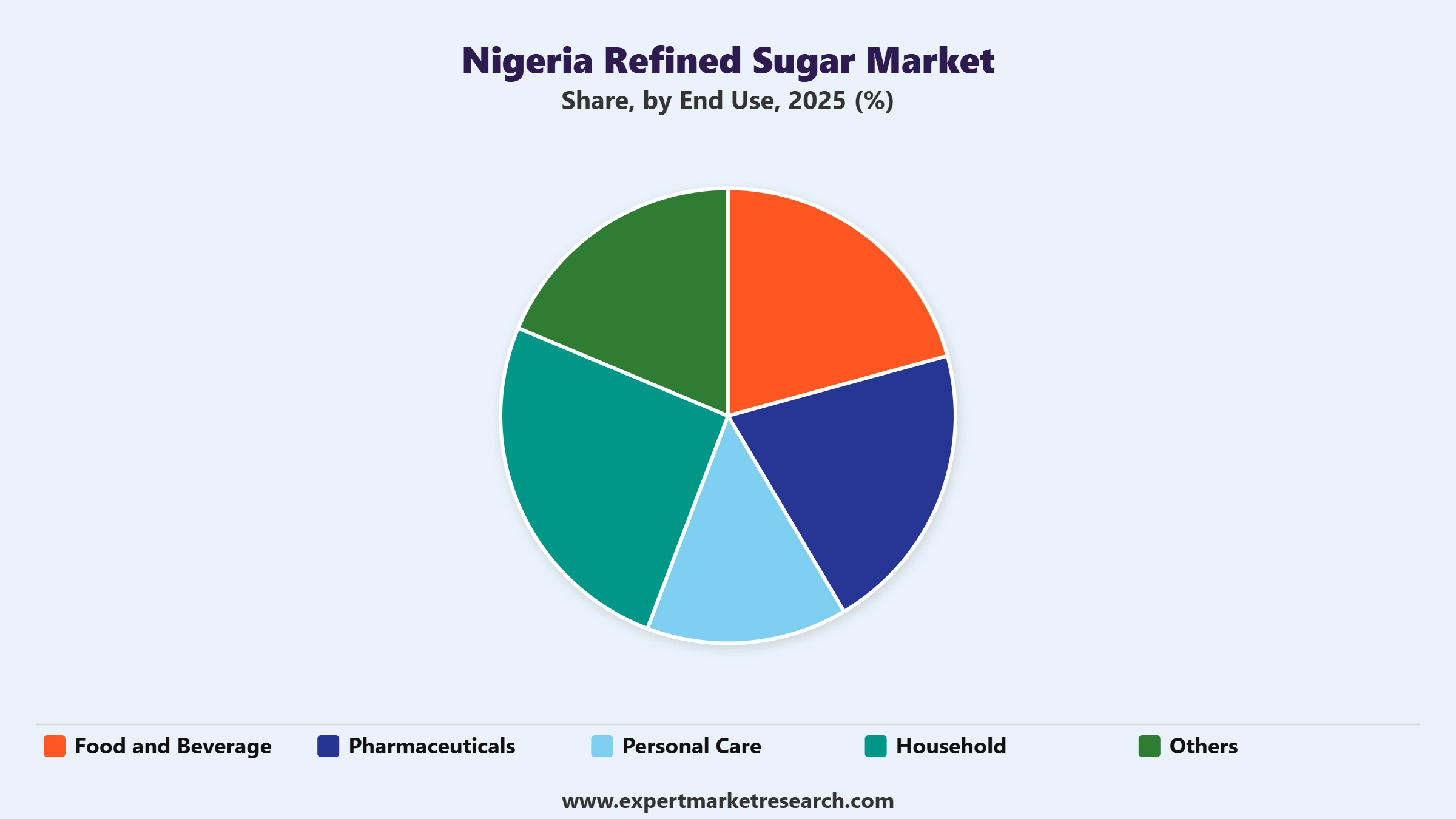
Key Insight: The market growth is mainly anchored by food and beverages, the dominant end-use, supported by bakery, confectionery, and carbonated drinks. Pharmaceuticals are growing fast, while personal care industries utilize sugar in skincare formulations, and households maintain steady use for everyday sweetening. Other smaller sectors, including industrial and specialty applications, add further diversity to demand.
Read more about this report - REQUEST FREE SAMPLE COPY IN PDF
By product type, white sugar holds the largest share due to widespread use
White sugar continues to dominate the refined sugar market in Nigeria, retaining demand across households, bakeries, and beverage manufacturers. Its widespread availability and versatility make it indispensable in cooking, baking, and industrial processing. White sugar also benefits from long-established distribution networks, enabling consistent supply across urban and rural markets. Companies like Dangote Sugar and Golden Sugar focus on scaling production capacity to meet this entrenched demand, supported by government incentives under the Nigeria Sugar Master Plan.
Read more about this report - REQUEST FREE SAMPLE COPY IN PDF
Brown sugar is gaining rapid momentum in terms of the Nigeria refined sugar market revenue share, driven by health-conscious consumers and innovation from local producers. Valued for its richer taste and perceived nutritional edge, brown sugar is being increasingly adopted in the bakery and confectionery sectors. The launch of fortified Sunti Brown Sugar by Flour Mills of Nigeria highlights industry innovation to meet evolving preferences. Government support for value-added sugar products is also accelerating adoption.
By form, granulated sugar leads the market due to versatility
Granulated sugar, driven by its wide usability across households, bakeries, and beverage producers, significantly contributes to the Nigeria refined sugar market value. Its consistent texture, ease of storage, and long shelf life make it the default choice for sweetening and food processing. Industrial users rely heavily on granulated sugar for confectionery, jams, and baked goods, ensuring steady, large-scale demand. Quick-service restaurants and packaged food manufacturers also prefer it for consistency in taste and quality.
Read more about this report - REQUEST FREE SAMPLE COPY IN PDF
Syrup is witnessing strong growth in the Nigeria refined sugar market, as beverage companies and processed food producers increasingly adopt it for efficiency and solubility. The expansion of Nigeria’s carbonated drink industry, coupled with rising demand for ready-to-eat packaged products, has accelerated syrup usage. Quick-service restaurants and fast-growing local beverage brands are adopting sugar syrup for its consistency, ease of mixing, and suitability for high-volume production. Producers are also refining processes to deliver high-purity syrups that meet evolving industrial standards.
By source, sugarcane dominates the industry as the primary source of refined sugar
Sugarcane commands the largest share of the Nigeria refined sugar industry revenue, supported by large-scale cultivation projects and government incentives under the National Sugar Master Plan. The harvested area is expected to grow by nearly 5% in MY 2025/26, reaching close to 100,000 hectares. Companies like Dangote Sugar and BUA Foods are investing heavily in integrated estates that include plantations, mills, and refineries. The crop’s dual use in ethanol and bagasse-based energy also adds economic value, strengthening its role beyond refined sugar. With strong institutional support and extensive cultivation potential, sugarcane is expected to remain the dominant and most reliable source for Nigeria’s sugar supply.
Read more about this report - REQUEST FREE SAMPLE COPY IN PDF
While sugarcane dominates, sugar beet has gained traction in the market as an alternative source, though on a much smaller scale. Nigeria’s climate poses challenges for beet farming, yet experimental cultivation projects are underway in select northern regions with cooler conditions. The potential lies in diversifying raw material sources to reduce overdependence on cane, particularly in areas with water scarcity, broadening the scope of the Nigeria refined sugar market expansion. Sugar beet production remains commercially insignificant, but innovations in drought-resistant varieties could open up several opportunities.
By end use, the food and beverage industry leads sugar consumption in Nigeria
The food and beverage sector represents the dominant end-use category for refined sugar in Nigeria, absorbing the largest share of total consumption. Rising urbanization and middle-class growth have spurred demand for processed foods, bakery products, and beverages. Quick-service restaurants, bakeries, and FMCG brands continue to expand production, reinforcing the sector’s heavy reliance on sugar as a key ingredient. Refined sugar is also vital for confectionery, jams, and bottled drinks, making the food and beverage industry the most influential motivator of the Nigeria refined sugar market growth.
Read more about this report - REQUEST FREE SAMPLE COPY IN PDF
The pharmaceutical industry is emerging as a fast-growing end-use category for refined sugar in Nigeria. Sugar plays a crucial role in drug formulations, acting as a stabilizer, sweetener, and excipient in syrups, tablets, and pediatric medicines. As Nigeria’s pharmaceutical manufacturing base expands under government-backed local production policies, the reliance on refined sugar is expected to rise. Demand is particularly strong in over-the-counter medicines, antibiotics, and vitamin supplements, where sugar enhances palatability and shelf life. With the federal government promoting pharmaceutical self-sufficiency and healthcare access, refined sugar’s importance in drug production is likely to expand significantly over the forecast period.
Established Nigeria refined sugar market players such as Dangote Sugar Refinery, BUA Foods, Golden Sugar, and Flour Mills of Nigeria are focusing on backward integration, expanding estates, and upgrading refining capacities in line with the Nigeria Sugar Master Plan. BUA Foods is also advancing refinery upgrades and land acquisitions for cane cultivation. Apart from capacity expansion, firms are exploring fortified and value-added products, such as vitamin A-enriched brown sugar, to capture shifting consumer demand.
Nigeria refined sugar companies are finding lucrative opportunities in cogeneration, ethanol production, and strategic exports within West Africa. With government incentives, infrastructure investments, and strong consumption growth, competition will intensify for players who balance cost efficiency, product diversification, and integration across the value chain.
Established in 1981 and headquartered in Lagos, Dangote Sugar Refinery is the largest player in Nigeria’s refined sugar sector. The company is expanding backward integration projects by developing sugarcane estates and building milling plants to reduce import reliance. Dangote is also exploring cogeneration and ethanol production from sugar by-products, positioning itself as an energy and food solutions provider.
Founded in 1988 and based in Lagos, BUA Foods operates one of West Africa’s largest sugar refineries with a focus on high-capacity production. The company is actively acquiring land for sugarcane cultivation and introducing new refining technologies that improve efficiency and product quality. BUA is also developing fortified sugar varieties, including vitamin A-enriched options, to meet health-focused consumer demands.
Established in 1960 with headquarters in Lagos, FMN Plc manages Golden Sugar Company, a subsidiary driving innovation in refined sugar production. The company emphasizes sustainable agriculture through its sugar estate developments in Niger State, where it integrates modern irrigation systems to boost yields. FMN also prioritizes supply chain reliability, ensuring consistent sugar availability for bakeries, confectioneries, and pharmaceutical manufacturers.
Founded in 2012 and headquartered in Nigeria, Graceco Limited operates as a mid-sized but agile player in the Nigerian refined sugar industry. By leveraging innovation in packaging and portion-control formats, Graceco targets urban retail markets and SMEs in the food sector. Its nimble structure allows faster adaptation to consumer shifts, while partnerships with local distributors enhance market penetration.
*Please note that this is only a partial list; the complete list of key players is available in the full report. Additionally, the list of key players can be customized to better suit your needs.*
Another key player in the market is Dogan's Sugar Limited, among others.
Explore the latest trends shaping the Nigeria refined sugar market 2026-2035 with our in-depth report. Gain strategic insights, future forecasts, and key market developments that can help you stay competitive. Download a free sample report or contact our team for customized consultation on Nigeria refined sugar market trends 2026.
Australia Sugar Free Food and Beverage Market
Asia Pacific Liquid Sugar Market
Australia Brown Sugar Market
Thailand Liquid Sugar Market
Vietnam Liquid Sugar Market
United States Sugar Market
China Liquid Sugar Market
Colombia Sugar Market
Vietnam Sugar Market
Mexico Sugar Market


Upto 15% Off
USD
$2499 $2249
$3999 $3599
$4999 $4249
$5999 $5099


*While we strive to always give you current and accurate information, the numbers depicted on the website are indicative and may differ from the actual numbers in the main report. At Expert Market Research, we aim to bring you the latest insights and trends in the market. Using our analyses and forecasts, stakeholders can understand the market dynamics, navigate challenges, and capitalize on opportunities to make data-driven strategic decisions.*
In 2025, the Nigeria refined sugar market reached an approximate value of USD 1930.54 Million.
The market is projected to grow at a CAGR of 5.20% between 2026 and 2035.
The market is estimated to witness a healthy growth in the forecast period of 2026-2035 to reach a value of USD 3205.06 Million by 2035.
Companies are investing in smart farming, diversifying product portfolios with fortified sugar, forming public-private partnerships, expanding renewable energy use, and strengthening regional trade networks to secure long-term growth opportunities.
The end uses include food and beverage, pharmaceuticals, dairy, bakery and confectionery, and household, among others.
Sugarcane and sugar beet are the two sources of refined sugar.
White sugar and brown sugar are the two types as per the market report.
The key players in the market include BUA Group, Dangote Industries Limited, FMN Plc., Graceco Ltd, Dogan's Sugar Limited, among others.
Companies face high energy costs, weak infrastructure, foreign exchange pressures, and difficulty scaling backward integration, making it hard to balance local production ambitions with affordable consumer pricing.
Explore our key highlights of the report and gain a concise overview of key findings, trends, and actionable insights that will empower your strategic decisions.
| REPORT FEATURES | DETAILS |
| Base Year | 2025 |
| Historical Period | 2019-2025 |
| Forecast Period | 2026-2035 |
| Scope of the Report |
Historical and Forecast Trends, Industry Drivers and Constraints, Historical and Forecast Market Analysis by Segment:
|
| Breakup by Product Type |
|
| Breakup by Form |
|
| Breakup by Source |
|
| Breakup by End Use |
|
| Market Dynamics |
|
| Competitive Landscape |
|
| Companies Covered |
|
| Report Price and Purchase Option | Explore our purchase options that are best suited to your resources and industry needs. |
| Delivery Format | Delivered as an attached PDF and Excel through email, with an option of receiving an editable PPT, according to the purchase option. |
Datasheet
One User
USD 2,499
USD 2,249
tax inclusive*
Single User License
One User
USD 3,999
USD 3,599
tax inclusive*
Five User License
Five User
USD 4,999
USD 4,249
tax inclusive*
Corporate License
Unlimited Users
USD 5,999
USD 5,099
tax inclusive*
*Please note that the prices mentioned below are starting prices for each bundle type. Kindly contact our team for further details.*
Flash Bundle
Small Business Bundle
Growth Bundle
Enterprise Bundle
*Please note that the prices mentioned below are starting prices for each bundle type. Kindly contact our team for further details.*
Flash Bundle
Number of Reports: 3
20%
tax inclusive*
Small Business Bundle
Number of Reports: 5
25%
tax inclusive*
Growth Bundle
Number of Reports: 8
30%
tax inclusive*
Enterprise Bundle
Number of Reports: 10
35%
tax inclusive*
How To Order

Select License Type
Choose the right license for your needs and access rights.

Click on ‘Buy Now’
Add the report to your cart with one click and proceed to register.

Select Mode of Payment
Choose a payment option for a secure checkout. You will be redirected accordingly.
Strategic Solutions for Informed Decision-Making
Gain insights to stay ahead and seize opportunities.

Get insights & trends for a competitive edge.

Track prices with detailed trend reports.

Analyse trade data for supply chain insights.

Leverage cost reports for smart savings

Enhance supply chain with partnerships.

Connect For More Information
Our expert team of analysts will offer full support and resolve any queries regarding the report, before and after the purchase.
Our expert team of analysts will offer full support and resolve any queries regarding the report, before and after the purchase.
We employ meticulous research methods, blending advanced analytics and expert insights to deliver accurate, actionable industry intelligence, staying ahead of competitors.
Our skilled analysts offer unparalleled competitive advantage with detailed insights on current and emerging markets, ensuring your strategic edge.
We offer an in-depth yet simplified presentation of industry insights and analysis to meet your specific requirements effectively.




