

Consumer Insights
Uncover trends and behaviors shaping consumer choices today
Procurement Insights
Optimize your sourcing strategy with key market data
Industry Stats
Stay ahead with the latest trends and market analysis.
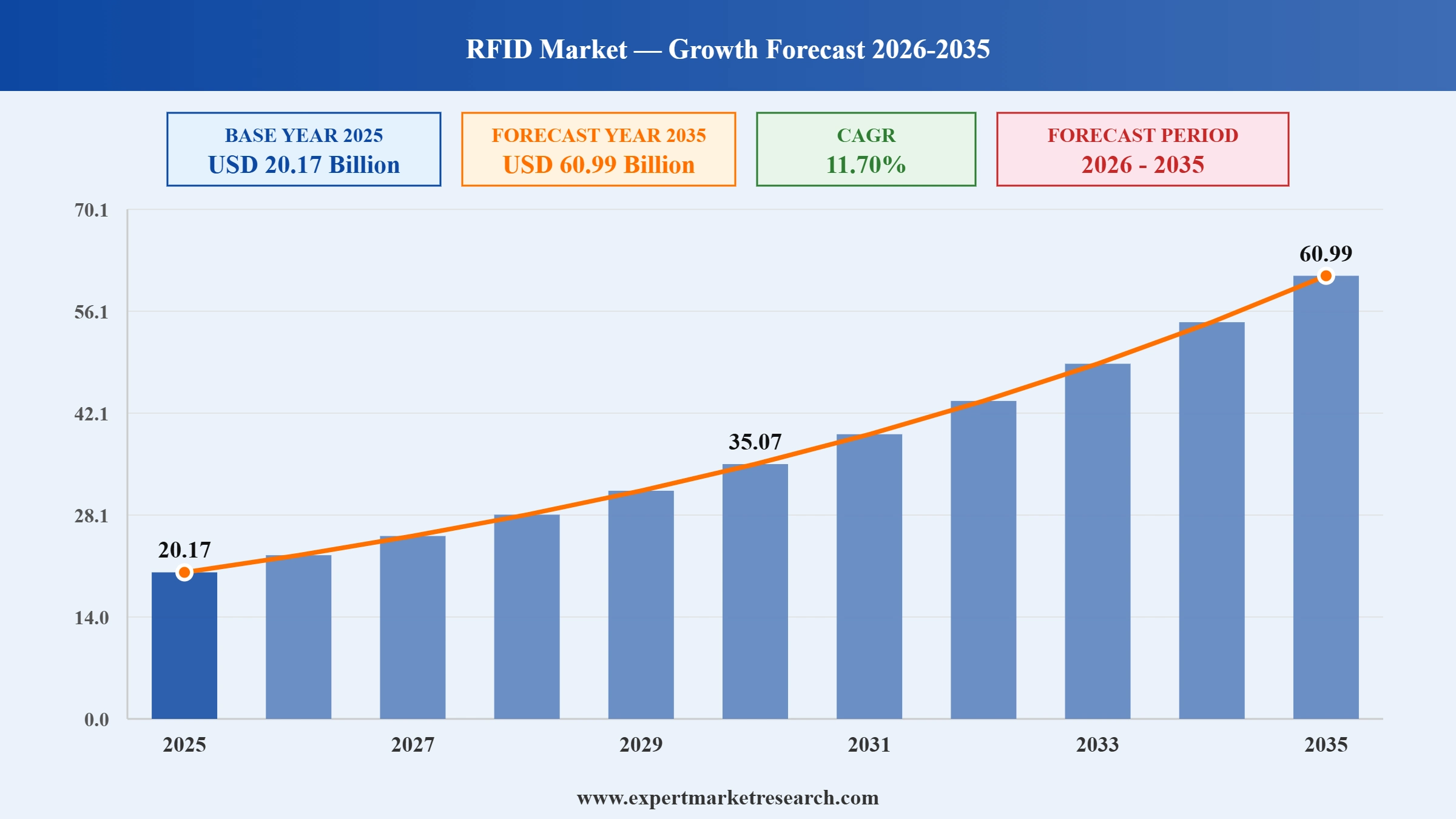
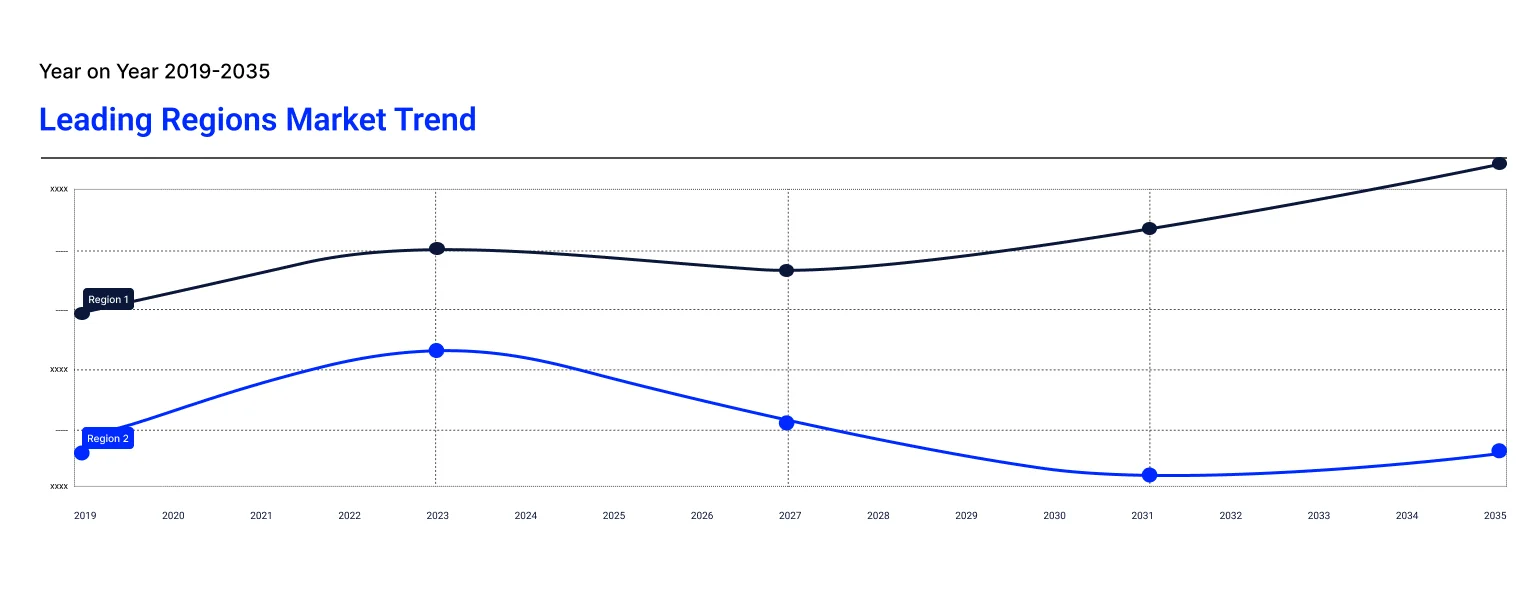
The RFID market size reached around USD 20.17 Billion in 2025. The market is projected to grow at a CAGR of 11.70% between 2026 and 2035 to reach nearly USD 60.99 Billion by 2035. Growth is being driven by rising adoption of RFID technology across retail, logistics, healthcare, manufacturing, and transportation. Businesses are increasingly using RFID for real-time inventory tracking, asset monitoring, and supply chain visibility. Expansion of automated warehouses, smart retail systems, and contactless identification solutions is further supporting demand. Advancements in RFID tags, readers, and cloud-based tracking platforms are also improving scalability and adoption across industries.
The RFID market covers radio frequency identification systems that read and write data to tags attached to objects, animals or people without line of sight contact. A working deployment combines four elements: tags carrying an integrated circuit and antenna, interrogators that transmit and receive the radio signal, middleware that filters and routes the resulting event data, and the software or services layer that turns tag reads into an inventory, asset or access record. Real time location systems built on active tags extend the same principle to continuous position tracking.
Deployment spans retail inventory and loss prevention, warehouse and logistics automation, hospital asset and pharmaceutical tracking, industrial work in progress tracking, access control credentials, livestock and companion animal identification, and electronic toll collection. Buyers weigh read accuracy in difficult physical conditions, tag unit cost at volume, integration effort with existing enterprise systems, and conformance with global data standards that let tag information travel between trading partners. Frequency band selection follows the application, since read range, data rate and tolerance for metal and liquid differ sharply between low frequency, high frequency and ultra high frequency systems.
Read more about this report - REQUEST FREE SAMPLE COPY IN PDF
| RFID Market Report Summary | Description | Value |
| Base Year | USD Billion | 2025 |
| Historical Period | USD Billion | 2019-2025 |
| Forecast Period | USD Billion | 2026-2035 |
| Market Size 2025 | USD Billion | 20.17 |
| Market Size 2035 | USD Billion | 60.99 |
| CAGR 2019-2025 | Percentage | XX% |
| CAGR 2026-2035 | Percentage | 11.70% |
| CAGR 2026-2035 - Market by Region | Asia Pacific | 13.5% |
| CAGR 2026-2035 - Market by Country | India | 15.5% |
| CAGR 2026-2035 - Market by Country | China | 13.0% |
| CAGR 2026-2035 - Market by Frequency | Ultra-High Frequency (UHF) | 16.2% |
| CAGR 2026-2035 - Market by Application | Transportation & Logistics | 17.3% |
| Market Share by Country 2025 | Germany | 4.5% |
The shift towards cloud-based data storage technologies and the emergence of hybrid/remote working models have led to an increase in the number of cyberattacks on corporate organisations. In 2023, organisations witnessed a 112% growth in the volume of credential-based attacks, with 62% of all organisations finding it difficult to manage and control data accessibility. Around 70% of all data breaches involve a human element, and stolen credentials have emerged as one of the primary ways for cybercriminals to access an organisation’s sensitive data. As per industrial analysis, the number of attempted password attacks recorded a y-o-y growth of 10% in 2023. This is expected to lead to RFID market expansion, as the technology can be utilised for creating customised credentials for each employee. With the switch towards identity access management solutions, smart cards using RFID technology are expected to garner market traction rapidly, thereby leading to market growth.
The growing shift towards contactless interactions between consumers and foodservice retailers is anticipated to have a favourable impact on the RFID market dynamics. This includes the use of digital payment solutions and the use of RFID tags for managing inventory at point of sale.
Retail item-level tagging and inventory accuracy
Retailers have moved item-level RFID from apparel pilots into standing programmes across electronics, home goods and increasingly perishables, because the operational case is now well documented. Deployments consistently report on-shelf availability above 95 percent and inventory accuracy improvements exceeding 25 percent, which translates directly into fewer lost sales and lower safety stock. Supplier mandates have turned that advantage into an industry requirement, pushing source tagging back up the supply chain. Vendors are engineering specifically for the harder categories, with Avery Dennison launching the AD IdentiFresh inlay series in February 2026 for bakery, meat, deli and produce, built to hold performance on densely stacked items in high moisture cold environments.
Regulatory mandates and traceability requirements
Legislation is creating demand that does not depend on a retailer building its own business case. The EU Ecodesign for Sustainable Products Regulation requires products to carry a scannable data carrier linking to a digital product passport covering material composition, carbon footprint and recyclability, which places an identification tag on goods entering the European market. In April 2026 the European Parliament approved the first EU rules requiring microchip identification for all dogs and cats, extending the mandatory installed base into companion animals. Transport authorities are moving in the same direction, with NHAI launching India's first multi-lane free flow barrier-less tolling system on National Highway 48 in May 2026, using FASTag RFID stickers read by overhead gantries at highway speed.
Falling tag cost and integration with AI and IoT platforms
The semiconductor shortage that constrained the industry between 2021 and 2023 has cleared, and standard UHF inlay prices have fallen below USD 0.04 with roughly 55 billion passive tags shipping annually. That price point opens categories where the tag cost previously exceeded the value of the visibility it provided. At the same time RFID data is being fed into artificial intelligence and IoT platforms for predictive replenishment and supply chain anomaly detection, which raises the return on an existing deployment. Investment is following the convergence, with Avery Dennison committing USD 75 million to ambient IoT specialist Wiliot in April 2026 and taking a board seat.
Read more about this report - REQUEST FREE SAMPLE COPY IN PDF
Increasing demand for passive UHF RFID tags; growing demand for RFID tags from Latin America; advancements in flexible printing options; and a shift towards cloud-based data storage are the major factors favouring the RFID market growth
Impinj reported second quarter 2026 revenue of USD 108.4 million, up 10.7 percent from USD 97.9 million a year earlier, with non-GAAP net income of USD 27.0 million and adjusted EBITDA of USD 30.7 million. The company guided to third quarter revenue of USD 105.5 million to USD 108.5 million.
Impinj moved manufacturing of its R700 Antenna Hub from the United States to Malaysia, with the transition beginning in July 2026. The change reshapes the supply chain for fixed RFID reader infrastructure used in high density retail and logistics deployments.
The National Highways Authority of India brought India's first multi-lane free flow tolling system into service at the Chorayasi toll plaza on the Surat to Bharuch stretch of National Highway 48 in Gujarat. Overhead gantries read FASTag RFID stickers at highway speed and deduct tolls automatically, with cameras billing untagged vehicles.
Avery Dennison announced a strategic USD 75 million minority investment in ambient IoT specialist Wiliot to scale physical AI applications, taking a seat on the company's board. The investment links Avery Dennison's labelling volume to battery-free Bluetooth tag technology.
UHF RFID tags have the longest read range and the fastest reading speed. Besides, they are relatively cheaper than other passive UHF tags, which is expected to facilitate the RFID market development.
This can be attributed to the growth of Brazil’s agricultural industry, whereby farmers are adopting RFID tags for identifying and managing herds of cattle and ensuring high-quality production of meat products for global markets.
Advancements in thin-film transistor technology have enabled RFID tags to become bend-resistant and slim, which has opened new areas for its applications. This includes reducing theft-related incidents, by embedding them into textiles and apparel in showrooms. Over the forecast period, this is expected to substantially increase the RFID market value.
The shift towards cloud-based data storage is expected to enhance data accessibility, and optimise stock management, and product replenishment and availability in retail stores. This can further enhance supply chain management and enhance overall productivity.
The Expert Market Research's report titled “Global RFID Market Report and Forecast 2026-2035” offers a detailed analysis of the market based on the following segments:
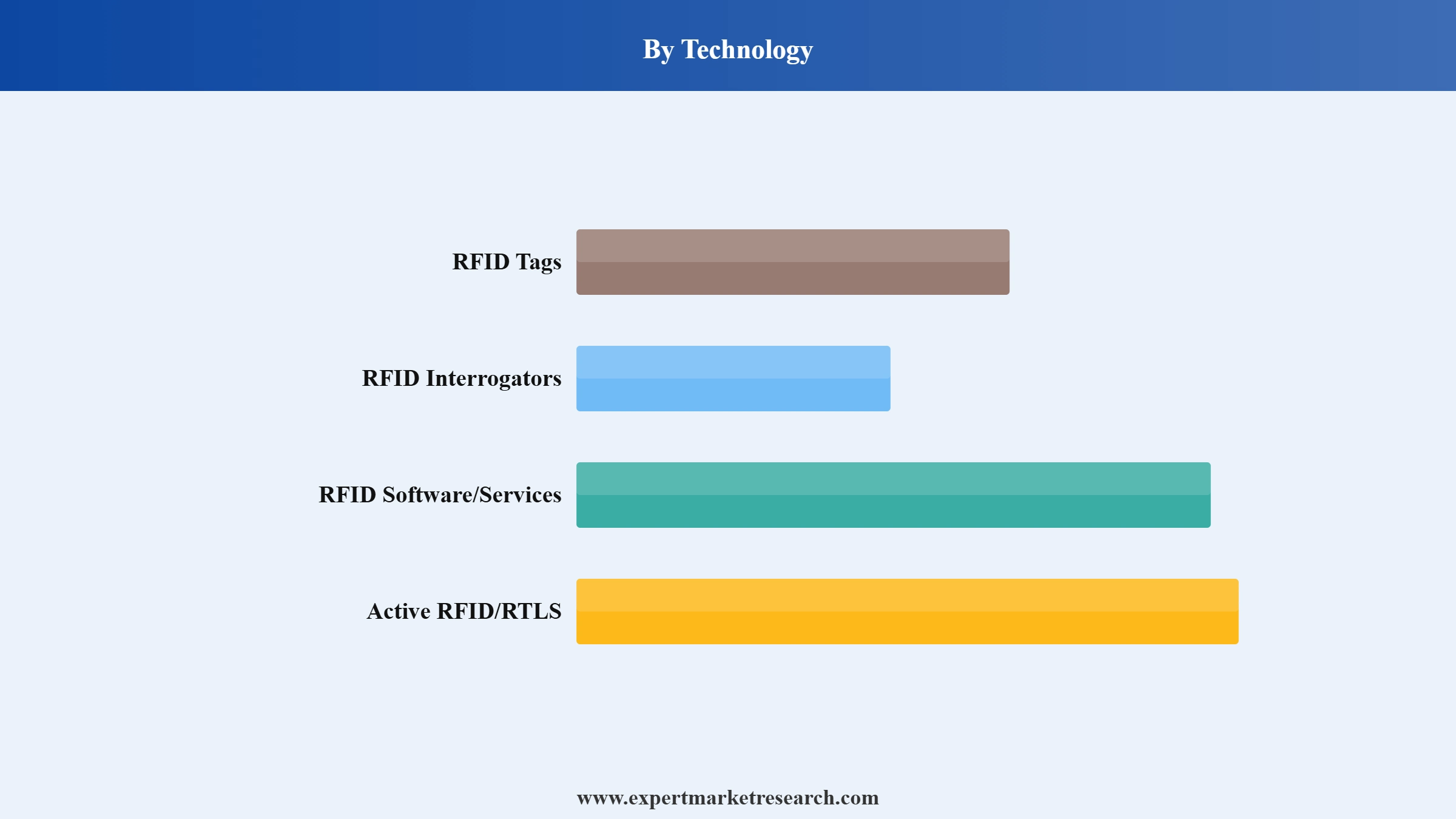
Market Breakup by Technology
Key Insight: RFID tags account for the largest share of the technology segment because every deployment consumes them in volume and most consume them as a recurring cost, unlike readers which are bought once per read point. Passive tags dominate the category, and shipments now run at roughly 55 billion units a year with standard UHF inlay prices below USD 0.04. Falling unit cost is what allows the category to expand into lower value goods, and vendors continue to engineer application-specific inlays for difficult substrates, as Avery Dennison did with the AD IdentiFresh series for fresh food in February 2026.
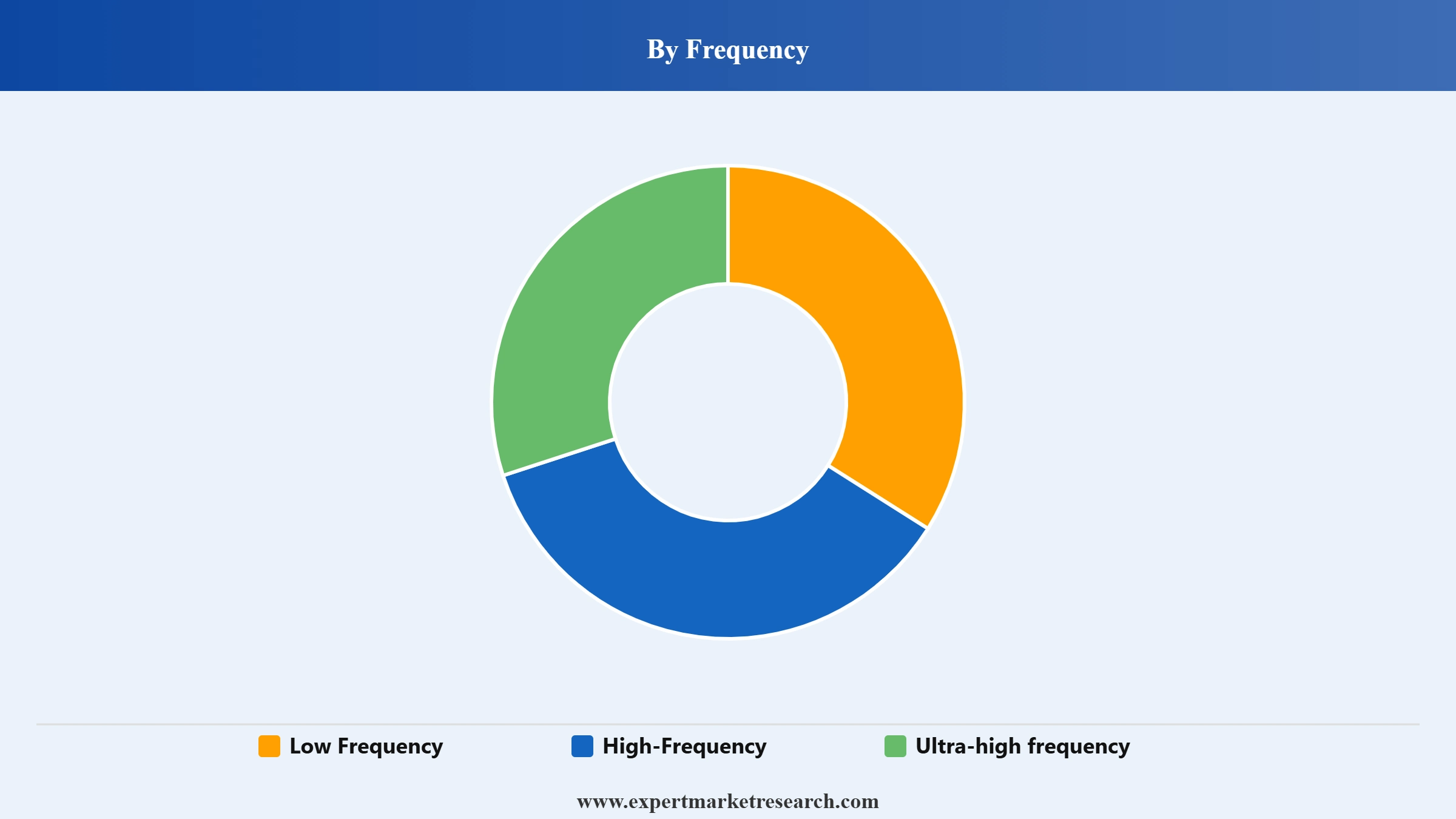
Market Breakup by Frequency
Key Insight: Ultra high frequency leads the frequency segment and is forecast to grow at a 16.2% CAGR between 2026 and 2035, the fastest of the three bands. UHF offers the longest read range and the fastest read rate, and it costs less per tag than the alternatives, which suits the bulk scanning that retail and logistics require. Semiconductor supply has normalised after the constraints of the early 2020s, restoring the volume economics behind the band. Chipmakers report the demand directly, with NXP Semiconductors citing an Industrial and IoT segment increase of 38 percent in the second quarter of 2026.
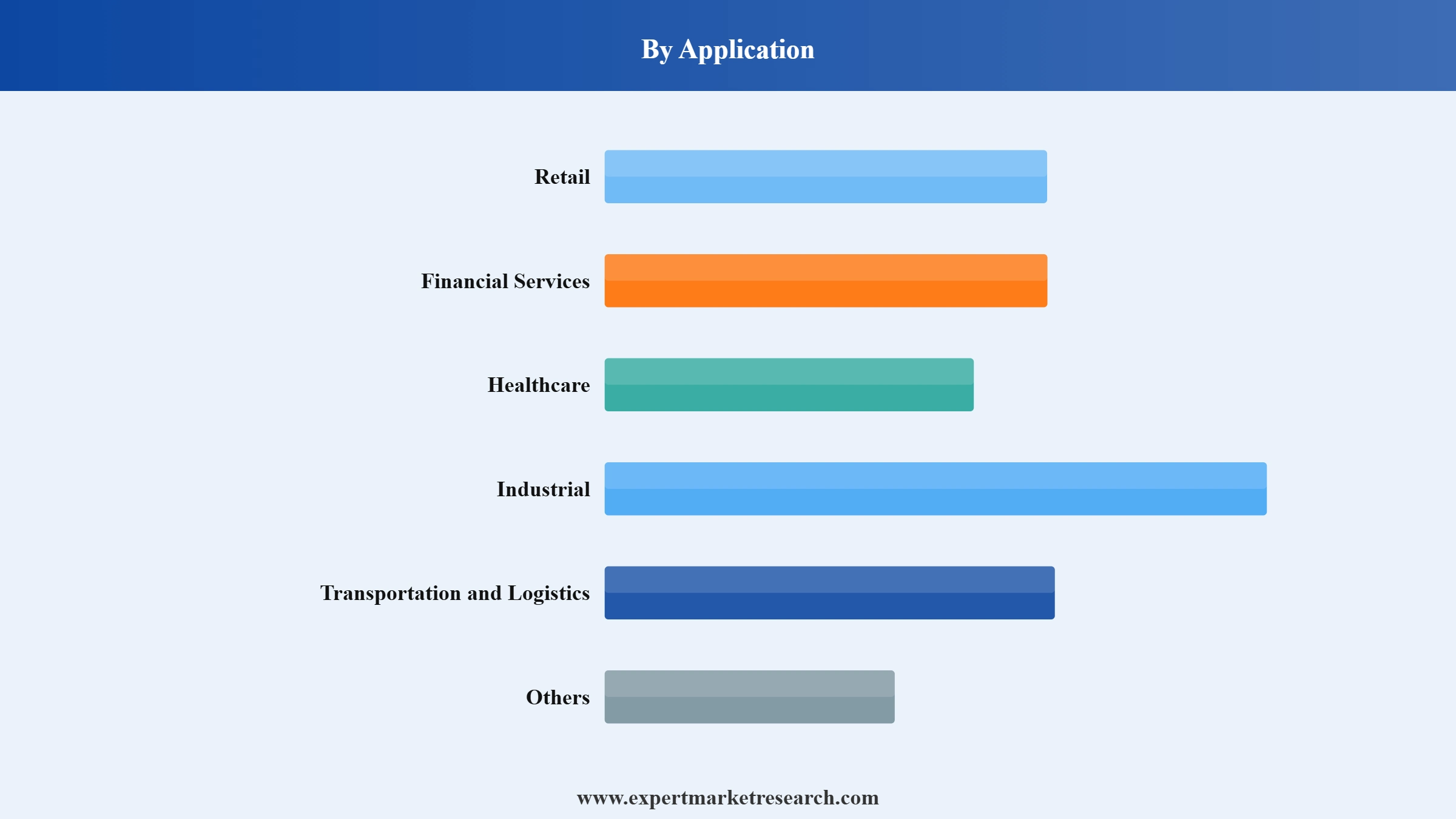
Market Breakup by Application
Key Insight: Retail remains the largest application because item-level tagging delivers a measurable return through inventory accuracy and on-shelf availability, and supplier mandates have made participation a condition of trading with major chains. Coverage has widened past apparel into electronics, home goods and perishables, with fresh food now the active frontier. Transportation and logistics is the fastest expanding application at a 17.3% CAGR through 2035, and national infrastructure projects are driving that pace, illustrated by the multi-lane free flow FASTag tolling system NHAI brought into service on National Highway 48 in May 2026.
Market Breakup by Region
Key Insight: Asia Pacific is the fastest expanding region at a 13.5% CAGR through 2035, supported by the growth of the regional logistics industry, large scale manufacturing capacity and national digital infrastructure programmes. India leads the individual country forecasts at a 15.5% CAGR, with China at 13.0%, reflecting toll collection, warehousing and retail modernisation across both markets. Germany accounted for 4.5% of the global market in 2025. Demand across the region also benefits from flexible printing advances that make tags cheaper to apply at high volume.
LF and HF to Retain Specialised Positions
Low frequency systems operating at 125 kHz hold a durable share because they read reliably through water and around metal, which is why they remain standard for livestock and companion animal identification and for access control. Regulatory demand is now reinforcing that position, since the EU rules approved in April 2026 make microchip identification compulsory for dogs and cats across member states.
High frequency and NFC hold the consumer-facing ground, covering contactless payment cards, transit tickets, product authentication and smartphone-read packaging. NFC is gaining traction as brands use tags to deliver product information and digital product passport data directly to shoppers, and the format is spreading into new physical carriers, including compostable labels and garment components.
Read more about this report - REQUEST FREE SAMPLE COPY IN PDF
Interrogators, Software and RTLS to Grow with Deployment Scale
RFID interrogators grow with the number of read points a deployment covers, and demand is shifting from handheld devices used for periodic cycle counts towards fixed overhead readers that run continuously. Supply chains for this hardware are being restructured, with Impinj moving production of its R700 Antenna Hub from the United States to Malaysia from July 2026.
Software and services carry an increasing share of programme value, since raw tag reads only become useful once filtered, deduplicated and mapped onto business events. Active RFID and real time location systems serve the higher end of the market, tracking high value assets continuously in hospitals, yards and industrial plants where knowing the current position matters more than confirming presence.
Read more about this report - REQUEST FREE SAMPLE COPY IN PDF
Application Positions Beyond Retail
Healthcare uses RFID for equipment location, pharmaceutical inventory and specimen tracking, and the case is strengthening as hospitals combine tag data with analytics to cut search time and expiry losses. Industrial users track work in progress, tooling and returnable containers on the factory floor, an area where reusable packaging programmes are creating fresh demand.
Financial services relies on HF and NFC in payment cards and secure credentials, and the identity access management shift towards smart cards is extending the same technology into employee authentication. Transportation and logistics covers tolling, parcel sortation, yard management and container tracking, and it is the fastest growing application of the set.
Read more about this report - REQUEST FREE SAMPLE COPY IN PDF
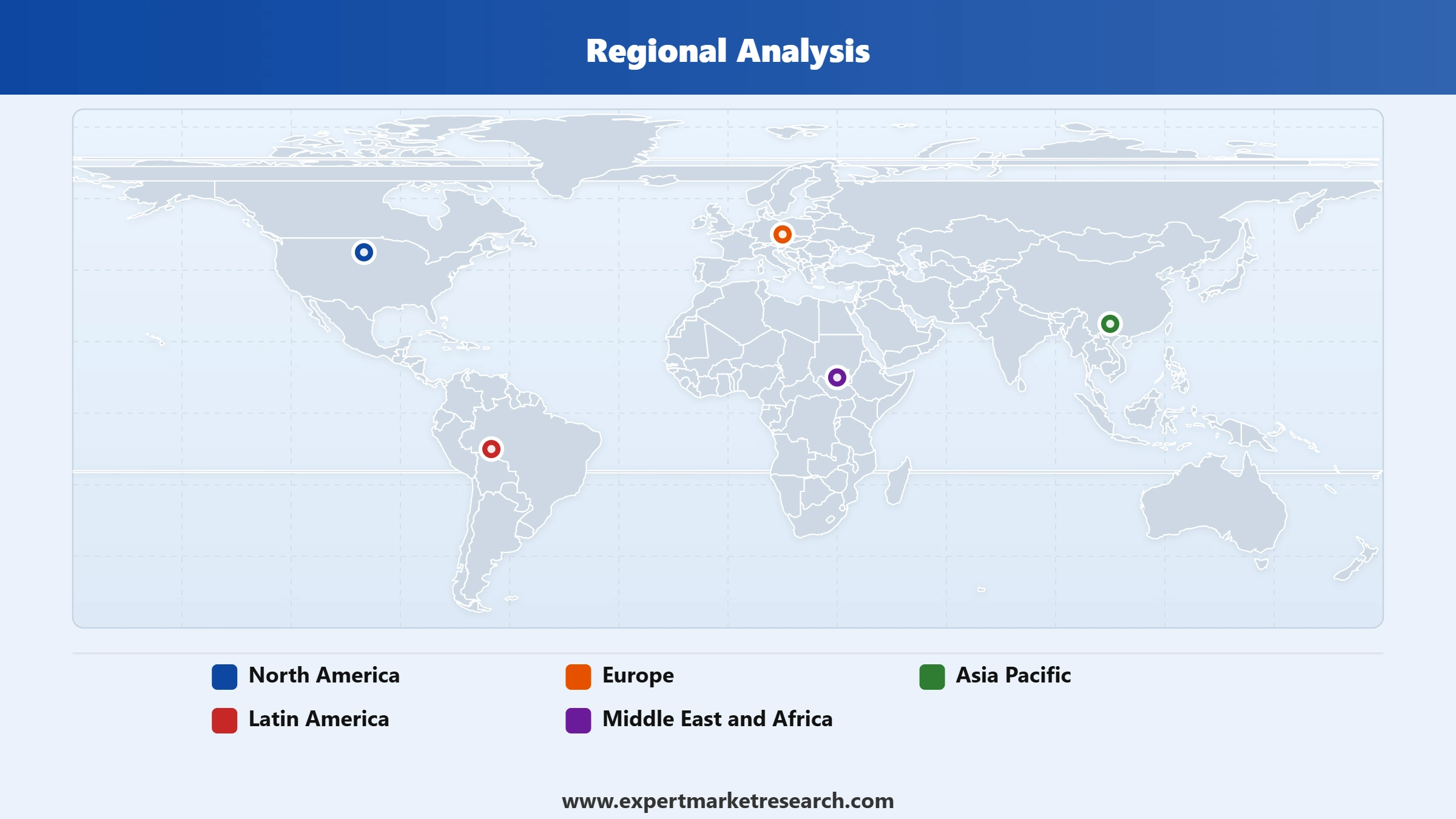
North America holds a substantial share, supported by early retail mandates, mature logistics networks and a deep research base that includes the Auburn University RFID Lab, which serves more than 35 industry sponsors and broke ground on a USD 22 million expanded facility in May 2026.
Europe combines retail adoption with the strongest regulatory pull in the market, since the digital product passport requirement and the new companion animal rules both create identification demand by law rather than by business case. Latin America is growing on the back of Brazilian agriculture, where farmers use RFID tags to identify and manage cattle herds and evidence meat quality for export markets. The Middle East and Africa remains smaller, with demand concentrated in logistics, retail and access control.
Read more about this report - REQUEST FREE SAMPLE COPY IN PDF
Major players are introducing cost-effective and flexible RFID tags to facilitate vaccine administration for adults and children in hospitals. This can increase the RFID market revenue in the upcoming years.
Zebra Technologies Corporation was founded in 1969 and is headquartered in Illinois, United States. It serves around 80% of all Fortune 500 companies by offering digital connectivity solutions, including RFID services.
Invengo Information Technology Co., Ltd. was founded in 1993 and is headquartered in China. It is a leading provider of IoT technology and RFID solutions to numerous industries, including pharmaceutical, healthcare, and transportation.
Nedap N.V. was founded in 1929 and is headquartered in Groenlo, the Netherlands. It is engaged in developing advanced software architecture, connected devices, and emerging communication technologies.
Datalogic S.p.A. was founded in 1972 and is headquartered in Bologna, Italy. It is a globally renowned leader in producing mobile computers, barcode readers, laser marking systems, RFID vision systems, and advanced sensors.
Other players included in the RFID market report are Honeywell International Inc., Avery Dennison Corporation, Impinj, Inc., NXP Semiconductors N.V., unitech electronics co., ltd., and ASSA ABLOY Group, among others.
*Please note that this is only a partial list; the complete list of key players is available in the full report. Additionally, the list of key players can be customized to better suit your needs.*
Physical read reliability remains the practical obstacle. Metal surfaces, liquids and densely stacked goods degrade UHF performance, which is why fresh food and electronics have taken longer to tag than apparel. Deployment complexity compounds this, since integrating reader infrastructure with legacy warehouse and point of sale systems demands work that many organisations underestimate. Poorly scoped projects fail visibly, as Sri Lanka's Department of Motor Traffic showed in April 2026 when it abandoned an RFID vehicle registration scheme after a parliamentary inquiry into planning failures.
Cost continues to restrain adoption below the enterprise tier. Readers, antennas, cabling and software carry real capital expense against a barcode system that already works, and smaller retailers struggle to fund a programme whose return depends on scale. Privacy concerns around item-level tagging attract regulatory attention in consumer markets, and inconsistent use of global data standards limits how far tag data travels between trading partners.
Regulation is opening the widest opportunity. The EU digital product passport requirement and the companion animal microchipping rules approved in April 2026 create demand independent of any commercial case. Falling inlay prices below USD 0.04 make previously uneconomic categories viable, and convergence with ambient IoT and analytics platforms, reflected in Avery Dennison's USD 75 million investment in Wiliot, extends the addressable ground further.


Upto 15% Off
USD
$2499 $2249
$3999 $3599
$4999 $4249
$5999 $5099


*While we strive to always give you current and accurate information, the numbers depicted on the website are indicative and may differ from the actual numbers in the main report. At Expert Market Research, we aim to bring you the latest insights and trends in the market. Using our analyses and forecasts, stakeholders can understand the market dynamics, navigate challenges, and capitalize on opportunities to make data-driven strategic decisions.*
In 2025, the market reached an approximate value of USD 20.17 Billion.
The market is projected to grow at a CAGR of 11.70% between 2026 and 2035.
The market is estimated to witness healthy growth in the forecast period of 2026-2035 to reach a value of around USD 60.99 Billion by 2035.
The different regions considered in the market report include North America, Europe, the Asia Pacific, Latin America, and the Middle East and Africa.
The major market trends are increasing demand for passive UHF RFID tags, growing demand for RFID tags from Latin America, and the shift towards cloud-based data storage.
The different segments considered in the market report are RFID tags, RFID interrogators, RFID software/services, and active RFID/RTLS.
The different applications of RFID are retail, financial services, healthcare, industrial, and transportation and logistics, among others.
Key players in the market are Honeywell International Inc., Zebra Technologies Corporation, Avery Dennison Corporation, Nedap N.V., Impinj, Inc., NXP Semiconductors N.V., unitech electronics co., ltd., ASSA ABLOY Group, Invengo Information Technology Co., Ltd., and Datalogic S.p.A., among others.
Explore our key highlights of the report and gain a concise overview of key findings, trends, and actionable insights that will empower your strategic decisions.
| REPORT FEATURES | DETAILS |
| Base Year | 2025 |
| Historical Period | 2019-2025 |
| Forecast Period | 2026-2035 |
| Scope of the Report |
Historical and Forecast Trends, Industry Drivers and Constraints, Historical and Forecast Market Analysis by Segment:
|
| Breakup by Technology |
|
| Breakup by Frequency |
|
| Breakup by Application |
|
| Breakup by Region |
|
| Market Dynamics |
|
| Competitive Landscape |
|
| Companies Covered |
|
Datasheet
One User
USD 2,499
USD 2,249
tax inclusive*
Single User License
One User
USD 3,999
USD 3,599
tax inclusive*
Five User License
Five User
USD 4,999
USD 4,249
tax inclusive*
Corporate License
Unlimited Users
USD 5,999
USD 5,099
tax inclusive*
*Please note that the prices mentioned below are starting prices for each bundle type. Kindly contact our team for further details.*
Flash Bundle
Small Business Bundle
Growth Bundle
Enterprise Bundle
*Please note that the prices mentioned below are starting prices for each bundle type. Kindly contact our team for further details.*
Flash Bundle
Number of Reports: 3
20%
tax inclusive*
Small Business Bundle
Number of Reports: 5
25%
tax inclusive*
Growth Bundle
Number of Reports: 8
30%
tax inclusive*
Enterprise Bundle
Number of Reports: 10
35%
tax inclusive*
How To Order

Select License Type
Choose the right license for your needs and access rights.

Click on ‘Buy Now’
Add the report to your cart with one click and proceed to register.

Select Mode of Payment
Choose a payment option for a secure checkout. You will be redirected accordingly.
Strategic Solutions for Informed Decision-Making
Gain insights to stay ahead and seize opportunities.

Get insights & trends for a competitive edge.

Track prices with detailed trend reports.

Analyse trade data for supply chain insights.

Leverage cost reports for smart savings

Enhance supply chain with partnerships.

Connect For More Information
Our expert team of analysts will offer full support and resolve any queries regarding the report, before and after the purchase.
Our expert team of analysts will offer full support and resolve any queries regarding the report, before and after the purchase.
We employ meticulous research methods, blending advanced analytics and expert insights to deliver accurate, actionable industry intelligence, staying ahead of competitors.
Our skilled analysts offer unparalleled competitive advantage with detailed insights on current and emerging markets, ensuring your strategic edge.
We offer an in-depth yet simplified presentation of industry insights and analysis to meet your specific requirements effectively.




