

Consumer Insights
Uncover trends and behaviors shaping consumer choices today
Procurement Insights
Optimize your sourcing strategy with key market data
Industry Stats
Stay ahead with the latest trends and market analysis.
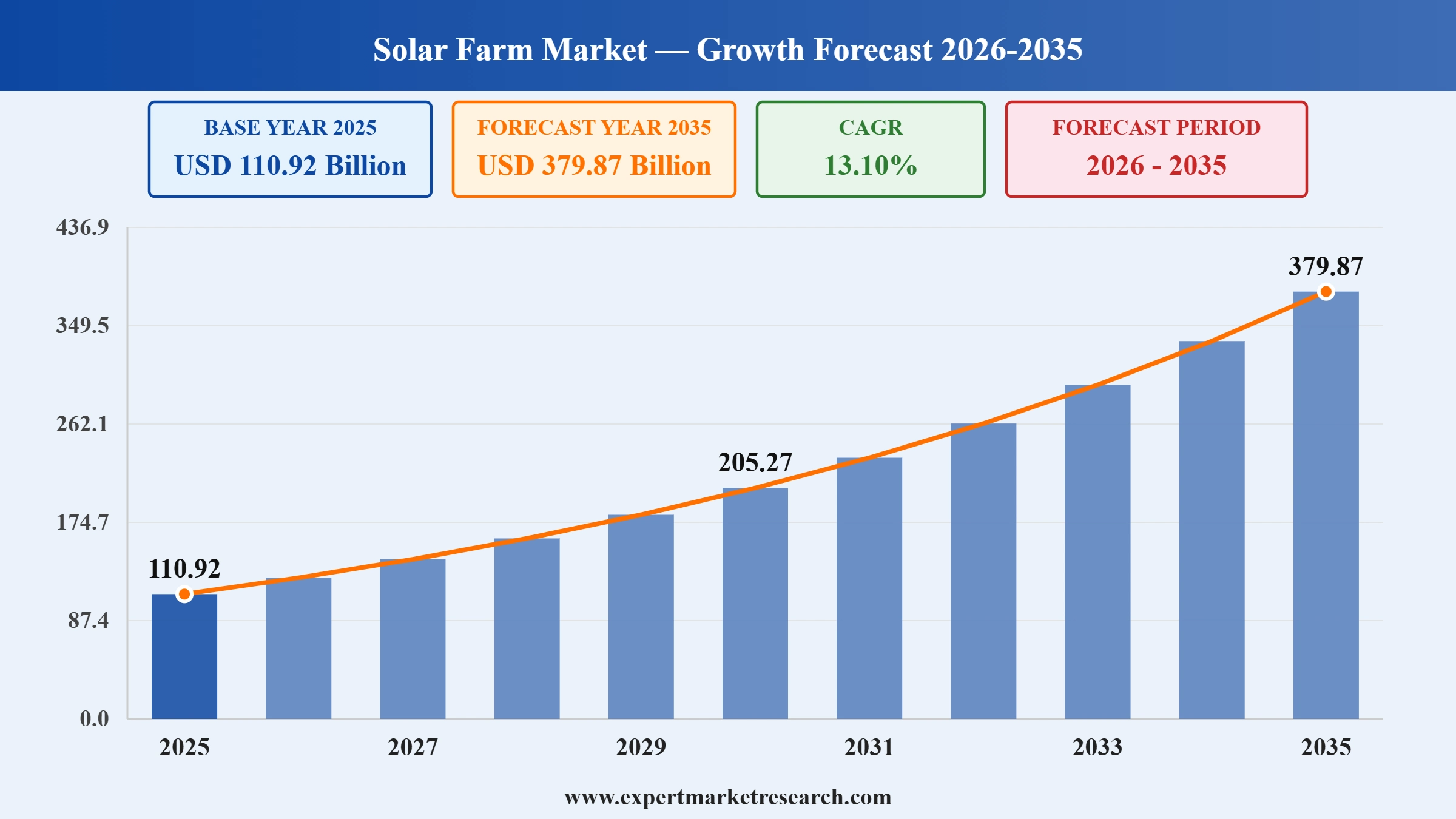
The global solar farm market attained a value of USD 110.92 Billion in 2025 and is projected to expand at a CAGR of 13.10% through 2035. The market is further expected to reach USD 379.87 Billion by 2035. Rising government support for renewable capacity, falling photovoltaic module costs, and surging electricity demand from data centres and industrial users are strengthening solar farm deployment worldwide. Expanding grid interconnection programmes, alongside growing utility and corporate offtake agreements, are further encouraging developers to scale utility grade solar farm projects across every major region.
A solar farm refers to a large-scale collection of ground mounted photovoltaic panels that convert sunlight into electricity for supply to the grid or directly to off takers. Utility scale solar farms hold a substantial share of the market owing to their ability to deliver electricity at scale and at increasingly competitive levelized costs. Rising electricity demand from industrial facilities and data centres continues to widen the developer base for large scale solar farm projects nationwide and internationally.
Demand is concentrating around developers able to combine large scale generation backlogs with fast interconnection timelines. In January 2026, NextEra Energy Resources confirmed in its year end results that it had brought 7.2 gigawatts of new generation and storage capacity online during 2025, adding to a development backlog exceeding 13.5 gigawatts. This backlog driven positioning is converting rising demand for reliable clean power directly into expanded capacity across the global solar farm market.
Developers across the market are converging on a common development direction, widening from standalone generation toward hybrid solar plus storage platforms that firm output and capture additional grid value. Module manufacturers are increasingly pursuing joint patent licensing arrangements to reduce litigation risk and streamline technology deployment across competing production platforms. This shift is reshaping competitive dynamics among developers, favouring companies who can demonstrate fast permitting, diversified offtake structures, and integrated storage capability over those offering standalone generation alone.
Read more about this report - REQUEST FREE SAMPLE COPY IN PDF
| Global Solar Farm Market Report Summary | Description | Value |
| Base Year | USD Billion | 2025 |
| Historical Period | USD Billion | 2019-2025 |
| Forecast Period | USD Billion | 2026-2035 |
| Market Size 2025 | USD Billion | 110.92 |
| Market Size 2035 | USD Billion | 379.87 |
| CAGR 2019-2025 | Percentage | XX% |
| CAGR 2026-2035 | Percentage | 13.10% |
| CAGR 2026-2035 - Market by Region | Asia Pacific | 13.2% |
| CAGR 2026-2035 - Market by Country | India | 17.3% |
| CAGR 2026-2035 - Market by Country | UK | 12.0% |
| CAGR 2026-2035 - Market by Type | Utility-scale | 14.4% |
| CAGR 2026-2035 - Market by End User | Commercial | 14.7% |
| Market Share by Country 2025 | Germany | 4.4% |
Harmony Energy and joint venture partner Igneo Infrastructure Partners announced that the 150-megawatt Tauhei Solar Farm on New Zealand's North Island had been successfully energised, exporting electricity into the national grid. The milestone arrived four months ahead of schedule, with operations expected by October 2026. Developers across the solar farm market can use accelerated timelines to bring flagship projects online ahead of delivery dates.
Enervest delivered a 500-kilowatt floating solar array at the Brierly Basin reservoir in Warrnambool, Victoria, for water utility Wannon Water to offset energy costs of pumping drinking water. Construction began in March 2026, and the system comprises 1,260 bifacial solar modules generating over 600,000 kilowatt hours annually. Developers across the solar farm market can use reservoir sites to deploy floating solar without land costs.
The United Kingdom's Energy Secretary announced a public consultation aimed at fast tracking floating solar farm development across the country's reservoirs and lakes, seeking to remove planning friction. Research commissioned for the announcement estimated British inland waters could host up to 58.6 gigawatts of floating solar capacity by 2050. Developers across the solar farm market can use streamlined frameworks to accelerate deployment on infrastructure.
Arevon secured a total debt package of 183 million dollars for its 124-megawatt Big Muddy Solar Project in Jackson County, Illinois, marking the company's first utility scale undertaking. The package combined a tax equity bridge loan, a construction to term loan, and a letter of credit. Developers can use layered financing to bring new capacity online despite tightening credit conditions.
Energy regulators across emerging solar markets are increasingly reporting sharp quarter on quarter capacity growth as developers accelerate project completions to meet rising grid demand. This is reshaping national generation mixes across the global solar farm market, favouring countries with streamlined project approval processes and faster permitting cycles. In April 2026, India's Union Minister for New and Renewable Energy announced that the country recorded 6.65 gigawatts of solar capacity in March 2026, its highest ever single month installation.
Technology companies operating large data centre portfolios are increasingly signing direct offtake agreements with solar developers to secure long term clean power supply ahead of rising computing demand. This is reshaping demand structures across the global solar farm market, favouring developers who can deliver gigawatt scale capacity on accelerated timelines and schedules. In March 2026, MN8 Energy confirmed an 80-megawatt agreement with Meta, its first such contract between the companies, adding incremental generation to a strained regional grid.
International renewable energy developers are increasingly entering the United States solar market by sourcing domestically manufactured modules to qualify for available tax incentives and credits. This is reshaping supply chain strategy across the global solar farm market, favouring developers who prioritise domestic content requirements over imported alternatives across every project and jurisdiction. In December 2025, ContourGlobal completed Black Hollow Sun I in Colorado using Qcells modules, marking the company's first renewable asset in the American market.
Solar module manufacturers are increasingly pursuing cross licensing settlements to resolve overlapping patent claims and reduce the risk of prolonged litigation across competing production platforms nationwide and abroad. This is reshaping intellectual property strategy across the global solar farm market, favouring manufacturers who can secure freedom to operate across export markets and jurisdictions worldwide. In November 2025, JA Solar and Astronergy reached a global settlement covering ongoing TOPCon patent disputes, terminating related legal proceedings between the companies.
Energy regulators and grid operators are increasingly reporting record utility scale solar capacity additions as developers accelerate project completions ahead of shifting incentive timelines. This is reshaping national generation mixes across the global market, favouring regions with streamlined interconnection processes and grid connection procedures. In December 2025, the United States Energy Information Administration reported developers plan to add 43.4 gigawatts of new utility scale solar capacity in 2026, concentrated across Texas, Arizona, California, and Michigan.
The Expert Market Research's report titled "Global Solar Farm Market Report and Forecast 2026-2035" offers a detailed analysis of the market based on the following segments:
Market Breakup by Type
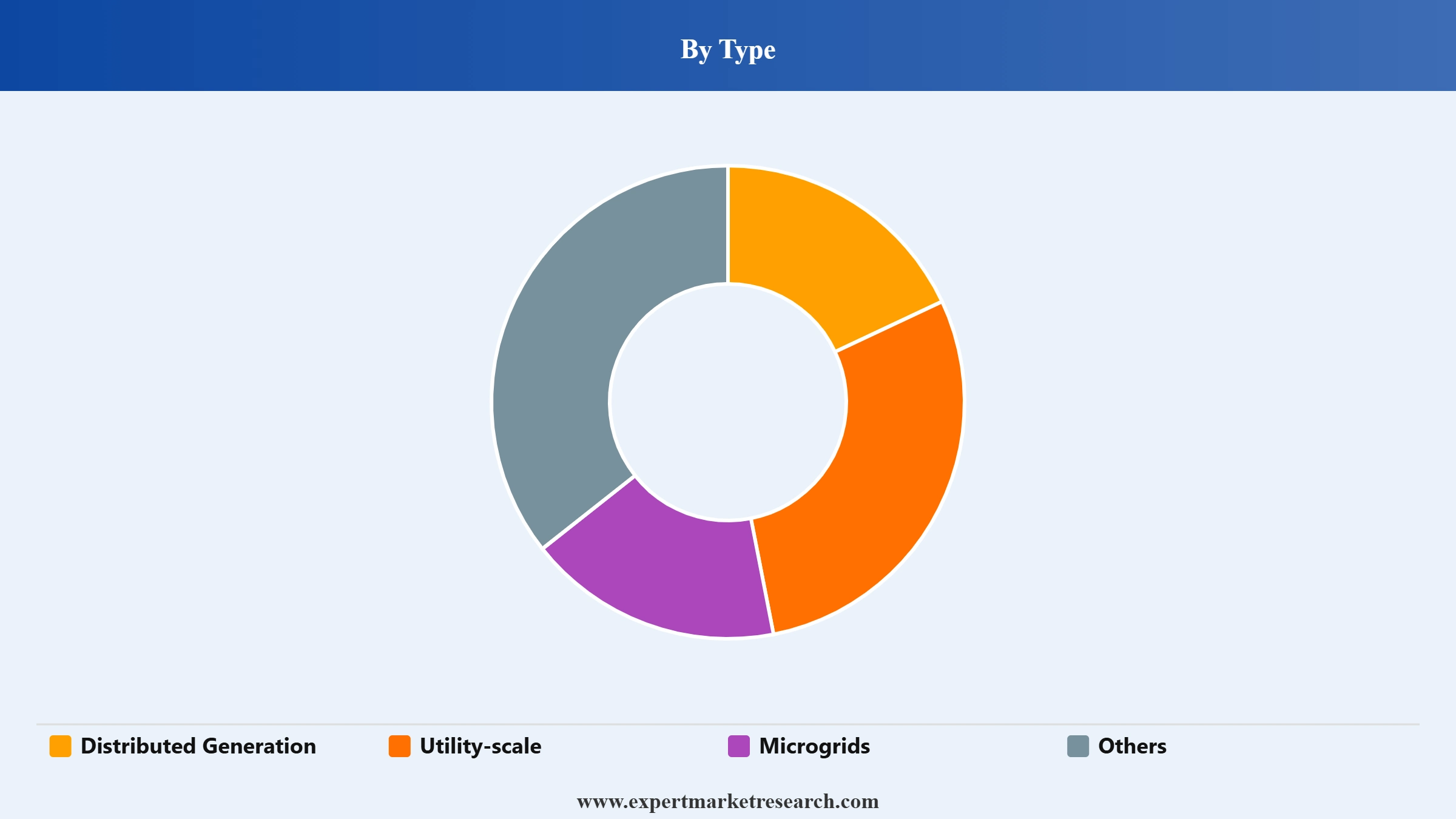
Key Insight: Utility scale solar farms dominate the type of segment given their ability to deliver electricity at scale and at increasingly competitive levelized costs across large land parcels. In March 2025, Matrix Renewables entered commercial operations for its 261-megawatt Pleasant Valley Solar project in Ada County, Idaho, illustrating continued investor appetite for completed utility scale assets. Distributed generation is registering the fastest growth as commercial and industrial facilities increasingly install on site or near site solar capacity to offset rising grid electricity costs. Microgrids are gaining traction in remote and grid constrained areas seeking resilient, localised power supply, while other configurations, including floating solar installations, round out remaining demand across niche applications.
Market Breakup by End User
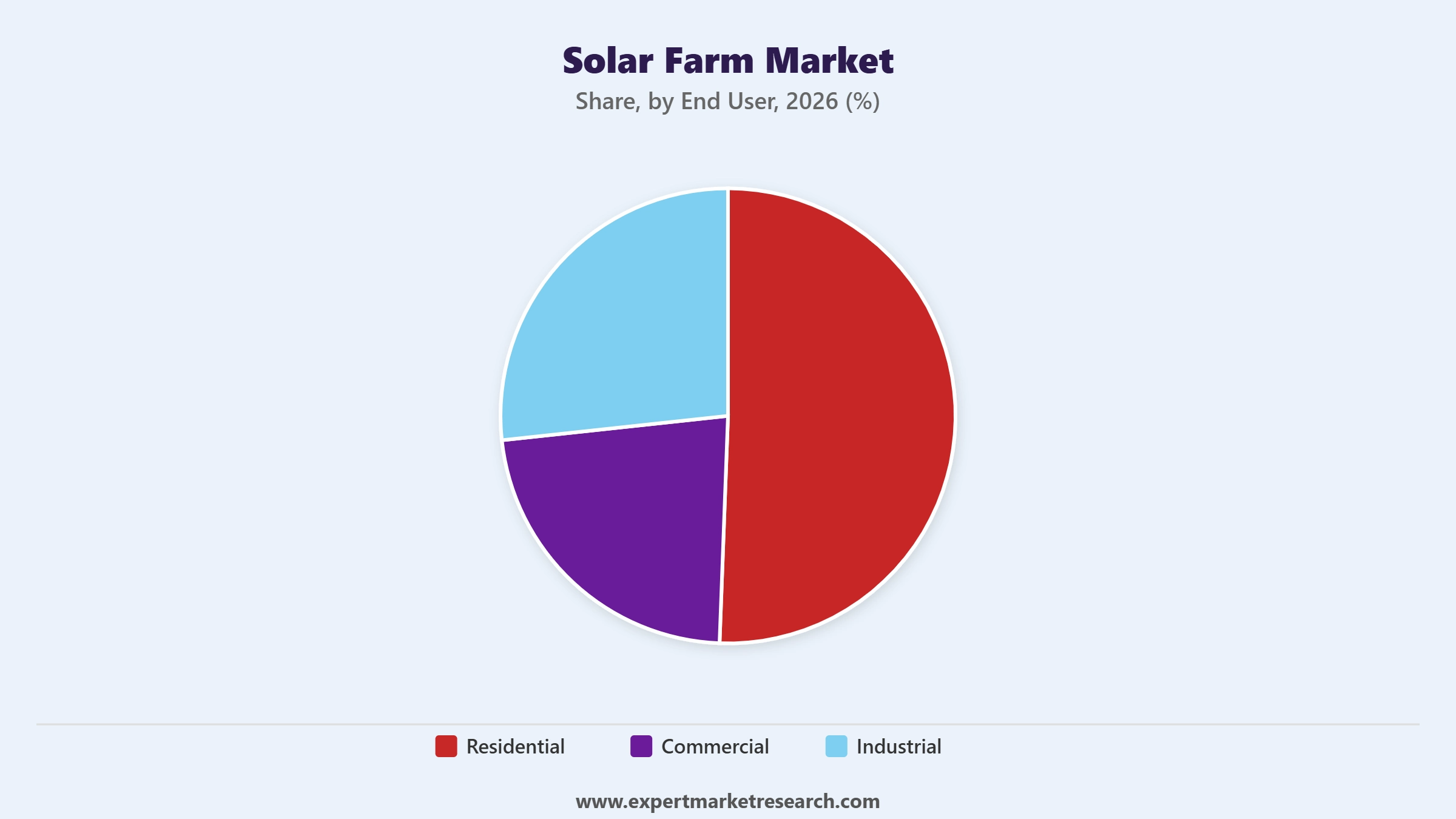
Key Insight: The commercial segment holds a substantial end user share as retail chains, office parks, and institutional campuses increasingly install solar capacity to reduce operating costs and meet sustainability commitments. The residential segment is registering the fastest growth as falling equipment costs and financing options widen homeowner adoption across suburban and rural markets. The industrial segment sustains steady demand from manufacturing facilities and data centres seeking dedicated, large scale clean power supply.
Market Breakup by Region
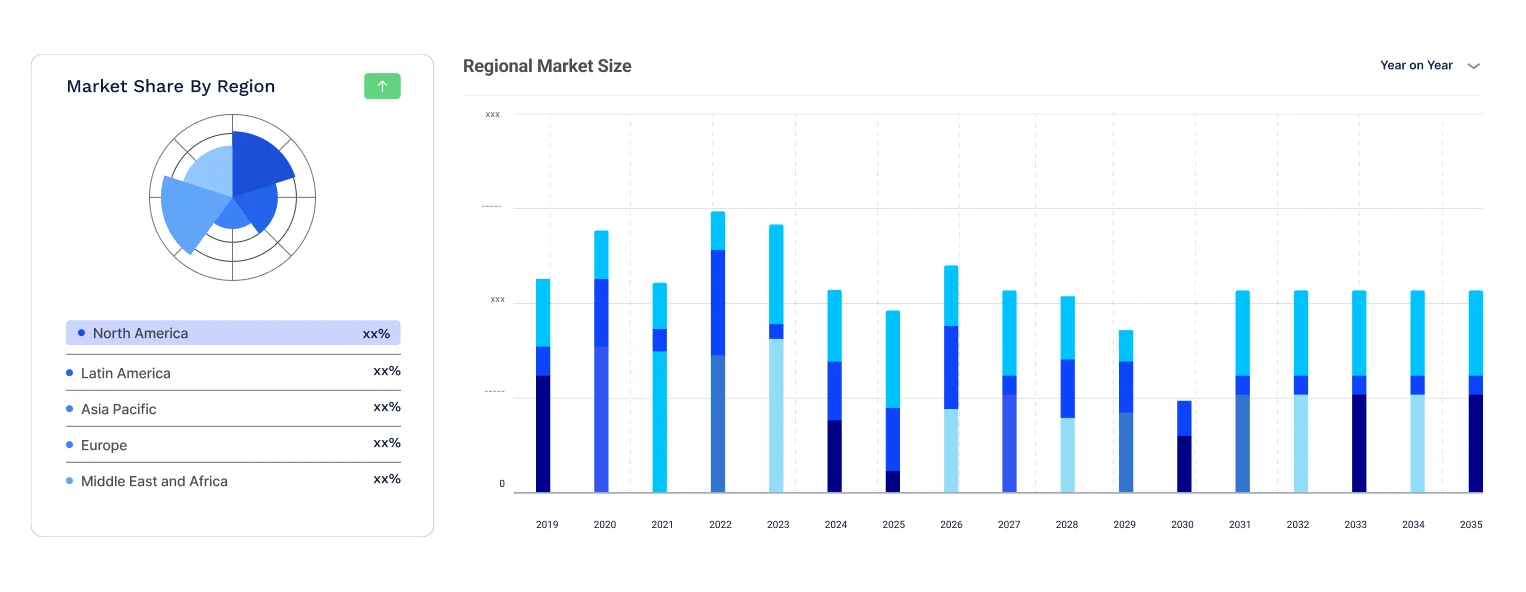
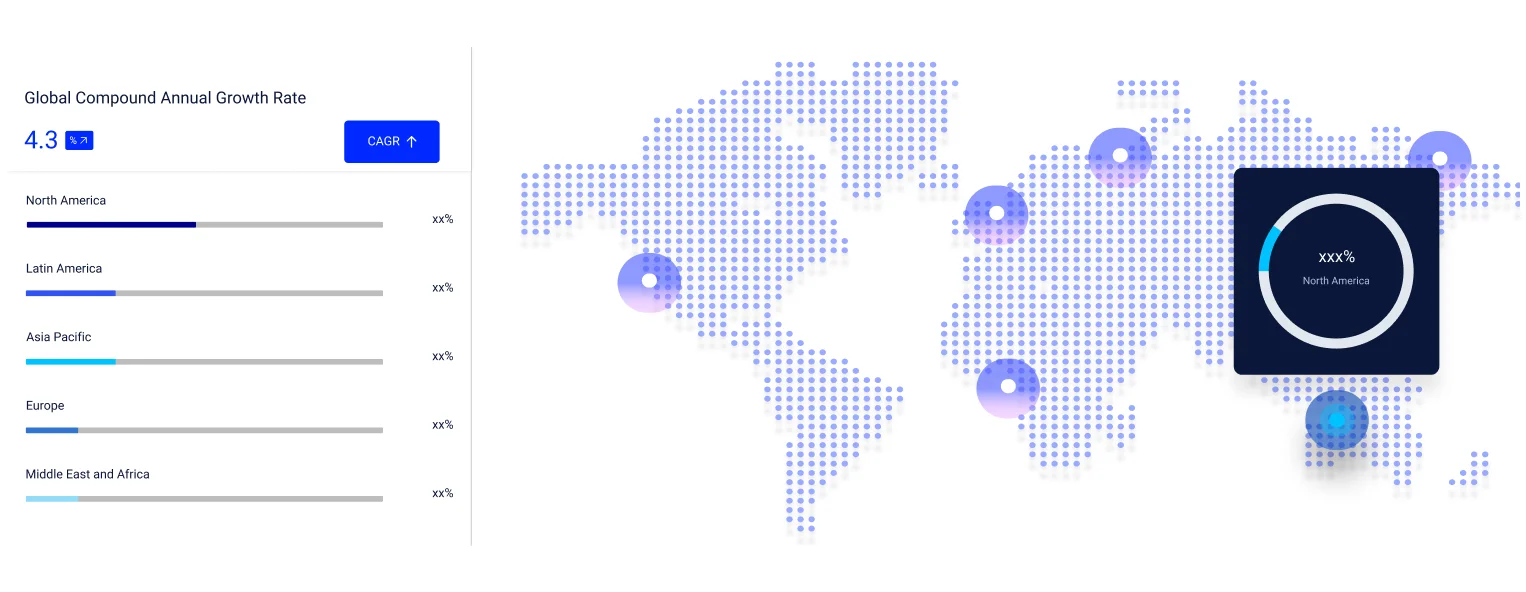
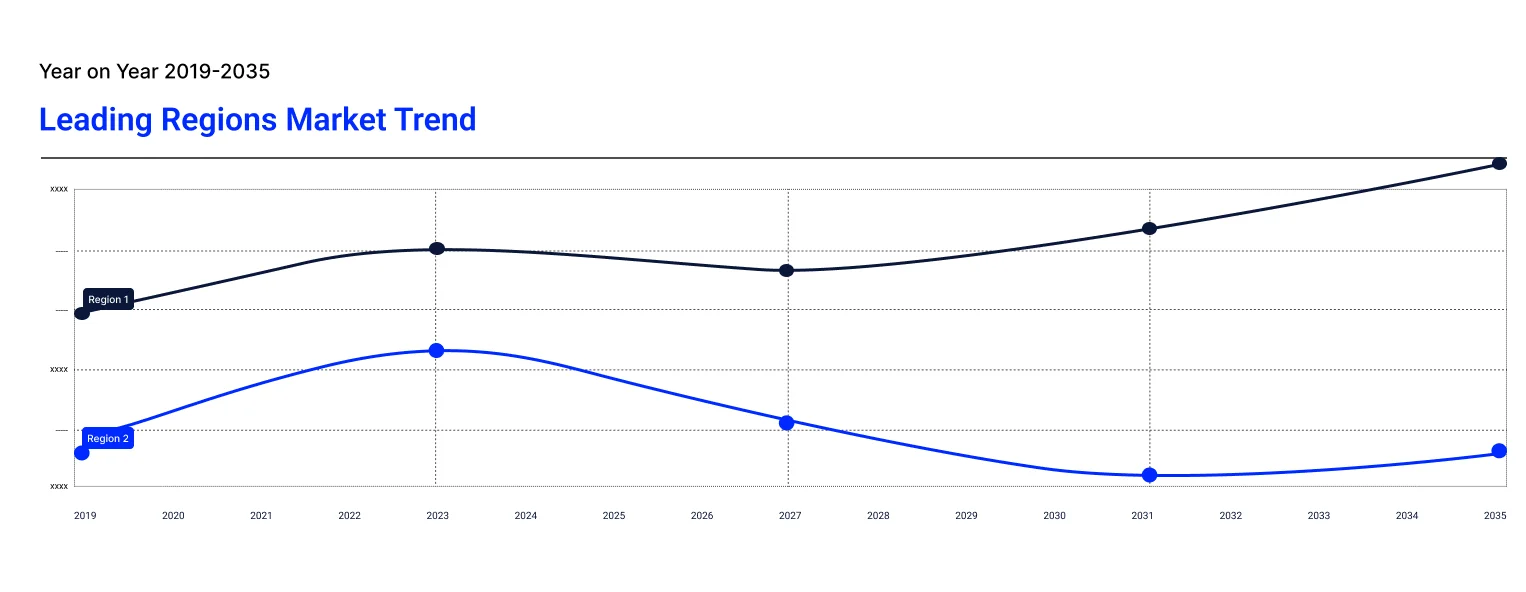
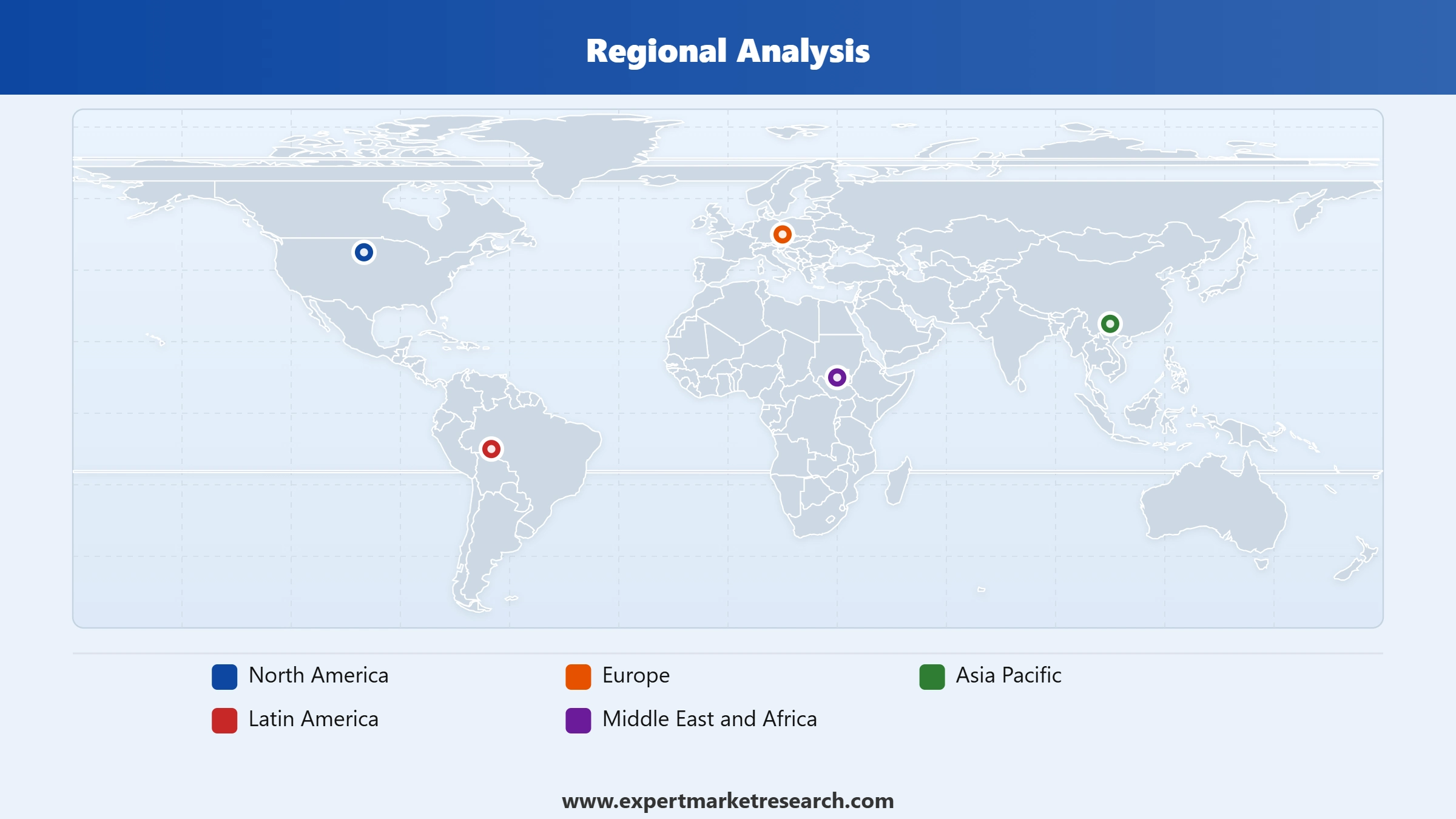
Key Insight: Asia Pacific holds a substantial regional share of the solar farm market, supported by large scale manufacturing capacity and aggressive national renewable energy targets across China, India, and Japan. The Middle East and Africa region is registering the fastest growth as Gulf economies diversify energy portfolios beyond hydrocarbons into utility scale solar generation. North America sustains strong demand from data centre driven offtake agreements, while Europe and Latin America round out demand through national decarbonisation programmes and expanding grid interconnection.
By type, utility scale solar farms dominate the market owing to their ability to deliver electricity at scale and at competitive levelized costs
Utility scale solar farms dominate the type of segment of the solar farm market owing to their ability to deliver electricity at scale and at increasingly competitive levelized costs across large land parcels nationwide and abroad today across every market and region entirely. In August 2026, a 110-megawatt standalone solar project developed by Mitsui and Co. in Hill County, Texas, began commercial operations backed by a subscription based virtual power purchase agreement structured for individual video game players across the country.
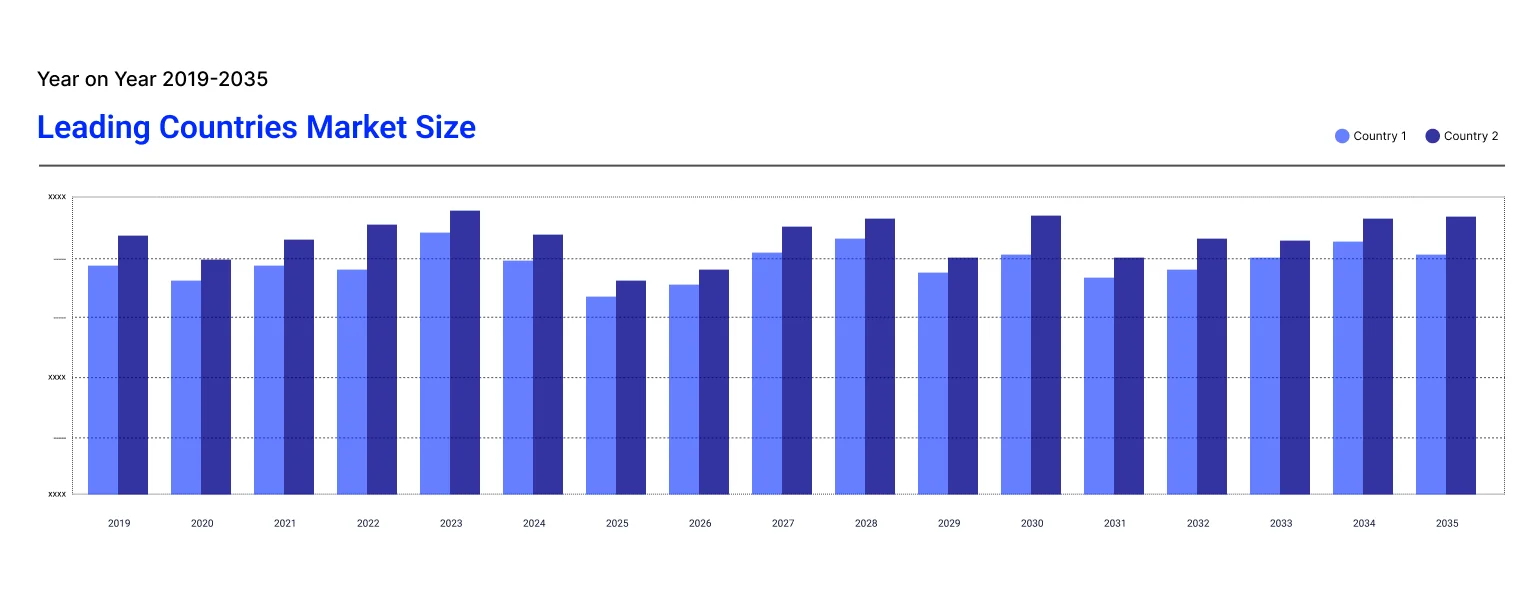
Distributed generation is registering the fastest type of growth as commercial and industrial facilities increasingly install on site or near site solar capacity to offset rising grid electricity costs and improve energy resilience nationwide and abroad today across every market and sector entirely. In January 2026, GameChange Solar launched a dedicated Distributed Generation Solar Division, marking the traditionally utility-scale racking manufacturer's strategic move to capture a larger share of the commercial, industrial, and community solar markets.
Read more about this report - REQUEST FREE SAMPLE COPY IN PDF
By end user, the commercial segment accounts for the largest share owing to retail chains and institutional campuses installing capacity to reduce operating costs
The commercial segment accounts for the largest end user share of the solar farm market as retail chains, office parks, and institutional campuses increasingly install solar capacity to reduce operating costs and meet sustainability commitments nationwide and abroad today across every sector and jurisdiction entirely. Providers serving this category continue to prioritise flexible offtake structures accordingly, since commercial customers typically seek shorter contract terms than industrial or utility buyers across every regional market and jurisdiction worldwide and beyond comprehensively.
Read more about this report - REQUEST FREE SAMPLE COPY IN PDF
The residential segment is registering the fastest end user growth as falling equipment costs and expanding financing options widen homeowner adoption of rooftop and community solar programmes across suburban markets nationwide and abroad today across every demographic group entirely. In August 2026, New Zealand's Ministry of Business, Innovation and Employment reported in its Energy in New Zealand 2026 publication that national solar capacity climbed 52 percent during 2025 to reach 830 megawatts, driven partly by expanding household adoption.
Read more about this report - REQUEST FREE SAMPLE COPY IN PDF
Asia Pacific leads the market through large scale manufacturing capacity and aggressive renewable energy targets
Asia Pacific holds a substantial share of the solar farm market, supported by large scale integrated manufacturing capacity and aggressive national renewable energy targets across China, India, Japan, and Australia and beyond the region entirely and comprehensively today. In New Zealand, seven utility scale solar plants of 9 megawatts or larger were commissioned during 2025 alone, including the Lauriston Solar Farm, which reached full capacity in February 2025 under a ten-year supply contract with Spark New Zealand.
The Middle East and Africa region is registering the fastest growth in the solar farm market as Gulf economies diversify their energy portfolios beyond hydrocarbons into utility scale generation and export focused renewable capacity nationwide and abroad today across every economy and jurisdiction. In October 2025, a consortium of the Saudi Electricity Company and EDF Power Solutions was awarded a 600-megawatt solar photovoltaic project in Saudi Arabia, adding to the kingdom's expanding utility scale renewable pipeline and portfolio further.
Read more about this report - REQUEST FREE SAMPLE COPY IN PDF
The global solar farm market players are becoming increasingly consolidated as major solar farm companies invest in module efficiency, integrated storage capability, and diversified offtake structures to defend their market positions. Solar farm players are prioritising domestic manufacturing footprints, patent licensing coordination, and accelerated interconnection timelines to differentiate their offerings in a capital intensive and increasingly competitive landscape.
Major solar farm companies are also focusing on hybrid solar plus storage platforms, pursuing joint ventures and technology partnerships to capture additional grid value beyond standalone generation. Opportunities are emerging in distributed generation and floating solar configurations, as well as in emerging Middle Eastern and African markets. Companies that successfully combine low-cost financing with fast permitting and diversified customer offtake are expected to strengthen their competitive position over the coming years.
Founded in 2006 and headquartered in Shangrao, Jiangxi, China, JinkoSolar Holding Co. Ltd. supports the market through its Tiger Neo module platform built on TOPCon cell technology, supplying utility scale developers worldwide. The company continues to pursue efficiency records across its tandem cell research programme. JinkoSolar draws on integrated ingot to module manufacturing capacity to serve large scale project pipelines across multiple continents.
Founded in 2006 and headquartered in Fredericia, Denmark, Oersted A/S contributes to the market through its growing onshore renewables portfolio, which complements its established offshore wind development business. The company continues to expand project origination beyond its traditional European base. Oersted draws on decades of large-scale energy infrastructure development experience to structure utility offtake and financing arrangements.
Founded in 1999 and headquartered in Tempe, Arizona, United States, First Solar, Inc. supports the market through its thin film Series 7 module platform, manufactured domestically to qualify for available tax incentives. The company continues to expand production capacity to meet rising utility scale demand. First Solar draws on a vertically integrated cadmium telluride manufacturing process distinct from conventional silicon-based competitors.
Founded in 2006 and headquartered in Sainghin-en-Melantois, France, Ciel et Terre International contributes to the market through its Hydrelio floating solar mounting platform, deployed across reservoirs and water bodies worldwide. The company continues to expand its floating installation footprint into new geographies. Ciel et Terre draws on specialised engineering expertise distinguishing it from conventional ground mount solar developers.
Other key players in the market include Hanwha Corporation, JA Solar Technology Co., Ltd., KYOCERA Corporation, LONGi Green Energy Technology Co., Ltd., Trina Solar Co., Ltd., Wuxi Suntech Power Co., Ltd., and Yingli Energy Development Co., Ltd., among others.
*Please note that this is only a partial list; the complete list of key players is available in the full report. Additionally, the list of key players can be customized to better suit your needs.*
Unlock the latest insights with our solar farm market trends 2026 report. Discover regional growth patterns, module technology economics, and key industry players. Stay ahead of the competition and identify emerging opportunities in the evolving solar farm market landscape.


Upto 15% Off
USD
$2499 $2249
$3999 $3599
$4999 $4249
$5999 $5099


*While we strive to always give you current and accurate information, the numbers depicted on the website are indicative and may differ from the actual numbers in the main report. At Expert Market Research, we aim to bring you the latest insights and trends in the market. Using our analyses and forecasts, stakeholders can understand the market dynamics, navigate challenges, and capitalize on opportunities to make data-driven strategic decisions.*
In 2025, the market reached an approximate value of USD 110.92 Billion.
The market is projected to grow at a CAGR of 13.10% between 2026 and 2035.
The market is estimated to witness healthy growth in the forecast period of 2026-2035 to reach USD 379.87 Billion by 2035.
Securing layered project financing, pursuing corporate offtake agreements, integrating battery storage, diversifying module sourcing, and expanding into the Middle East and Africa are key strategies driving the market.
The major trends in the market include increasing technological advancements, increasing use of photovoltaic technologies, and growth of solar water farms.
The major regions in the market are North America, Latin America, the Middle East and Africa, Europe, and the Asia Pacific.
The different end users of solar farms include residential, commercial, and industrial.
The key players in the market include JinkoSolar Holding Co. Ltd., Oersted A/S, First Solar, Inc., Ciel et Terre International, Hanwha Corporation, JA Solar Technology Co., Ltd., KYOCERA Corporation, LONGi Green Energy Technology Co., Ltd., Trina Solar Co., Ltd., Wuxi Suntech Power Co., Ltd., and Yingli Energy Development Co., Ltd., among others.
Developers face capital intensity, interconnection queue delays, module supply chain concentration, and exposure to shifting government incentive policies across major markets.
Explore our key highlights of the report and gain a concise overview of key findings, trends, and actionable insights that will empower your strategic decisions.
| REPORT FEATURES | DETAILS |
| Base Year | 2025 |
| Historical Period | 2019-2025 |
| Forecast Period | 2026-2035 |
| Scope of the Report |
Historical and Forecast Trends, Industry Drivers and Constraints, Historical and Forecast Market Analysis by Segment:
|
| Breakup by Type |
|
| Breakup by End User |
|
| Breakup by Region |
|
| Market Dynamics |
|
| Competitive Landscape |
|
| Companies Covered |
|
Datasheet
One User
USD 2,499
USD 2,249
tax inclusive*
Single User License
One User
USD 3,999
USD 3,599
tax inclusive*
Five User License
Five User
USD 4,999
USD 4,249
tax inclusive*
Corporate License
Unlimited Users
USD 5,999
USD 5,099
tax inclusive*
*Please note that the prices mentioned below are starting prices for each bundle type. Kindly contact our team for further details.*
Flash Bundle
Small Business Bundle
Growth Bundle
Enterprise Bundle
*Please note that the prices mentioned below are starting prices for each bundle type. Kindly contact our team for further details.*
Flash Bundle
Number of Reports: 3
20%
tax inclusive*
Small Business Bundle
Number of Reports: 5
25%
tax inclusive*
Growth Bundle
Number of Reports: 8
30%
tax inclusive*
Enterprise Bundle
Number of Reports: 10
35%
tax inclusive*
How To Order

Select License Type
Choose the right license for your needs and access rights.

Click on ‘Buy Now’
Add the report to your cart with one click and proceed to register.

Select Mode of Payment
Choose a payment option for a secure checkout. You will be redirected accordingly.
Strategic Solutions for Informed Decision-Making
Gain insights to stay ahead and seize opportunities.

Get insights & trends for a competitive edge.

Track prices with detailed trend reports.

Analyse trade data for supply chain insights.

Leverage cost reports for smart savings

Enhance supply chain with partnerships.

Connect For More Information
Our expert team of analysts will offer full support and resolve any queries regarding the report, before and after the purchase.
Our expert team of analysts will offer full support and resolve any queries regarding the report, before and after the purchase.
We employ meticulous research methods, blending advanced analytics and expert insights to deliver accurate, actionable industry intelligence, staying ahead of competitors.
Our skilled analysts offer unparalleled competitive advantage with detailed insights on current and emerging markets, ensuring your strategic edge.
We offer an in-depth yet simplified presentation of industry insights and analysis to meet your specific requirements effectively.




