

Consumer Insights
Uncover trends and behaviors shaping consumer choices today
Procurement Insights
Optimize your sourcing strategy with key market data
Industry Stats
Stay ahead with the latest trends and market analysis.
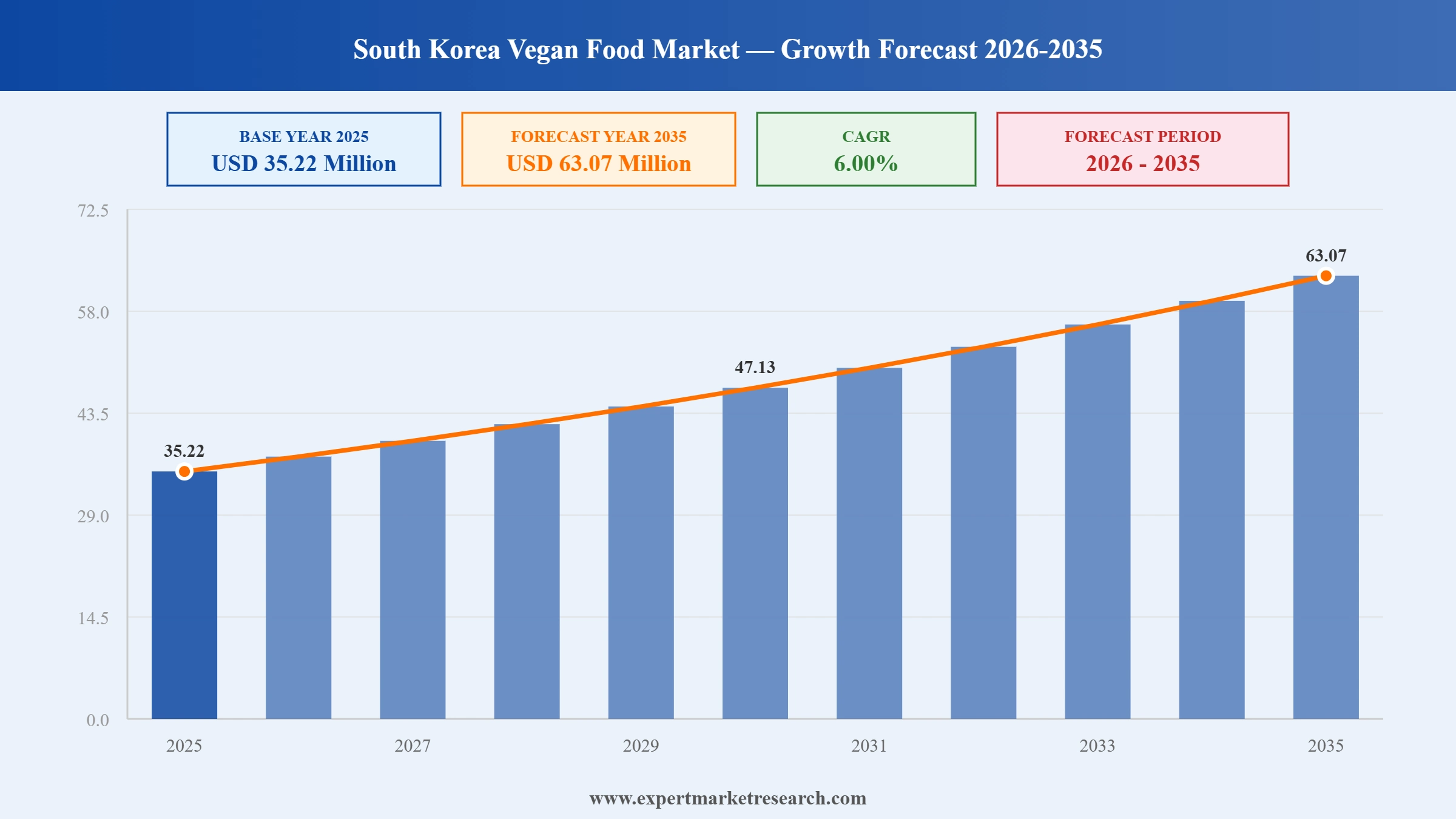
The South Korea vegan food market reached a value of USD 35.22 Million at 2025 and is projected to expand at a CAGR of around 6.00% during the forecast period of 2026-2035. With over 75% of the South Korean population affected by lactose intolerance, a growing cohort of health-conscious millennials and Gen Z consumers, dedicated government support for plant-based food industry development, and rapid product innovation by domestic companies, the market is expected to reach USD 63.07 Million by 2035.
Read more about this report - REQUEST FREE SAMPLE COPY IN PDF
South Korea's vegan food market is transitioning from niche to mainstream as corporate investment, government policy, and cultural shifts converge. Major domestic food companies have established dedicated plant-based subsidiaries, while the Ministry of Agriculture, Food and Rural Affairs has formalised national-level support for the sector. Consumer preferences are evolving rapidly, with younger demographics driving demand for products that address health, sustainability, and ethical concerns simultaneously.
South Korea's Ministry of Agriculture, Food and Rural Affairs selected CJ CheilJedang and Binggrae among 145 companies for its Global Next K-Food export initiative in April 2026. Plant-based and health-oriented products form a key component of the international marketing strategy, boosting the global profile of South Korean vegan food producers.
Major South Korean food companies including CJ CheilJedang reported operating profit declines of over 20% in 2025, prompting restructuring in February 2026. CJ CheilJedang's CEO signalled plans for disruptive innovation, expected to accelerate investment reallocation toward high-growth plant-based categories through its PlantTable brand.
South Korea's Ministry of Agriculture, Food and Rural Affairs announced a National Plan to foster the plant-based food industry in September 2025, making South Korea among a handful of countries globally to implement a dedicated national strategy supporting vegan food sector growth, R&D funding, and international brand promotion.
CJ CheilJedang's PlantTable brand expanded its plant-based meat substitute product range in March 2024, introducing new formulations designed to replicate the taste and texture of beef, chicken, and pork. The brand leverages CJ's proprietary fermentation technology to produce vegan alternatives appealing to flexitarian consumers.
Dairy alternatives represent the fastest-growing product type in South Korea's vegan food market, driven by over 75% lactose intolerance prevalence. South Korean vegan food market growth is particularly evident in plant-based milk, yoghurt, and cheese, where domestic and international brands compete to capture the expanding consumer base.
South Korea's meat substitute segment benefits from intensifying R&D investment by companies seeking taste and texture parity with conventional meat. Zikooin's Unlimeat brand and Phyto Corporation are targeting flexitarian consumers, while CJ CheilJedang uses proprietary fermentation technology in the South Korea vegan food market.
Specialty health stores and online retailers are gaining distribution share in South Korea's vegan food market. E-commerce platforms enable imported vegan brands to reach health-conscious consumers willing to pay premium prices for certified organic products, particularly concentrated in Seoul's urban core where premium plant-based demand is strongest.
The vegan bakery and confectionery segments are emerging as meaningful growth areas within the South Korea vegan food market. Manufacturers are reformulating familiar products using oat, almond, and coconut-based substitutes, expanding plant-based options beyond the traditional protein-replacement framing that originally defined the category.
The South Korea vegan food market benefits from K-beauty culture emphasising skin health through diet. Social media content linking vegan diets with clear skin and sustainable living creates aspirational associations, expanding the plant-based consumer base well beyond strictly health- or ethics-motivated purchasers in South Korea.
The report of the Expert Market Research's titled "South Korea Vegan Food Market Report and Forecast 2026-2035" offers a detailed analysis of the market based on the following segments:
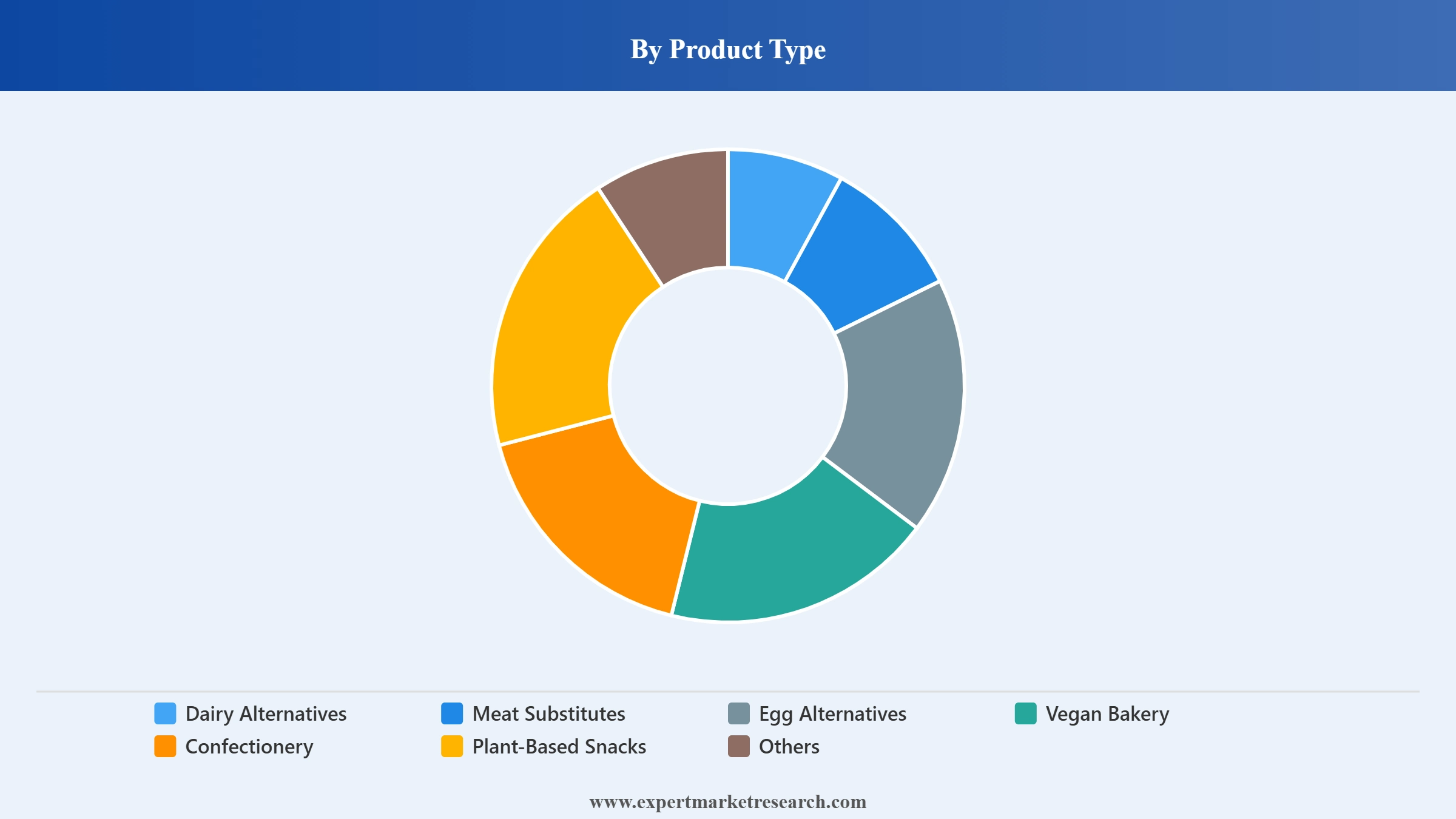
Market Breakup by Product Type
Key Insight: Dairy alternatives command the largest share of South Korea's vegan food market, a position structurally reinforced by the extremely high prevalence of lactose intolerance in the Korean population. More than 75% of South Koreans experience lactose intolerance, creating a permanent and growing base of consumers who rely on plant-based dairy for routine dietary needs rather than purely lifestyle-driven preference. Meat substitutes are the fastest-growing product type, with tofu maintaining traditional consumption while newer formats like TVP and seitan gain traction among health-conscious younger consumers.
Market Breakup by Distribution Channels
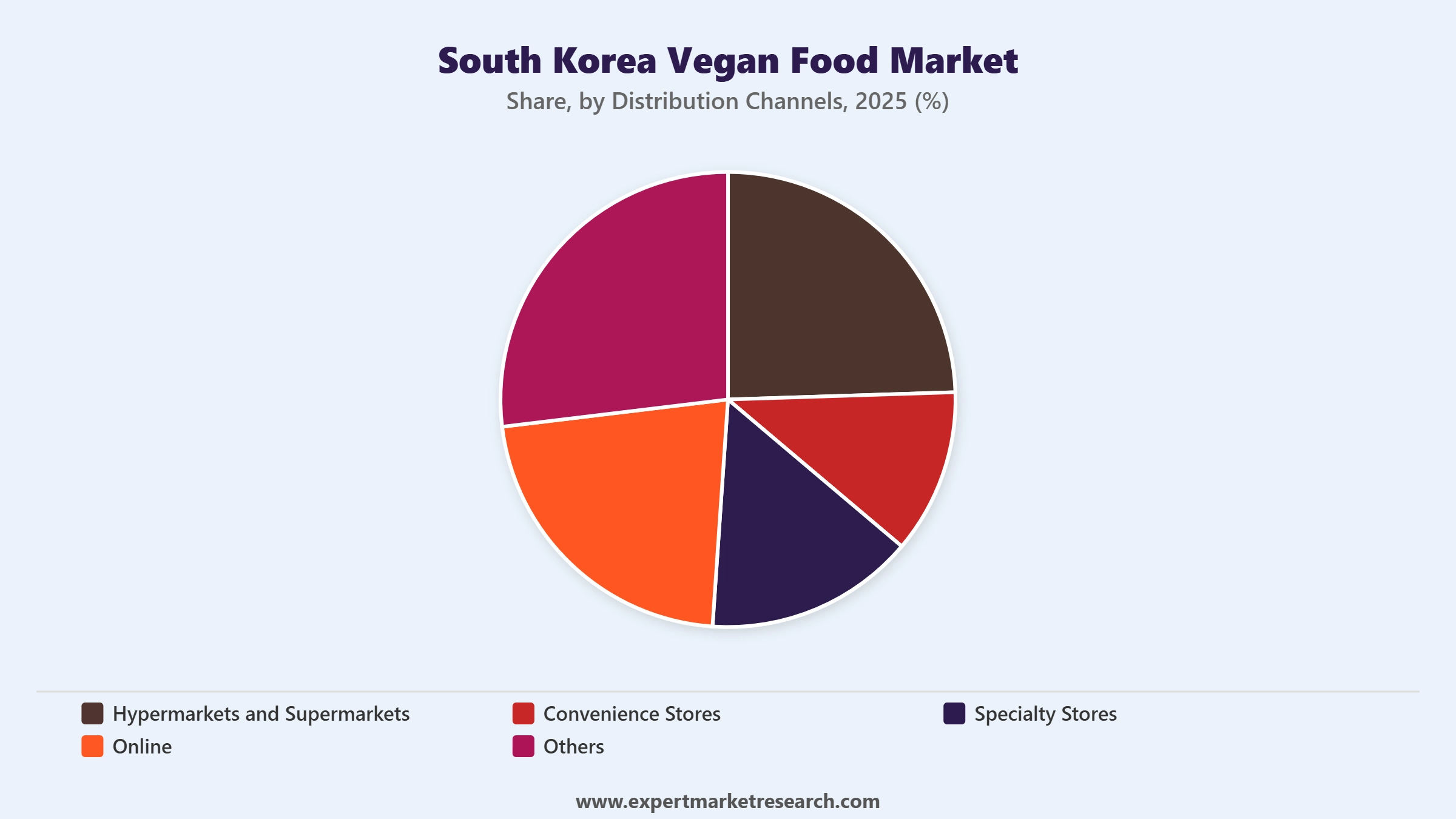
Key Insight: Hypermarkets and supermarkets remain the dominant distribution channel for vegan food in South Korea, providing broad product accessibility and the scale of exposure needed to support mainstream consumer trial. However, online channels are growing rapidly as the preferred route for imported and premium vegan brands, enabling smaller producers to reach health-conscious consumers nationwide without the high costs of physical retail. Convenience stores, ubiquitous in South Korean urban life, are also expanding plant-based product ranges to capture on-the-go vegan consumption occasions.
Read more about this report - REQUEST FREE SAMPLE COPY IN PDF
By Product Type, dairy alternatives dominate the market due to widespread lactose intolerance and habitual dietary needs
Dairy alternatives hold the largest share of South Korea's vegan food market, accounting for the majority of category revenue across milk, cheese, yoghurt, and dessert formats. The scientific and demographic basis of this demand is distinctive: South Korean lactose intolerance prevalence is among the highest in the world due to genetic lactase persistence patterns, meaning plant-based dairy addresses a fundamental digestive need rather than a purely lifestyle-driven preference. Leading domestic brands have built substantial distribution networks for soy, oat, and almond milk variants.
Read more about this report - REQUEST FREE SAMPLE COPY IN PDF
Meat substitutes represent the second-largest and fastest-growing product type in the South Korea vegan food market, driven by a combination of environmental awareness, health concerns, and expanding availability of high-quality plant-based proteins. Tofu and TVP remain the most culturally embedded formats, while products using seitan, Quorn, and pea protein are gaining traction among flexitarian consumers. CJ CheilJedang's PlantTable brand expanded its meat substitute product range in March 2024, contributing meaningfully to this segment's momentum.
By Distribution Channel, hypermarkets and supermarkets account for the dominant share due to product range breadth and consumer accessibility
Hypermarkets and supermarkets hold the largest share of vegan food distribution in South Korea, providing the broad product range and physical accessibility that drives regular purchase frequency. Major Korean retailers including E-Mart, Lotte Mart, and Homeplus have significantly expanded their plant-based food sections in recent years, reflecting the category's growing commercial importance. The mainstream retail positioning of vegan products is helping normalise plant-based eating among consumers who may not identify as vegan but are open to incorporating plant-based options into a balanced diet.
Read more about this report - REQUEST FREE SAMPLE COPY IN PDF
Online channels are gaining share rapidly in South Korea's vegan food distribution landscape, particularly for premium, certified organic, and internationally imported vegan products. The country's highly developed e-commerce infrastructure and high consumer comfort with digital purchasing make online a critical growth channel for brands seeking to bypass the shelf-space constraints of physical retail. Specialty stores also play an important role in the distribution of premium and imported vegan products, particularly in health-focused urban neighbourhoods.
South Korea's vegan food market is characterised by a combination of large domestic food conglomerates that have launched dedicated plant-based subsidiaries alongside smaller specialist brands. CJ CheilJedang dominates the mainstream plant-based food segment through its PlantTable brand, while international players are gradually entering through e-commerce and retail partnerships. The market is still in a relatively early stage of consolidation, with multiple small and mid-sized brands competing for the health-conscious and environmentally motivated consumer segment.
Product innovation and certification are key competitive differentiators in the South Korea vegan food market. Companies that demonstrate taste and texture equivalence with conventional animal-based products while maintaining clean-label credentials are best positioned to capture mainstream consumer adoption. The government's September 2025 plant-based food development plan is expected to support R&D investment and accelerate new entrants over the forecast period.
CJ CheilJedang Corp. was founded in 1953 and is headquartered in Seoul, South Korea. Operating as a division of CJ Group, the company is one of South Korea's largest food and biotechnology conglomerates. Its dedicated plant-based food brand PlantTable produces a range of meat substitute products through proprietary fermentation and bioprocessing technology. In April 2026, the company was selected for the South Korean government's Global Next K-Food export initiative, reflecting its growing importance in Korea's international food export strategy.
Phyto Corporation is a South Korean company specialising in plant-based food product development. The company focuses on creating innovative vegan food formulations catering to health-conscious and environmentally aware consumers. Phyto Corporation competes in the plant-based protein and meat substitute categories, leveraging advanced food science to develop products addressing both nutritional completeness and sensory appeal. The company targets both the domestic South Korean market and international vegan food segments through selective export activities.
The PlantEat Inc. is a South Korean plant-based food company focused on developing accessible and culturally relevant vegan products for Korean consumers. The company's product range is designed to integrate seamlessly with traditional Korean cooking styles and meal patterns, making plant-based eating more approachable for consumers transitioning from conventional diets. The PlantEat's positioning bridges the gap between committed veganism and mainstream flexitarian consumption in the South Korea vegan food market.
Zikooin Company is a South Korean food-tech company known for its Unlimeat brand, which produces plant-based meat products targeting premium food service and retail channels in South Korea and internationally. Zikooin's products have been adopted by major restaurant chains and food service operators, demonstrating the commercial viability of premium plant-based meat alternatives in the South Korean food service sector. The company has pursued international expansion in Asia, North America, and Europe.
*Please note that this is only a partial list; the complete list of key players is available in the full report. Additionally, the list of key players can be customized to better suit your needs.*
Discover the latest insights on the South Korea vegan food market 2026 with our comprehensive report. Stay ahead with valuable data on plant-based product innovations, consumer demand shifts, and emerging distribution channels. Whether you're evaluating plant-based product launches or expanding your retail footprint in Asia, this report gives you the clarity you need. Download your free sample now and discover key opportunities in South Korea's thriving vegan food industry.


Upto 15% Off
USD
$2499 $2249
$3999 $3599
$4999 $4249
$5999 $5099


*While we strive to always give you current and accurate information, the numbers depicted on the website are indicative and may differ from the actual numbers in the main report. At Expert Market Research, we aim to bring you the latest insights and trends in the market. Using our analyses and forecasts, stakeholders can understand the market dynamics, navigate challenges, and capitalize on opportunities to make data-driven strategic decisions.*
The South Korea vegan market is projected to grow at a CAGR of 6.00% between 2026 and 2035.
The South Korea vegan food market is estimated to witness a healthy growth in the forecast period and is expected to reach USD 35.22 Million by 2035.
Sustainable packaging, rising disposable income, celebrity influence, health benefits, and high demand for clean-labelled products are the major drivers.
Lactose intolerance among people and awareness regarding animal cruelty are the key trends in the South Korea vegan market.
The dominant type of vegan food in the industry are and Dairy alternatives, meat substitutes, egg alternatives, vegan bakery, confectionary, and plant-based snacks, among others.
The distribution channel segment is led by supermarkets/hypermarkets, convenience stores, specialty stores, and online stores, among others.
The major players in the industry are Phyto Corporation, The PlantEat Inc., Zikooin Company, and CJ Cheiljedang Corp., among others.
Explore our key highlights of the report and gain a concise overview of key findings, trends, and actionable insights that will empower your strategic decisions.
| REPORT FEATURES | DETAILS |
| Base Year | 2025 |
| Historical Period | 2019-2025 |
| Forecast Period | 2026-2035 |
| Scope of the Report |
Historical and Forecast Trends, Industry Drivers and Constraints, Historical and Forecast Market Analysis by Segment:
|
| Breakup by Product Type |
|
| Breakup by Distribution Channels |
|
| Market Dynamics |
|
| Competitive Landscape |
|
| Companies Covered |
|
Datasheet
One User
USD 2,499
USD 2,249
tax inclusive*
Single User License
One User
USD 3,999
USD 3,599
tax inclusive*
Five User License
Five User
USD 4,999
USD 4,249
tax inclusive*
Corporate License
Unlimited Users
USD 5,999
USD 5,099
tax inclusive*
*Please note that the prices mentioned below are starting prices for each bundle type. Kindly contact our team for further details.*
Flash Bundle
Small Business Bundle
Growth Bundle
Enterprise Bundle
*Please note that the prices mentioned below are starting prices for each bundle type. Kindly contact our team for further details.*
Flash Bundle
Number of Reports: 3
20%
tax inclusive*
Small Business Bundle
Number of Reports: 5
25%
tax inclusive*
Growth Bundle
Number of Reports: 8
30%
tax inclusive*
Enterprise Bundle
Number of Reports: 10
35%
tax inclusive*
How To Order

Select License Type
Choose the right license for your needs and access rights.

Click on ‘Buy Now’
Add the report to your cart with one click and proceed to register.

Select Mode of Payment
Choose a payment option for a secure checkout. You will be redirected accordingly.
Strategic Solutions for Informed Decision-Making
Gain insights to stay ahead and seize opportunities.

Get insights & trends for a competitive edge.

Track prices with detailed trend reports.

Analyse trade data for supply chain insights.

Leverage cost reports for smart savings

Enhance supply chain with partnerships.

Connect For More Information
Our expert team of analysts will offer full support and resolve any queries regarding the report, before and after the purchase.
Our expert team of analysts will offer full support and resolve any queries regarding the report, before and after the purchase.
We employ meticulous research methods, blending advanced analytics and expert insights to deliver accurate, actionable industry intelligence, staying ahead of competitors.
Our skilled analysts offer unparalleled competitive advantage with detailed insights on current and emerging markets, ensuring your strategic edge.
We offer an in-depth yet simplified presentation of industry insights and analysis to meet your specific requirements effectively.




