

Consumer Insights
Uncover trends and behaviors shaping consumer choices today
Procurement Insights
Optimize your sourcing strategy with key market data
Industry Stats
Stay ahead with the latest trends and market analysis.
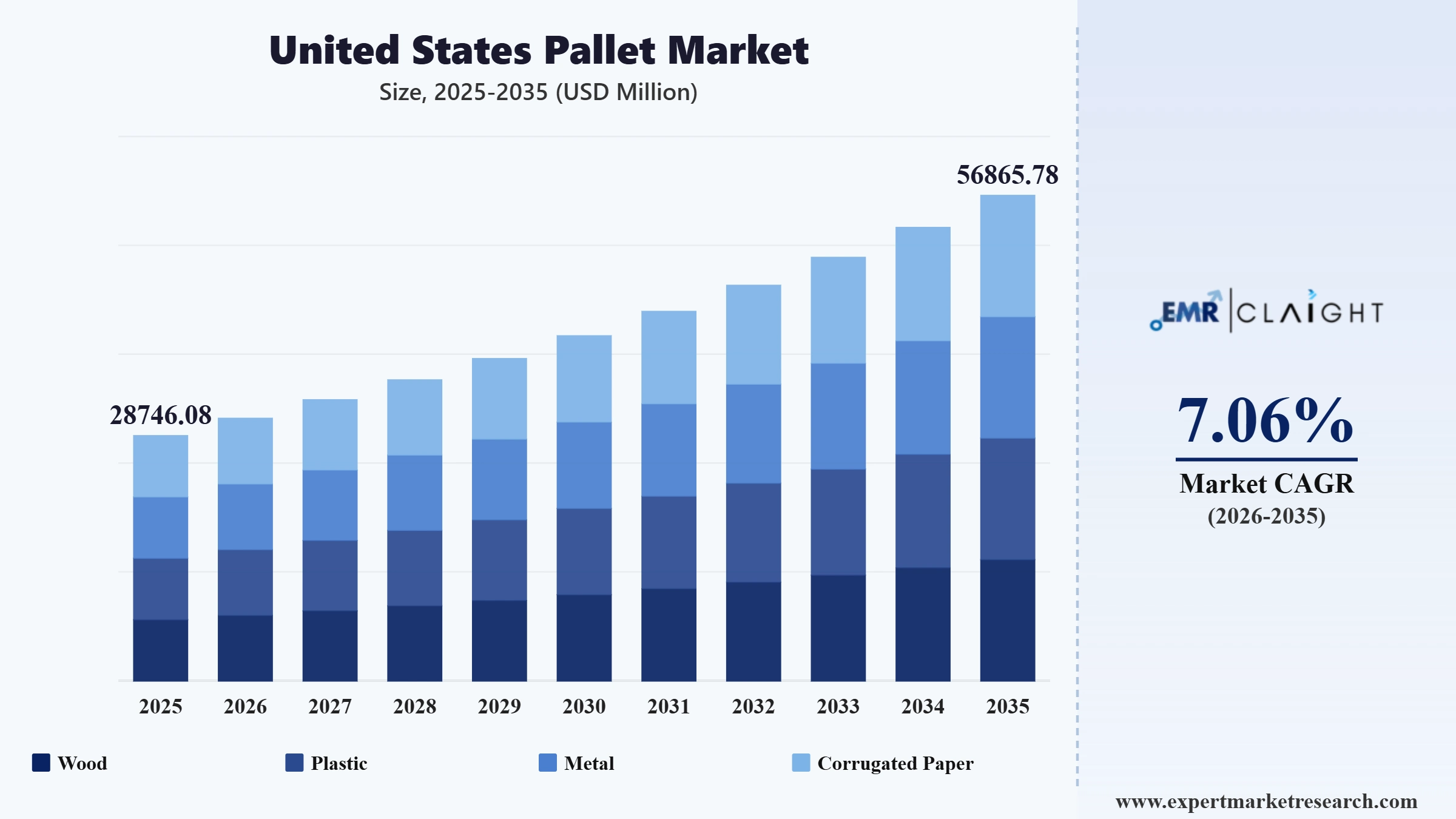
The United States pallet market was valued at USD 28746.08 Million in 2025. The market is expected to grow at a CAGR of 7.06% during the forecast period of 2026-2035 to reach a value of USD 56865.78 Million by 2035. Expanding cold chain investments across the nation’s food and pharma sectors is heightening demand for hygienic, reusable pallet solutions that meet FDA and FSMA compliance standards.
The market is being heavily influenced by the rapid acceleration of e-commerce and the shift toward automated warehouses. According to the United States pallet market analysis, in 2023, the country’s online retail sales reached nearly USD 1 trillion, underscoring how the demand for pallets has scaled with last-mile and high-volume fulfillment needs. Pallets now function as more than just a load-bearing platform, they have become central to modern logistics efficiency.
Government data also reflects how the manufacturing base is strengthening pallet demand. The Federal Reserve reported a 1.5% rise in United States industrial production in 2023, a direct push to pallet utilization for raw material movement and finished goods distribution. In addition, sustainability continues to shape strategies, with the Environmental Protection Agency emphasizing recycling mandates, contributing to wood pallets achieving an industry-leading recovery rate of about 95%.
Innovation is also reshaping the United States pallet market dynamics. Companies are rolling out RFID-enabled smart pallets and IoT-based inventory tracking tools to increase supply chain visibility. In December 2023, CHEP North America piloted data-rich pooling systems that improved retailer warehouse uptime by 12%. With e-commerce scaling, manufacturing reviving, and sustainability policies in play, the market is positioned for steady expansion, balancing traditional wood pallet dominance with fast-growing interest in plastic and corrugated solutions.
Read more about this report - REQUEST FREE SAMPLE COPY IN PDF
| United States Pallet Market Report Summary | Description | Value |
| Base Year | USD Million | 2025 |
| Historical Period | USD Million | 2019-2025 |
| Forecast Period | USD Million | 2026-2035 |
| Market Size 2025 | USD Million | 28746.08 |
| Market Size 2035 | USD Million | 56865.78 |
| CAGR 2019-2025 | Percentage | XX% |
| CAGR 2026-2035 | Percentage | 7.06% |
| CAGR 2026-2035 - Market by Region | Rocky Mountain | 8.04% |
| CAGR 2026-2035 - Market by Region | Southwest | 7.5% |
| CAGR 2026-2035 - Market by Type | Plastic | 8.4% |
| CAGR 2026-2035 - Market by End Use | Food and Beverages | 7.6% |
| Market Share by Region 2025 | Southwest | 21.2% |
UFP Industries acquired John Rock, Inc., a Pennsylvania-based pallet manufacturer, for approximately USD 48 million, expanding PalletOne's northeast manufacturing presence across Pennsylvania and Virginia.
UFP Industries announced the acquisition of Berry Pallets, Inc., a Minnesota-based manufacturer, for approximately USD 20 million, adding USD 23 million in annual sales and strengthening its upper Midwest supply network.
Softwood GMA pallet prices recorded their largest increase in years, driven by rising low-grade lumber input costs and stacking US tariffs on Canadian softwood lumber exceeding 40% in early 2026.
The National Wooden Pallet and Container Association officially rebranded as Woodpack Global at its Annual Leadership Conference in Fort Lauderdale, Florida, reflecting the industry's expanded global scope and advocacy capacity.
E-commerce remains one of the strongest factors driving pallet demand in the United States pallet market. In 2023, the United States Census Bureau highlighted that e-commerce now represents 15.4% of total retail sales, up from 14.7% a year prior. Such growth accelerates turnover in distribution hubs, making standardized pallets critical for handling high-frequency shipments. Companies like Walmart and Target are investing in regional fulfillment centers that rely on durable block pallets for continuous operations. As order volumes rise and delivery windows tighten, pallet durability and design efficiency have become vital enablers of both cost savings and speed-to-market performance.
Automation is transforming pallet demand as robots, AMRs, and automated storage systems dominate logistics hubs. Amazon, for instance, operates more than 750,000 robots in its fulfillment network since 2012, requiring highly compatible pallet systems. Durable block pallets are being favored for their strength and four-way entry, allowing seamless integration with conveyor and robotic systems, driving the United States pallet market opportunities. These automation initiatives are reshaping design, durability, and handling expectations for pallets in high-volume warehouses, creating opportunities for manufacturers aligned with robotics compatibility.
The United States pallet market trends are evolving with sustainability at its core. In October 2024, KraftPal and Orora partnered to scale corrugated pallet use across North America, tapping demand for lighter, recyclable logistics tools. On the other hand, the United States Department of Agriculture expanded its BioPreferred Program in August 2025, incentivizing industries to adopt bio-based packaging and pallet solutions. As companies pursue ESG commitments, plastic and corrugated pallets are gaining adoption for hygiene and lifecycle benefits. Wood still holds dominance due to repairability, but the surge of eco-friendly alternatives is proving that the ecosystem is pivoting toward greener and recyclable solutions across industries.
Reusable pallet systems are increasingly becoming the go-to choice for United States corporates under cost and sustainability pressures. Providers like CHEP and iGPS are leading pooling services that reduce waste while ensuring consistent quality. Automotive supply chains, in particular, rely on pooled plastic pallets to reduce logistics costs and improve standardization. The EPA’s WasteWise program further supports reusability, aligning industry goals with national recycling standards, broadening the United States pallet market scope. By embracing circular economy models, pooling extends pallet lifespans and lowers replacement expenses.
Regulated industries are accelerating demand for specialized pallet formats. The United States Food and Drug Administration mandates strict compliance for pharmaceutical pallets under Good Manufacturing Practice (GMP) and Good Distribution Practice (GDP). Meanwhile, the food sector must comply with the Food Safety Modernization Act (FSMA), which prioritizes moisture-resistant and hygienic pallet designs. Automotive manufacturers continue to favor heavy-duty metal pallets for components like transmissions and engines, accelerating the United States pallet market expansion. With regulatory scrutiny rising and industry-specific requirements expanding, the market is increasingly diversifying into niche, high-performance pallet types tailored to meet stringent operational and safety standards across multiple sectors.
The EMR’s report titled “United States Pallet Market Report and Forecast 2026-2035” offers a detailed analysis of the market based on the following segments:
Market Breakup by Type
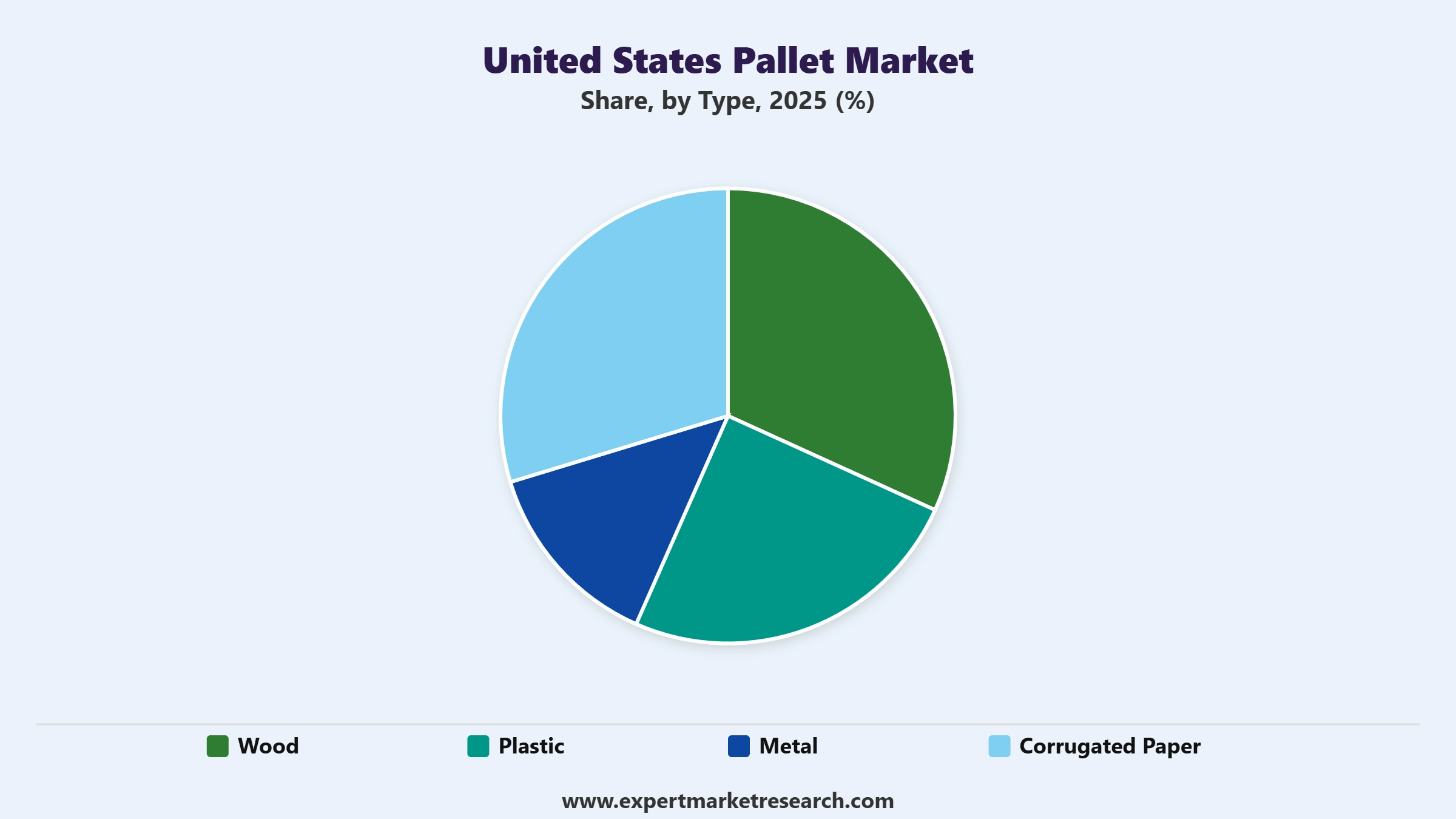
Key Insight: The United States pallet industry spans across wood, plastic, metal, and corrugated types, each serving unique operational priorities. Wood maintains its leadership in the market through low cost and repairability, while plastic accelerates growth in regulated, hygiene-sensitive industries. Metal pallets secure demand in heavy manufacturing and automotive sectors where durability is non-negotiable. Corrugated paper pallets, though less common, are gaining traction in e-commerce for lightweight, one-way shipments.
Market Breakup by Structural Design
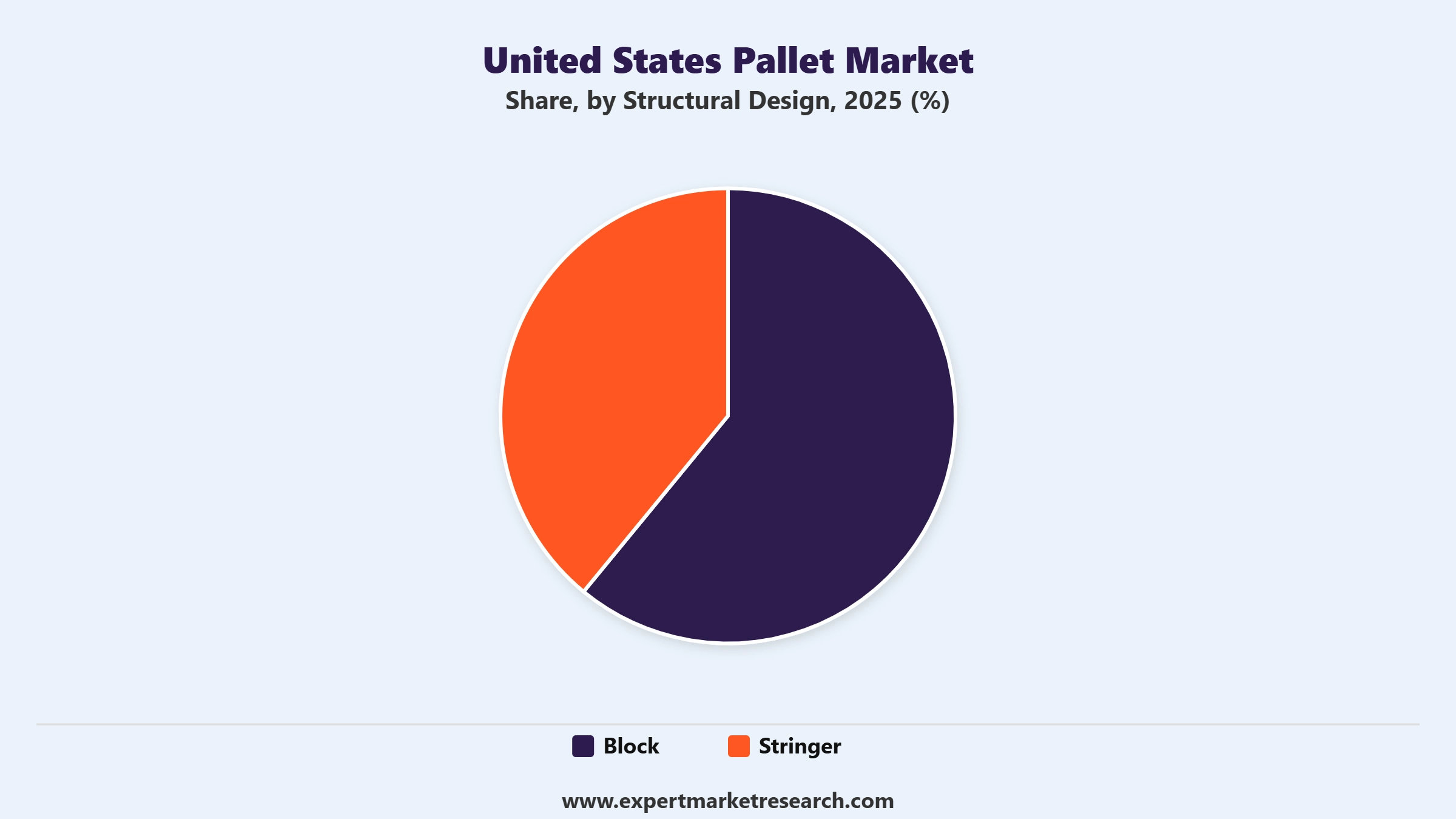
Key Insight: Structural design options, considered in the United States pallet market report, include block, stringer, and other niche forms. Block pallets dominate with superior strength and robotics compatibility, while stringer pallets grow popular due to cost efficiency and lightweight handling. Other designs, including specialty pallets, cater to industry-specific needs but remain limited in adoption. Overall, the market reflects how businesses balance durability, affordability, and design flexibility.
Market Breakup by Application
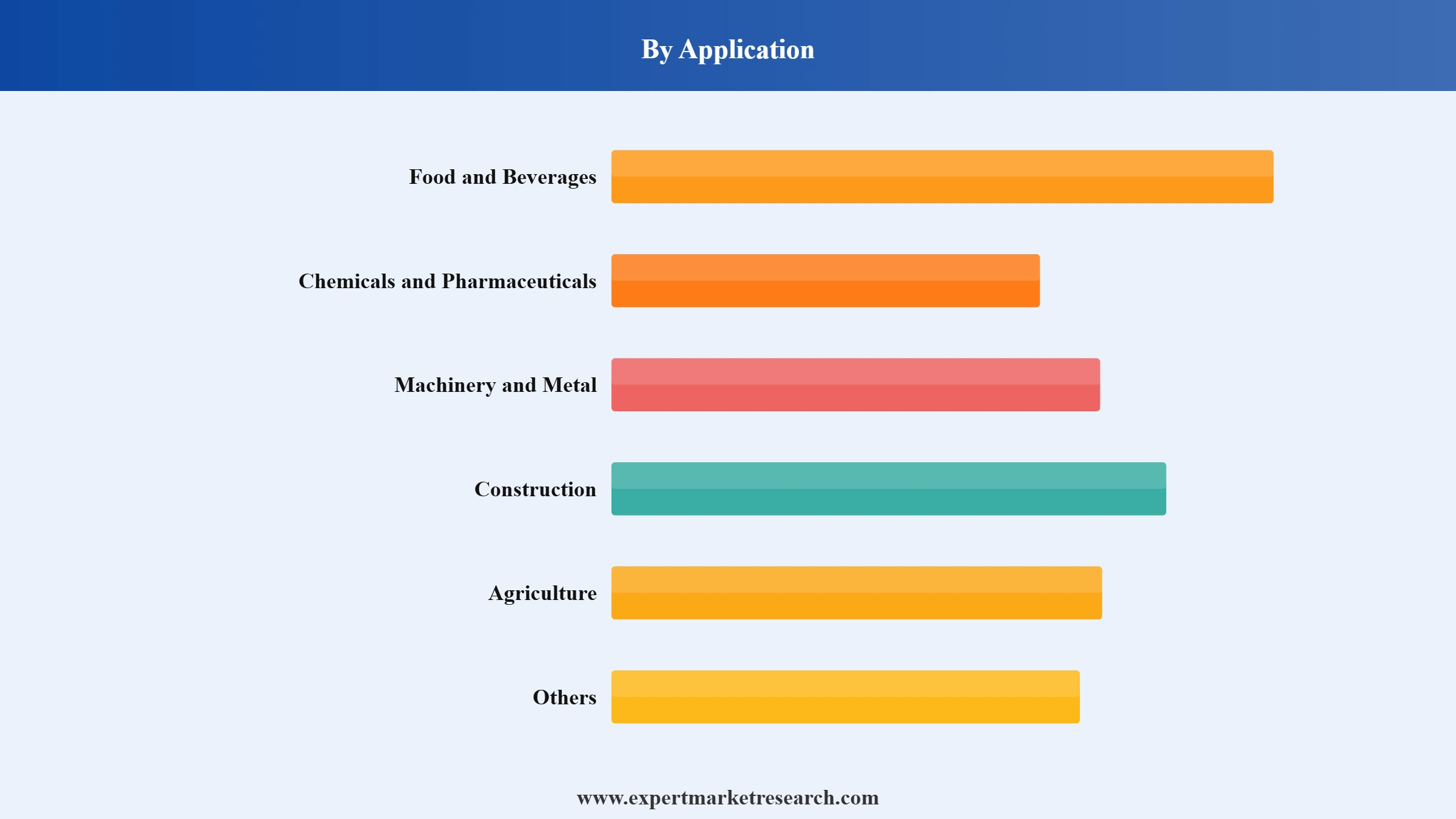
Key Insight: The United States pallet demand growth is powered by food and beverage, pharmaceuticals, chemicals, construction, agriculture, machinery, and metals. Food continues to dominate due to cold chain and hygiene demands, while the pharmaceuticals sector expands its share under regulatory scrutiny. Chemicals rely on compliant pallets for safe handling, while construction and agriculture scale usage for raw material flows. Automotive and machinery industries demand metal-heavy-duty pallets for bulky components.
Market Breakup by Region
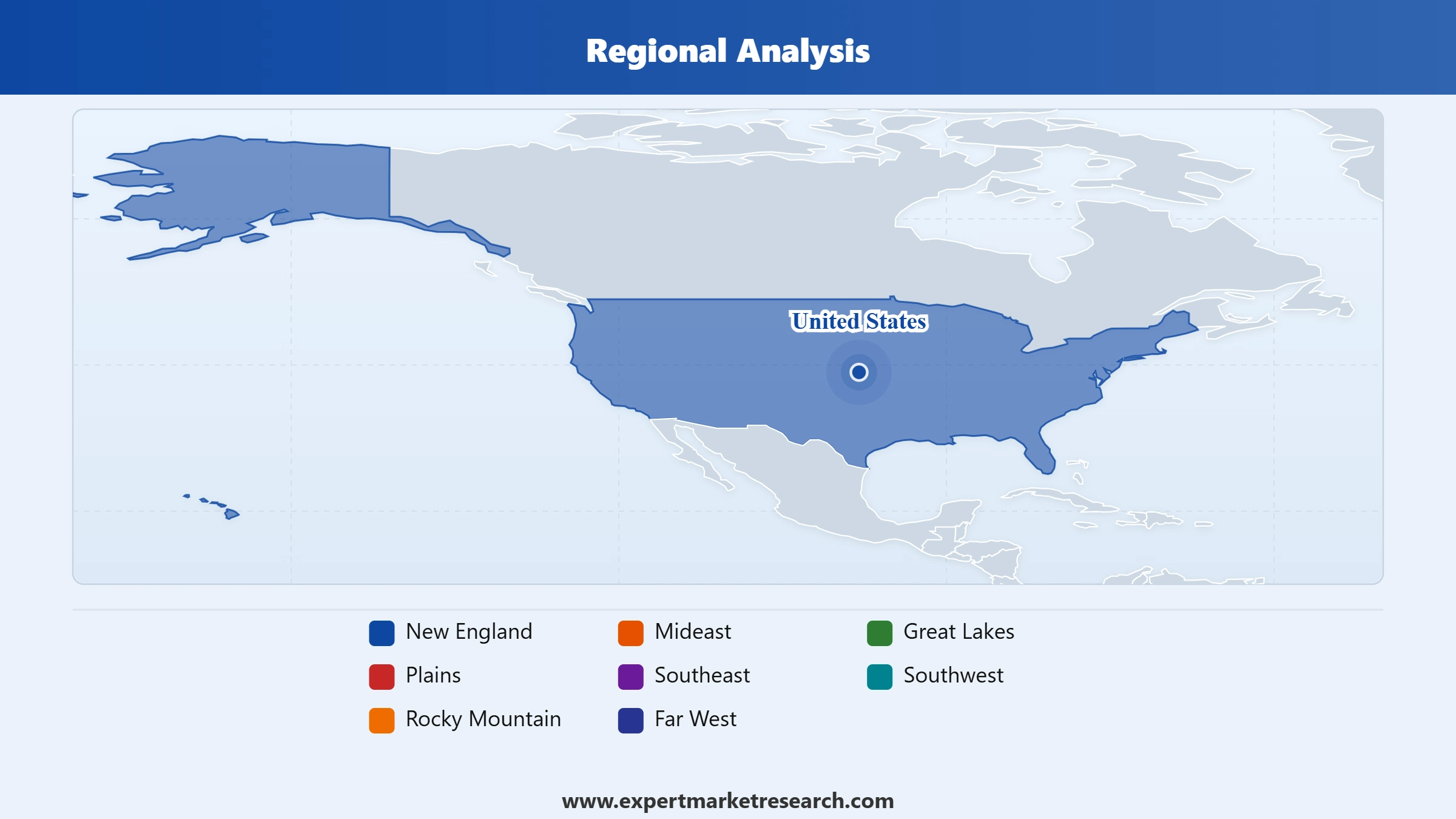
Key Insight: The Southeast United States pallet market dominates with industrial strength and automated warehousing. The Far West leads growth on sustainability and recycled pallet innovations. Great Lakes and Midwest drive automotive and machinery usage, while agricultural states in the Plains and Southwest push wooden pallet demand. New England and the Mideast sustain moderate growth tied to retail logistics.
Read more about this report - REQUEST FREE SAMPLE COPY IN PDF
Wood pallets hold the largest market share with high recycling efficiency
Wood pallets dominate the market due to their affordability, widespread availability, and recyclability. Industries such as retail, manufacturing, and e-commerce depend on them for transporting bulk goods, particularly in heavy-duty applications. Their ease of repair ensures continued adoption. Additionally, initiatives by pallet recyclers like 48forty Solutions are enhancing sustainability and extending wood pallet lifecycles.
Read more about this report - REQUEST FREE SAMPLE COPY IN PDF
Plastic pallets are the fastest-growing category accelerating the United States pallet market value, driven by regulatory pressures and hygiene requirements. Pharmaceutical and food industries prefer plastic pallets for their durability, moisture resistance, and compliance with FDA and FSMA standards. Their market share is projected to grow at the highest CAGR over the forecast period, fueled by greater adoption in cold chain logistics. Companies like Orbis Corporation are investing in recycled plastic pallet solutions that meet both sustainability and industry-specific standards.
By structural design, block pallets command the largest share of the market due to their high durability
Block pallets dominate the structural design category, valued for their durability, four-way entry design, and compatibility with automated systems. These account for the largest share due to their adaptability across high-volume warehousing and robotics-driven distribution centers. Block pallets are particularly useful in e-commerce and manufacturing where quick maneuverability and heavy load capacity are essential. Automated warehouses in the Southeast and Midwest are increasingly standardizing block pallet usage to streamline robotics integration. Their performance, combined with versatility across industries, keeps block pallets at the forefront of structural design adoption in the United States pallet market.
Read more about this report - REQUEST FREE SAMPLE COPY IN PDF
Stringer pallets are also expanding their market share, propelled by their affordability and lightweight build. They are especially popular in agriculture and retail sectors where medium to low-weight goods dominate transportation flows. In 2025, their adoption is projected to grow significantly due to demand from cost-conscious businesses optimizing supply chain spending. Stringer pallets also offer greater ease in handling and repair, making them attractive for small-scale operations.
By application, food and beverages lead the market as the largest consumer of pallets
The food and beverage sector remains the largest consumer of pallets in the United States. Strict hygiene standards and the need for efficient transport of perishable goods drive strong adoption. Plastic pallets, with their moisture resistance and ease of sanitization, are increasingly chosen for fresh produce, dairy, and meat supply chains. The Department of Agriculture’s food distribution initiatives continue to add logistics volumes, boosting overall demand in the United States pallet market.
Read more about this report - REQUEST FREE SAMPLE COPY IN PDF
Pharmaceuticals are the fastest-growing pallet application, with rising demand for specialized designs meeting FDA and GMP standards. Corrugated and plastic pallets are preferred for their cleanliness and compliance. Growth is tied to expanding biologics and vaccine distribution, with federal initiatives like Project NextGen supporting resilient supply chains.
Southeast secures the largest regional market share with manufacturing and e-commerce base
The Southeast region leads the market, supported by manufacturing, agriculture, and e-commerce hubs. States like Georgia, Florida, and South Carolina host large distribution centers and highly automated warehouses, where block and plastic pallets dominate. Major retailers are investing in logistics infrastructure in this region, stimulating consistent pallet demand. The Southeast’s industrial growth, combined with strategic port access, makes it the most active market for pallet usage.
Read more about this report - REQUEST FREE SAMPLE COPY IN PDF
The Far West, led by California and Washington, is the fastest-growing pallet market in the United States. Demand is fueled by the rise of sustainability policies, particularly California’s push for circular economy compliance in packaging and logistics. Plastic and corrugated pallets are gaining traction due to regulatory incentives and adoption in food, agriculture, and tech supply chains. In November 2022, 48forty Solutions expanded its recycled pallet footprint in California through the acquisition of Dependable Pallet Logistics. Such investments highlight how the Far West is becoming a testing ground for eco-friendly, customized pallet solutions driving market growth.
The market is highly competitive, shaped by both legacy players and innovators leveraging automation, recycling, and materials science. Leading United States pallet market players like CHEP, 48forty Solutions, and Orbis are focusing on advanced pallet pooling, IoT-enabled smart pallets, and sustainable material adoption. Mergers and acquisitions, such as 48forty’s expansion in California, demonstrate how consolidation strengthens regional networks.
The competitive emphasis is on lowering costs through automation, meeting ESG-driven client demands, and aligning products with robotics and cold chain logistics systems. For United States pallet companies, opportunities lie in collaborating with providers that integrate pallet services into larger supply chain ecosystems. Firms that adapt through innovation, regional scale, and compliance-driven design are positioned to capture long-term value in this evolving market.
The US pallet market competitive landscape in 2026 is defined by three strategic imperatives: consolidation through acquisition, technology-led differentiation via IoT and RFID integration, and ESG-aligned material innovation. UFP Industries' back-to-back acquisitions of Berry Pallets and John Rock, Inc. in April–May 2026 illustrate how leading players are expanding geographic manufacturing footprints to serve national customers with regional efficiency. Meanwhile, pooling specialists and plastic pallet manufacturers are investing in sensor-ready pallet platforms to capture the growing demand from automated and cold chain logistics networks.
Founded in 1985, headquartered in Vienna, United States, Millwood, Inc. is focusing on unit-load engineering and pallet lifecycle services. The firm is combining pallet repair, innovative automated repair lines, and customized load-containment systems to reduce waste and improve warehouse output. Millwood is expanding regional service centers and offering on-site packaging audits.
Founded in 1982, headquartered in Colorado, United States, Anderson Pallet and Crate Inc. specializes in heat-treated wood pallets and complex industrial crating for heavy equipment. The company serves aerospace, oil & gas, and HVAC sectors with engineered crating solutions that meet export and military specifications.
Established in the year 1988, headquartered in Netherlands, TMF Corporation manufactures heavy-duty plastic pallets and specialty containers for pharmaceutical, food, and waste management industries. TMF is known for high-strength, chemically resistant pallet designs that extend service life and lower contamination risk. Unique innovations include recyclable polymer blends and a nested-stack pallet that cuts transport volume.
Founded in 1984 and headquartered in the United States, Orbis Corporation is a leader in reusable plastic packaging and smart pallet systems. Orbis is pioneering sensor-ready pallets, reusable retail display pallets, and dunnage that integrate with digital inventory tracking. Its unique developments include the Odyssey 3-runner pallet and programmatic pallet-as-a-service models that shift CAPEX to OPEX for retailers.
*Please note that this is only a partial list; the complete list of key players is available in the full report. Additionally, the list of key players can be customized to better suit your needs.*
Other key players in the market are Kamps Inc., Palletone Inc., and John Rock, Inc., among others.
Explore the latest trends shaping the United States pallet market 2026-2035 with our in-depth report. Gain strategic insights, future forecasts, and key market developments that can help you stay competitive. Download a free sample report or contact our team for customized consultation on United States pallet market trends 2026.
Global Metal Pallet Market
Global Pallet Market
Global Plastic Pallets Market
United States Flame Retardant Plastic Pallets Market
United States Plastic Pallets Market
Mexico Pallet Market
Mexico Plastic Pallets Market
Australia Pallet Wraps Market
Australia Pallets Market
North America Pallet Market


Upto 15% Off
USD
$2499 $2249
$3999 $3599
$4999 $4249
$5999 $5099


*While we strive to always give you current and accurate information, the numbers depicted on the website are indicative and may differ from the actual numbers in the main report. At Expert Market Research, we aim to bring you the latest insights and trends in the market. Using our analyses and forecasts, stakeholders can understand the market dynamics, navigate challenges, and capitalize on opportunities to make data-driven strategic decisions.*
In 2025, the United States pallet market reached an approximate value of USD 28746.08 Million.
The market is projected to grow at a CAGR of 7.06% between 2026 and 2035.
The market is estimated to witness a healthy growth in the forecast period of 2026-2035 to reach a value of USD 56865.78 Million by 2035.
Investing in recyclable materials, piloting sensor-enabled pallets, expanding regional repair hubs, offering pallet-as-a-service contracts, partnering with retailers on reverse logistics, and training workforce in circular packaging operations and measuring KPIs.
The robust growth of the warehousing sector, increasing R&D activities in the manufacturing of pallets, and the rising demand for pallets from the pharmaceutical sector are the key trends propelling the market growth.
Regions considered in the market are New England, Mideast, Great Lakes, Plains, Southeast, Southwest, Rocky Mountain, and Far West.
The leading types of pallets in the market are wood, plastic, metal, and corrugated paper.
Food and beverages, chemicals and pharmaceuticals, machinery and metal, construction, and agriculture, among others, are the major applications of pallet.
The different segments based on the structural design of the pallet are block and stringer, among others.
The key players in the market include Millwood, Inc., Anderson Pallet and Crate Inc., TMF Corporation, Orbis Corporation, Kamps Inc., Palletone Inc., and John Rock, Inc., among others.
Supply chain volatility, raw material price swings, skilled labor shortages, regulatory export rules, and pressure to decarbonize forcing pallet firms to innovate while managing tighter margins and higher service expectations.
Explore our key highlights of the report and gain a concise overview of key findings, trends, and actionable insights that will empower your strategic decisions.
| REPORT FEATURES | DETAILS |
| Base Year | 2025 |
| Historical Period | 2019-2025 |
| Forecast Period | 2026-2035 |
| Scope of the Report |
Historical and Forecast Trends, Industry Drivers and Constraints, Historical and Forecast Market Analysis by Segment:
|
| Breakup by Type |
|
| Breakup by Structural Design |
|
| Breakup by Application |
|
| Breakup by Region |
|
| Market Dynamics |
|
| Competitive Landscape |
|
| Companies Covered |
|
| Report Price and Purchase Option | Explore our purchase options that are best suited to your resources and industry needs. |
| Delivery Format | Delivered as an attached PDF and Excel through email, with an option of receiving an editable PPT, according to the purchase option. |
Datasheet
One User
USD 2,499
USD 2,249
tax inclusive*
Single User License
One User
USD 3,999
USD 3,599
tax inclusive*
Five User License
Five User
USD 4,999
USD 4,249
tax inclusive*
Corporate License
Unlimited Users
USD 5,999
USD 5,099
tax inclusive*
*Please note that the prices mentioned below are starting prices for each bundle type. Kindly contact our team for further details.*
Flash Bundle
Small Business Bundle
Growth Bundle
Enterprise Bundle
*Please note that the prices mentioned below are starting prices for each bundle type. Kindly contact our team for further details.*
Flash Bundle
Number of Reports: 3
20%
tax inclusive*
Small Business Bundle
Number of Reports: 5
25%
tax inclusive*
Growth Bundle
Number of Reports: 8
30%
tax inclusive*
Enterprise Bundle
Number of Reports: 10
35%
tax inclusive*
How To Order

Select License Type
Choose the right license for your needs and access rights.

Click on ‘Buy Now’
Add the report to your cart with one click and proceed to register.

Select Mode of Payment
Choose a payment option for a secure checkout. You will be redirected accordingly.
Strategic Solutions for Informed Decision-Making
Gain insights to stay ahead and seize opportunities.

Get insights & trends for a competitive edge.

Track prices with detailed trend reports.

Analyse trade data for supply chain insights.

Leverage cost reports for smart savings

Enhance supply chain with partnerships.

Connect For More Information
Our expert team of analysts will offer full support and resolve any queries regarding the report, before and after the purchase.
Our expert team of analysts will offer full support and resolve any queries regarding the report, before and after the purchase.
We employ meticulous research methods, blending advanced analytics and expert insights to deliver accurate, actionable industry intelligence, staying ahead of competitors.
Our skilled analysts offer unparalleled competitive advantage with detailed insights on current and emerging markets, ensuring your strategic edge.
We offer an in-depth yet simplified presentation of industry insights and analysis to meet your specific requirements effectively.




