

Consumer Insights
Uncover trends and behaviors shaping consumer choices today
Procurement Insights
Optimize your sourcing strategy with key market data
Industry Stats
Stay ahead with the latest trends and market analysis.
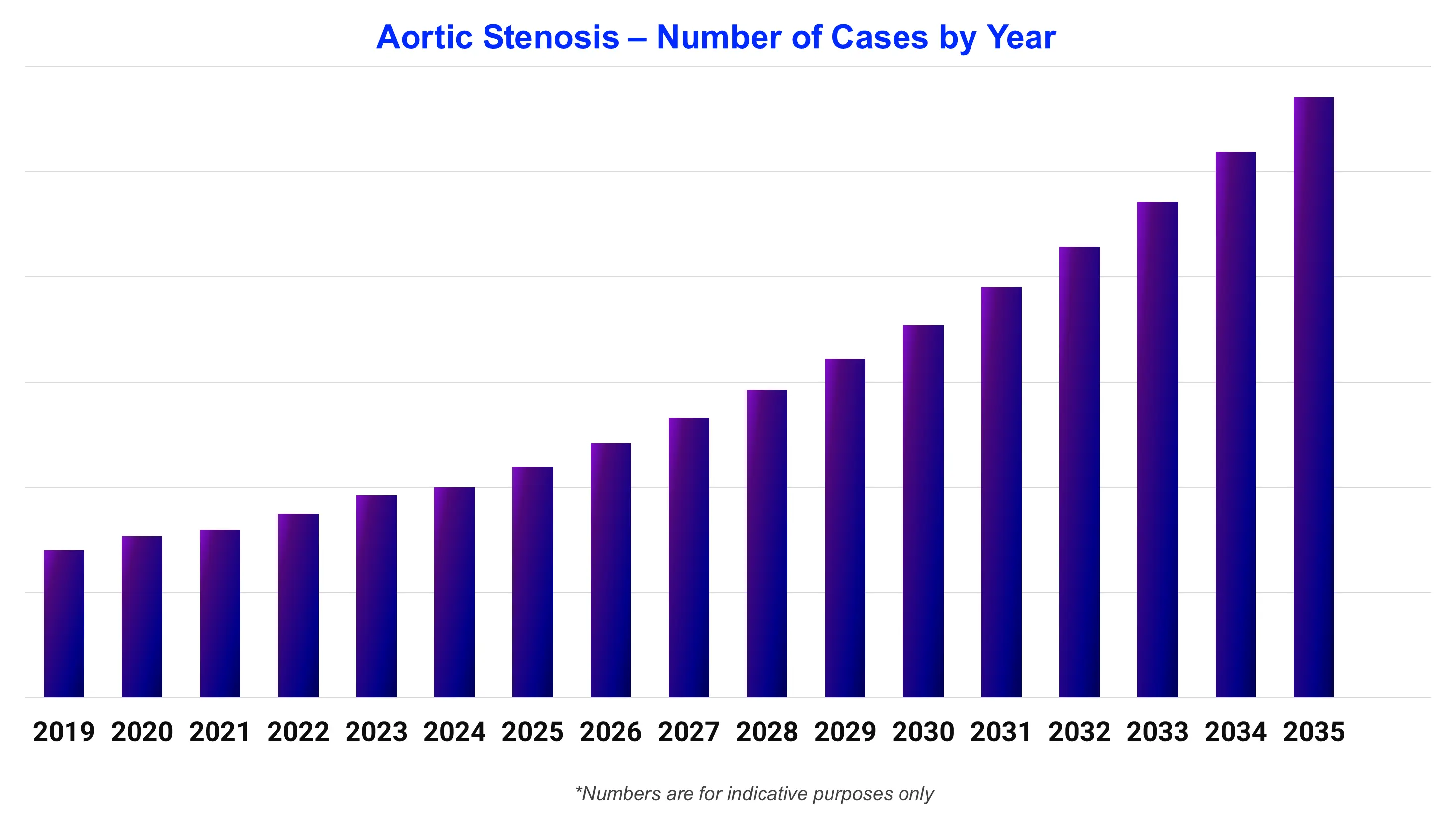
Aortic stenosis (AS) is a heart valve disease characterized by narrowing of the aortic valve, restricting blood flow from the heart to the body. As per the Tomoyo Hamana et al. (2025), aortic stenosis affects approximately 2-3% of individuals aged over 65 years worldwide. According to the Aortic Stenosis epidemiology forecast by Expert Market Research, disease prevalence trends remain relevant to understanding the evolving global burden of this condition.
Base Year
Historical Period
Forecast Period
Read more about this report - REQUEST FREE SAMPLE COPY IN PDF
Expert Market Research's “Aortic Stenosis Epidemiology Forecast Report 2026-2035” offers comprehensive information on the prevalence and demographics of aortic stenosis. It projects the future incidence and prevalence rates of aortic stenosis cases across various populations. The study covers age, gender, and type as major determinants of the aortic stenosis population. The report highlights patterns in the prevalence of aortic stenosis over time and projects future trends based on multiple variables.
The report provides a comprehensive overview of the disease, as well as historical and projected data on the epidemiology of aortic stenosis in the 8 major markets.
Regions Covered
Aortic stenosis is a valvular heart disease characterized by narrowing of the aortic valve opening, which restricts blood flow from the left ventricle into the aorta. It commonly develops due to age-related calcium accumulation, congenital abnormalities such as a bicuspid aortic valve, or rheumatic heart disease. The condition increases cardiac workload and can eventually lead to heart failure if left untreated. Aortic stenosis is classified as mild, moderate, or severe based on clinical and echocardiographic measurements. Calcific aortic valve disease is a major underlying cause in older adults.
|
Parameter |
Insight |
|
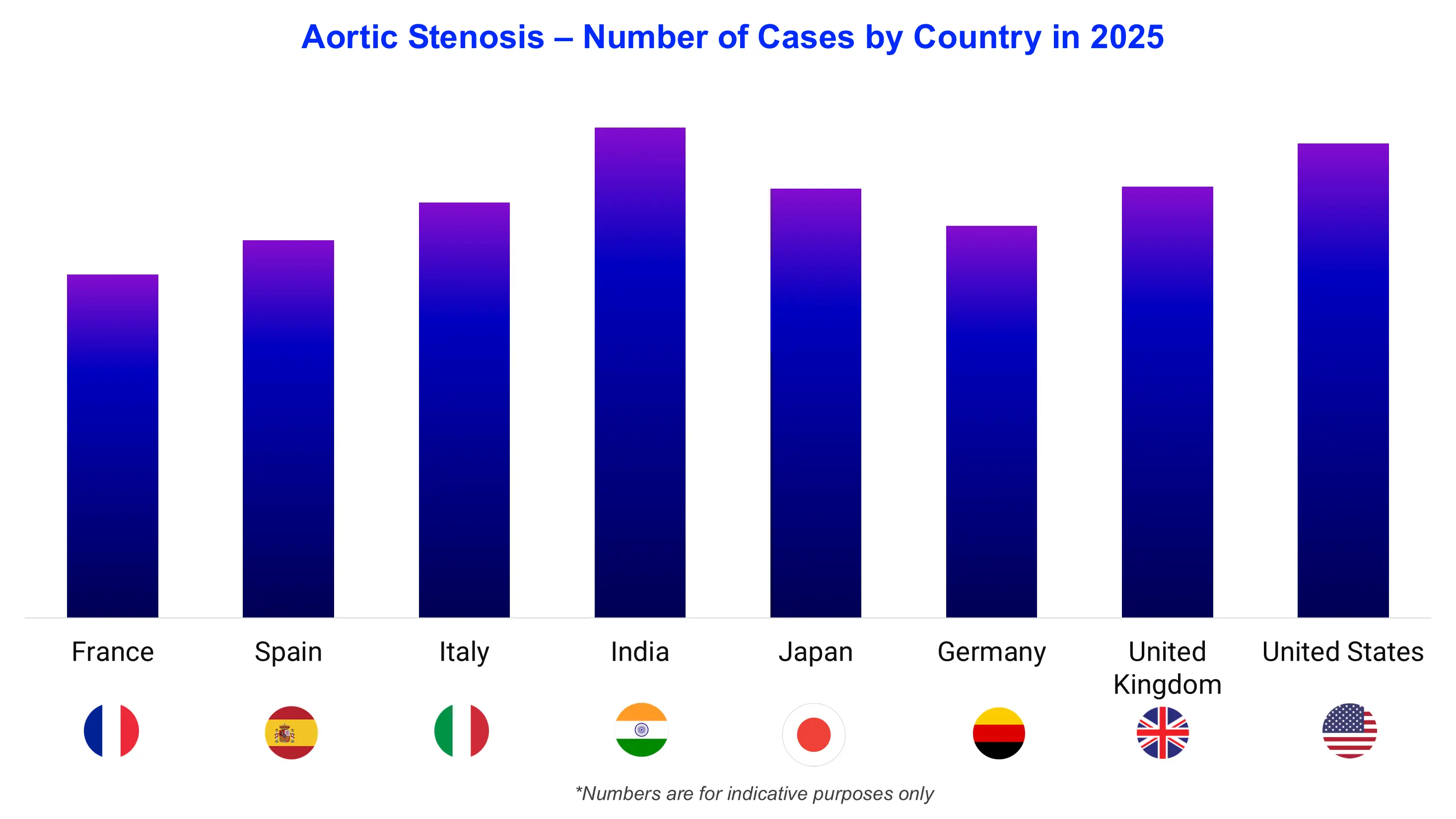
Largest Patient Pool |
United States |
|
Fastest Growing Region |
India |
|
High-Risk Population |
Older adults, particularly those with age-related aortic valve calcification; individuals with congenital bicuspid aortic valves and a history of rheumatic heart disease are also at risk. |
|
Key Diagnostic Method |
Transthoracic echocardiography (TTE) is the first-line diagnostic method for confirming aortic stenosis and assessing its severity. |
|
Major Risk Factor |
Advanced age and degenerative calcification of the aortic valve; congenital valve abnormalities and rheumatic heart disease are additional causes. |
|
Major gap in the market |
Underdiagnosis and undertreatment, delayed recognition of disease severity, and barriers to timely valve replacement. |
The aortic stenosis epidemiology division offers information on the patient pool from history to the present as well as the projected trend for each of the 8 major markets. Expert Market Research provides both current and predicted trends for the aortic stenosis epidemiology scenario by examining a wide range of studies. Additionally, the report covers the diagnosed patient pool for aortic stenosis and their trends. The data is broken down into specific categories, such as total prevalent cases in males and females, and total diagnosed cases across different age groups and patient pools.
|
Epidemiology Segment |
Key Insights |
|
Diagnosed Prevalent Cases of the Disease |
According to Tomoyo Hamana et al. (2025), aortic stenosis affects approximately 2-3% of individuals older than 65 years. Its prevalence is increasing globally alongside population aging, with projections suggesting that prevalence could double by 2050. |
|
Gender-Specific Cases of the Disease |
According to Shin Yi Jang et al. (2022), women diagnosed with aortic stenosis were older on average than men, at 72.7 and 66.2 years, respectively. The findings also highlighted age-related differences in the distribution of diagnosed cases. |
|
Age-Specific Cases of the Disease |
As per Makoto Hibino et al. (2023), aortic stenosis prevalence is approximately 2% among individuals aged 70-80 years in the United States and Europe. The disease burden increases with age, particularly among older adults with degenerative valve changes. |
|
Ethnicity-Wise Cases of the Disease |
According to BMJ Publishing Group Limited, people of Black and South Asian ethnicities were less likely than White people to undergo aortic valve replacement. Timely procedures occurred in 55% of Black and South Asian patients, compared with 65% of White patients, highlighting disparities in treatment access. |
|
Mortality and Survival Analysis of the Disease |
According to Makoto Hibino et al. (2023), untreated symptomatic severe aortic stenosis is associated with an average survival of approximately two years, with a one-year mortality rate reaching 50%. Mortality trends increased across several high-income countries between 2000 and 2020. |
|
Disease Type |
Prevalence |
|
Congenital aortic stenosis |
Represents a smaller share of aortic stenosis cases, with earlier disease onset commonly associated with bicuspid or unicuspid aortic valve abnormalities. |
|
Acquired aortic stenosis |
Accounts for the major share of cases, primarily driven by age-related calcific degeneration, with rheumatic heart disease contributing to the burden in some populations. |
Read more about this report - REQUEST FREE SAMPLE COPY IN PDF
The aortic stenosis epidemiology data and findings for the United States, Germany, Spain, Italy, France, the United Kingdom, Japan, and India are also provided in the epidemiology section.
|
Country |
Key Insights |
|
United States |
According to Aymen Ahmed et al. (2026), aortic stenosis is the most prevalent valvular heart disease in the United States and accounts for more than 60% of valvular heart disease-related mortality. The burden is concentrated among older adults and is expected to increase with population aging. |
|
Germany |
In Germany, aortic stenosis prevalence is influenced by population aging, the growing proportion of older adults requiring cardiovascular care, and age-related calcification of the aortic valve. The burden is particularly relevant to degenerative disease among elderly patients. |
|
France |
Aortic stenosis prevalence in France is driven by age-related degeneration of the aortic valve, increasing longevity, and the accumulation of cardiovascular risk factors among older adults. Greater detection of valvular abnormalities through cardiovascular assessment may also contribute to diagnosed cases. |
|
Italy |
In Italy, the substantial older population contributes to the burden of aortic stenosis, particularly calcific degeneration associated with advanced age. The increasing healthcare needs of elderly patients with multiple cardiovascular conditions further influence the demand for diagnosis and disease management. |
|
Spain |
Aortic stenosis prevalence in Spain is influenced by the aging population and degenerative changes in the aortic valve. Differences in cardiovascular risk profiles, the recognition of valve disease, and access to diagnostic assessment may also affect the number of identified cases. |
|
United Kingdom |
According to Guy’s and St Thomas’ Specialist Care, approximately 400,000 people in the United Kingdom live with aortic stenosis. Makoto Hibino et al. (2023) reported that its crude mortality rate increased from 3.47 to 5.87 per 100,000 people between 2000 and 2020. |
|
Japan |
According to Makoto Hibino et al. (2023), the crude mortality rate associated with aortic stenosis increased from 1.12 to 5.49 per 100,000 people between 2000 and 2020. |
|
India |
According to John Sukumar Aluru et al. (2022), the reported prevalence of rheumatic aortic stenosis in India was 4.54 per 1,000 people. This highlights the relevance of rheumatic disease in the country's aortic stenosis epidemiology. |
Aortic stenosis presents opportunities to improve early diagnosis, disease monitoring, and access to definitive treatment across the United States, Germany, France, Italy, Spain, the United Kingdom, Japan, and India. Underdiagnosis and undertreatment remain important challenges, particularly when symptoms develop gradually or disease severity is not recognized promptly. Wider use of transthoracic echocardiography, improved referral pathways, and timely assessment by multidisciplinary heart teams may help address these gaps. Expanding access to surgical and transcatheter aortic valve replacement may further support treatment delivery, particularly for eligible patients with severe disease.
Aortic stenosis treatment depends on disease severity, symptoms, cardiac function, age, and overall health. Patients with mild or moderate disease may undergo regular clinical assessments and echocardiographic monitoring. Severe symptomatic aortic stenosis generally requires valve replacement because medications cannot reverse the mechanical obstruction. The principal interventions are surgical aortic valve replacement (SAVR) and transcatheter aortic valve replacement (TAVR), with the choice guided by clinical risk, anatomy, and patient suitability. Aortic valve replacement is the definitive treatment for advanced disease, while multidisciplinary evaluation helps determine the most appropriate intervention.


Upto 15% Off
USD
$2699 $2429
$4299 $3869
$5799 $4949
$6999 $5949


*While we strive to always give you current and accurate information, the numbers depicted on the website are indicative and may differ from the actual numbers in the main report. At Expert Market Research, we aim to bring you the latest insights and trends in the market. Using our analyses and forecasts, stakeholders can understand the market dynamics, navigate challenges, and capitalize on opportunities to make data-driven strategic decisions.*
Explore our key highlights of the report and gain a concise overview of key findings, trends, and actionable insights that will empower your strategic decisions.
|
Report Features |
Details |
|
Base Year |
2025 |
|
Historical Period |
2019-2025 |
|
Forecast Period |
2026-2035 |
|
Epidemiology Statistics Provided |
|
|
Segmentation Provided |
|
|
Geographies Covered |
|
Datasheet
One User
USD 2,699
USD 2,429
tax inclusive*
Single User License
One User
USD 4,299
USD 3,869
tax inclusive*
Five User License
Five User
USD 5,799
USD 4,949
tax inclusive*
Corporate License
Unlimited Users
USD 6,999
USD 5,949
tax inclusive*
*Please note that the prices mentioned below are starting prices for each bundle type. Kindly contact our team for further details.*
Flash Bundle
Small Business Bundle
Growth Bundle
Enterprise Bundle
*Please note that the prices mentioned below are starting prices for each bundle type. Kindly contact our team for further details.*
Flash Bundle
Number of Reports: 3
20%
tax inclusive*
Small Business Bundle
Number of Reports: 5
25%
tax inclusive*
Growth Bundle
Number of Reports: 8
30%
tax inclusive*
Enterprise Bundle
Number of Reports: 10
35%
tax inclusive*
How To Order

Select License Type
Choose the right license for your needs and access rights.

Click on ‘Buy Now’
Add the report to your cart with one click and proceed to register.

Select Mode of Payment
Choose a payment option for a secure checkout. You will be redirected accordingly.
Strategic Solutions for Informed Decision-Making
Gain insights to stay ahead and seize opportunities.

Get insights & trends for a competitive edge.

Track prices with detailed trend reports.

Analyse trade data for supply chain insights.

Leverage cost reports for smart savings

Enhance supply chain with partnerships.

Connect For More Information
Our expert team of analysts will offer full support and resolve any queries regarding the report, before and after the purchase.
Our expert team of analysts will offer full support and resolve any queries regarding the report, before and after the purchase.
We employ meticulous research methods, blending advanced analytics and expert insights to deliver accurate, actionable industry intelligence, staying ahead of competitors.
Our skilled analysts offer unparalleled competitive advantage with detailed insights on current and emerging markets, ensuring your strategic edge.
We offer an in-depth yet simplified presentation of industry insights and analysis to meet your specific requirements effectively.




