

Consumer Insights
Uncover trends and behaviors shaping consumer choices today
Procurement Insights
Optimize your sourcing strategy with key market data
Industry Stats
Stay ahead with the latest trends and market analysis.
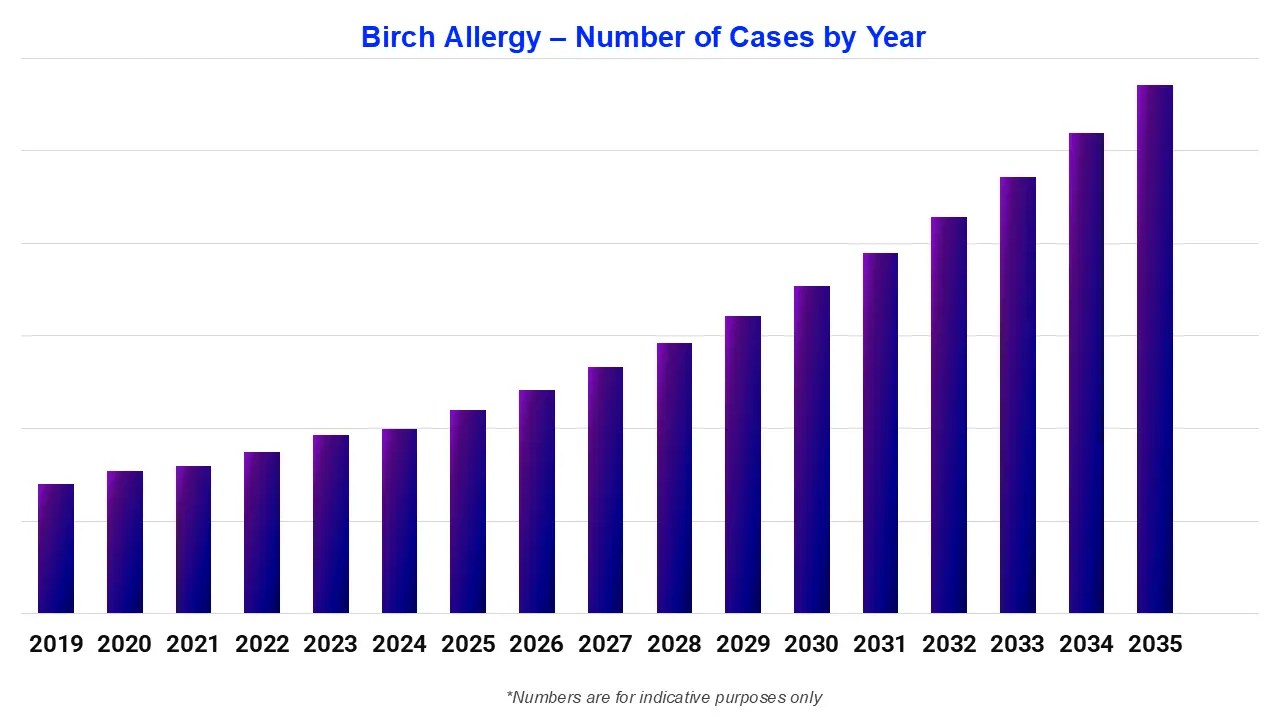
Birch allergy is an allergic reaction triggered by exposure to birch tree pollen, commonly causing seasonal allergic rhinitis and pollen sensitization. According to Yukinori Kato et al. (2025), birch sensitization affects 6.8%–57.4% of individuals across Europe, with 47.6%–98.5% experiencing symptoms. As per birch allergy epidemiology forecast by Expert Market Research, the disease burden is expected to rise with increasing pollen exposure.
Base Year
Historical Period
Forecast Period
Read more about this report - Request a Free Sample
Expert Market Research's “Birch Allergy Epidemiology Forecast Report 2026-2035” offers comprehensive information on the prevalence and demographics of birch allergy. It projects the future incidence and prevalence rates of birch allergy cases across various populations. The study covers age, gender, and type as major determinants of the birch allergy population. The report highlights patterns in the prevalence of birch allergy over time and projects future trends based on multiple variables.
The report provides a comprehensive overview of the disease, as well as historical and projected data on the epidemiology of birch allergy in the 8 major markets.
Regions Covered
Birch allergy is an immunoglobulin E (IgE)-mediated allergic condition caused by sensitization to proteins present in birch tree pollen, particularly Bet v 1. It commonly manifests as seasonal allergic rhinitis, conjunctivitis, and may trigger oral allergy syndrome due to cross-reactivity with certain fruits, vegetables, and nuts. The condition develops when the immune system mistakenly identifies birch pollen as harmful, resulting in the release of inflammatory mediators. Clinical presentations range from mild seasonal symptoms to severe pollen allergy with food-associated hypersensitivity, depending on the degree of sensitization and environmental pollen exposure.
|
Parameter |
Insight |
|
Largest Patient Pool |
Germany |
|
Fastest Growing Region |
Japan |
|
High-Risk Population |
Individuals with seasonal allergic rhinitis, atopic disorders, and family history of allergies. |
|
Key Diagnostic Method |
Skin prick testing and serum-specific immunoglobulin E (IgE) testing. |
|
Major Risk Factor |
Repeated exposure to birch pollen and cross-reactive pollen allergens. |
|
Major gap in the market |
Underdiagnosis of pollen-food allergy syndrome and limited access to allergen-specific immunotherapy. |
The birch allergy epidemiology division offers information on the patient pool from history to the present as well as the projected trend for each of the 8 major markets. Expert Market Research provides both current and predicted trends for the birch allergy epidemiology scenario by examining a wide range of studies. Additionally, the report covers the diagnosed patient pool for birch allergy and their trends. The data is broken down into specific categories, such as total prevalent cases in males and females, and total diagnosed cases across different age groups and patient pools.
|
Epidemiology Segment |
Key Insights |
|
Diagnosed Prevalent Cases of the Disease |
Birch pollen allergy is one of the leading causes of seasonal allergic rhinitis, particularly across Europe. According to Yukinori Kato et al. (2025), the prevalence of birch pollen sensitization across European countries ranges from 6.8% to 57.4%, with 47.6%–98.5% of sensitized individuals experiencing related symptoms. As per the European Environment Agency, the overall prevalence of birch pollen sensitization in Europe is estimated at 8%–16%. |
|
Gender-Specific Cases of the Disease |
Birch allergy affects both males and females, although healthcare utilization patterns may vary. As reported by V. Landesberger et al. (2023), approximately two-thirds of participants enrolled in a German pollen allergy study were female, indicating greater female representation among individuals participating in allergy-related assessments. |
|
Age-Specific Cases of the Disease |
Birch pollen allergy frequently begins during childhood and often persists into adulthood. According to Magnus Lindqvist et al. (2023), approximately 75% of children with pollen allergic rhinitis at 4 or 8 years had persistent disease up to 24 years, while 30% developed asthma. The estimated annual incidence declined from 1.5% to 0.8% between adolescence and young adulthood. |
|
Ethnicity-Wise Cases of the Disease |
Geographic and environmental factors substantially influence birch allergy epidemiology. As per Xiaoyan Wang et al. (2023), birch pollen sensitization reached 11.3% in northern China, while the general population sensitization rate ranged from 8% to 16%. According to Min-su Oh et al. (2025), birch pollen sensitization accounted for 10.8% among Korean schoolchildren with allergic rhinitis. |
|
Mortality and Survival Analysis of the Disease |
Birch allergy primarily contributes to long-term allergic morbidity through persistent allergic rhinitis and related allergic conditions. Epidemiological evaluations generally emphasize disease persistence, sensitization patterns, symptom progression, and associated respiratory complications rather than mortality or survival outcomes. |
Read more about this report - Request a Free Sample
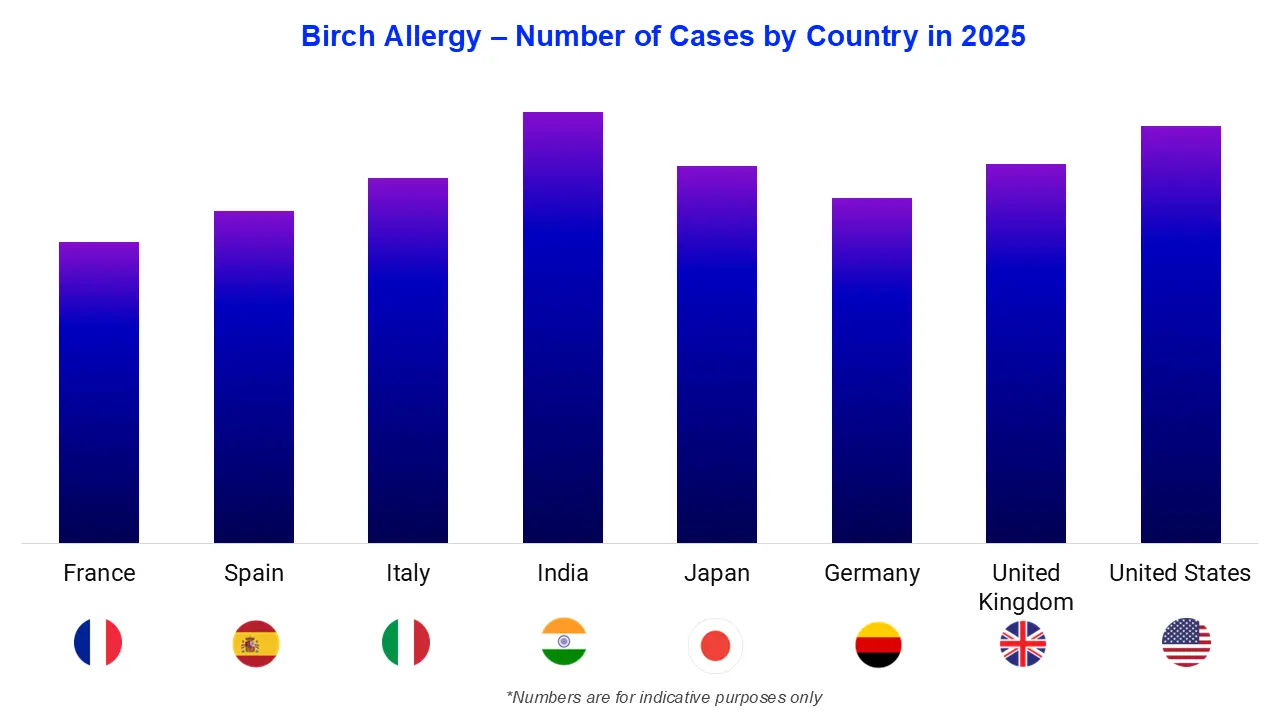
The birch allergy epidemiology data and findings for the United States, Germany, Spain, Italy, France, the United Kingdom, Japan, and India are also provided in the epidemiology section.
|
Country |
Key Insights |
|
United States |
Birch pollen allergy contributes to pollen-associated allergic disorders in susceptible individuals. According to Yukinori Kato et al. (2025), the prevalence of food allergy among more than 40,000 United States adults was 10.8%, reflecting the burden of pollen-associated allergic conditions. |
|
Germany |
Germany experiences a substantial burden of birch pollen allergy due to widespread pollen exposure. As reported by Yukinori Kato et al. (2025), 92% (239 of 260) patients with tree pollinosis were sensitized to Bet v 1. According to Das Umweltbundesamt (UBA), birch pollen is one of the foremost triggers of pollen allergy in Germany. |
|
France |
Birch pollen allergy contributes to seasonal allergic disease in France, with epidemiological patterns influenced by regional pollen exposure, environmental conditions, and sensitization trends across Europe. |
|
Italy |
According to Yukinori Kato et al. (2025), 53%–95% of Italian patients with birch pollinosis were sensitized to Bet v 1. The author also reported that pollen food allergy syndrome prevalence among patients with seasonal allergic rhinitis in southern Europe ranged from 7.5% to 41.4%, reflecting regional variability. |
|
Spain |
Spain follows the broader southern European epidemiological pattern, where the burden of birch pollen allergy varies according to pollen distribution, environmental exposure, and regional sensitization characteristics. |
|
United Kingdom |
Birch pollen allergy represents an important contributor to seasonal allergic rhinitis, with epidemiological trends influenced by pollen exposure, climatic conditions, and increasing sensitization observed across Europe. |
|
Japan |
As per Yukinori Kato et al. (2025), allergic rhinitis prevalence increased from 29.8% in 1998 to 49.2% in 2019, while 49.5% of children aged 10–19 years experienced hay fever in 2019. The author also reported a 10.8% prevalence of pollen food allergy syndrome in Fukui Prefecture. |
|
India |
Birch allergy epidemiology varies across India because allergen exposure differs by geography and climate. According to Raj Kumar et al. (2023), more than 25% of the Indian population is sensitized to different allergens, with pollen representing one of the major allergen sources. |
The regional epidemiology landscape for birch allergy continues to face challenges due to inconsistent surveillance systems, underdiagnosis of pollen-food allergy syndrome, and limited awareness of cross-reactive food allergies, particularly outside Europe. Expanding access to standardized allergy diagnostics and allergen-specific immunotherapy presents significant opportunities across countries such as Japan and India, where allergic diseases are increasing. Climate change, prolonged pollen seasons, and improving healthcare infrastructure are expected to drive epidemiological research, facilitate earlier diagnosis, and support the development of targeted prevention and disease management strategies across high-burden regions.
Treatment for birch allergy primarily focuses on symptom control, allergen avoidance, and long-term immune modulation. Pharmacological management includes antihistamines, intranasal corticosteroids, decongestants, and ophthalmic medications to relieve allergic symptoms. Patients with pollen-food allergy syndrome are advised to avoid foods that trigger cross-reactive responses during pollen seasons. Allergen-specific immunotherapy, administered subcutaneously or sublingually, is the only disease-modifying approach shown to improve immune tolerance and reduce symptom severity. Appropriate allergen immunotherapy can provide sustained clinical benefits and decrease reliance on symptomatic medications in sensitized individuals.


Upto 15% Off
USD
$2699 $2429
$4299 $3869
$5799 $4949
$6999 $5949


*While we strive to always give you current and accurate information, the numbers depicted on the website are indicative and may differ from the actual numbers in the main report. At Expert Market Research, we aim to bring you the latest insights and trends in the market. Using our analyses and forecasts, stakeholders can understand the market dynamics, navigate challenges, and capitalize on opportunities to make data-driven strategic decisions.*
Explore our key highlights of the report and gain a concise overview of key findings, trends, and actionable insights that will empower your strategic decisions.
|
Report Features |
Details |
|
Base Year |
2025 |
|
Historical Period |
2019-2025 |
|
Forecast Period |
2026-2035 |
|
Epidemiology Statistics Provided |
|
|
Segmentation Provided |
|
|
Geographies Covered |
|
Datasheet
One User
USD 2,699
USD 2,429
tax inclusive*
Single User License
One User
USD 4,299
USD 3,869
tax inclusive*
Five User License
Five User
USD 5,799
USD 4,949
tax inclusive*
Corporate License
Unlimited Users
USD 6,999
USD 5,949
tax inclusive*
*Please note that the prices mentioned below are starting prices for each bundle type. Kindly contact our team for further details.*
Flash Bundle
Small Business Bundle
Growth Bundle
Enterprise Bundle
*Please note that the prices mentioned below are starting prices for each bundle type. Kindly contact our team for further details.*
Flash Bundle
Number of Reports: 3
20%
tax inclusive*
Small Business Bundle
Number of Reports: 5
25%
tax inclusive*
Growth Bundle
Number of Reports: 8
30%
tax inclusive*
Enterprise Bundle
Number of Reports: 10
35%
tax inclusive*
How To Order

Select License Type
Choose the right license for your needs and access rights.

Click on ‘Buy Now’
Add the report to your cart with one click and proceed to register.

Select Mode of Payment
Choose a payment option for a secure checkout. You will be redirected accordingly.
Strategic Solutions for Informed Decision-Making
Gain insights to stay ahead and seize opportunities.

Get insights & trends for a competitive edge.

Track prices with detailed trend reports.

Analyse trade data for supply chain insights.

Leverage cost reports for smart savings

Enhance supply chain with partnerships.

Connect For More Information
Our expert team of analysts will offer full support and resolve any queries regarding the report, before and after the purchase.
Our expert team of analysts will offer full support and resolve any queries regarding the report, before and after the purchase.
We employ meticulous research methods, blending advanced analytics and expert insights to deliver accurate, actionable industry intelligence, staying ahead of competitors.
Our skilled analysts offer unparalleled competitive advantage with detailed insights on current and emerging markets, ensuring your strategic edge.
We offer an in-depth yet simplified presentation of industry insights and analysis to meet your specific requirements effectively.




