

Consumer Insights
Uncover trends and behaviors shaping consumer choices today
Procurement Insights
Optimize your sourcing strategy with key market data
Industry Stats
Stay ahead with the latest trends and market analysis.
Juvenile idiopathic arthritis (JIA) is a heterogeneous group of chronic inflammatory rheumatic diseases characterized by persistent joint inflammation beginning before the age of 16 years. It is the most common chronic rheumatic disease in children and adolescents. A 2025 study by researchers using the U.S. National Survey of Children's Health examined data covering 223,195 children and developed predictive models for JIA. Its introduction cited prevalence estimates of 12.8–45 cases per 100,000 children and incidence rates of 7.8–8.3 new cases per 100,000 person-years. According to Juvenile Idiopathic Arthritis Epidemiology Forecast by Expert Market Research (EMR), JIA remains an important cause of chronic inflammatory disease and disability in children.
Base Year
Historical Period
Forecast Period
Read more about this report - REQUEST FREE SAMPLE COPY IN PDF
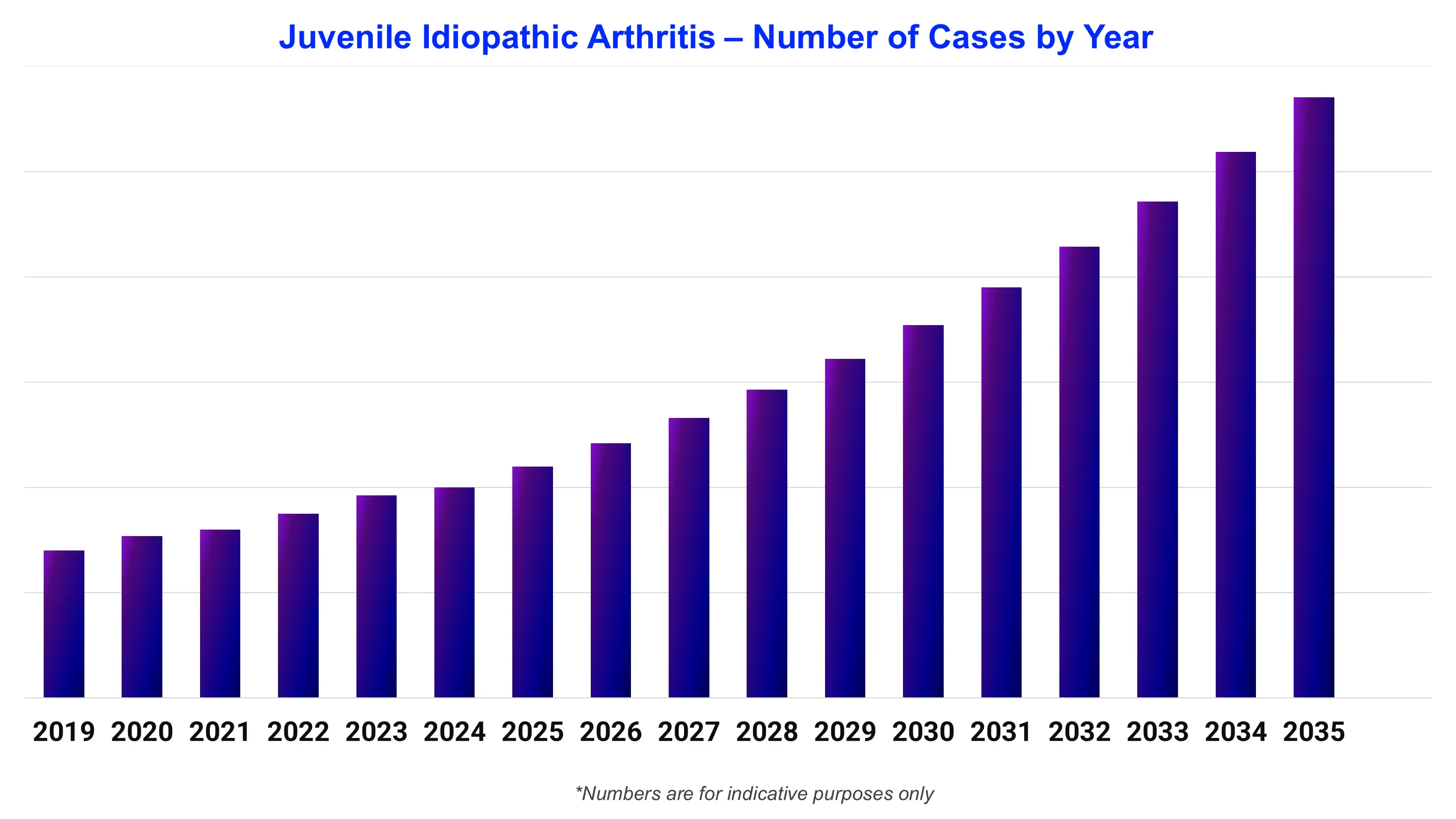
Expert Market Research's “Juvenile Idiopathic Arthritis Epidemiology Forecast Report 2026-2035” offers comprehensive information on the prevalence and demographics of Juvenile Idiopathic Arthritis. It projects the future incidence and prevalence rates of Juvenile Idiopathic Arthritis cases across various populations. The study covers age, gender, and type as major determinants of the Juvenile Idiopathic Arthritis population. The report highlights patterns in the prevalence of Juvenile Idiopathic Arthritis over time and projects future trends based on multiple variables.
The report provides a comprehensive overview of the disease, as well as historical and projected data on the epidemiology of Juvenile Idiopathic Arthritis in the 8 major markets.
Regions Covered
Juvenile idiopathic arthritis (JIA) is a heterogeneous group of chronic inflammatory rheumatic diseases characterized by persistent joint inflammation beginning before the age of 16 years. It is the most common chronic rheumatic disease in children and adolescents. The condition is generally defined by arthritis lasting at least six weeks, with other potential causes, including infections, malignancies and alternative autoimmune disorders, excluded. JIA can cause joint pain, swelling, stiffness, restricted movement and progressive damage to cartilage and bone. Depending on the clinical subtype, patients may also develop fever, skin rashes, eye inflammation, growth abnormalities and systemic complications. The underlying cause remains incompletely understood, although genetic susceptibility, immune dysregulation and environmental influences are believed to contribute to disease development.
|
Parameter |
Insight |
|
Largest Patient Pool |
United States |
|
Fastest Growing Country |
United Kingdom |
|
High-Risk Population |
Children under 16 years of age are at risk of developing juvenile idiopathic arthritis (JIA), a chronic inflammatory rheumatic disease. |
|
Key Diagnostic Method |
Juvenile idiopathic arthritis is primarily diagnosed through clinical evaluation, including a detailed medical history, physical examination, and identification of persistent arthritis lasting at least six weeks in children younger than 16 years, after excluding alternative causes. |
|
Major Risk Factor |
Juvenile idiopathic arthritis is associated with genetic susceptibility, immune dysregulation, and potential environmental influences. |
|
Major gap in the market |
The juvenile idiopathic arthritis market faces substantial unmet needs in early diagnosis, subtype-specific treatment, long-term disease control, and equitable access to advanced therapies. |
The Juvenile Idiopathic Arthritis epidemiology division offers information on the patient pool from history to the present as well as the projected trend for each of the 8 major markets. Expert Market Research provides both current and predicted trends for the Juvenile Idiopathic Arthritis epidemiology scenario by examining a wide range of studies. Additionally, the report covers the diagnosed patient pool for Juvenile Idiopathic Arthritis and their trends. The data is broken down into specific categories, such as total prevalent cases in males and females, and total diagnosed cases across different age groups and patient pools.
|
Epidemiology Segment |
Key Insights |
|
Diagnosed Prevalent Cases of the Disease |
A 2025 systematic review published in the European Journal of Pediatrics reported a pooled global JIA prevalence of 32.6 cases per 100,000 children. The review also highlighted substantial variation between studies because of differences in diagnostic capacity, access to pediatric rheumatology and epidemiological methodology |
|
Gender-Specific Cases of the Disease |
JIA generally shows a female predominance, with females accounting for approximately 60–70% of cases in many epidemiological studies. A 2022 systematic review and meta-analysis found that females represented 52.6–81.5% of cases across the included studies. A 2025 UK population-based study reported that females constituted 57.0% of identified cases, increasing to 63.6% among validated cases. |
|
Age-Specific Cases of the Disease |
A 2025 multicentre study of 199 patients with infantile-onset JIA found a median age at symptom onset of 17 months and a median age at diagnosis of 20 months, demonstrating that the disease can emerge well before the age of two. |
|
Ethnicity-Wise Cases of the Disease |
A 2023 population-based study using electronic health records from England reported that JIA prevalence was highest among White children, followed by Black, Asian and mixed-ethnicity children. In 2025, the prevalence among children younger than 16 years was 71.1 per 100,000 in White children, 46.3 per 100,000 in Black children, 42.1 per 100,000 in Asian children and 29.4 per 100,000 in mixed-ethnicity children, based on hospital-validated cases. |
|
Mortality and Survival Analysis of the Disease |
Juvenile idiopathic arthritis is associated with low absolute mortality in childhood, although mortality may be higher than in the general population. A 2025 observational study published in EULAR Rheumatology Open analysed 4,762 patients diagnosed before age 16 in England, with follow-up extending through December 2018. |
|
Disease Type |
Prevalence |
|
Oligoarticular JIA |
Oligoarticular juvenile idiopathic arthritis is the most common subtype, accounting for approximately 50–60% of JIA cases. It affects four or fewer joints during the first six months and predominantly occurs in young children, particularly girls. |
|
Polyarticular JIA, RF-negative |
RF-negative polyarticular JIA accounts for approximately 10–30% of JIA cases. It affects five or more joints during the first six months, without rheumatoid factor positivity, and may cause persistent inflammation, joint damage, and functional impairment. |
|
Polyarticular JIA, RF-positive |
RF-positive polyarticular JIA represents approximately 5–10% of JIA cases. It affects five or more joints and is more common in older children and adolescents, particularly girls, with an increased risk of erosive joint damage. |
|
Systemic JIA |
Systemic juvenile idiopathic arthritis accounts for approximately 10–20% of JIA cases. It involves arthritis and systemic inflammation, including recurrent fever and rash. Severe cases may develop macrophage activation syndrome, a potentially life-threatening complication. |
Read more about this report - REQUEST FREE SAMPLE COPY IN PDF
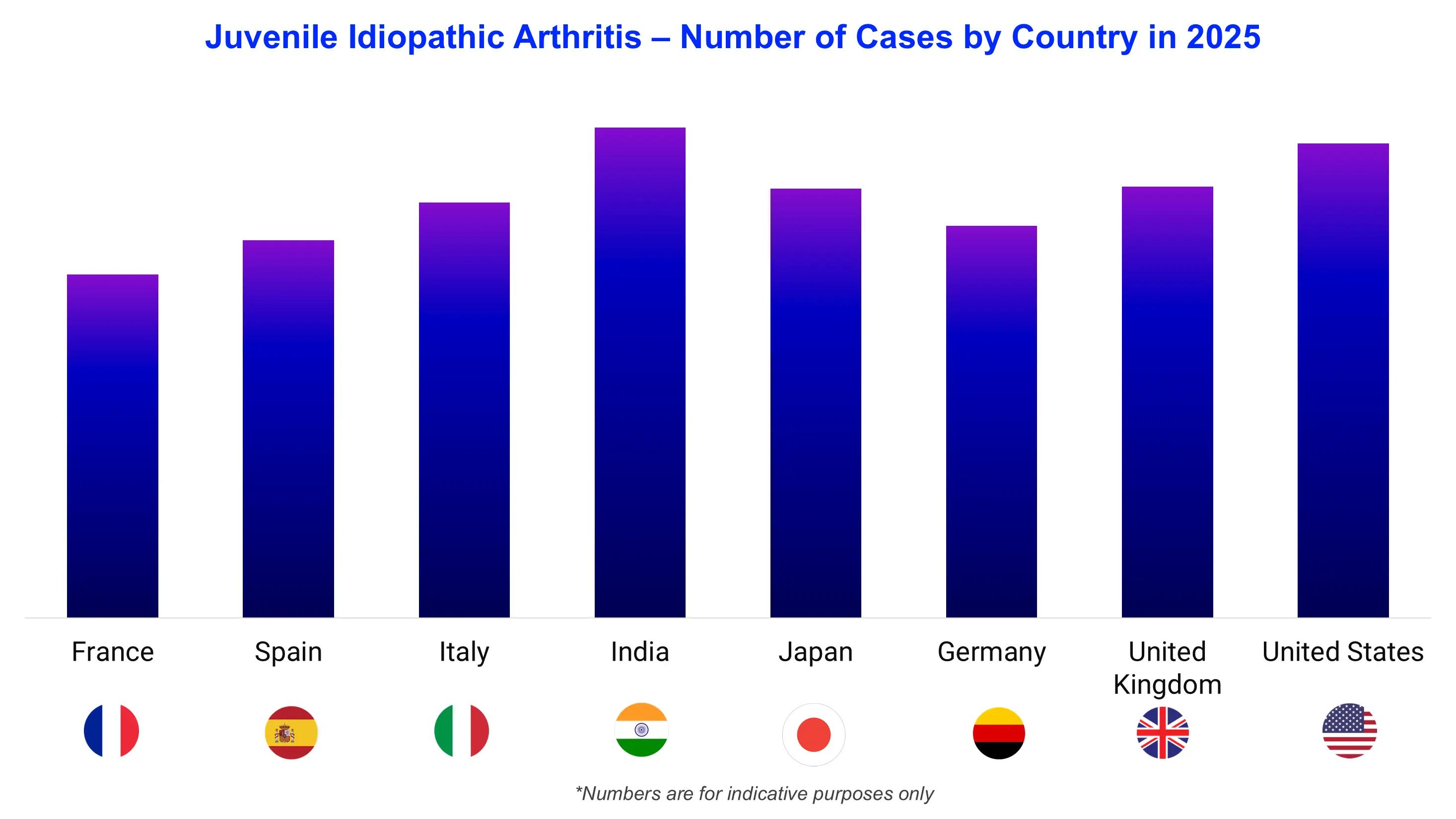
The Juvenile Idiopathic Arthritis epidemiology data and findings for the United States, Germany, Spain, Italy, France, the United Kingdom, Japan, and India are also provided in the epidemiology section.
|
Country |
Key Insights |
|
United States |
A 2025 U.S. study reported that JIA prevalence estimates in the published literature range from 12.8 to 45 cases per 100,000 children, with incidence estimates of 7.8–8.3 new cases per 100,000 person-years. These figures provide a reference range rather than a definitive current national case count. |
|
Germany |
A 2023 systematic review of inflammatory rheumatic diseases in Germany estimated that approximately 14,000 children and adolescents aged 0–18 years were living with JIA, corresponding to a prevalence of approximately 0.10% (around 1 in 1,000). The estimate was based on German healthcare data and population figures, rather than a new nationwide clinical survey. |
|
France |
A French national clinical protocol published in 2025 estimates that approximately 5,000 children younger than 16 years are affected by JIA in France. This is a commonly cited national estimate, rather than a newly measured 2025 case count. |
|
Italy |
A 2024 multicentre study involving 18 Italian pediatric rheumatology centres included 1,300 children with JIA, providing more recent clinical information on disease subtypes and management. However, this was a clinical cohort rather than a population-based prevalence survey. |
|
Spain |
A 2023 study of real-world healthcare outcomes and costs in Spain reported previously published regional prevalence estimates of 39.7–44.8 cases per 100,000 children in Catalonia and 51.4 cases per 100,000 children and adolescents younger than 16 years in Asturias. These figures are based on regional epidemiological studies rather than a current nationwide prevalence survey. |
|
United Kingdom |
A 2025 analysis of English electronic health records reported a 2018 prevalence of 62.6 cases per 100,000 children younger than 16 years across the validated study population. The rate varied by ethnicity, with higher recorded prevalence among White children than among Asian, Black or mixed-ethnicity children. This is an England-specific estimate and should not be treated as directly interchangeable with the age-standardised UK-wide figure. |
|
Japan |
A 2024 clinical review published in Modern Rheumatology reported an overall JIA prevalence of approximately 10–15 cases per 100,000 children in Japan. Using Japan's 2016 population of approximately 16.95 million children younger than 16 years, researchers estimated around 1,695–2,543 affected children. This is a calculated estimate based on the published prevalence range and historical population figures, not a current national case count. |
|
India |
A 2024 publication on pediatric rheumatological diseases in central India highlighted the absence of reliable nationwide prevalence data. It cited estimates suggesting that 350,000–1.3 million Indian children may have JIA, derived from extrapolation and earlier literature rather than a national population-based survey. These figures should therefore be treated as estimates of the potential disease burden, not confirmed diagnosed cases. |
A major unmet need concerns the limited availability of reliable biomarkers for predicting disease progression and treatment response. Although biologic and targeted synthetic disease-modifying antirheumatic drugs have improved disease control, some patients continue to experience persistent inflammation or inadequate response to successive therapies. Emerging opportunities include biomarker-guided treatment selection, subtype-specific therapeutic development, improved strategies for medication tapering after sustained remission and head-to-head trials comparing advanced therapies
Juvenile idiopathic arthritis (JIA) is managed through early, subtype-specific treatment aimed at achieving clinical remission, controlling inflammation, preventing irreversible joint damage and preserving normal growth and physical function. Treatment options include nonsteroidal anti-inflammatory drugs (NSAIDs), intra-articular glucocorticoid injections, conventional synthetic disease-modifying antirheumatic drugs (DMARDs), such as methotrexate, and biologic therapies targeting tumour necrosis factor (TNF), interleukin-1 (IL-1) or interleukin-6 (IL-6). Children with inadequate responses to conventional therapy may require biologic or targeted synthetic DMARDs, including Janus kinase (JAK) inhibitors in selected cases.


Upto 15% Off
USD
$2699 $2429
$4299 $3869
$5799 $4949
$6999 $5949


*While we strive to always give you current and accurate information, the numbers depicted on the website are indicative and may differ from the actual numbers in the main report. At Expert Market Research, we aim to bring you the latest insights and trends in the market. Using our analyses and forecasts, stakeholders can understand the market dynamics, navigate challenges, and capitalize on opportunities to make data-driven strategic decisions.*
Explore our key highlights of the report and gain a concise overview of key findings, trends, and actionable insights that will empower your strategic decisions.
|
Report Features |
Details |
|
Base Year |
2025 |
|
Historical Period |
2019-2025 |
|
Forecast Period |
2026-2035 |
|
Epidemiology Statistics Provided |
|
|
Segmentation Provided |
|
|
Geographies Covered |
|
Datasheet
One User
USD 2,699
USD 2,429
tax inclusive*
Single User License
One User
USD 4,299
USD 3,869
tax inclusive*
Five User License
Five User
USD 5,799
USD 4,949
tax inclusive*
Corporate License
Unlimited Users
USD 6,999
USD 5,949
tax inclusive*
*Please note that the prices mentioned below are starting prices for each bundle type. Kindly contact our team for further details.*
Flash Bundle
Small Business Bundle
Growth Bundle
Enterprise Bundle
*Please note that the prices mentioned below are starting prices for each bundle type. Kindly contact our team for further details.*
Flash Bundle
Number of Reports: 3
20%
tax inclusive*
Small Business Bundle
Number of Reports: 5
25%
tax inclusive*
Growth Bundle
Number of Reports: 8
30%
tax inclusive*
Enterprise Bundle
Number of Reports: 10
35%
tax inclusive*
How To Order

Select License Type
Choose the right license for your needs and access rights.

Click on ‘Buy Now’
Add the report to your cart with one click and proceed to register.

Select Mode of Payment
Choose a payment option for a secure checkout. You will be redirected accordingly.
Strategic Solutions for Informed Decision-Making
Gain insights to stay ahead and seize opportunities.

Get insights & trends for a competitive edge.

Track prices with detailed trend reports.

Analyse trade data for supply chain insights.

Leverage cost reports for smart savings

Enhance supply chain with partnerships.

Connect For More Information
Our expert team of analysts will offer full support and resolve any queries regarding the report, before and after the purchase.
Our expert team of analysts will offer full support and resolve any queries regarding the report, before and after the purchase.
We employ meticulous research methods, blending advanced analytics and expert insights to deliver accurate, actionable industry intelligence, staying ahead of competitors.
Our skilled analysts offer unparalleled competitive advantage with detailed insights on current and emerging markets, ensuring your strategic edge.
We offer an in-depth yet simplified presentation of industry insights and analysis to meet your specific requirements effectively.




