Consumer Insights
Uncover trends and behaviors shaping consumer choices today
Procurement Insights
Optimize your sourcing strategy with key market data
Industry Stats
Stay ahead with the latest trends and market analysis.
The VSAT market was valued at USD 11.50 Billion in 2025. The market is expected to grow at a CAGR of 8.20% during the forecast period of 2026-2035 to reach a value of USD 25.29 Billion by 2035. Rising demand for remote connectivity, growth in low earth orbit networks, and airline, maritime, and defense upgrades are collectively driving the market growth.
The current VSAT market dynamics reflect spectrum policy, new satellite constellations, and rising demand for connectivity in places without fiber or mobile coverage. Policy is central to this shift: in September 2026, the US Federal Communications Commission adopted a satellite spectrum order that opens 1,025 MHz, including 525 MHz at 12.7 to 13.25 GHz and 500 MHz at 42 to 42.5 GHz, and creates a new non-geostationary downlink allocation for user terminals. Such rules add usable capacity and support steady terminal demand.
The overall VSAT market value is also shaped by the connectivity gap. The International Telecommunication Union estimated that about 6 billion people, or 74% of the world, were online in 2025, up from 60% in 2020, while 2.2 billion people remained offline. Such gaps keep satellite links relevant for rural homes, ships, aircraft, and remote sites, while buyers weigh speed, latency, and cost. Providers with multi orbit offers are better placed.
Aviation adds a third layer of demand. A Viasat passenger survey released in December 2024, covering over 11,000 people who had flown in the previous 12 months, found that 75% would be more likely to choose an airline offering quality inflight Wi-Fi, while 22% would not consider a long haul route without connectivity. Airlines therefore keep adding satellite terminals to their fleets, which supports antenna, modem, and service revenue. Vendors that bundle hardware, bandwidth, and installation support for carriers should capture more of this demand.
Compound Annual Growth Rate
8.2%
Value in USD Billion
2026-2035
Read more about this report - REQUEST FREE SAMPLE COPY IN PDF
|
Very Small Aperture Terminal (VSAT) Market Report Summary |
Description |
Value |
|
Base Year |
USD Billion |
2025 |
|
Historical Period |
USD Billion |
2019-2025 |
|
Forecast Period |
USD Billion |
2026-2035 |
|
Market Size 2025 |
USD Billion |
11.50 |
|
Market Size 2035 |
USD Billion |
25.29 |
|
CAGR 2019-2025 |
Percentage |
XX% |
|
CAGR 2026-2035 |
Percentage |
8.20% |
|
CAGR 2026-2035 - Market by Region |
Middle East and Africa |
10.6% |
|
CAGR 2026-2035 - Market by Component |
Hardware |
8.9% |
|
CAGR 2026-2035 - Market by Frequency Band |
Ka Band |
11.4% |
|
2025 Market Share by Region |
Asia Pacific |
24.0% |
The VSAT market is being shaped by Intellian's multi band WGS terminal partnership, the entry of ViaSat-3 F3 into service, Gilat's agreement to buy a Comtech business, and Amazon Leo's terminal lineup. Multi orbit products, capacity additions, and consolidation are further reshaping the competitive landscape for terminal makers and service providers.
Intellian and Network Innovations signed a multi year partnership to co-develop Intellian's first tactical WGS flyaway terminal supporting military Ka, commercial Ka, and Ku bands across low, medium, geostationary, and highly elliptical orbits. Setup was planned at under 30 minutes. Makers can leverage this by building multi band, multi orbit products that let defense users switch networks without changing hardware.
Viasat's ViaSat-3 F3 satellite, launched on 29 April 2026 on a Falcon Heavy, entered service across Asia Pacific with over 1 Tbps of throughput. It became the second of three ViaSat-3 satellites in service, while F2 was in final in orbit testing. Service providers can leverage this by selling Ka band plans to airlines, ships, and enterprises in the region.
Gilat Satellite Networks agreed to buy most of Comtech's Satellite and Space Communications for USD 157.5 million in cash. The two firms had overlapping VSAT platforms, modems, and power amplifiers, adding scale and access to new customers such as NASA. Closing was expected by end 2026. Suppliers can leverage this by consolidating portfolios to win larger defense and enterprise programs.
Amazon Leo, formerly Project Kuiper, unveiled a terminal lineup: Leo Nano at 100 Mbps, Leo Pro at 400 Mbps, and Leo Ultra at 1 Gbps. Amazon had over 200 satellites in orbit by March 2026. Terminal suppliers can leverage this by designing antennas and modems compatible with several low earth orbit networks, so customers avoid being locked to one provider.
Low earth orbit services offer faster speeds and lower latency, so subscribers and airline contracts are moving away from legacy geostationary operators, putting pressure on their finances. For example, in August 2026, Hughes Network Systems filed for Chapter 11 protection in Texas, holding USD 102 million in cash against USD 1.5 billion of borrowings that matured on 1 August. EchoStar's second quarter broadband subscribers fell by about 59,000 to 622,000 as more customers moved to rival low earth orbit services.
Airlines want faster, steadier onboard internet across large fleets, so many are choosing low earth orbit services and mixing them with existing geostationary links. For example, in July 2026, Frontier and the Indigo Partners group, which includes Wizz Air, Volaris, JetSMART, and Cebu Pacific, selected Starlink for more than 1,000 aircraft, with Frontier's first aircraft entering service in early 2027, a sign of shifting airline supply and an opening for terminal makers with multi network antennas that suit several operators.
Governments are clarifying licensing and spectrum rules, which lets satellite operators plan commercial launches in large emerging markets. For example, in September 2026, India's Digital Communications Commission approved most of the regulator's satcom spectrum recommendations, allowing Starlink, Eutelsat OneWeb, and Jio Satellite Communications to start. Service cannot begin until spectrum is allocated and security clearance is complete, and the regulator proposed a 4% revenue levy with a minimum annual spectrum charge of 3,500 rupees per MHz, so demand follows allocation.
Satellite operators must replace aging satellites and add capacity, which sustains terminal demand and the capital spending behind it. For example, in September 2026, Eutelsat signed an authorization to proceed with Airbus for 229 more OneWeb low earth orbit satellites, worth about 1 billion euros. The order brings the total of new satellites on order to 669, with replenishment and expansion planned through 2034, giving terminal makers and service providers a longer runway to plan compatible products and network capacity.
Armed forces want resilient, portable satellite links, so they are ordering customized terminals and field services in place of generic equipment. For example, in July 2026, the French defense procurement agency DGA signed a seven year agreement worth up to 120 million euros for CAMELEON SATCOM terminals, with Greenerwave as prime contractor and Airbus Defence and Space and Thales working alongside it. Such orders favor suppliers with secure, rugged, field proven designs and offer steadier revenue than consumer broadband markets.
The Expert Market Research's report titled "Very Small Aperture Terminal (VSAT) Market Report and Forecast 2026-2035" offers a detailed analysis of the market based on the following segments:
Market Breakup by Component
Key Insight: Services dominate the VSAT market by component, as airtime, managed networks, and support bring recurring revenue, while hardware is the fastest growing on flat panel and multi orbit terminals. Hardware covers antennas, modems, and terminals bought during network rollouts and fleet upgrades, while services grow with every installed terminal. Showing the weight of services, in the quarter ended 31 March 2026, Viasat's Communication Services segment earned USD 810.3 million of its USD 1,171.3 million total revenue, about 69%, which highlights how recurring connectivity income anchors the sector and funds new satellite capacity.
Market Breakup by Frequency Band
Key Insight: Ku band dominates the VSAT market by frequency band, as its coverage and equipment base suit many networks, while Ka band is the fastest growing on high throughput capacity. C band serves rain prone regions and older networks, while others such as X band and L band serve government and mobility links. Showing Ku demand, in February 2026, Southwest Airlines chose Starlink's Ku band service for its Boeing 737 fleet, with about 300 aircraft planned by the end of 2026, while keeping a Ka band service on newer jets.
Market Breakup by Orbit Type
Key Insight: Geostationary orbit dominates the VSAT market by orbit type, as most installed terminals and contracts rely on it, while low earth orbit is the fastest growing on speed and latency gains. Medium earth orbit adds mid latency capacity for enterprise, cruise, and government links. Showing low earth orbit scale, in August 2026, Telesat won a Canadian military contract worth C$2.3 billion, or about C$2.7 billion with options, adding 69 satellites to its Lightspeed constellation, which rises from 156 to 225 satellites.
Market Breakup by End Use
Key Insight: Telecommunications dominates the VSAT market by end use, as cellular backhaul and rural broadband need satellite links, while aviation is the fastest growing on airline upgrades. Maritime uses satellite for crew and vessel links, government and defense for secure field networks, oil and gas for remote sites, enterprise for branch networks, and others such as utilities and mining for remote operations. Showing defense demand, in September 2026, Kymeta received a USD 20 million order from a US Department of Defense branch for 100 Osprey u8 multi orbit terminals.
Market Breakup by Region
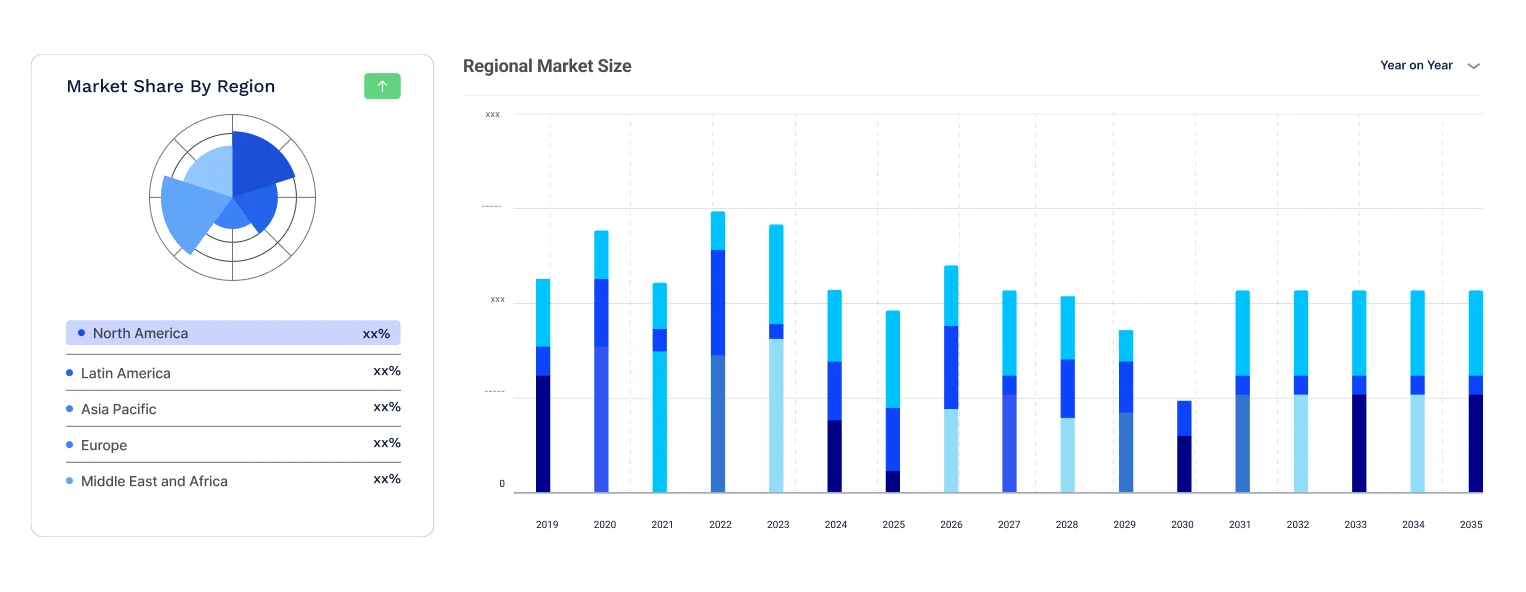
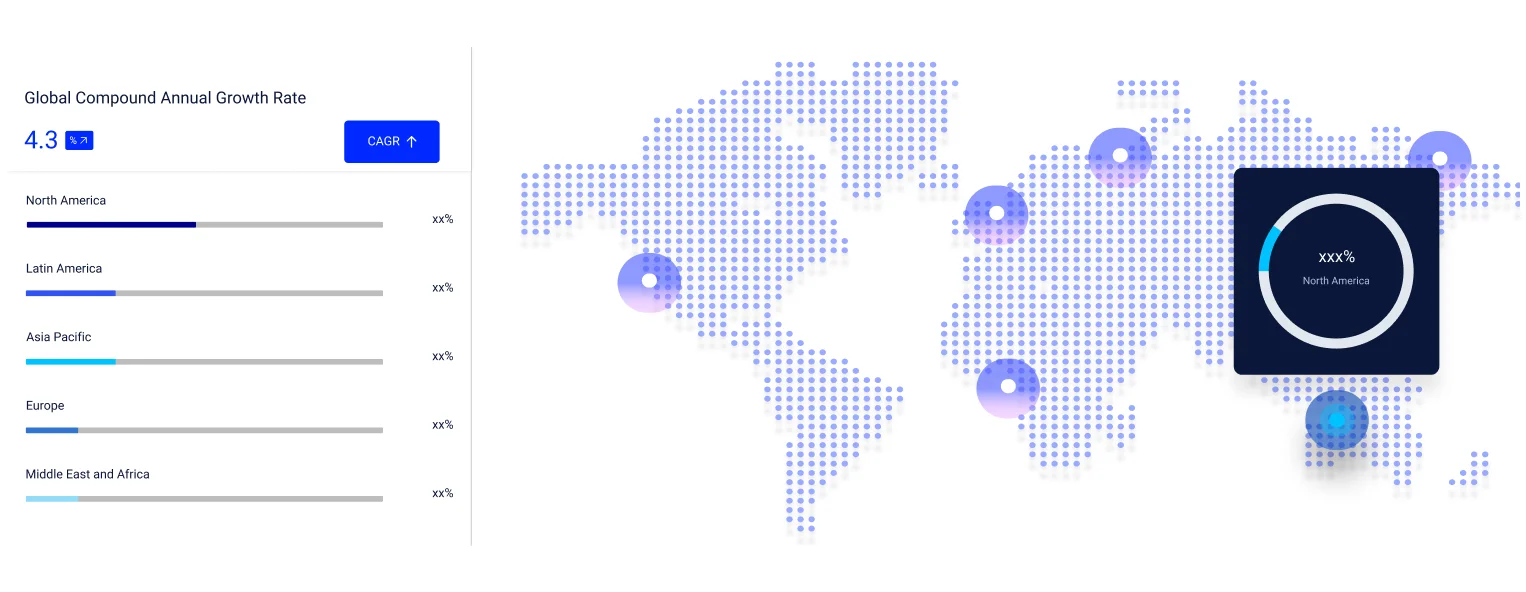
Key Insight: North America dominates the VSAT market on rural broadband funding and defense demand, while the Middle East and Africa is the fastest growing from a small base. Europe grows on maritime links, Asia Pacific on new licensing, and Latin America on satellite broadband uptake. Showing Latin American plans, in July 2026, Brazil's Telebras outlined a next generation SGDC satellite with up to 100 Gbps of added capacity, against 60 Gbps for SGDC-1, though no budget is secured yet.
Read more about this report - REQUEST FREE SAMPLE COPY IN PDF
By component, services dominate on recurring airtime and managed network contracts
Services account for the largest share of the VSAT market by component, because operators and integrators earn recurring revenue from airtime, managed networks, installation, and support long after a terminal is sold. Enterprises, airlines, and shipping companies prefer bundled service contracts with guaranteed performance, which keeps subscriptions in place for years. This steady income helps providers fund new satellites and gateways, and it lifts the value of each installed terminal over its life while also supporting upgrades to newer terminals.
Hardware is the fastest growing component as new flat panel and multi orbit terminals replace older dishes and as fleets upgrade their links. In September 2026, AvL Technologies signed a USD 31 million contract with GISS for 2.4 m trailer mounted, WGS certified driveaway terminals for Poland's Ministry of National Defence. Such orders show how rugged terminal programs are now lifting equipment demand across commercial and defense users in major regions, alongside lighter flat panel antennas for ships and aircraft.
By frequency band, Ku band dominates on wide coverage and a large installed base
Ku band accounts for the largest share of the VSAT market by frequency band, because it offers wide coverage, a mature equipment base, and practical antenna sizes for enterprises, ships, and aircraft. Many existing networks and contracts already use Ku capacity, so users can add new terminals without redesigning their systems. Lower prices for Ku terminals and airtime also keep it attractive for retail, banking, energy, and mining sites in remote areas that lack fiber, power, or reliable mobile coverage.
Ka band is the fastest growing frequency band as high throughput satellites deliver more capacity at a lower cost per bit, while C band stays important in rain prone regions and others serve niche links. In June 2026, Indonesia's BAKTI reported that its Satria-1 Ka band satellite, with 150 Gbps of capacity, served 31,803 public service locations as of 5 June 2026, showing how Ka band links reach remote and island areas and help rural schools and clinics go online.
By orbit type, geostationary orbit dominates on its established networks and large installed terminal base
Geostationary orbit accounts for the largest share of the VSAT market by orbit type, because most installed terminals, enterprise networks, and long term contracts still rely on satellites parked above the equator. A few satellites can cover most of the globe, so networks are simple to plan, and terminals can point at fixed positions. Operators also hold capacity backlogs on these satellites, which keeps geostationary services central to maritime, defense, and enterprise users who value proven coverage and service reliability.
Low earth orbit is the fastest growing orbit type as faster speeds and lower latency attract consumers, airlines, and ships, while medium earth orbit adds mid latency capacity. In July 2025, SES completed its acquisition of Intelsat, creating a fleet of about 120 satellites, roughly 90 geostationary and nearly 30 medium earth orbit, with pro forma revenue of 3.7 billion euros and a backlog above 8 billion euros, showing operators combining orbits to serve customers across several industries and regions.
By end use, telecommunications dominates on cellular backhaul and broadband access needs
Telecommunications accounts for the largest share of the VSAT market by end use, because mobile operators and internet providers use VSAT for cellular backhaul, rural broadband, and links to remote towers where fiber is costly to lay. Operators that extend coverage in sparse areas rely on satellite as a fast way to reach new subscribers without building costly ground networks, and government programs for rural connectivity add steady terminal and service demand year after year in many countries and regions.
Aviation is the fastest growing end use as airlines upgrade onboard connectivity across their fleets, and passengers expect reliable streaming, while maritime, government and defense, oil and gas, enterprise, and other users add steady demand. In March 2026, Turkish Airlines upgraded Wi-Fi on more than 100 narrowbody aircraft using Anuvu's Dedicated Space technology, already deployed on 65 aircraft, with the vendor claiming about nine times the throughput and 25% lower latency. Faster links help carriers add streaming and crew applications.
North America dominates the market due to rural broadband funding and strong enterprise and defense demand
North America dominates the VSAT market, as the United States combines large rural broadband funding, a big base of enterprise and government users, and the headquarters of leading terminal and service providers. In July 2026, reports on the BEAD rural broadband program said about 20% of its 3.9 million locations went to satellite providers, with more than USD 1 billion for satellite grantees, though federal removals could trim some awards. Canada adds remote community and defense links across the north.
Middle East and Africa is the fastest growing region in the VSAT market, as satellite fills gaps where fiber and mobile coverage are thin. In August 2026, Nigeria approved the NIGCOMSAT-2A and 2B satellites with a stated investment of over USD 2 billion, targeting launches in 2028 and 2029, and in September 2026 contracted Thales Alenia Space to build 2A. Asia Pacific and Latin America also grow on new licensing, while Europe grows steadily on maritime, enterprise, and defense links.
|
CAGR 2026-2035 - Market by |
Region |
|
North America |
6.8% |
|
Europe |
7.2% |
|
Asia Pacific |
9.4% |
|
Latin America |
9.2% |
|
Middle East and Africa |
10.6% |
The global VSAT market is competitive, as VSAT market players include terminal makers, network platform suppliers, and satellite service providers from several countries, and each competes on coverage, throughput, terminal cost, and multi orbit support. Companies like Viasat Inc., Hughes Network Systems LLC, Gilat Satellite Networks Ltd., and ST Engineering iDirect lead through scale and platform reach, while Comtech Telecommunications Corp., Intellian Technologies Inc., Cobham Satcom, Kymeta Corporation, and Thales Group add depth in specific segments.
Leading VSAT market companies are differentiating through flat panel antennas, multi orbit platforms, higher throughput satellites, and managed services for airlines, ships, and defense users. Several are also consolidating through acquisitions, signing partnerships, and expanding ground networks to widen demand. Growing focus on low latency, spectrum access, and resilient links is helping companies broaden portfolios, reach new customers, and support sustained long term growth across several regions.
Viasat Inc., headquartered in Carlsbad, California, was founded in 1986. The company provides satellite broadband, VSAT terminals, modems, and government and defense communications, and operates the ViaSat-3 Ka band satellites. It reported record revenue of USD 4.64 billion for the year ended 31 March 2026 and employs about 7,000 people.
Hughes Network Systems LLC, headquartered in Germantown, Maryland, was founded in 1971 and is an EchoStar company. The company supplies the JUPITER ground system, Hughesnet consumer broadband, and managed enterprise services. It has about 2,000 employees and serves over half a million enterprise connections.
Gilat Satellite Networks Ltd., headquartered in Petah Tikva, Israel, was founded in 1987. The company makes the SkyEdge VSAT platform, Wavestream amplifiers, and DataPath terminals. It has shipped more than 1.6 million satellite terminals to over 100 countries and reported 2025 revenue of USD 451.7 million, up 48%.
ST Engineering iDirect, headquartered in Herndon, Virginia, was founded in 1994 as ComSoft Systems and bought by ST Engineering in 2005. It added Newtec in October 2019 and supplies satellite modems, hubs, and network platforms. ST Engineering booked a 667 million Singapore dollar impairment on the unit in 2025.
Other key players in the market report include Comtech Telecommunications Corp. (founded in 1967), Intellian Technologies Inc. (founded in 2004), Cobham Satcom (founded in 1981), Kymeta Corporation (founded in 2012), and Thales Group (founded in 2000), among others.
*Please note that this is only a partial list; the complete list of key players is available in the full report. Additionally, the list of key players can be customized to better suit your needs.*
Discover the key trends shaping the VSAT market 2026-2035 through our in-depth report. Access strategic insights, forward looking forecasts, and major market developments that help you stay ahead of competitors. Request a free sample report or speak with our team for tailored guidance on the VSAT market trends 2026.


Upto 15% Off
USD
$2499 $2249
$3999 $3599
$4999 $4249
$5999 $5099


*While we strive to always give you current and accurate information, the numbers depicted on the website are indicative and may differ from the actual numbers in the main report. At Expert Market Research, we aim to bring you the latest insights and trends in the market. Using our analyses and forecasts, stakeholders can understand the market dynamics, navigate challenges, and capitalize on opportunities to make data-driven strategic decisions.*
In 2025, the VSAT market reached an approximate value of USD 11.50 Billion.
The market is projected to grow at a CAGR of 8.20% between 2026 and 2035.
The key players in the market include Viasat Inc., Hughes Network Systems LLC, Gilat Satellite Networks Ltd., ST Engineering iDirect, Comtech Telecommunications Corp., Intellian Technologies Inc., Cobham Satcom, Kymeta Corporation, and Thales Group, among others.
Leading companies are developing multi orbit and flat panel terminals, consolidating through acquisitions, adding satellite capacity, and expanding managed services for airlines, ships, and defense users.
Key challenges include competition from low earth orbit broadband, financial strain on legacy operators, spectrum and licensing delays, high terminal costs, and fast changing technology.
Explore our key highlights of the report and gain a concise overview of key findings, trends, and actionable insights that will empower your strategic decisions.
|
Report Features |
Details |
|
Base Year |
2025 |
|
Historical Period |
2019-2025 |
|
Forecast Period |
2026-2035 |
|
Scope of the Report |
Historical and Forecast Trends, Industry Drivers and Constraints, Historical and Forecast Market Analysis by Segment: Component Frequency Band Orbit Type End Use Region |
|
Breakup by Component |
|
|
Breakup by Frequency Band |
|
|
Breakup by Orbit Type |
|
|
Breakup by End Use |
|
|
Breakup by Region |
|
|
Market Dynamics |
|
|
Competitive Landscape |
|
|
Companies Covered |
|
Datasheet
One User
USD 2,499
USD 2,249
tax inclusive*
Single User License
One User
USD 3,999
USD 3,599
tax inclusive*
Five User License
Five User
USD 4,999
USD 4,249
tax inclusive*
Corporate License
Unlimited Users
USD 5,999
USD 5,099
tax inclusive*
*Please note that the prices mentioned below are starting prices for each bundle type. Kindly contact our team for further details.*
Flash Bundle
Small Business Bundle
Growth Bundle
Enterprise Bundle
*Please note that the prices mentioned below are starting prices for each bundle type. Kindly contact our team for further details.*
Flash Bundle
Number of Reports: 3
20%
tax inclusive*
Small Business Bundle
Number of Reports: 5
25%
tax inclusive*
Growth Bundle
Number of Reports: 8
30%
tax inclusive*
Enterprise Bundle
Number of Reports: 10
35%
tax inclusive*
How To Order

Select License Type
Choose the right license for your needs and access rights.

Click on ‘Buy Now’
Add the report to your cart with one click and proceed to register.

Select Mode of Payment
Choose a payment option for a secure checkout. You will be redirected accordingly.
Strategic Solutions for Informed Decision-Making
Gain insights to stay ahead and seize opportunities.
Get insights & trends for a competitive edge.
Track prices with detailed trend reports.
Analyse trade data for supply chain insights.
Leverage cost reports for smart savings
Enhance supply chain with partnerships.
Connect For More Information
Our expert team of analysts will offer full support and resolve any queries regarding the report, before and after the purchase.
Our expert team of analysts will offer full support and resolve any queries regarding the report, before and after the purchase.
We employ meticulous research methods, blending advanced analytics and expert insights to deliver accurate, actionable industry intelligence, staying ahead of competitors.
Our skilled analysts offer unparalleled competitive advantage with detailed insights on current and emerging markets, ensuring your strategic edge.
We offer an in-depth yet simplified presentation of industry insights and analysis to meet your specific requirements effectively.