

Consumer Insights
Uncover trends and behaviors shaping consumer choices today
Procurement Insights
Optimize your sourcing strategy with key market data
Industry Stats
Stay ahead with the latest trends and market analysis.
Myelodysplastic syndrome (MDS) is a group of bone marrow disorders characterized by ineffective blood cell production and an increased risk of progression to acute myeloid leukemia. As per the American Cancer Society, approximately 10,000 people are diagnosed with MDS annually in the United States, although estimates vary. According to the Myelodysplastic syndrome epidemiology forecast by Expert Market Research, disease burden trends support continued attention to hematologic malignancies.
Base Year
Historical Period
Forecast Period
Read more about this report - REQUEST FREE SAMPLE COPY IN PDF
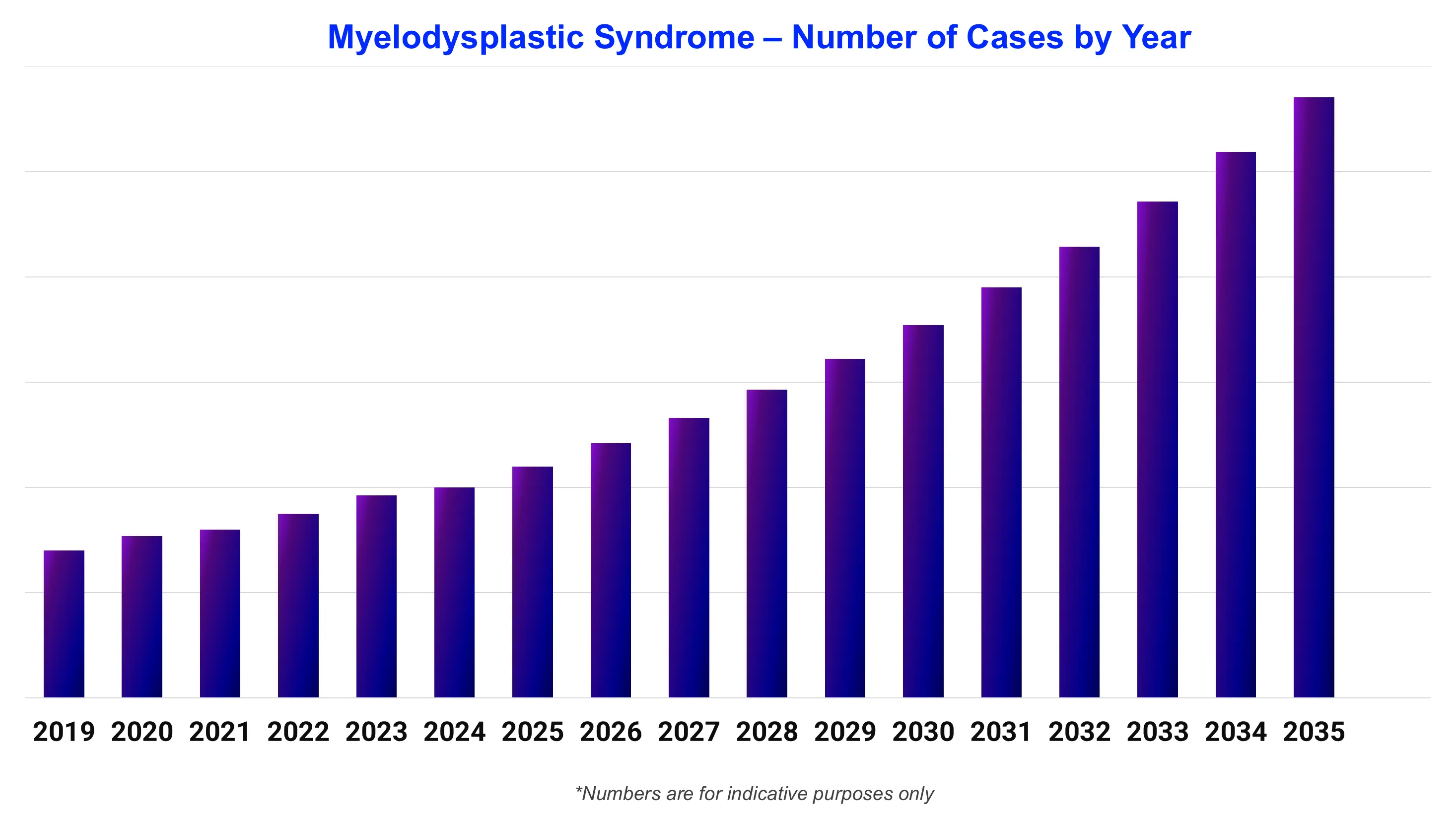
Expert Market Research's “Myelodysplastic Syndrome Epidemiology Forecast Report 2026-2035” offers comprehensive information on the prevalence and demographics of myelodysplastic syndrome. It projects the future incidence and prevalence rates of myelodysplastic syndrome cases across various populations. The study covers age, gender, and type as major determinants of the myelodysplastic syndrome population. The report highlights patterns in the prevalence of myelodysplastic syndrome over time and projects future trends based on multiple variables.
The report provides a comprehensive overview of the disease, as well as historical and projected data on the epidemiology of myelodysplastic Syndrome in the 8 major markets.
Regions Covered
Myelodysplastic syndromes (MDS) are a group of clonal bone marrow disorders characterized by ineffective blood cell production, abnormal blood cell development, and persistent cytopenias. The disease develops when acquired genetic alterations in hematopoietic stem cells disrupt normal blood cell formation, resulting in reduced levels of red blood cells, white blood cells, or platelets. MDS primarily affects older adults and carries a variable risk of progression to acute myeloid leukemia. Classification considers factors such as genetic abnormalities, bone marrow findings, and blast cell counts, reflecting the disease's hematologic malignancy characteristics.
|
Parameter |
Insight |
|
Largest Patient Pool |
United States |
|
Fastest Growing Country |
India |
|
High-Risk Population |
Older adults, particularly those aged 65 years and older, and individuals previously treated with chemotherapy or radiation therapy. |
|
Key Diagnostic Method |
Complete blood count, peripheral blood smear, bone marrow aspiration and biopsy, and cytogenetic or molecular testing to confirm and classify MDS. |
|
Major Risk Factor |
Advanced age; previous chemotherapy or radiation therapy and exposure to certain chemicals, including benzene, are also associated with increased risk. |
|
Major gap in the market |
Delayed recognition of unexplained cytopenias, together with the need for comprehensive bone marrow, cytogenetic, and molecular evaluation to support accurate diagnosis and risk classification. |
The myelodysplastic syndrome epidemiology division offers information on the patient pool from history to the present as well as the projected trend for each of the 8 major markets. Expert Market Research provides both current and predicted trends for the myelodysplastic syndrome epidemiology scenario by examining a wide range of studies. Additionally, the report covers the diagnosed patient pool for myelodysplastic syndrome and their trends. The data is broken down into specific categories, such as total prevalent cases in males and females, and total diagnosed cases across different age groups and patient pools.
|
Epidemiology Segment |
Key Insights |
|
Diagnosed Prevalent Cases of the Disease |
According to the American Cancer Society, annual MDS diagnoses in the United States have been estimated at approximately 10,000, although estimates vary. Cancer Council Victoria reported 440 diagnoses in Victoria in 2024, highlighting the documented disease burden. |
|
Gender-Specific Cases of the Disease |
As per Cancer Council Victoria, 281 males and 159 females were diagnosed with MDS in Victoria in 2024, representing 64% and 36% of cases, respectively. According to HealthTree Foundation, males accounted for approximately 56% of cases in a 2000-2021 analysis. |
|
Age-Specific Cases of the Disease |
According to the American Cancer Society, MDS is uncommon before age 50 and is most frequently diagnosed in people in their 70s. Universitätsklinikum Ulm reports an average diagnosis age of approximately 75 years in Germany. |
|
Ethnicity-Wise Cases of the Disease |
According to HealthTree Foundation, an analysis of more than 84,000 patients diagnosed between 2000 and 2021 examined differences in outcomes by race, income, and geographic location. These factors provide context for assessing disparities in MDS outcomes. |
|
Mortality and Survival Analysis of the Disease |
According to Cancer Council Victoria, MDS accounted for 1.5% of cancer-related deaths in Victoria in 2024. HealthTree Foundation reported lower five-year survival among males and poorer outcomes among rural residents and people with lower household incomes. |
|
Disease Type |
Prevalence |
|
MDS with low blasts and isolated 5q deletion (MDS-5q) |
MDS with low blasts represents a clinically important category of myelodysplastic syndromes. Its relative contribution to the overall disease burden may vary across populations, depending on diagnostic classification and patient characteristics. |
|
MDS with low blasts and SF3B1 mutation (MDS-SF3B1) |
MDS with increased blasts is an important disease category associated with a higher blast count. Its representation within the overall MDS population may vary according to the distribution of disease subtypes and diagnostic criteria. |
|
MDS with biallelic TP53 inactivation (MDS-biTP53) |
This genetically defined subtype represents a distinct category of MDS. Its relative frequency may vary across patient populations according to the genetic characteristics of diagnosed cases. |
Read more about this report - REQUEST FREE SAMPLE COPY IN PDF
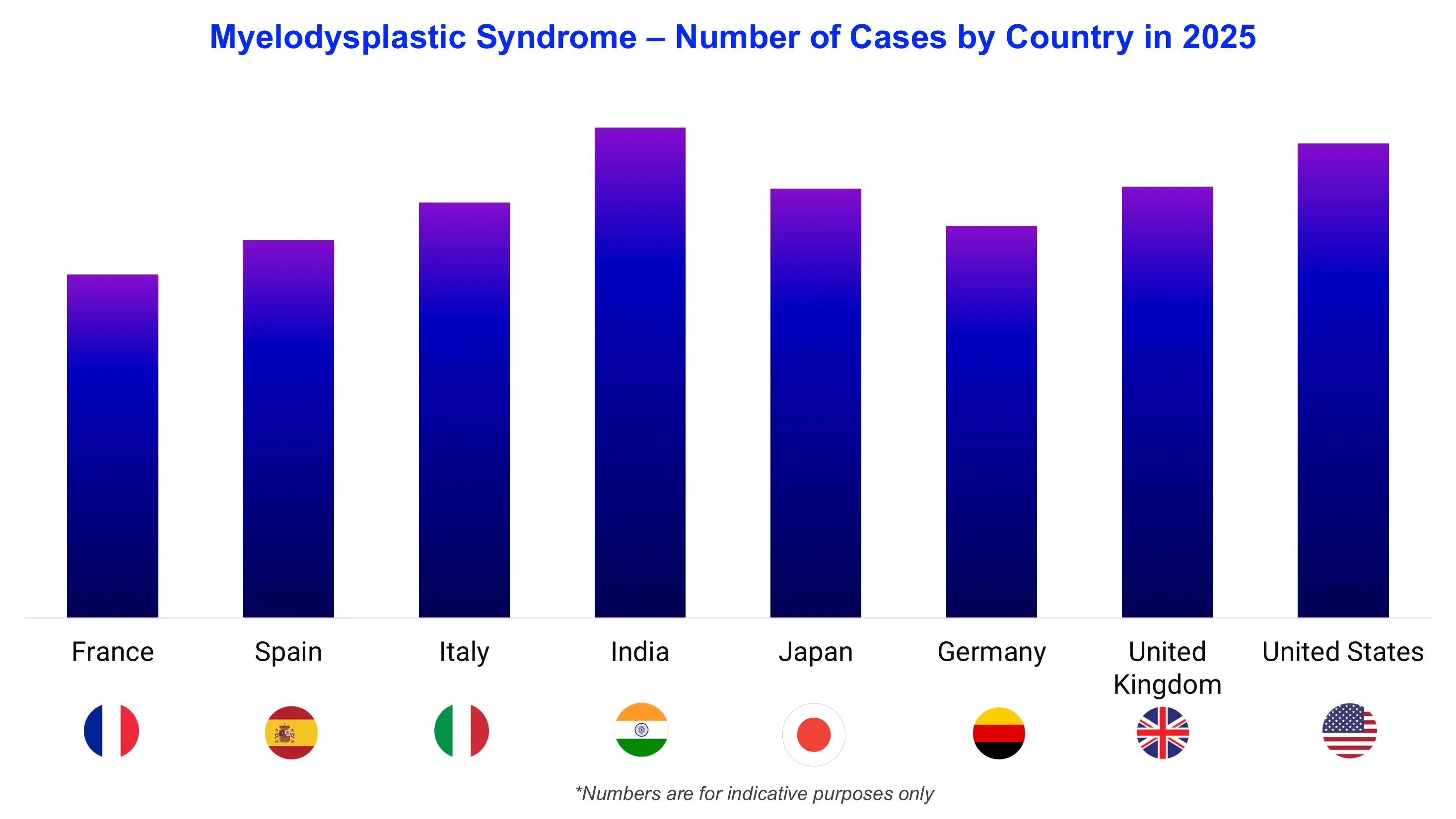
The myelodysplastic syndrome epidemiology data and findings for the United States, Germany, Spain, Italy, France, the United Kingdom, Japan, and India are also provided in the epidemiology section.
|
Country |
Key Insights |
|
United States |
According to the American Cancer Society, annual MDS diagnoses in the United States have been estimated at approximately 10,000, although estimates vary. MDS is uncommon before age 50 and is most frequently diagnosed in people in their 70s. |
|
Germany |
According to Universitätsklinikum Ulm, MDS incidence in Germany is approximately 4 cases per 100,000 inhabitants, and the average age at diagnosis is around 75 years. |
|
France |
As per Paris Saint-Louis Leukemia Institute, approximately 4,000 MDS cases are diagnosed annually in France. The disease mainly affects older adults and is more common in males than females. |
|
Italy |
In Italy, population aging and the identification of MDS among older adults are relevant considerations when assessing the disease burden. Differences in diagnostic recognition and the completeness of case registration may also affect estimates of reported incidence. |
|
Spain |
According to MD Anderson, approximately 3,000 new MDS cases are diagnosed annually in Spain. Around 90% of patients are older than 60 years, and 10%-20% of diagnosed cases progress to acute myeloid leukemia. |
|
United Kingdom |
In the United Kingdom, age distribution is an important consideration in assessing MDS epidemiology. Recognition of cases in older adults and the accuracy of cancer registration are relevant to understanding the reported disease burden. |
|
Japan |
According to Shuji Uno et al. (2023), MDS incidence in Japan increases with age, particularly among individuals aged 70 years or older. The estimated median age at diagnosis is 76 years. |
|
India |
In India, access to specialized hematology services, the availability of diagnostic testing, and recognition of MDS may influence the number of cases identified. These factors are relevant when assessing the disease burden across different healthcare settings. |
Myelodysplastic syndrome presents opportunities to improve early diagnosis, molecular characterization, and access to risk-appropriate treatment across the United States, Germany, France, Italy, Spain, the United Kingdom, Japan, and India. Because the disease predominantly affects older adults, aging populations may increase the need for diagnostic evaluation and long-term disease management. A major unmet need is effective treatment for higher-risk patients who do not respond to hypomethylating agents. Advances in molecular risk stratification and emerging therapies may support more personalized treatment, while improved diagnostic capacity could help address under-recognition.
Myelodysplastic syndromes treatment depends on disease risk, genetic characteristics, blood cell counts, symptoms, age, and overall health. Supportive care may include red blood cell or platelet transfusions, iron chelation when indicated, and growth factors to manage cytopenias. Disease-modifying treatments include hypomethylating agents, such as azacitidine and decitabine, while selected patients may receive lenalidomide or other targeted approaches based on disease features. Allogeneic hematopoietic stem cell transplantation is the only potentially curative treatment for eligible patients. These approaches aim to improve blood counts, reduce transfusion requirements, and delay disease progression through risk-adapted therapy.
Myelodysplastic Syndrome Pipeline Analysis
Relapsed or Refractory Myelodysplastic Syndrome Pipeline Analysis


Upto 15% Off
USD
$2699 $2429
$4299 $3869
$5799 $4949
$6999 $5949


*While we strive to always give you current and accurate information, the numbers depicted on the website are indicative and may differ from the actual numbers in the main report. At Expert Market Research, we aim to bring you the latest insights and trends in the market. Using our analyses and forecasts, stakeholders can understand the market dynamics, navigate challenges, and capitalize on opportunities to make data-driven strategic decisions.*
Explore our key highlights of the report and gain a concise overview of key findings, trends, and actionable insights that will empower your strategic decisions.
|
Report Features |
Details |
|
Base Year |
2025 |
|
Historical Period |
2019-2025 |
|
Forecast Period |
2026-2035 |
|
Epidemiology Statistics Provided |
|
|
Segmentation Provided |
|
|
Geographies Covered |
|
Datasheet
One User
USD 2,699
USD 2,429
tax inclusive*
Single User License
One User
USD 4,299
USD 3,869
tax inclusive*
Five User License
Five User
USD 5,799
USD 4,949
tax inclusive*
Corporate License
Unlimited Users
USD 6,999
USD 5,949
tax inclusive*
*Please note that the prices mentioned below are starting prices for each bundle type. Kindly contact our team for further details.*
Flash Bundle
Small Business Bundle
Growth Bundle
Enterprise Bundle
*Please note that the prices mentioned below are starting prices for each bundle type. Kindly contact our team for further details.*
Flash Bundle
Number of Reports: 3
20%
tax inclusive*
Small Business Bundle
Number of Reports: 5
25%
tax inclusive*
Growth Bundle
Number of Reports: 8
30%
tax inclusive*
Enterprise Bundle
Number of Reports: 10
35%
tax inclusive*
How To Order

Select License Type
Choose the right license for your needs and access rights.

Click on ‘Buy Now’
Add the report to your cart with one click and proceed to register.

Select Mode of Payment
Choose a payment option for a secure checkout. You will be redirected accordingly.
Strategic Solutions for Informed Decision-Making
Gain insights to stay ahead and seize opportunities.

Get insights & trends for a competitive edge.

Track prices with detailed trend reports.

Analyse trade data for supply chain insights.

Leverage cost reports for smart savings

Enhance supply chain with partnerships.

Connect For More Information
Our expert team of analysts will offer full support and resolve any queries regarding the report, before and after the purchase.
Our expert team of analysts will offer full support and resolve any queries regarding the report, before and after the purchase.
We employ meticulous research methods, blending advanced analytics and expert insights to deliver accurate, actionable industry intelligence, staying ahead of competitors.
Our skilled analysts offer unparalleled competitive advantage with detailed insights on current and emerging markets, ensuring your strategic edge.
We offer an in-depth yet simplified presentation of industry insights and analysis to meet your specific requirements effectively.




