

Consumer Insights
Uncover trends and behaviors shaping consumer choices today
Procurement Insights
Optimize your sourcing strategy with key market data
Industry Stats
Stay ahead with the latest trends and market analysis.
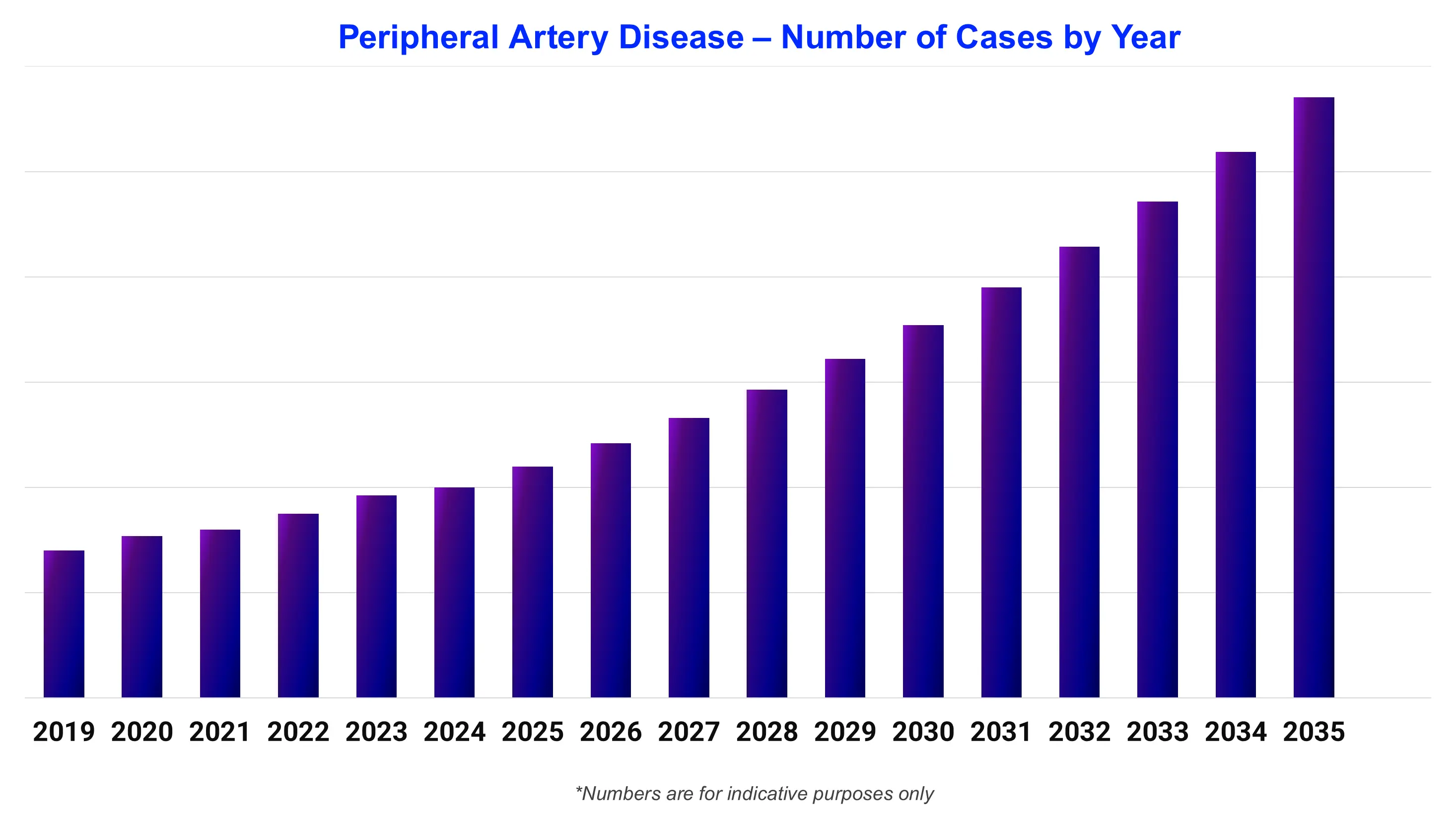
Peripheral artery disease (PAD) is a cardiovascular disease characterized by narrowed arteries that reduce blood flow, primarily to the limbs. As per the American College of Cardiology Foundation, PAD represents a significant global health burden, affecting millions worldwide. According to the peripheral artery disease epidemiology overview by Expert Market Research, the disease remains an important area of epidemiological assessment.
Base Year
Historical Period
Forecast Period
Read more about this report - REQUEST FREE SAMPLE COPY IN PDF
Expert Market Research's “Peripheral Artery Disease Epidemiology Forecast Report 2026-2035” offers comprehensive information on the prevalence and demographics of peripheral artery disease. It projects the future incidence and prevalence rates of peripheral artery disease cases across various populations. The study covers age, gender, and type as major determinants of the peripheral artery disease population. The report highlights patterns in the prevalence of peripheral artery disease over time and projects future trends based on multiple variables.
The report provides a comprehensive overview of the disease, as well as historical and projected data on the epidemiology of peripheral artery disease in the 8 major markets.
Regions Covered
Peripheral artery disease (PAD) is a circulatory condition characterized by the narrowing or blockage of arteries that supply blood to the limbs, most commonly the legs. It primarily develops due to atherosclerosis, in which fatty deposits accumulate within arterial walls, restricting blood flow and oxygen delivery to tissues. Common symptoms include leg pain during walking, numbness, and slow-healing wounds, although some patients remain asymptomatic. PAD may present as asymptomatic disease, symptomatic disease with intermittent claudication, or chronic limb-threatening ischemia. Atherosclerotic cardiovascular disease is a relevant associated condition because PAD shares several underlying vascular risk factors.
|
Parameter |
Insight |
|
Largest Patient Pool |
India |
|
Fastest Growing Country |
India |
|
High-Risk Population |
Older adults, current and former smokers, and individuals with diabetes, hypertension, or dyslipidemia |
|
Key Diagnostic Method |
Ankle-brachial index (ABI), which compares blood pressure at the ankle and arm to help identify reduced blood flow |
|
Major Risk Factor |
Tobacco smoking, which contributes to atherosclerosis and increases the risk of PAD and related cardiovascular complications |
|
Major gap in the market |
Underdiagnosis, limited screening of high-risk populations, and unequal access to vascular specialists and revascularization services |
The peripheral artery disease epidemiology division offers information on the patient pool from history to the present as well as the projected trend for each of the 8 major markets. Expert Market Research provides both current and predicted trends for the peripheral artery disease epidemiology scenario by examining a wide range of studies. Additionally, the report covers the diagnosed patient pool for peripheral artery disease and their trends. The data is broken down into specific categories, such as total prevalent cases in males and females, and total diagnosed cases across different age groups and patient pools.
|
Epidemiology Segment |
Key Insights |
|
Diagnosed Prevalent Cases of the Disease |
According to Matthew A. Allison et al. (2023), peripheral artery disease (PAD) affects approximately 200 million people worldwide, including an estimated 7-12 million people in the United States. Asymptomatic cases contribute to underdiagnosis and may result in prevalence estimates that underestimate the overall disease burden. |
|
Gender-Specific Cases of the Disease |
As per the Australian Institute of Health and Welfare, PAD-related hospitalizations in Australia during 2023-24 were 1.9 times higher among males than females after age adjustment. In 2024, PAD death rates were 1.6 times higher among males than females. |
|
Age-Specific Cases of the Disease |
According to Matthew A. Allison et al. (2023), PAD prevalence increases rapidly with age and is highest among adults older than 70 years. In Australia, hospitalizations and deaths also increase with age, with the highest rates observed among people aged 85 years and older. |
|
Ethnicity-Wise Cases of the Disease |
As reported by Matthew A. Allison et al. (2023), Black Americans experience a disproportionately high burden of PAD. Among men aged 50-59 years, prevalence was approximately 5%, compared with 1.9% among non-Hispanic White individuals of the same age. |
|
Mortality and Survival Analysis of the Disease |
According to the Australian Institute of Health and Welfare, PAD was the underlying cause of 1,900 deaths in Australia in 2024, representing 1.0% of all deaths. The burden was concentrated among older adults, with 74% of PAD deaths occurring in people aged 75 years and older. |
|
Disease Type |
Prevalence |
|
Lower-extremity PAD |
Lower-extremity PAD is the most common form of peripheral artery disease and affects blood flow to the legs and feet, contributing to the overall burden of PAD. |
|
Upper-extremity PAD |
Upper-extremity PAD affects blood flow to the arms, hands, and fingers and is considerably less common than lower-extremity PAD. |
Read more about this report - REQUEST FREE SAMPLE COPY IN PDF
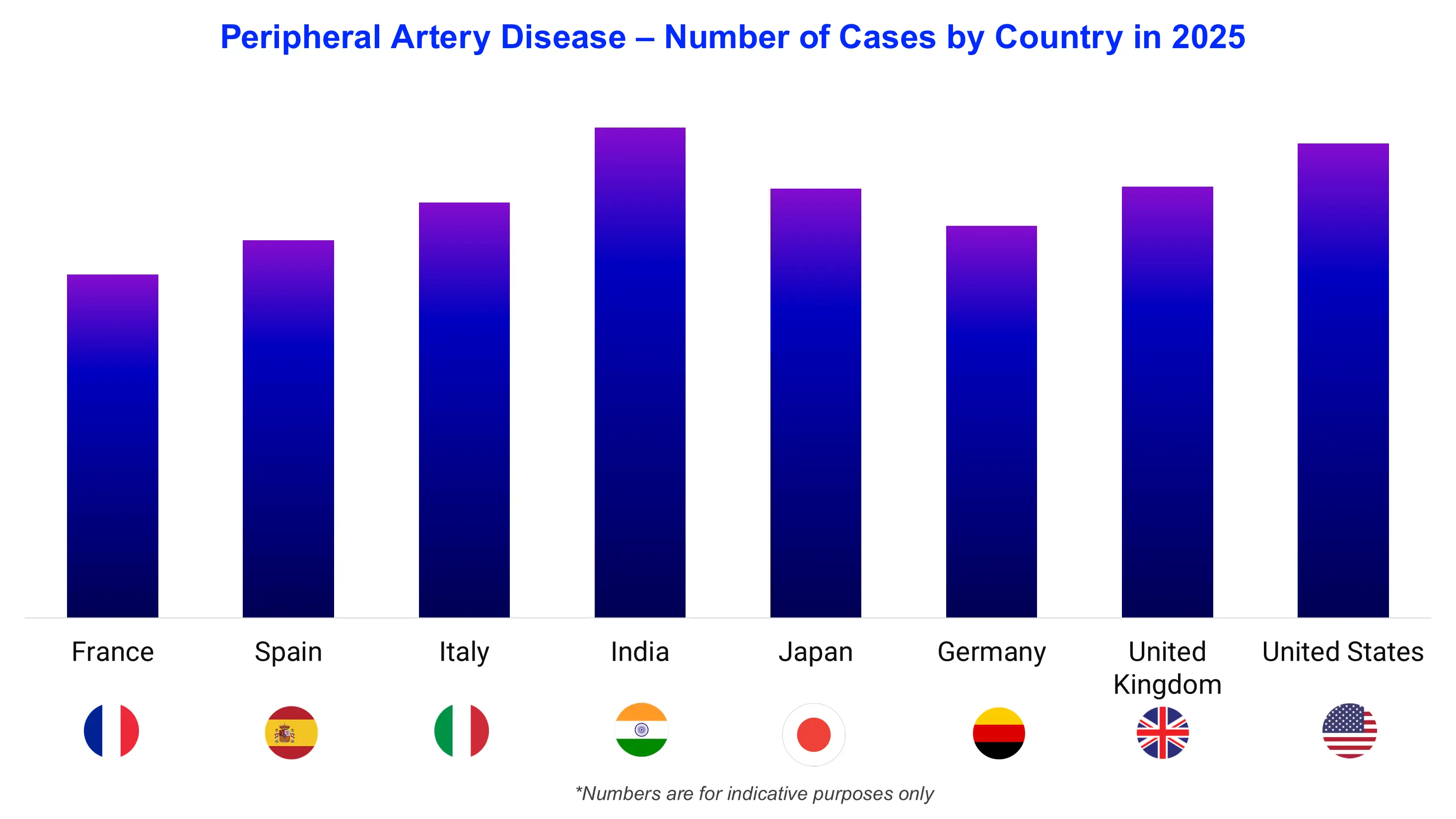
The peripheral artery disease epidemiology data and findings for the United States, Germany, Spain, Italy, France, the United Kingdom, Japan, and India are also provided in the epidemiology section.
|
Country |
Key Insights |
|
United States |
According to Matthew A. Allison et al. (2023), an estimated 7-12 million people in the United States have PAD. Prevalence increases with age and differs across sex, racial, and ethnic groups. |
|
Germany |
As reported by Alexandros Giosdekos et al. (2025), PAD prevalence increases from approximately 3% in middle age to more than 18% among men aged 70-75 years. |
|
France |
PAD contributes to the broader European disease burden. According to Alexandros Giosdekos et al. (2025), approximately 40 million people in Europe live with PAD, although a France-specific prevalence estimate was not provided. |
|
Italy |
According to Alexandros Giosdekos et al. (2025), PAD prevalence in Italy is approximately 22.9%, highlighting a substantial burden compared with several other European countries. |
|
Spain |
The prevalence of peripheral artery disease in Spain is influenced by population aging and the increasing burden of cardiovascular risk factors, including diabetes, smoking, hypertension, dyslipidemia, and obesity. These factors contribute to atherosclerosis and increase the risk of PAD, particularly among older adults and individuals with multiple underlying risk factors. |
|
United Kingdom |
According to Alexandros Giosdekos et al. (2025), approximately 20% of individuals older than 60 years in the United Kingdom have PAD. |
|
Japan |
As reported by Nobuko Hayashi et al. (2022), a study in rural Hokkaido found PAD prevalence of 1.6% among males and 0.7% among females younger than 60 years in Japan. Among people aged 60 years and older, prevalence was 3.6% among males and 3.3% among females. |
|
India |
According to Ajay Yadav et al. (2024), PAD affects approximately 12% of the adult population in India, with the burden increasing alongside global prevalence trends. |
Underdiagnosis and unequal access to early diagnosis remain important challenges across the United States, Germany, France, Italy, Spain, the United Kingdom, Japan, and India. Opportunities include improving ankle-brachial index testing among high-risk individuals, particularly older adults and people with diabetes or a history of smoking. India may offer substantial opportunities to expand PAD awareness, diagnostic capacity, and access to evidence-based treatment. Across these markets, greater use of structured exercise programs, cardiovascular risk management, and timely revascularization may help address unmet clinical needs and reduce the risk of limb complications.
Peripheral artery disease treatment focuses on improving blood flow, reducing cardiovascular risks, relieving symptoms, and preventing limb complications. Management typically includes smoking cessation, structured exercise therapy, and dietary and lifestyle modifications. Medications such as antiplatelet agents, statins, and selected drugs for intermittent claudication may be prescribed according to individual clinical needs. For patients with severe symptoms or chronic limb-threatening ischemia, revascularization procedures, including endovascular angioplasty with or without stenting and surgical bypass, may be necessary. Endovascular revascularization is an important treatment approach that can restore blood flow in selected patients and help reduce the risk of limb loss.


Upto 15% Off
USD
$2699 $2429
$4299 $3869
$5799 $4949
$6999 $5949


*While we strive to always give you current and accurate information, the numbers depicted on the website are indicative and may differ from the actual numbers in the main report. At Expert Market Research, we aim to bring you the latest insights and trends in the market. Using our analyses and forecasts, stakeholders can understand the market dynamics, navigate challenges, and capitalize on opportunities to make data-driven strategic decisions.*
Explore our key highlights of the report and gain a concise overview of key findings, trends, and actionable insights that will empower your strategic decisions.
|
Report Features |
Details |
|
Base Year |
2025 |
|
Historical Period |
2019-2025 |
|
Forecast Period |
2026-2035 |
|
Epidemiology Statistics Provided |
|
|
Segmentation Provided |
|
|
Geographies Covered |
|
Datasheet
One User
USD 2,699
USD 2,429
tax inclusive*
Single User License
One User
USD 4,299
USD 3,869
tax inclusive*
Five User License
Five User
USD 5,799
USD 4,949
tax inclusive*
Corporate License
Unlimited Users
USD 6,999
USD 5,949
tax inclusive*
*Please note that the prices mentioned below are starting prices for each bundle type. Kindly contact our team for further details.*
Flash Bundle
Small Business Bundle
Growth Bundle
Enterprise Bundle
*Please note that the prices mentioned below are starting prices for each bundle type. Kindly contact our team for further details.*
Flash Bundle
Number of Reports: 3
20%
tax inclusive*
Small Business Bundle
Number of Reports: 5
25%
tax inclusive*
Growth Bundle
Number of Reports: 8
30%
tax inclusive*
Enterprise Bundle
Number of Reports: 10
35%
tax inclusive*
How To Order

Select License Type
Choose the right license for your needs and access rights.

Click on ‘Buy Now’
Add the report to your cart with one click and proceed to register.

Select Mode of Payment
Choose a payment option for a secure checkout. You will be redirected accordingly.
Strategic Solutions for Informed Decision-Making
Gain insights to stay ahead and seize opportunities.

Get insights & trends for a competitive edge.

Track prices with detailed trend reports.

Analyse trade data for supply chain insights.

Leverage cost reports for smart savings

Enhance supply chain with partnerships.

Connect For More Information
Our expert team of analysts will offer full support and resolve any queries regarding the report, before and after the purchase.
Our expert team of analysts will offer full support and resolve any queries regarding the report, before and after the purchase.
We employ meticulous research methods, blending advanced analytics and expert insights to deliver accurate, actionable industry intelligence, staying ahead of competitors.
Our skilled analysts offer unparalleled competitive advantage with detailed insights on current and emerging markets, ensuring your strategic edge.
We offer an in-depth yet simplified presentation of industry insights and analysis to meet your specific requirements effectively.




