

Consumer Insights
Uncover trends and behaviors shaping consumer choices today
Procurement Insights
Optimize your sourcing strategy with key market data
Industry Stats
Stay ahead with the latest trends and market analysis.
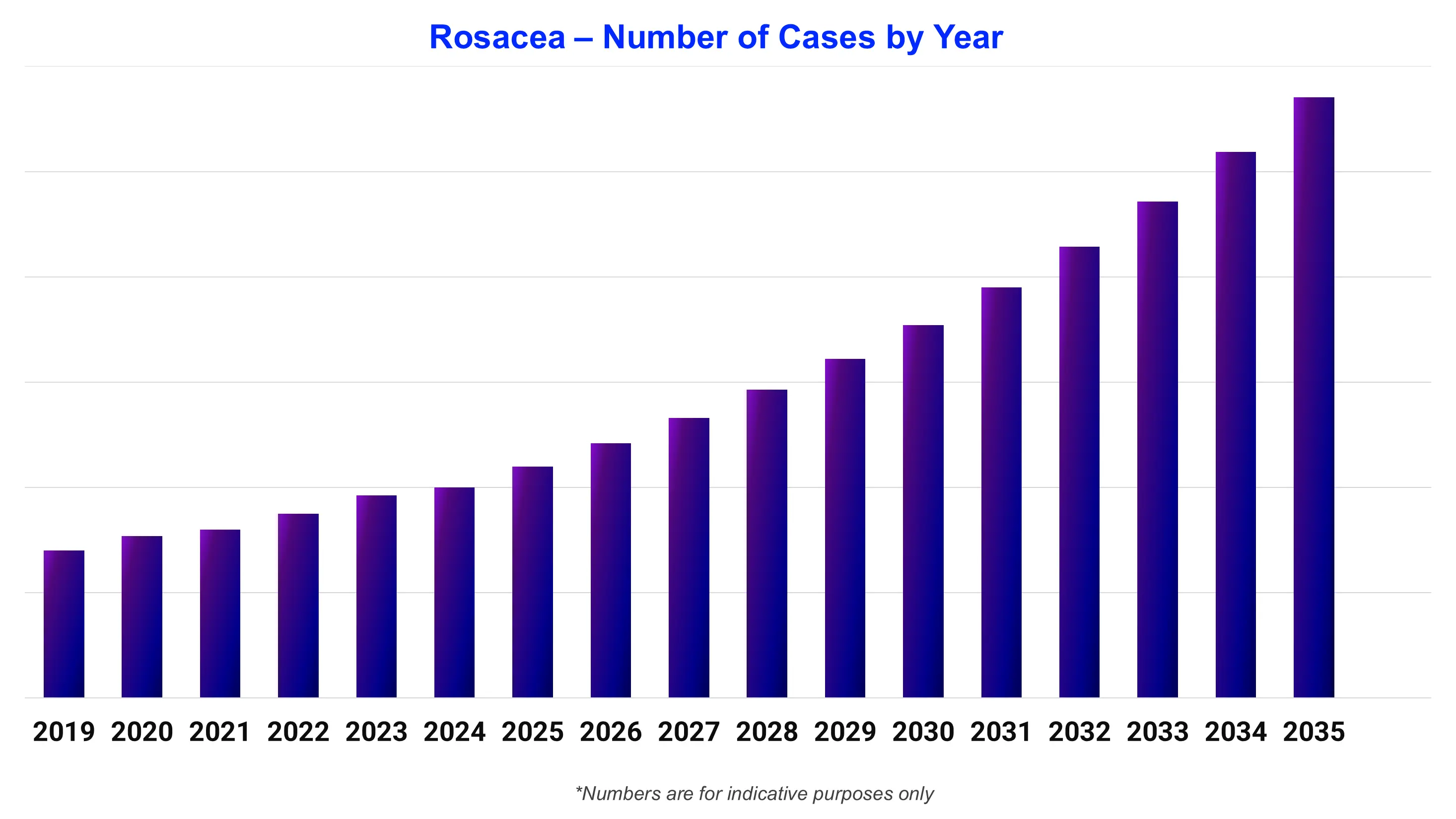
Rosacea is a chronic, inflammatory dermatological disorder characterized by persistent centrofacial erythema, episodic flushing, visible superficial blood vessels (telangiectasia), and, in some patients, inflammatory papules and pustules resembling acne. Rosacea is a common chronic skin disorder in the United States, with population-based estimates indicating that approximately 13–16 million Americans may be affected. According to Rosacea Epidemiology Forecast by Expert Market Research (EMR), its epidemiology is characterized by substantial variation in reported prevalence, probable underdiagnosis, and differences in recognition across age groups, sexes, and skin phototypes.
Base Year
Historical Period
Forecast Period
Read more about this report - REQUEST FREE SAMPLE COPY IN PDF
Expert Market Research's “Rosacea Epidemiology Forecast Report 2026-2035” offers comprehensive information on the prevalence and demographics of Rosacea. It projects the future incidence and prevalence rates of Rosacea cases across various populations. The study covers age, gender, and type as major determinants of the Rosacea population. The report highlights patterns in the prevalence of Rosacea over time and projects future trends based on multiple variables.
The report provides a comprehensive overview of the disease, as well as historical and projected data on the epidemiology of Rosacea in the 8 major markets.
Regions Covered
Rosacea is a chronic, inflammatory dermatological disorder characterized by persistent centrofacial erythema, episodic flushing, visible superficial blood vessels (telangiectasia), and, in some patients, inflammatory papules and pustules resembling acne. It predominantly affects the cheeks, nose, chin, and forehead and may involve the eyes, producing dryness, irritation, blepharitis, or other ocular complications. The disease typically follows a relapsing–remitting course, with periods of exacerbation and partial remission. Although rosacea is not contagious, it can persist for years and adversely affect patients’ psychological well-being and quality of life.
|
Parameter |
Insight |
|
Largest Patient Pool |
United States |
|
Fastest Growing Country |
Germany |
|
High-Risk Population |
Adults aged 30 years and older, particularly fair-skinned individuals of Northern European or Celtic ancestry, women, and individuals with a family history of rosacea. |
|
Key Diagnostic Method |
Rosacea is diagnosed primarily through clinical examination of characteristic facial skin changes and assessment of the patient's medical history. |
|
Major Risk Factor |
Genetic susceptibility and ultraviolet (UV) radiation exposure are important contributors to rosacea development and exacerbation. |
|
Major gap in the market |
The rosacea market faces significant unmet needs in early diagnosis, durable disease control, and treatments that address multiple underlying disease mechanisms. |
The Rosacea epidemiology division offers information on the patient pool from history to the present as well as the projected trend for each of the 8 major markets. Expert Market Research provides both current and predicted trends for the Rosacea epidemiology scenario by examining a wide range of studies. Additionally, the report covers the diagnosed patient pool for Rosacea and their trends. The data is broken down into specific categories, such as total prevalent cases in males and females, and total diagnosed cases across different age groups and patient pools.
|
Epidemiology Segment |
Key Insights |
|
Diagnosed Prevalent Cases of the Disease |
A reliable, globally standardized count of diagnosed prevalent cases is not currently established. A 2024 worldwide epidemiological study published in the Journal of the American Academy of Dermatology, involving 50,552 individuals aged 16 years and older across 20 countries, estimated rosacea prevalence at 5.1%. A 2025 systematic review of 19 population-based studies covering approximately 64.1 million individuals estimated pooled prevalence at 3.22% (95% CI: 1.40–5.05%). These estimates represent overall disease prevalence, not confirmed diagnosed-case counts. |
|
Gender-Specific Cases of the Disease |
Rosacea affects both men and women, with women generally showing higher reported prevalence in population-based studies. A 2018 systematic review and meta-analysis estimated prevalence at 5.41% in women (95% CI: 3.85–7.23%) compared with 3.90% in men (95% CI: 3.04–4.87%). A 2024 worldwide epidemiological study reported rosacea prevalence of 5.9% among women and 4.4% among men, based on a cross-sectional assessment of 50,552 participants across 20 countries. |
|
Age-Specific Cases of the Disease |
Rosacea predominantly affects adults, with onset commonly occurring between 30 and 60 years of age. A 2024 worldwide epidemiological study involving 50,552 participants across 20 countries reported the highest age-specific prevalence in individuals aged 25–39 years (3.7%), followed by those aged 40–64 years (2.9%). These findings differ from earlier studies that reported higher prevalence among older adults. |
|
Ethnicity-Wise Cases of the Disease |
A 2024 worldwide epidemiological study involving 50,552 participants across 20 countries estimated the highest rosacea prevalence among individuals of mixed ethnicity (4.3%), followed by White individuals (3.3%), Asian individuals (3.1%), and Black individuals (2.3%). These findings challenge the traditional assumption that rosacea predominantly affects people of European ancestry. |
|
Mortality and Survival Analysis of the Disease |
Rosacea is a chronic inflammatory skin disorder that is not generally associated with increased all-cause mortality or reduced life expectancy. |
Read more about this report - REQUEST FREE SAMPLE COPY IN PDF
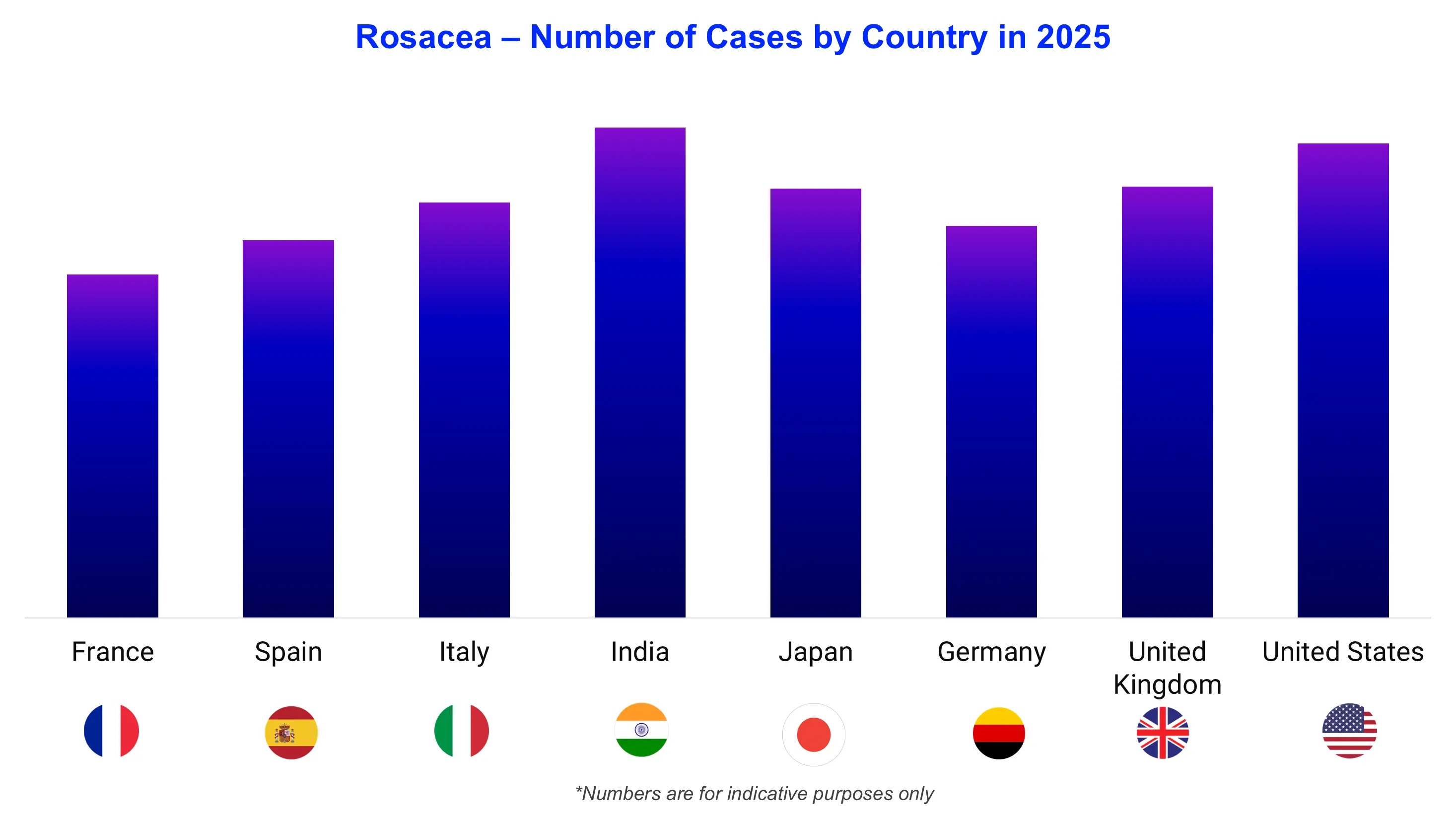
The Rosacea epidemiology data and findings for the United States, Germany, Spain, Italy, France, the United Kingdom, Japan, and India are also provided in the epidemiology section.
|
Country |
Key Insights |
|
United States |
Rosacea is estimated to affect more than 16 million Americans, equivalent to approximately 5% of the U.S. population, according to the National Rosacea Society's 2026 estimates. However, only approximately 3 million affected individuals are reported to be actively managing their condition, indicating a substantial gap between estimated disease burden and treatment engagement. |
|
Germany |
A population-based study of 161,269 German employees, published in the International Journal of Dermatology in 2022, identified rosacea in 2.1% of participants (3,386 cases) through dermatological examinations. In contrast, the 2016 RISE study, which screened 3,052 adults aged 18–65 years in Germany, estimated prevalence at 12.3% (95% CI: 10.2–14.4%). More than 80% of participants identified with rosacea in the RISE study had not previously received a diagnosis. |
|
France |
France’s official health information portal, Assurance Maladie, reports that rosacea affects approximately 2–3% of the adult population. This provides a current general prevalence estimate, although it is not derived from a newly published national epidemiological survey. |
|
Italy |
Rosacea represents a persistent dermatological burden in Italy, particularly among adults, with clinical manifestations including facial erythema, flushing, telangiectasia, and inflammatory papules and pustules. Prevalence is influenced by age, genetic susceptibility, ultraviolet radiation exposure, and differences in diagnostic recognition. |
|
Spain |
Rosacea is estimated to affect approximately 10% of the Spanish population, according to figures reported in April 2024 by Spanish pharmaceutical and dermatology-sector sources. The condition predominantly affects adults, with women aged 30–50 years frequently represented among reported cases. Common manifestations include persistent facial redness, flushing, visible superficial blood vessels, and inflammatory lesions. |
|
United Kingdom |
A UK Biobank analysis involving 370,209 participants reported an overall recorded rosacea prevalence of 1.22%. The study, published in 2023, used linked health records and examined associations between vitamin D status and rosacea risk. This estimate reflects recorded disease in the study cohort rather than the full underlying population burden. |
|
Japan |
Rosacea is a recognized chronic inflammatory skin disorder in Japan, characterized by facial erythema, flushing, telangiectasia, and inflammatory papules and pustules. A 2026 consensus publication in the Journal of Dermatology notes that the exact national prevalence remains unknown, partly because of underdiagnosis and inconsistent diagnostic criteria. |
|
India |
Rosacea affects Indian adults, but the national burden is likely underrecognized because of diagnostic challenges, limited population-based research, and overlap with other facial dermatoses. Improved clinical awareness and appropriate differentiation from acne, seborrhoeic dermatitis, and corticosteroid-induced rosacea are important for timely diagnosis and treatment. |
The rosacea landscape presents significant opportunities in early diagnosis, long-term disease management, and phenotype-specific treatment development. Underrecognition among individuals with darker skin phototypes remains a major diagnostic gap, creating opportunities for improved clinical assessment tools, dermoscopic evaluation, and diagnostic criteria that incorporate burning, stinging, flushing, and ocular symptoms alongside visible erythema. A 2025 international expert consensus highlighted the underrepresentation of skin-of-color populations in dermatological research and the need for more inclusive diagnostic and therapeutic approaches. Another major unmet need is the development of fast-acting, durable, and well-tolerated therapies that control multiple manifestations, including persistent erythema, inflammatory papules and pustules, and ocular involvement. Existing treatments frequently target individual symptoms, while evidence supporting long-term maintenance beyond 12–16 weeks and optimal combination regimens remains limited.
Rosacea management focuses on controlling inflammatory lesions, reducing persistent facial erythema, alleviating ocular symptoms, and preventing disease exacerbations. Treatment is individualized according to clinical manifestations and severity, as no definitive cure is currently available. General management includes gentle skin cleansing, regular moisturization, broad-spectrum sunscreen, and avoidance of individual triggers such as ultraviolet radiation, excessive heat, alcohol, and spicy foods. Pharmacological treatment includes topical ivermectin, metronidazole, and azelaic acid for inflammatory papules and pustules, while topical brimonidine or oxymetazoline can temporarily reduce persistent facial erythema.


Upto 15% Off
USD
$2699 $2429
$4299 $3869
$5799 $4949
$6999 $5949


*While we strive to always give you current and accurate information, the numbers depicted on the website are indicative and may differ from the actual numbers in the main report. At Expert Market Research, we aim to bring you the latest insights and trends in the market. Using our analyses and forecasts, stakeholders can understand the market dynamics, navigate challenges, and capitalize on opportunities to make data-driven strategic decisions.*
Explore our key highlights of the report and gain a concise overview of key findings, trends, and actionable insights that will empower your strategic decisions.
|
Report Features |
Details |
|
Base Year |
2025 |
|
Historical Period |
2019-2025 |
|
Forecast Period |
2026-2035 |
|
Epidemiology Statistics Provided |
|
|
Segmentation Provided |
|
|
Geographies Covered |
|
Datasheet
One User
USD 2,699
USD 2,429
tax inclusive*
Single User License
One User
USD 4,299
USD 3,869
tax inclusive*
Five User License
Five User
USD 5,799
USD 4,949
tax inclusive*
Corporate License
Unlimited Users
USD 6,999
USD 5,949
tax inclusive*
*Please note that the prices mentioned below are starting prices for each bundle type. Kindly contact our team for further details.*
Flash Bundle
Small Business Bundle
Growth Bundle
Enterprise Bundle
*Please note that the prices mentioned below are starting prices for each bundle type. Kindly contact our team for further details.*
Flash Bundle
Number of Reports: 3
20%
tax inclusive*
Small Business Bundle
Number of Reports: 5
25%
tax inclusive*
Growth Bundle
Number of Reports: 8
30%
tax inclusive*
Enterprise Bundle
Number of Reports: 10
35%
tax inclusive*
How To Order

Select License Type
Choose the right license for your needs and access rights.

Click on ‘Buy Now’
Add the report to your cart with one click and proceed to register.

Select Mode of Payment
Choose a payment option for a secure checkout. You will be redirected accordingly.
Strategic Solutions for Informed Decision-Making
Gain insights to stay ahead and seize opportunities.

Get insights & trends for a competitive edge.

Track prices with detailed trend reports.

Analyse trade data for supply chain insights.

Leverage cost reports for smart savings

Enhance supply chain with partnerships.

Connect For More Information
Our expert team of analysts will offer full support and resolve any queries regarding the report, before and after the purchase.
Our expert team of analysts will offer full support and resolve any queries regarding the report, before and after the purchase.
We employ meticulous research methods, blending advanced analytics and expert insights to deliver accurate, actionable industry intelligence, staying ahead of competitors.
Our skilled analysts offer unparalleled competitive advantage with detailed insights on current and emerging markets, ensuring your strategic edge.
We offer an in-depth yet simplified presentation of industry insights and analysis to meet your specific requirements effectively.




