

Consumer Insights
Uncover trends and behaviors shaping consumer choices today
Procurement Insights
Optimize your sourcing strategy with key market data
Industry Stats
Stay ahead with the latest trends and market analysis.
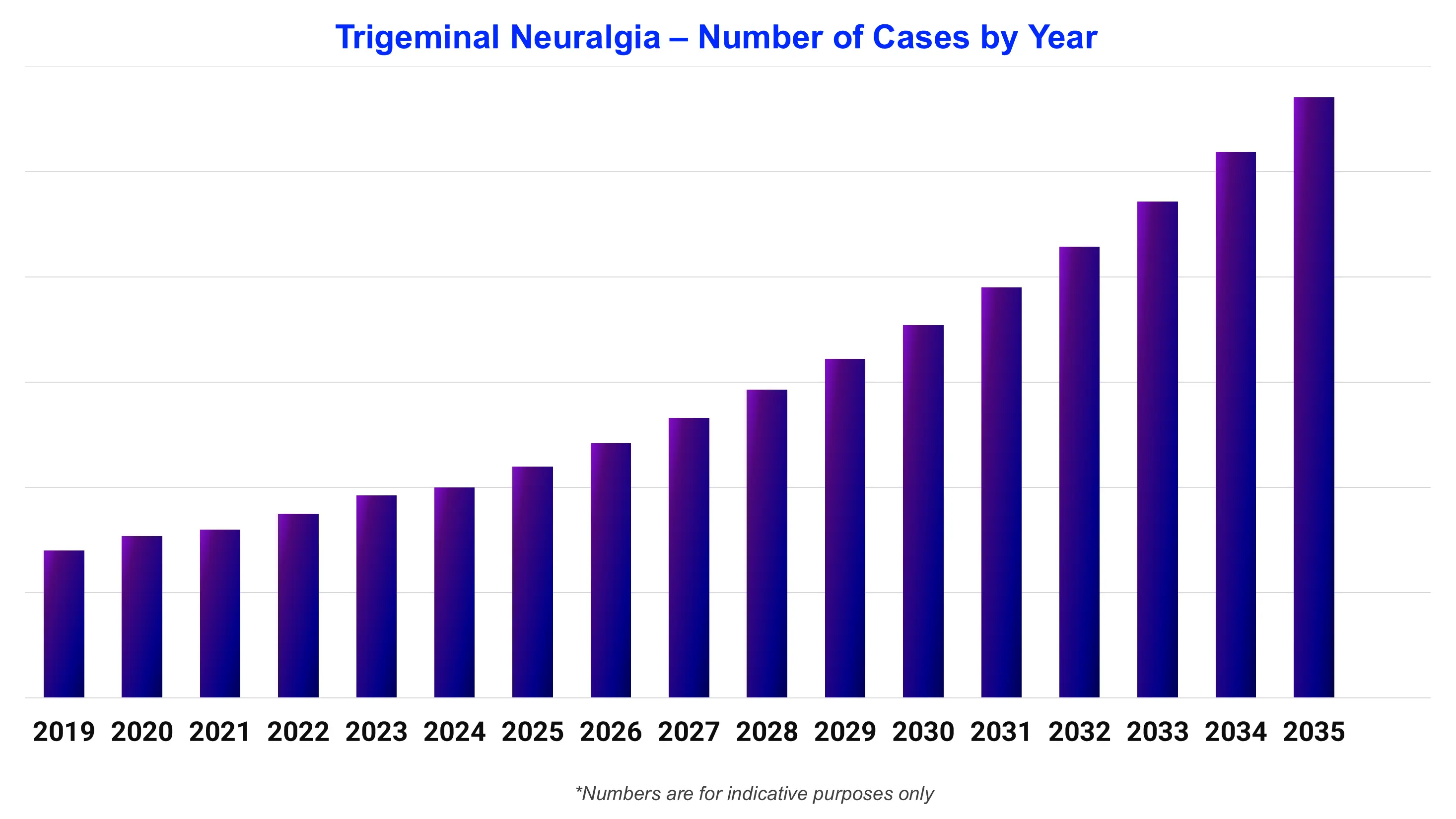
Trigeminal neuralgia (TN), also known as tic douloureux, is a chronic neuropathic pain disorder involving the trigeminal nerve (cranial nerve V), which transmits sensory information from the face to the brain. Johns Hopkins Medicine estimates that approximately 15,000 people are diagnosed with trigeminal neuralgia annually in the United States. According to Trigeminal Neuralgia Epidemiology Forecast by Expert Market Research (EMR), the prevalence is expected to increase in the forecast period. The condition predominantly affects older adults, with the average age of onset generally around 50-60 years. Women are more frequently affected than men, and incidence rises with age.
Base Year
Historical Period
Forecast Period
Read more about this report - REQUEST FREE SAMPLE COPY IN PDF
Expert Market Research's “Trigeminal Neuralgia Epidemiology Forecast Report 2026-2035” offers comprehensive information on the prevalence and demographics of trigeminal neuralgia. It projects the future incidence and prevalence rates of trigeminal neuralgia cases across various populations. The study covers age, gender, and type as major determinants of the trigeminal neuralgia population. The report highlights patterns in the prevalence of trigeminal neuralgia over time and projects future trends based on multiple variables.
The report provides a comprehensive overview of the disease, as well as historical and projected data on the epidemiology of trigeminal neuralgia in the 8 major markets.
Regions Covered
Trigeminal neuralgia (TN), also known as tic douloureux, is a chronic neuropathic pain disorder involving the trigeminal nerve (cranial nerve V), which transmits sensory information from the face to the brain. It is characterized by recurrent episodes of sudden, severe, electric shock-like, shooting or stabbing pain affecting one or more regions of the face, particularly the cheek, upper and lower jaw, teeth and surrounding oral structures. Attacks are frequently triggered by otherwise innocuous stimuli, including chewing, brushing teeth, speaking, shaving, washing the face or exposure to cold air. The pain typically lasts from a fraction of a second to approximately two minutes per attack, although repeated episodes can occur in rapid succession and substantially impair daily functioning.
|
Parameter |
Insight |
|
Largest Patient Pool |
United States |
|
Fastest Growing Region |
Japan |
|
High-Risk Population |
Adults aged 50 years and older, particularly older women |
|
Key Diagnostic Method |
Clinical history and characteristic facial pain features |
|
Major Risk Factor |
Neurovascular compression, often involving the superior cerebellar artery |
|
Major gap in the market |
Limitations of carbamazepine and oxcarbazepine |
The trigeminal neuralgia epidemiology division offers information on the patient pool from history to the present as well as the projected trend for each of the 8 major markets. Expert Market Research provides both current and predicted trends for the trigeminal neuralgia the diagnosed patient pool for trigeminal neuralgia and their trends. The data is broken down into specific categories, such as total prevalent cases in males and females, and total diagnosed cases across different age groups and patient pools.
|
Epidemiology Segment |
Key Insights |
|
Diagnosed Prevalent Cases of the Disease |
Sina Samieirad et al., 2026, reports a general-population prevalence of approximately 0.03%–0.3%, equivalent to 30–300 cases per 100,000 people. |
|
Gender-Specific Cases of the Disease |
Trigeminal neuralgia is more prevalent among females than males. A population-based study by Isabela Porto De Toledo et al., 2024, reported a female-to-male prevalence ratio of approximately 3:1, although other clinical and epidemiological sources report ratios closer to 1.5:1–1.7:1. Women, particularly those aged over 40–50 years, account for a greater proportion of cases. |
|
Age-Specific Cases of the Disease |
According to Medline Plus, trigeminal neuralgia predominantly affects adults aged 50 years and older, with increasing incidence with advancing age. The condition is uncommon in children and younger adults, while the burden rises substantially among older populations. |
|
Ethnicity-Wise Cases of the Disease |
Raymond J So et al., 2023, reviewed a retrospective study of 1,011 patients who underwent microvascular decompression and reported that, among 921 patients with recorded racial demographics, 75.7% were White, 11.7% were Black or African American, 4.2% were Asian, and 8.4% belonged to other racial groups. These figures represent the composition of a selected surgical cohort, not ethnicity-specific prevalence in the general population |
|
Mortality and Survival Analysis of the Disease |
A 2026 nationwide Swedish retrospective by Erik Ehinger et al., determined that suicide mortality was more than twice the expected level among women. |
|
Disease Type |
Prevalence |
|
Classical trigeminal neuralgia |
Associated with neurovascular compression of the trigeminal nerve accompanied by morphological changes, such as nerve-root displacement or atrophy. It is further classified into purely paroxysmal TN and TN with concomitant continuous pain. |
|
Idiopathic trigeminal neuralgia |
Characteristic TN without an identified underlying cause or significant abnormalities on appropriate investigations. It is subdivided into purely paroxysmal TN and TN with concomitant continuous pain. |
|
Secondary trigeminal neuralgia |
Caused by an identifiable underlying disease or structural abnormality. Recognised causes include multiple sclerosis, cerebellopontine-angle tumours and arteriovenous malformations. It may present with purely paroxysmal pain or with concomitant continuous pain. |
Read more about this report - REQUEST FREE SAMPLE COPY IN PDF
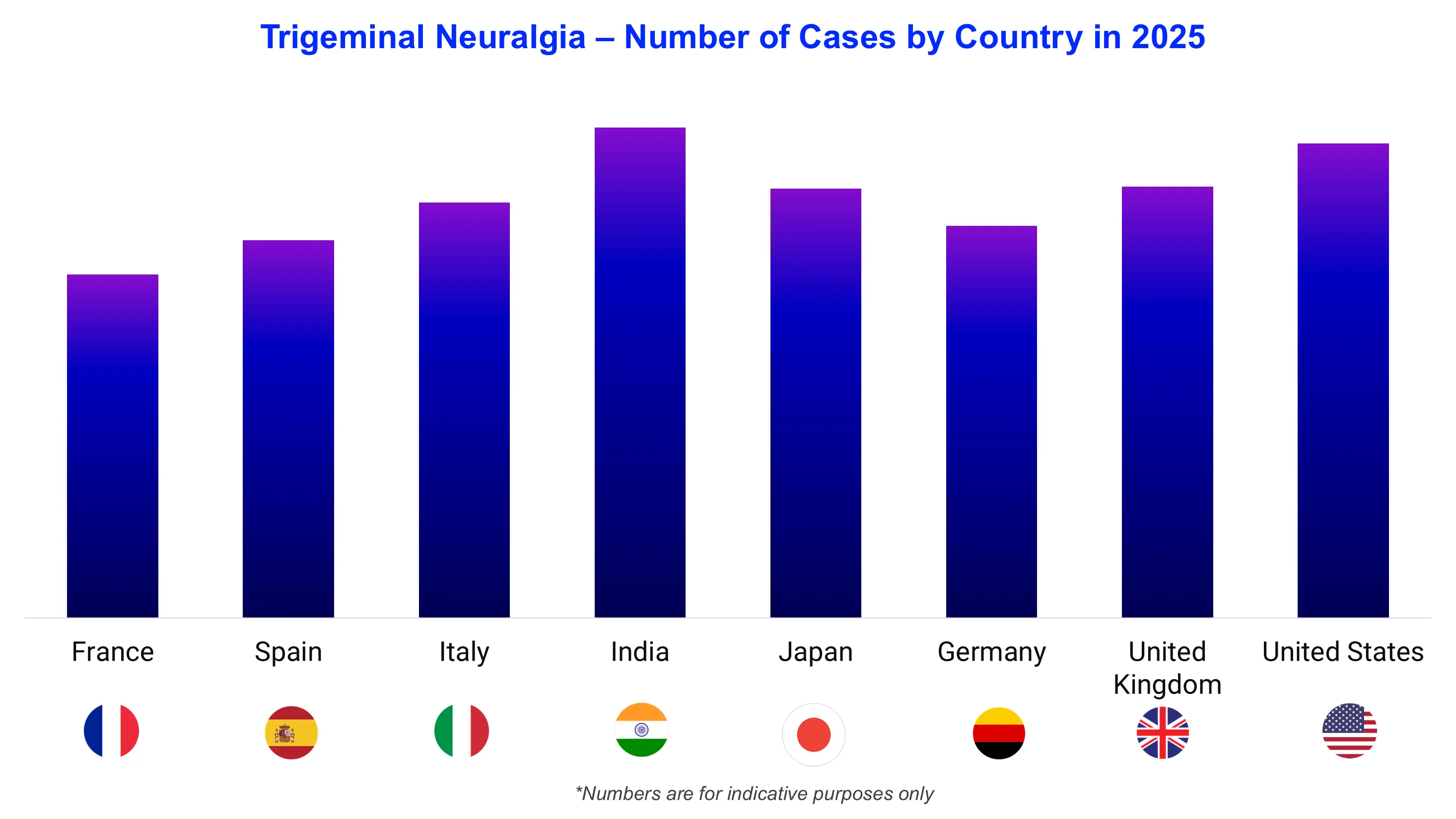
The trigeminal neuralgia epidemiology data and findings for the United States, Germany, Spain, Italy, France, the United Kingdom, Japan, and India are also provided in the epidemiology section.
|
Country |
Key Insights |
|
United States |
As per Johns Hopkins Medicine, the disease accounts for approximately 15,000 people annually in the United States. |
|
Germany |
Trigeminal neuralgia prevalence in Germany is influenced by population aging and the higher occurrence of the condition among older adults and women. Greater neurological assessment and imaging may also improve case identification, although population-based estimates remain limited. |
|
France |
In France, greater recognition of facial pain disorders and improved access to neurological consultations may support the identification of trigeminal neuralgia. The concentration of cases among older age groups also makes demographic aging an important factor influencing the disease burden. |
|
Italy |
Italy's growing elderly population may contribute to the trigeminal neuralgia patient pool, given the condition's higher occurrence in later life. Age-related vascular changes and the potential association with neurovascular compression are additional clinical factors relevant to disease occurrence. |
|
Spain |
According to the Spanish Society of Neurology (SEN), approximately 2,000 new cases of trigeminal neuralgia are diagnosed annually in Spain. This estimate was reported in October 2024 and represents annual new diagnoses rather than a population-based incidence rate. Spanish clinical literature reports an estimated incidence of approximately 4–13 cases per 100,000 people per year. |
|
United Kingdom |
According to Trigeminal Nerve Ltd., estimated an annual incidence of approximately 26 cases per 100,000 person. The disease is most common in people over the age of 50 and is slightly more common in women than men. |
|
Japan |
Japan's rapidly aging population represents a key demographic factor that may influence the number of people affected by trigeminal neuralgia. The greater representation of older adults, combined with improved neurological evaluation and access to diagnostic imaging, may increase case identification. |
|
India |
The annual incidence of trigeminal neuralgia in India is not established through a recent, nationally representative population-based study. Indian clinical literature commonly cites an estimated incidence of approximately 4–5 new cases per 100,000 people annually, although this figure is derived from broader epidemiological literature and should not be treated as an India-specific national estimate. |
A major unmet need is the delayed and inaccurate diagnosis of trigeminal neuralgia, as characteristic facial pain can be mistaken for dental disorders or other facial pain conditions. Greater awareness among primary-care physicians, dentists and neurologists, alongside timely MRI assessment to identify neurovascular compression and exclude secondary causes, could improve diagnostic accuracy and referral for appropriate treatment. The absence of consistent national registries and standardized case definitions also creates gaps in estimates of diagnosed prevalence, disease progression and treatment outcomes, particularly in India and other settings with limited population-based evidence.
Treatment for trigeminal neuralgia focuses on controlling neuropathic facial pain, reducing attack frequency and severity, and maintaining long-term quality of life. Carbamazepine and oxcarbazepine are the principal first-line pharmacological treatments, acting by stabilising neuronal voltage-gated sodium channels and reducing abnormal electrical activity. Alternative or adjunctive medications include lamotrigine, baclofen, gabapentin, pregabalin and phenytoin; botulinum toxin type A may also be considered in selected patients. Conventional analgesics, including paracetamol and opioids, are generally ineffective against the characteristic brief, shock-like attacks.


Upto 15% Off
USD
$2699 $2429
$4299 $3869
$5799 $4949
$6999 $5949


*While we strive to always give you current and accurate information, the numbers depicted on the website are indicative and may differ from the actual numbers in the main report. At Expert Market Research, we aim to bring you the latest insights and trends in the market. Using our analyses and forecasts, stakeholders can understand the market dynamics, navigate challenges, and capitalize on opportunities to make data-driven strategic decisions.*
Explore our key highlights of the report and gain a concise overview of key findings, trends, and actionable insights that will empower your strategic decisions.
|
Report Features |
Details |
|
Base Year |
2025 |
|
Historical Period |
2019-2025 |
|
Forecast Period |
2026-2035 |
|
Epidemiology Statistics Provided |
|
|
Segmentation Provided |
|
|
Geographies Covered |
|
Datasheet
One User
USD 2,699
USD 2,429
tax inclusive*
Single User License
One User
USD 4,299
USD 3,869
tax inclusive*
Five User License
Five User
USD 5,799
USD 4,949
tax inclusive*
Corporate License
Unlimited Users
USD 6,999
USD 5,949
tax inclusive*
*Please note that the prices mentioned below are starting prices for each bundle type. Kindly contact our team for further details.*
Flash Bundle
Small Business Bundle
Growth Bundle
Enterprise Bundle
*Please note that the prices mentioned below are starting prices for each bundle type. Kindly contact our team for further details.*
Flash Bundle
Number of Reports: 3
20%
tax inclusive*
Small Business Bundle
Number of Reports: 5
25%
tax inclusive*
Growth Bundle
Number of Reports: 8
30%
tax inclusive*
Enterprise Bundle
Number of Reports: 10
35%
tax inclusive*
How To Order

Select License Type
Choose the right license for your needs and access rights.

Click on ‘Buy Now’
Add the report to your cart with one click and proceed to register.

Select Mode of Payment
Choose a payment option for a secure checkout. You will be redirected accordingly.
Strategic Solutions for Informed Decision-Making
Gain insights to stay ahead and seize opportunities.

Get insights & trends for a competitive edge.

Track prices with detailed trend reports.

Analyse trade data for supply chain insights.

Leverage cost reports for smart savings

Enhance supply chain with partnerships.

Connect For More Information
Our expert team of analysts will offer full support and resolve any queries regarding the report, before and after the purchase.
Our expert team of analysts will offer full support and resolve any queries regarding the report, before and after the purchase.
We employ meticulous research methods, blending advanced analytics and expert insights to deliver accurate, actionable industry intelligence, staying ahead of competitors.
Our skilled analysts offer unparalleled competitive advantage with detailed insights on current and emerging markets, ensuring your strategic edge.
We offer an in-depth yet simplified presentation of industry insights and analysis to meet your specific requirements effectively.




