Innovations in EMS Vehicle Types
Emergency Medical Services play a crucial role in saving lives and improving healthcare outcomes. The equipment used by EMS crews is likewise evolving at a tumultuous rate, with new designs and technologies being added to assist in meeting the expanding requirement for faster, safer, and more effective emergency response. Internationally, EMS fleets are more and more including electric and hybrid ambulances, rural response vehicles, airborne units, patient transport vans, and disaster relief trucks. These technologies are allowing healthcare systems to enhance response times, reduce operational costs, and expand coverage in urban and rural settings.
Electric and Hybrid Ambulances
Electric and hybrid ambulances are emerging as an eco-friendly option for future EMS fleets. They reduce carbon emissions and fuel consumption while providing the performance level required for swift medical response. Urban areas with heavy traffic congestion are particularly in need of electric ambulances since they will be able to function well with lower emissions and less noise. Hybrid vehicles employ traditional engines in conjunction with electric motors to maximize range and offer energy savings. Industry leaders among EMS companies are adopting these kinds of vehicles for sustainability programs and compliance with regional emissions guidelines, and they will become a necessary part of the future EMS landscape.
Medical Response Vehicles for Rural Areas
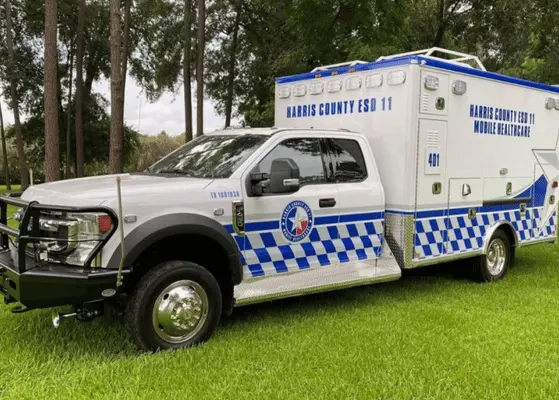
Remote and rural locations are typically besieged by problems of access to prompt medical care. Medical response vehicles specially designed for the purpose in these locations ensure that the EMS crews are able to respond swiftly to patients despite poor terrain or large distances. These vehicles are equipped with all the medical equipment and communications necessary for effective treatment in the field. Lightweight, durable, and flexible configurations allow them to travel on dirt roads and challenging terrain, providing lifesaving medical services where traditional ambulances cannot safely reach.
Airborne EMS Vehicles and Helicopter Ambulances
Airborne EMS vehicles, including helicopter ambulances, are priceless for immediate medical care in rural areas. Equipped with advanced medical equipment, these planes allow EMS practitioners to provide lifesaving treatment during transportation. Helicopters are used frequently in mountainous or congested accident zones, and disaster relief operations where ground transport is hindered. The addition of GPS navigation, communication equipment, and lightweight material creates more efficiency through increased response speed and safer patient transport.
Patient Transport Vans for Non-Critical Care
Not every EMS call merits high-level treatment; patient transport vans work well for transporting patients who do not need high-performance care. They are designed to transport safely in ventilated seats, with important monitoring devices, and provide safe protection to patients being transported from one hospital, to care facility, or to home.
These vans also help to alleviate EMS trucks for much-needed hospital transfers so that necessary vehicles are free to deal with emergency calls. By improving fleet use, EMS delivery models can continue to provide needed services while being cost effective and efficient, and meeting the needs of emergency and non-emergency transport of patients.
Specialty EMS Vehicles for Disaster Response
Natural disasters, mass casualty incidents, and public health emergencies need mobile units to provide full medical care on-site. Disaster response specialty EMS vehicles are not simply EMS vehicles, they are mobile hospitals or triage vehicles where patient care and appropriate triage principles can take place. These vehicles are outfitted with advanced life support devices, equipment to support more critical interventions, and communication technologies to assist in coordinating an emergency response.
Specialty EMS vehicles provide rapid response, deploy to areas needing temporary medical facilities especially in times where telecommunications agreements may have failed. These vehicles are modular, in the sense that EMS teams modify vehicles for emergency circumstances, from a flood through to mass public event.
To learn more about EMS vehicle market trends, regional trends, and future growth opportunities, read our EMS Vehicle Market
Future Trends and Considerations
EMS vehicle types' development is closely related to technology, efficiency, and sustainability goals. With the introduction of electric and hybrid vehicles, telehealth integration, rural and disaster response specialized units, EMS operators are in a good position to meet the challenges of modern healthcare. Governments and private entities make continued investments in fleet upgrading, training, and enhanced features on units, demonstrating the high level of priority of innovation in patient care and operational efficiency.
Technical innovations in EMS vehicle types are transforming emergency medical response globally. With electric ambulances and rural response units to airborne units, patient transport vans, and disaster response units, EMS providers today have a diverse set of vehicles to enhance healthcare delivery. By adopting advanced vehicle designs and technologies, EMS fleets improve response times and patient care while contributing to sustainability and operational efficiency. With increasing healthcare requirements, investment in sophisticated EMS vehicles will remain a priority area for governments, hospitals, and emergency service providers worldwide.











Share