

Consumer Insights
Uncover trends and behaviors shaping consumer choices today
Procurement Insights
Optimize your sourcing strategy with key market data
Industry Stats
Stay ahead with the latest trends and market analysis.
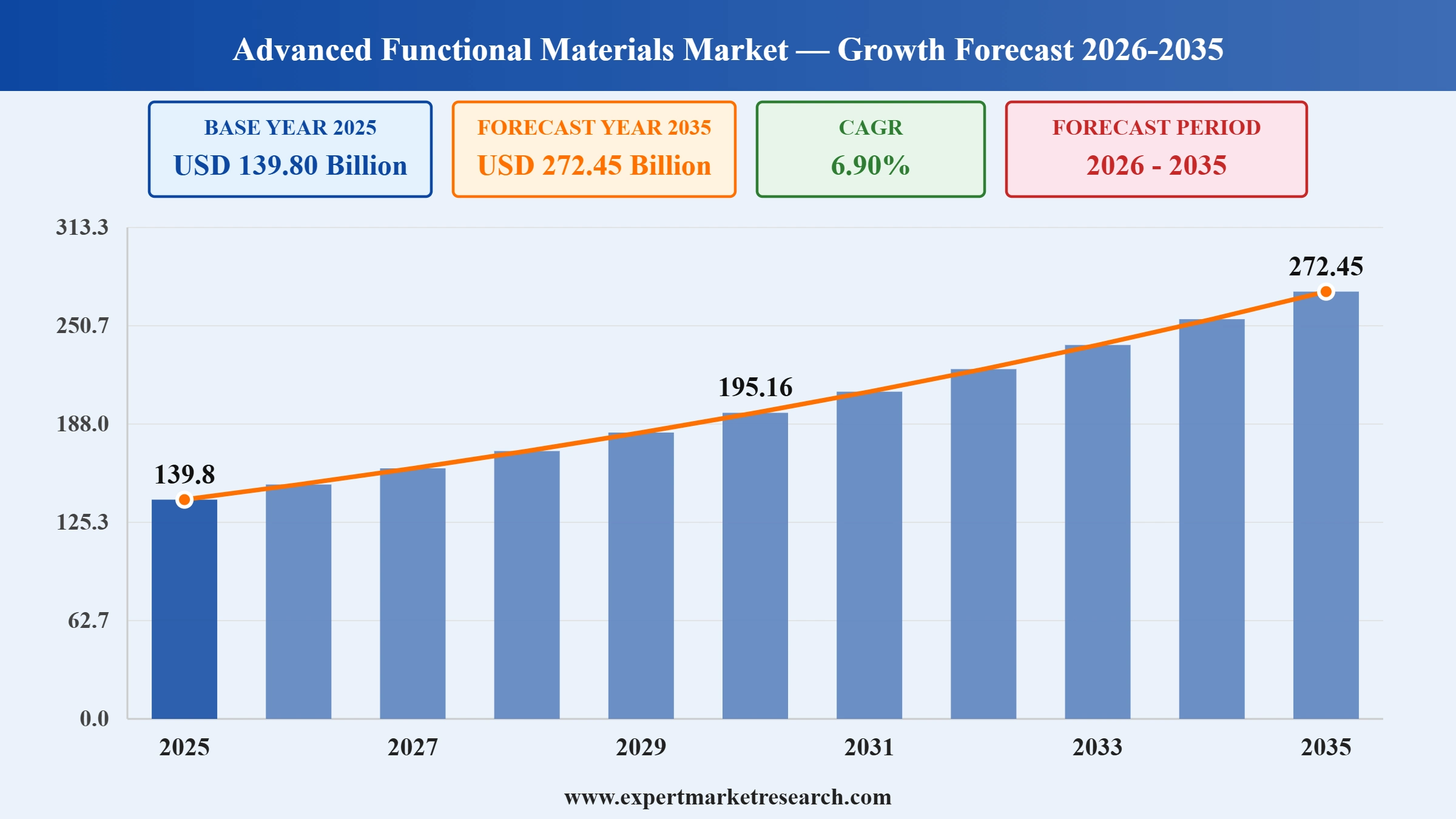
The global advanced functional materials market was valued at USD 139.80 Billion in 2025. The market is expected to grow at a CAGR of 6.90% during the forecast period of 2026-2035 to reach a value of USD 272.45 Billion by 2035. Growing demand for lightweight, high-performance materials across electronics, automotive, aerospace, energy, and healthcare is the main factor that is boosting growth in the market. Material developers are focusing on improved conductivity, strength, thermal resistance, and durability for next-generation applications. Expansion of electric mobility, renewable energy, and advanced electronics is further creating demand for specialized functional materials.
The advanced functional materials market observes an increasing usage in renewable energy technologies and automated industry processes. These include functional coating and composite materials used in wind turbines, photovoltaic panels, and industrial machines. Additionally, companies are directing their efforts towards the development of functional materials that can be easily recycled. They are also focusing on developing these materials out of biological components in order to meet sustainability targets set by their industrial clients. The growing number of data centers and AI-based computing networks is another factor contributing to rising functional materials sales.
Innovation in the advanced functional materials market is driven by significant technological progress achieved in the engineering of materials for energy storage devices, electronics, aerospace applications, and future manufacturing techniques. Notable examples include a significant push forward by Samsung Advanced Institute of Technology and Samsung Electronics, whose R&D efforts are being devoted to oxide solid-state batteries with higher energy densities and better performance than traditional lithium-ion counterparts. Innovation in such technologies is stimulated by increased interest in multifunctional materials that provide electrical conductivity, mechanical toughness, and thermal stability. These advances are backed up by increasing investment in innovative batteries as electric vehicle sales exceed 20 million units globally in 2025, resulting in greater demand for functional materials for batteries, semiconductors, and light-weight parts.
Further, growth in the advanced functional materials market is driven not only by continuous advancements but also by fast-paced development of semiconductor manufacturing, renewable energy facilities, and smart electronics. Major suppliers of functional materials are being involved in research and development activities to engineer nanostructured ceramics, conductive polymers, advanced composites, and special coatings that increase effectiveness in applications. For example, in June 2026, researchers at Lingnan University developed AI-guided wrinkled materials, enabling future anti-counterfeiting systems, artificial organs, and stretchable batteries.
Read more about this report - REQUEST FREE SAMPLE COPY IN PDF
TACC Limited and the National University of Singapore’s Institute for Functional Intelligent Materials signed an MoU to accelerate research in advanced energy materials, including battery-grade anode materials and graphene-based innovations. Material developers can therefore partner with universities to speed up the commercialization of advanced battery and graphene technologies, boosting the advanced functional materials market growth.
Researchers from the Chinese Academy of Sciences reported advancements in functional material engineering, enabling improved electronic, energy-storage, and intelligent material applications. The development highlights growing momentum toward multifunctional materials that combine enhanced performance, durability, and adaptability for next-generation industrial technologies. Firms can invest in multifunctional materials serving electronics, energy, and smart manufacturing markets simultaneously.
Ricoh announced progress in functional material technologies, leveraging its expertise in advanced printing and material engineering. The innovation supports emerging applications requiring precise material deposition, flexible electronics, and next-generation manufacturing processes, expanding the role of functional materials across industrial sectors. Companies in the advanced functional materials market can therefore develop printable functional materials for flexible electronics, sensors, and advanced industrial manufacturing.
The Royal Society of Chemistry launched a themed collection focused on emerging trends in advanced functional porous materials. The initiative emphasizes growing research interest in materials designed for energy storage, catalysis, environmental remediation, gas separation, and sustainable industrial applications.
The move towards solid-state batteries is presenting significant opportunities in the advanced functional materials market. Firms are developing advanced solid electrolyte technology, ceramics separators, and advanced cathodes which are safer and energy-dense compared to conventional batteries. Governments are promoting commercialization via strategic funding initiatives as well. The United States Department of Energy is continuously funding battery programs which focus on next-generation batteries using domestic raw materials and functional materials. Similarly, firms such as Toyota, Samsung, and other battery innovators are implementing pilot projects in the development of solid-state batteries. This is creating a growing demand for functional materials, such as ceramics, advanced conductors, and nanomaterials that are capable of operating at high temperatures and have superior electrochemical properties. In June 2026, Solidion Technology introduced its patented Gen-ECB battery platform, engineered for Low Earth Orbit AI data centers, satellites, lunar infrastructure, and space missions.
Advanced functional materials are increasingly playing an important role as semiconductor makers develop chips which are smaller and more energy efficient. This includes materials like dielectrics, specialty polymers, photoresist materials, and thermal interface materials. Governments are supporting semiconductor production activities through policies and funding, reshaping the advanced functional materials market dynamics. Firms such as TSMC, Intel, and Samsung are making heavy investments in packaging technologies that require specialized functional materials for heat management and electrical properties. On the other hand, in May 2026, Sumitomo Chemical announced the launch of its new high-purity alumina product line, the ELA series of low alpha radiation, and high-purity fine spherical alumina products.
The global movement to deploy clean energy technologies is creating new opportunities in the advanced functional materials market. High-quality coatings, composites, and conductive materials are being used in renewable energy equipment as a means of improving efficiency and reliability. European governments, those from the Asia-Pacific region, and the United States continue providing support for renewable energy projects via incentives and infrastructure development programs. Manufacturing companies respond to these developments by producing coatings, composites, and conductive materials that can withstand harsh conditions of renewable energy equipment use. For example, in June 2026, Sungrow introduced its Pulson smart solar module featuring AI diagnostics, self-cleaning, self-cooling, rapid shutdown, and intelligent lifecycle management capabilities.
Advances in artificial intelligence have a profound impact on the development of advanced functional materials. Machine learning algorithms are used in many cases as a means of selecting chemicals that possess required characteristics from an electrical, thermal, and mechanical perspective. This technique speeds up the process of material discovery and significantly decreases costs. Innovation projects based on AI are promoted both by governments and research organizations with the goal of enhancing competitiveness in advanced manufacturing. Companies like IBM, Microsoft, and other specialized materials manufacturing organizations are collaborating with research institutes. Aligning with this trend in the advanced functional materials market, May 2026, Northwestern researchers demonstrated mega libraries that rapidly generate millions of material data points, accelerating AI-driven discovery and optimization.
Aerospace manufacturers are emphasizing fuel savings and reductions in emissions through their development of new technologies and materials. Aerospace firms are increasingly making use of lightweight composite materials, high-temperature ceramic materials, and multifunctional materials that can help reduce the weight of aircraft while retaining strength. Aerospace development initiatives funded by government organizations, along with military aircraft development projects aimed at updating military aircraft technology, are fueling the development in the advanced functional materials market. NASA and ESA are also providing funding for advanced materials to be used in future aircraft and space missions. In May 2026, Hexcel and Wichita State University's NIAR began construction of a new Applications Center focused on composite materials, automated processing, and aerospace manufacturing innovation.
The Expert Market Research’s report titled “Global Advanced Functional Materials Market Report and Forecast 2026-2035” offers a detailed analysis of the market based on the following segments:
Market Breakup by Type
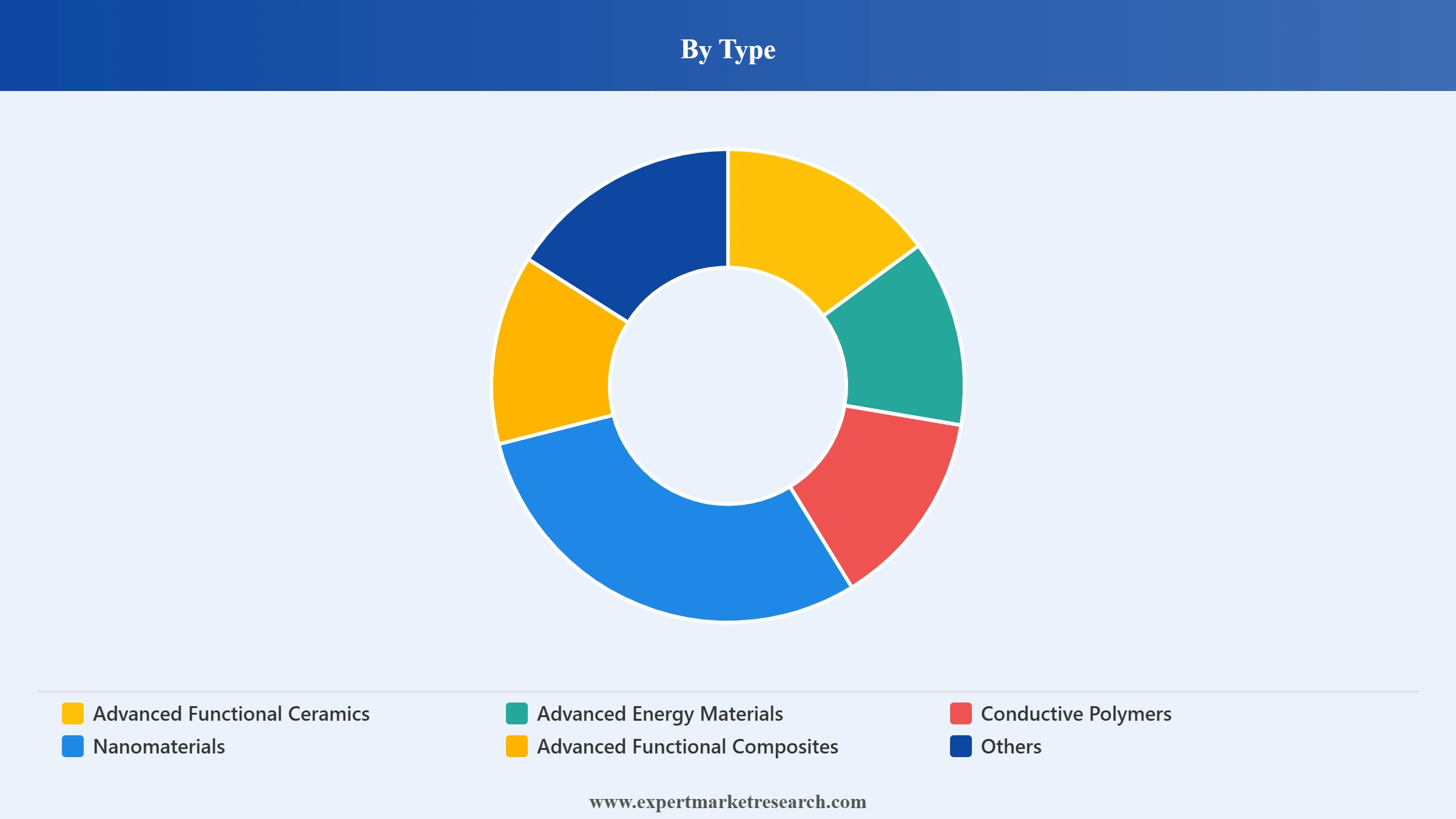
Key Insight: The advanced functional materials market comprises different types of materials for meeting unique demands within industrial applications. Advanced functional ceramics occupy the leading position in the market due to their better thermal and electrical behavior. Advanced energy materials receive impetus owing to the growth of electrification and advancements in battery technology. The demand for conductive polymers is also increasing because of the rise of flexible electronics and devices that need a lightweight solution for conducting electricity. Nanomaterials facilitate performance improvement by making surfaces more efficient. Advanced functional composites are gaining significance for applications demanding weight reduction and increased structural strength.
Market Breakup by End Use
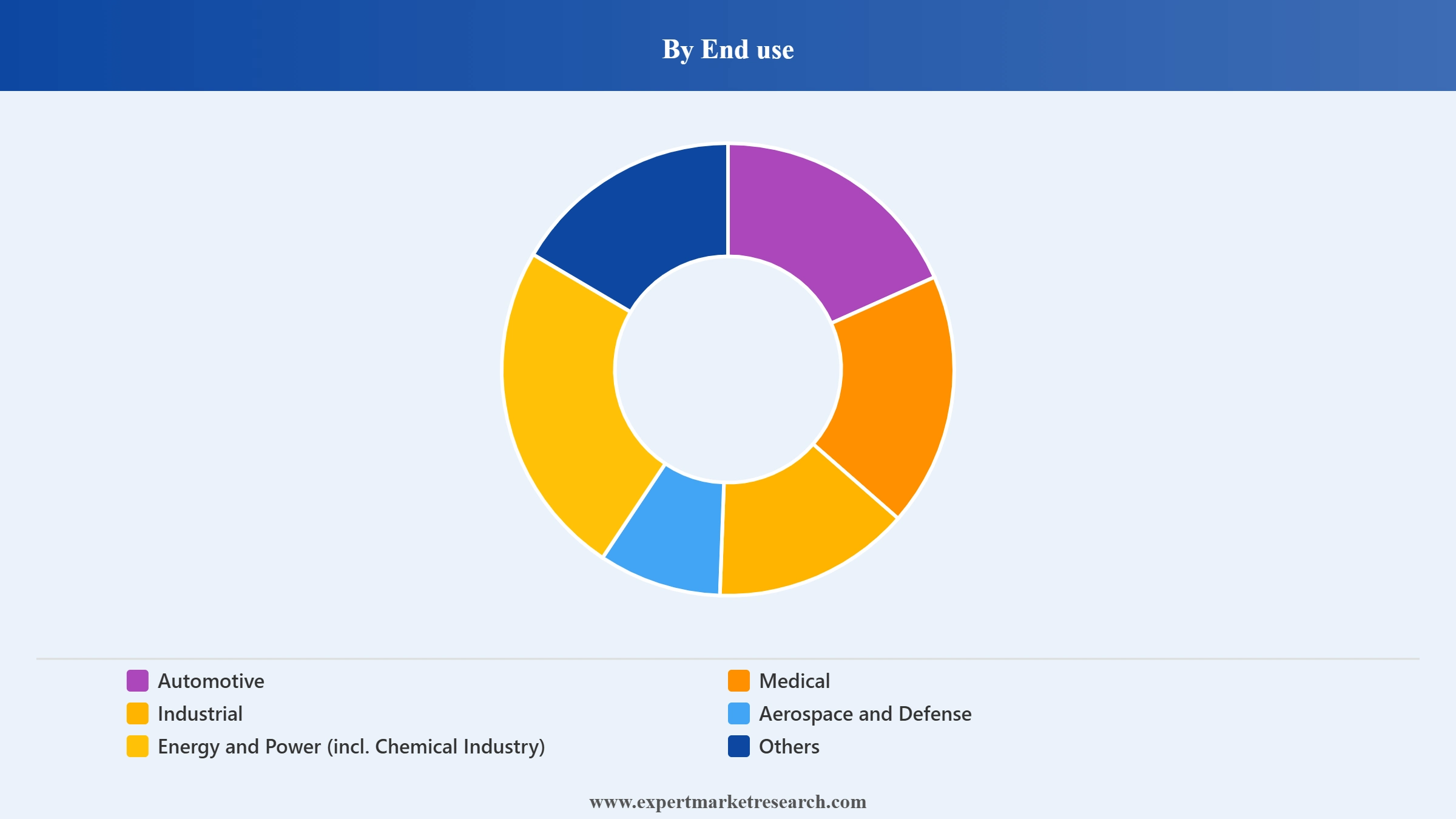
Key Insight: Usage demands differ widely depending on their performance criteria and the complexities of their use. Industrial applications continue to lead the advanced functional materials market growth as companies need materials that can increase efficiency and longevity of operation. Material adoption in the automotive industry is driven by the need for lightweight vehicles, vehicle electrification, and improved battery efficiency. The medical industry uses specialized materials because of their biocompatibility and need for precision-performance. In the aerospace and defense sector, there is a need for lightweight and high-temperature resistant materials. Energy and power applications are gaining traction due to more efficient use of materials. In June 2026, Japanese companies initiated a research converting semiconductor waste plastics into automotive-grade recycled materials, advancing circular manufacturing.
Market breakup by region
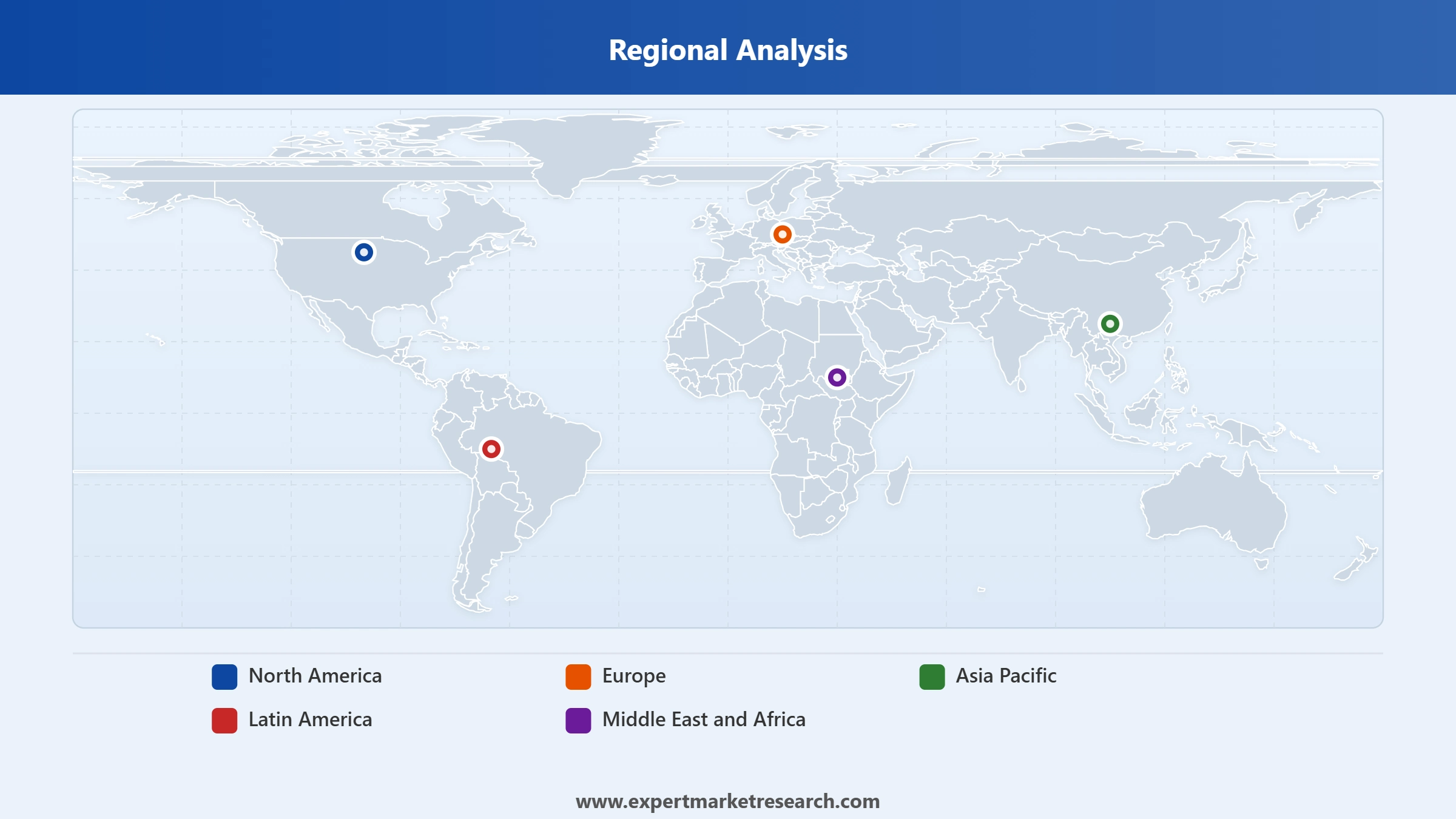
Key Insight: Demand trends in the advanced functional materials market depend on regional priorities regarding industry and innovations. Asia Pacific retains its dominance due to its superior manufacturing capacity, production of electronic products and batteries. In North America, the demand for advanced materials is boosted by development in semiconductors, aerospace, and energy sectors. In Europe, there is a focus on sustainable materials, innovative technology, and industry upgrades. Advanced materials are becoming increasingly popular in Latin America because of their application in the energy, mining, and industrial sectors. In the Middle East and Africa, the market is gaining momentum due to rising investments in industrial diversification and renewable energy projects.
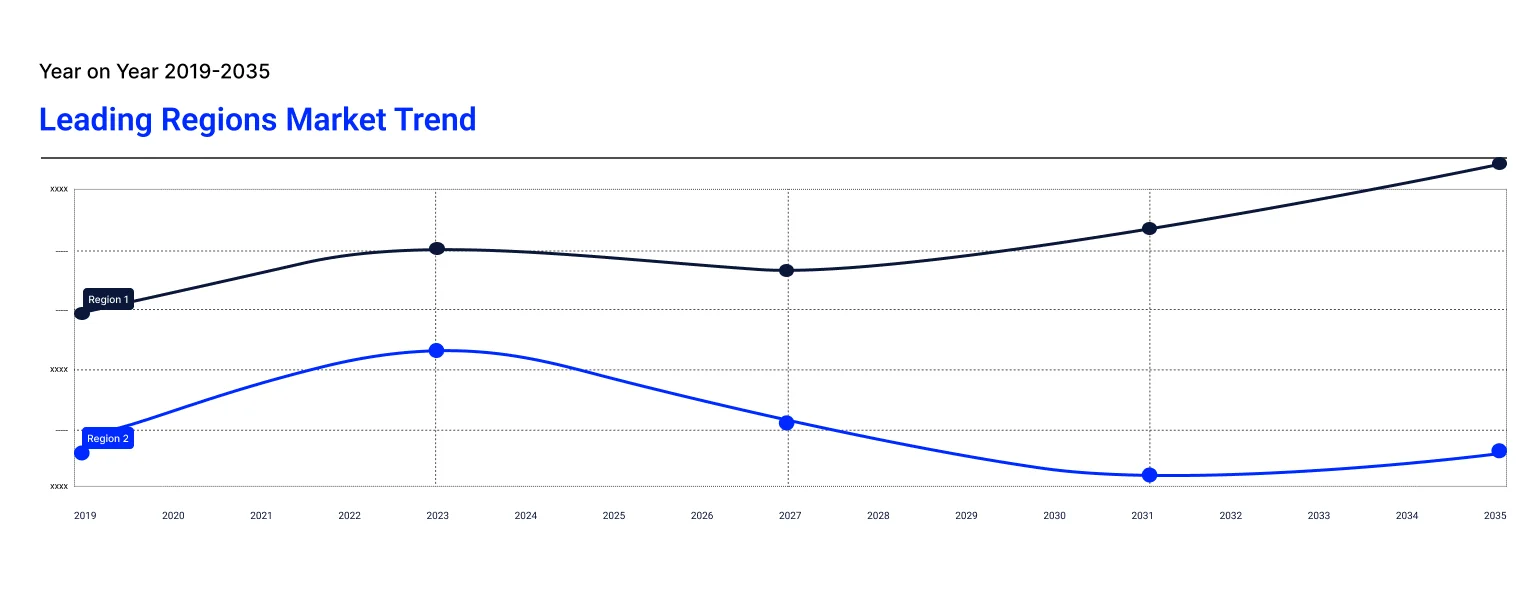
Read more about this report - REQUEST FREE SAMPLE COPY IN PDF
Advanced functional ceramics register notable demand growth due to superior thermal, electrical, and mechanical performance
Advanced functional ceramics hold the largest share of the advanced functional materials market due to their widespread application in semiconductors, electronic substrates, biomedical equipment, aerospace components, and energy systems. The capability of these materials to survive under extremely harsh environmental conditions is making them indispensable in high-value-added industrial applications. Efforts are being made to develop ceramics with high dielectric constant and thermal conductivity that can be applied to miniaturize electronic circuits and enhance battery performance. With continuous investments in electric vehicles, semiconductor manufacturing, and industrial automation technologies, the demand for advanced ceramics is expected to remain strong in the coming years. In June 2026, THEMIS Powder2Power began commissioning particle-based CSP technology, advancing thermal storage and industrial decarbonization solutions.
Read more about this report - REQUEST FREE SAMPLE COPY IN PDF
Advanced energy materials observe rapid growth in the advanced functional materials market as manufacturers are making efforts to electrify processes, develop renewable energy storage options, and advanced battery technologies. Solid electrolyte materials, cathodes, advanced separators, and conductive compounds that can help improve the performance of batteries are included in this category. Companies are continuously developing ceramic materials that have the potential to perform in solid-state batteries and large-scale energy storage systems.
By end use, the industrial sector captures the largest share of the market due to broad manufacturing integration
The industrial segment is leading the overall advanced functional materials market growth since high-performance materials are becoming widely used in automated equipment, process machinery, industrial electronics, sensors, and specific types of machines. Manufacturers are looking for durable, heat-resistant, conductive, and more efficient materials. Advanced ceramics, composites, and nanomaterials can boost the performance of the equipment by improving its functionality and decreasing the need for maintenance operations. With the current development of smart manufacturing and the rise of Industry 4.0 factories, industrial operators are showing increasing interest in advanced materials for precision manufacturing. Capitalizing on this trend, in April 2026, Fujifilm introduced Prescale for High Temperature 100/200, enabling accurate pressure measurement in heat-sealing, packaging, and manufacturing processes.
Read more about this report - REQUEST FREE SAMPLE COPY IN PDF
The energy and power segment can be considered one of the most promising end-use applications in terms of growth rates. The growing demand for batteries, solar energy systems, fuel cells, power grids, and other energy generation, storage, and conversion technologies is driving strong demand in the advanced functional materials market from the energy sector. Companies producing functional materials are now working on the development of special products suitable for use in energy-related areas, including renewable energy installations.
Asia Pacific clocks in the largest share of the global market revenue due to expanding manufacturing concentration
The Asia Pacific region accounts for the dominant share of the advanced functional materials market revenue because of its huge electronic assembly base, battery manufacturing base, advanced materials for semiconductors, and overall industrial development. Nations such as China, Japan, South Korea, and India are investing heavily in their local capabilities for R&D of advanced materials and manufacturing. Suppliers in the region benefit from well-established supply chains and rising demand from automotive, electronics, and renewable energy industries. Investments in advanced material manufacturing in Asia Pacific are being fueled by its high-technology manufacturing base and innovation programs. For example, in November 2023, JNCASR researchers studied quantum materials, revealing pathways to enhance thermoelectric performance and functional properties
Read more about this report - REQUEST FREE SAMPLE COPY IN PDF
North America is considered to be the most rapidly growing regional advanced functional materials market because of its ongoing investment in semiconductor manufacturing projects, battery supply chain infrastructure, and aerospace capabilities. North America's focus on technology superiority and resilient supply chains is prompting heavy investments in advanced materials development. Investments in clean energy technologies, domestic manufacturing, and innovation commercialization are adding to the momentum in the market. Innovators are collaborating with end users for developing tailor-made materials that meet changing industry needs.
There is currently an increased inclination toward innovation in the industry as advanced functional materials companies compete in terms of material performance, specializations, and research collaborations. Advanced batteries, engineered ceramics, nanostructures, and multi-functional composites that can be applied to cater to the surging demands associated with semiconductors, aerospace, medicine, and renewables are currently areas of concentration among businesses. The competition is also being driven by the development of artificial intelligence-driven platforms for discovering new materials, which helps in reducing the time it takes to develop new products and increase success rates in the market.
Leading advanced functional materials market players are currently leveraging opportunities with localized production facilities. There are potential opportunities for development in technologies like solid-state batteries, advanced semiconductor packaging techniques, light-weighted aerospace designs, and thermal management solutions for artificial intelligence data centers. Businesses that can integrate sustainability considerations into their advanced material innovations are projected to be able to capitalize on favorable long-term supply agreements.
Morgan Advanced Materials plc is an organization that was established in 1856 with headquarters based in United Kingdom. It manufactures advanced ceramic products, carbon material, and thermal systems for use in various industries such as manufacturing, medicine, aerospace, and energy. Morgan Advanced Materials plc mainly specializes in high-temperature and performance engineering of advanced ceramic technologies.
Established in 1959 with headquarters located in Kyoto, Japan, KYOCERA Corporation manufactures advanced ceramics, electronic packages, materials, and industrial components for use in electronics, automobiles, telecommunications, and medicine industries. This company uses materials of highly engineered components to facilitate customer satisfaction due to higher reliability and performance in technology-driven applications.
Founded in 1946 and operating from Stamford, Connecticut, United States, Hexcel Corporation is an American company specializing in state-of-the-art composite materials that can be applied in aerospace, defense, and renewable energy industries. The company produces carbon fiber reinforcement and resins that enable its clients to produce lighter components without sacrificing strength.
Founded in 1989 and operating from Romeoville, Illinois, United States, Nanophase Technologies Corporation is an American company specializing in the production of engineered nanoparticles and advanced particles. The company produces a range of materials designed to improve the durability, clarity, conductivity, and surface performance of industrial and consumer products.
Other key players in the market include Kuraray Co., Ltd., Henkel AG & Co. KGaA, Murata Manufacturing Co., Ltd., among others.
*Please note that this is only a partial list; the complete list of key players is available in the full report. Additionally, the list of key players can be customized to better suit your needs.*
Unlock the latest insights with our advanced functional materials market trends 2026 report. Discover regional growth patterns, consumer preferences, and key industry players. Stay ahead of competition with trusted data and expert analysis. Download your free sample report today and drive informed decisions in the market.


Upto 15% Off
USD
$2499 $2249
$3999 $3599
$4999 $4249
$5999 $5099


*While we strive to always give you current and accurate information, the numbers depicted on the website are indicative and may differ from the actual numbers in the main report. At Expert Market Research, we aim to bring you the latest insights and trends in the market. Using our analyses and forecasts, stakeholders can understand the market dynamics, navigate challenges, and capitalize on opportunities to make data-driven strategic decisions.*
The global advanced functional materials market is projected to grow at a CAGR of 6.90% between 2026 and 2035.
The major drivers of the industry, such as technological innovation, production of lightweight, portable and versatile substrate devices, and the growing product demand in the medical sector, are expected to aid the industry growth.
The key market trend guiding the growth of the market include the growing demand for miniaturisation and microelectronics.
The major regional markets are North America, Europe, the Asia Pacific, Latin America and the Middle East and Africa, with the Asia Pacific accounting for the largest market share.
Nanomaterials is the dominating type of advanced functional materials in the market.
The medical sector is the leading end use sector of the product in the market.
The major players in the industry are Morgan Advanced Materials plc, KYOCERA Corporation, Hexcel Corporation, Nanophase Technologies Corporation, Kurray Co. Ltd., Henkel AG & Co. KGaA, and Murata Manufacturing Co., Ltd, among others.
In 2025, the global advanced functional materials market reached an approximate value of USD 139.80 Billion.
The market is expected to attain approximately USD 272.45 Billion by 2035.
Explore our key highlights of the report and gain a concise overview of key findings, trends, and actionable insights that will empower your strategic decisions.
| REPORT FEATURES | DETAILS |
| Base Year | 2025 |
| Historical Period | 2019-2025 |
| Forecast Period | 2026-2035 |
| Scope of the Report |
Historical and Forecast Trends, Industry Drivers and Constraints, Historical and Forecast Market Analysis by Segment:
|
| Breakup by Type |
|
| Breakup by End use |
|
| Breakup by Region |
|
| Market Dynamics |
|
| Competitive Landscape |
|
| Companies Covered |
|
| Report Price and Purchase Option | Explore our purchase options that are best suited to your resources and industry needs. |
| Delivery Format | Delivered as an attached PDF and Excel through email, with an option of receiving an editable PPT, according to the purchase option. |
Datasheet
One User
USD 2,499
USD 2,249
tax inclusive*
Single User License
One User
USD 3,999
USD 3,599
tax inclusive*
Five User License
Five User
USD 4,999
USD 4,249
tax inclusive*
Corporate License
Unlimited Users
USD 5,999
USD 5,099
tax inclusive*
*Please note that the prices mentioned below are starting prices for each bundle type. Kindly contact our team for further details.*
Flash Bundle
Small Business Bundle
Growth Bundle
Enterprise Bundle
*Please note that the prices mentioned below are starting prices for each bundle type. Kindly contact our team for further details.*
Flash Bundle
Number of Reports: 3
20%
tax inclusive*
Small Business Bundle
Number of Reports: 5
25%
tax inclusive*
Growth Bundle
Number of Reports: 8
30%
tax inclusive*
Enterprise Bundle
Number of Reports: 10
35%
tax inclusive*
How To Order

Select License Type
Choose the right license for your needs and access rights.

Click on ‘Buy Now’
Add the report to your cart with one click and proceed to register.

Select Mode of Payment
Choose a payment option for a secure checkout. You will be redirected accordingly.
Strategic Solutions for Informed Decision-Making
Gain insights to stay ahead and seize opportunities.

Get insights & trends for a competitive edge.

Track prices with detailed trend reports.

Analyse trade data for supply chain insights.

Leverage cost reports for smart savings

Enhance supply chain with partnerships.

Connect For More Information
Our expert team of analysts will offer full support and resolve any queries regarding the report, before and after the purchase.
Our expert team of analysts will offer full support and resolve any queries regarding the report, before and after the purchase.
We employ meticulous research methods, blending advanced analytics and expert insights to deliver accurate, actionable industry intelligence, staying ahead of competitors.
Our skilled analysts offer unparalleled competitive advantage with detailed insights on current and emerging markets, ensuring your strategic edge.
We offer an in-depth yet simplified presentation of industry insights and analysis to meet your specific requirements effectively.




