

Consumer Insights
Uncover trends and behaviors shaping consumer choices today
Procurement Insights
Optimize your sourcing strategy with key market data
Industry Stats
Stay ahead with the latest trends and market analysis.
The arc welding market was valued at USD 6000.00 Million in 2025. The market is expected to grow at a CAGR of 4.80% during the forecast period of 2026-2035 to reach a value of USD 9588.80 Million by 2035. Sustained infrastructure investment, rising automotive and shipbuilding production, and accelerating adoption of robotic and automated welding systems are collectively driving demand for arc welding equipment and consumables worldwide.
The current arc welding market dynamics reflect an industry balancing steady demand from traditional heavy fabrication sectors against accelerating investment in automation, as established equipment manufacturers pursue targeted acquisitions and strategic partnerships to broaden their technology portfolios beyond core welding hardware. In October 2025, Panasonic Factory Solutions deployed its Tawers G4 Welding Robot System at Stadler Anlagenbau, a manufacturer of recycling and waste sorting plant equipment, cutting cycle times by two-thirds through advanced offline simulation software.
The overall arc welding industry through 2025 continues to be shaped by persistent skilled welder shortages across major manufacturing economies, pushing fabricators toward semi-automatic and fully automatic welding systems capable of maintaining consistent weld quality with less reliance on manual operator expertise. Equipment manufacturers are simultaneously expanding battery powered and portable welding capability to serve customers operating in power-limited or remote jobsite environments where grid electricity access remains inconsistent. In February 2026, Miller Electric Mfg. LLC launched the Venture 150 T, a battery powered TIG-first welder engineered for high quality, aesthetically critical welds in power-limited environments including food-grade piping, shipbuilding, and mechanical contracting applications.
Compound Annual Growth Rate
4.8%
Value in USD Million
2026-2035
Read more about this report - REQUEST FREE SAMPLE COPY IN PDF
|
Arc Welding Market Report Summary |
Description |
Value |
|
Base Year |
USD Million |
2025 |
|
Historical Period |
USD Million |
2019-2025 |
|
Forecast Period |
USD Million |
2026-2035 |
|
Market Size 2025 |
USD Million |
6000.00 |
|
Market Size 2035 |
USD Million |
9588.80 |
|
CAGR 2019-2025 |
Percentage |
XX% |
|
CAGR 2026-2035 |
Percentage |
4.80% |
|
CAGR 2026-2035 - Market by Region |
Asia Pacific |
5.6% |
|
CAGR 2026-2035 - Market by Process Type |
Flux Cored Arc Welding |
5.4% |
|
CAGR 2026-2035 - Market by Automation |
Automatic |
5.9% |
|
2025 Market Share by Region |
Asia Pacific |
34.5% |
The arc welding market is being reshaped by major acquisitions expanding manufacturer capability beyond core welding equipment, new product launches targeting jobsite power and aluminum fabrication, and expanding regional service infrastructure supporting closer customer relationships.
Voestalpine Böhler Welding hosted its Automation Day 2026 at its Hamm training centre in June 2026, welcoming around 50 industry professionals alongside technology partners Yaskawa, Abagy, and BIS Braun for a day dedicated to robotics and automated welding. This kind of multi-partner showcase gives fabricators a direct, hands-on view of automation capability that a product brochure alone rarely delivers.
ESAB Corporation completed its acquisition of Eddyfi Technologies, a global leader in advanced inspection and monitoring technologies, in June 2026, extending ESAB's end to end workflow solution beyond traditional welding equipment. The deal signals a broader shift in the market, where inspection and monitoring capability is increasingly treated as a core expectation rather than a separate purchase from a specialist vendor.
Lincoln Electric introduced its AlumaFab aluminum MIG welding system in May 2026, developed through a strategic partnership with MK Products to simplify high-volume aluminum welding by combining advanced wire feeding with proven power source technology. Partnering with a specialist wire feeding company let Lincoln enter a demanding material segment faster than building the underlying feed technology internally would have allowed.
Fronius UK opened a new Technical Competence Centre at the Advanced Manufacturing Park in Rotherham in March 2026, offering customers bespoke welding trials, demonstrations, and hands-on technical support closer to their operations. Positioning technical support this close to end users reflects a wider industry recognition that proximity, not just product quality, increasingly shapes which supplier a fabricator chooses.
Arc welding equipment manufacturers are increasingly expanding into adjacent manufacturing technologies rather than remaining confined to traditional welding equipment, reflecting recognition that their underlying robotics and process control expertise transfers directly to related industrial applications and adjacent production processes. In July 2026, DAIHEN Corporation launched its ArcBuilder 3D wire arc additive manufacturing printer, entering the metal 3D printing business by applying its welding and robotics expertise to build large scale parts with more than 98 percent less spatter than conventional welding methods.
Industrial gas suppliers are increasingly investing in workforce development initiatives targeting the next generation of welders, reflecting recognition that persistent skilled welder shortages threaten long term demand for their shielding gas and welding consumables business across the industry. In June 2025, Airgas, an Air Liquide company, sponsored the SkillsUSA National Leadership and Skills Conference for the third consecutive year, supplying industrial gases for welding competitions serving nearly 440,000 career and technical education students nationwide across the country.
Robotics companies are increasingly launching welding compatible cobot carts designed to work across multiple equipment brands rather than locking customers into a single welding power source manufacturer or proprietary automation ecosystem. In September 2025, Kawasaki Robotics showcased its CL Series Cobot Weld Carts at FABTECH 2025, offering collision detection, easy-teach programming, and compatibility with major welding supply brands, with packages starting at 75,000 dollars for shops of all sizes and budgets.
Shipbuilders are increasingly partnering with robotics developers to explore humanoid welding systems for confined and hazardous shipyard environments rather than relying solely on fixed robotic welding cells across their production facilities. In March 2026, HD Hyundai partnered with robotics company Persona to develop humanoid robots for shipyard welding applications, targeting a prototype by late 2026 ahead of field testing and eventual commercial deployment.
Machine vision providers are increasingly advancing real time weld monitoring capability, reflecting rising demand for continuous digital quality assurance as manufacturers shift away from manual, post-weld visual inspection alone. In June 2025, Xiris Automation released its NIR Weld Camera System, featuring more than 140 decibels of high dynamic range imaging synchronized with near infrared illumination to deliver clear views of the weld arc and melt pool for open arc welding processes.
The Expert Market Research's report titled “Arc Welding Market Report and Forecast 2026-2035” offers a detailed analysis of the market based on the following segments:
Market Breakup by Process Type
Key Insight: Gas Metal Arc Welding accounts for the largest share of the arc welding market by process type, supported by its speed, versatility, and compatibility with automated and robotic welding systems widely used across automotive and heavy fabrication industries. In June 2025, EWM GmbH, a German heavy industrial welding equipment specialist generating approximately 120 million euros in annual revenue, agreed to be acquired for 275 million euros, reflecting the value automation-ready gas metal arc welding technology commands. Flux Cored Arc Welding is the fastest-growing process type as improved electrode formulations expand its use in heavy fabrication. Shielded Metal Arc Welding remains widely used for field and maintenance work due to its low equipment cost and versatility on rusty or dirty surfaces. Gas Tungsten Arc Welding continues to serve applications requiring the highest precision and cleanest welds, particularly in thin material and specialty alloy work. Submerged Arc Welding remains common for thick plate joining in heavy structural fabrication. The Others category includes emerging hybrid process configurations.
Market Breakup by Automation
Key Insight: Automatic arc welding systems account for the largest share of the market by automation, driven by advancements in robotic welding technology and steady demand for consistent weld quality across high volume production environments. In October 2025, Carl Cloos Schweisstechnik's TANDEM+ MIG/MAG welding process won first place at the Blechexpo SCHWEISSTEC award, recognising its efficiency gains for automated production lines. Manual welding continues to serve field applications. Semi-Automatic systems bridge these approaches.
Market Breakup by End Use
Key Insight: Automotive accounts for the largest share of the arc welding market by end use, supported by sustained vehicle production volumes and the sector's heavy reliance on robotic gas metal arc welding for body and chassis assembly. Aerospace and Defense is the fastest-growing end use segment as precision welding requirements expand alongside rising defense and commercial aircraft production. Construction continues to drive substantial demand for field-capable, portable welding equipment across infrastructure and building projects. Shipbuilding remains a major end use given the scale of hull and structural welding required per vessel. Energy and Utilities relies heavily on welding for pipeline, power generation, and grid infrastructure fabrication and maintenance. The Others category includes electrical and machinery manufacturing applications.
Market Breakup by Region
Key Insight: Asia Pacific dominates the arc welding market, supported by massive shipbuilding, automotive production, construction activity, and machinery manufacturing across the region's leading manufacturing economies. Asia Pacific is also the fastest-growing region as infrastructure investment and industrial capacity expansion continue accelerating. North America and Europe remain significant markets supported by established equipment manufacturers. Latin America and the Middle East and Africa remain smaller markets.
By process type, gas metal arc welding leads the market while flux cored arc welding grows fastest
Gas Metal Arc Welding accounts for the largest share of the arc welding market by process type, supported by its speed, versatility, and compatibility with automated and robotic welding systems widely deployed across automotive assembly lines and heavy fabrication shops today. This compatibility with automation continues to reinforce gas metal arc welding's leading position as manufacturers increasingly prioritise welding processes suited to robotic integration and consistent high volume production output.
Flux Cored Arc Welding is the fastest-growing process type as improved electrode formulations and rising demand for strong, durable welds in construction and shipbuilding continue to expand its adoption across heavy fabrication applications and structural steel projects. In March 2026, Hobart Brothers introduced its SubArc Hercules metal-cored wire system, paired with a dedicated power source and torch to deliver higher deposition rates for heavy fabrication customers seeking improved productivity.
By automation, automatic systems lead the market and are also the fastest-growing category
Automatic arc welding systems account for the largest share of the market by automation, driven by advancements in robotic welding technology and steady demand for consistent weld quality across high volume production environments and assembly operations. In June 2026, Novarc Technologies signed a memorandum of understanding with a leading industrial robotics manufacturer to integrate its AI-powered adaptive welding intelligence platform, targeting structural steel, heavy equipment, and modular construction applications worldwide.
Automatic systems are also the fastest-growing automation category as manufacturers address persistent skilled welder shortages through robotic adoption across high volume fabrication and assembly operations worldwide, spanning automotive, heavy equipment, and structural steel production lines across multiple regions. This shift toward robotic adoption continues to accelerate as labour availability remains a persistent constraint for fabricators across most manufacturing economies pursuing consistent, repeatable weld quality at scale and reduced operating costs.
By end use, automotive leads the market while aerospace and defense grows fastest
Automotive accounts for the largest share of the arc welding market by end use, supported by sustained vehicle production volumes and the sector's heavy reliance on robotic gas metal arc welding for body and chassis assembly across major manufacturing hubs worldwide. In June 2025, Pemamek installed a Pema RWP-C automated welding station at TTI Oil, a Texas-based builder of ASME code pressure vessels, illustrating similar automated welding adoption extending across energy and heavy equipment sectors.
Aerospace and Defense is the fastest-growing end use segment as precision welding requirements expand alongside rising defense and commercial aircraft production programmes worldwide, driving demand for certified, high-precision welding equipment and specialised consumables across the supply chain. This shift continues to broaden the addressable customer base for manufacturers offering precision, certified welding equipment and consumables suited to stringent aerospace quality, traceability, and regulatory compliance standards.
Read more about this report - REQUEST FREE SAMPLE COPY IN PDF
Asia Pacific dominates the market due to shipbuilding, automotive, and construction activity concentration
Asia Pacific dominates the arc welding market, supported by massive shipbuilding, automotive production, construction activity, and machinery manufacturing across the region's leading manufacturing economies including China, Japan, and South Korea and their broader supplier networks. In May 2025, Chinese manufacturer Megmeet Welding Technology signed a procurement agreement with Anhui Honglu Steel Construction for 1,800 robotic welding power sources, supporting a steel structure group with annual production capacity of up to six million tons.
Asia Pacific is also the fastest-growing region as infrastructure investment and industrial capacity expansion continue accelerating across several key national markets pursuing manufacturing sector growth and export-oriented industrial policy. Rising regional automotive and shipbuilding investment continues to create new opportunities for both established and emerging arc welding equipment providers seeking to expand their regional distribution networks and local manufacturing footprint across the region.
|
CAGR 2026-2035 - Market by |
Region |
|
North America |
4.4% |
|
Europe |
4.2% |
|
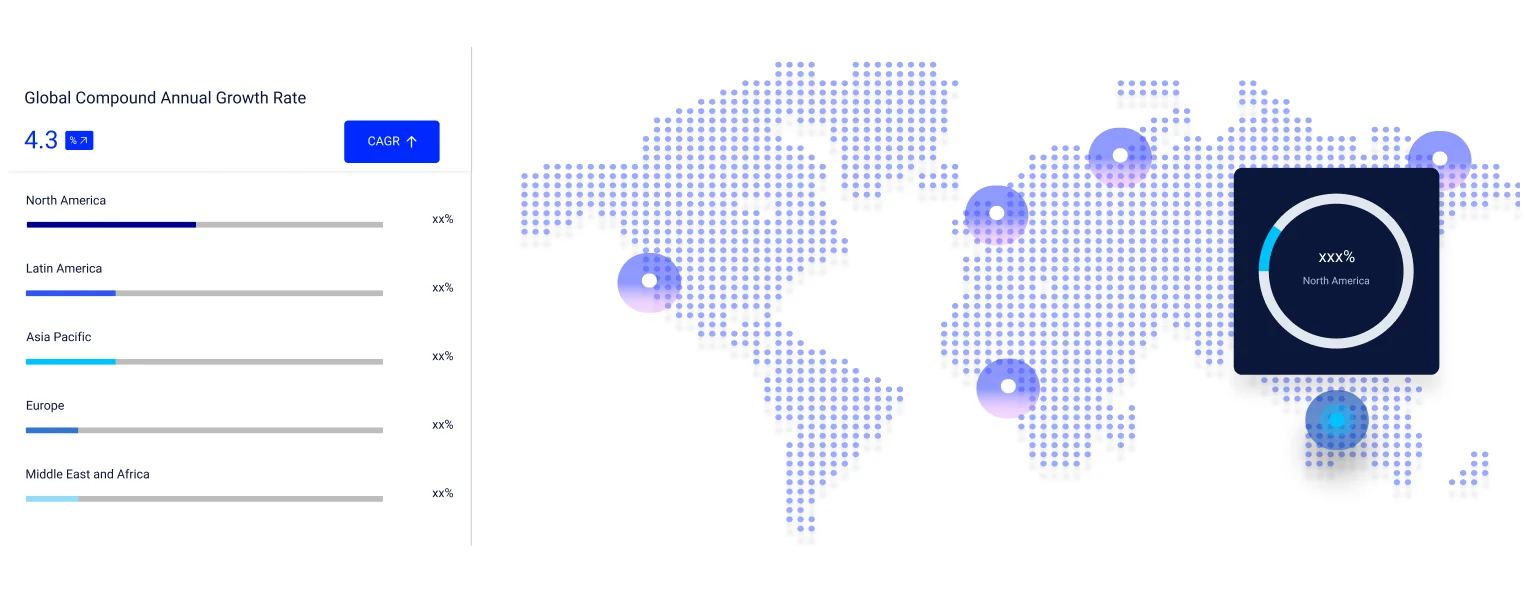
Asia Pacific |
5.6% |
|
Latin America |
4.7% |
|
Middle East and Africa |
4.9% |
The global arc welding market features a moderately consolidated competitive structure led by established equipment manufacturers with broad product portfolios and strong distribution networks. Manufacturers, including Lincoln Electric and ESAB are competing primarily through automation capability, targeted acquisitions, and expanding consumables portfolios, while specialist providers including Fronius and Kemppi differentiate through inverter technology innovation and deep customer relationships built over decades of regional presence.
Leading arc welding market players are focusing on expanding automation and robotic welding capability to address skilled welder shortages, pursuing strategic acquisitions to broaden portfolios beyond core welding equipment into inspection and monitoring technology, and strengthening regional service and training infrastructure. Increasing collaboration with industrial gas suppliers and component specialists is also enabling manufacturers to offer more complete, bundled welding solutions to end customers.
Lincoln Electric Holdings, Inc., founded in 1895 and headquartered in Cleveland, Ohio, United States, is the world's leading manufacturer of arc welding solutions, automated joining, assembly and cutting systems, and plasma and oxy-fuel cutting equipment, alongside a leading global position in brazing and soldering alloys. The company continues to expand its automation and specialised material welding capability through targeted acquisitions and strategic technology partnerships across its global operations.
ESAB Corporation, founded in 1904 and headquartered in North Bethesda, Maryland, United States, is a focused premier industrial compounder providing welding and cutting equipment, consumables, and increasingly inspection and monitoring technology to professional and industrial customers worldwide. The company continues to broaden its end to end workflow solution through strategic acquisitions extending beyond traditional welding equipment into adjacent industrial technology categories.
Fronius International GmbH, founded in 1945 and headquartered in Pettenbach, Upper Austria, Austria, is a family-owned global leader in welding technology, photovoltaics, and battery charging technology, holding more than 1,800 active patents. The company's welding portfolio spans manual gas shielded arc welding, high-performance robotic systems, and fully automated welding solutions, supported by an expanding network of regional technical competence centres worldwide.
Kemppi Oy, founded in 1949 and headquartered in Lahti, Finland, is a privately owned, family run welding equipment manufacturer recognised as a design leader in the arc welding industry across MIG, TIG, and MMA welding machine ranges. The company continues to expand its digital welding software and sustainable product offerings, serving customers from large industrial welding companies to individual contractors worldwide.
Other key players in the market report include Illinois Tool Works Inc., voestalpine Böhler Welding Group GmbH, Panasonic Corporation, DAIHEN Corporation, and Air Liquide S.A., among others.
*Please note that this is only a partial list; the complete list of key players is available in the full report. Additionally, the list of key players can be customized to better suit your needs.*
Explore the latest trends shaping the arc welding market 2026-2035 with our in-depth report. Gain strategic insights, future forecasts, and key market developments that can help you stay competitive. Download a free sample report or contact our team for customised consultation on the market trends 2026.


Upto 15% Off
USD
$2499 $2249
$3999 $3599
$4999 $4249
$5999 $5099


*While we strive to always give you current and accurate information, the numbers depicted on the website are indicative and may differ from the actual numbers in the main report. At Expert Market Research, we aim to bring you the latest insights and trends in the market. Using our analyses and forecasts, stakeholders can understand the market dynamics, navigate challenges, and capitalize on opportunities to make data-driven strategic decisions.*
In 2025, the arc welding market reached an approximate value of USD 6000.00 Million.
The market is projected to grow at a CAGR of 4.80% between 2026 and 2035.
The key players in the market include Lincoln Electric Holdings, Inc., ESAB Corporation, Illinois Tool Works Inc., Fronius International GmbH, Kemppi Oy, voestalpine Böhler Welding Group GmbH, Panasonic Corporation, DAIHEN Corporation, and Air Liquide S.A., among others.
Leading manufacturers are focusing on expanding automation and robotic welding capability, pursuing strategic acquisitions to broaden portfolios beyond core welding equipment, and strengthening regional service and training infrastructure.
Key challenges include persistent skilled welder shortages, high initial costs of advanced automated systems, and compliance with evolving environmental and workplace safety regulations across major manufacturing economies.
Explore our key highlights of the report and gain a concise overview of key findings, trends, and actionable insights that will empower your strategic decisions.
|
Report Features |
Details |
|
Base Year |
2025 |
|
Historical Period |
2019-2025 |
|
Forecast Period |
2026-2035 |
|
Scope of the Report |
Historical and Forecast Trends, Industry Drivers and Constraints, Historical and Forecast Market Analysis by Segment:
|
|
Breakup by Process Type |
|
|
Breakup by Automation |
|
|
Breakup by End Use |
|
|
Breakup by Region |
|
|
Market Dynamics |
|
|
Competitive Landscape |
|
|
Companies Covered |
|
Datasheet
One User
USD 2,499
USD 2,249
tax inclusive*
Single User License
One User
USD 3,999
USD 3,599
tax inclusive*
Five User License
Five User
USD 4,999
USD 4,249
tax inclusive*
Corporate License
Unlimited Users
USD 5,999
USD 5,099
tax inclusive*
*Please note that the prices mentioned below are starting prices for each bundle type. Kindly contact our team for further details.*
Flash Bundle
Small Business Bundle
Growth Bundle
Enterprise Bundle
*Please note that the prices mentioned below are starting prices for each bundle type. Kindly contact our team for further details.*
Flash Bundle
Number of Reports: 3
20%
tax inclusive*
Small Business Bundle
Number of Reports: 5
25%
tax inclusive*
Growth Bundle
Number of Reports: 8
30%
tax inclusive*
Enterprise Bundle
Number of Reports: 10
35%
tax inclusive*
How To Order

Select License Type
Choose the right license for your needs and access rights.

Click on ‘Buy Now’
Add the report to your cart with one click and proceed to register.

Select Mode of Payment
Choose a payment option for a secure checkout. You will be redirected accordingly.
Strategic Solutions for Informed Decision-Making
Gain insights to stay ahead and seize opportunities.

Get insights & trends for a competitive edge.

Track prices with detailed trend reports.

Analyse trade data for supply chain insights.

Leverage cost reports for smart savings

Enhance supply chain with partnerships.

Connect For More Information
Our expert team of analysts will offer full support and resolve any queries regarding the report, before and after the purchase.
Our expert team of analysts will offer full support and resolve any queries regarding the report, before and after the purchase.
We employ meticulous research methods, blending advanced analytics and expert insights to deliver accurate, actionable industry intelligence, staying ahead of competitors.
Our skilled analysts offer unparalleled competitive advantage with detailed insights on current and emerging markets, ensuring your strategic edge.
We offer an in-depth yet simplified presentation of industry insights and analysis to meet your specific requirements effectively.




